





Skip to content
Label Room Notes
Home / Notes

Label Room Notes

This editorial section explains everyday label stock and thermal roll topics in clear terms. It is built to help buyers, stores teams and production staff make sensible decisions without overcomplicating the basics.

Face Stock Basics

Face Stock Basics

An introduction to the printable top layer of a self-adhesive label construction.

Adhesive Basics

Adhesive Basics

A plain-language look at how label adhesives differ by tack, hold and surface suitability.

Liner Basics

Liner Basics

Why liners matter for die-cutting, dispensing, storage and machine feeding.

Paper Or Film

Paper Or Film

When a paper face stock may work well and when a film material may suit better.

Direct Thermal Explained

Direct Thermal Explained

How direct thermal printing works and where it is commonly used.

Thermal Transfer Explained

Thermal Transfer Explained

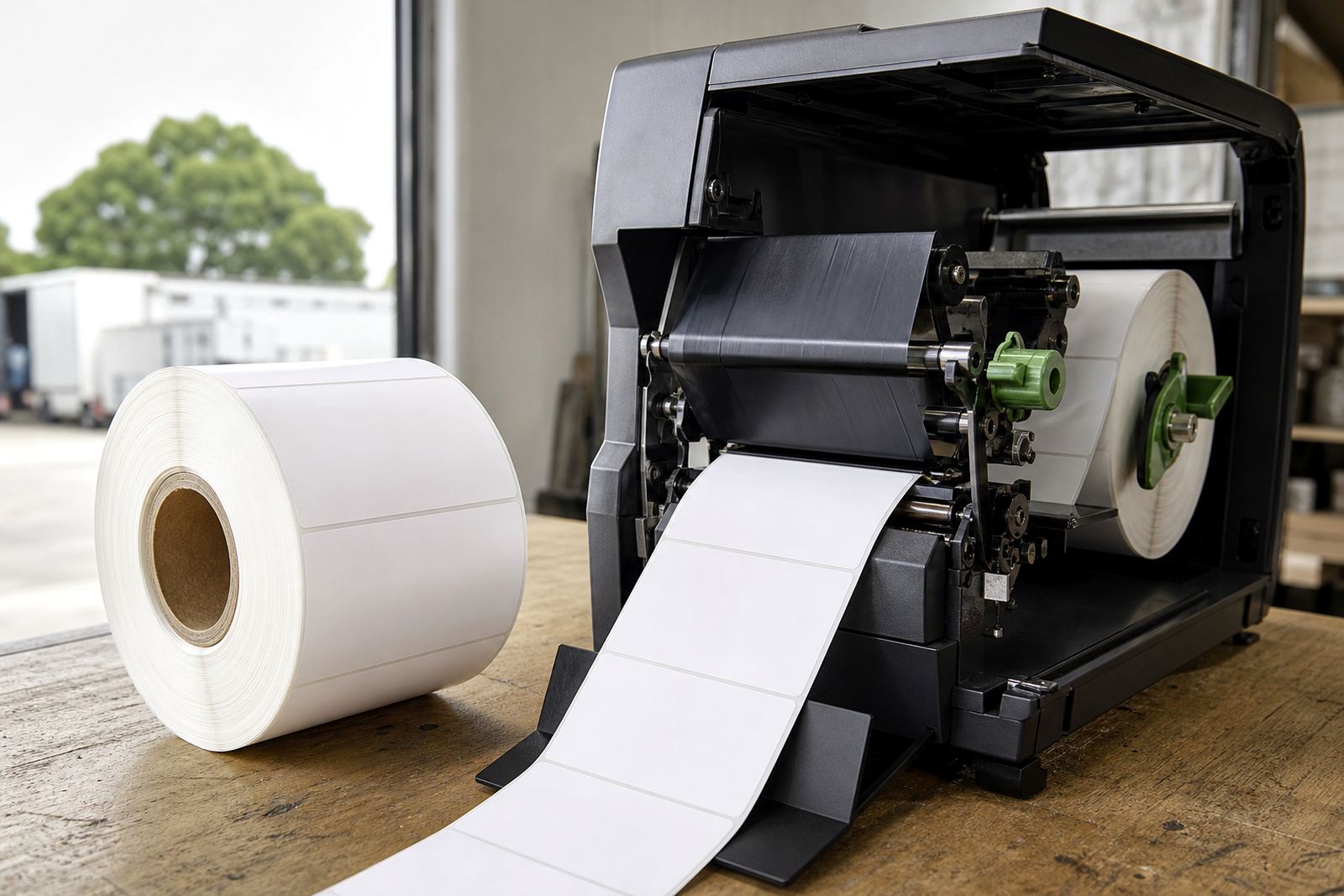
How ribbon-based thermal transfer printing differs from direct thermal methods.

Compare Print Methods

Compare Print Methods

A practical comparison of direct thermal and thermal transfer for common jobs.

Core Size Meaning

Core Size Meaning

What core size means and why it affects printer fit and roll handling.

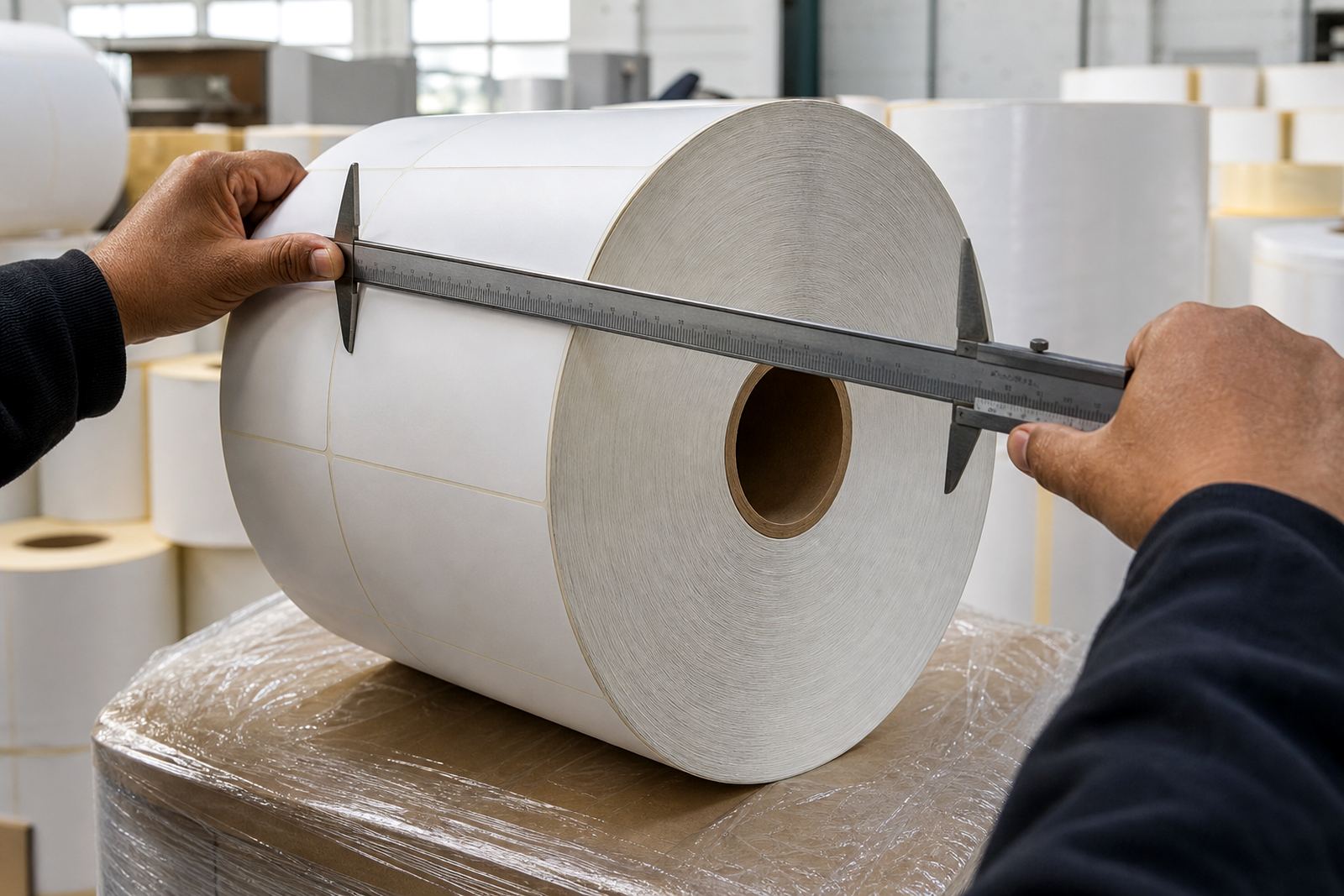
Roll Diameter Guide

Roll Diameter Guide

Why outer roll diameter matters for printer compartments and run length.

Winding Direction Basics

Winding Direction Basics

How wound orientation influences loading and print alignment on different printers.

Top Coated Uses

Top Coated Uses

Where top coated paper can help support better thermal transfer print results.

Uncoated Uses

Uncoated Uses

Situations where a simpler uncoated paper label remains a sensible option.

Permanent Adhesive Jobs

Permanent Adhesive Jobs

Typical day-to-day uses for permanent self-adhesive label stock.

Removable Adhesive Jobs

Removable Adhesive Jobs

Where removable labels can help with temporary marking and stock control.

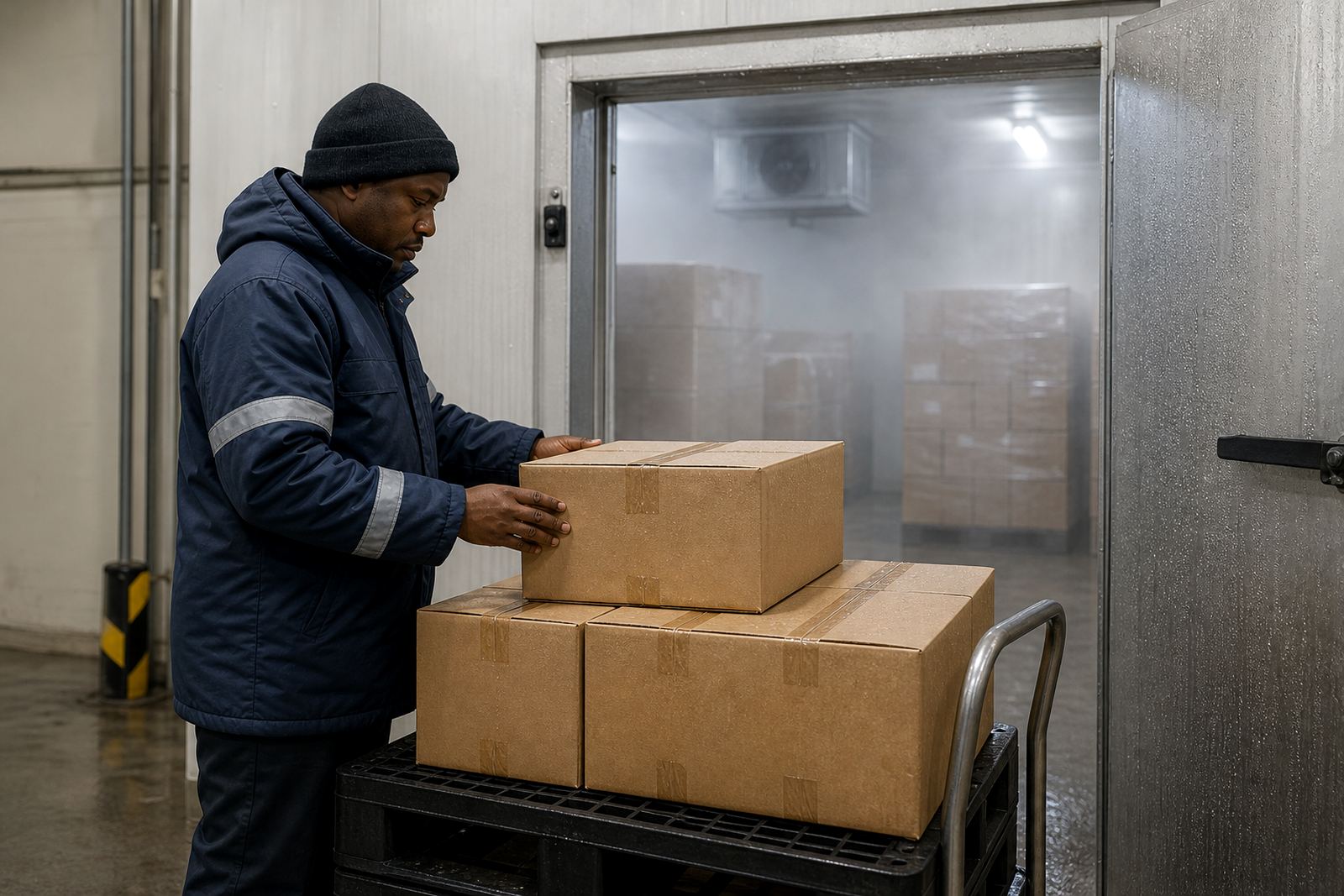
Cold Room Considerations

Cold Room Considerations

Basic points to review before choosing labels for chilled handling environments.

Barcode Legibility Tips

Barcode Legibility Tips

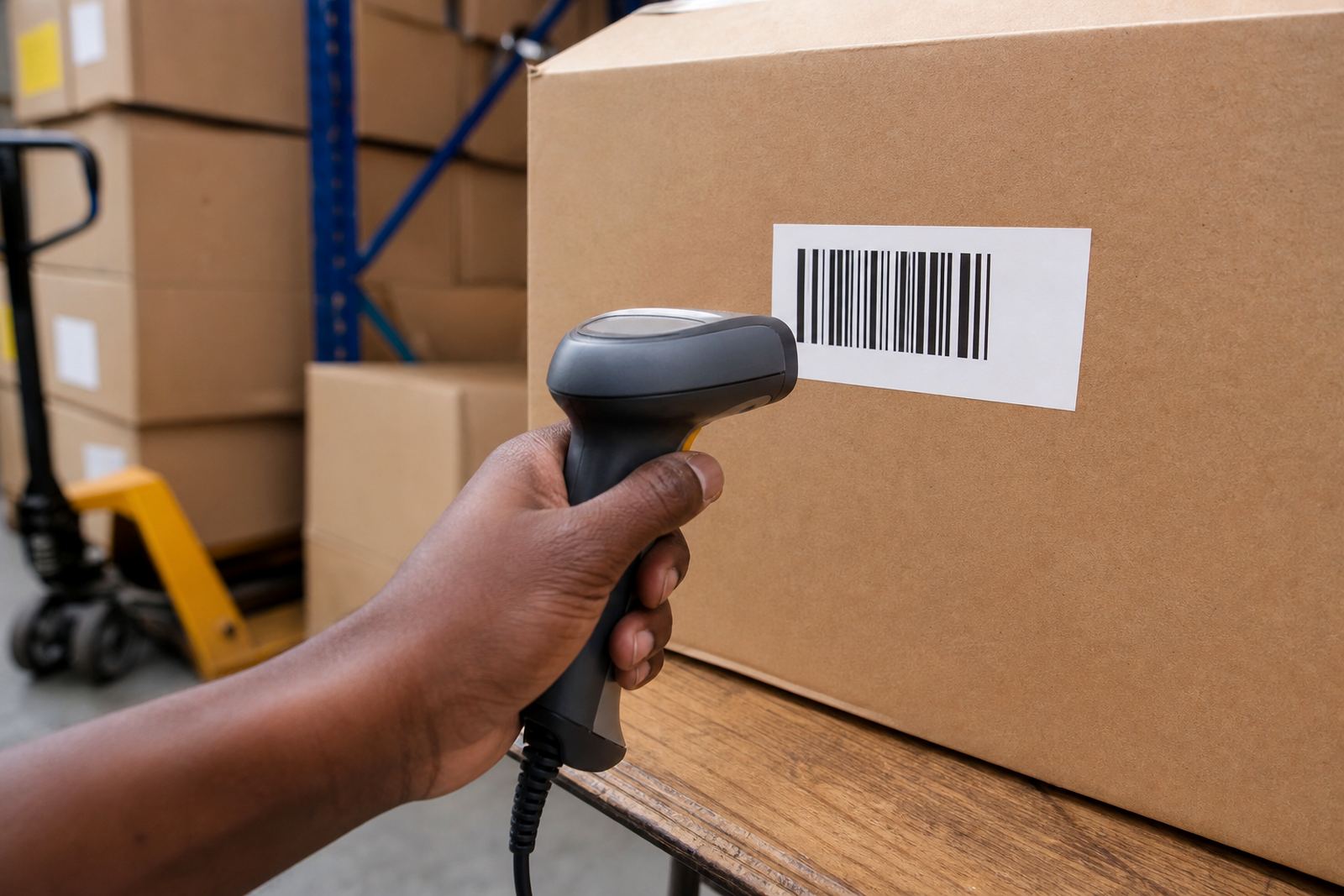
Simple ways to improve barcode readability through material and print choices.

Storage Good Practice

Storage Good Practice

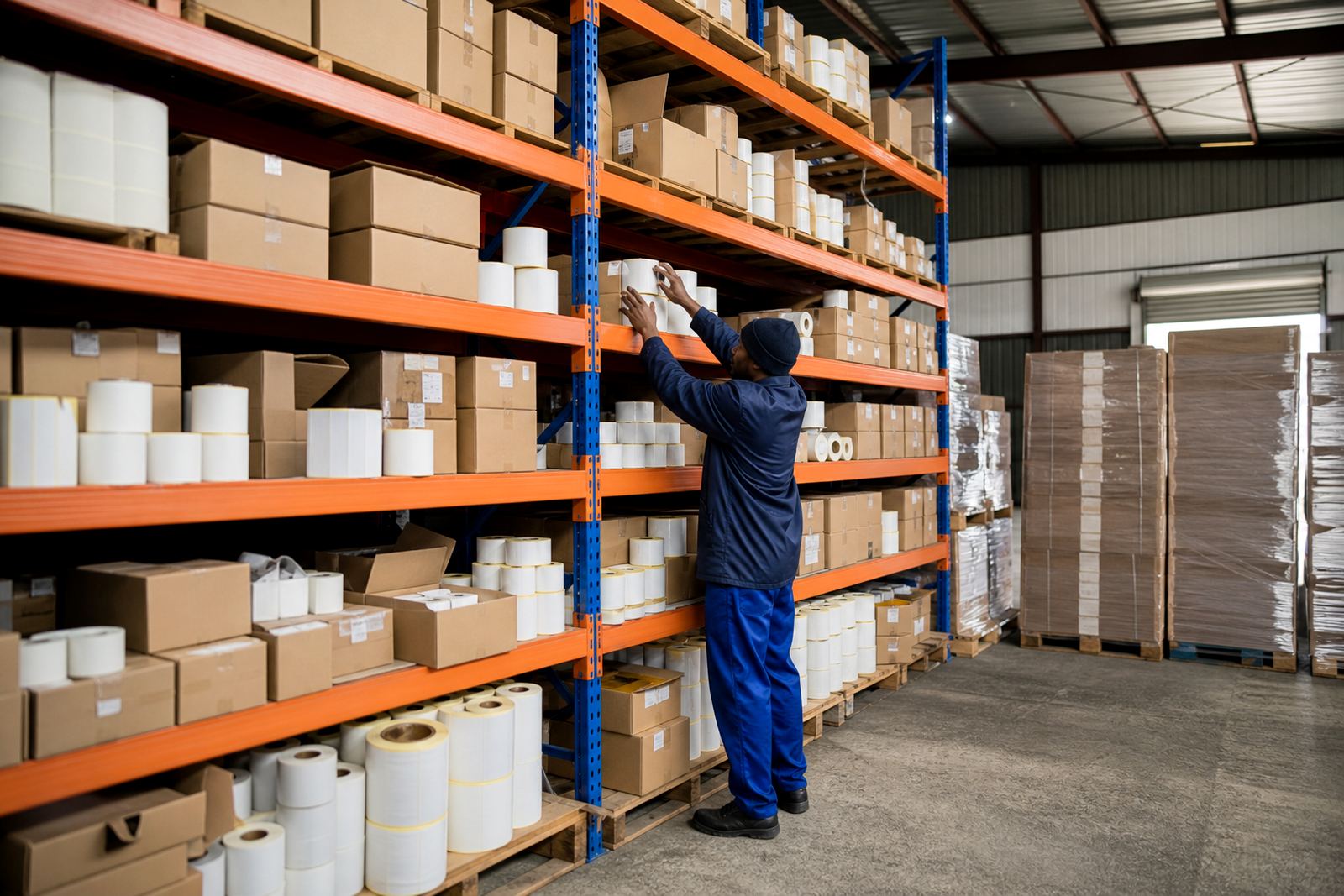
How sensible storage helps preserve label stock condition before use.

Handling Jumbo Rolls

Handling Jumbo Rolls

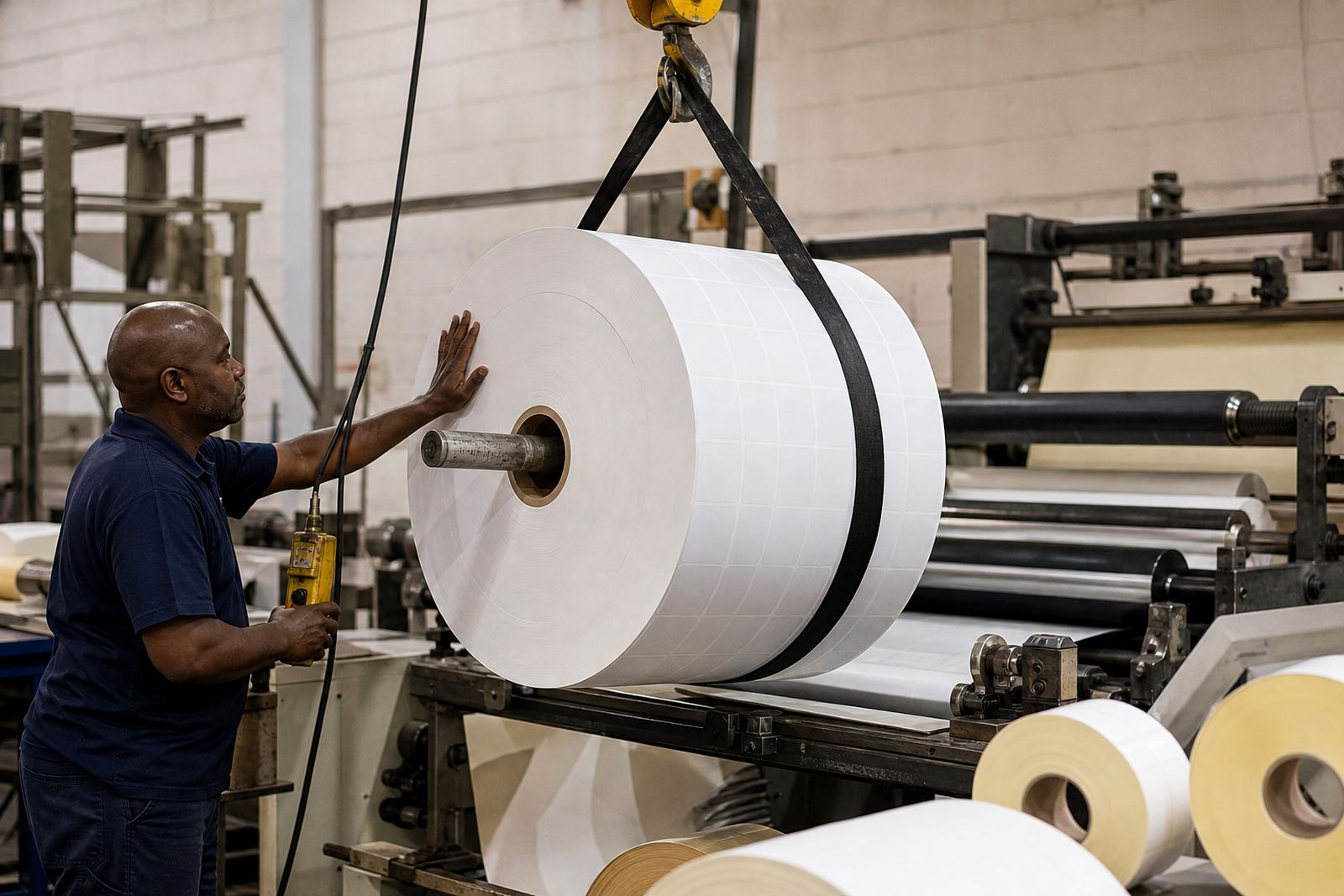
Basic handling considerations for larger parent rolls in a conversion area.

Slitting Why Matters

Slitting Why Matters

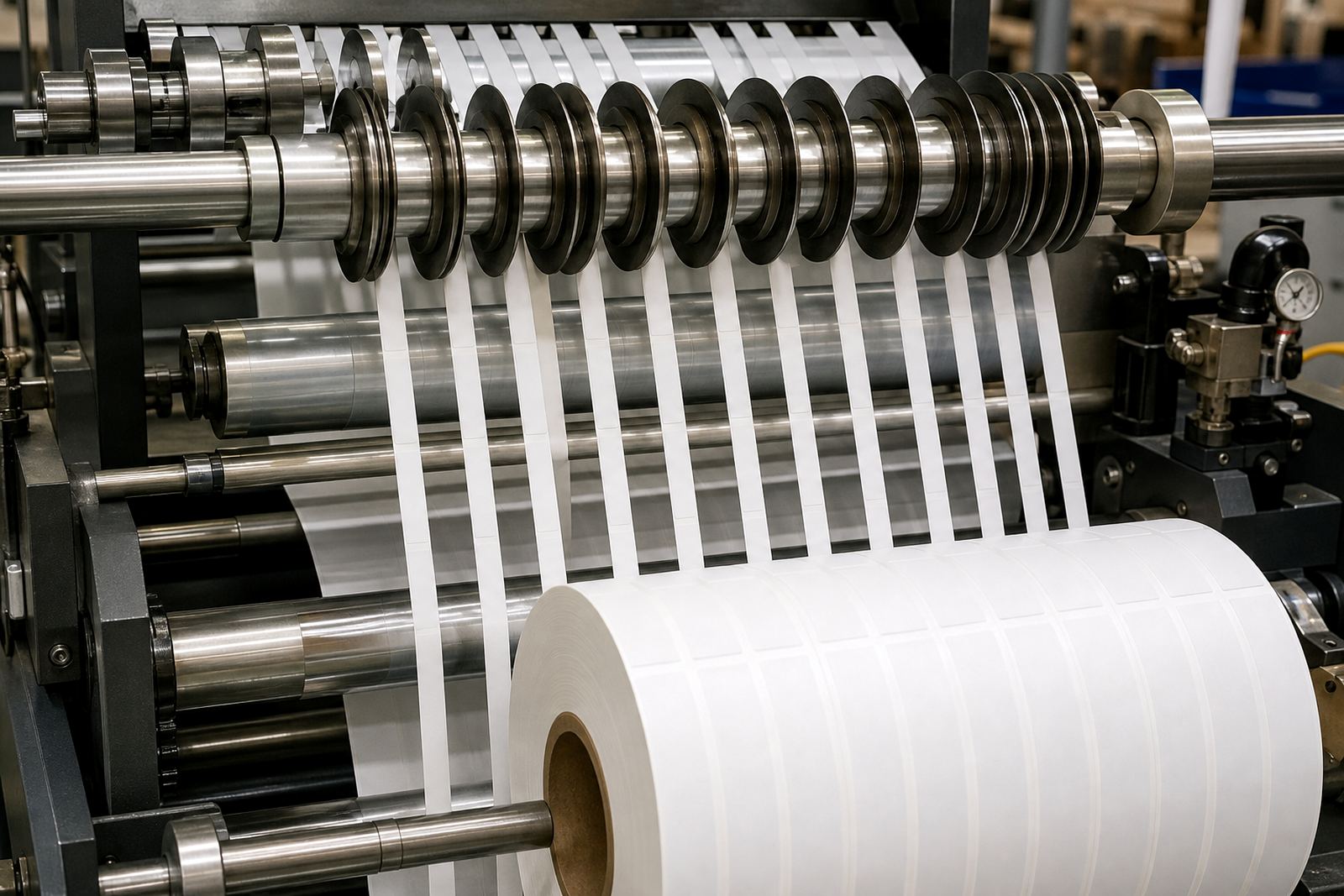
Why slit accuracy affects roll consistency, feed reliability and waste control.

Rewinding Why Matters

Rewinding Why Matters

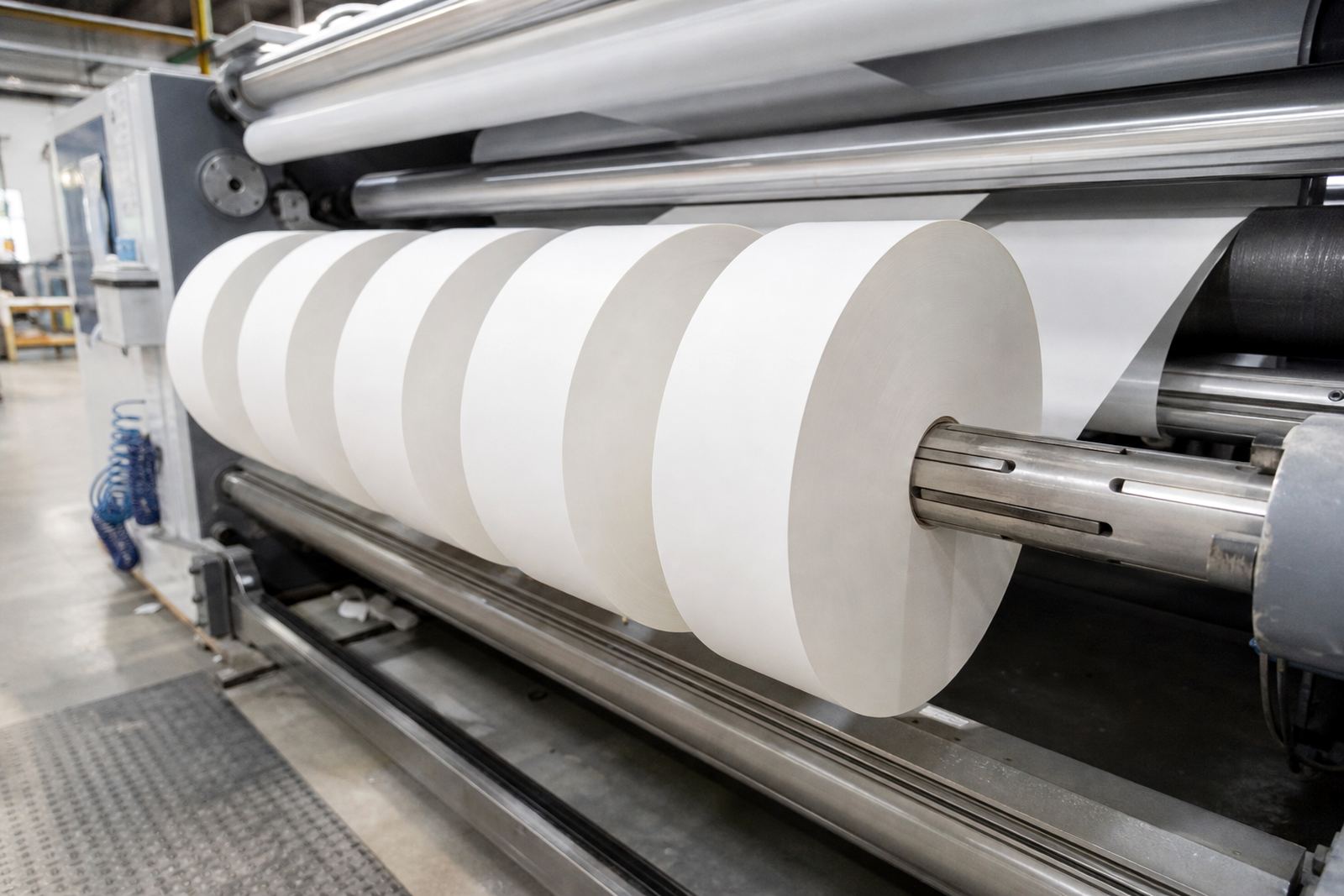
How good rewinding supports neat rolls, smoother loading and fewer feed issues.

Printer Fit Basics

Printer Fit Basics

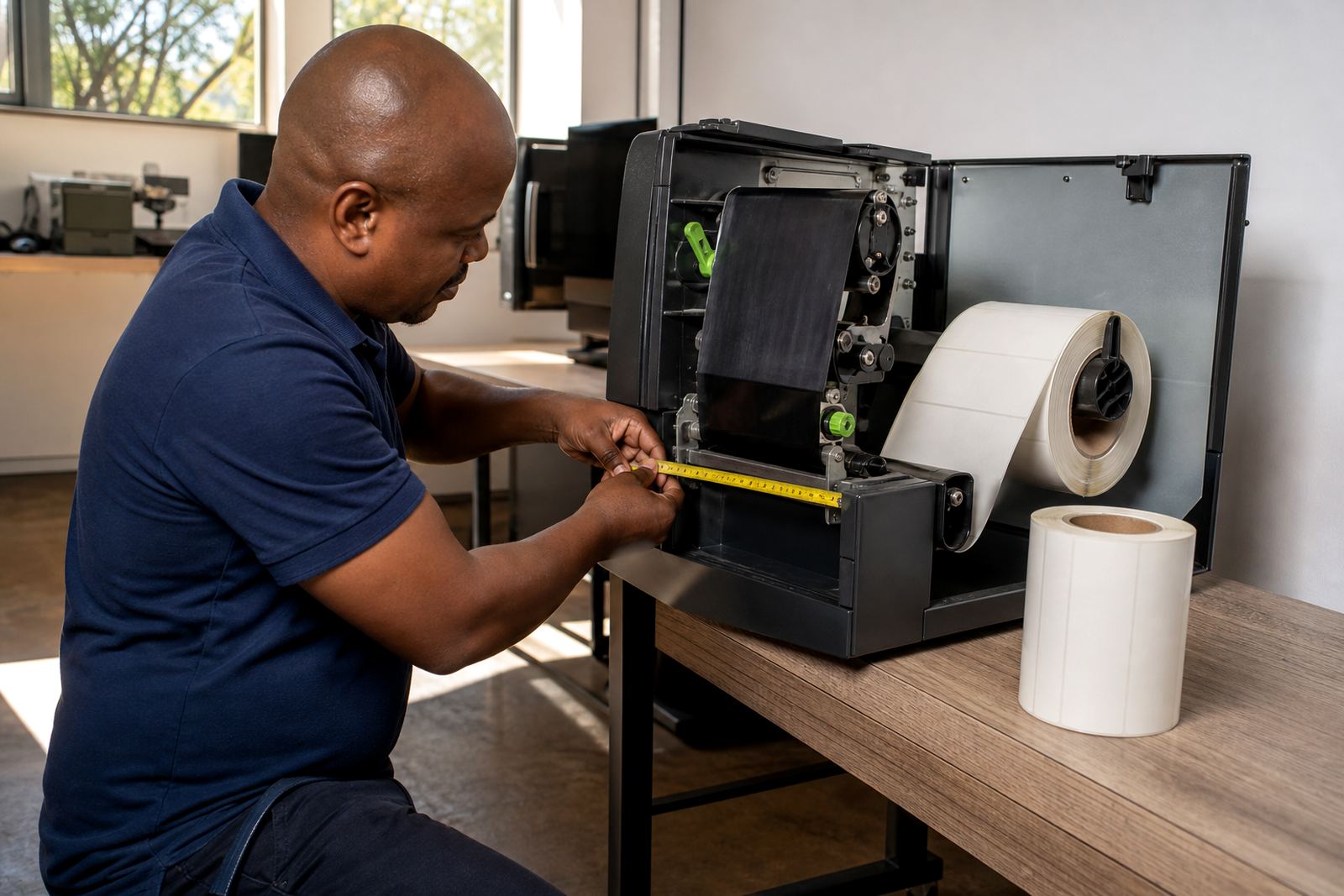
The key physical checks to make before ordering a new roll format.

Benchtop Printer Rolls

Benchtop Printer Rolls

What usually matters when selecting rolls for compact bench printers.

Industrial Printer Rolls

Industrial Printer Rolls

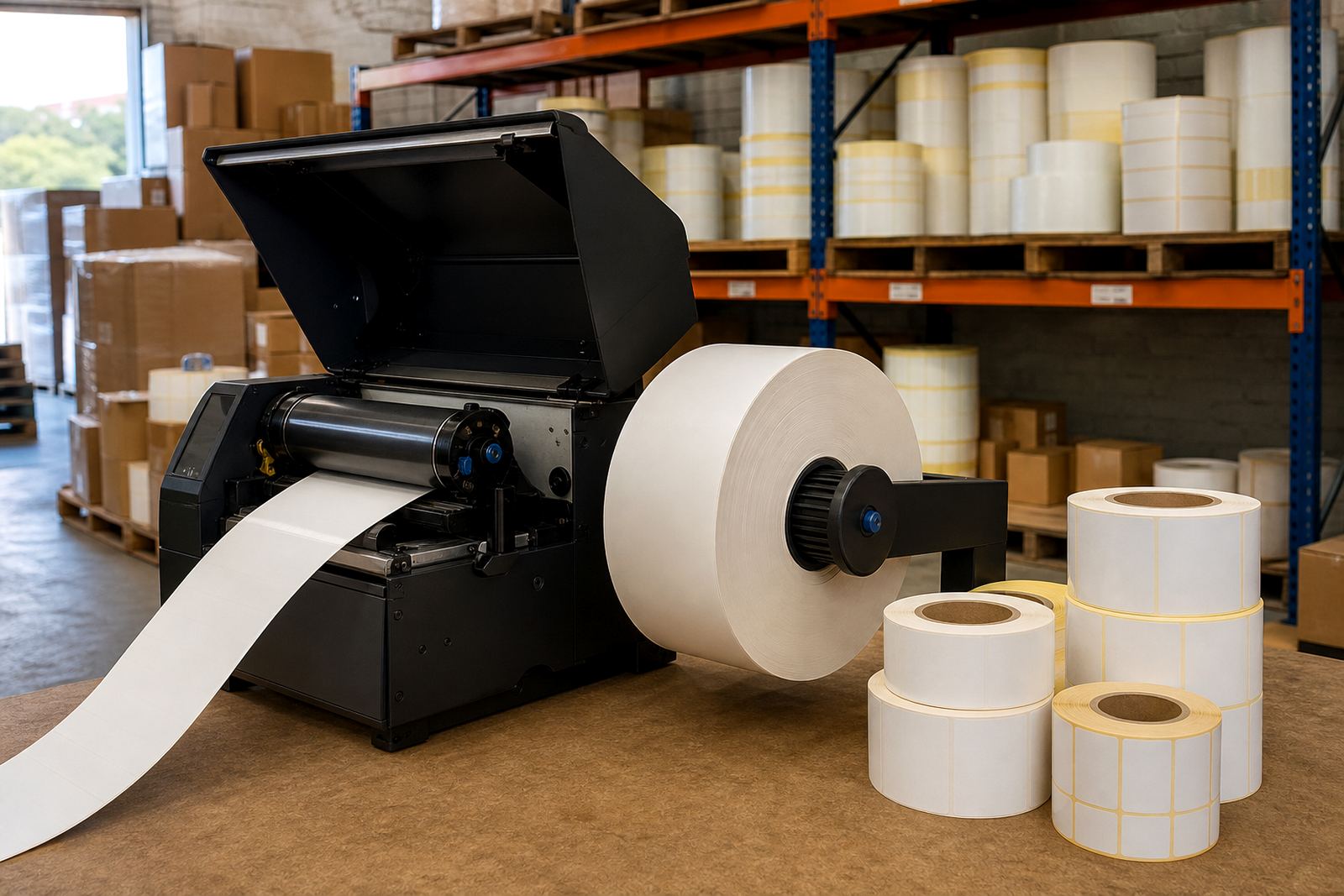
General considerations for larger printers used in warehouse and factory settings.

Short Run Benefits

Short Run Benefits

Why shorter rolls can be useful for trials, low volume lines and frequent changes.

Long Run Benefits

Long Run Benefits

How longer rolls can reduce interruptions where usage is steady and space allows.

Retail Label Needs

Retail Label Needs

Common practical priorities for labels used in store and shelf environments.

Logistics Label Needs

Logistics Label Needs

Why logistics operations often prioritise scan reliability, speed and roll efficiency.

Manufacturing Label Needs

Manufacturing Label Needs

Material choices often considered for internal factory and production labels.

Carton Seal Options

Carton Seal Options

Different label constructions used for simple carton closure and control markings.

Tamper Label Basics

Tamper Label Basics

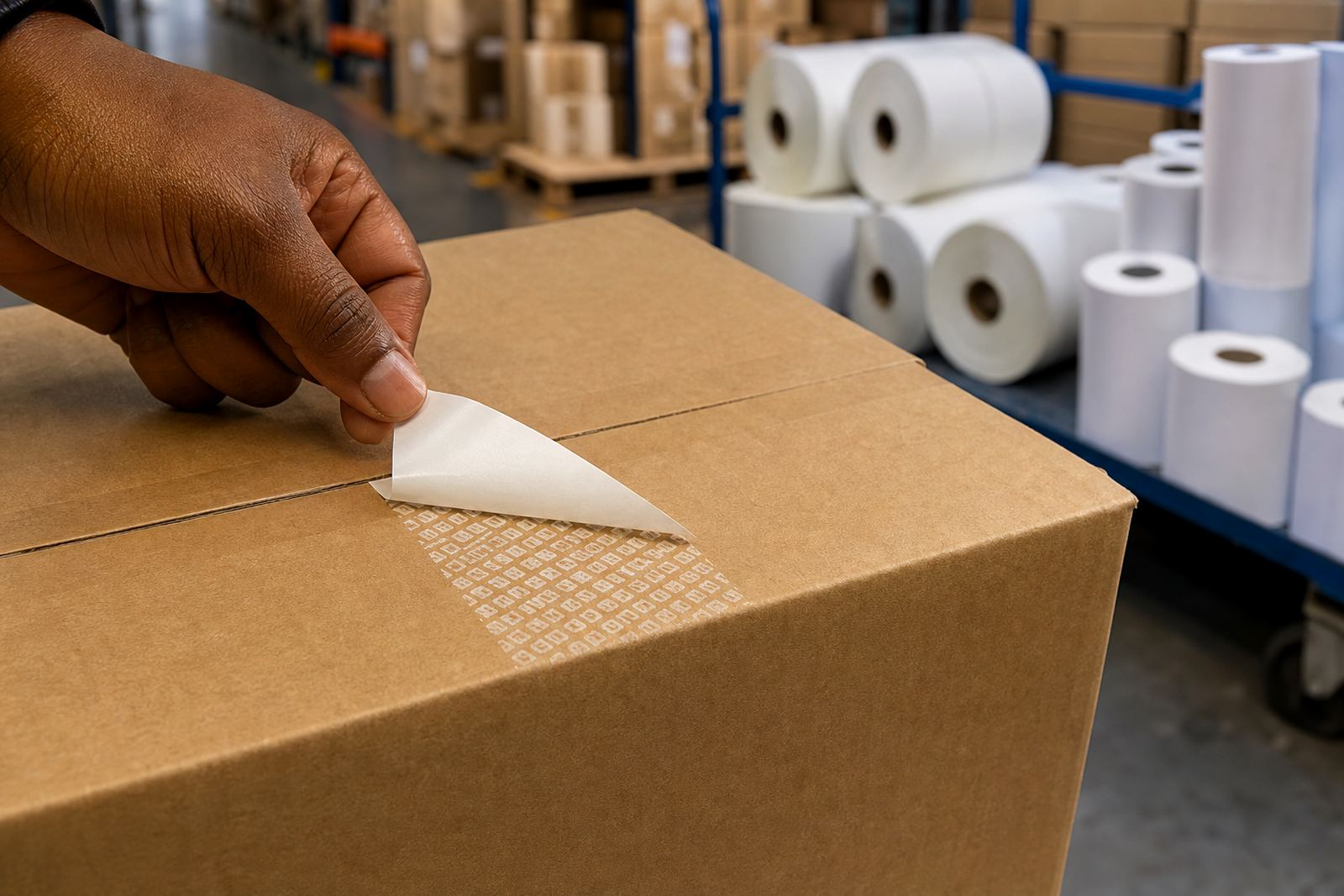
What tamper-indicating labels do and where they can be useful.

Scale Roll Notes

Scale Roll Notes

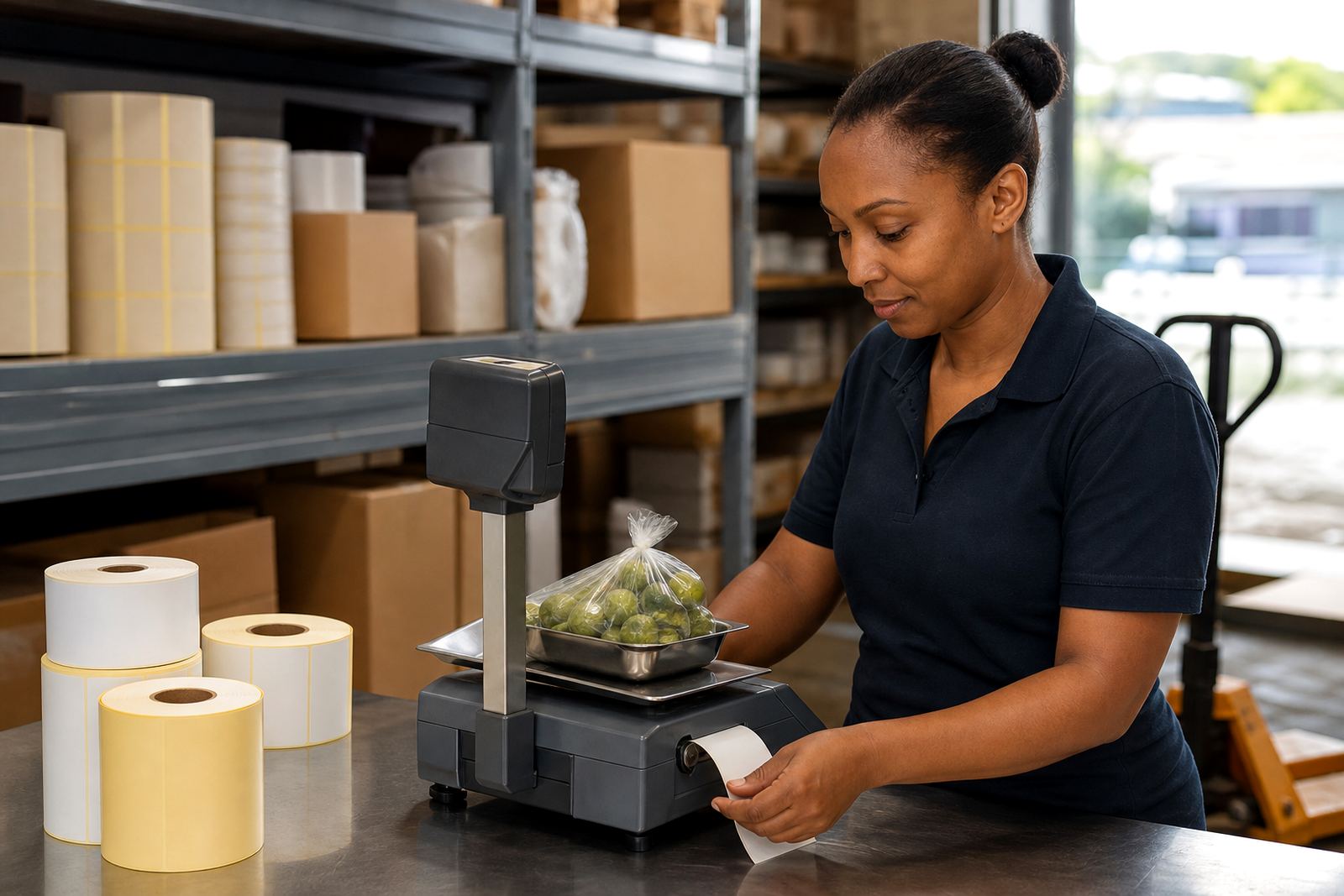
A basic overview of thermal roll needs for weigh-and-price labelling.

Shipping Roll Notes

Shipping Roll Notes

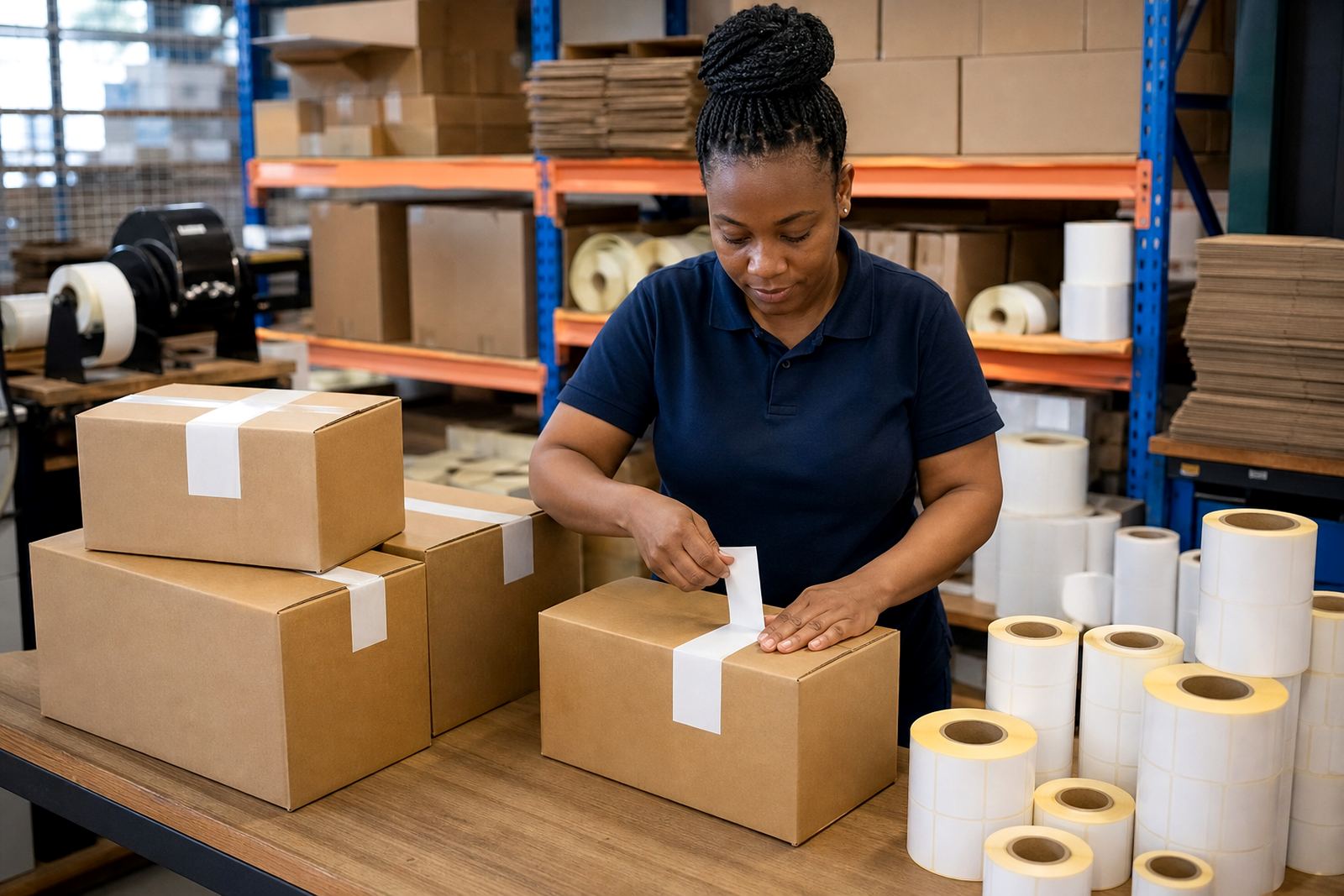
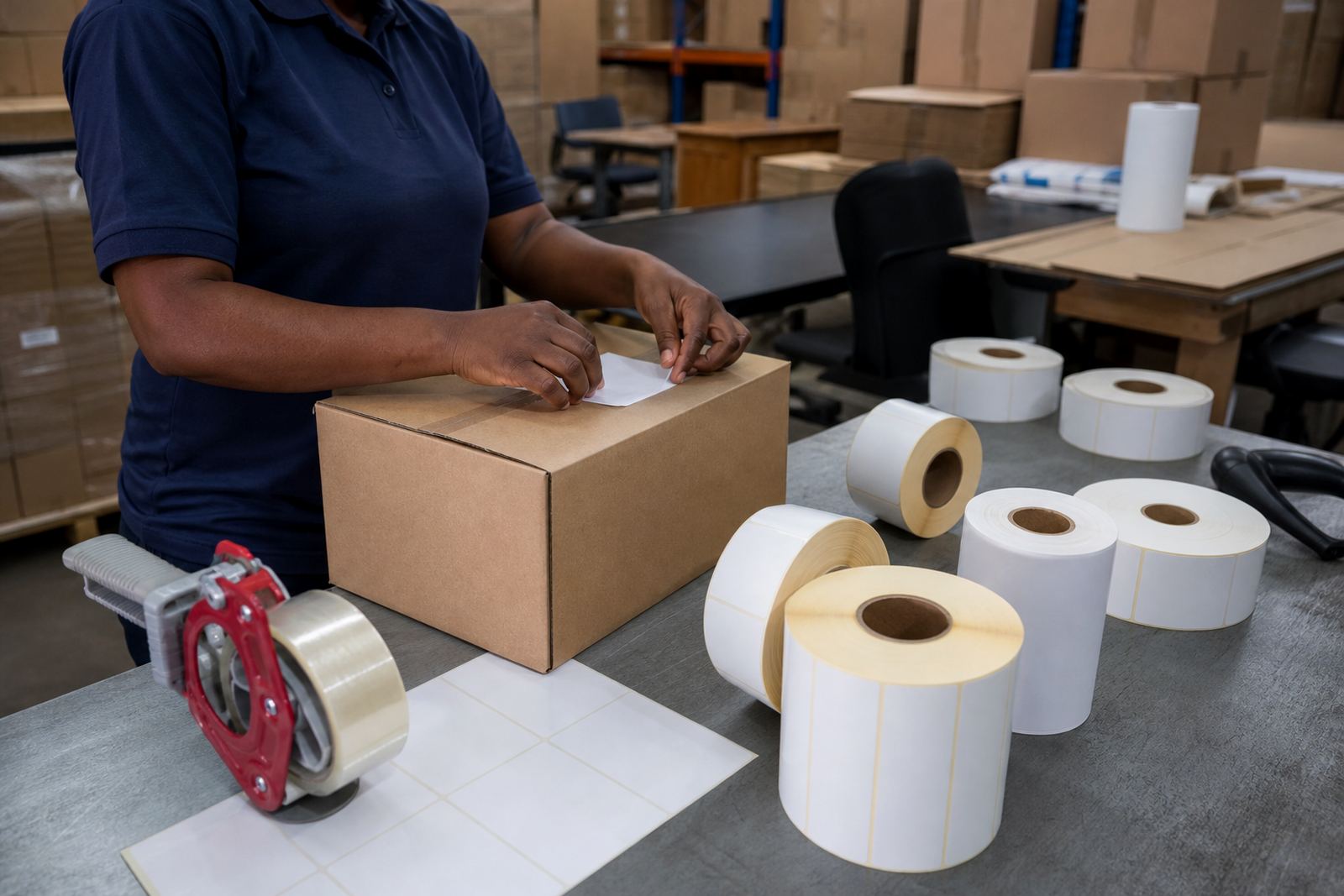
Useful checks when setting up labels for parcel and carton despatch.

Asset Labelling Basics

Asset Labelling Basics

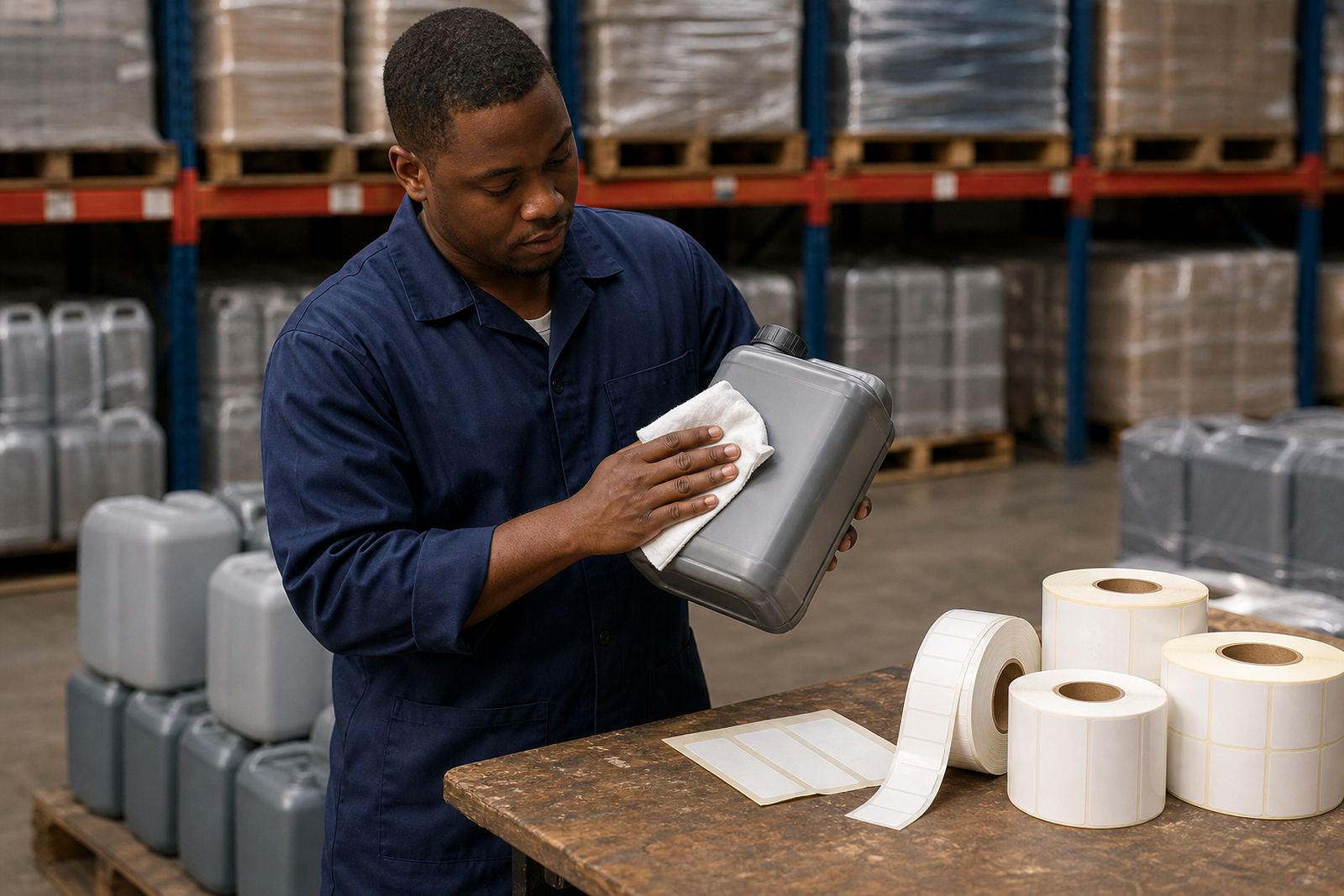
Simple guidance for labels used on shelves, containers and equipment.

Clean Surface Better

Clean Surface Better

Why a reasonably clean, dry surface usually helps labels apply more consistently.

Label Failure Causes

Label Failure Causes

Some common reasons labels may lift, wrinkle or print poorly in use.

The stock choices that decide how a label behaves

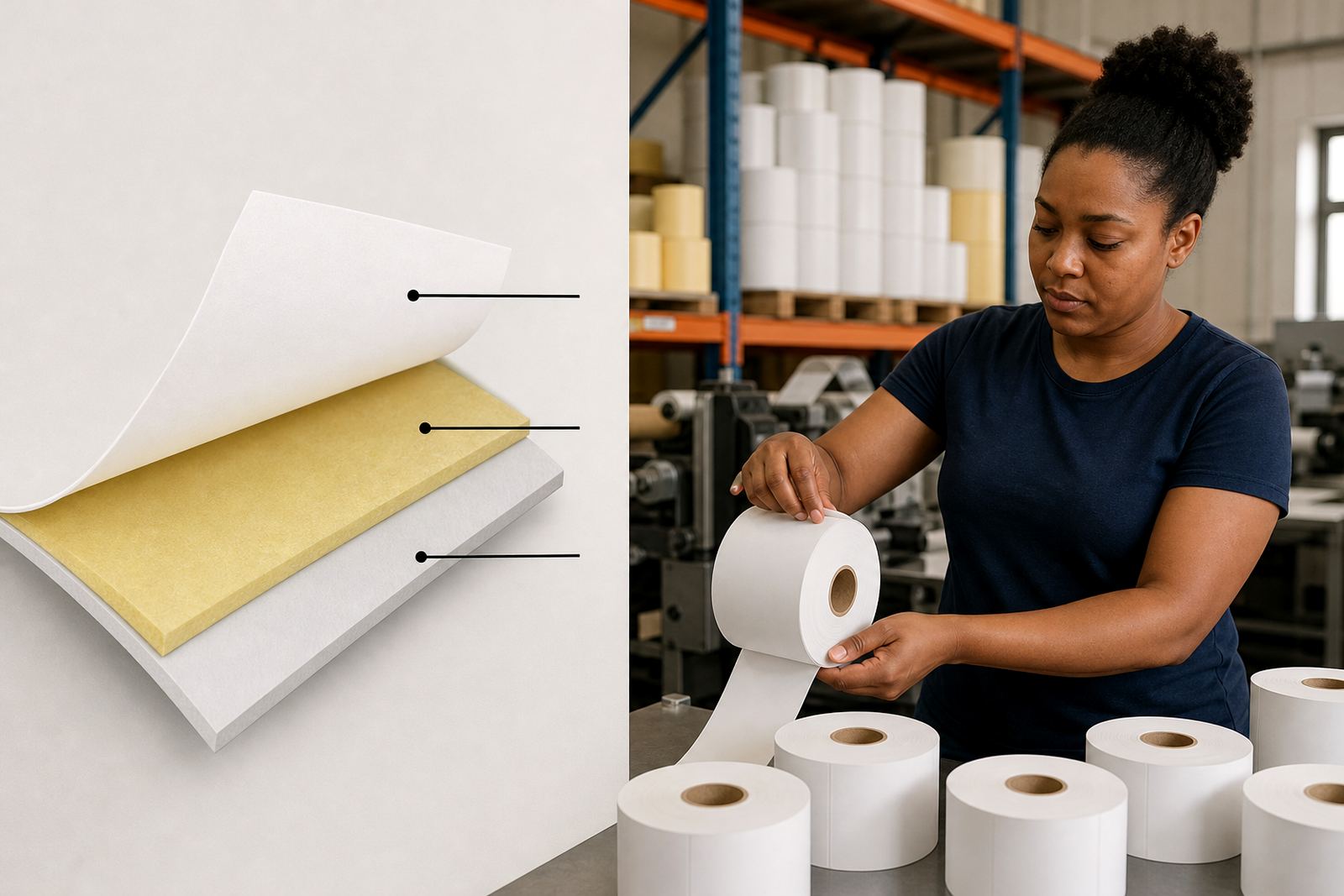
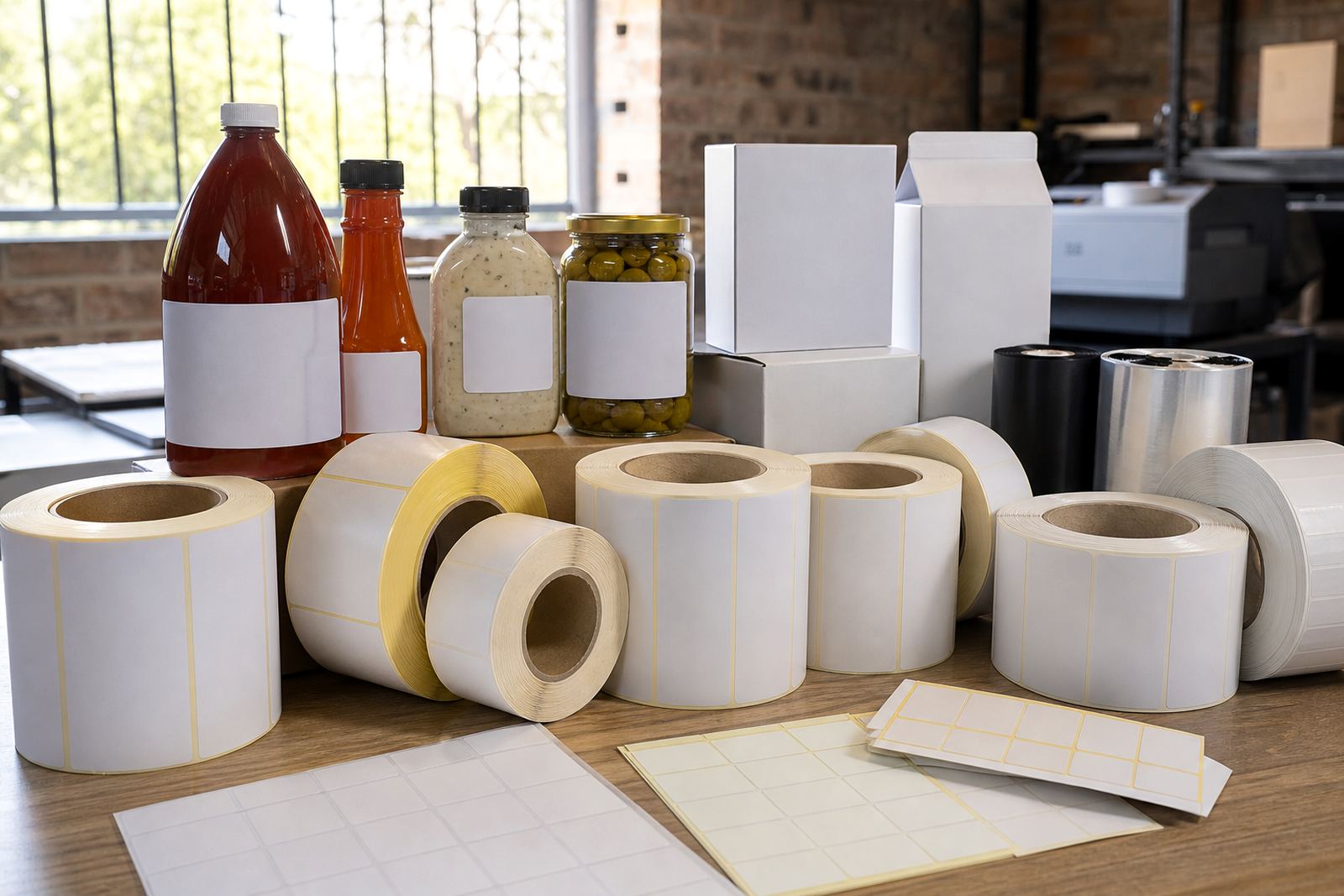
Self-adhesive labels start with the face stock, the top layer that carries print and holds up to handling. Paper face stocks suit cartons, warehouse bins and short life retail labels, while synthetic face stocks are better where moisture, oil or rubbing is part of the day to day, especially in Durban humidity or cold rooms.

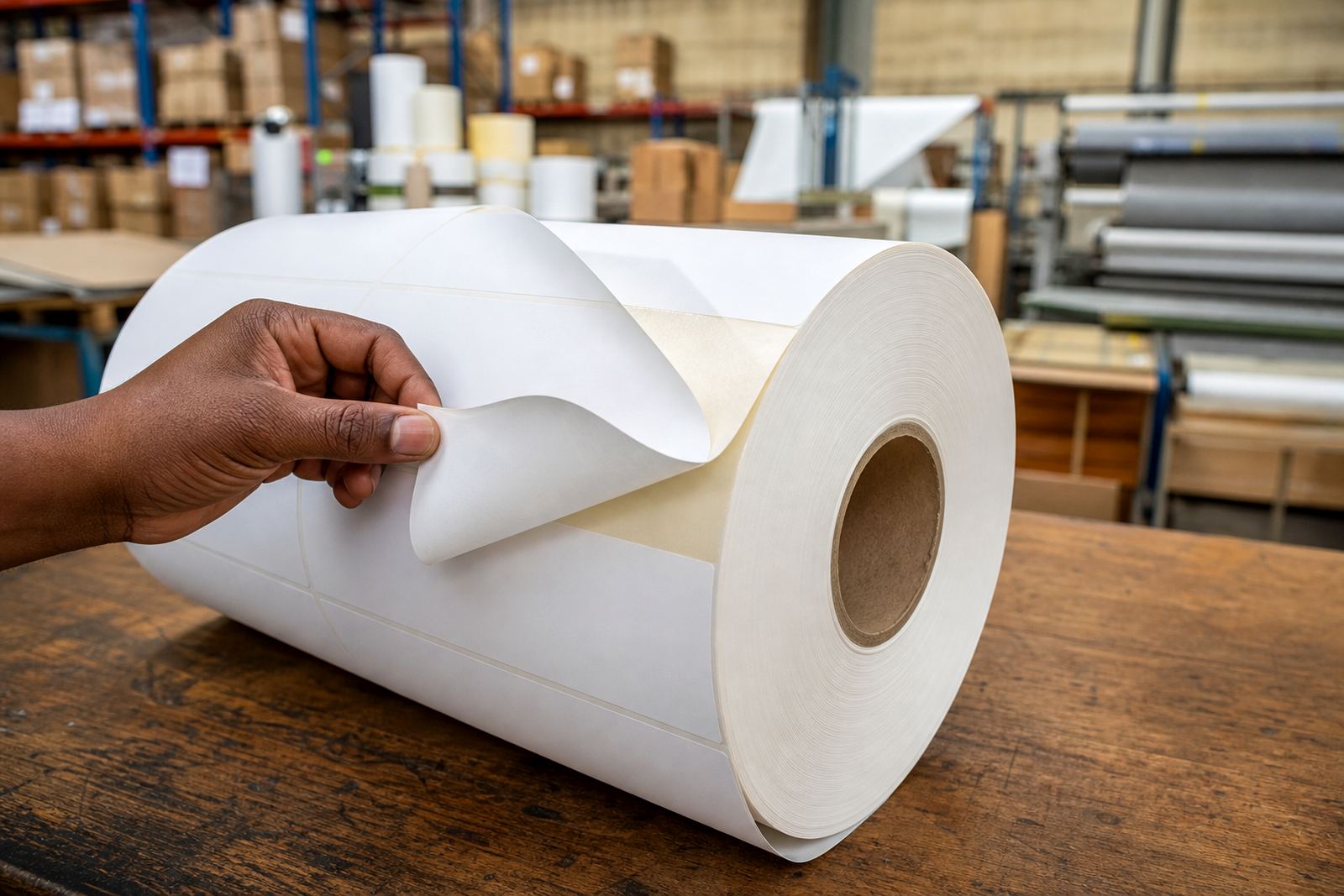
The backer and adhesive matter just as much. A permanent adhesive stays put for sealing and shipping, while a removable grade is used where the label must lift off cleanly later. A freezer grade, high tack or general purpose mix can be matched to the surface, because corrugated board, plastic tubs and powder coated surfaces all behave differently.

How to choose between direct thermal and thermal transfer rolls

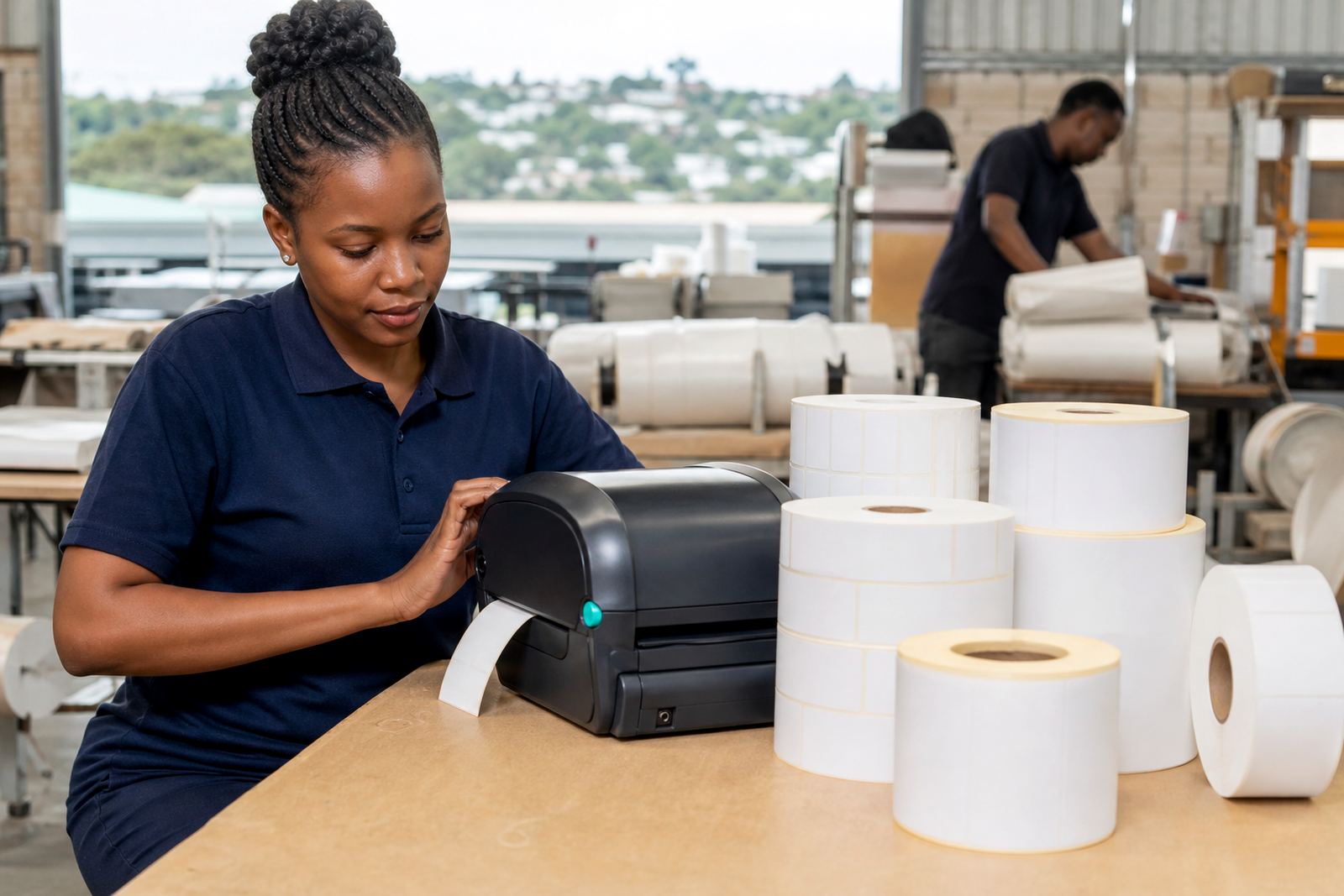
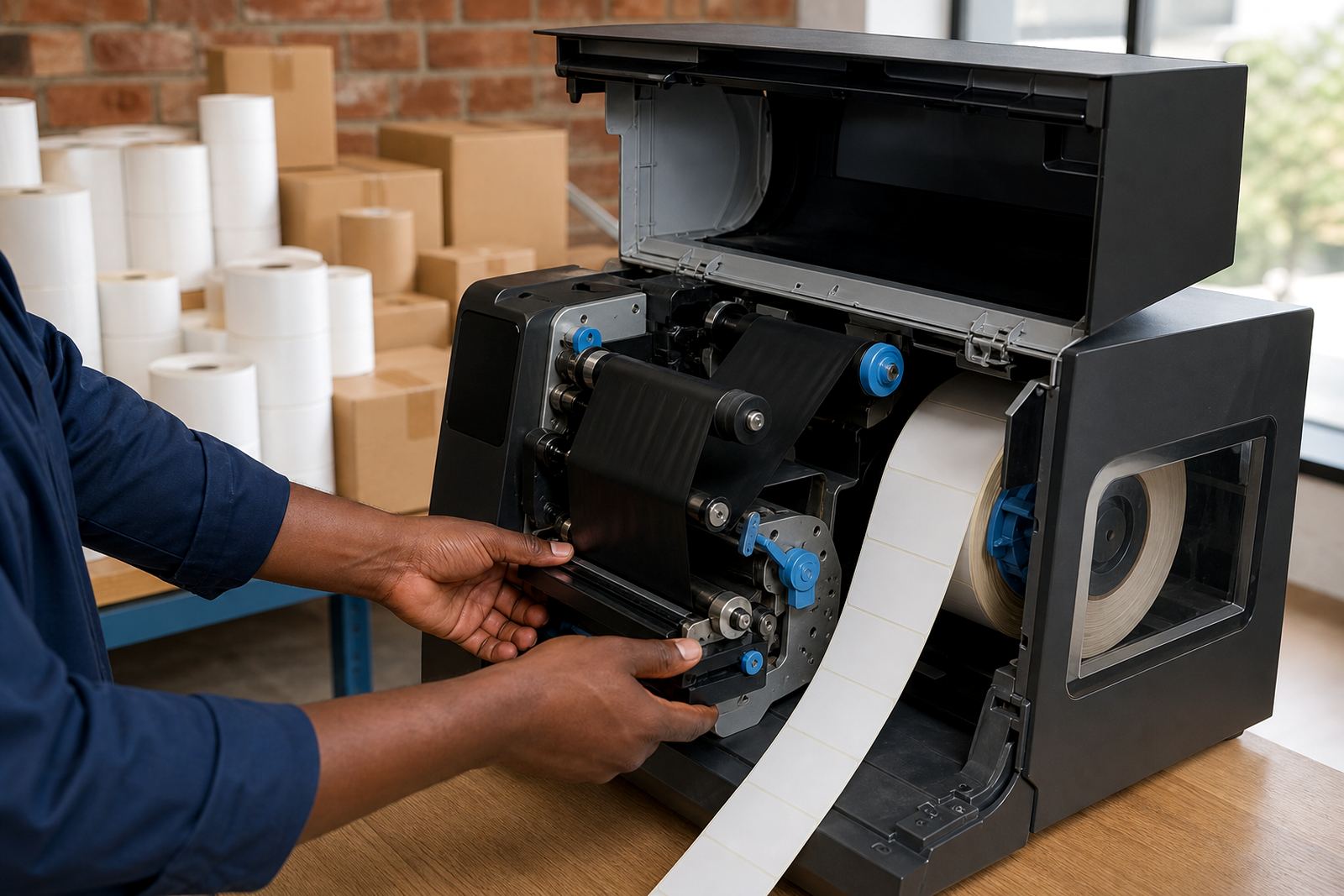
Direct thermal rolls are used where the printer heats the paper itself, so there is no ribbon involved. They are common for courier labels, short shelf life stock and fast moving dispatch areas. Thermal transfer rolls use a ribbon, which gives a tougher print and is often preferred for labels that must last longer or stand up to abrasion.

For busy sites in Johannesburg, Cape Town or Pretoria, the choice often comes down to life span and handling. Direct thermal is practical for speed and cost control, while thermal transfer is the safer pick for product labels that must stay readable after storage, transport and some rough treatment. We see this a lot in packaging rooms where labels get touched, stacked and moved around, sometimes more than once.

Core sizes, roll widths and whether the printer will take it

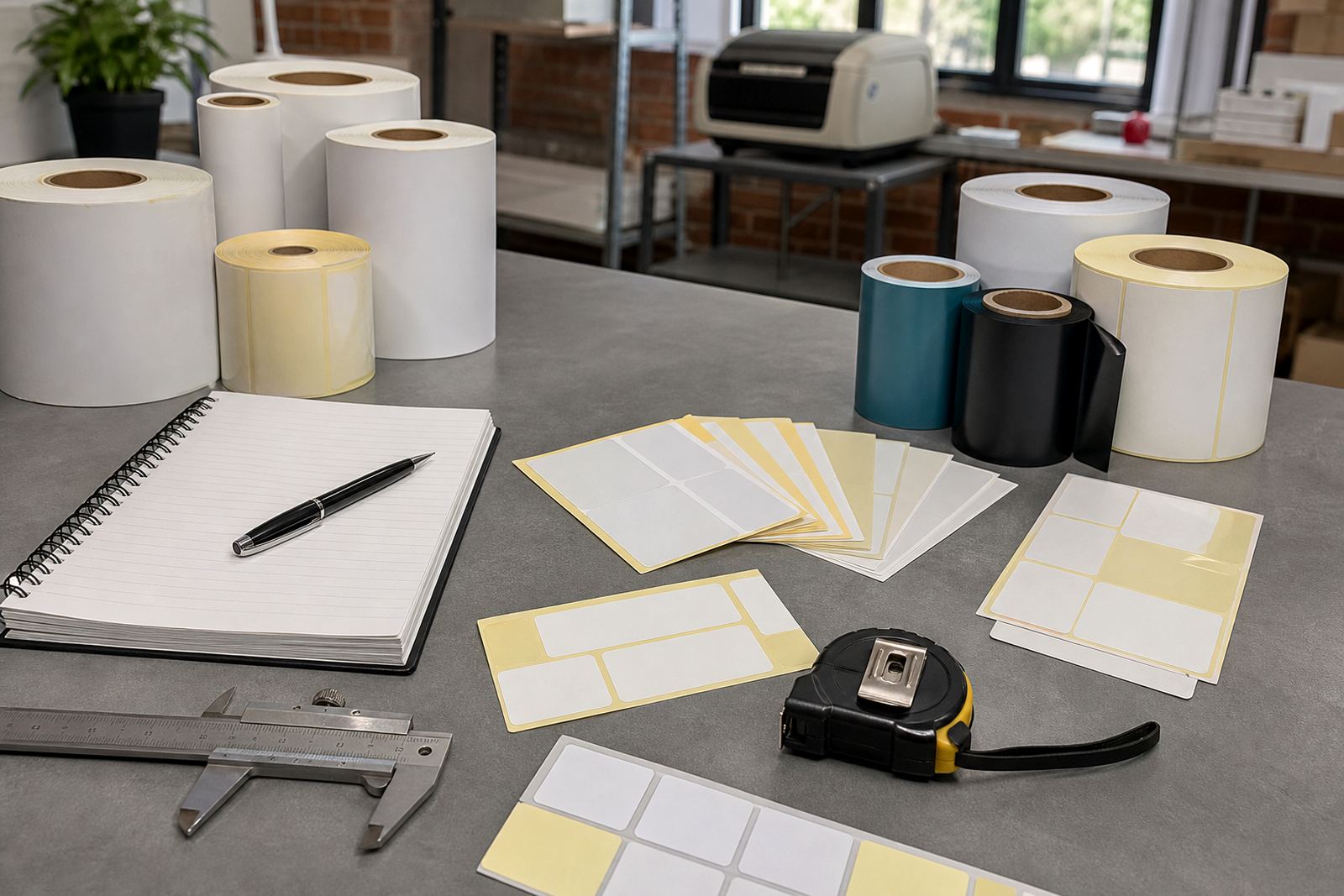
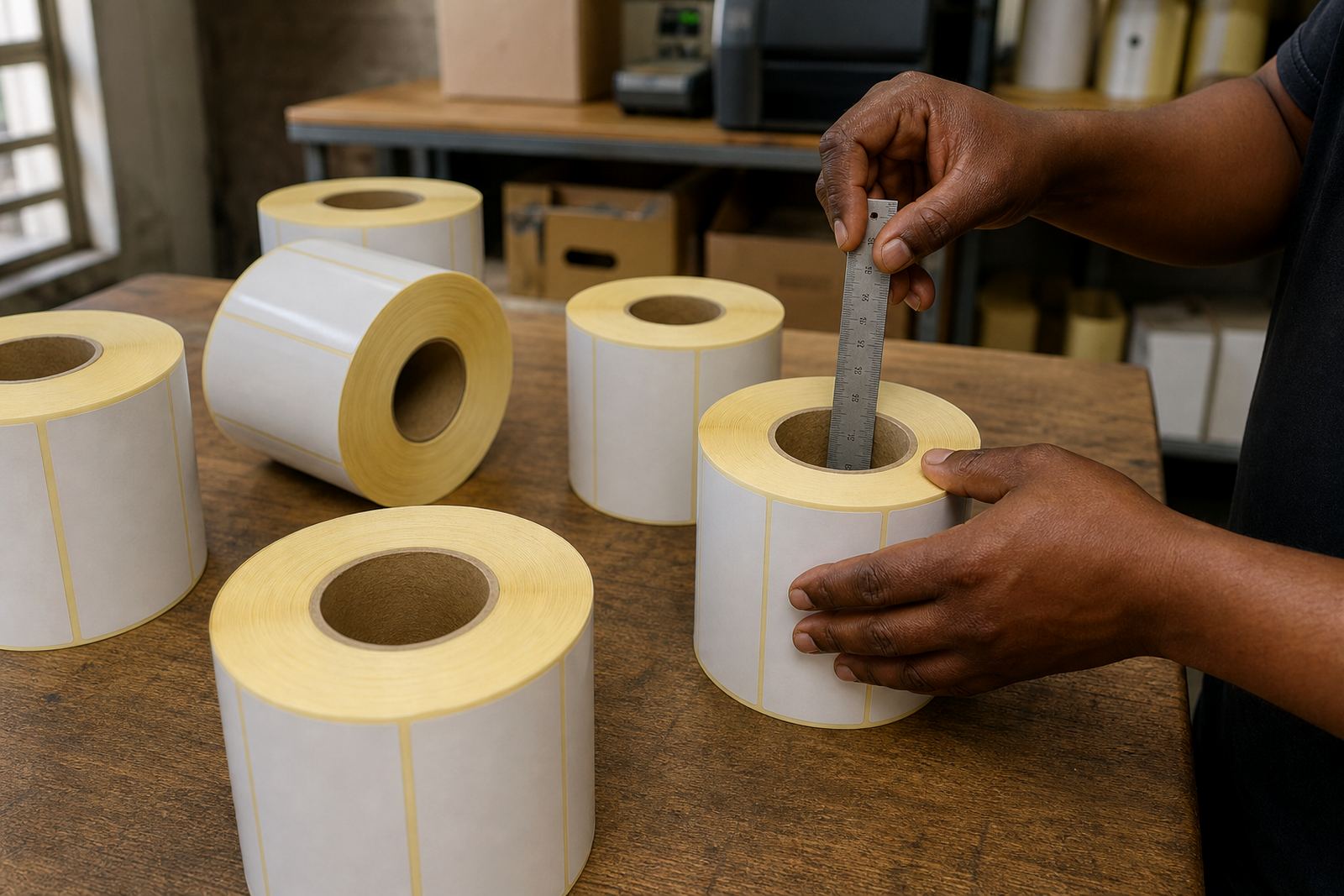
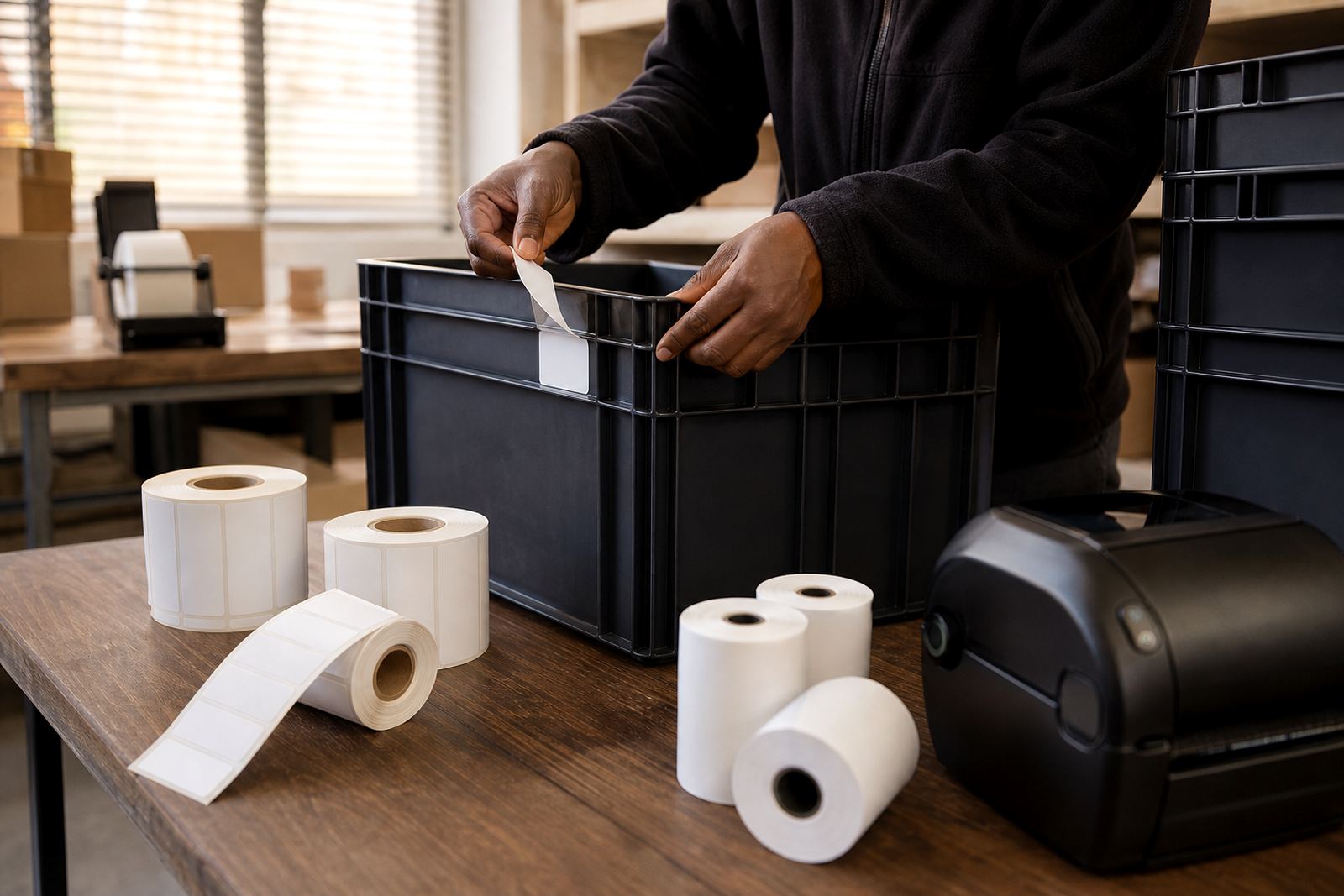
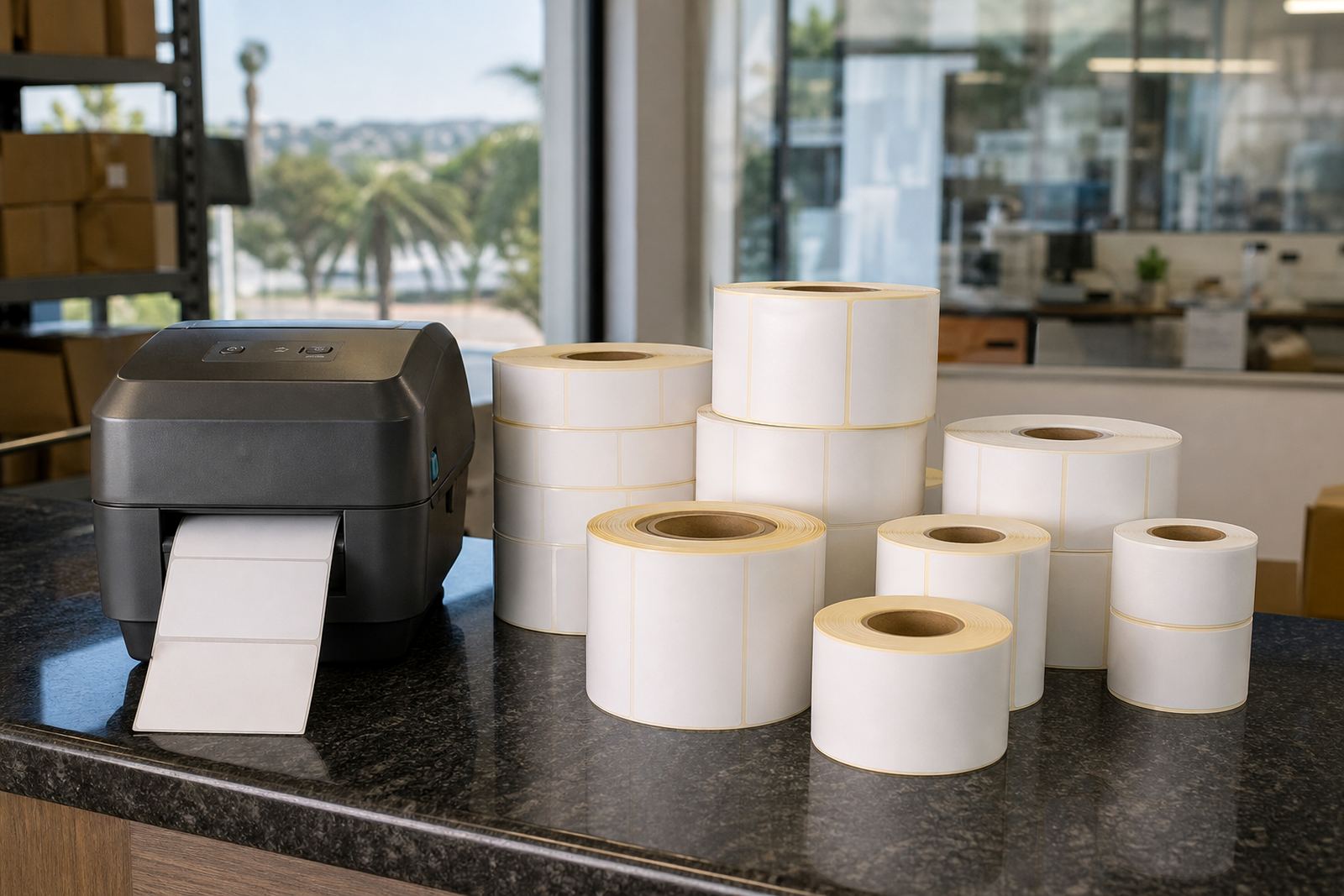
Printer fit checks are worth doing before any order is cut. The roll width, outer diameter and core size must suit the machine, and the winding direction needs to match how the printer feeds the label. Common core sizes are 25 mm, 40 mm and 76 mm, but there are other fits too depending on the unit and the job.

  • Benchtop printers usually need smaller rolls and a smaller core.
  • Industrial units can handle larger diameters and longer roll lengths.
  • Barcode, shipping and packaging printers may need a specific gap, black mark or notch sensing setup.
  • If the label trails the wrong way, the print head and sensors wont line up properly.

We plan roll length and winding direction with the end use in mind, so the label runs cleanly and the changeover is not a mission.

Why some labels hold well and others fail on the line

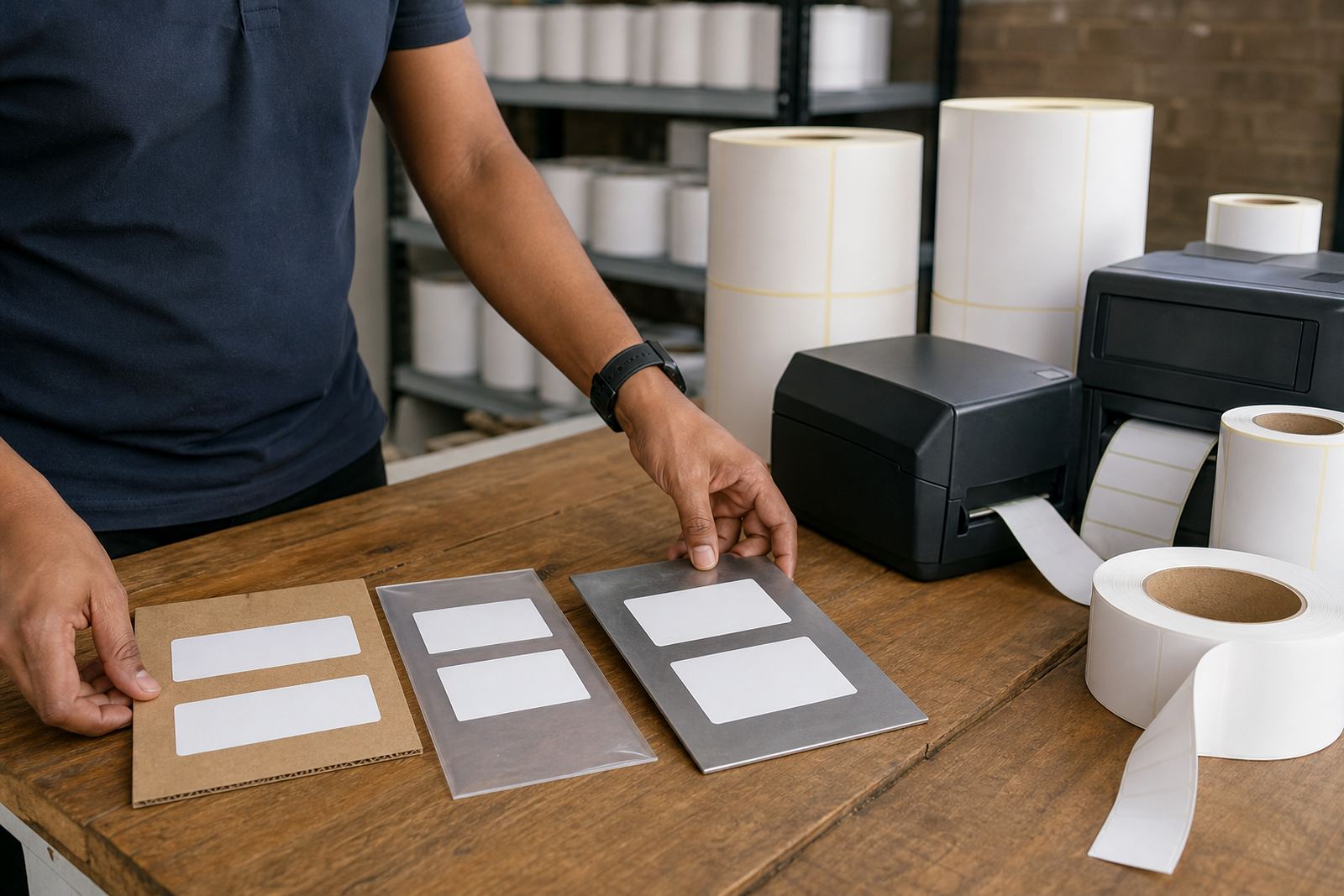
Adhesive matching is one of the most important parts of label planning. A label that must stick to a dusty carton in Westmead is not the same as a label going onto chilled packaging or a smooth plastic bottle. Surface energy, dust, condensation and contact time all affect the bond.

For sealing and retail packs, the face stock and adhesive need to work together. A coated paper face can give a neat print finish, but if the adhesive is too light it may lift at the corners. On the other hand, a very aggressive adhesive can make removal messy. The best option depends on the actual surface and the handling it will see.

How the room handles slitting, rewinding and sample checks

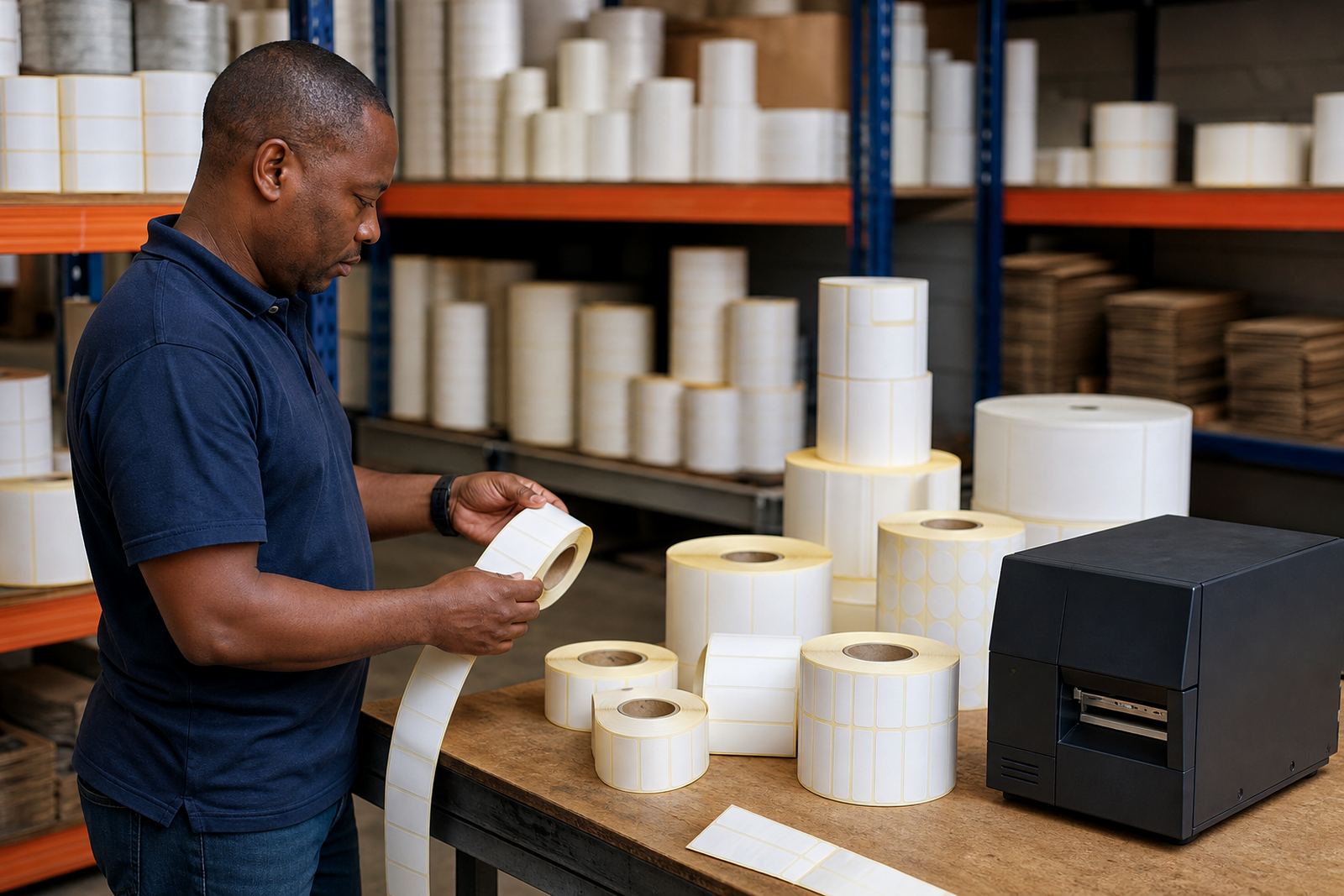
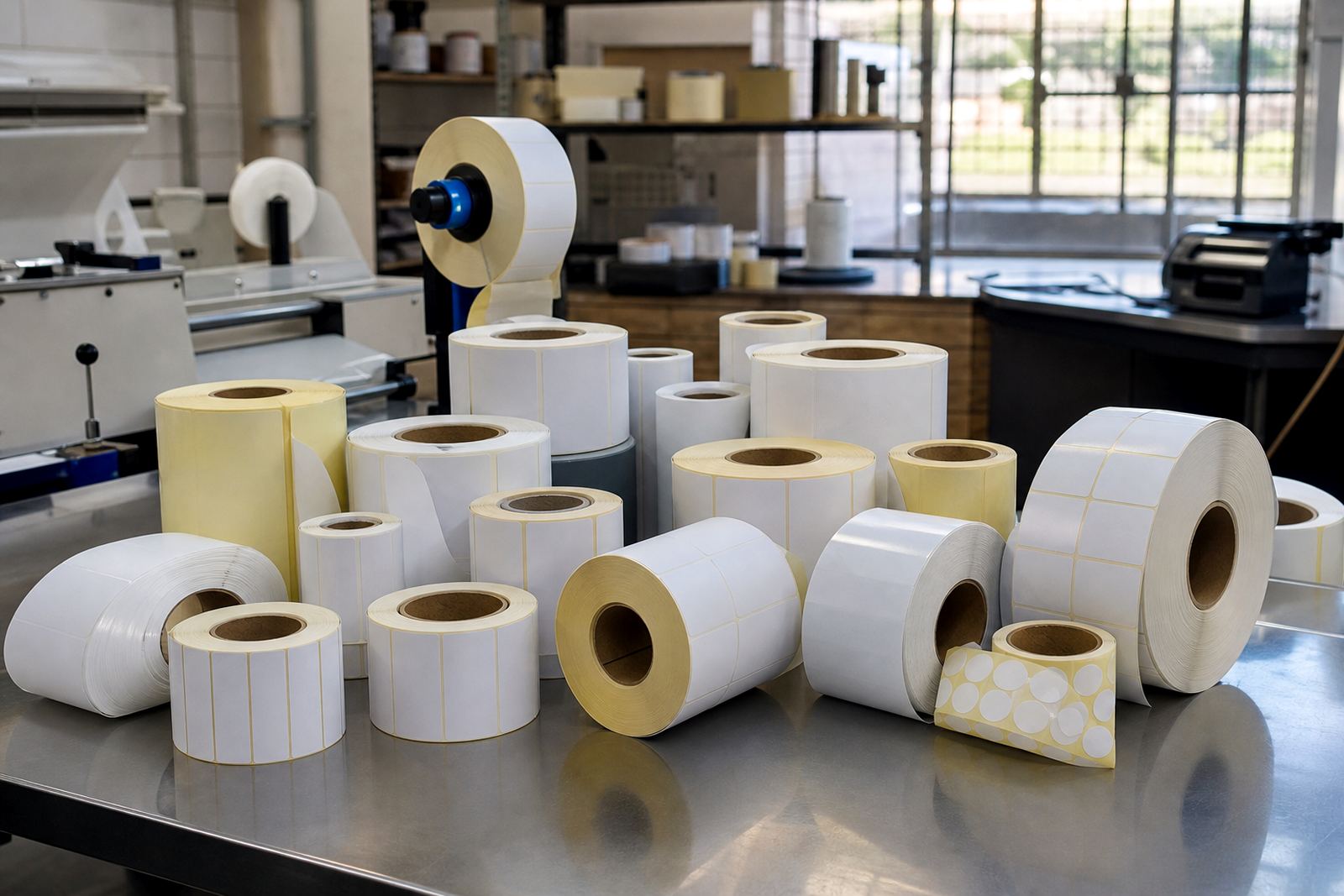
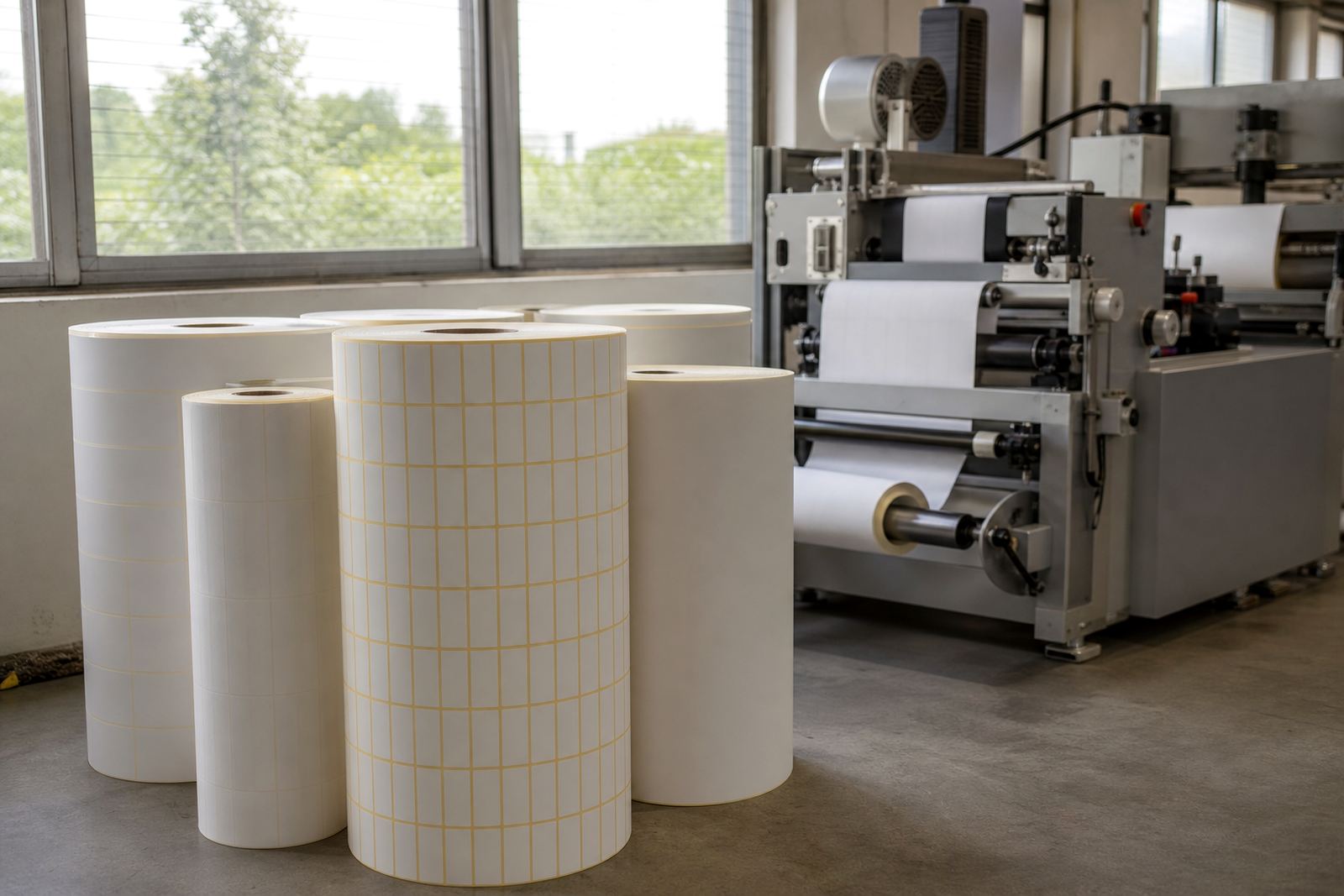
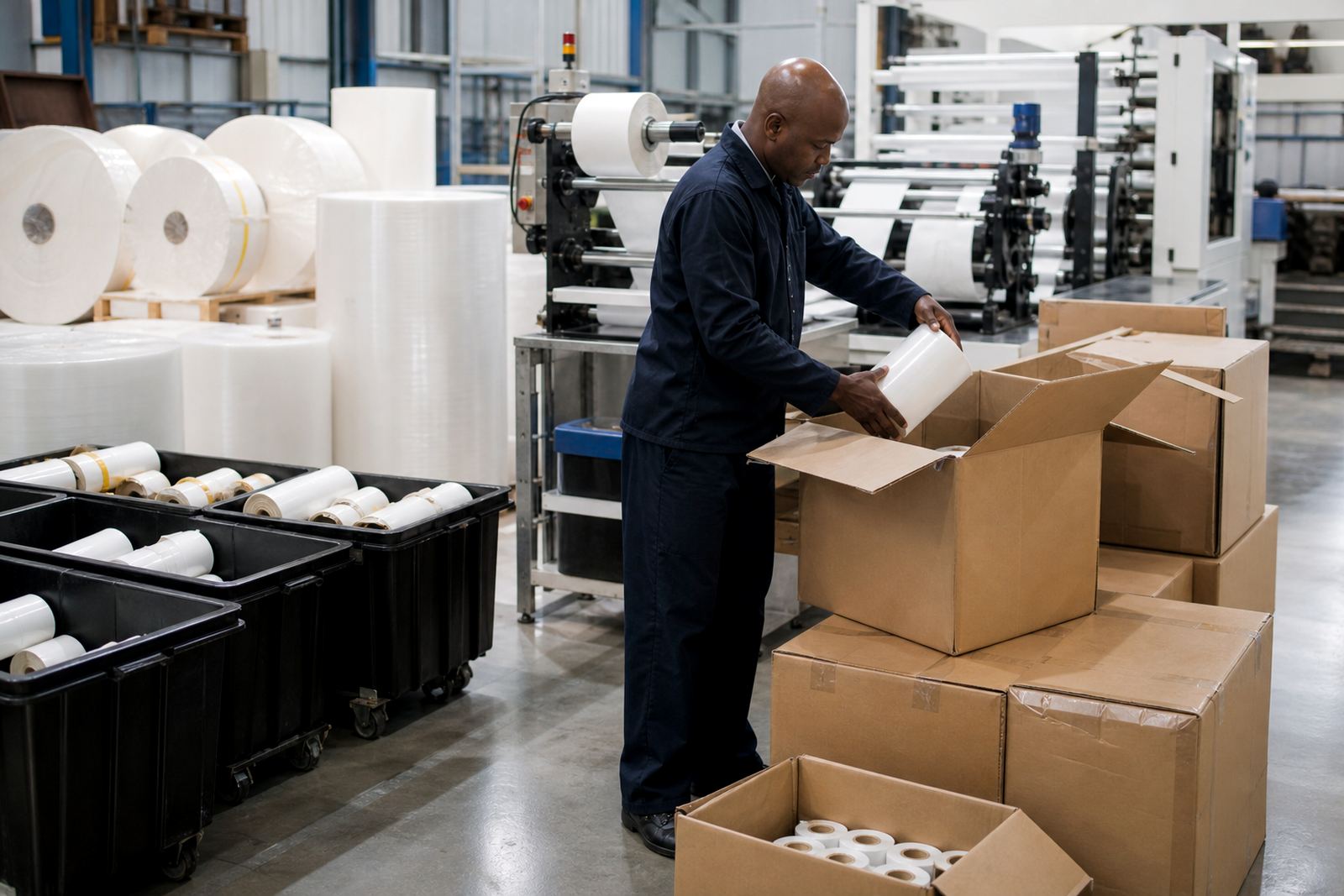
Custom slitting is used when the master roll needs to be cut into narrower widths for different printers or pack sizes. Rewinding helps set the roll in the correct direction and finish, while core sizing makes sure the finished roll fits the holder. These steps matter when one site uses multiple printers across stores, dispatch and production.

Sample rolls are useful before full production starts. They let the team check print clarity, adhesive grab and feed performance on the actual equipment. That small check can save time later, especially when a new label is being introduced or a printer is being swapped out after a break down.

Where the labels go after packing and what that changes

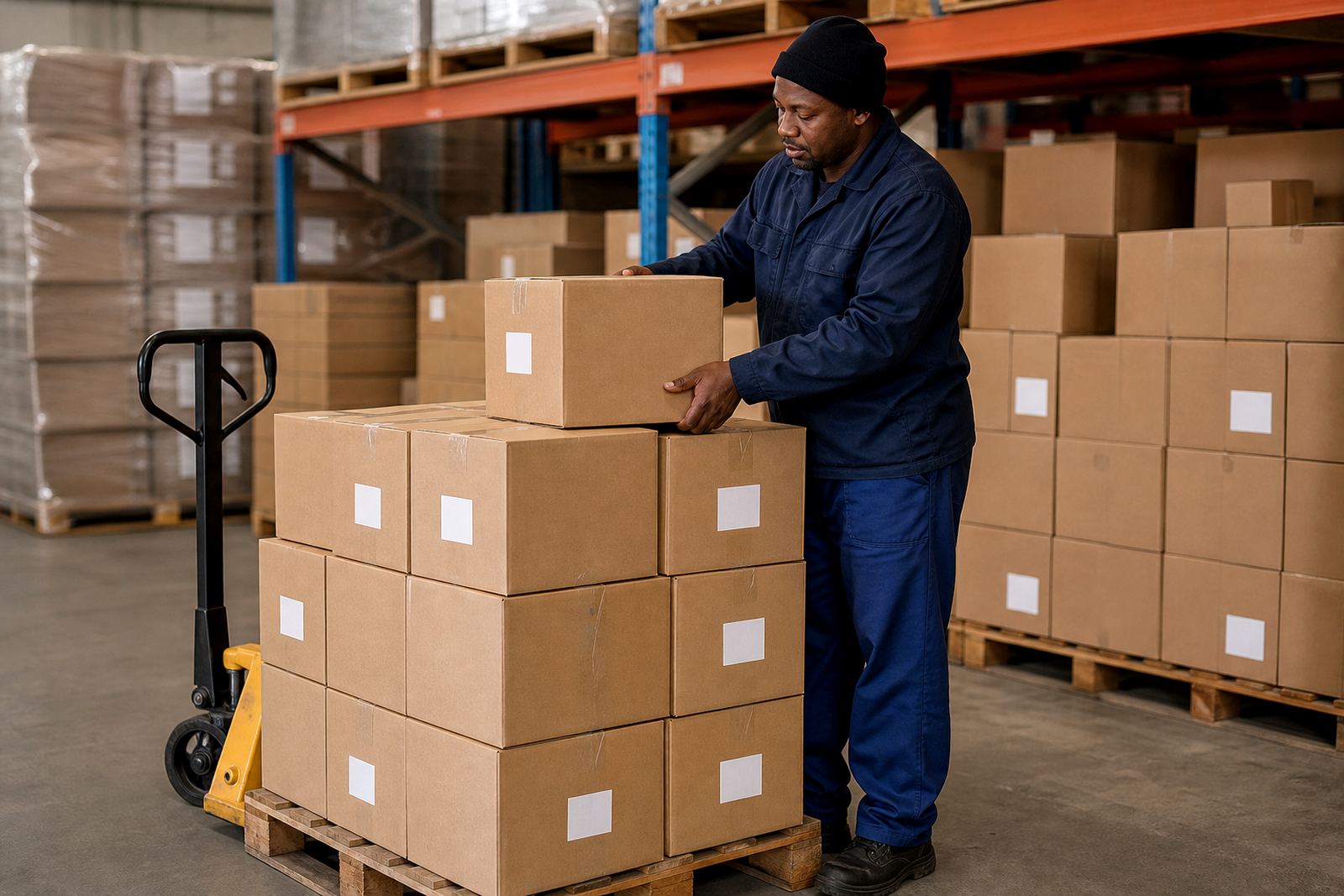
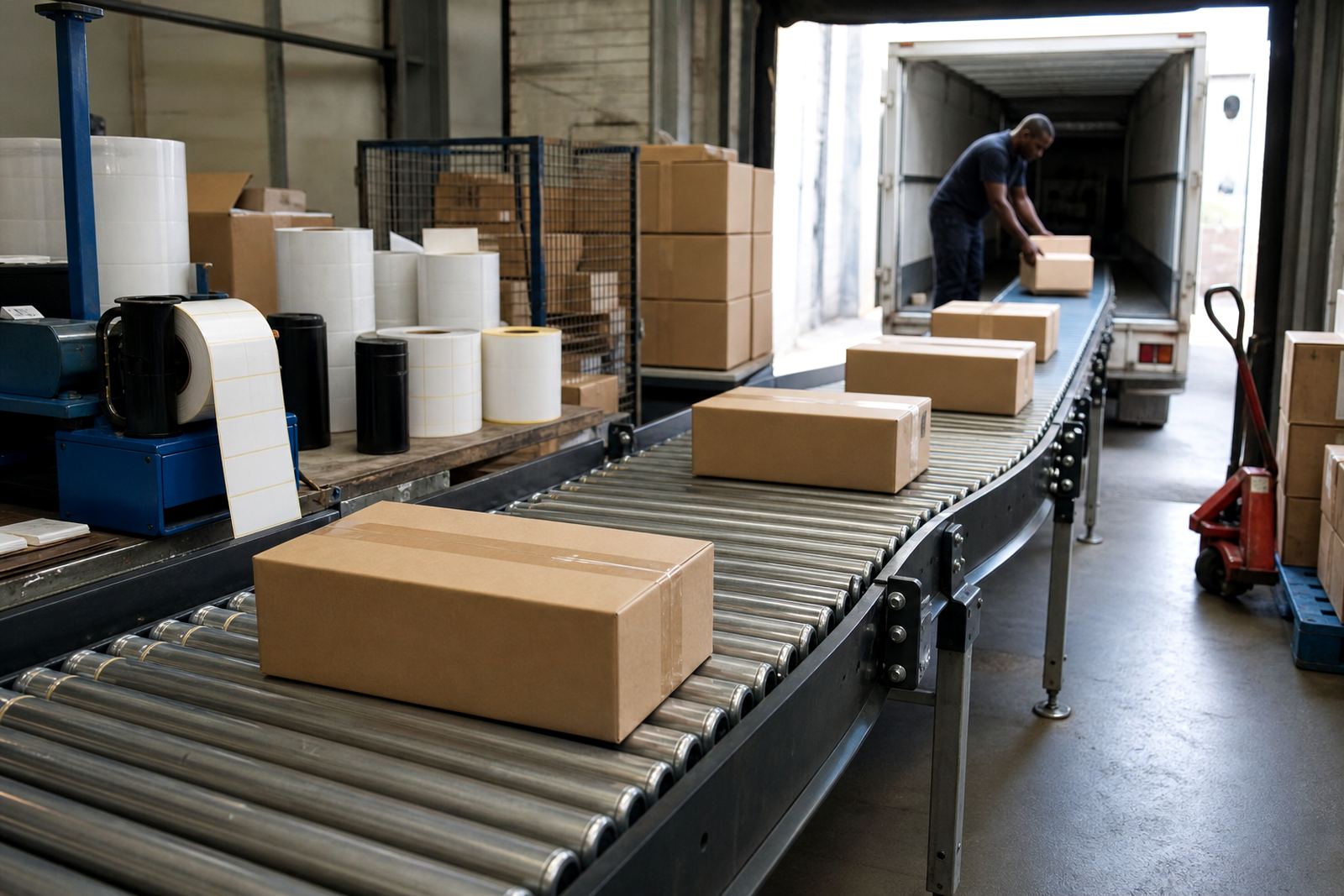
Labels used in logistics need to survive movement, pallet wrap and warehouse handling. Labels used in retail have to present neatly and stay legible on the shelf. Labels for manufacturing may need to cope with coding, batch detail, moisture or temperature swings. Each use puts a different demand on the stock.

  • Packaging lines often need fast release from the liner and steady print quality.
  • Retail labels usually need a cleaner finish and good shelf presentation.
  • Logistics labels benefit from strong print contrast and reliable adhesion on board or film.
  • Manufacturing labels may need a longer life and better resistance to scuffing.

For clients across South Africa, from Pinetown to Pietermaritzburg and on to other major routes, we plan dispatch packing so the rolls arrive tidy and ready for use.

Label stock questions

What is the difference between a face stock and a liner?

The face stock is the top layer that receives the print and carries the label image. The liner is the backing sheet that the label sits on before it is peeled off and applied.

How do I know if my printer needs direct thermal or thermal transfer rolls?

Check whether the printer uses a ribbon. If it does not, it is usually a direct thermal setup. If it does, it is a thermal transfer setup, and the roll and ribbon must be matched to the machine.

Why is core size so important when ordering labels?

The core size must fit the printer spindle or holder. If the core is wrong, the roll may wobble, feed badly or simply not fit into the printer at all.

Need rolls to fit your printer? Send us the core and width.

Contact form