Why the glue line matters before the print does
A self-adhesive label is only as useful as the bond it makes to the pack, carton, drum or pouch.If the adhesive is too aggressive it can misbehave on removal, and if it is too light it may lift at the corners before the parcel even leaves the depot.
Most buyers focus first on the face stock or printer fit, but the adhesive decides whether the label stays put through packing, shelving and transport. In a busy Westmead conversion run, the right adhesive also helps with consistent kiss cutting and cleaner stripping because the label web behaves properly under pressure. That saves time on the line and reduces waste.
- High tack grips quickly on many common surfaces.
- Permanent hold is chosen when removal is not expected.
- Removable grades are used where clean lift matters.
- Some adhesives handle chill, moisture or rough textures better than others.
Tack, hold and peel: the three bits people mix up
Tack is the first grab. It is how fast the label catches the surface when pressed down. Hold is the long-term bond, meaning how well it stays there after hours, days or weeks. Peel refers to how the label comes off if it is meant to be removable. These three traits are related but not the same, which is why two label stocks that look identical can perform very differently in Durban humidity or a chilled Pietermaritzburg store room.
For fast packing lines, a label with enough initial tack is useful because workers do not have to keep pressing each pack over and over. For longer term identification, the hold needs to stay stable through handling, stacking and vibration. On smooth plastics, a lighter adhesive may be fine. On recycled cartons or slightly dusty surfaces, you usually need more bite.
- Fast tack helps on moving lines and hand-apply jobs.
- High hold helps on shipping cartons and asset labels.
- Controlled peel helps on promotional or temporary labels.
- Surface texture changes the result more than many people expect.
Matching adhesive to the surface in front of you
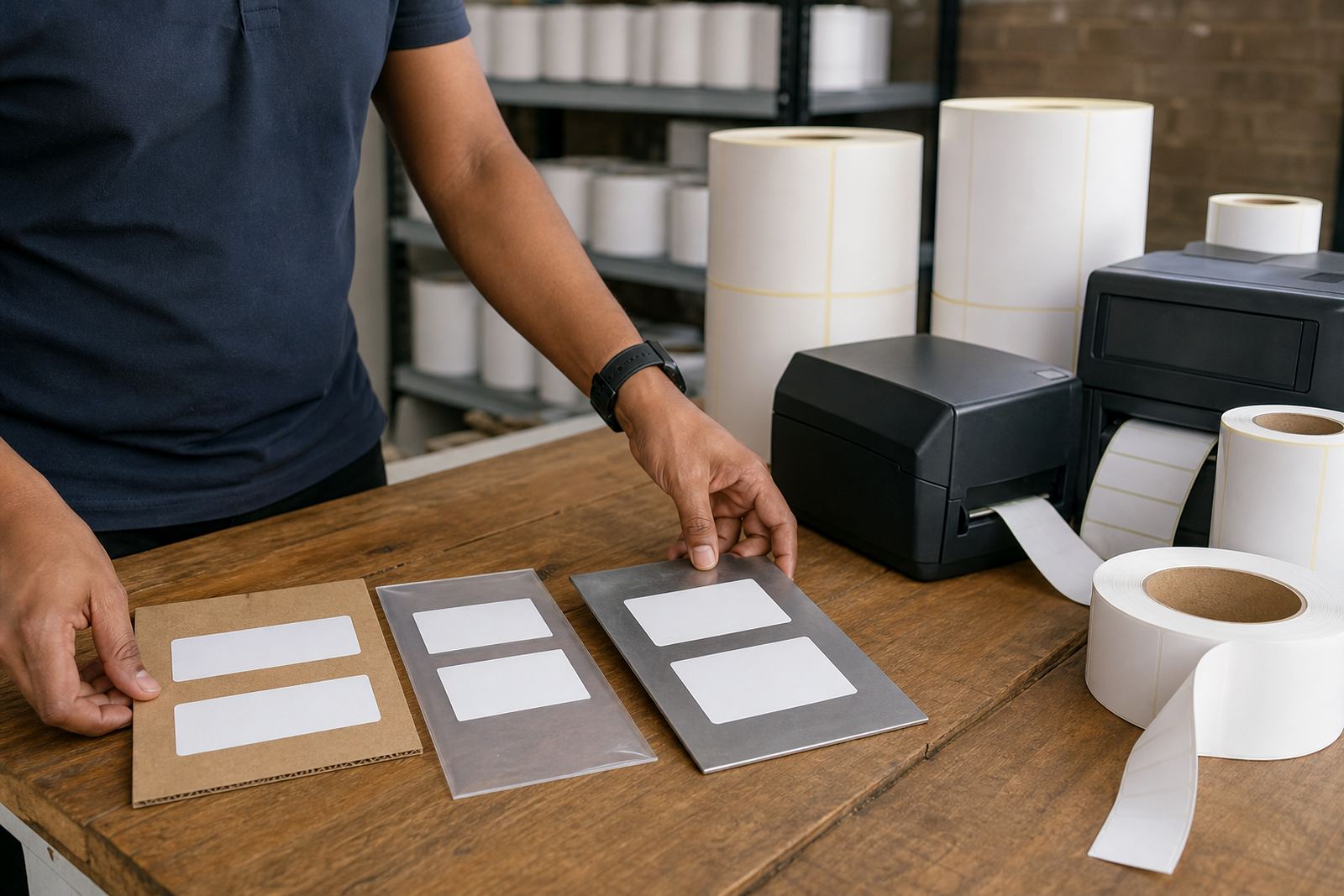
There is no single adhesive that suits every pack. That is why adhesive matching is part of sensible label planning, not an afterthought. Paper cartons, glossy plastics, glass jars, powder-coated metal, frozen packs and rough sacks all behave differently. A label that holds nicely on a smooth jar may lift on a fibrous carton edge or wrinkle on a curved tube.
For packaging in South Africa, the surface often decides the spec before the printer does. If you are labelling chilled goods, moisture resistance matters. If the pack sits in a sunny dispatch yard, heat stability matters. If you are coding items for warehousing, you may need something that stays flat under barcodes and scanner use. One small surface change can make a big difference, and it is worth testing before a full roll-out.
- Paperboard: usually needs balanced tack and good wet-out.
- Plastic tubs and pouches: often need stronger initial grab.
- Glass and metal: can suit a cleaner, more controlled bond.
- Cold or damp environments: need adhesives suited to low temperatures or moisture.
Face stock and adhesive have to work as a pair
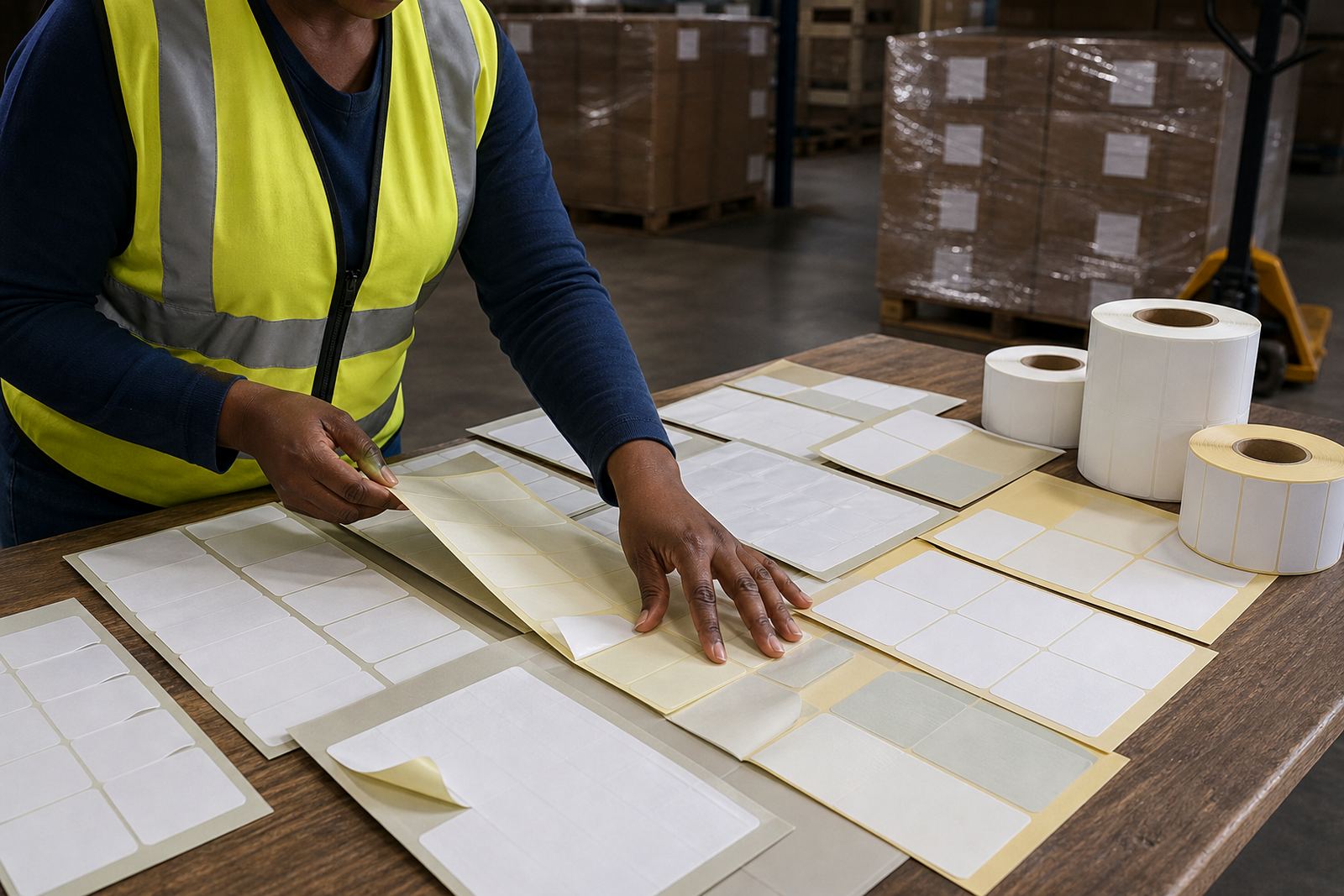
The face stock is the top layer you print on, and it changes how the adhesive performs in use. A textured paper face stock may move a little differently on the liner than a smooth synthetic face stock. If the face stock is stiff, thin or highly glossy, it can affect how well the label conforms around corners and bottle curves. In other words, adhesive choice is never only about glue, it is about the full label build.
For retail and logistics, the right pairing helps the label stay readable and neat. A good bond on a poor face stock still leaves you with lifting corners or wrinkled print. A solid face stock with the wrong adhesive can look fine off the printer but fail once the cartons are stacked. That is why sample rolls and usage review are useful before committing to a longer production run.
- Paper face stocks suit many everyday carton and packaging jobs.
- Synthetic face stocks can suit tougher handling and moisture exposure.
- Clear or glossy finishes can change how the adhesive wets out.
- Testing the pair together is better than choosing each part separately.
Cold rooms, coastal air and the places labels give trouble
South African conditions vary widely. A label that performs well in dry inland Johannesburg can behave differently in coastal Cape Town or Durban where humidity is higher. In cold rooms, the adhesive has to bond to a chilled surface, sometimes with condensation forming as cartons move in and out. In hot dispatch areas, the bond must not soften or creep.
Westmead suppliers see these issues often because stock moves through retail, logistics and manufacturing all at once. One client might need labels for frozen stock, another for shelf-ready goods and another for drum identification in a factory yard. The adhesive grade has to suit the real site conditions, not just the sample sheet on a clean table. If you plan for the worst surface and the worst weather, you usually avoid the most expensive mistakes.
- Humidity can weaken poor bonds and lift corners.
- Condensation can stop an adhesive from gripping properly.
- Heat can cause certain adhesives to soften or shift.
- Dust and carton fibre can reduce contact area at the edge.
How Label Paper approaches adhesive matching in practice
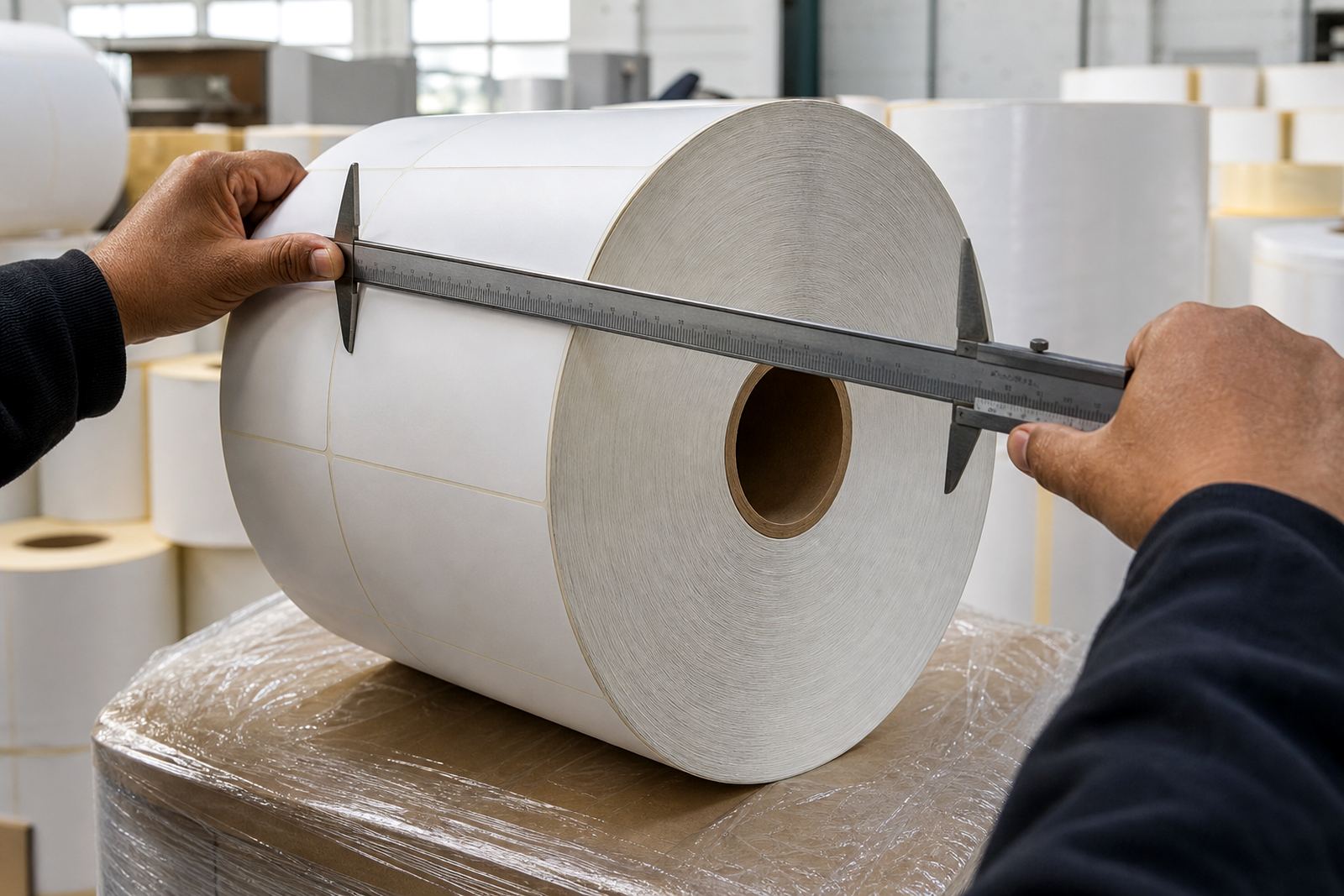
When a business asks for label stock, the practical questions matter most. What is the surface? Is the label temporary or permanent? Will it travel through a thermal printer or a transfer printer? Does it need a clean release from the liner, and what core size fits the machine? Those details shape the recommendation more than any general rule ever could.
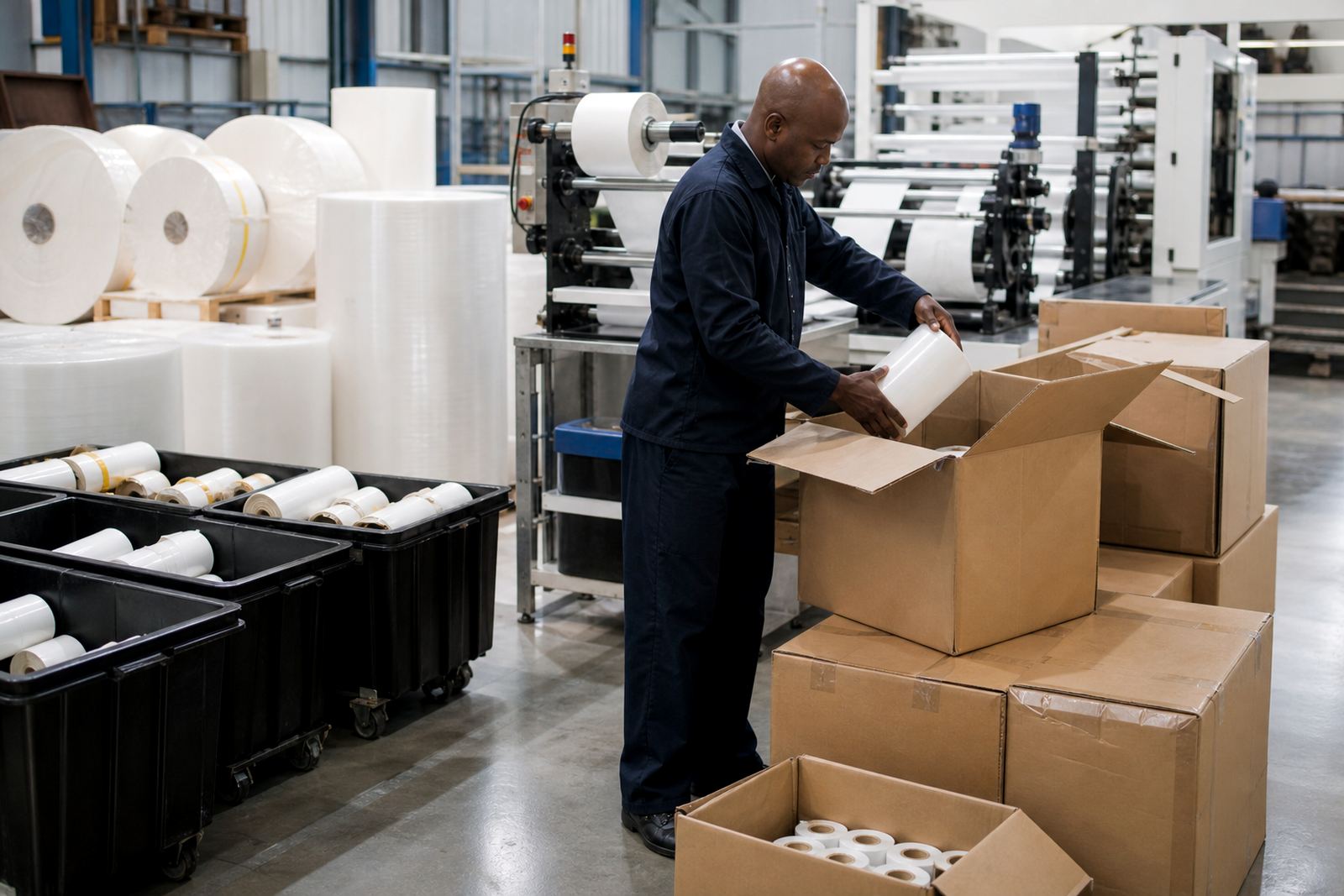
From Westmead, Pinetown we supply self-adhesive label stock and thermal rolls across Durban, Johannesburg, Cape Town, Pretoria and Pietermaritzburg. That means the product has to suit mixed conditions and different print setups. We also handle custom slitting, rewinding, core sizing, roll length planning, winding direction, printer fit checks and repeat order planning so the label roll arrives ready for the work on hand.
- Sample rolls help check grip, print quality and stripping.
- Printer fit checks reduce downtime on handover.
- Roll length planning helps match label usage to the actual run.
- Usage review helps spot where adhesive grade should be changed.
A local example from the packing floor
Think of a Pietermaritzburg food packer sending mixed cartons to retail and wholesale buyers. The cartons may be slightly dusty from storage and the labels need to stay put after packing, transport and shelf handling. A light adhesive could look fine on day one then fail at the edges after the first cold change. A stronger grade with the right face stock gives a better result, and the label stays legible for barcodes, product details and dispatch notes.
That kind of job is why adhesive basics matter. It is not about picking the strongest glue every time, but matching the bond to the real use. When the surface, temperature and handling are understood, label performance becomes much more predictable and the team spends less time reworking stock or chasing returns. That is good for the pack line and good for the customer.
For enquiries, clients use the contact form on our contact page. From there we can help with adhesive matching, sample rolls and the right roll build for the printer in use.