Start with the surface, not the label
Good asset labelling begins with the thing you are sticking onto. A painted steel rack, a powder-coated trolley, a plastic crate and a laminated cabinet all behave differently. If the surface is dusty, oily, cold or slightly curved, the wrong adhesive can lift at the edges long before the label has finished its job.
For shelves and bins in a warehouse, a standard permanent adhesive often works well when the surface is clean and dry. For equipment that is moved often, or surfaces that see temperature change, it is worth checking whether a stronger tack or a different liner release is needed. Coastal humidity in Durban can affect the way labels grip overnight, while a cold room in Gauteng can slow down bond formation.
Think about the label as part of the asset, not an afterthought. If the surface is textured or uneven, a wider label may sit flatter and last longer than a narrow strip. If the item is cleaned with chemicals, the face stock should match that reality.
Face stock choices that make codes stay readable
The face stock is the top layer that takes print. For asset use, the main choice is usually between paper and synthetic options. Paper face stock is suitable for dry indoor areas, file shelves, carton identification and short life labels. Synthetic face stock is tougher, better for moisture, handling and repeated contact.
Thermal printing also changes the way you choose the face stock. Direct thermal rolls work without a ribbon, so they are handy for short term labelling, dispatch and stock rotation. Thermal transfer rolls use a ribbon and are better where the print must last through abrasion, sunlight or cleaning. If you are labelling equipment in a workshop, a transfer printed synthetic label will usually outlast a direct thermal paper label.
Use the label face to match the job, not the other way round. A shelf marker in a storeroom may only need a plain paper face, while a unit on a production floor may need a face stock that shrugs off dust, grease and hand contact.
- Paper face stock: good for dry indoor shelves, cartons and general filing
- Synthetic face stock: better for moisture, abrasion and longer service life
- Top-coated thermal materials: improved print clarity for barcode and batch work
- Matt finishes: easier to scan and read under bright warehouse lights
Adhesives are the part people notice only when they fail
Most labelling problems start with adhesive choice. Permanent adhesive is the common option for asset labels that should stay put. Removable adhesive is useful for trial stock, temporary shelf changes or equipment that moves between departments. High tack adhesive helps on rough, low energy or slightly dusty surfaces, but it must still be checked against the material underneath.
There is no one adhesive for every task. A label on a powder-coated cabinet in Pietermaritzburg may need a different grip from one on a plastic container in a Cape Town dispatch area. If the surface gets wiped often, ask whether the adhesive can tolerate that cleaning schedule without creeping or lifting. If the item lives near heat, avoid assuming that all permanent adhesives behave the same way.
A small sample run saves trouble later. One of the most practical habits is to test a few labels on the actual surface and leave them for a day or two before approving the full batch.
- Permanent adhesive: best for fixed shelves, tools and equipment tags
- Removable adhesive: useful for temporary identification and stock trials
- High tack adhesive: for rough, dusty or difficult surfaces
- Special matching: useful where cleaning, cold or coastal moisture is part of the job
Core size, roll length and printer fit are not small details
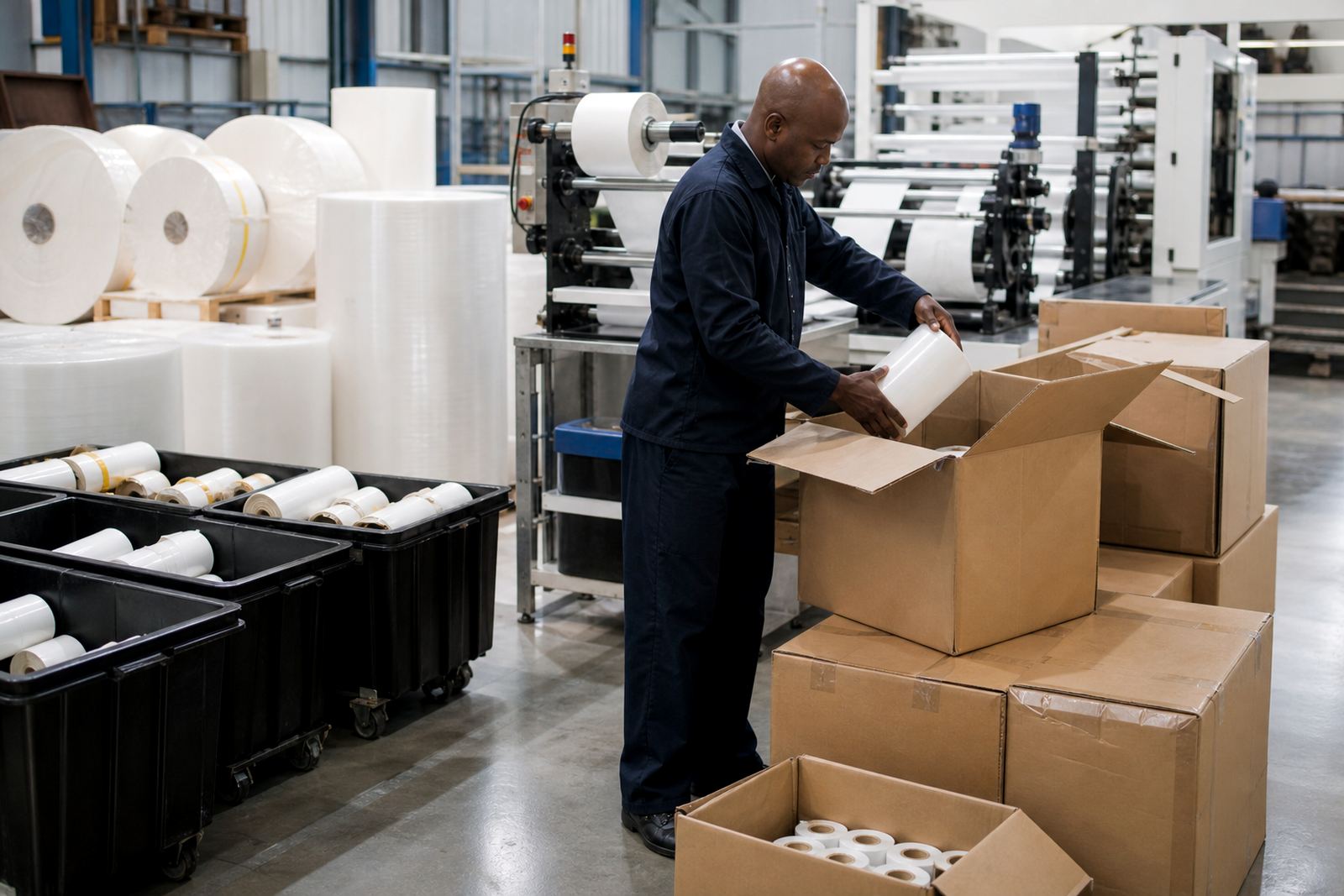
Even a good label can become a headache if the roll does not fit the printer. Core size matters because the printer spindle, feed path and roll holder are made for specific dimensions. Common core sizes are used across benchtop and industrial printers, but the wrong core means poor feeding, missed print, or repeated stoppages.
Roll length also matters. A short roll may suit sample use or a small office, while a longer roll reduces changeovers in a busy packing line.Winding direction is another detail that affects how the printer reads and feeds the roll.
Printer fit checks should cover more than just size. Label width, gap sensing, core diameter, unwind direction and intended print method all need to line up. A roll may look correct in the box but still create waste if the printer is not matched properly.
- Check core size before ordering
- Match roll length to daily label volume
- Confirm unwind direction and roll orientation
- Make sure the printer can handle the label width and sensor type
What asset labels do in a working site
Asset labels help people move faster and make fewer mistakes. On shelves, they support bin location and stock control. On containers, they help with contents, batch separation and department sorting. On equipment, they support maintenance records, inspection schedules and internal tracking.
In a warehouse in Westmead, for example, a label on a rack beam may need to stay visible through daily picking, forklift movement and dust. In a manufacturing area, a label on a machine guard or control box might need to hold a serial number, service date or inspection code. The same job can require different materials depending on the surface, the heat and the amount of handling.
Clear labels also make it easier to work across branches. A team in Johannesburg can read the same numbering system as a team in Durban if the label size, contrast and layout are planned properly from the start. That is where roll planning and sample rolls help, because the first test shows whether the layout actually works in real conditions.
A practical check before you print in bulk
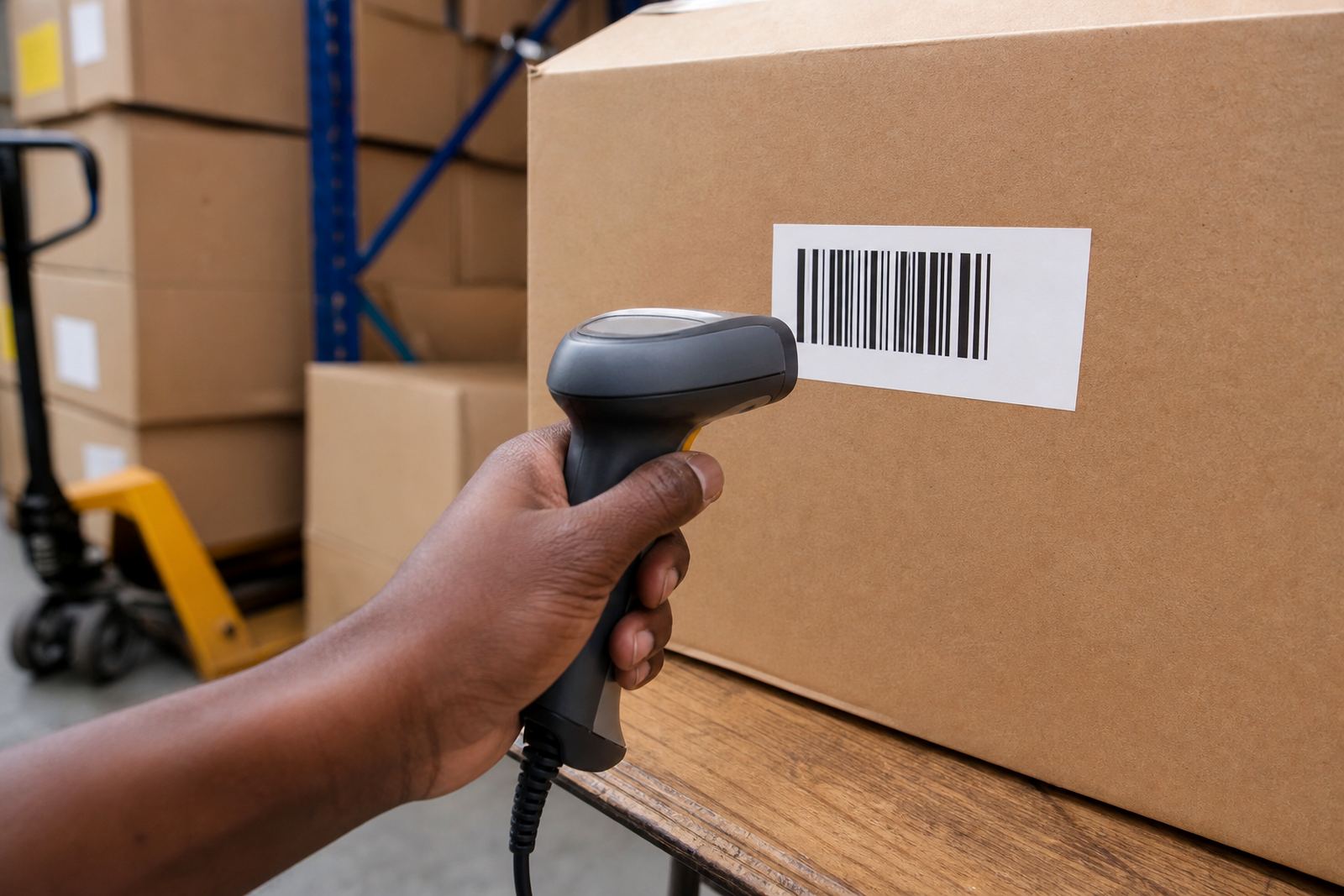
Before a full print run, it helps to confirm three things: the asset surface, the print method and the life of the label. Short term labels for dispatch do not need the same construction as labels for equipment that stays in service for years. If the label will be scanned, make sure the barcode has enough contrast and quiet space around it. If it will be read by eye, keep the text plain and the layout uncluttered.
Many businesses also forget to plan for reordering. Once a label format has been approved, keep the face stock, adhesive, core size and winding direction on record. That makes repeat order planning easier and reduces surprises when the next run is needed in a hurry.
For South African sites juggling retail, logistics and manufacturing work, good asset labelling is mostly about matching the material to the task. The right label is the one that stays legible, feeds properly and does not give trouble when the day is already busy.