Why a parcel label has to survive the whole trip
A logistics label may look small, but it has to carry a lot of work. It must print cleanly, stay bonded through handling, and remain readable after sorting, loading and delivery. If a barcode smears or lifts at the corner, a parcel can slow down a whole route and create avoidable rework.
For depots in Westmead, Pinetown and Durban, the challenge often starts with heat, humidity and dust. In Johannesburg the bigger issue is fast throughput, where labels need to feed consistently from the roll and match the printer setting without faffing around. Good logistics labels are selected for the surface they go on, the print method, and the time they must stay legible.
Face stock, adhesive and liner are not small details
Self-adhesive label stock is built from three parts. The face stock is the printable layer, the adhesive holds the label in place, and the liner carries the material through the printer before release. In logistics, each part affects how the label behaves on cartons, poly mailers, crates and shrink wrapped items.
Common face stocks include matte paper for general parcel marking, thermal face stock for direct print use, and synthetic options when labels need extra resistance to moisture or rubbing. Adhesives are usually chosen by surface and conditions. Some stick well to clean cardboard, while others are better for cold rooms, slightly rough cartons or surfaces with light dust. A liner that releases cleanly also matters, because poor release can cause missed labels and waste.
- Paper face stock suits short to medium life parcel labels and carton identification.
- Synthetic face stock handles moisture, scuffing and longer handling better.
- Permanent adhesive works well on most shipping cartons once the surface is clean and dry.
- More aggressive adhesives are useful where boxes travel through chilled storage or rough handling.
Direct thermal or thermal transfer, which fits the load
Direct thermal rolls print without a ribbon. They are useful for shipping labels, internal routing labels and short-life dispatch work. The print is clear and fast, but the image can fade if exposed to heat, sunlight or heavy rubbing. That makes direct thermal a practical choice for fast-moving parcel flows where labels are used within a shorter window.
Thermal transfer rolls use a ribbon to print onto the label face stock. This gives a tougher image and is better where barcodes must stay readable for longer, or where the label will face more handling. Many warehouses choose thermal transfer for stock identification, pallet labels and items stored for longer periods. The right choice depends on how long the label must last, not just on printer speed.
- Direct thermal suits dispatch labels, courier labels and short-term location labels.
- Thermal transfer suits pallet IDs, warehouse locations and longer-life product identification.
- Printer compatibility must match roll width, core size and winding direction.
- For some printers, the wrong gap, black mark or roll orientation can cause feeding issues.
Roll size decisions that save time on the floor
Logistics teams often focus on label count, but roll length and core size can affect daily flow just as much. Larger rolls mean fewer changeovers, which helps when orders are coming through in bursts. Smaller rolls can be useful on compact printers or where a work area has limited space. The right fit depends on the printer, the label size and how often the team can stop to reload.
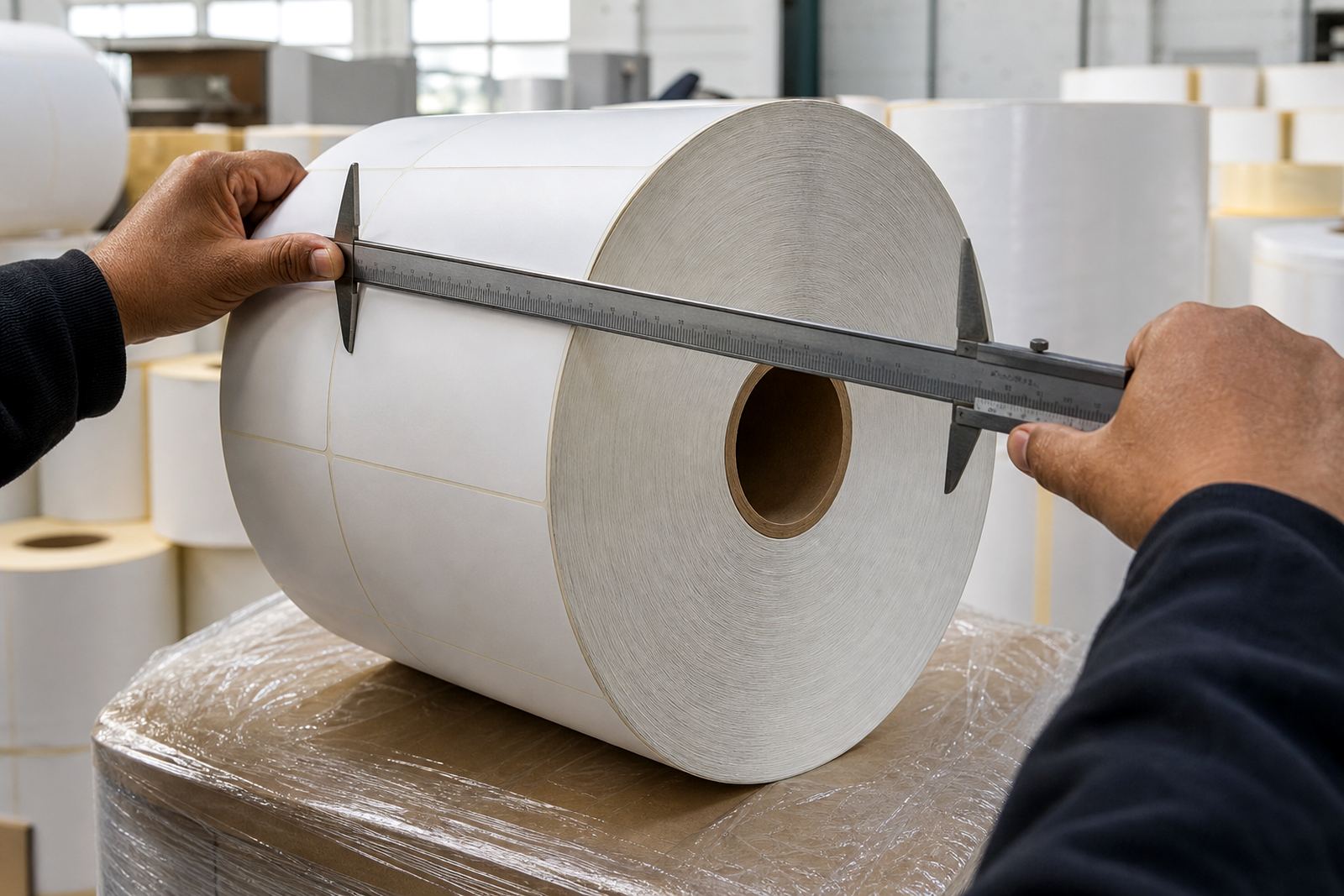
Core sizing is especially important. Benchtop and industrial printers do not all take the same core diameter, and forcing the wrong roll into place can create feed tension or tracking problems. Winding direction also matters because the label must peel and feed in the direction the printer expects. A neat fit reduces waste and keeps production moving, which is vital in busy Gauteng and coastal dispatch operations alike.
When scan speed matters more than a pretty finish
In logistics, the best label is usually the one that scans first time. That means the print contrast must be strong enough for scanners, the label surface must accept clean print, and the adhesive must hold flat without lifting into the barcode area. If the barcode wrinkles, the scanner may pick it up late or not at all.
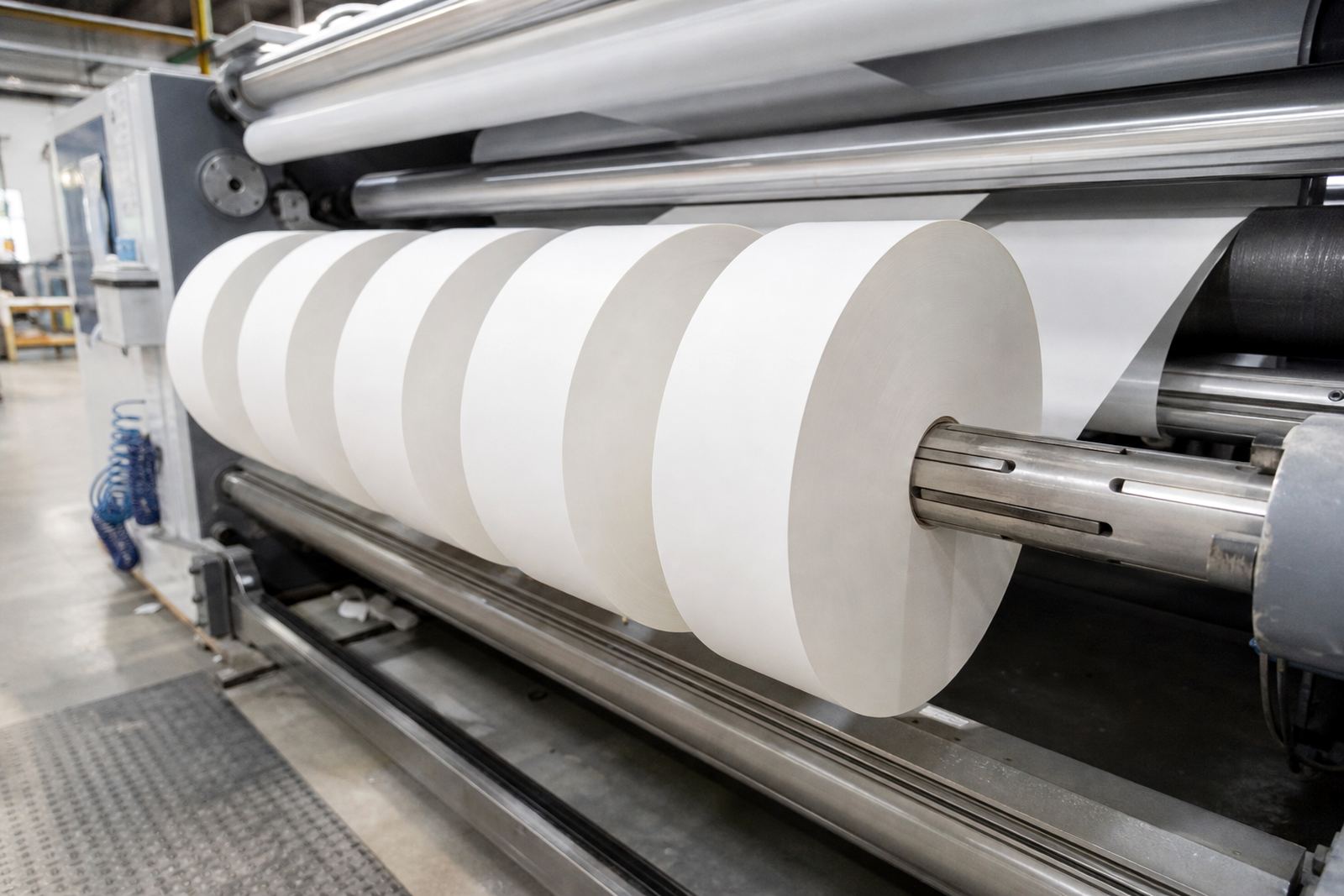
Speed matters too. Teams handling high-volume order fulfilment need labels that dispense cleanly from the roll and separate without tearing at the edge. This is where roll length planning and slit widths help. A label roll that is cut to suit the application can improve speed on the packing line and reduce operator frustration, especially during peak dispatch periods.
- Use a label size that leaves enough quiet space around the barcode.
- Match the adhesive to the box surface and the storage environment.
- Choose a roll length that suits your shift pattern and printer capacity.
- Keep a sample roll for printer fit checks before ordering larger volumes.
A Westmead example from dispatch to depot
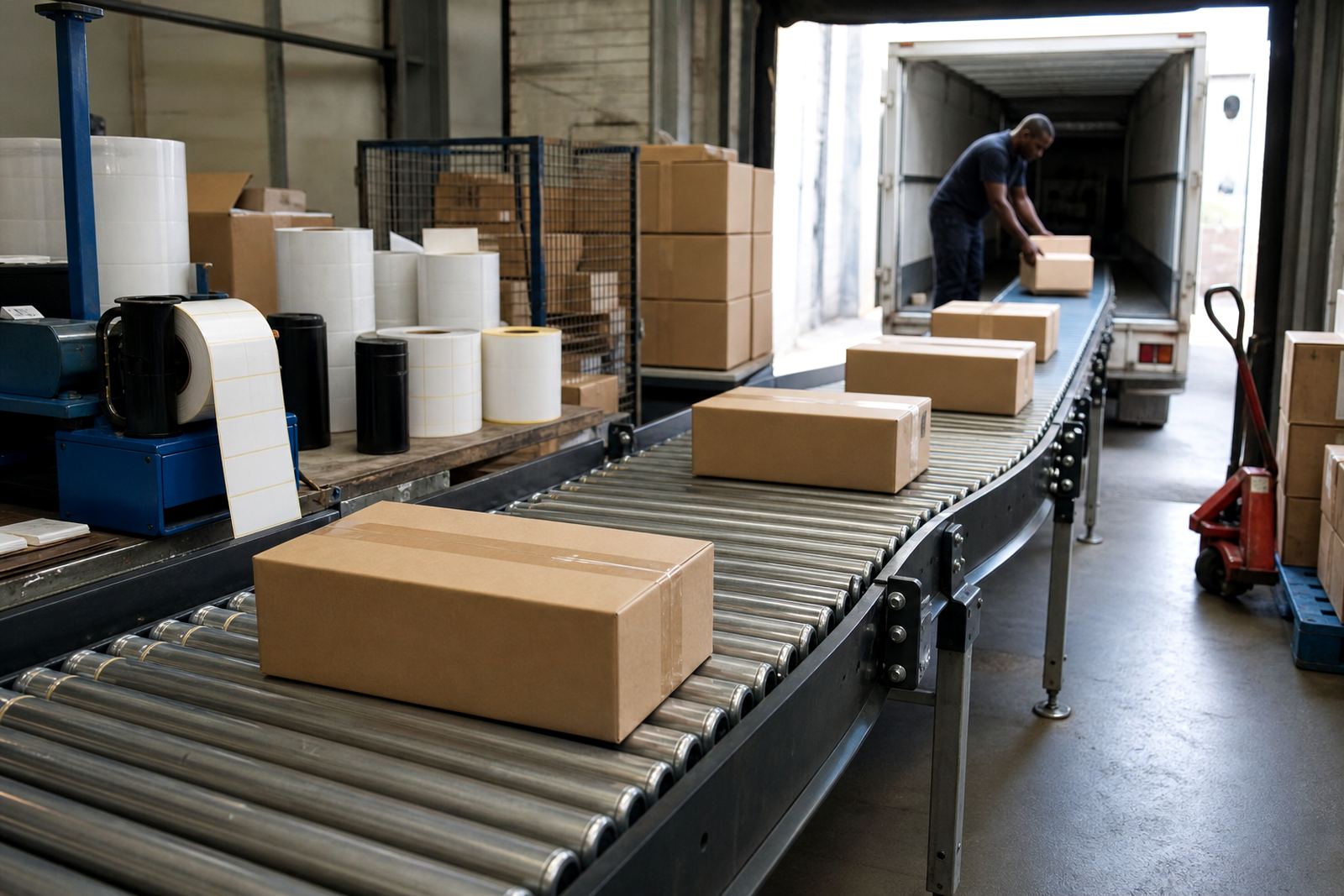
A Pinetown distribution team sending cartons to Durban, Johannesburg and Cape Town may use different label types across the same day. A parcel moving by road for next-day delivery can use a standard paper face stock with a strong permanent adhesive. A pallet heading into longer storage may need thermal transfer printing on a more durable face stock so the code stays legible after stacking and handling.
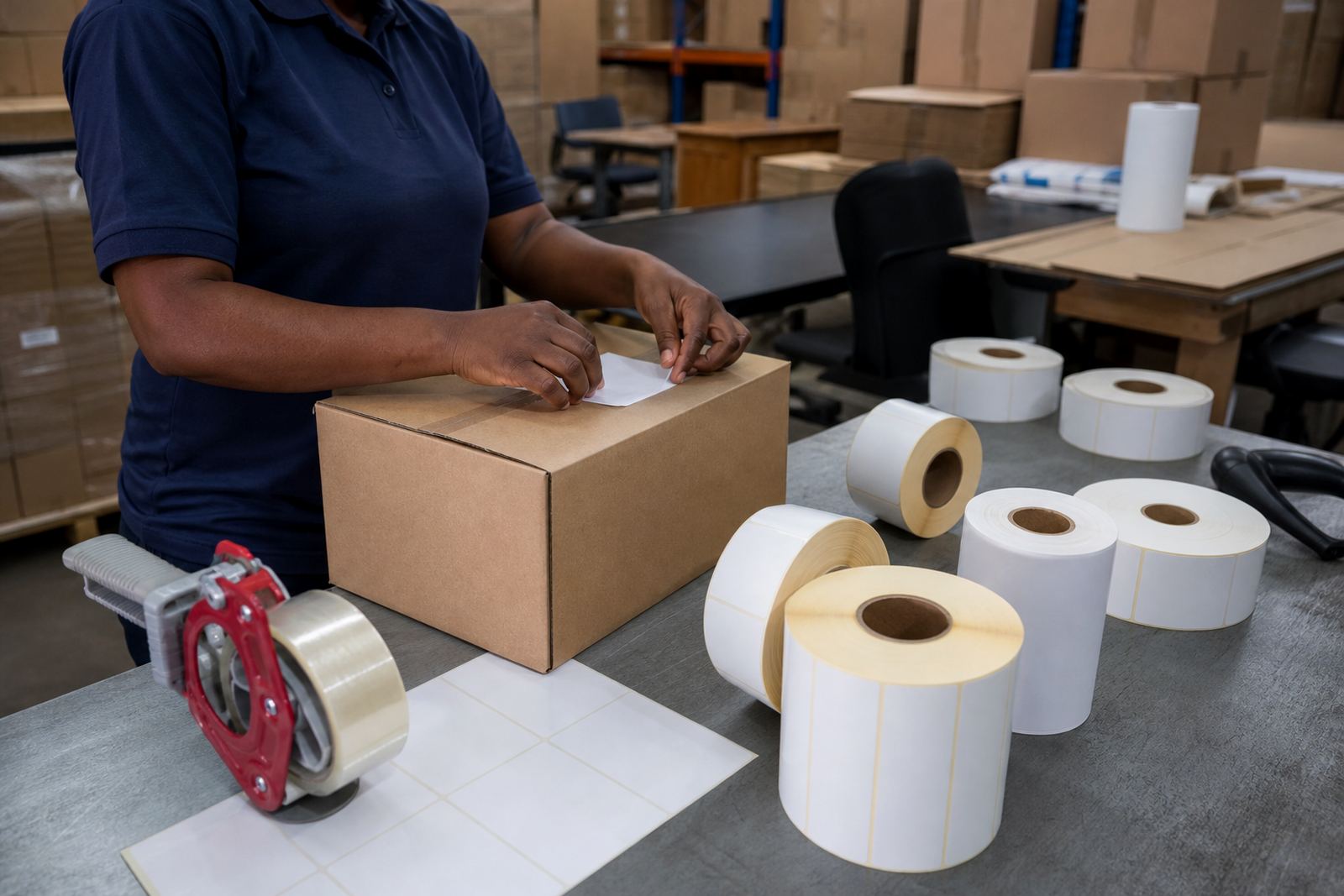
In a busy Westmead warehouse, the label choice also has to suit the printer sitting at the packing bench. If the roll is not the right core size or the winding direction is wrong, the operator loses time every time the printer is reloaded. That is why sample rolls, printer fit checks and repeat order planning are practical tools, not extras. They help a team keep moving while loads keep changing through the week.
Getting the label mix right for South African logistics
Logistics operations often use more than one label type. A receiving bay may need temporary location labels, dispatch may need shipping labels, and inventory control may need durable identification on shelves or bins. The best setup is usually a planned mix of face stock, adhesive and roll format matched to the work that is actually happening.
From Westmead, Pinetown and Hammarsdale through to Pretoria, Cape Town, Johannesburg and Pietermaritzburg, the same rule holds. If the label is easy to print, easy to scan and easy to keep on the package, the operation runs cleaner. That is the real value of choosing the right stock and the right roll build for logistics work.