When paper labels do the job without fuss
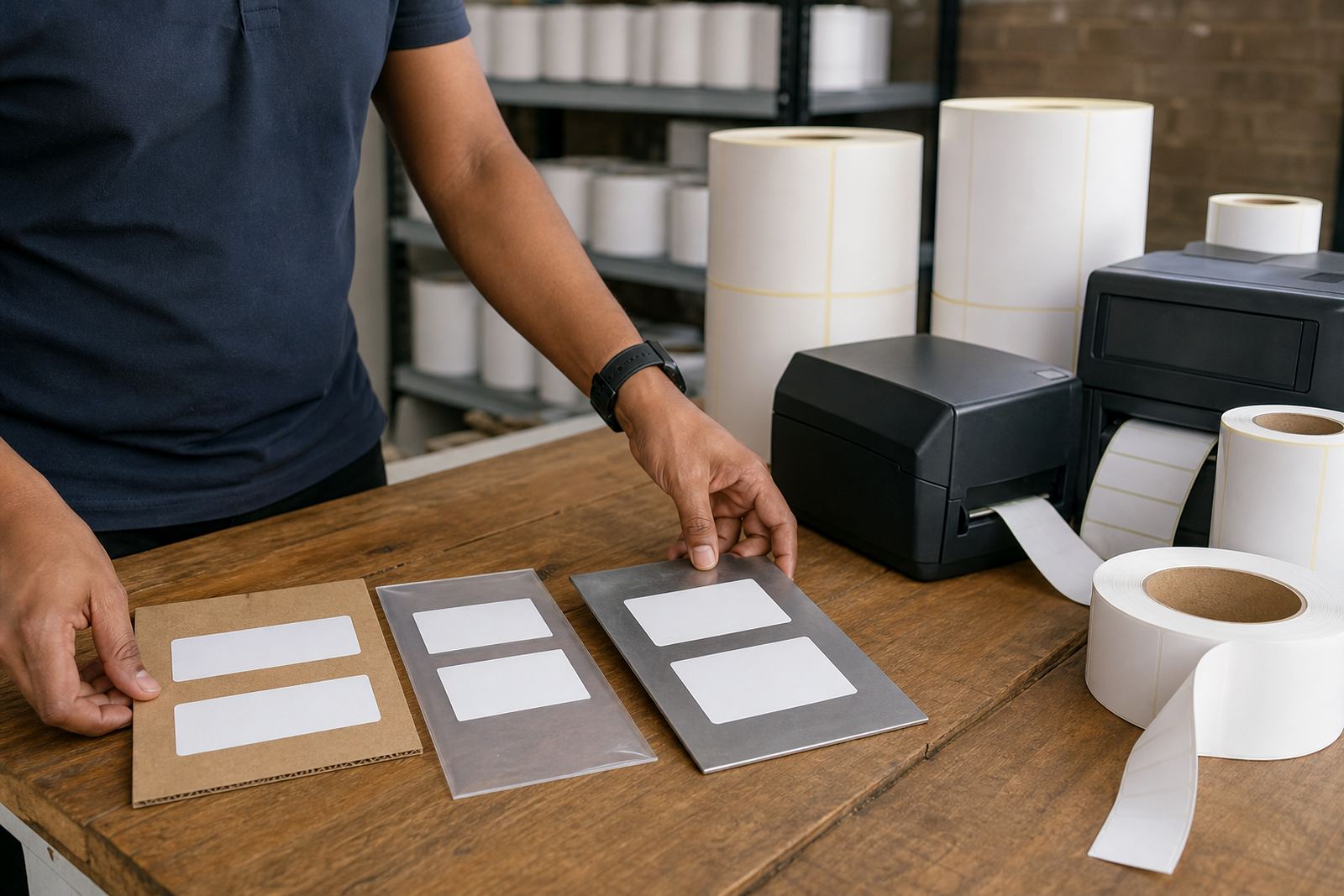
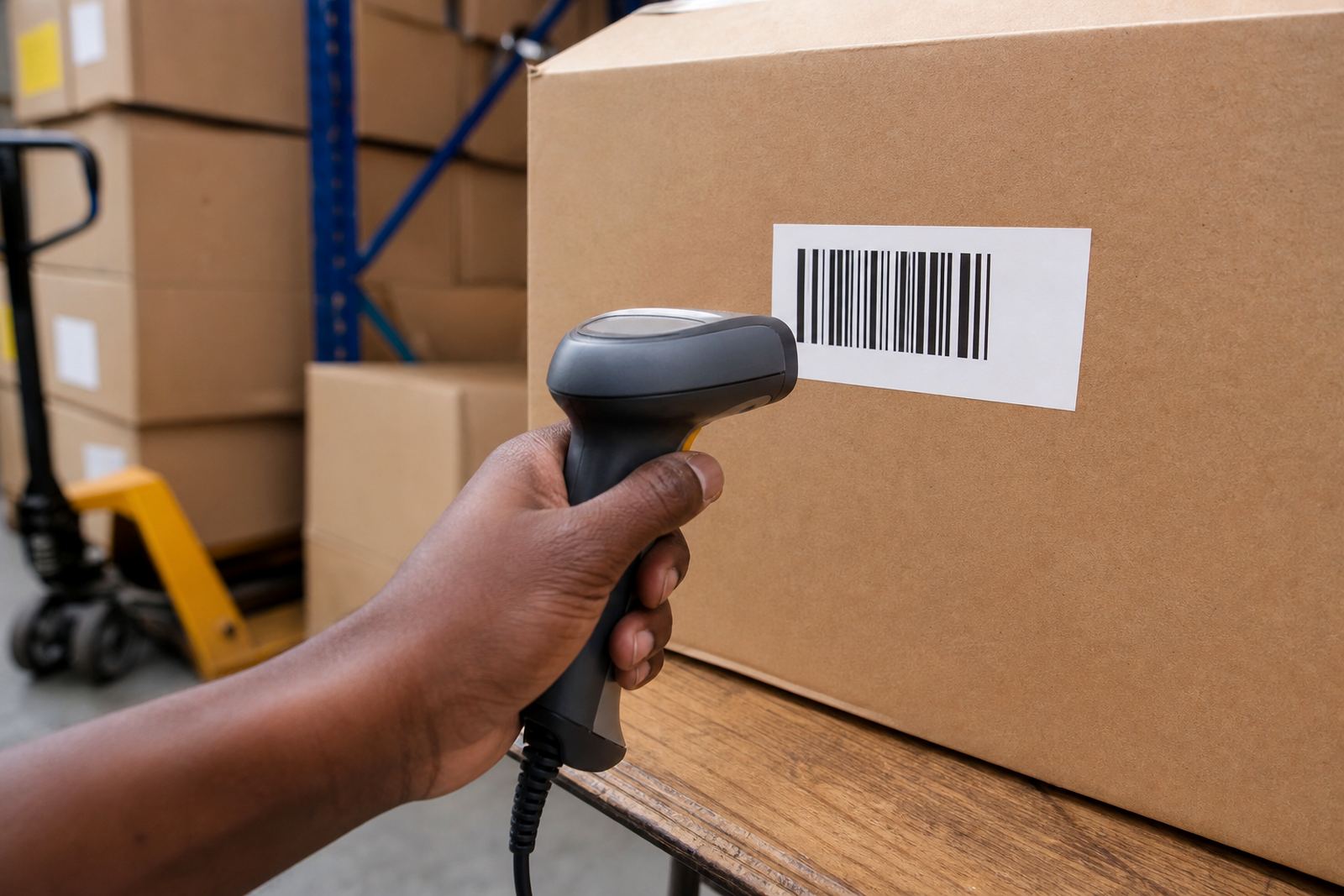
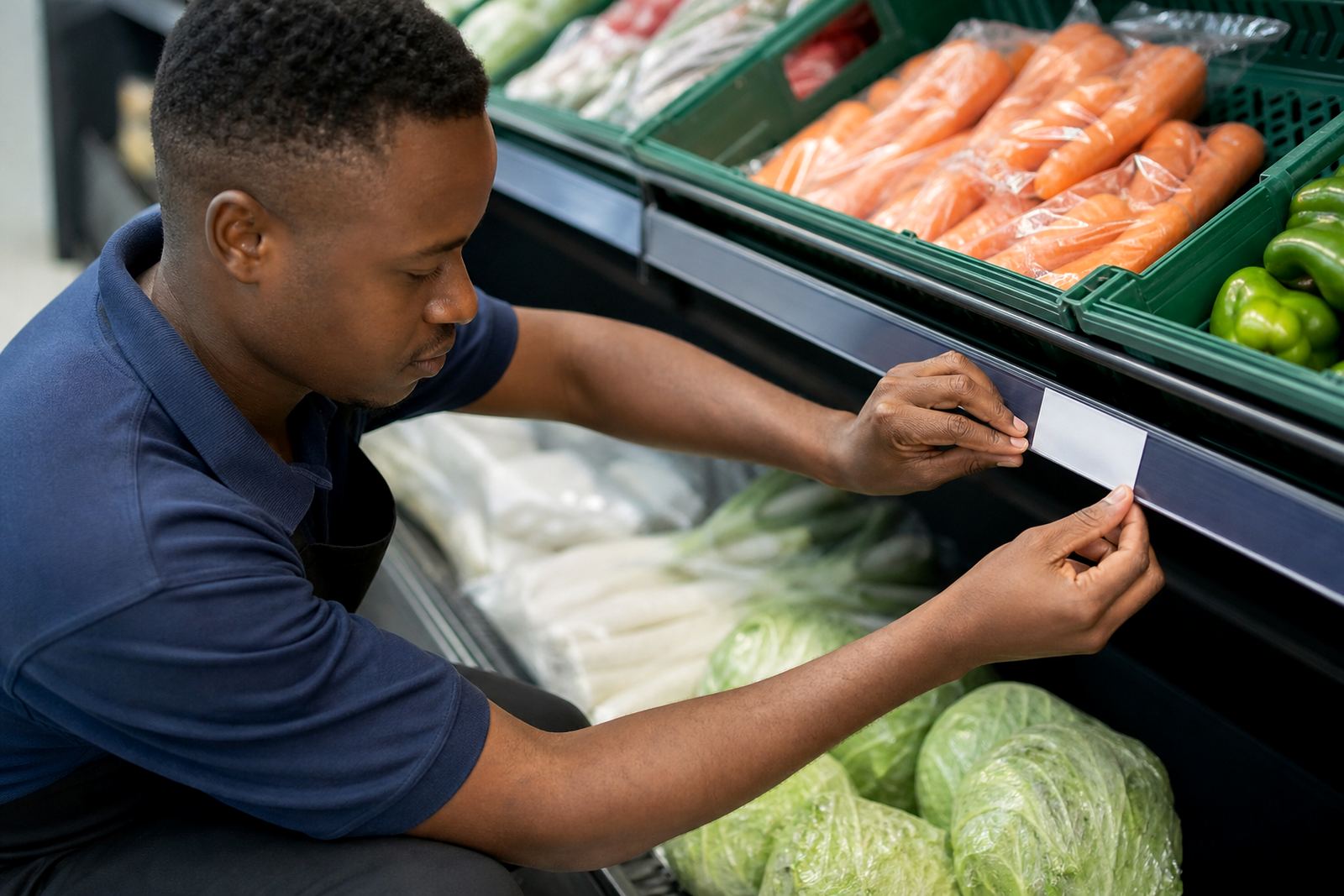
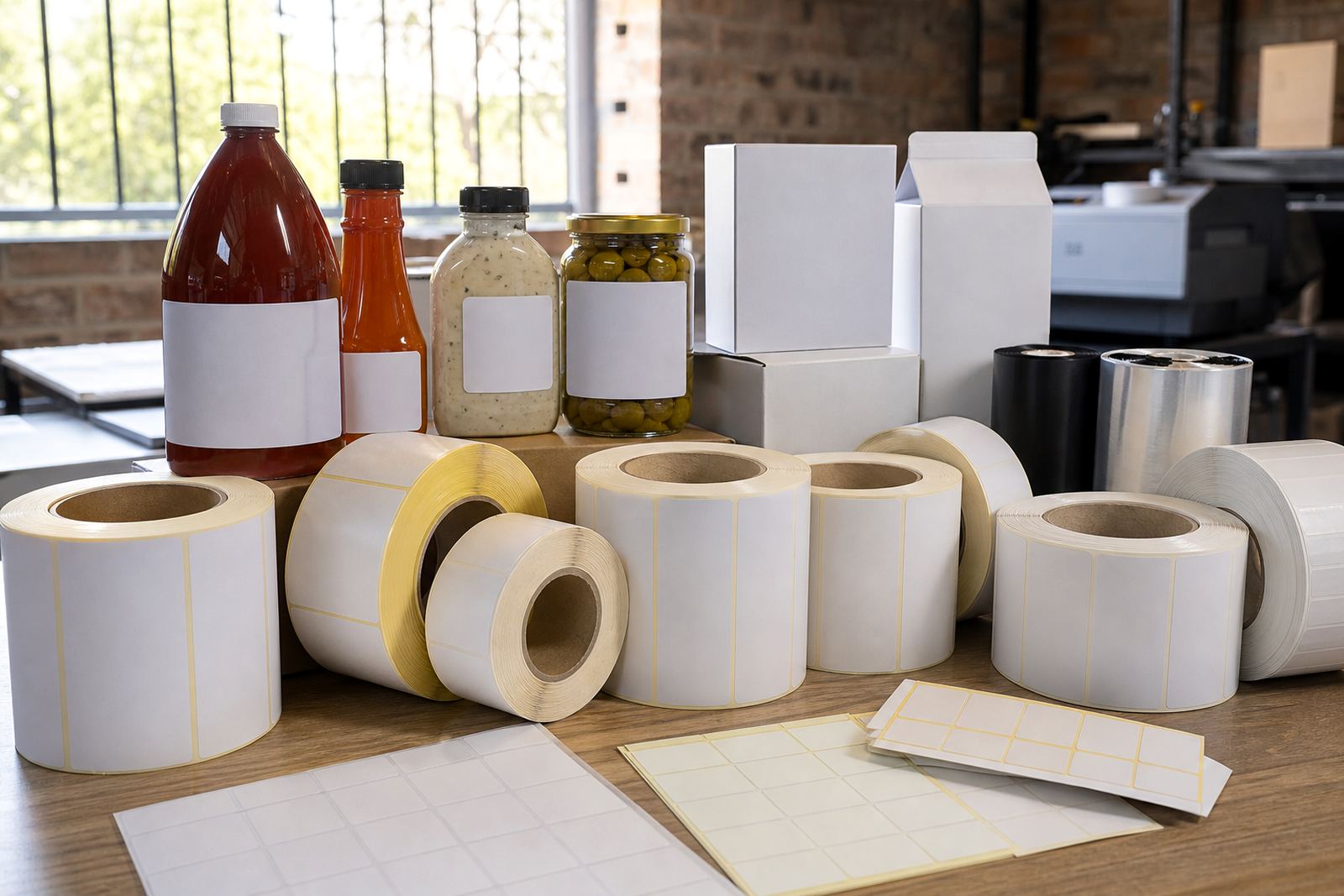
Paper face stock is still the workhorse for many jobs in retail, warehousing and general packaging. If the pack is dry, the surface is reasonably clean and the label is not expected to survive heavy abrasion, paper is often the most practical choice. It prints cleanly, takes a wide range of adhesives and gives good readability for barcodes, product names, batch details and dispatch marks.
In Westmead and Pinetown we see paper labels used on cartons, shelf-ready packs, grocery items, office consumables and short-life shipping labels. For many indoor applications, a paper label is more than enough. It folds over box corners better than many films, and for cartons that are opened soon after dispatch, there is usually no need to pay for a tougher face material than the job requires.
Paper also works well where you need cost control across large volumes. If a customer is labelling thousands of parcels a week, a sensible paper stock can keep the roll costs steady while still giving clear print contrast. The key is matching the adhesive to the surface, because the face stock is only half the story.
- Good for dry cartons, retail packs and short-duration labels
- Prints well for text, barcodes and simple branding
- Usually easier on budget for higher volumes
- Best when the label will not face moisture, scuffing or cold wash-downs
Where film earns its place on the line
Film label stock is the better choice when the label has to deal with moisture, handling, condensation or frequent rubbing. A film face stock is more resistant to tearing and tends to hold up better on products that move through cold rooms, chilled distribution, or humid coastal conditions. That matters in Durban, Cape Town and other places where damp air can affect how labels sit on the pack.
Film is also useful on packs that flex. Sachets, squeezable bottles, plastic pails and curved containers can all put strain on a label. A paper label may crack or lift at the edges, while the right film gives a cleaner finish and longer life. For manufacturing and logistics where the label needs to stay legible after transport, film is often the safer option.
The trade-off is that film can cost more and may need more careful printer setup. The print method, ribbon type and adhesive all need to suit each other. If the label is going onto a product that is oily, cold or handled often, the extra planning is usually worth it.
- Better for damp, chilled or high-touch applications
- Holds up well on curved or flexible packs
- Useful for products that travel long distances
- Often chosen when label life matters more than lowest material cost
Adhesive choice is where many orders go wrong
People often start with paper versus film, but the adhesive does the real holding. A good face stock can fail if the adhesive is not matched to the surface. Smooth plastic, textured cartons, glass, powder-coated surfaces and frozen packs all behave differently. In a humid area like Pinetown, a label that looks fine on the bench can still lift on a dusty or warm pack.
Permanent adhesives suit most general packing and retail uses. Removable adhesives are better where the label must come off cleanly later, such as return handling, temporary pricing or internal stock movement. For cold chain work, the adhesive needs to grab in low temperatures and still stay put after condensation forms. That is why adhesive matching matters as much as the face stock itself.
We also look at where the label is applied. A label fixed by hand to a fast-moving carton line is not the same as one applied slowly to a clean bottle in a controlled room. The right answer changes with surface energy, storage temperature and handling after application.
- Permanent for long-term hold on cartons, containers and packs
- Removable for temporary use or later peel-off
- Cold-room grades for chilled or frozen goods
- Special attention needed on dusty, oily or uneven surfaces
Thermal rolls: direct thermal or thermal transfer
Thermal rolls are not all the same, and the printer method makes a real difference. Direct thermal stock has a heat-sensitive coating and prints without a ribbon. It is useful for short-life labels, courier labels, weigh labels and some retail applications where the print only needs to last a limited time. It is often a practical choice where speed and low handling matter.
Thermal transfer uses a ribbon to transfer print onto the label face stock. This usually gives better durability and wider material choice, especially when the job needs resistance to rubbing, light or heat. If a label must stay readable on shelving, in dispatch or after storage, thermal transfer is often the safer route.
Printer compatibility matters too. Core size, roll length, unwind direction and outer diameter must suit the machine. Some printers take smaller cores for compact benchtop use, while others need larger industrial cores for longer runs. If the roll is wound the wrong way round, or the core is off by a few millimetres, the line slows down and the operator starts improvising, which is never good for repeat work.
- Direct thermal for short-life labels and fast printing
- Thermal transfer for longer life and tougher use
- Check core size, roll diameter and unwind direction
- Match the roll format to the actual printer, not just the label size
A Westmead example from carton floor to cold room
A local packaging operation in Westmead may use two very different label types in the same week. The dispatch team might need a paper label for carton identification, stock rotation and pallet notes, where the packs are dry and the labels are read quickly. At the same time, the production side may need a film label for chilled items that pass through a cold room and are handled several times before leaving the site.
That split is common. One label type is not automatically better than the other. It depends on where the pack goes, who touches it, how long it stays on the product and whether the surface is flat, curved or damp. In practice, many businesses use paper for one part of the operation and film for another, because forcing one material to do both jobs can lead to waste and complaints.
For Durban, Johannesburg, Pretoria, Cape Town and Pietermaritzburg deliveries, the bigger question is often not the city but the use. A carton leaving for a warehouse in Gauteng may need a different label from a product going into coastal storage in humidity. The label should suit the trip, not just the first scan.
A tighter way to choose before you place the order
Before you settle on paper or film, it helps to check a few practical points. These are the things that usually decide whether the label performs well or gives trouble later.
- Surface: cardboard, plastic, glass, metal or flexible packaging
- Environment: dry room, chilled store, freezer, humid dock or exposed transport
- Print life: short dispatch use or longer shelf and handling life
- Printer type: direct thermal or thermal transfer
- Roll fit: core size, winding direction and roll length
- Application method: hand applied, semi-automatic or line applied
If you are unsure, sample rolls help a lot. A small test on the actual pack often shows what will happen in real use, not just on paper in the office. That is also where usage review, face stock selection and adhesive matching earn their keep, because the details are easier to correct before a full production run than after labels have started lifting or fading.
The right label is the one that stays readable, stays put and suits the worksite without causing extra handling. Paper is often enough. Film is often worth it. The trick is knowing which one your pack actually needs.