When a roll looks neat, the printer feels it too
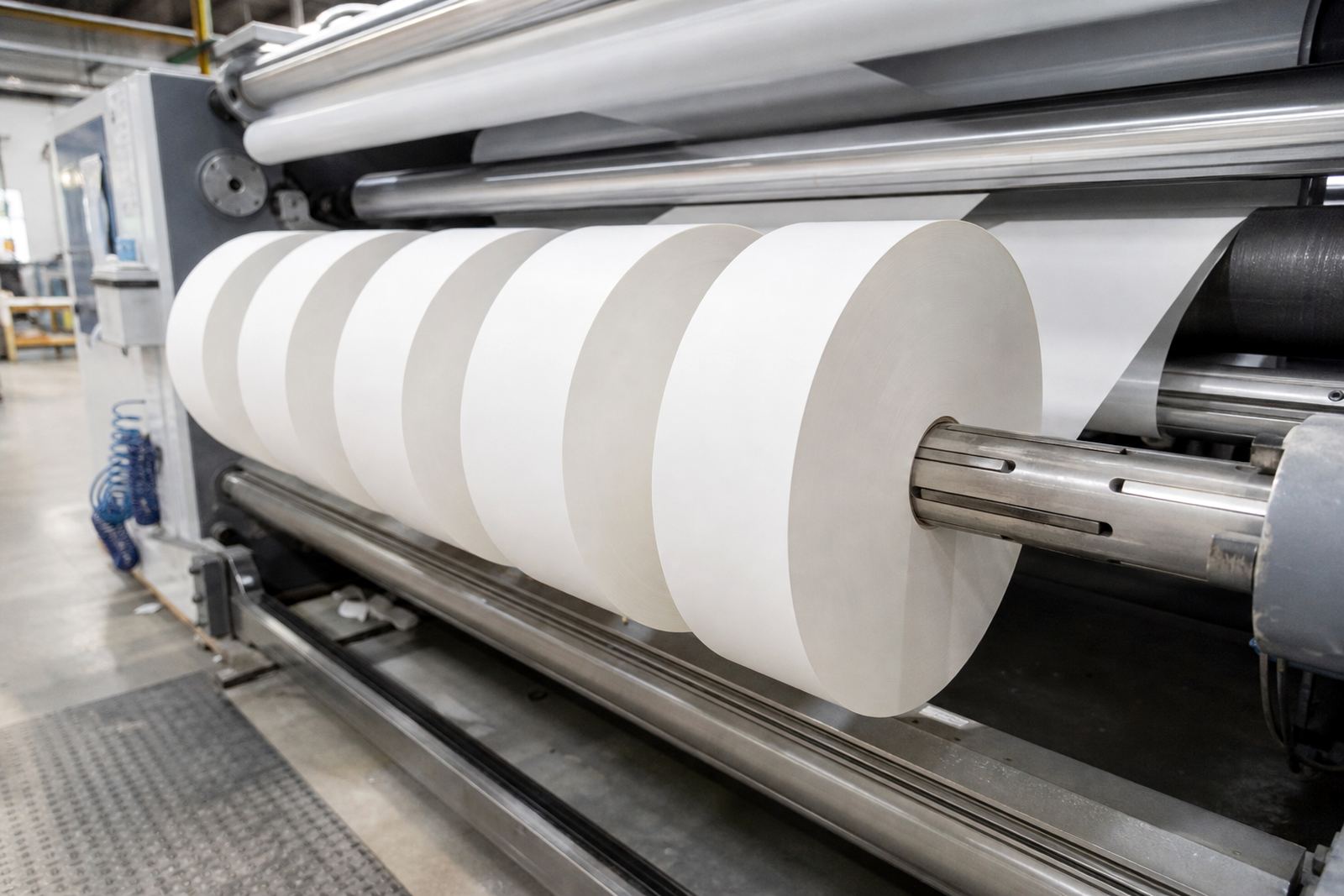
Rewinding is the process of taking label material and winding it back into a clean, even roll after slitting or converting. When the tension is controlled properly, the edges stay square, the winding is firm without crushing the stock, and the roll feeds without chatter. That matters whether the labels are used on a warehouse line in Westmead or in a dispatch room in Johannesburg where staff are loading rolls through the day.
If the roll is wound too loosely, labels can shift, telescope or snag. If it is wound too tight, the liner can curl and the face stock may not release evenly. Both problems show up later as missed labels, crooked feeding or stops that eat into a shift.
The small faults that cause the biggest feed trouble
Most feed issues start before the roll ever reaches the printer. A roll that was rewound with uneven tension may look acceptable on the outside, yet bind in the middle or lift at the edges once it warms up in a hot storeroom. On a humid Durban day, a poor rewind can also make liner curl more noticeable, especially on narrower rolls packed tightly into cartons.
- Edges that step in and out instead of staying level across the roll face.
- Loose pockets inside the roll that cause bouncing during unwind.
- Tight centres that make the first few metres drag.
- Telescoping where one side starts creeping out past the other.
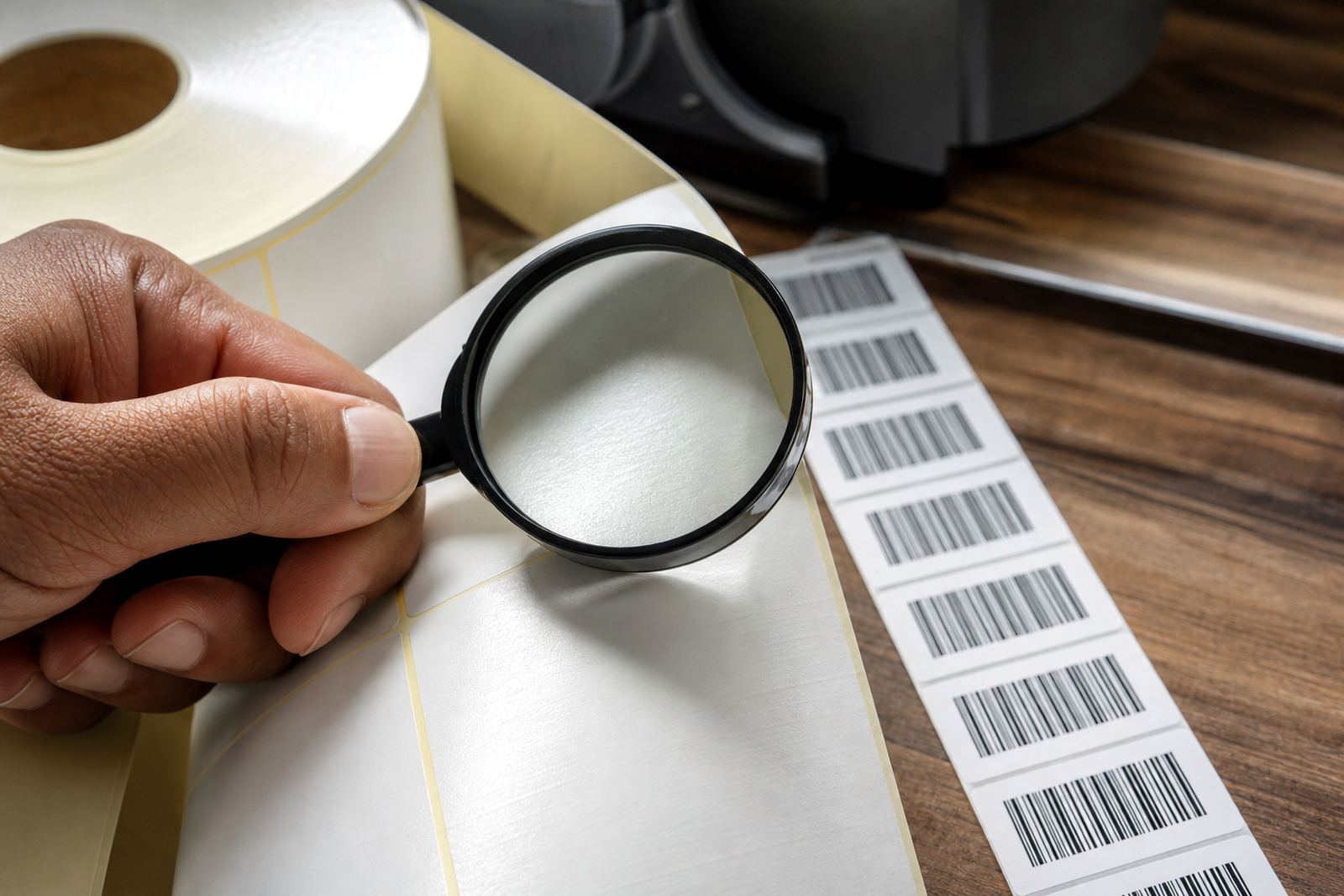
- Wrinkled liner that can affect sensor reading or print registration.
These faults are not always obvious during packing. They often show up only when the operator is under pressure and the line needs to keep moving.
Why rewinding matters for different label materials
Not every label stock behaves the same way. Paper face stocks, gloss or matt, usually rewind cleanly when the tension is set correctly. Film based face stocks can hold memory more strongly and may need firmer control so they do not spring back. Liners also differ, with glassine and other release liners each responding in their own way to pressure, heat and roll size.
Adhesive choice plays a part too. Permanent, removable and high tack adhesives can all affect how the web behaves during converting. A stock that is meant for cold rooms or outdoor use may need a different rewind profile from a lighter retail label used on cartons or shelf packs. That is why roll finishing should be matched to the material, not treated as a one setting job.
Core size, winding direction and printer fit are not small details
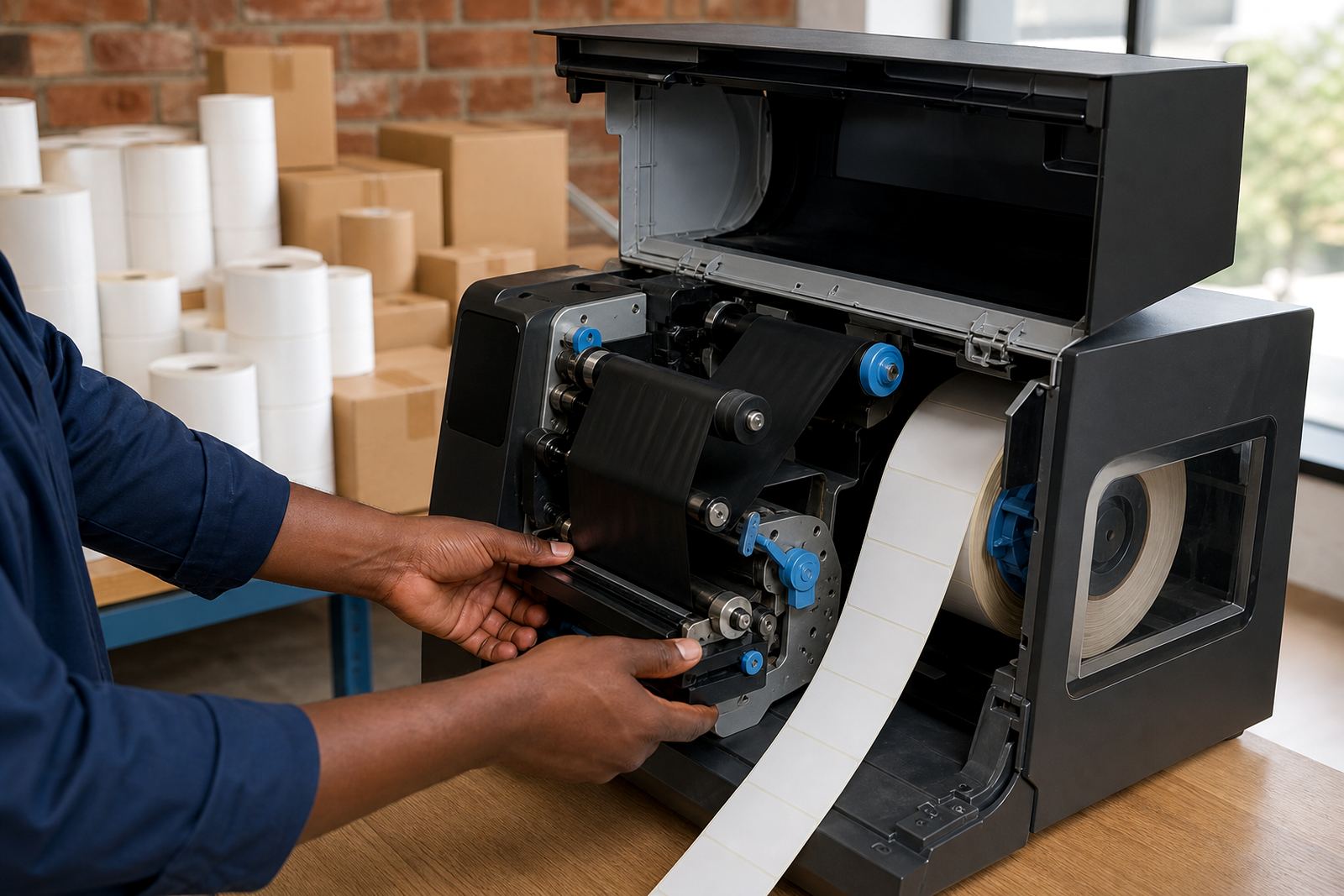
Rolls have to suit the printer or applicator they are going into. Core size, roll outer diameter, winding direction and gap between labels all affect how the roll loads. A 25 mm core may suit compact benchtop units, while 76 mm cores are common on larger thermal printers and industrial lines. If the roll is wound the wrong way, the printer may struggle to recognise the leading edge or the label may peel in the wrong direction.
That is why printer fit checks matter before a repeat order is run. In many cases the issue is not the printer at all, but a roll that was wound too loosely, packed with the wrong core, or set for the wrong unwind direction.
- Check core size before slitting and rewinding.
- Confirm face in or face out winding direction.
- Match roll length to the available spool space.
- Allow for the printer sensor and platen path.
- Keep the roll width consistent across the batch.
A Pinetown example: fewer stops on a busy dispatch floor
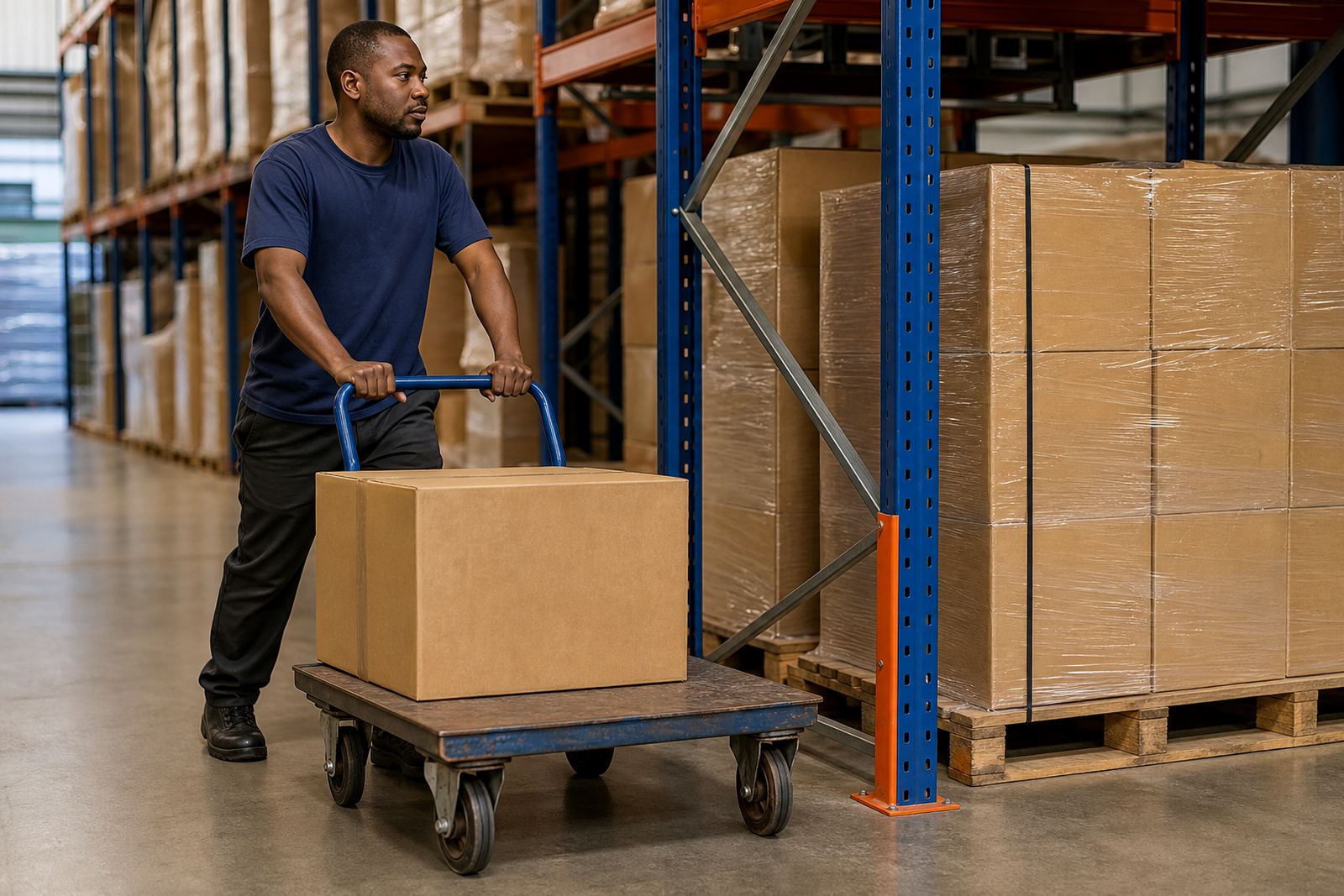
A logistics team in the Pinetown and Hammarsdale area often runs labels in bursts through the day, especially when trucks are loading and offloading around the same shift. If the rolls arrive unevenly wound, the operators spend extra time correcting the path, pushing the roll back into position, or reprinting labels that misfeed. In practice, that is wasted time and extra handling, all because the rewind was not controlled properly.
With the right rewinding, the same site gets neater rolls, easier loading and fewer feed faults. That helps the team keep carton labelling, pallet ID and dispatch marking moving without stopping to sort out curled edges or loose winding. It also reduces the chance of a label batch being rejected because the roll did not sit right in the machine.
What proper rewinding supports across the supply chain
Rewinding is not only about appearance. It supports the next step in the process, whether that is printing, dispensing, sealing or hand application. For businesses in retail, manufacturing and warehousing, a well rewound roll is easier to store, easier to count and easier to dispatch. It also packs more cleanly, which matters when stock is moving to Cape Town, Pretoria or Pietermaritzburg and needs to arrive ready for use.
Good rewinding helps with:
- Cleaner loading into thermal printers and applicators.
- Better label release from the liner.
- Reduced edge damage during transport.
- More consistent performance on repeat runs.
- Less downtime caused by awkward roll handling.
When the roll is finished properly, the user feels the difference immediately. The printer pulls evenly, the label feeds straight and the operator can get on with the job without fighting the roll.