Why a clean storeroom saves a full print run
Label stock may look plain on the shelf, but it is a layered product with a face stock, adhesive and liner that all react to storage conditions. When sheets or rolls sit in the wrong place, the edges lift, the roll ovalises, and printer feed issues start creeping in. A few days in a hot loading bay or beside a door that opens to coastal air can do more harm than many people expect.
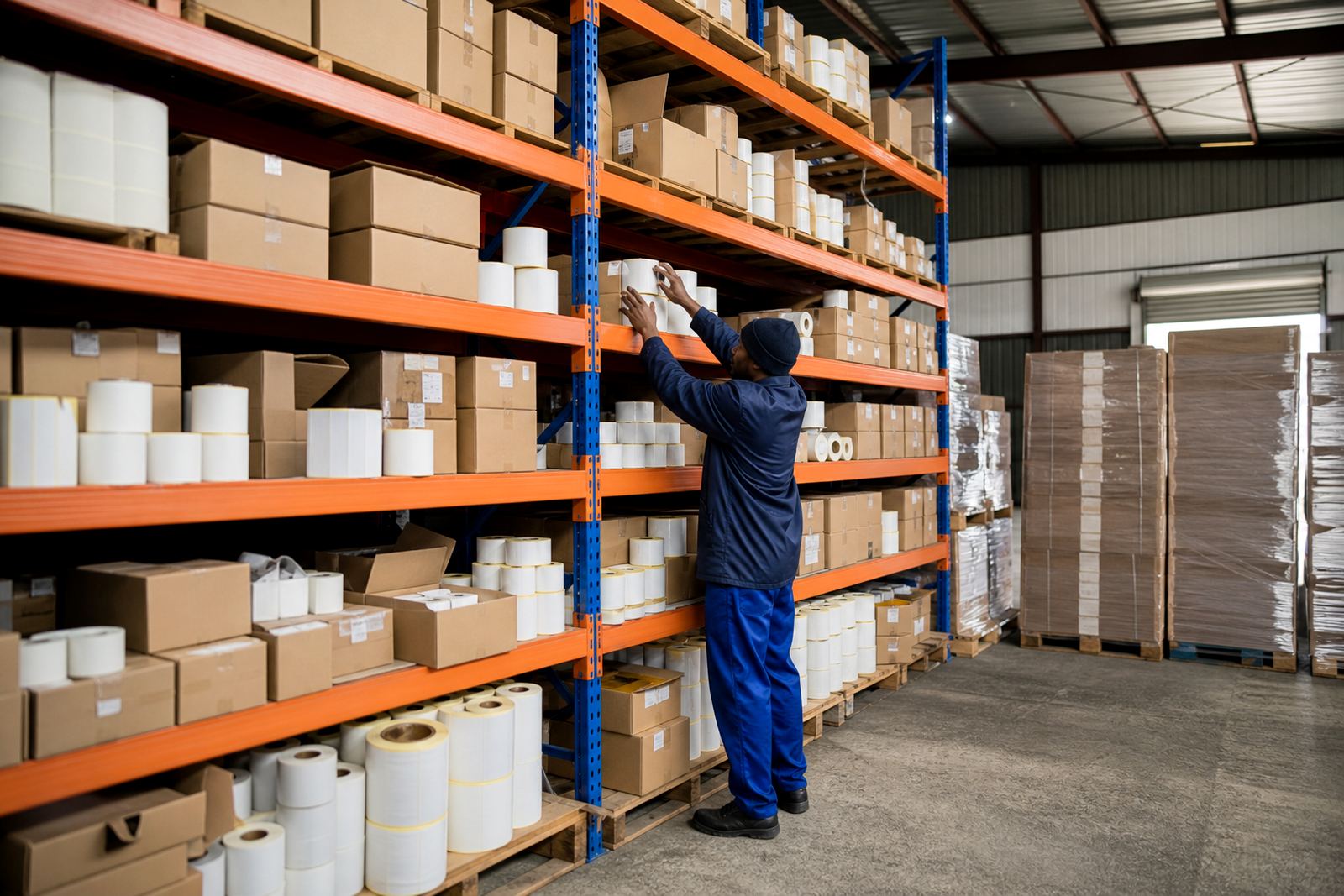
In Westmead, Pinetown, we often see stock held near roller doors or on pallets close to the floor. That is where dust, humidity and temperature swings hit first. A better storeroom does not need fancy fittings, just steady conditions, clean racking and a habit of keeping cartons sealed until they are needed.
- Keep cartons off bare concrete and away from standing water
- Store away from direct sun, windows and corrugated roofs that trap heat
- Leave enough space for air movement around pallets
- Do not stack heavy cartons on top of lightweight rolls or cut sheets
The room conditions label stock prefers
Self-adhesive label materials hold up best in a dry, cool room with stable temperature. Sudden changes are the real enemy. A stock room that is cold at night and hot by midday can cause curl, moisture gain or loss, and condensation on the outer wrap. That is a problem for both direct thermal rolls and thermal transfer label stock, because each depends on the surface behaving as expected.
Direct thermal face stock is coated to react with heat from the printer head. If the surface gets dirty or damp, print quality drops fast. Thermal transfer stock uses a ribbon and usually gives better resistance to rubbing, chemicals and sunlight, but the label face still needs to be clean and flat. Humid coastal conditions around Durban need extra care, and even inland cities can get damp storage spaces after rain or pipe leaks.
- Allow unopened stock time to settle to room conditions before use
- Keep adhesive rolls wrapped until needed
- Avoid storing next to chemicals, cleaning agents or solvent fumes
- Do not leave material in vehicles for long periods in summer heat
Rolls, cartons and the right way to stack them
Roll storage is not only about the room, it is also about pressure. A 100 mm roll placed under a heavy carton can take on a flat edge and then wobble during unwind. Small cores are especially sensitive because they depend on the centre staying true. If the roll shape changes, printer fit becomes harder and the unwind tension can become uneven, which is not what you want when labels must run through a packaging line or a benchtop unit without fuss.
Use racking that supports the carton or the roll on its side as intended by the supplier. Keep same-size rolls together and mark outer cartons clearly so older stock is used first. In fast-moving dispatch areas, where someone is rushing to prepare labels for a load going to Johannesburg or Cape Town, tidy rotation matters more than people think. Small habits save a lot of rework.
- Stack by size, core and face stock type
- Do not crush the outer wrap or tighten straps too hard
- Keep heavier cartons on lower shelves
- Use first-in, first-out rotation for all label materials
Adhesive behaviour changes when storage slips
The adhesive on self-adhesive label stock is designed for a certain range of surfaces and temperatures. If it is stored badly, it can lose tack, become too hard, or behave inconsistently at the point of application. That may show up as labels lifting on cartons, poor edge seal on packaging, or failed adhesion on bottles, pouches and shipping packs. Once the adhesive has been stressed by heat or damp, the result can be hard to recover fully.
This matters for businesses doing retail labelling, logistics and manufacturing in places with mixed conditions. A warehouse in Pietermaritzburg may be cooler than a loading bay in Pinetown, while a site near the coast may fight moisture more often. Matching the right adhesive is important, but storage still has to support it. Even a good adhesive can underperform if the liner gets dirty or the roll is stored on its end for too long.
- Keep pressure-sensitive stock away from dust and oils
- Store specialist adhesives separately if you use more than one grade
- Check older stock before use if the room was unusually hot or damp
- Do not open a carton and leave it exposed for weeks
Printer fit starts long before the first label prints
Storage good practice also protects compatibility. A roll might be the correct width and core size, but if the edges are damaged or the winding direction has shifted in handling, it may not feed cleanly. Thermal printers are fussy about neat unwind, especially when the roll is close to the printer’s maximum diameter. Repeated knocks on the floor or rough dispatch packing can make a good roll act like the wrong one.
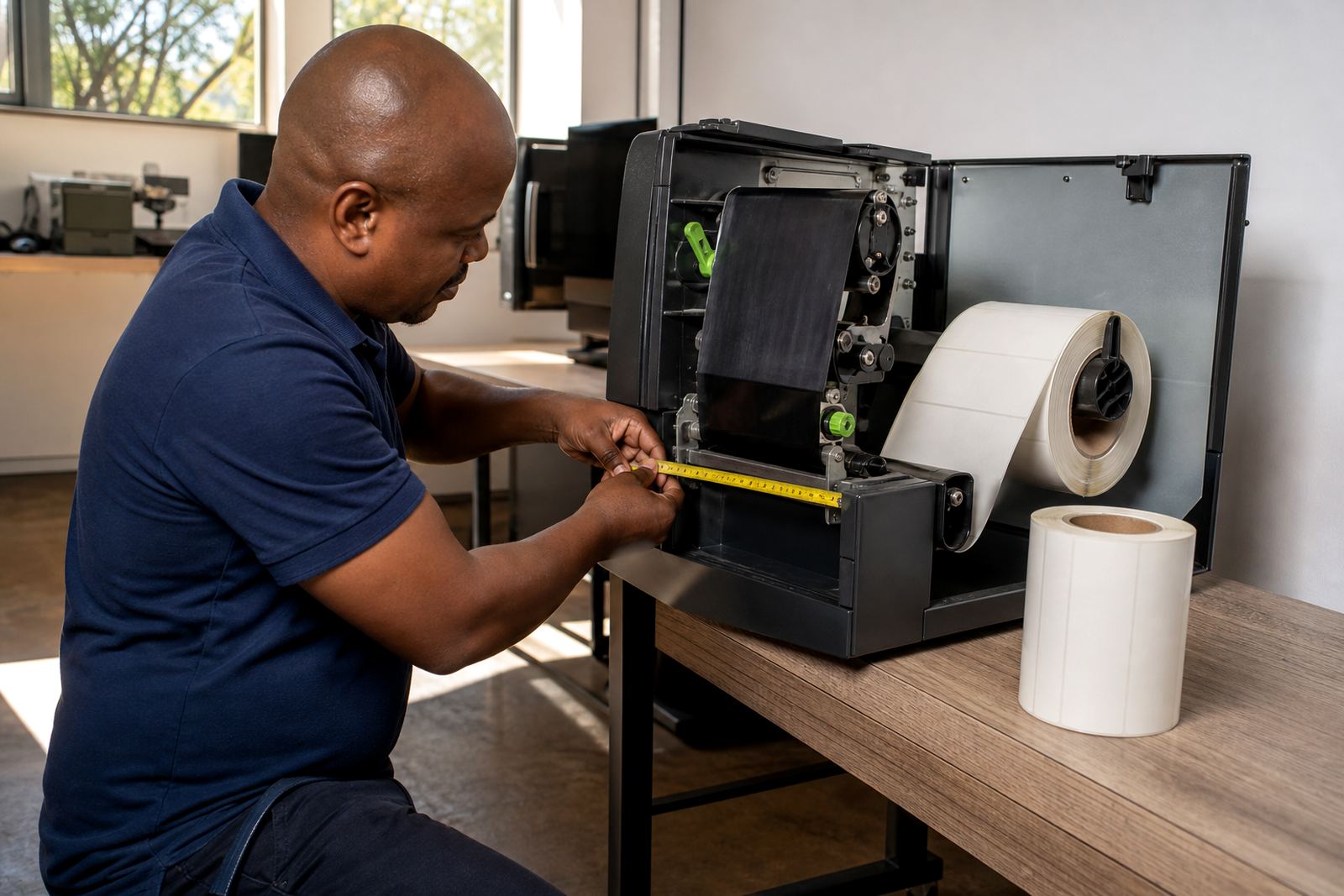
For businesses using mixed printer types, it helps to store direct thermal rolls separately from thermal transfer stock and to label each shelf by core size and winding direction. That saves time and avoids those late day mistakes when someone grabs the nearest roll and finds it does not fit the machine at all. A quick printer fit check before opening a full case is worth doing, especially when a new carton has travelled from Westmead to another branch or site.
- Separate direct thermal and thermal transfer stock
- Mark core sizes clearly on shelves and cartons
- Keep winding direction visible for fast selection
- Inspect the outer wrap for crushed corners before opening
A Durban loading bay is not the same as a sealed store
Local conditions matter. A sealed storeroom in Pretoria behaves very differently from a loading bay near Durban’s humidity or a warehouse in Hammarsdale where forklifts, dust and frequent stock movement are part of the day. If label stock is stored near open doors, concrete floors and moving pallets, it needs better discipline than a quiet office cupboard. Even a small amount of moisture can affect the liner and cause curl, and that then shows up when the printer is loaded under pressure.
A practical routine works best: receive stock, check the cartons, move them into the storage area fast, and keep the room tidy enough that nothing gets forgotten at the back. If a roll looks suspicious after a long hot week, test a sample first rather than loading it into a full production run. That little pause can prevent wasted packaging, delayed despatch and a messy reprint job.
For repeat label runs, it helps to look at how fast the rolls are used and how much room is available for safe storage. If labels move out quickly, the shelf layout should support first in, first out handling. If demand is slower, the priority is keeping the rolls ready for the next order without curling, crushing or edge damage.