When a good label gives up early
A label that peels at the corners, bubbles under the face stock or prints faintly is usually telling you something useful. It may be the wrong adhesive for the pack, the wrong face stock for the job, or the wrong roll spec for the printer. In many cases the product itself is fine, but the matching between materials and process has been missed.
At our Westmead base, we see this often when a business changes carton type, bottle finish or printer model and keeps using the same roll spec. A label that behaved well on a dry corrugated box can fail on a slightly oily plastic tub, and a roll that ran well on one printer may not track properly on another. The first step is always to identify where the failure starts.
- Edge lifting usually points to adhesive, surface energy, dust or moisture.
- Wrinkling often comes from tension, winding direction, liner thickness or applicator pressure.
- Poor print quality can come from the wrong face stock, heat setting or ribbon match.
Surface trouble starts before the roll is touched
One of the biggest causes of label failure is the surface itself. Packaging made from recycled board, chilled film, powder-coated metal or slightly curved plastic all behave differently. If the surface has dust, condensation, oil or release agents, even a well-made self-adhesive label can struggle to hold.
Coastal humidity around Durban and wet mornings in Pietermaritzburg can make this worse. A carton that feels dry to the touch may still carry moisture from storage, and a chilled pack moved from a cold room to ambient air can sweat for several minutes. That thin film of water is enough to weaken initial tack.
- Box dust can stop the adhesive from wetting out properly.
- Condensation creates early lift on cold-chain packs.
- Rough or textured surfaces may need a stronger adhesive and more contact pressure.
- Very smooth plastics may need a different adhesive chemistry altogether.
The label face stock can make or break the print
Not every face stock behaves the same way. Paper face stocks suit many packaging and retail jobs, but synthetic face stocks are better where moisture, abrasion or handling are higher. If a label is exposed to scuffing, cold rooms or repeated wiping, the print can fade or the face can split if the wrong material is chosen.
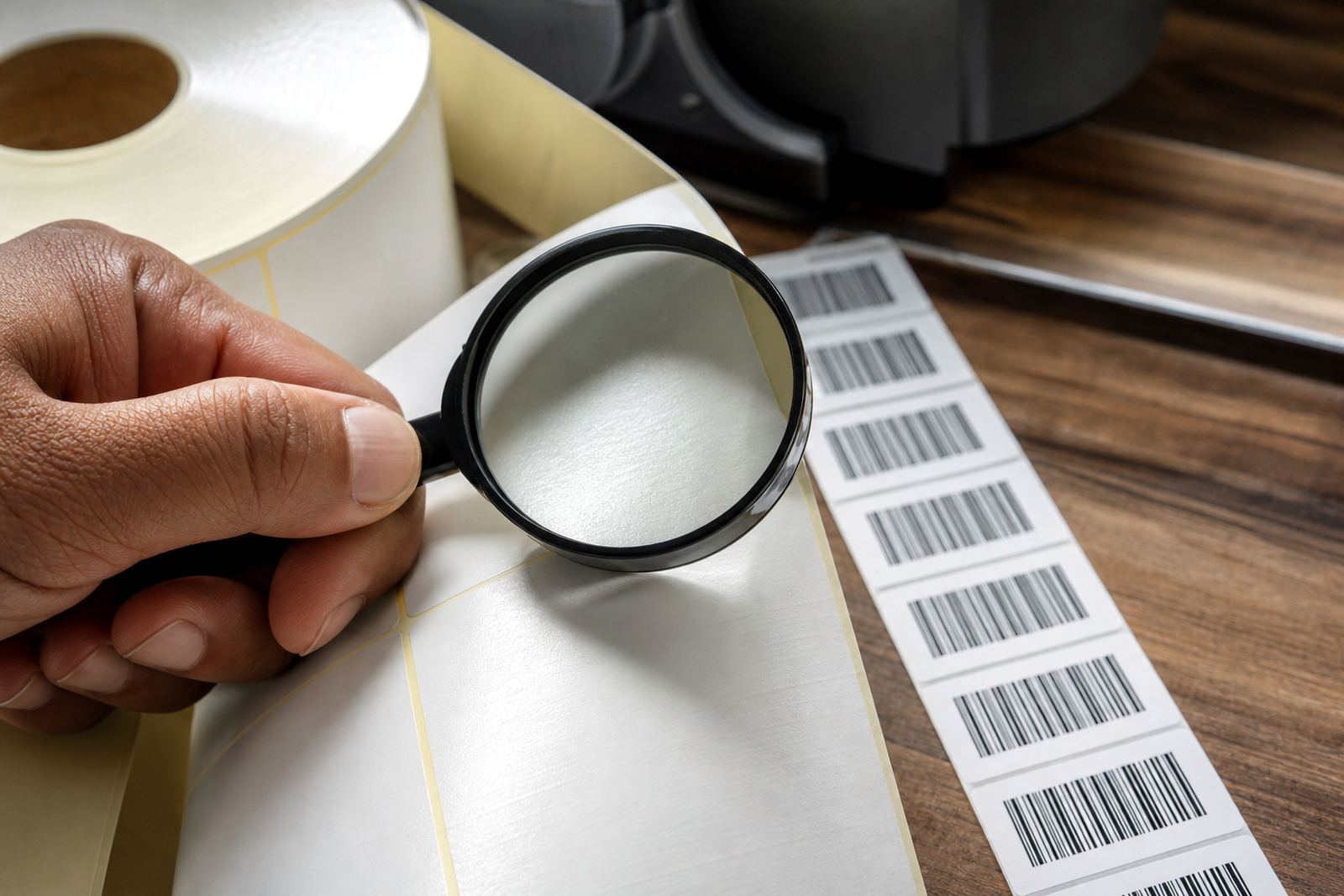
Print quality also changes with the surface finish. A thermal transfer ribbon needs to transfer cleanly onto the face stock, while direct thermal stock depends on heat-sensitive coating. If the coating is uneven or the stock is not suited to the printer, the result can be pale text, patchy barcodes or dark marks where the print head runs hot. That can cause scanning issues at dispatch and delays at receiving.
- Gloss, matt and top-coated papers behave differently under heat.
- Synthetic face stocks may need a different ribbon type and print energy.
- Thermal direct rolls are not suitable for every cold store or long-life label.
Adhesive selection is where many repeat problems start
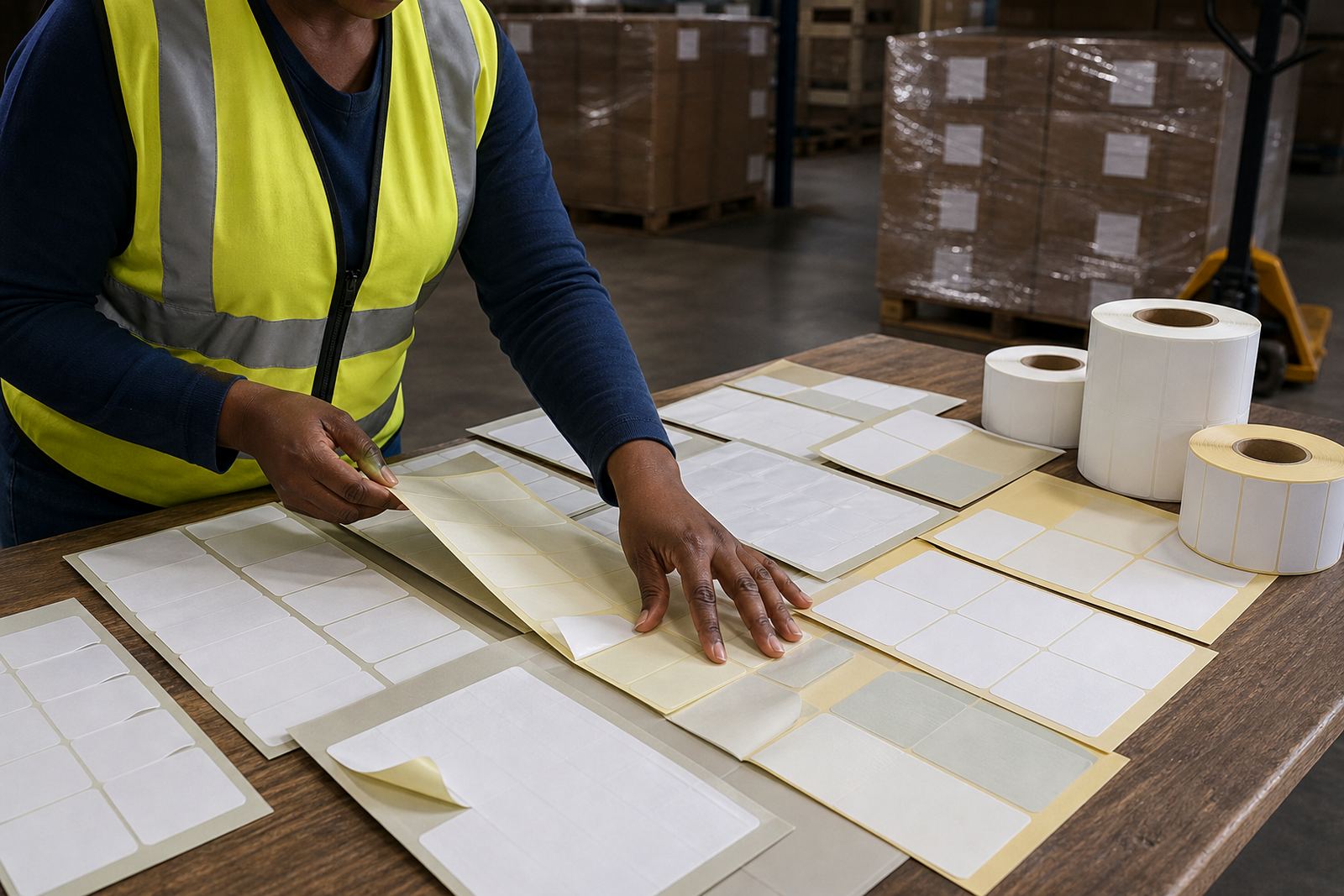
The adhesive is often the hidden cause behind labels that lift after a few hours or days. General purpose adhesives can work well on cartons and many retail packs, but they may struggle on low surface energy plastics, chilled surfaces or dusty warehouse stock. If the adhesive does not match the application, the label may appear fine at first and then fail later.
We also see issues when the wrong adhesive is used for removability. A label meant to peel cleanly can leave residue if the stock is too aggressive, while a permanent adhesive can fail if the pack flexes a lot. In manufacturing lines where speed matters, the initial tack has to be strong enough to grab quickly, but not so aggressive that it wrinkles or skews during application.
- Permanent adhesives suit cartons, bottles and many general packaging jobs.
- Removable adhesives are useful for temporary identification and rework.
- Freezer-grade or high-tack adhesives may be needed for cold rooms and damp handling.
Roll build, core size and winding direction matter more than people think
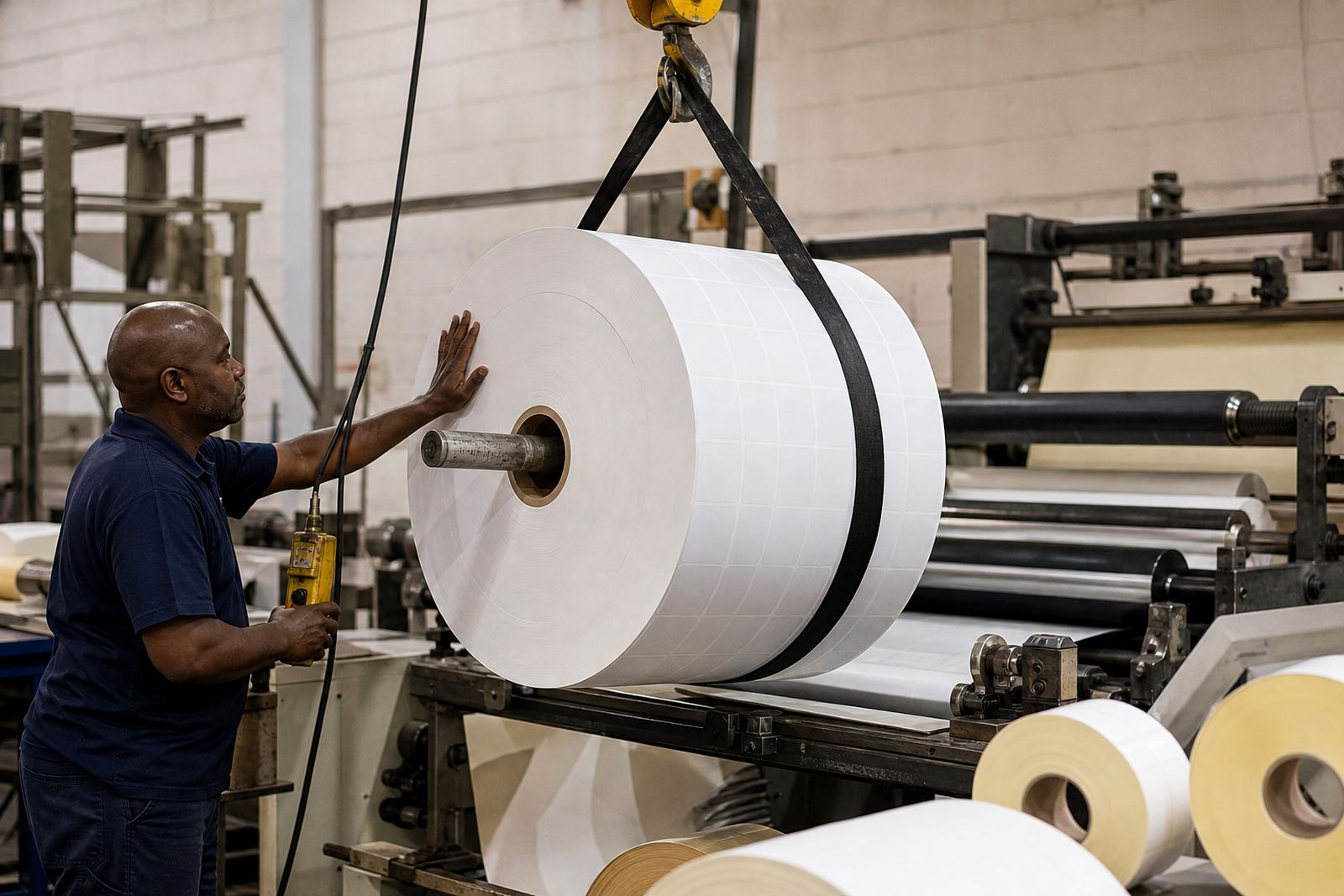
Some failures are not about the label material at all, but about how the roll is built. Core size, outer diameter, roll length and winding direction all need to suit the printer or applicator. If a roll is too tight, too loose or wound the wrong way, the label path can misfeed and the stock can crease.
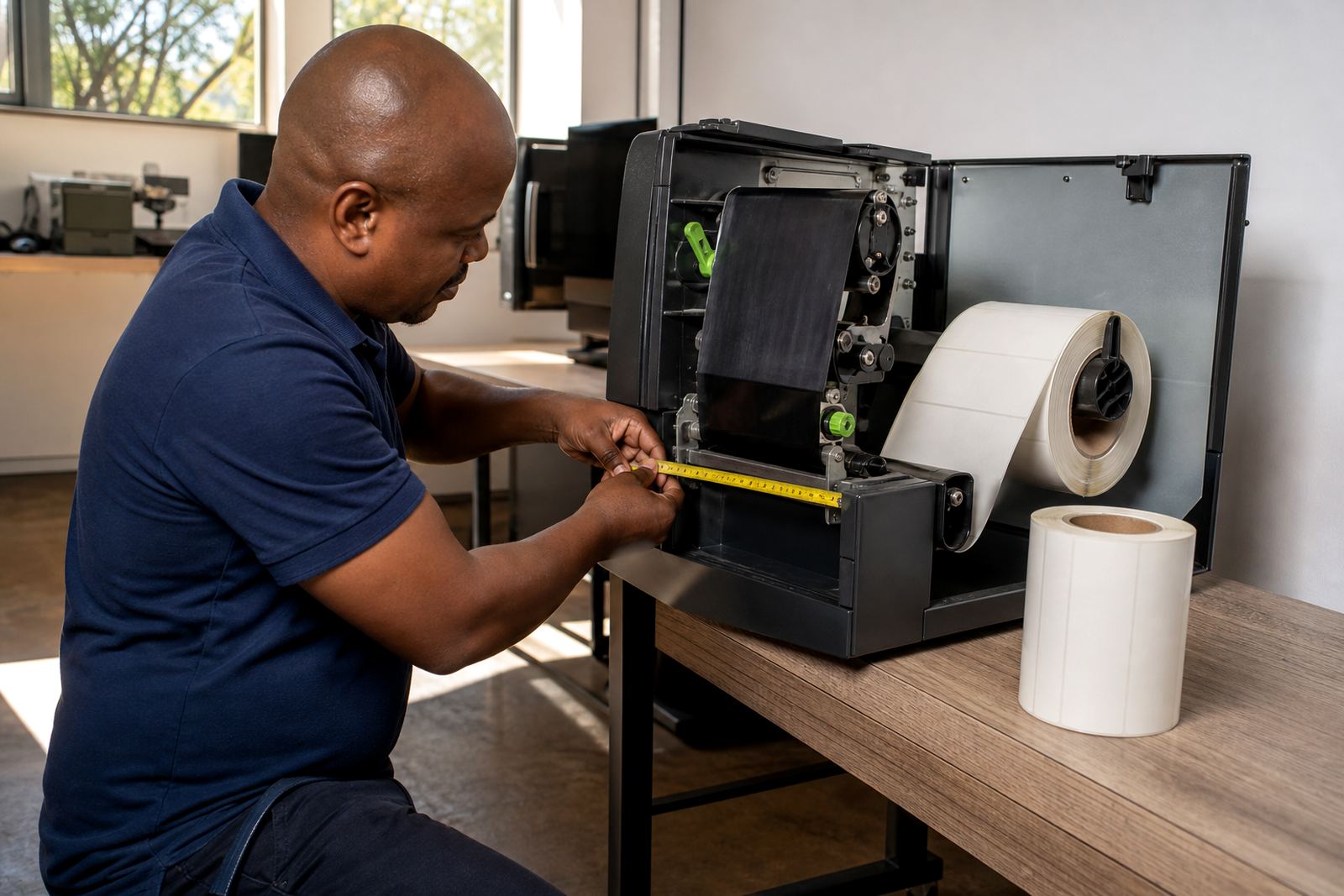
Thermal rolls used in benchtop units, table-top printers or larger industrial machines often require different core sizes and unwind orientations. A mismatch can create ribbon wrinkles on thermal transfer printers, or cause the labels to skew as they move past the platen. It sounds minor, but one wrong spec can waste a full shift of production.
- Check the core diameter before ordering, not after the roll arrives.
- Confirm whether the printer needs inside or outside wound material.
- Plan roll length to suit changeover frequency and storage space.
- If the label path is tight, a small core change can affect feed stability.
Printer settings can damage a perfectly good roll
Printing problems are often blamed on the label stock when the issue is really in the machine settings. Too much heat on thermal direct stock can darken the label and make barcodes muddy. Too little heat on thermal transfer stock can leave gaps in text. If print speed is too fast, the image may look faint, especially on smaller fonts or fine codes.
Dust on the print head, worn rollers and poor alignment can also give the impression that the roll is faulty. In reality the printer may need cleaning, calibration or a proper fit check. This is especially common in busy operations where the same unit runs through packing, dispatch and rework without much downtime for maintenance.
- Match print speed to the label material and required darkness.
- Clean the print head and rollers regularly.
- Run a printer fit check after changing stock type or supplier.
A Westmead example that shows the pattern clearly
A local packing operation in the Pinetown area was sending cartons to Durban, Johannesburg and Cape Town, and their labels kept lifting on the edges after loading. The cartons were stored near an open door, so early-morning moisture was sitting on the board. On top of that, the label stock was a general purpose adhesive that worked fine in dry conditions but was not giving enough grip on the slightly damp surface.
The fix was not complicated. They changed the adhesive match, allowed the cartons to acclimatise a bit before labelling and adjusted the winding direction on the rolls to suit the applicator. The label failure rate dropped sharply, and the print stayed clean through handling and transport. In cases like this, one small change can make the whole line behave better.
If labels are failing in your operation, it helps to look at the whole chain: face stock, adhesive, liner, printer, storage and the surface it is being applied to. That is where the real answer usually sits.