What a weigh-and-price roll has to do at the counter
A scale label has one job first: print clearly, stick properly and stay readable from packing to point of sale. In a butchery, deli, bakery or produce counter the label may meet chilled trays, light moisture, quick handling and a rough ride in a shopping bag, so the roll specification matters as much as the printer setting.
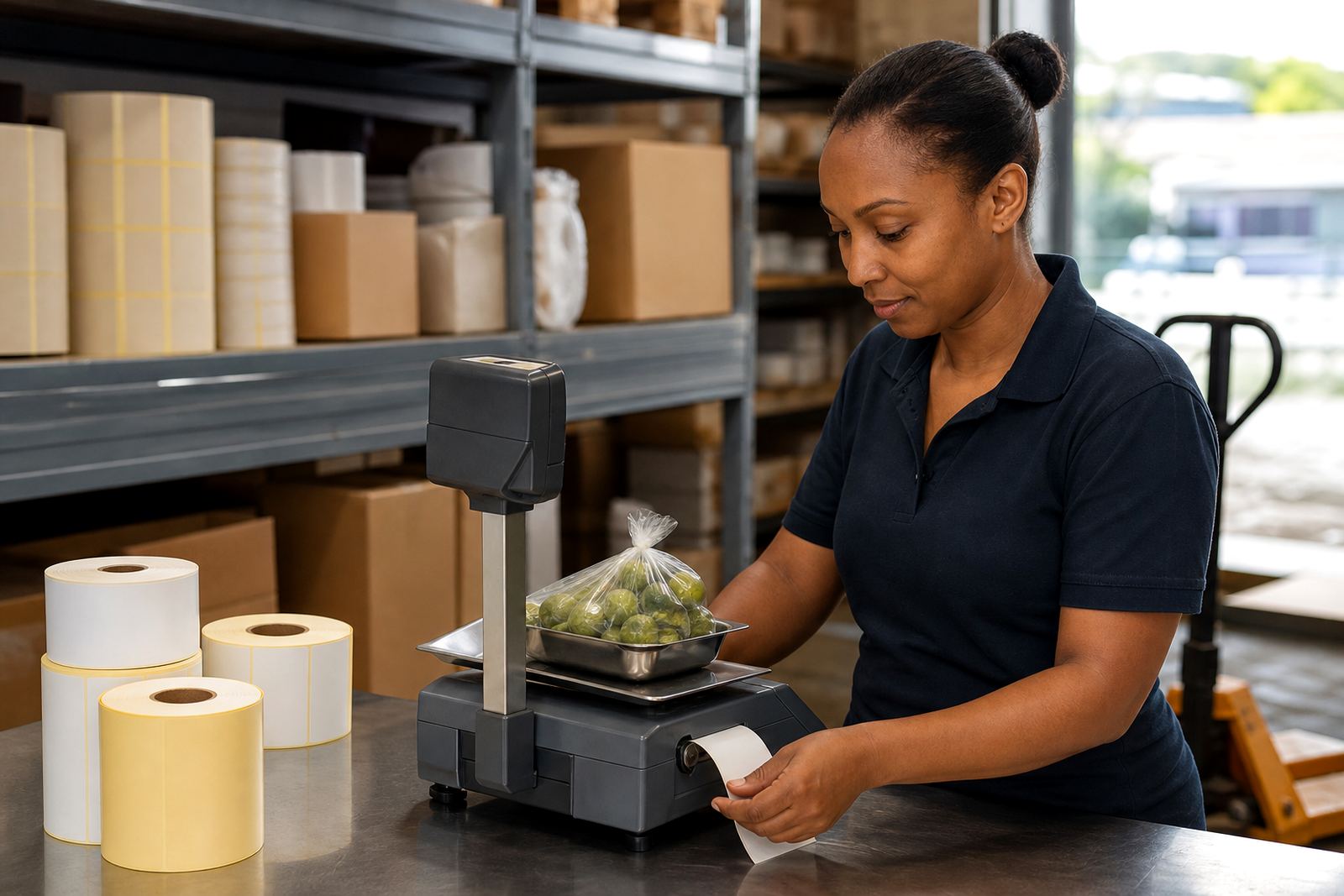
For weigh-and-price work, the label face stock is usually chosen for good print contrast and a clean surface for text, barcodes and weight fields. Thermal top-coated stocks are common for direct thermal printing, while paper or synthetic face stocks can be used when the label must handle more rubbing, cold rooms or longer display periods. The wrong stock can fade early, lift at the corners or leave a sticky edge on the pack. A neat roll helps the scale operator move quickly, and that counts when the queue is long in Pinetown or a fresh produce section in Durban gets busy.
Direct thermal or thermal transfer, the practical split
Direct thermal rolls are coated so the printer heat creates the image without ribbon. They work well where labels are used quickly and the environment is controlled, such as short-life weigh-and-price labels for fresh food. They are usually the first choice for many scale applications because the process is straightforward and less parts-heavy.
Thermal transfer rolls need a ribbon and are used with face stocks made to accept transferred ink. They are better when the label has to last longer, handle more abrasion or stay readable in tougher storage conditions. For example, if a pack is going from a chilled room to a distribution route, or a label is handled many times in a warehouse, thermal transfer can be the safer call.
- Direct thermal: no ribbon, lower handling steps, best for short display cycles.
- Thermal transfer: uses ribbon, better for durability and rub resistance.
- Choose the method based on how long the label must last, not just on printer type.
There is no one roll that fits every weigh scale. A shop in Pietermaritzburg selling same-day meat packs will not need the same durability as a logistics line in Johannesburg that labels cartons for storage and dispatch.
Face stock, adhesive and liner, each part pulls its weight
The face stock is the printed layer. The adhesive does the sticking, and the liner carries the roll through the printer. If one of these parts is wrong, the whole label run becomes frustrating. A label that prints well but peels in cold conditions is as bad as one that sticks too hard and leaves residue on trays or tubs.
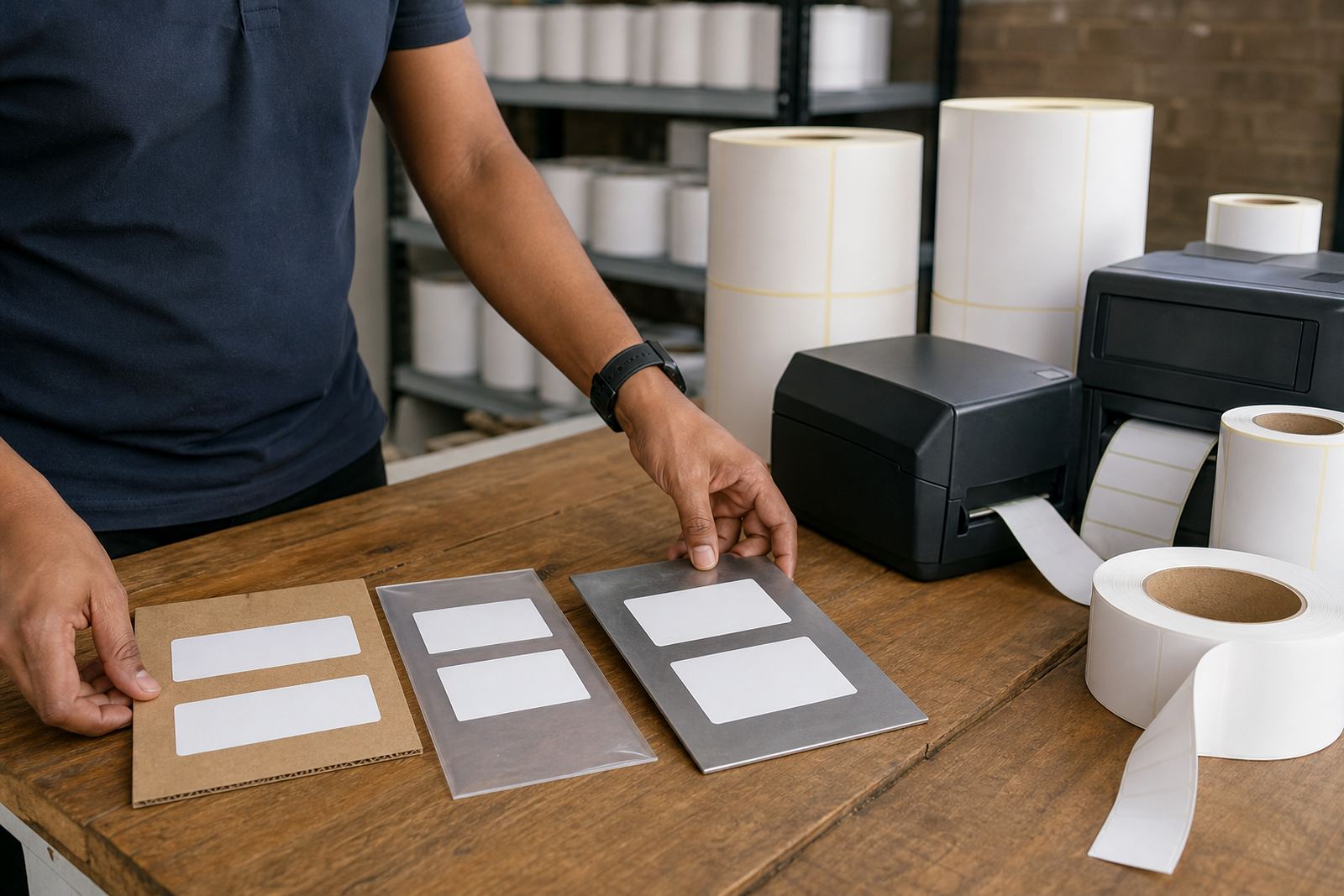
For weigh-and-price use, common face stock choices include economy paper, coated paper and synthetic options. Paper stocks are often fine for short-life retail use. Coated papers give a cleaner print and better resistance to smudging. Synthetic face stocks suit damp, chilled or high-contact applications where paper would soften. Adhesives can be permanent, removable or freezer grade depending on the pack and the surface. Smooth plastic tubs, chilled wrap and corrugated cartons all behave differently.
The liner matters too because it affects feed, release and waste. A roll with poor liner quality can skew through the printer or break in the middle of a run. That is where roll width, winding direction and core size need to match the machine exactly.
- Paper face stock: good for short display labels and general retail use.
- Coated paper: better print clarity and better scuff resistance.
- Synthetic face stock: better for moisture, chilling and handling.
- Adhesive choice: match to carton, wrap, tub, bag or frozen pack.
Core sizes and printer fit are not small details
Thermal rolls are not only about label width and length. Core size, outside diameter and winding direction all affect whether the roll sits correctly in the printer. A scale printer with a 25 mm core will not accept a 40 mm core without trouble, and a narrow core can also leave too little support for a heavy roll. The printer may jam, track badly or give uneven print pressure.
Before ordering, check the printer model, the spindle or holder width and the usable roll diameter. Many scale printers used in retail and food service take compact rolls that load fast and feed steadily. If the label format changes even a little, the settings for gap, black mark or continuous feed may also need checking. A small mismatch can waste a lot of labels across a week.
One wrong core size can stall a packer right when the line needs to move.
Length planning for busy tills and pack lines
Roll length should be planned around how many labels are used per day, how often the machine is reloaded and what the operator can manage during a shift. Shorter rolls may be easier to handle in a small counter setup. Longer rolls reduce changeovers in a busy warehouse or meat room, but only if the printer can handle the diameter.
For weigh-and-price labels, the format often includes item name, unit price, selling weight, total price and a barcode. That means the printable area must be correct from the start. A label that is too short can cut off the last line, while a roll that is too long for the printer can cause feed pressure problems. Roll length planning should always be linked to label size and printer capacity.
- Check how many labels a scale prints per hour.
- Match roll length to the size of the printer bay.
- Allow for reprints, test labels and price changes.
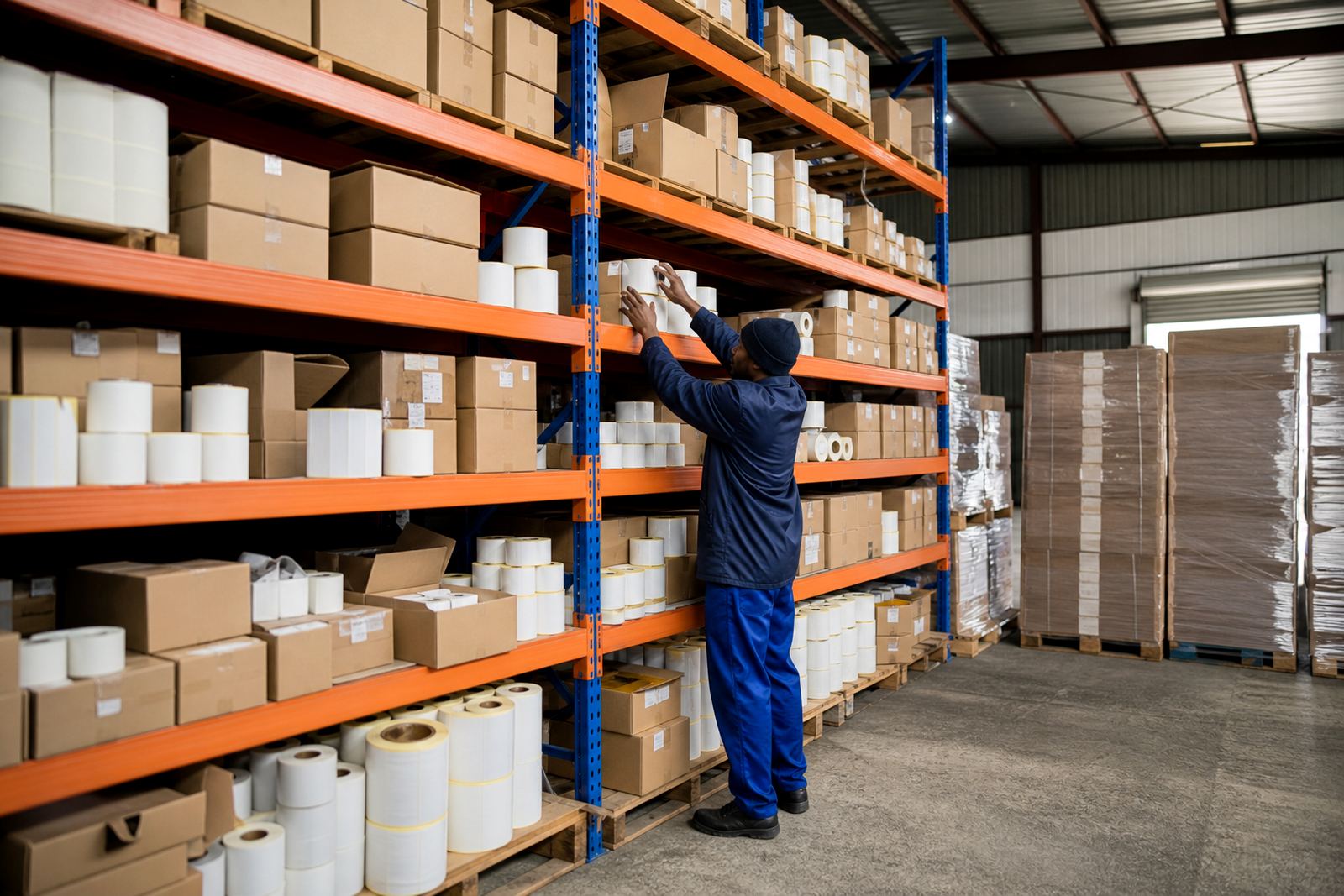
- Keep spare rolls in a clean, dry store away from direct sun.
A chilled dairy counter in Cape Town and a produce packing room in Pretoria will not use labels the same way, so the roll plan should follow the work pattern, not a rough guess.
A Durban packing line example that keeps the labels readable
Take a food packer in Durban supplying fresh produce and chilled packs to retail stores. The packer needs weigh-and-price labels that print fast, stick to slightly damp packs and remain readable after handling in a cold room. A direct thermal coated paper roll may work well for the shortest shelf life items, while a stronger adhesive and a better coated face stock may be needed for packs that move through more hands before sale.
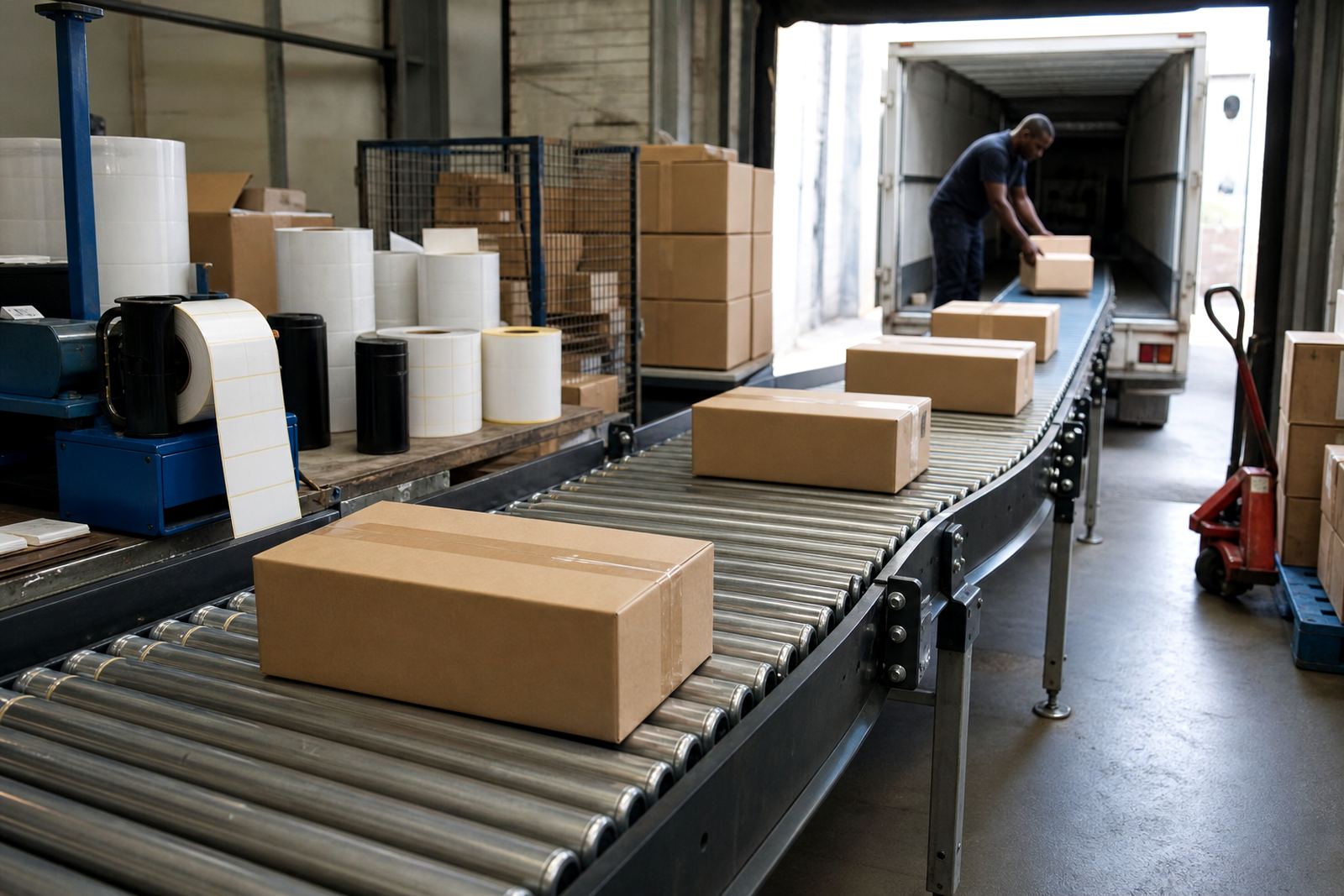
If the same business also labels outer cartons for dispatch to Johannesburg or Cape Town, then a second roll spec may be needed for the carton line. The carton label may need a tougher face stock and a different adhesive. That is why one roll type rarely covers every job in a food business. Sample rolls and a usage review help spot these differences before a full run goes out.
Our team at Westmead can check printer fit, advise on adhesive matching and plan the roll length to suit the packing rhythm. That sort of practical check saves wasted stock and fewer stoppages on the floor.
The ordering notes that prevent avoidable waste
When ordering thermal rolls for weigh-and-price labelling, the best note is not a long spec sheet. It is the set of details that stops errors before they start. If the roll is for a scale printer, say so. If it is for chilled retail packs, freezer stock, carton labels or short-life produce labels, say that too. A clear order helps with slitting, winding direction and dispatch packing.
- Printer model or a clear photo of the printer bay.
- Label width and length in millimetres.
- Core size and roll diameter.
- Direct thermal or thermal transfer requirement.
- Surface the label must stick to and how long it must last.
At Label Paper in Westmead, Pinetown, we supply self-adhesive label stock and thermal rolls across South Africa, from Durban and Pietermaritzburg to Johannesburg, Cape Town and Pretoria. The right weigh-and-price roll is the one that fits the printer, survives the pack and keeps the line moving without fuss.