The top layer does the visible work
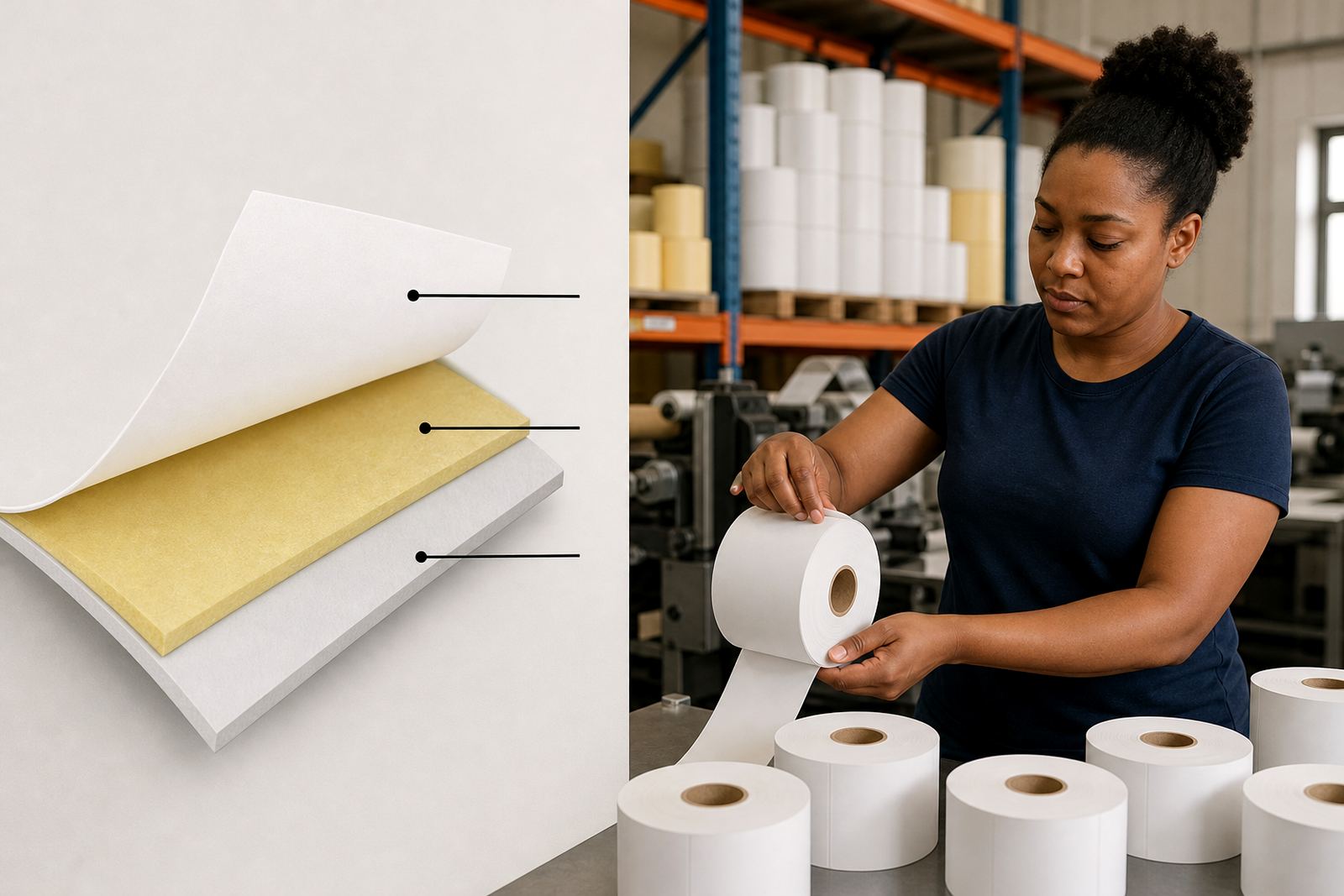
Face stock is the material that takes the print, carries the branding or instructions, and carries the handling abuse from packing table to final delivery. In most label constructions it sits on top of the adhesive, with a liner underneath to support the roll or sheet until use. It can be paper, film or a specialist coated stock, and each behaves differently when exposed to heat, moisture, abrasion or rough handling.
For a business in Westmead packing cartons for Durban, Cape Town or Johannesburg distribution, the face stock choice affects more than appearance. It affects how cleanly the label feeds through the printer, whether it tears by hand, and whether it stays readable after a cold room, a coastal warehouse or a long day in the back of a delivery vehicle.
Paper face stocks suit many everyday label jobs
Paper is still the most common face stock for general labelling because it prints well, cuts cleanly and is usually cost-effective for high-volume runs. It works well for shipping labels, product names, carton identification, shelf labels and internal tracking where the label does not need to face heavy moisture or repeated rubbing.
- Uncoated paper is a practical choice for basic packaging labels and hand-applied codes.
- Semi-gloss or coated paper gives sharper print detail for barcodes, product names and branding.
- Top-coated paper improves resistance to smearing when using thermal transfer ribbons or handling oily cartons.
Paper face stock can be a good fit for Pietermaritzburg operations where stock is stored indoors and labels are mostly used on cartons, pouches or trays. If the product will sit in a chilled store room or face condensation, you may need a more resistant surface than standard paper.
Film stocks hold up where paper starts to fail
Film face stocks are made for tougher conditions. They are often used where labels need better moisture resistance, better tear resistance or a cleaner finish that stays intact through handling and transport. Common film types are synthetic materials that flex without crumbling, and they are useful on chemical packs, frozen goods, outdoor items and containers that get wiped down.
In South African coastal areas, humidity can be the quiet problem that ruins a label job. A paper label may lift at the edges or start to go limp on a plastic tub, while a film face stock is more likely to keep its shape. That matters for retail packs in Durban, food holding packs in Hammarsdale and logistics labels that need to survive transfer between depots.
- Choose film when the pack may face moisture, friction or chilled storage.
- Check whether the label must be tear-proof or remove cleanly later.
- Confirm if the printer and ribbon combination can handle the stock thickness.
Print method and face stock must match
Direct thermal and thermal transfer behave differently, and the face stock needs to match the print method. Direct thermal prints by reacting heat onto a heat-sensitive coating, so it is best for short to medium life labels such as parcel labels, queue tickets and dispatch use. Thermal transfer uses a ribbon to transfer the print onto the face stock, which gives better durability and wider material choice.
If you use direct thermal on the wrong stock, the image can fade too fast. If you use thermal transfer with a face stock that is not suited to the ribbon type, you can get weak print, poor barcode contrast or patchy coverage. This is where printer fit checks matter, especially when a business is changing from one label type to another or switching between warehouse and retail use.
- Direct thermal is best for short-life labels and quick dispatch use.
- Thermal transfer suits longer life, better abrasion resistance and more face stock options.
- Test barcode scan quality after any stock change, not just appearance.
Core size, roll direction and printer fit save time later
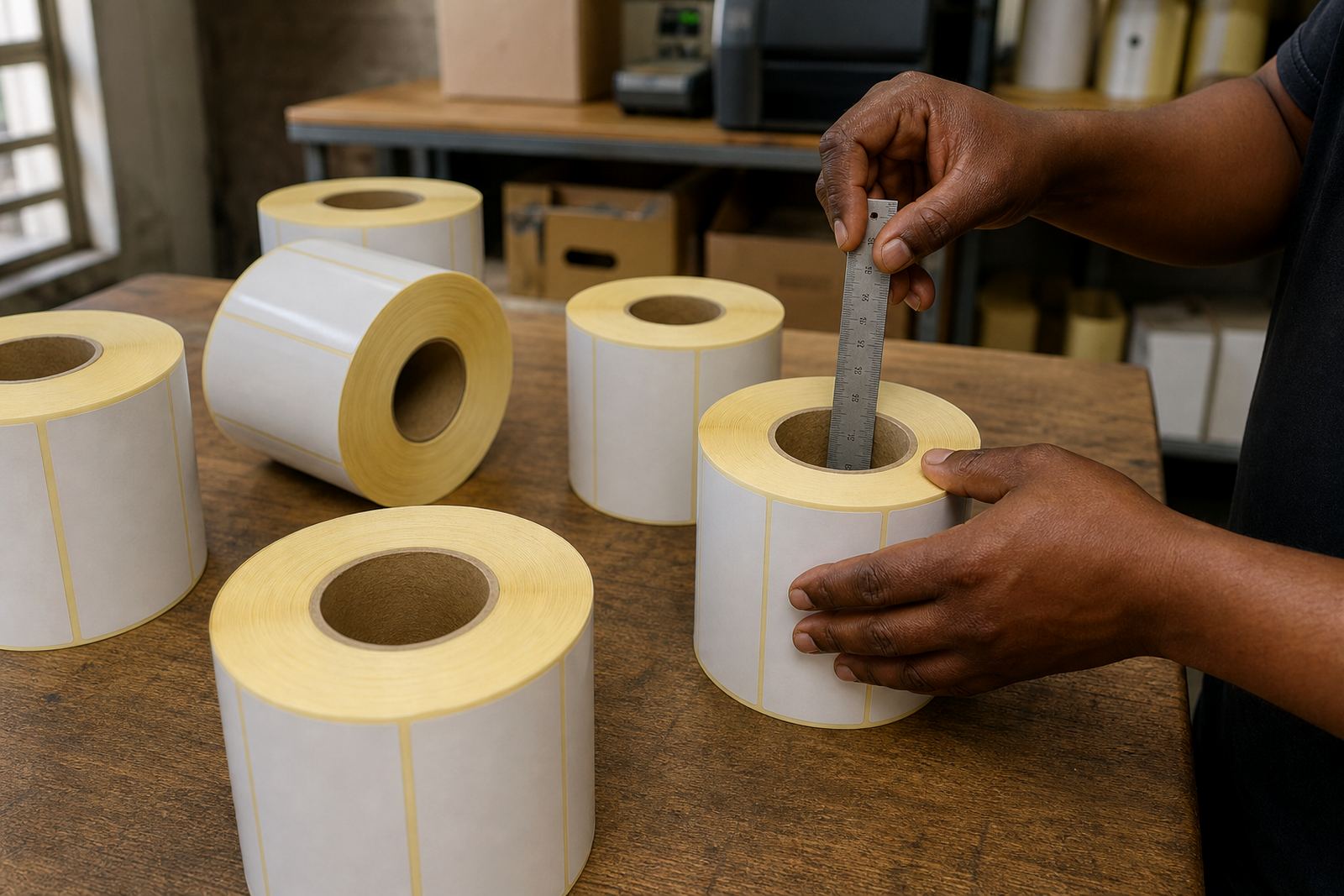
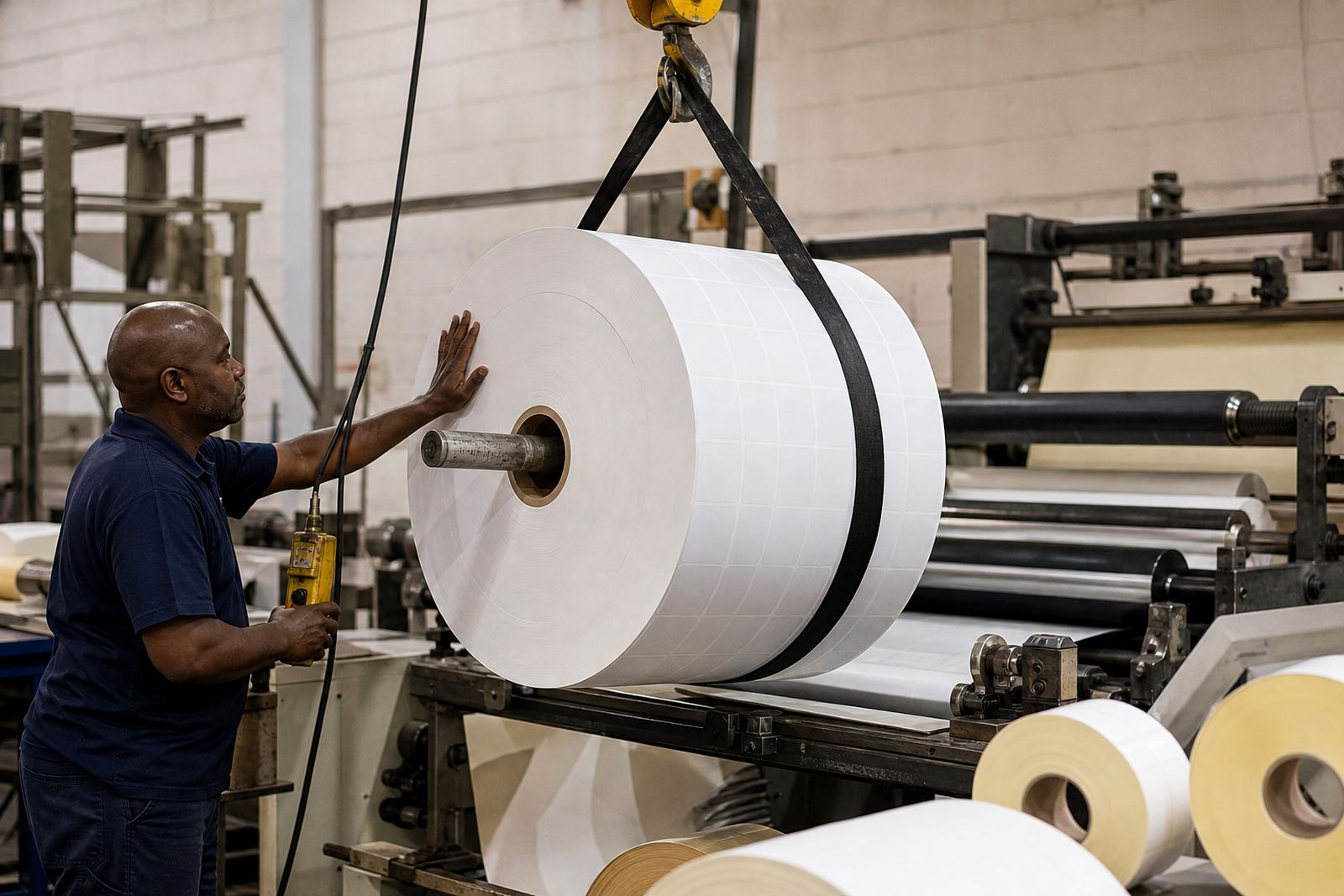
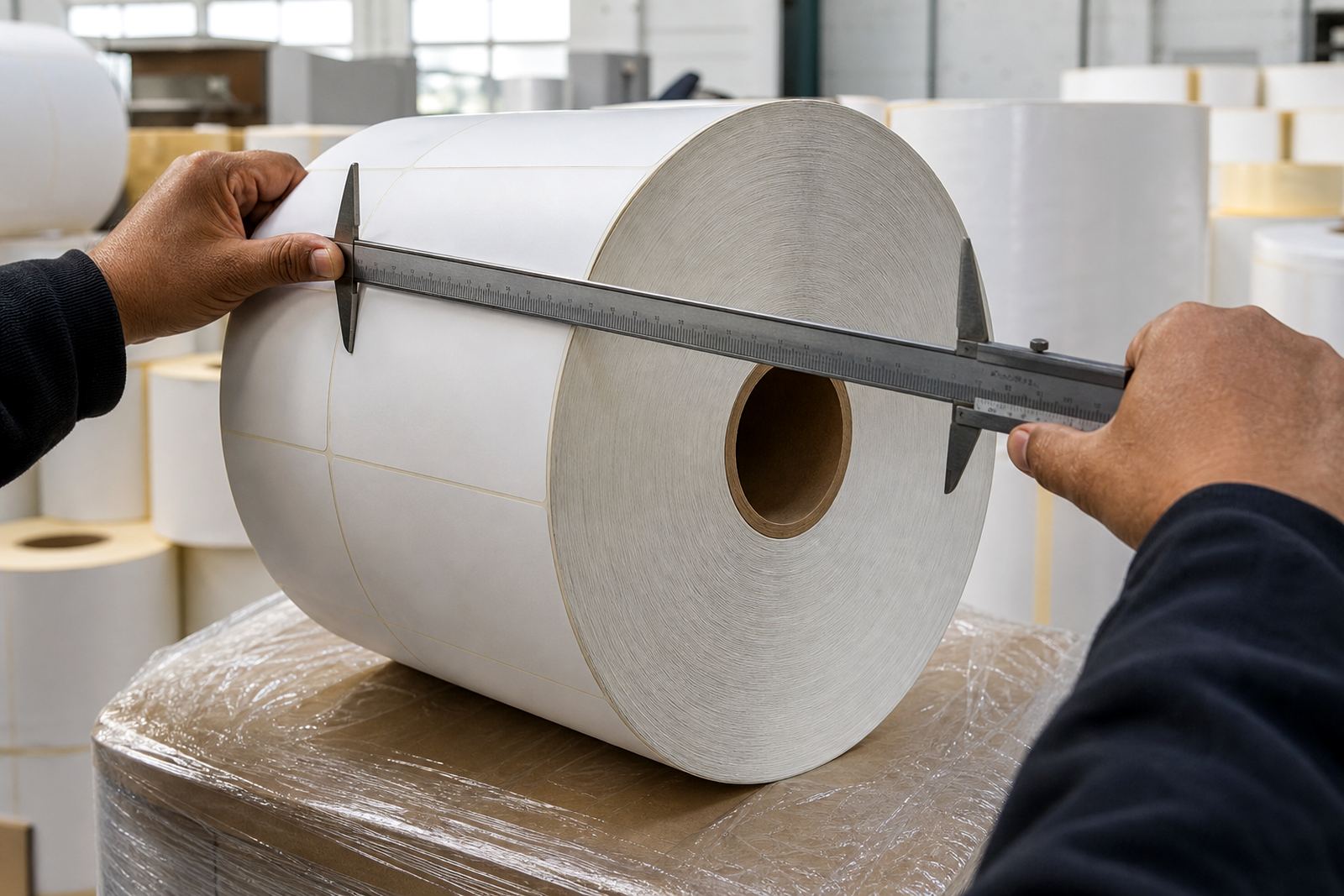
Face stock is only one part of the label roll, but it has to work with the full roll specification. Core size, winding direction, outer diameter and roll length all affect whether the labels fit your printer and unwind properly. A roll that is too large, wound the wrong way or cut with the wrong gap can cause misfeeds, wasted time and damaged print heads.
Businesses running benchtop printers, industrial print stations or conveyor-fed labelling systems need the stock to match the equipment exactly. A 25 mm core may suit some compact printers, while a 76 mm core is more common on larger units.
- Confirm core size before ordering, not after the roll arrives.
- Check winding direction for left-hand or right-hand feed printers.
- Plan roll length around daily usage so changeovers stay manageable.
Adhesive and liner matter because the face stock cannot work alone
The top layer gets the attention, but the adhesive and liner decide how the label behaves on the pack and in the printer. A glossy face stock may look neat, but if the adhesive is not matched to the surface, the label can curl, lift or fail under cold-chain storage. Likewise, a strong adhesive on the wrong liner can be awkward to release during fast packing.
For retail, logistics and manufacturing, the material pairing should suit the surface, the environment and the way the label is applied. Labels on corrugated cartons need different adhesive behaviour from labels on smooth plastic tubs or powder-coated drums. If the label must be removed later, the face stock and adhesive choice must both support that requirement, not fight it.
At our Westmead base in Pinetown, we regularly look at label use in relation to packing speed, storage conditions and printer set-up. A roll that works in a controlled warehouse in Pretoria may need a different adhesive or face stock combination for a humid Durban dispatch area. That detail saves rework, and keeps labels readable from the first pallet to the last carton.
Practical picking for South African packing floors
The best face stock is the one that matches the way your business actually runs. A small retailer may only need a neat paper label for shelves and stock control, while a larger manufacturer may need a synthetic face stock that can handle heat, friction and longer storage. The choice should be based on use, not just on how the sample looks in hand.
For local operations, a few checks make the decision easier:
- Will the label face moisture, cold rooms, dust or direct handling?
- Does it need to print barcode data, product copy or warning information clearly?
- Will it be applied by hand, from a benchtop printer or on a faster production line?
- Do you need removable labels, permanent labels or labels that must survive transport and storage?
Sample rolls help with this. A short test run can show whether the face stock feeds properly, how it prints on your equipment, and whether the finished label suits the pack surface. That is often the most practical way to avoid an expensive full roll that does not fit the job.