Why the label fails before the product does
Self-adhesive label stock is usually built from three parts. The face stock carries the print. The adhesive bonds the label to the pack or part. The liner protects the adhesive until application and must feed smoothly through the printer or dispensing process. If one layer is wrong, the whole roll gives trouble.
For internal factory use, paper face stocks are common on cartons, trays and general identification labels. They print clearly and are often cost-effective for short to medium life labels. For harsher conditions, synthetic face stocks are used when moisture, abrasion or contact with chemicals is expected. The adhesive needs to suit the target surface too, whether that is corrugated board, plastic tubs, shrink wrap, metal racking or drums.
- Permanent adhesives suit most packing and shipping labels
- Removable adhesives help with temporary process tags and bin labels
- High-tack adhesives are useful on textured cartons and some plastics
- Freezer or cold-room adhesives are chosen for chilled stock and cold chain use
Direct thermal or thermal transfer, and where each one earns its keep
Direct thermal rolls use heat-sensitive material that darkens in the printer. They are handy for shorter life applications such as dispatch labels, day codes and temporary warehouse tags. They need no ribbon, but they are more sensitive to heat, sunlight and friction, so they are not the best choice where a label must stay readable for months.
Thermal transfer rolls print with a ribbon, which gives stronger image durability. This is better for product identification, batch coding, asset tags and labels that must hold up in storage or transport. The right ribbon also matters. Wax ribbons suit many paper labels, while wax-resin or resin ribbons are chosen for tougher stocks and longer wear. On a hot production floor in Pinetown, that extra durability can save a lot of relabelling when cartons are moved more than once.
- Direct thermal for short life, high turnover labels
- Thermal transfer for longer life and better resistance
- Ribbon choice must match the face stock and print duty
- Barcode readability should be checked on the actual printer settings
Core size, winding direction and printer fit are not afterthoughts
Roll size is about more than how many labels fit on a reel. Core size, roll diameter, winding direction and label gap all affect whether the roll will run properly in the printer. A 25 mm core suits smaller benchtop units, while 76 mm cores are common on larger industrial printers. The wrong core or winding direction can lead to feeding issues, skewed labels and unnecessary downtime.
In a factory, printer compatibility needs to be confirmed before a large run is cut. That includes the label width, the roll outside diameter, sensor type and whether the printer expects labels wound out or wound in. A sample roll is worth far more than a guess when a line is running through the shift and no one has time to stop and reset the machine.
- Confirm core size before ordering new rolls
- Check if the printer uses gap, black mark or continuous sensing
- Match winding direction to the printer path
- Allow for ribbon width where thermal transfer is used
Label choices for factory bins, pallets and packed stock
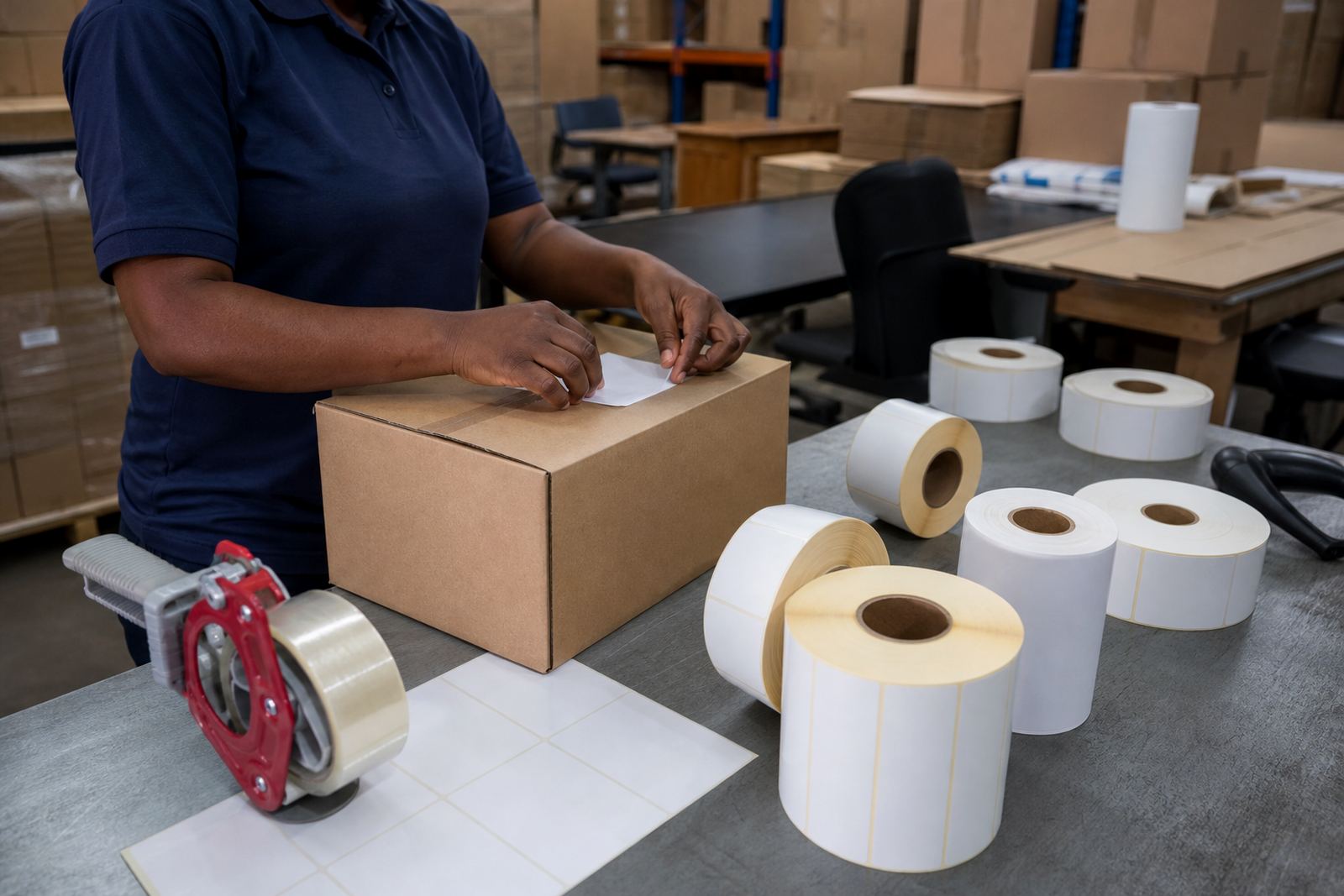
Different parts of the plant need different label behaviour. Bin labels may need to peel cleanly during line changes. Pallet labels need to stay in place through handling and film wrap. Inner pack labels may need a smaller format but better resistance to scuffing. A good label plan sets each of these apart rather than forcing one stock to do every job.
For manufacturers working across Durban, Johannesburg and Cape Town, moisture and transport conditions can vary a lot. Coastal humidity can affect paper labels stored too close to open doors, while inland dust and high daytime heat can change how adhesives perform on rough cartons. Planning for those differences helps reduce rejected rolls and labels that lift at the edges.
- Bin and process labels may need removable or repositionable adhesive
- Pallet labels usually need stronger grip and cleaner barcode print
- Internal tracking labels should stay readable through the full shift
- Outer carton labels often need a balance of cost and legibility
A Westmead example from the packing floor
A mid-sized packing line in Westmead may need one label for carton identification, another for batch coding, and a third for pallet dispatch. If the cartons are sealed in a warm area and then moved into storage, the label stock must cope with that change in temperature.
That kind of site usually benefits from a proper usage review. The team can look at what is being labelled, how long the label must last, the printer model in use and whether the stock should be cut to a specific width or rewind direction. A small change in adhesive or liner can prevent a lot of stoppages later, especially when several operators are sharing the same equipment across shifts.
- Review the surface before choosing the adhesive
- Match the life of the label to the life of the product
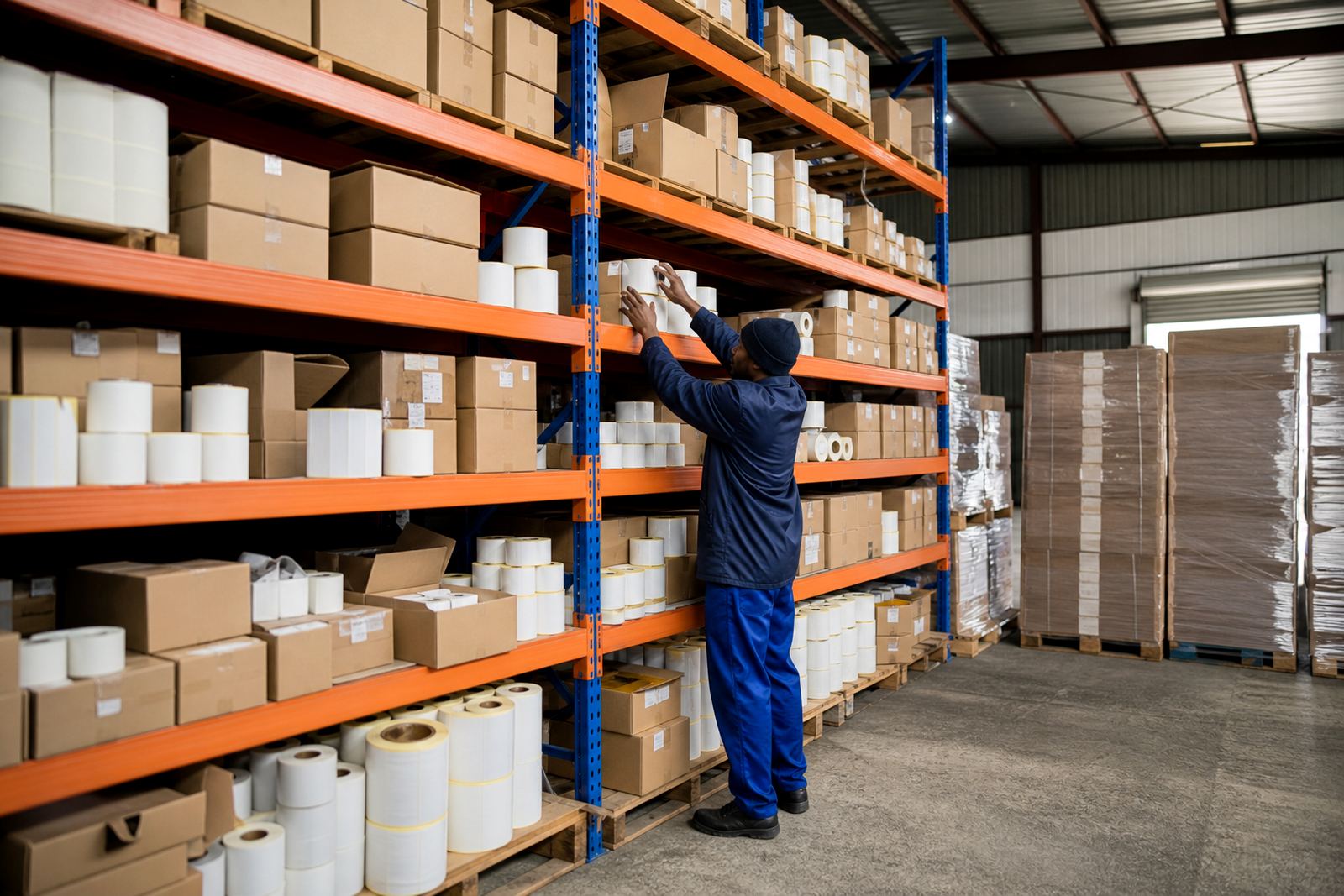
- Keep spare sample rolls for new lines or printer changes
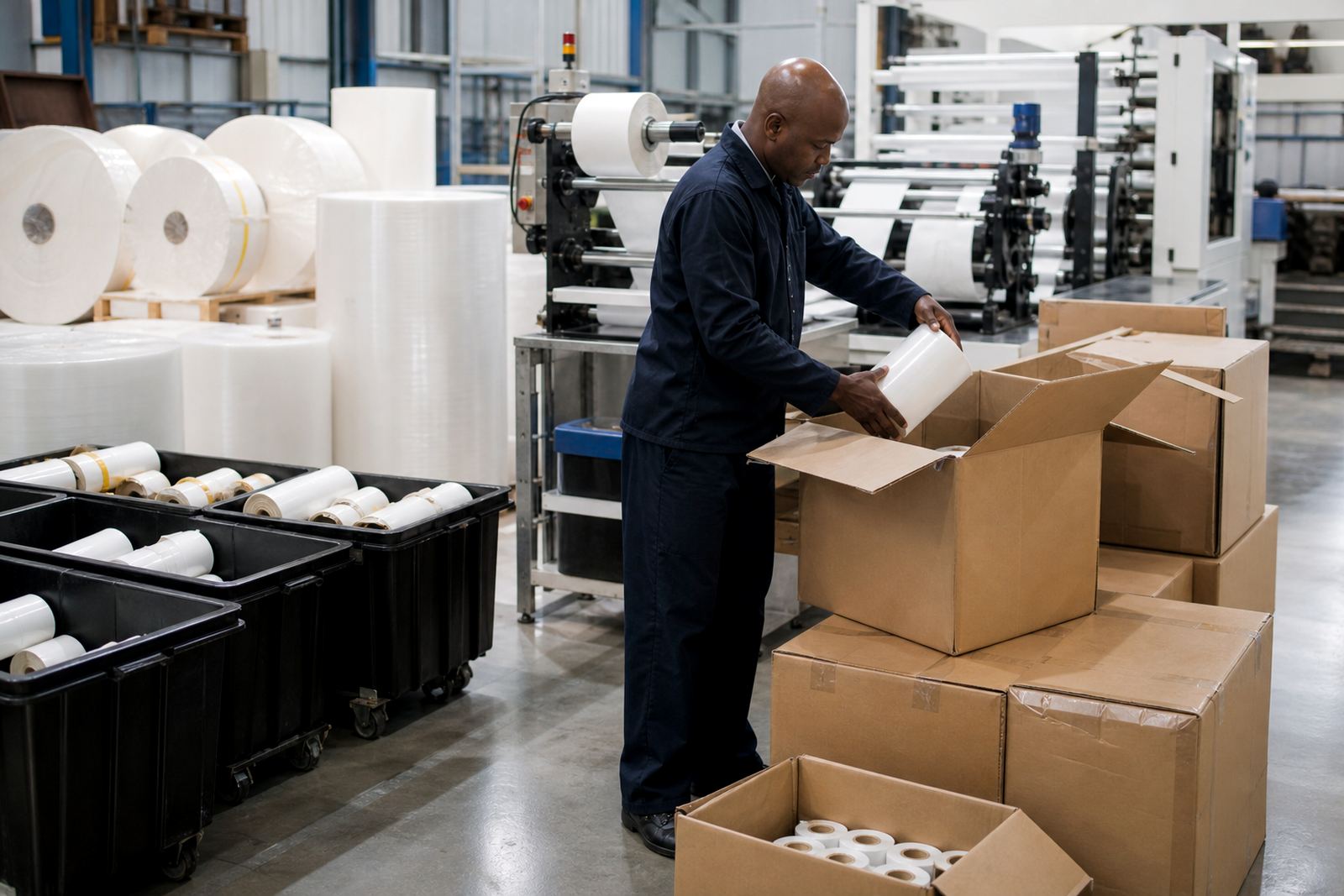
- Plan dispatch packing so rolls arrive clean and ready to use