Why the roll faces one way and not another
Winding direction refers to how the label face stock sits on the roll, and whether the printed or unprinted side is facing out as the roll feeds. With self-adhesive labels, that orientation affects where the label enters the printer, how the sensor sees gaps or black marks, and how the finished label lands on the liner. For thermal rolls, the same rule matters because the heat can only work properly on the correct face. If the roll is wound the wrong way, the printer may still pull it through, but the print position can drift or the image may appear on the liner side instead of the label face.
In practical terms, winding direction is part of the loading setup, not just a packing detail. A label that is wound face-in for one machine may need face-out for another. That is why the roll build has to match the printer path, the unwind direction and the way the operator feeds the stock in Westmead, Pinetown or at a warehouse in Jet Park, Johannesburg. A few millimetres out at the roll start can become a whole batch issue by the time the labels reach packing.
How printer paths change the answer
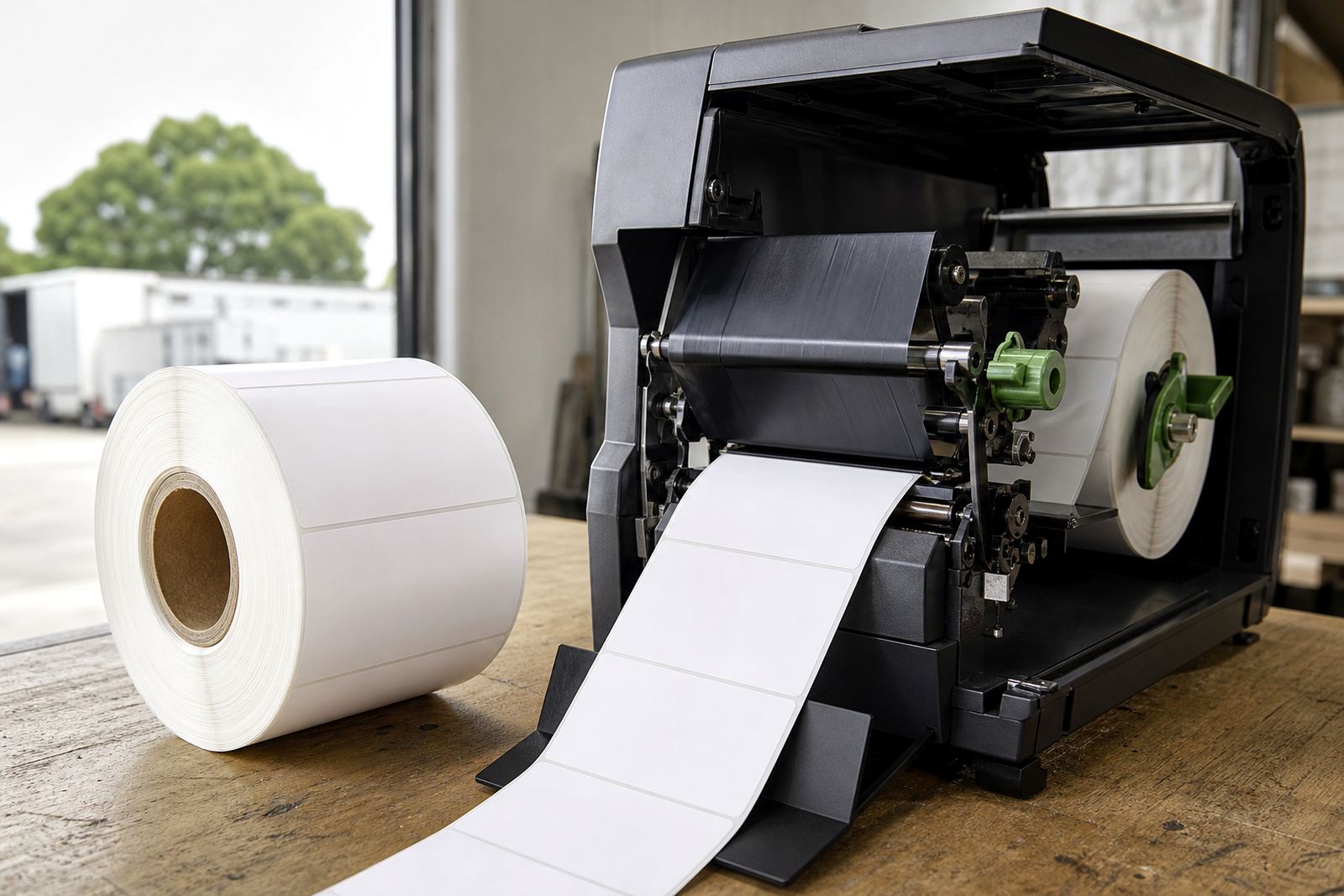
Different printers pull material in different ways. Some benchtop units accept rolls from the rear, others feed from the side, and industrial printers often have a more direct path with tighter guides. The winding direction must suit that path so the labels travel flat and stay aligned with the printhead. If the roll is reversed, the material may twist slightly, drag on the edge guides, or sit under tension and wander as it feeds. That is when you start seeing labels print too high, too low, or slightly skewed.
The same applies to core size and roll diameter. A 25 mm core used on smaller printers is handled differently from a 76 mm core used on heavier machines. If the core fit is wrong, the roll can wobble before the printer even starts working. When we check printer compatibility, we look at core size, unwind direction, outer diameter and label layout together, not one detail at a time.
- Rear-feed printers often need a different unwind than side-feed units.
- Smaller office printers usually need lighter rolls and tighter winding.
- Industrial units can take larger rolls, but the feed path still needs matching.
- Thermal transfer and direct thermal rolls are not loaded the same way.
Direct thermal and thermal transfer do not behave the same
Direct thermal rolls are coated so the image appears when heat passes through the printer head. There is no ribbon, so the face stock must be the correct heat-sensitive surface. If the roll is wound incorrectly, the printer may still feed it but the print can come out faint, patchy or on the wrong side. Thermal transfer rolls use a ribbon, and the face stock can be paper or synthetic depending on the job. That setup gives better resistance to moisture, scuffing and handling, which matters in coastal areas like Durban where humidity can affect packed goods.
Because the printing method differs, the winding direction also changes how the ribbon and label surface meet the printer. A thermal transfer roll that loads well in a warehouse in Pretoria might not suit the same machine if the roll is flipped. A quick test roll usually shows this straight away. You can hear it too, the feed sounds smoother when the unwind and print path are aligned properly.
What happens when winding direction is ignored
The problems are usually small at first, then they grow. A label may peel awkwardly, the barcode can print off centre, or the machine may keep stopping because the sensor is looking at the wrong side of the gap. In packaging areas with heavier throughput, that means more reprints and slower dispatch. On a humid afternoon in Pietermaritzburg, a badly matched roll can also curl at the edge and make feeding even harder.
Common signs include:
- Print shifting left or right across the label face.
- Labels lifting too early from the liner.
- Ribbon wrinkling on thermal transfer jobs.
- Feed errors after the first few metres of a roll.
- Uneven tension when the roll is mounted on the spindle.
These issues are not always caused by the printer itself. Often the roll is fine, but the winding direction is wrong for the machine or the operator has loaded it against the natural unwind. A small orientation mistake can waste a full carton if nobody checks the first sample label.
Matching winding direction to the job type
For packaging labels, you usually want a clean peel and a stable print area. For logistics labels, the priority is scan quality and repeat feeding over long shifts. For retail shelf labels, appearance matters because the print has to sit straight and look tidy on the pack. The winding direction has to support that use, along with the adhesive and face stock. Paper face stocks are common for general use, while synthetic face stocks are better where moisture, abrasion or handling is more intense.
It helps to plan the roll build in the same way you plan the print content. Check the printer model, the label size, the core size and the unwind direction together. Then confirm whether the application is hand-applied, machine-applied, or printed and packed straight away.
- Hand-applied labels need easy peel and clear lead edges.
- High-speed dispatch lines need stable feed and tight roll winding.
- Retail applications often need neat print alignment on smaller formats.
- Cold rooms and humid stores may need a more durable face stock and adhesive match.
A Westmead loading check before the first carton goes out
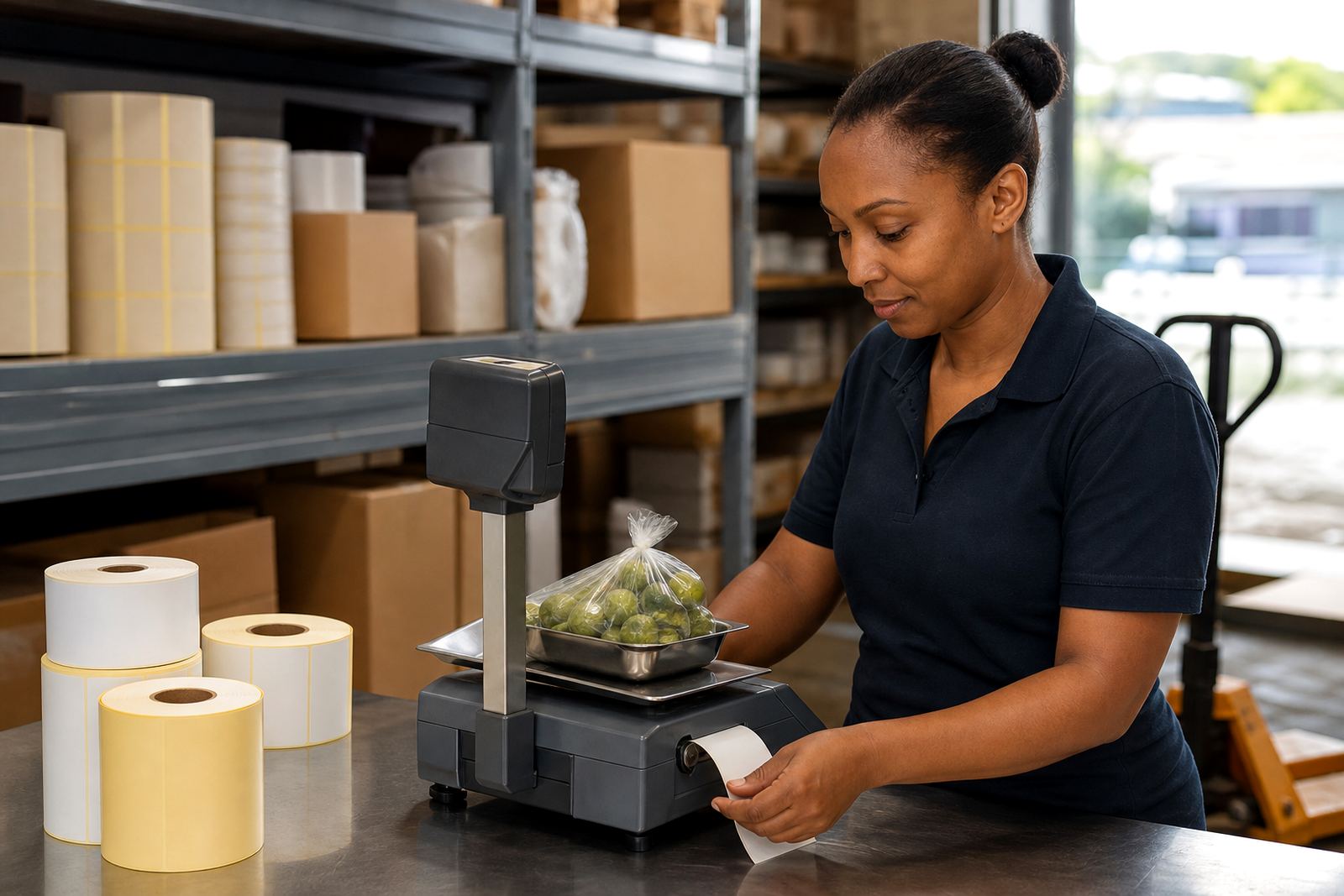
In Westmead, a packing team might run labels for cartons, stock codes and shelf-facing packs on the same morning. If the winding direction is wrong on just one roll, the operator may not notice until the first batch is already stacked for dispatch. The better habit is to run one sample label, check the leading edge and confirm the print sits squarely on the face stock. That takes a minute and can save an hour of sorting later.
When we plan a roll for dispatch packing, we look at the printer fit, the unwind direction and the way the labels will be used after printing. For some jobs, a face-in roll is best. For others, face-out works better because it suits the operator’s hand movement and the machine path. If the roll is being used in Durban, Johannesburg, Cape Town or Pretoria, the same basic rule applies: the printer decides the final orientation, not the other way round.
The practical checks that prevent wasted rolls
Before a run starts, there are a few checks worth doing every time. These are not complicated, but they prevent most loading problems and keep print quality steady across the shift. They also help when the same printer is used for different jobs on different days, which is common in logistics and manufacturing. If the orientation changes between products, the team should note it clearly on the roll box or internal picking slip.
Useful checks include:
- Confirm the printer model and label path.
- Check whether the roll needs face-in or face-out unwind.
- Match the core size to the spindle and guides.
- Test one label for print position before bulk printing.
- Note the preferred winding direction for repeat label runs
Once those details are set, loading becomes much quicker and there is less chance of rework. That is the point of proper winding direction planning: smoother loading, better alignment, and fewer surprises when the roll reaches the line.