Cold air changes how a label grabs
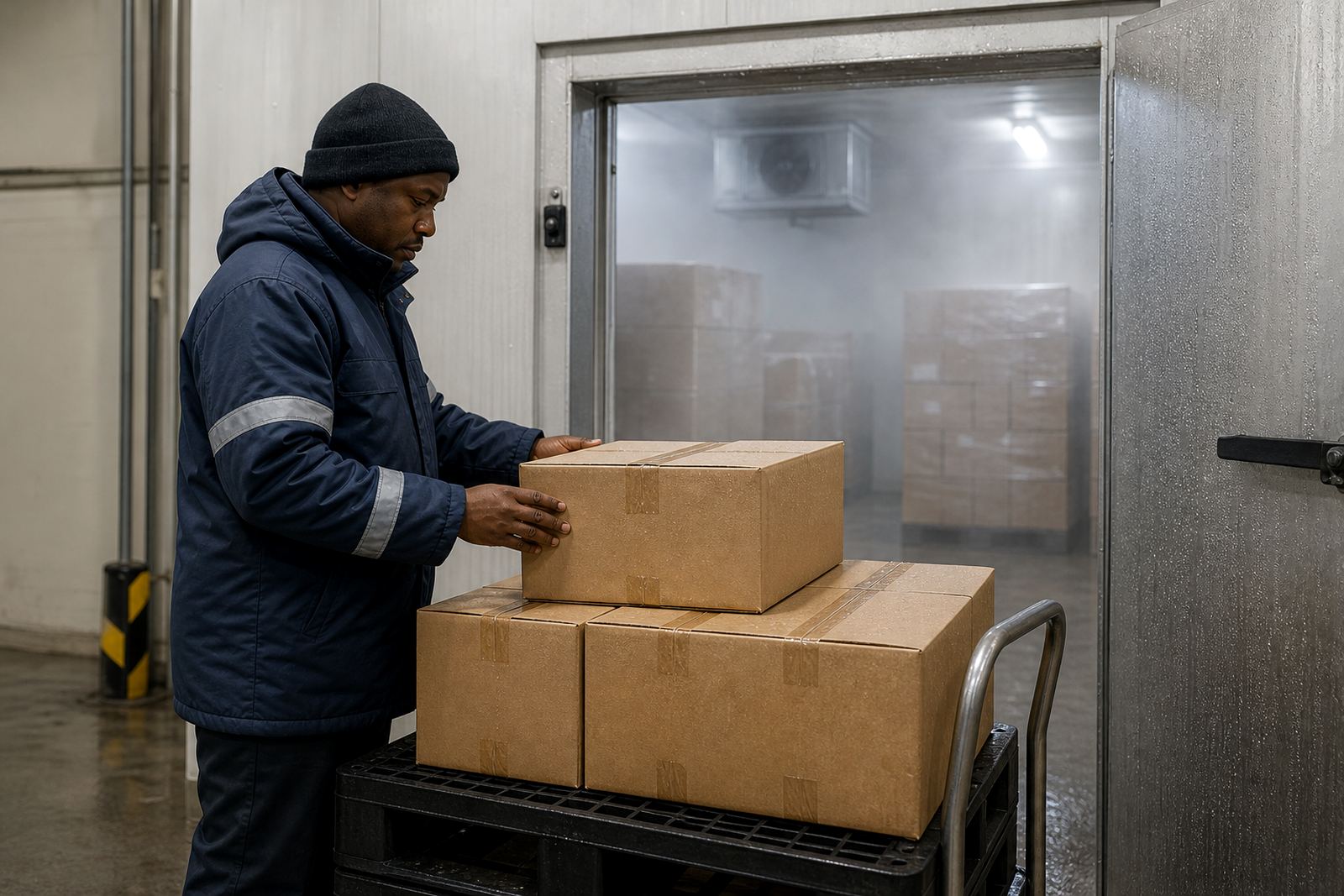
In chilled rooms, the first thing to check is whether the adhesive will bite properly on the actual surface you use. Cardboard cartons, shrink wrap, plastic tubs and polypropylene trays all behave differently once they move from a dry packing bay into a 2°C or 5°C room. A label that sticks well at room temperature can lift at the edges when the pack surface sweats.
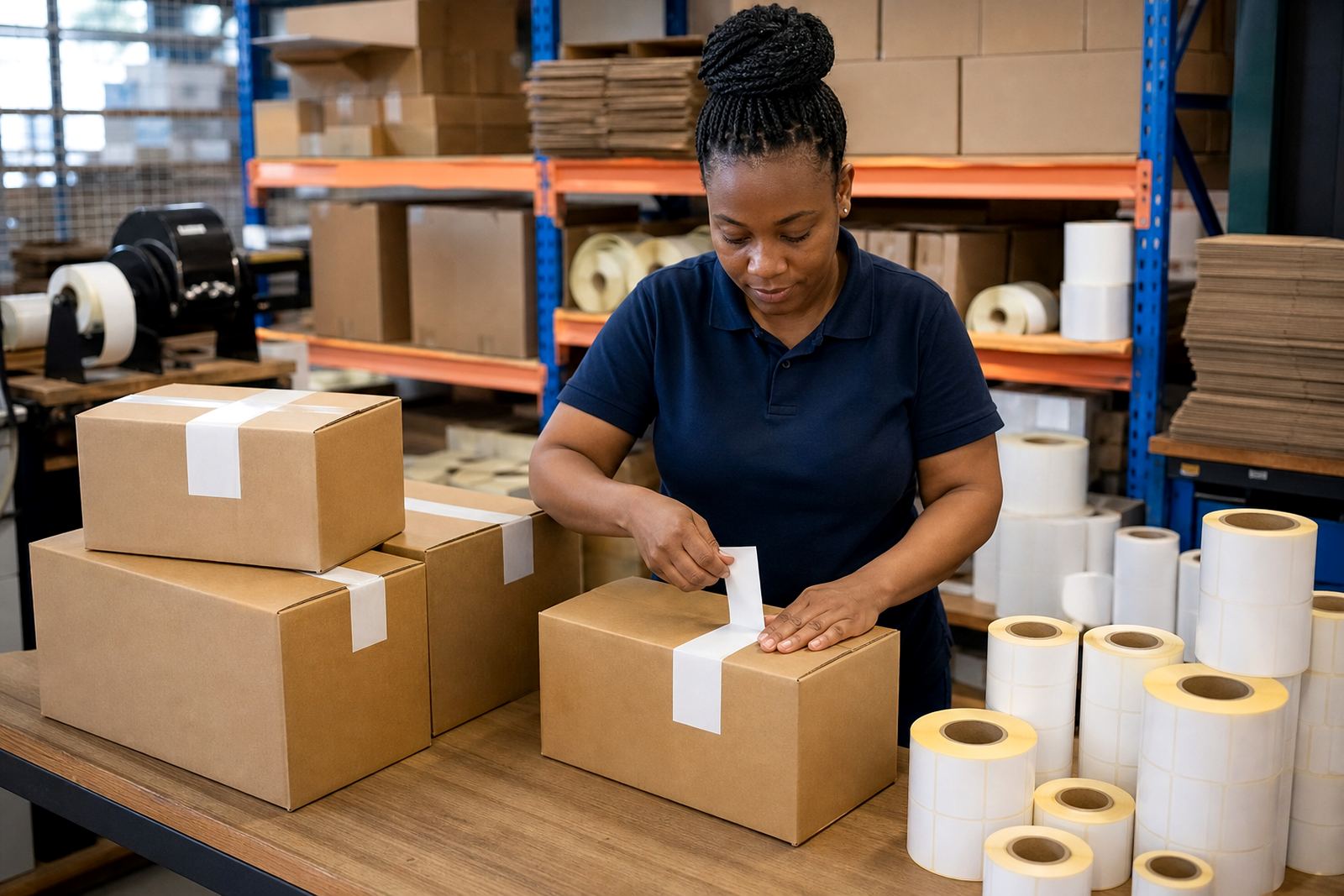
For chilled handling, the safest approach is to match the adhesive to the surface and the temperature range, not just the product name. Permanent adhesive is often needed for shipping and traceability, while removable or freezer grade options may suit returnable trays or short-term handling. On a humid Durban morning, a carton loaded in Westmead can already be taking in moisture before it reaches the cold room, so that first bond matters.
Face stock must survive moisture, not just look neat
The face stock is the top layer that carries the print, and in a cold room it needs to hold its shape when exposed to damp air and handling. Paper face stocks are common and cost-effective, but they can soften or scuff if the environment is wet, the cartons are cold to the touch, or the labels are handled with gloves. Synthetic face stocks are often better where boxes are chilled, unpacked, repacked, or stored near wash-down areas.
For barcodes, batch codes and ingredient information, the print contrast has to remain clear after condensation forms. A label that looks fine on the packing bench can become patchy in a cold room if the surface absorbs moisture. That is why food processors, cold storage operators and logistics teams in Pietermaritzburg and Pinetown often ask for sample rolls before committing to a full run.
- Use paper face stock where the label stays dry and the pack is handled lightly.
- Use a synthetic face stock where moisture, abrasion or handling is heavier.
- Ask for print samples on the same printer and ribbon type you use in production.
- Check that the barcode still scans after a period in chilled storage.
Direct thermal or thermal transfer, the cold room decides
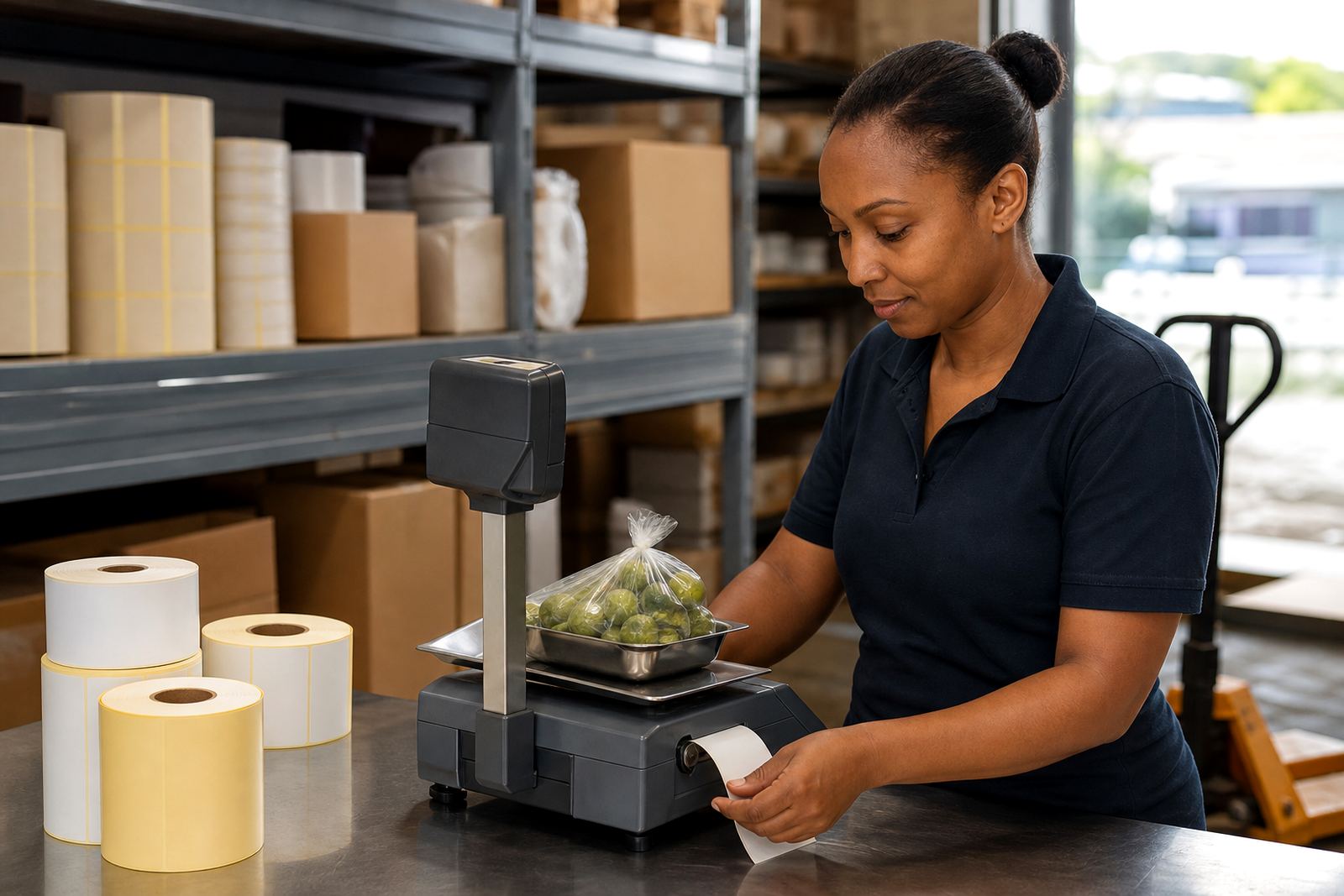
Direct thermal labels are printed without a ribbon, which makes them convenient for short-life applications. They are widely used for courier labels, weighing tickets and fast-moving dispatch bays, but they can fade more quickly when exposed to heat, friction or long storage. In a cold room, the issue is not only the chill itself, but also the shift from cold to warm air when stock is moved in and out.
Thermal transfer printing uses a ribbon and is usually the better option when the print must stay readable for longer, especially on labels for stock control, traceability and product identification. The ribbon and face stock need to work together. If the ribbon is not matched to the label material, you may get smudging, poor adhesion of the print, or a barcode that fails at the scanner gate.
- Choose direct thermal for short-term labels with limited handling.
- Choose thermal transfer where print life and barcode clarity matter more.
- Confirm whether your printer accepts the roll width, outer diameter and core size used on site.
- Ask for a check on winding direction if your printer feeds from the top, bottom or side.
Core size, roll length and printer fit are not small details
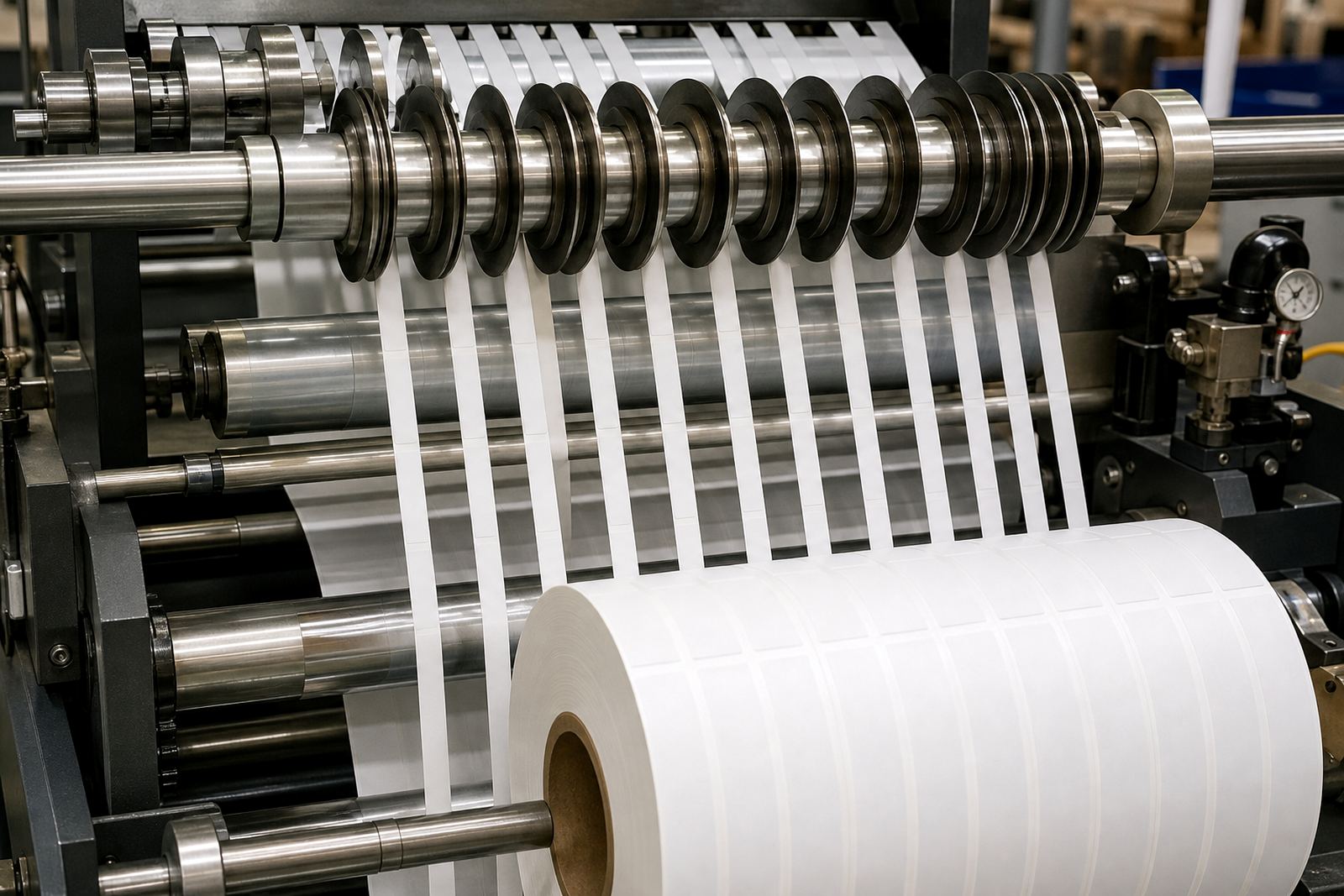
Many label problems in chilled environments are really feed problems. A roll that is too large for the printer housing, a core that sits loose on the spindle, or a roll wound the wrong way can waste time at the packing line. When production is running and forklifts are moving, nobody wants to stop and refit a spool because the label stock is not compatible with the printer.
Core size, roll length and rewind direction should be checked before the job starts. That applies whether the printer is a compact unit at a packaging table or a wider industrial machine in a dispatch area.
- Measure the printer spindle and confirm the core diameter.
- Check the maximum roll outside diameter the printer can hold.
- Confirm label length so the batch does not overrun the print queue.
- Plan for the same roll format across sites if orders move between branches.
Where the label is handled matters as much as where it is stored
A cold room label may only need to survive a few days, or it may need to stay legible through picking, transport and shelf display. The route matters. A chilled dairy carton that moves from Westmead to Johannesburg by road may face much more vibration, condensation and repeated touching than a carton held in one room for same-day dispatch. If the pack goes from chilled storage into a retail back room, the adhesive has to cope with temperature changes twice.
This is where usage review helps. If labels keep peeling on corners, smearing after a wash-down, or lifting after long transport, the issue is usually in the adhesive, face stock or print method rather than the barcode itself. A good label should suit the whole journey, not just the cold room shelf.
A practical Westmead example for chilled goods
A small food packer in Westmead might be sending prepared trays to Pietermaritzburg and Johannesburg on the same day. The trays are sealed in the packing area, then moved into chilled storage before dispatch. If the adhesive is too light, corners lift when the packs sweat. If the face stock is too soft, the barcode rubs during stacking. If the roll is not sized correctly for the printer, operators waste time clearing feed errors during a busy shift.
In that kind of set-up, the best result usually comes from a tested combination: the right adhesive for cold surfaces, the right face stock for moisture, and the right roll format for the printer already on site. Sample rolls, printer fit checks and adhesive matching save time later, especially where chilled stock moves quickly and there is no space for reprints.