Why ribbon-based printing lasts where heat and handling do the damage
Thermal transfer printing pushes ink from a ribbon onto the face stock, so the printed image sits on the label and does not rely on heat-sensitive coating alone. That makes it the better choice when labels must survive sunlight, friction, moisture or long shelf life. In a Westmead packing room or a Durban dispatch area with coastal humidity, that extra print durability matters more than many buyers first expect.
Direct thermal labels are quicker for short life jobs, but the print can fade when exposed to heat, oil or rubbing. If you are labelling cartons for same-week movement, direct thermal can be perfectly workable. If the label must stay readable on a drum, pallet or stock item for months, thermal transfer is usually the safer option.
- Thermal transfer uses a ribbon and a compatible face stock
- Direct thermal uses heat-sensitive paper with no ribbon
- Thermal transfer suits shipping labels, product IDs and compliance labels
- Direct thermal suits short-term courier and till-style applications
What happens inside the printer when the ribbon is doing the work
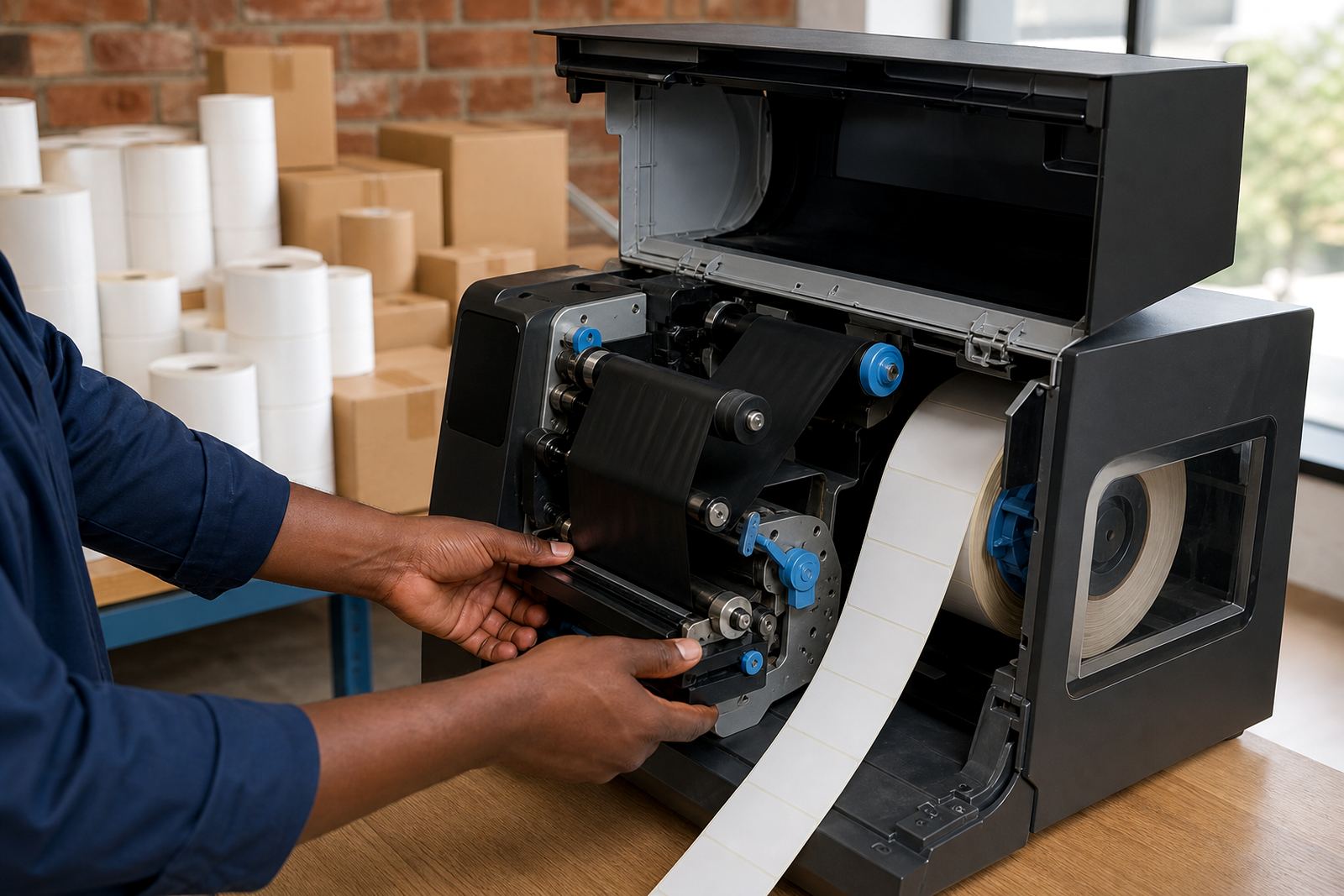
In a thermal transfer printer, the printhead applies heat to the ribbon, and the ribbon transfers ink onto the label surface. The result depends on three parts working together: the label face stock, the ribbon grade and the printer settings. If any one of those is wrong, print can look grey, patchy or too light for barcode scanning.
The face stock can be paper, synthetic or coated material, depending on whether you need tear resistance, moisture resistance or a cleaner finish. A correct ribbon match matters as much as the label itself. Wax ribbons are common for coated paper labels, wax-resin gives better scuff resistance, and resin is used where harsh handling or chemicals are part of the job.
- Paper face stocks work well for general packaging and retail labels
- Synthetic face stocks are better for cold rooms, outdoor use and damp conditions
- Wax ribbons are more economical for everyday paper labels
- Resin ribbons are better for tougher environments and long-life labels
Direct thermal is not weak, it is just built for a shorter run
Direct thermal has its place. It is common for courier labels, weigh-scale labels, receipts and temporary warehouse markers because there is no ribbon to load or replace. That cuts handling time and keeps the setup neat.
The trade-off is lifespan. Direct thermal print can darken over time, fade in heat and pick up marks from abrasion. In a Pietermaritzburg dispatch area, for example, a box label that stays on a shelf for a few weeks might be fine. A label exposed to a hot delivery vehicle or a damp storeroom may not stay legible for long. That is where thermal transfer earns its keep.
- Choose direct thermal for short-life labels and quick turnaround
- Choose thermal transfer when barcode clarity must hold up longer
- Consider storage conditions, not just the print speed
- Humidity, UV light and friction all shorten direct thermal life
Core sizes, roll length and printer fit are not minor details
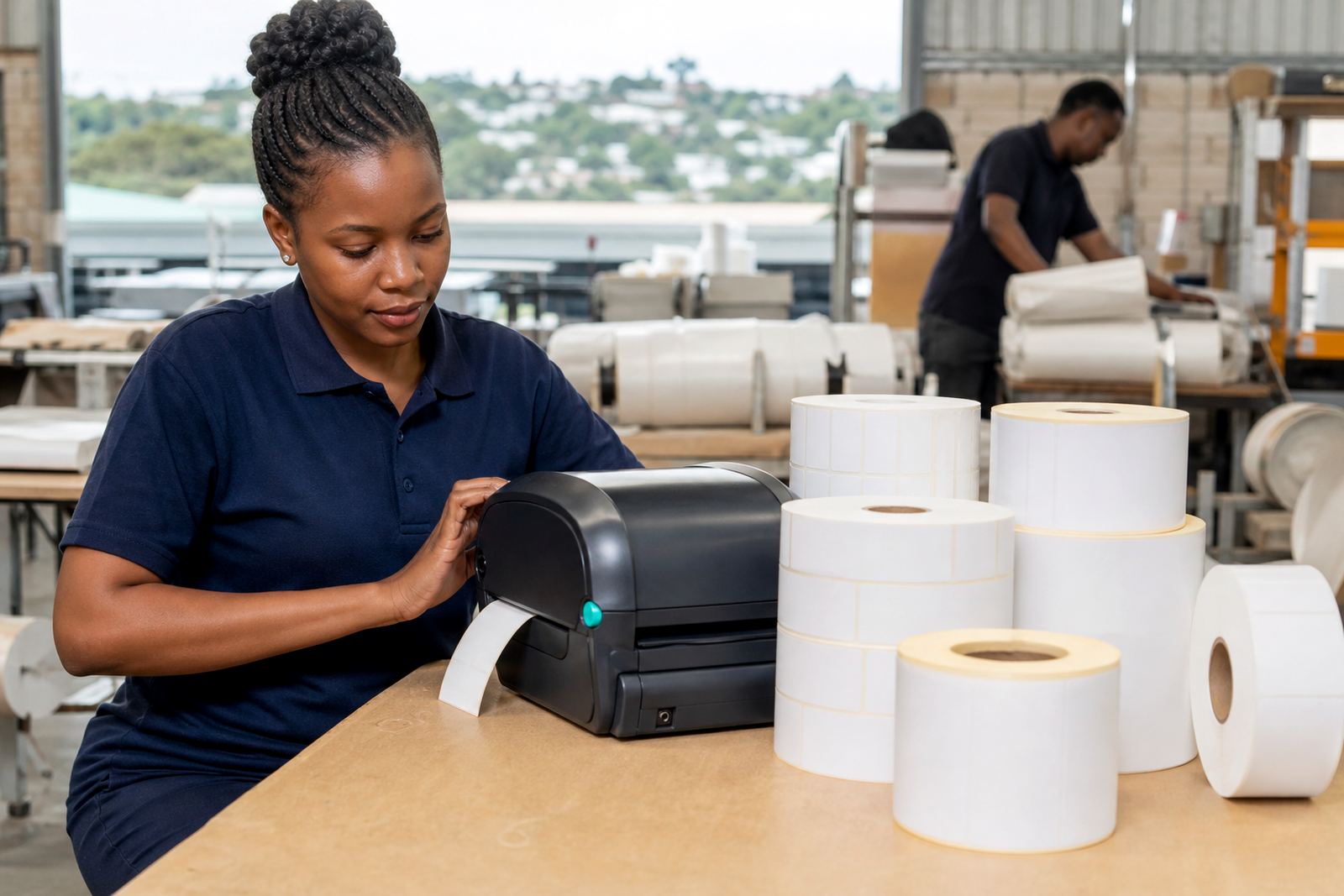
Thermal transfer and direct thermal rolls must match the printer, and that includes core size, roll diameter and winding direction. A roll that is too large may not fit the printer bay, while the wrong core can wobble or feed poorly. On many bench-top units, 25 mm or 40 mm cores are common, while larger industrial printers may take bigger cores and larger outer diameters. The exact fit depends on the machine and its label path.
Printer compatibility also includes label gap, black mark sensing, ribbon width and whether the printer uses inside or outside wound ribbon. If the winding is wrong, the print can shift or the label can jam. We see this often when a business in Johannesburg switches from one stock format to another and the printer settings are left unchanged. A quick fit check saves a lot of waste.
- Check core size before ordering new rolls
- Match label width, gap and sensing style to the printer
- Confirm ribbon width for thermal transfer jobs
- Set winding direction correctly to avoid feed issues
Picking the right face stock for packaging, retail and logistics
Face stock choice affects appearance, adhesion and how the label behaves after application. For retail and packaging, a bright white paper face stock can give clean contrast for barcodes and product text. For cartons, pallets and outer packs, a tougher coated or synthetic face stock may handle handling better. If the label must resist rubbing on conveyors or cold room condensation, the stock has to be chosen with that in mind.
Adhesive matters just as much. Permanent adhesives suit most shipping and product labels, while removable or freezer-grade options are used for different jobs. In humid coastal areas like Durban and parts of Cape Town, adhesive matching is worth proper attention because a label that lifts at the edges becomes a problem fast. On the other hand, over-aggressive adhesive can damage surfaces on removal. That balance is practical, not theoretical.
A Westmead example that shows why the method choice matters
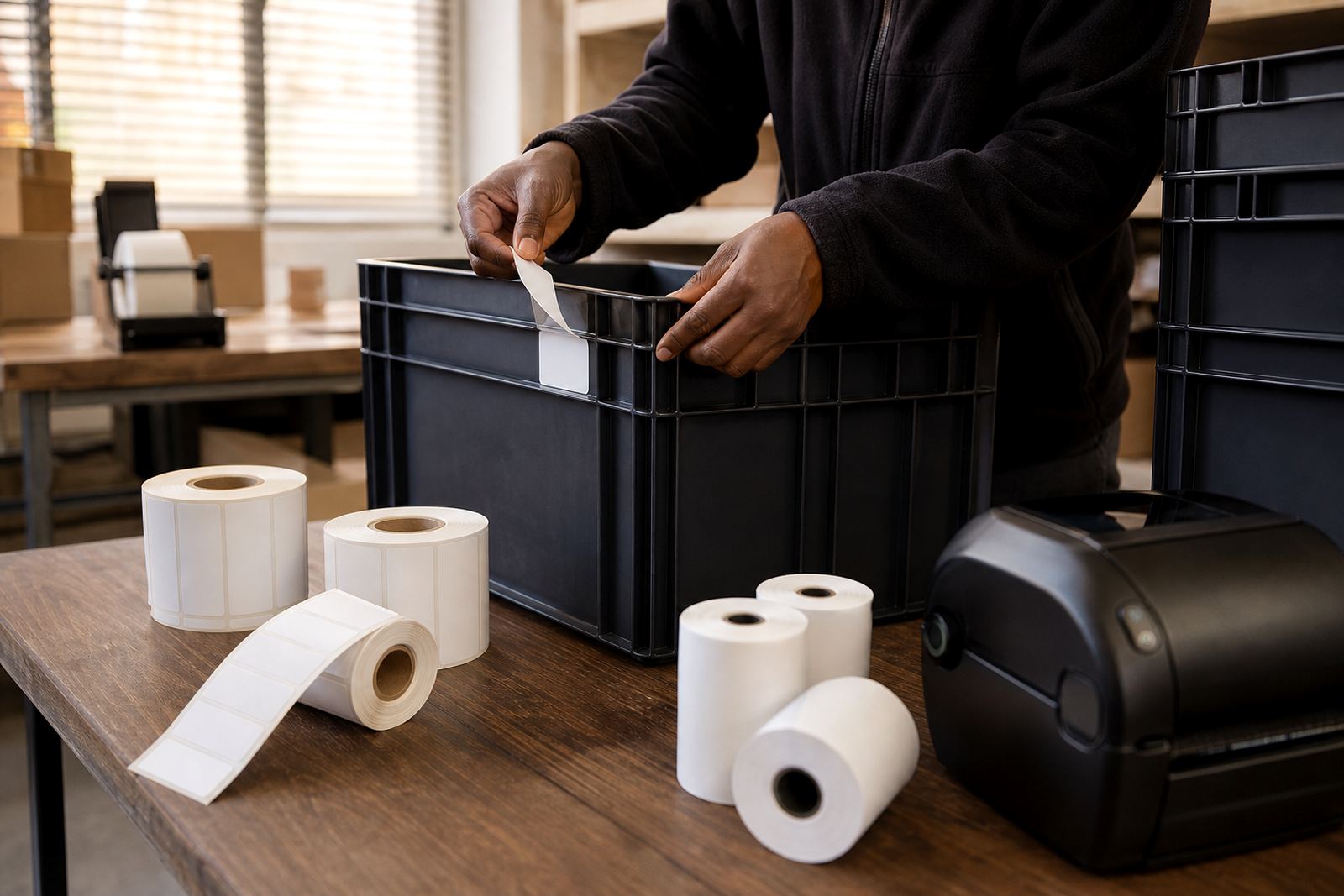
A packing line in Westmead may print carton labels in the morning, then move those cartons to a warehouse, a loading bay and finally a courier vehicle. If the labels are direct thermal and the stock sits near heat or gets scuffed during handling, the barcode can weaken before the goods reach Pretoria or Cape Town. Thermal transfer with the right ribbon and face stock keeps the print clearer through that journey.
That does not mean every label needs the stronger option. A business sending same-day local parcels from Pinetown may use direct thermal for speed, then move to thermal transfer only for stock labels, shelf markers or items that stay in circulation longer. The right answer is usually a mix, not one method for everything. It depends on the life of the label and the conditions it will face.
- Use direct thermal for fast-moving dispatch labels
- Use thermal transfer for durable product, pallet or warehouse labels
- Test sample rolls before committing to a full run
- Check whether the label must survive storage, transport or resale
How to avoid waste before the first roll is even loaded
Most label problems start before printing begins. A poor match between face stock, adhesive, ribbon and printer settings can cause wasted rolls, downtime and unreadable codes. Planning roll length, slit widths and winding direction helps the production team, and so does a proper usage review. If a business is using several printer types across sites in Durban, Johannesburg and Pietermaritzburg, it helps to keep the label specification consistent where possible.
At Label Paper, that is where services like sample rolls, core sizing, roll length planning and printer fit checks make the difference. The aim is not only to supply rolls, but to keep the labels feeding well and reading cleanly from the first pack to the last. A label that prints well once and fails later is expensive in the end. Better to get the match right and avoid the rework.