Start with the parcel, not the printer
Before choosing any label roll, work backwards from the pack itself. A plain corrugated carton, a gloss courier pouch, a chilled pack, or a dusty warehouse bin all ask for different label behaviour. If the box is flexible and gets handled a lot, the label needs enough grip to stay put through lifting, sliding and scanning. If the pack sits in a cold room or near damp air on the coast, the adhesive must handle those conditions without peeling at the corners.
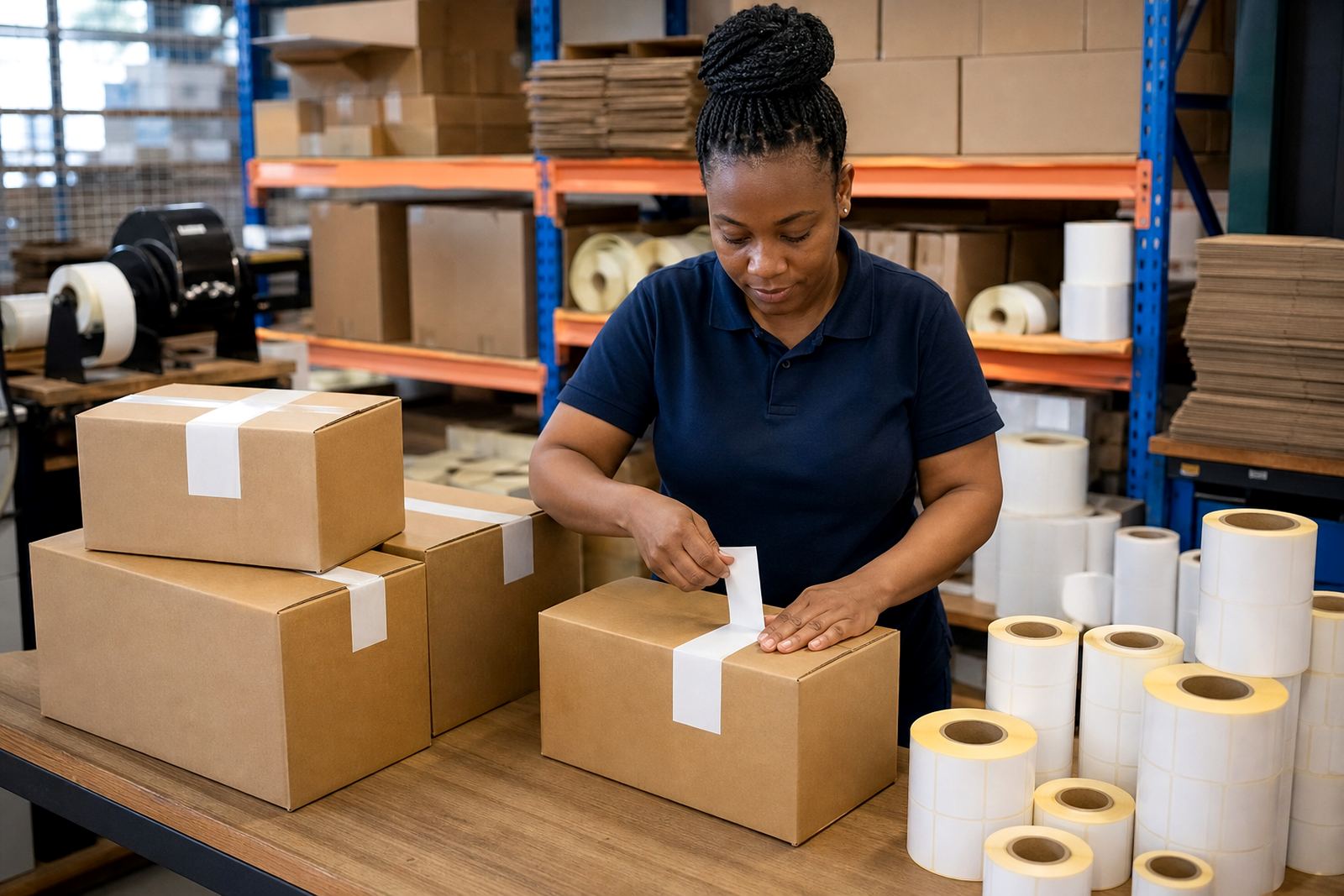
For carton despatch, many businesses use a paper face stock for clear print and easy scanning. Where the label faces more abrasion or moisture, a synthetic face stock may hold up better. The point is not to over specify, but to match the face stock to the actual trip the parcel takes from packing table to van load. In Pinetown and Durban, that often means accounting for humidity and the occasional rainy loading bay, which can change how a label settles in the first few minutes.
- Check whether the package surface is smooth, rough, dusty or slightly curved.
- Decide if the label must last one day, one week, or longer in storage.
- Think about handling, moisture, sunlight and rubbing during transit.
Adhesive choice is where most shipping mistakes start
Adhesive matching is one of the most useful roll notes to capture early. A permanent adhesive is the usual pick for parcel labels, carton seals and shipping identifiers that must stay put until delivery. A removable adhesive suits temporary bag labels or internal stock marking where the label must lift off later. Some surfaces, such as recycled board, textured cartons or certain plastics, need a stronger tack because the adhesive has less even contact. That matters more than many buyers expect.
In a packing line, a label that lifts at one corner can interrupt scanning, slow the team down and force a reprint. On a hot day in Pretoria or in a dusty distribution area outside Johannesburg, the label can face more stress than it did during testing. For that reason, adhesive testing should happen on the actual carton or bag used in the order, not just on a sample sheet at the office table.
- Permanent adhesive for shipping labels, carton seals and barcoded dispatch labels.
- Removable adhesive for temporary identification and short term internal use.
- Strong tack options for rough board, recycled cartons and difficult plastics.
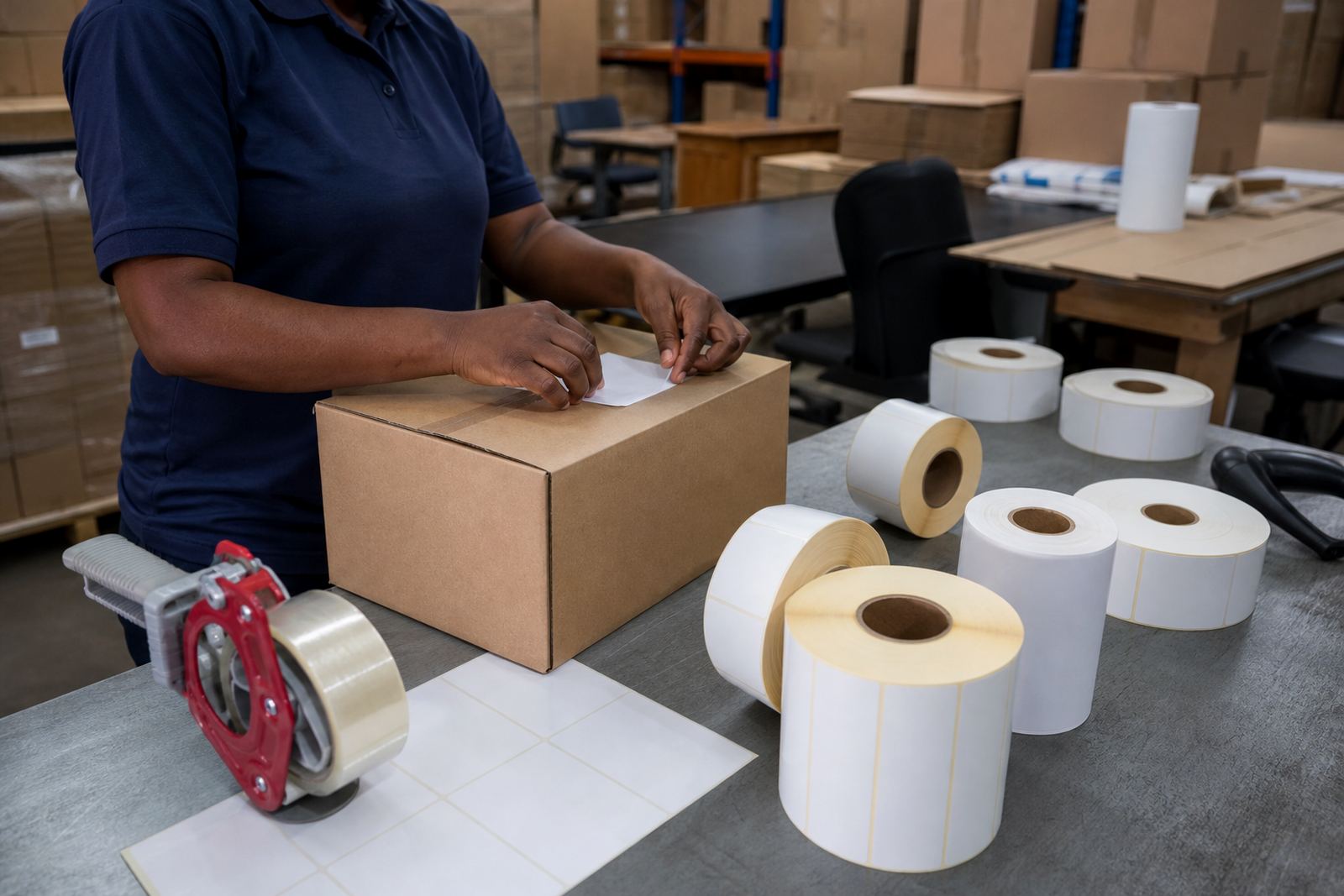
When sample rolls are supplied, test them on the real packing surface under normal conditions.
Face stock and print method must agree
There are two common print paths for shipping labels. Direct thermal uses heat-sensitive material and does not need a ribbon. Thermal transfer uses a ribbon against a face stock, which can give better durability depending on the application. If your labels must survive rubbing, brief weather exposure or long storage, thermal transfer is often the better route. If the labels are for fast moving courier cartons with shorter life, direct thermal can be practical and efficient.
Face stock selection should suit the print method. Some papers give a crisp print for address labels, dispatch notes and carton markings. Others are built for better resistance to scuffing or moisture. The wrong pairing can cause faded barcodes, patchy text or poor contrast on the scanner. That is why printer fit checks matter. A roll may be the right width but still print badly if the material and ribbon type do not match the machine setup.
- Direct thermal suits shorter life labels and simpler dispatch work.
- Thermal transfer suits longer life, tougher handling and clearer durability.
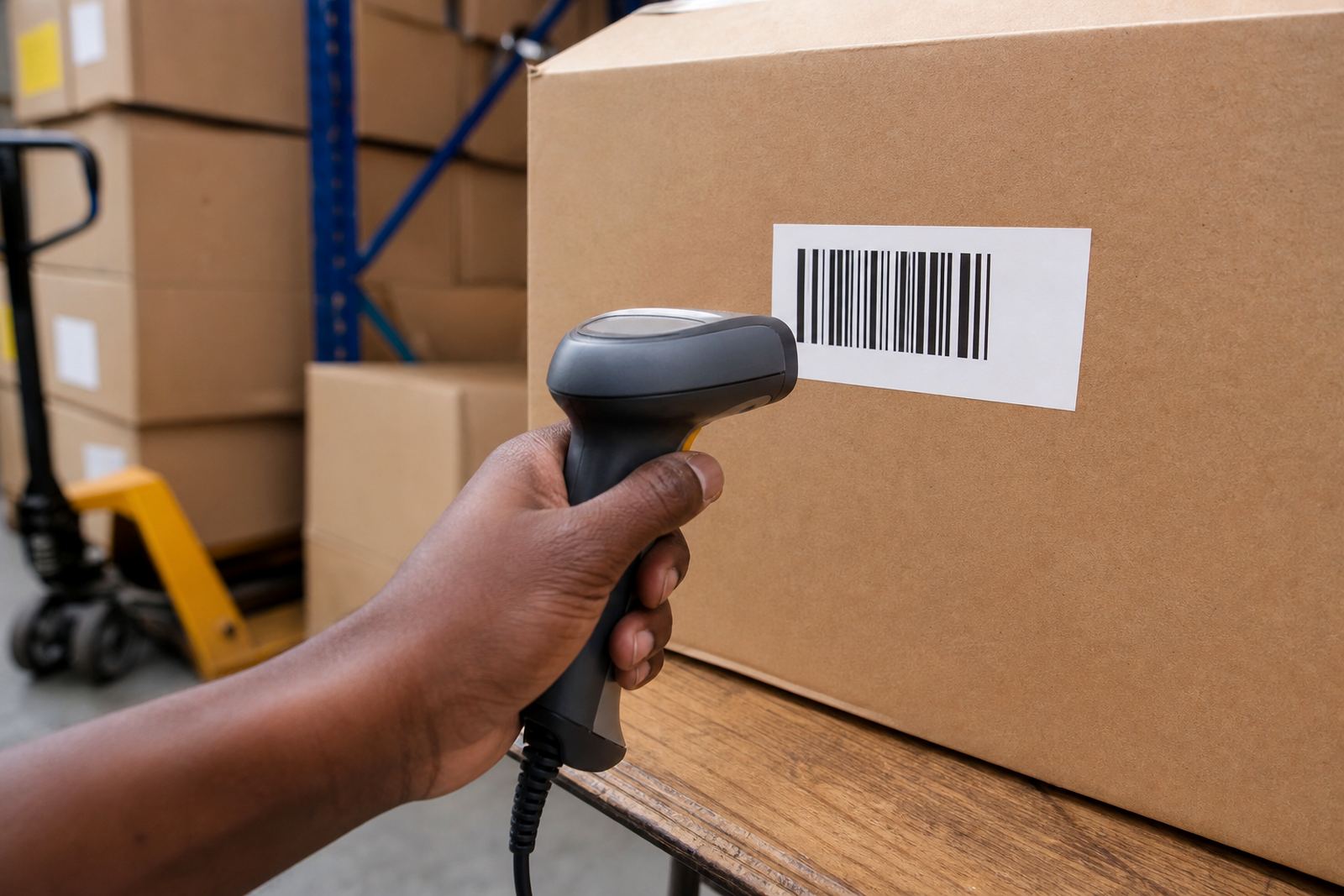
- Barcode readability should be checked after the first print, not later in the line.
Core size and winding direction are not small details
Roll notes should always include core size, roll length and winding direction. These details decide whether the roll fits the printer without jams or awkward threading. Benchtop printers often use smaller cores, while larger industrial units may take bigger cores and longer rolls. If the core is wrong, the roll can wobble, the sensors may misread the stock, or the label path may drag in a way that causes waste.
Winding direction is just as important. A label can feed out face up or face down, left wound or right wound, and the printer must receive it in the correct direction. A dispatch team in Westmead can lose time if every fifth roll has to be turned around by hand because the winding note was never checked. That kind of issue is easy to avoid once it is written into the order record.
- Confirm the core size your printer takes before cutting or ordering stock.
- Record roll length so reordering is easier and stock control stays neat.
- Note winding direction, label gap and outside diameter where needed.
For multi printer sites, use a printed roll note sheet so each packing area knows exactly which labels go where. It helps when one site uses smaller machines and another uses higher volume units. A small note can save a lot of empty movement between the pack line and the storage rack.
A Durban dispatch bay needs different checks to a dry inland store
Local conditions matter. A carton label used on a humid Durban dock may need different adhesive behaviour from one used in a dry inland warehouse in Johannesburg. Cold storage, coastal moisture, heat from sealed vehicles and dust from freight handling all influence how long a label stays readable. If a business ships daily to Cape Town, Pretoria and Pietermaritzburg, it is worth setting a standard note for each lane or product type, rather than hoping one roll suits every route.
A practical example: a food packer in Pinetown sends cartons to retailers in three provinces. The carton is plain board, the label carries a parcel code and routing information, and the packing table sits near a doorway that gets warm afternoon air. In that case, a permanent adhesive on suitable paper stock, with printer fit checked for the exact machine, is usually more dependable than a general purpose roll chosen only on width. The team can also keep sample rolls for line trials when a new carton style arrives.
- Use one note set for coastal humidity and another for dry inland storage if needed.
- Test a new carton or bag before changing the full production run.
- Keep a record of what works on each route or packing area.
The last check before labels go into the box
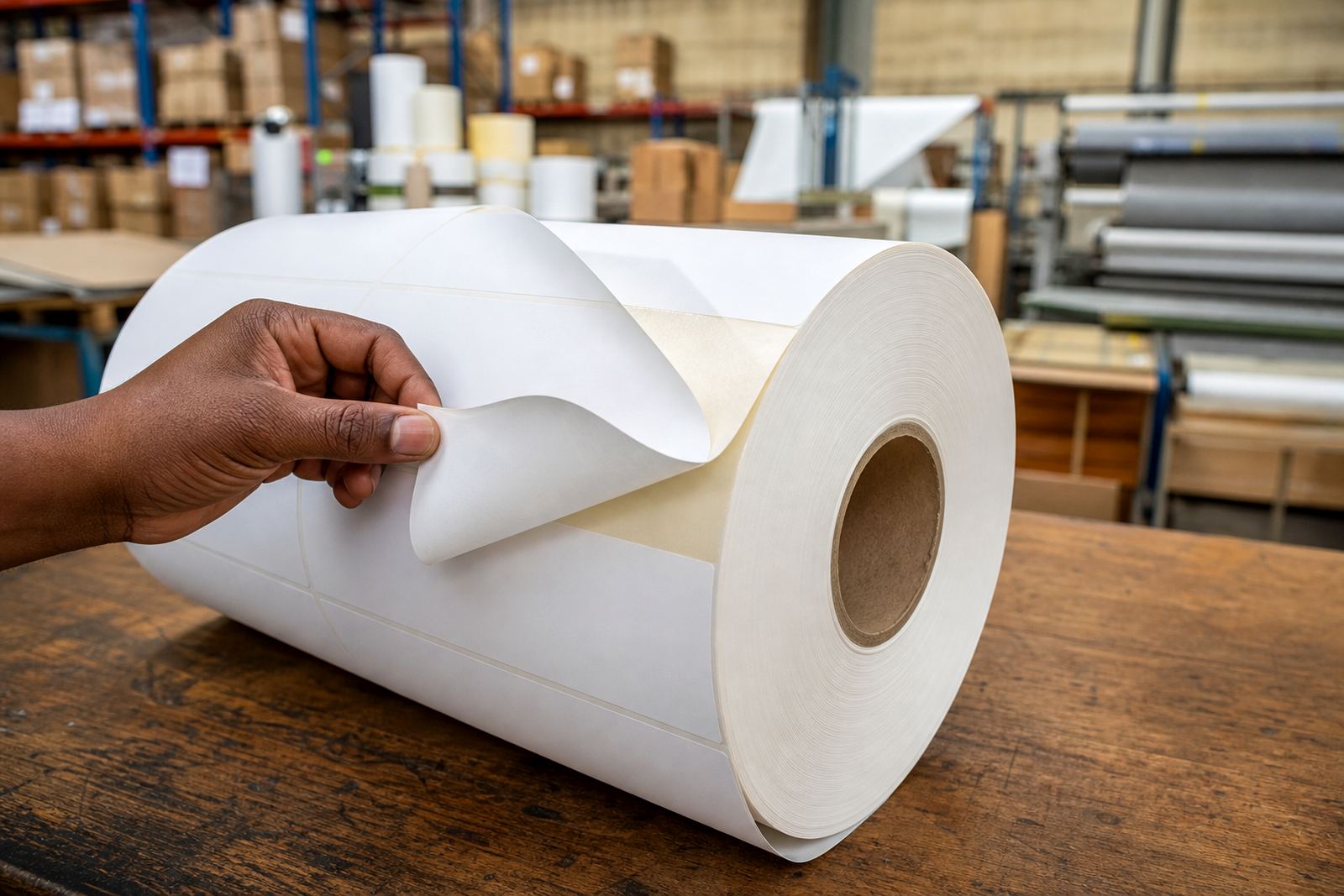
Before a roll goes into regular use, check the full path from stock to dispatch. Does the label peel cleanly from the liner? Does it stay aligned through the printer? Does the barcode scan at first pass? Does the adhesive hold after the carton is taped and stacked? These are the details that protect a shipping line from delays when the day gets busy and the loading schedule tightens.
Good roll notes also help with repeat order planning. When the core size, face stock, adhesive and winding direction are already recorded, the next order is easier to match. That matters for retail, logistics and manufacturing teams that need the same label every week, not a fresh guess each time. If something changes, such as a new printer or a different carton finish, update the notes straight away so the next batch starts cleanly.
At the end of the day, shipping labels are part of the parcel, not an afterthought. The better the notes, the fewer stoppages the pack line sees, and the less likely it is that a carton leaves the bay with a label that peels, smudges or prints badly.