
The first thing a bench printer cares about is fit
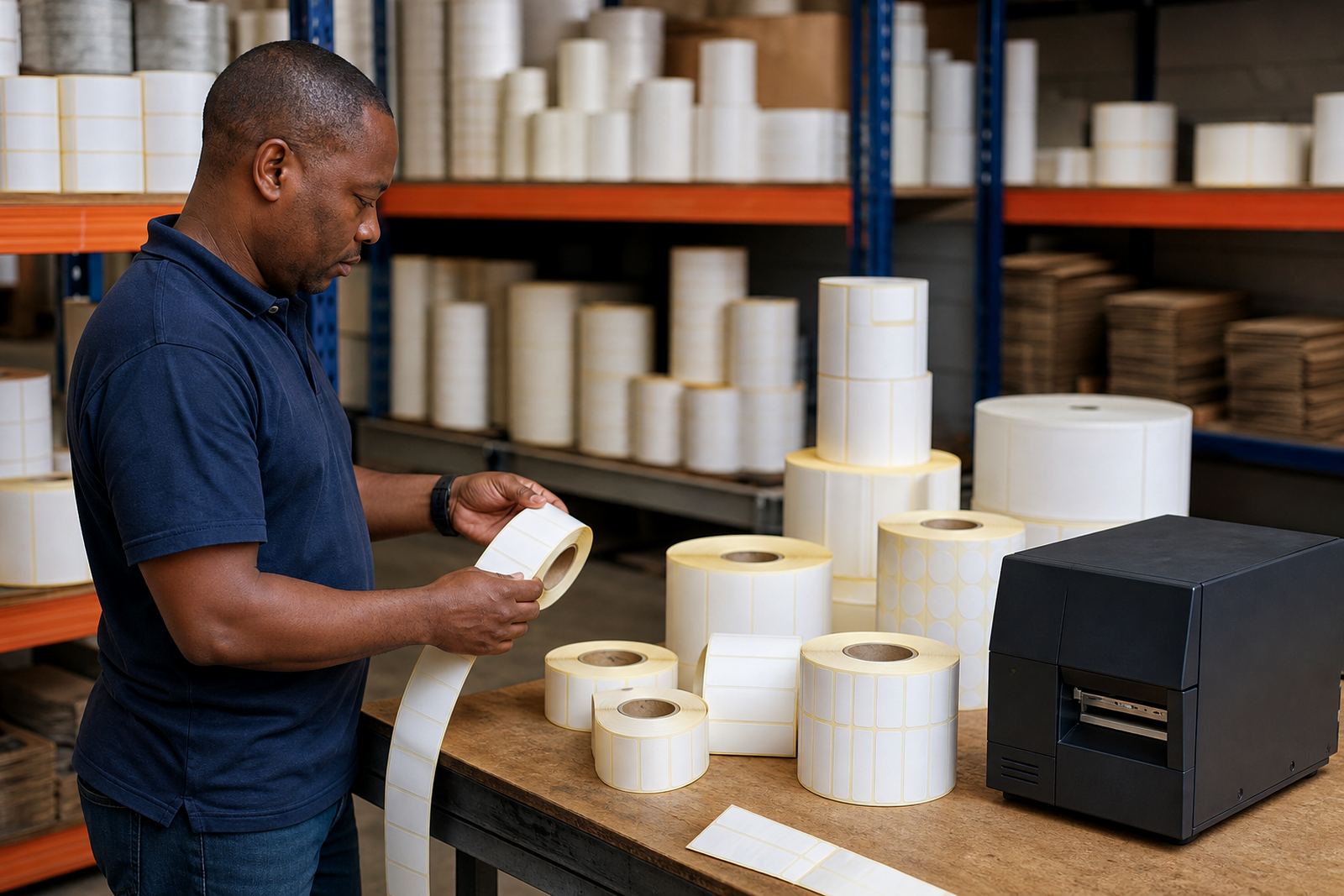
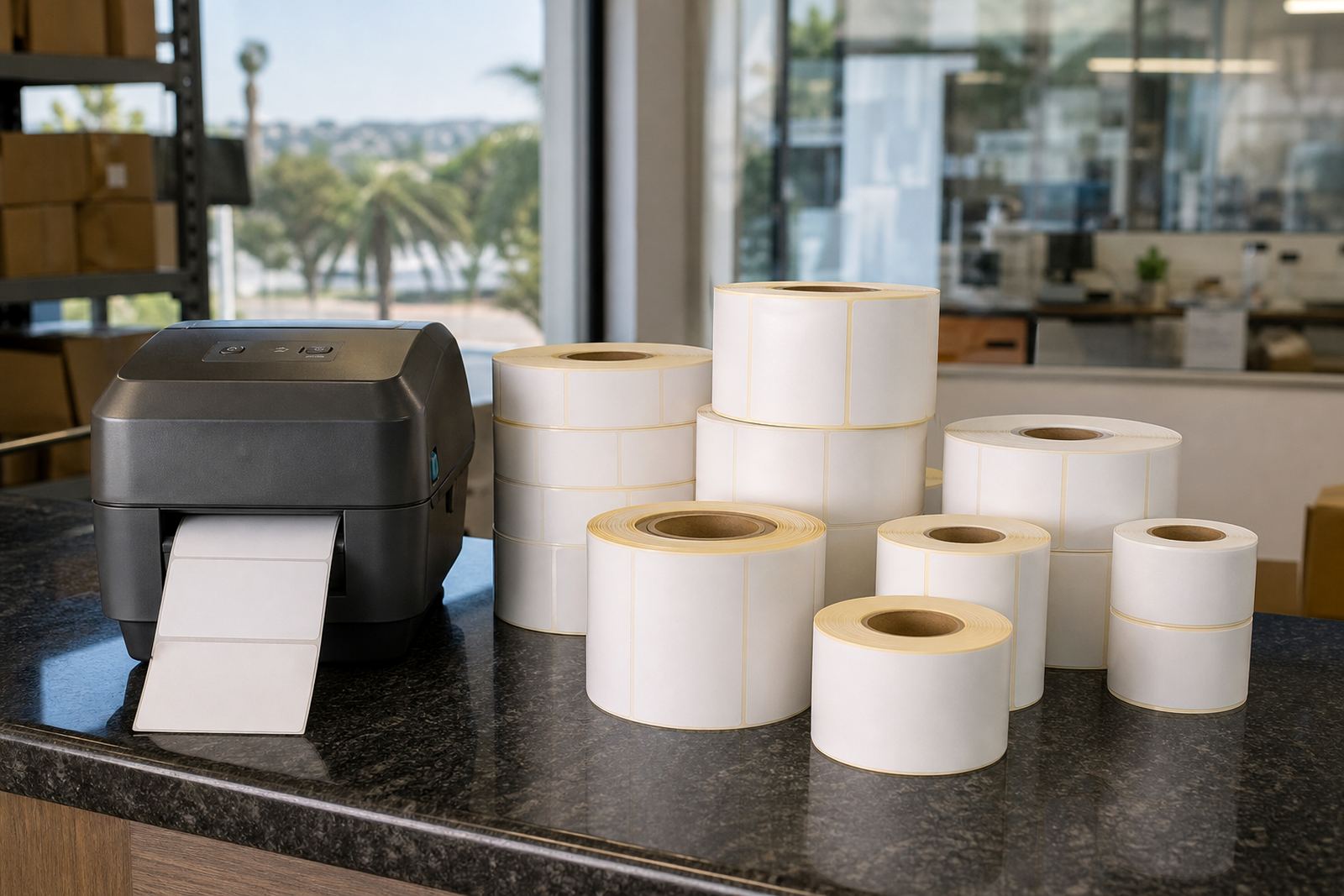
Benchtop printer rolls need to suit the printer path, the roll diameter, and the core that sits on the spindle. Many small printers in offices, stores and dispatch areas take a 25 mm or 40 mm core, while some accept larger cores with an adapter. If the roll is too bulky, the cover will not close properly and feed pressure becomes uneven.
For Westmead, Pinetown users working with packing tables and short run jobs, the most common problems are not the label face itself. They are roll size, core mismatch and a winding direction that sends the label edge the wrong way through the sensor. A quick fit check before a run saves a lot of stop start work.
- Check core size before placing the order
- Confirm outer diameter against the printer cavity
- Match winding direction to the printer path
- Leave enough room for the sensor to read the gap or black mark
Paper face stock or film face stock, it changes the day-to-day result
Self-adhesive label face stocks are usually paper based or film based. Paper works well for shipping labels, carton identification, retail stickers and general warehouse use. Film face stock is better where moisture, rubbing or handling are part of the job, such as chilled goods, coastal storage, or packs that move through several hands before delivery.
In Durban and other coastal areas, humidity can make a cheap label edge lift before the parcel even leaves the loading bay. On cartons stored near a cold room or in a warm truck, a better face stock holds its shape and print quality for longer, even when the load is moved around a lot.
- Paper face stock for general packing and retail marking
- Film face stock for moisture, scuffing and longer handling
- Matt surfaces often give cleaner print contrast
- Gloss and synthetic finishes may suit presentation or harsher use
The adhesive choice is not a small detail
The adhesive must suit the container, the temperature and how long the label needs to stay put. A standard permanent adhesive works for many cartons, sleeves and general packaging jobs. A removable adhesive is useful when a label must come off later, while stronger options are used where surfaces are rough, cold or slightly dusty.
Glass, coated board, plastics and powdery cartons all behave differently. A label that sticks neatly to a smooth retail pack may fail on a recycled box with lint and dust on it. If your packaging changes through the month, a proper adhesive match is worth sorting before production begins.
- Permanent adhesive for cartons and long term identification
- Removable adhesive for temporary marking and returnable packs
- Freezer or cold room use may need a stronger tack
- Uneven or dusty surfaces need extra attention during application
Direct thermal and thermal transfer are not the same job
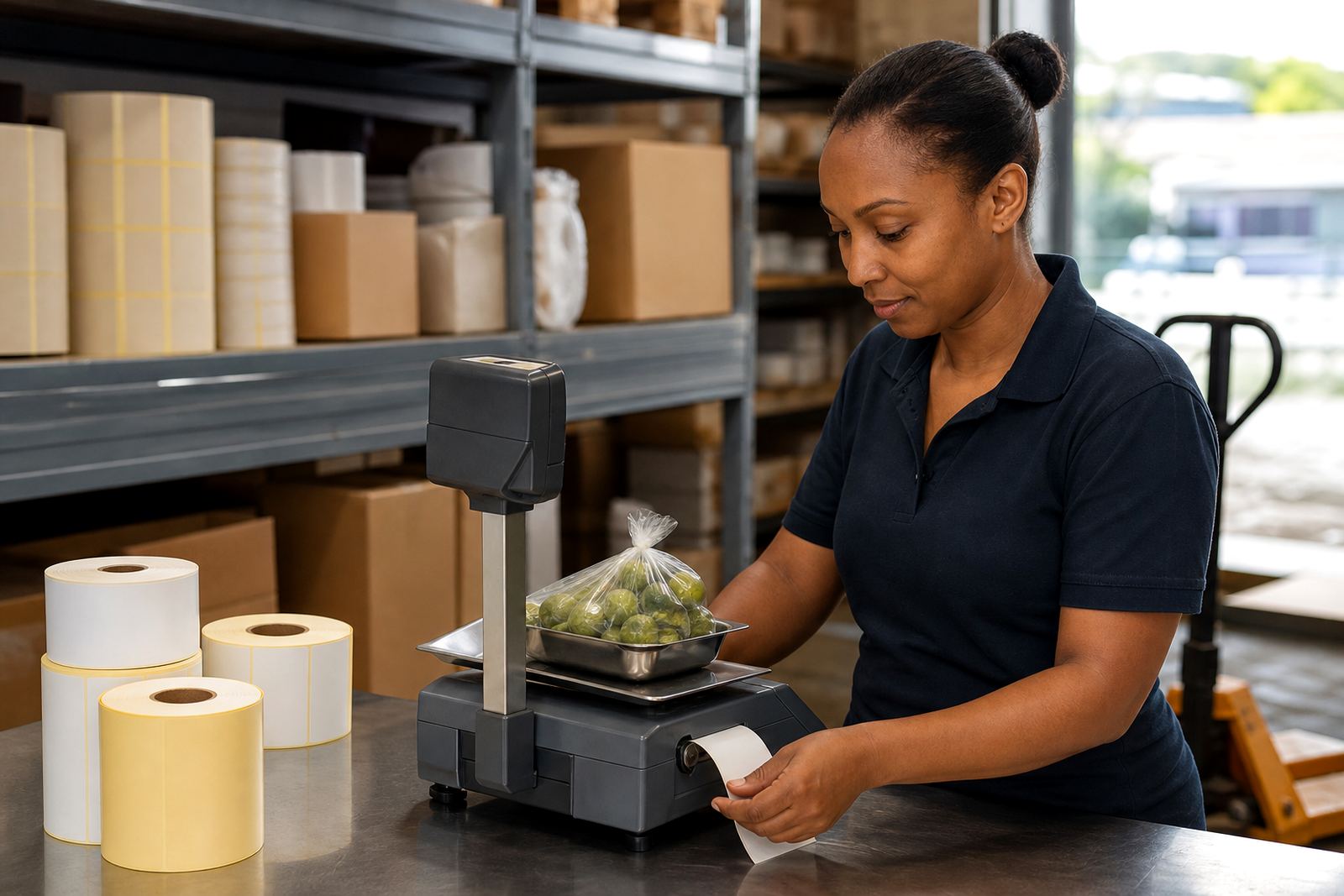
Direct thermal rolls are made for printers that heat the label face directly. They are useful for shipping labels, waybills, dispatch stickers and short life information. The print is clear, but it can darken with heat, sunlight and time. Thermal transfer rolls use a ribbon, which transfers the image to the label and usually gives better resistance to rubbing, chemicals and longer storage.
For a packing line in Pinetown or a warehouse in Johannesburg, the choice depends on how long the label must stay readable. A same day dispatch label does not need the same endurance as a product ID label that stays on a box in a store room for months.
- Direct thermal for short life labels and shipping use
- Thermal transfer for longer lasting print and tougher handling
- Check whether the printer needs ribbon support
- Match the roll face stock to the print method, not only the label size
Core size, roll length and rewind direction affect the line speed
Once the printer fit is sorted, the next matter is how the rolls are made up. Core size affects loading. Roll length affects how often the operator has to stop and replace stock. Rewind direction affects how the labels leave the roll and whether they track correctly through the machine. If any of these are off, even a good label stock can feel awkward in use.
That is why roll length planning matters for compact printers used in retail back rooms and dispatch areas. A printer that handles short bursts all day may be better with smaller rolls that are easier to change, while a busier station may need longer lengths to reduce stoppages. The right setting is often practical rather than fancy.
- Smaller rolls are easier to handle where space is tight
- Longer rolls reduce changeovers on busy benches
- Correct rewind direction supports smooth feeding
- Core sizing must suit the printer spindle or adapter
A Pinetown order can still have a national footprint
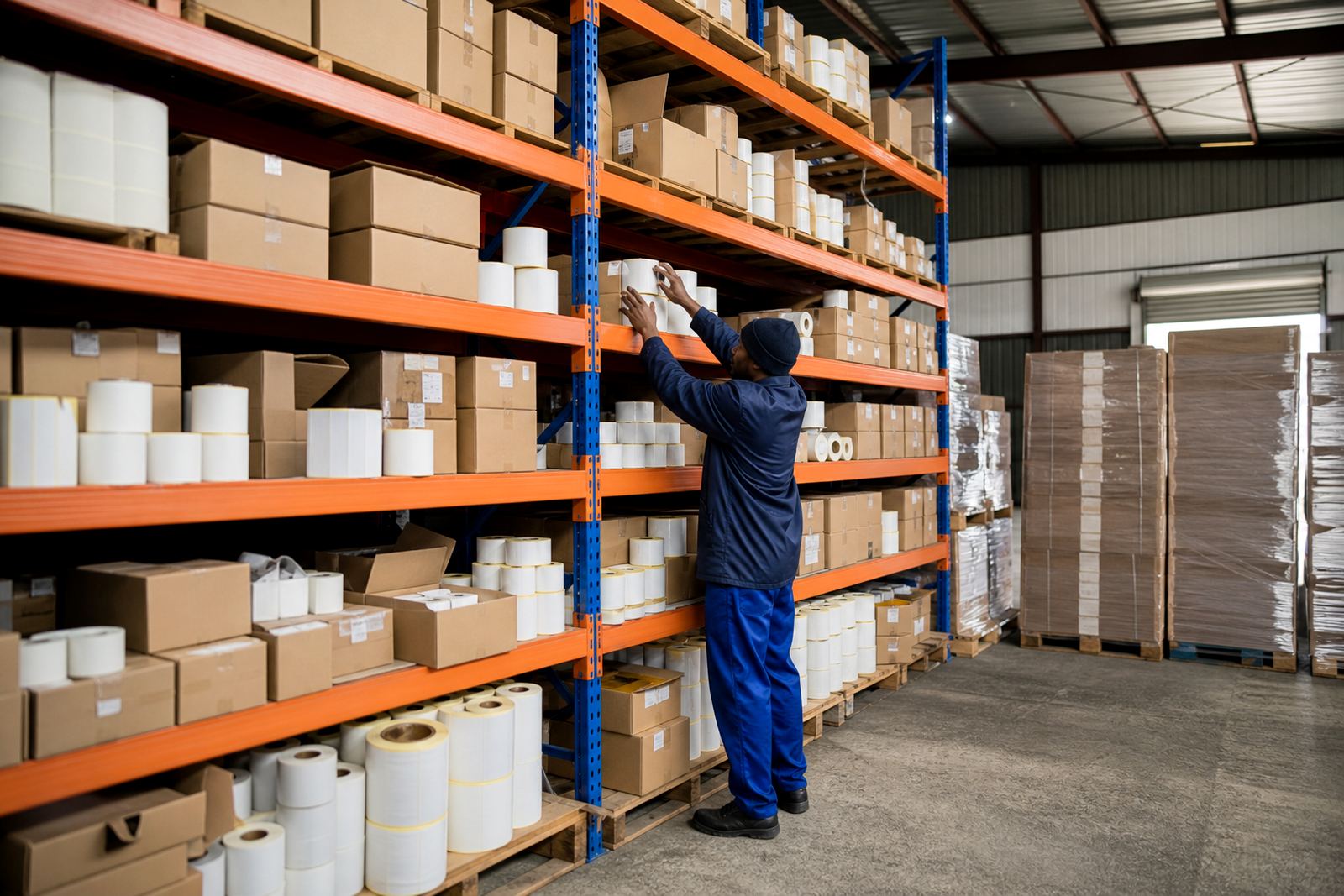
A small label run for a local packing table can still feed operations across Durban, Cape Town, Pretoria, Pietermaritzburg and Johannesburg. One food packer in Westmead may need short runs for seasonal lines, while the same business might also need shipping labels for freight to inland depots. The label spec has to work in all those settings, not just on the first day.
We often see the same issue repeat: a label chosen for neat appearance on a sample roll then fails in the actual work area because the printer model, the adhesive, or the storage conditions were not checked together. That is where sample rolls, printer fit checks and usage review help. They show whether the stock behaves the way the operator expects, before a full production batch is cut.
- Sample rolls help test the label in the real printer
- Printer fit checks reduce downtime at dispatch
- Usage review helps match stock to the actual pack room conditions
- Repeat order planning keeps sizes and winding direction consistent
What a practical benchtop roll order should settle before packing starts
Before ordering, it helps to lock down the label dimensions, core size, outer roll diameter, face stock, adhesive type and whether the printer uses direct thermal or thermal transfer. If the roll is going into a compact machine, ask whether the printer has a sensor for gap, black mark or notch detection. Small details like that keep the label feed stable and the print readable.
For teams in coastal storage areas or busy logistics bays, label failure usually starts with the wrong spec, not the wrong printer. Get the spec right and the roll becomes an everyday tool instead of a daily problem. It is a small part of the job, but it touches packing, dispatch and customer presentation all at once.