Why the outside measure changes the whole job
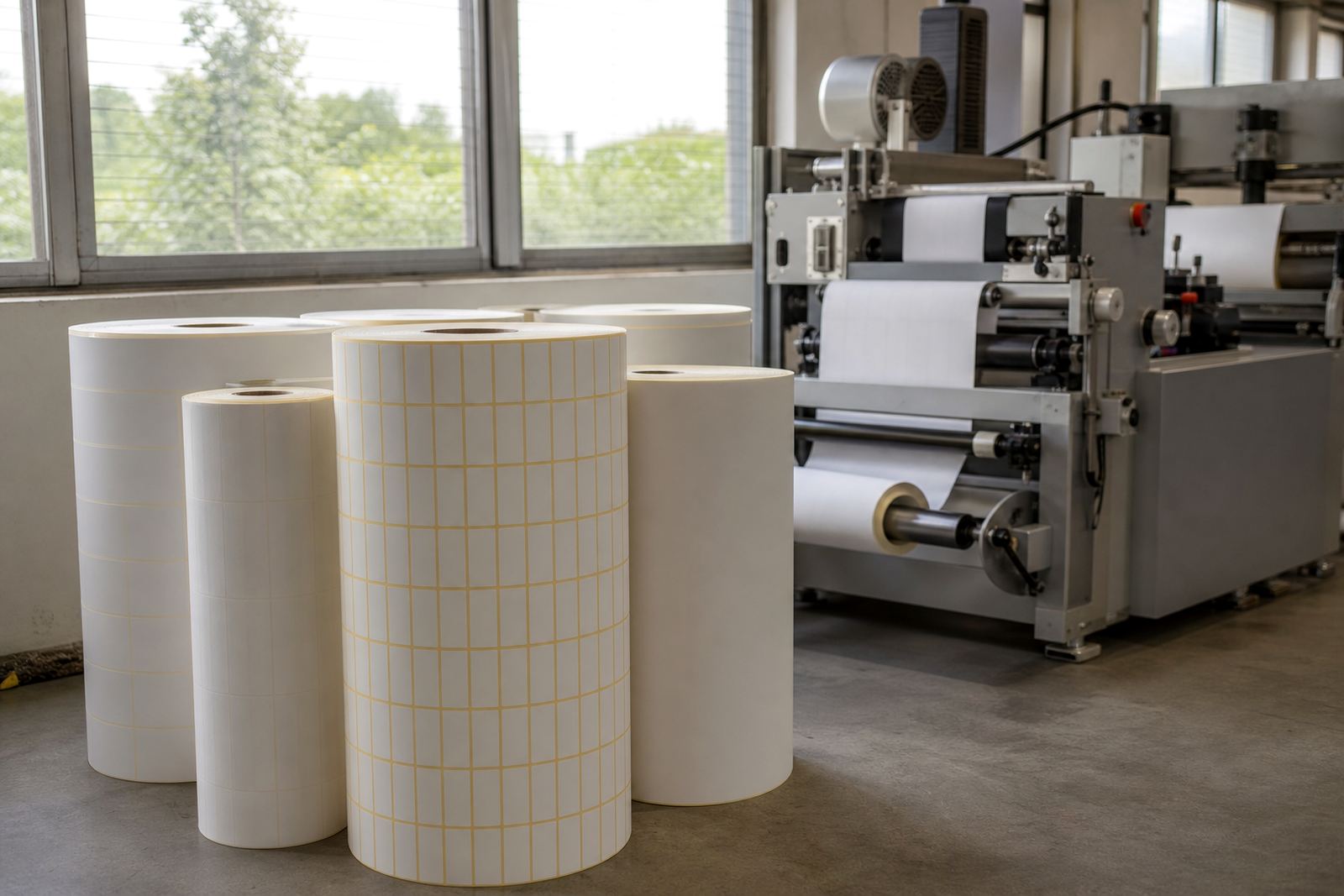
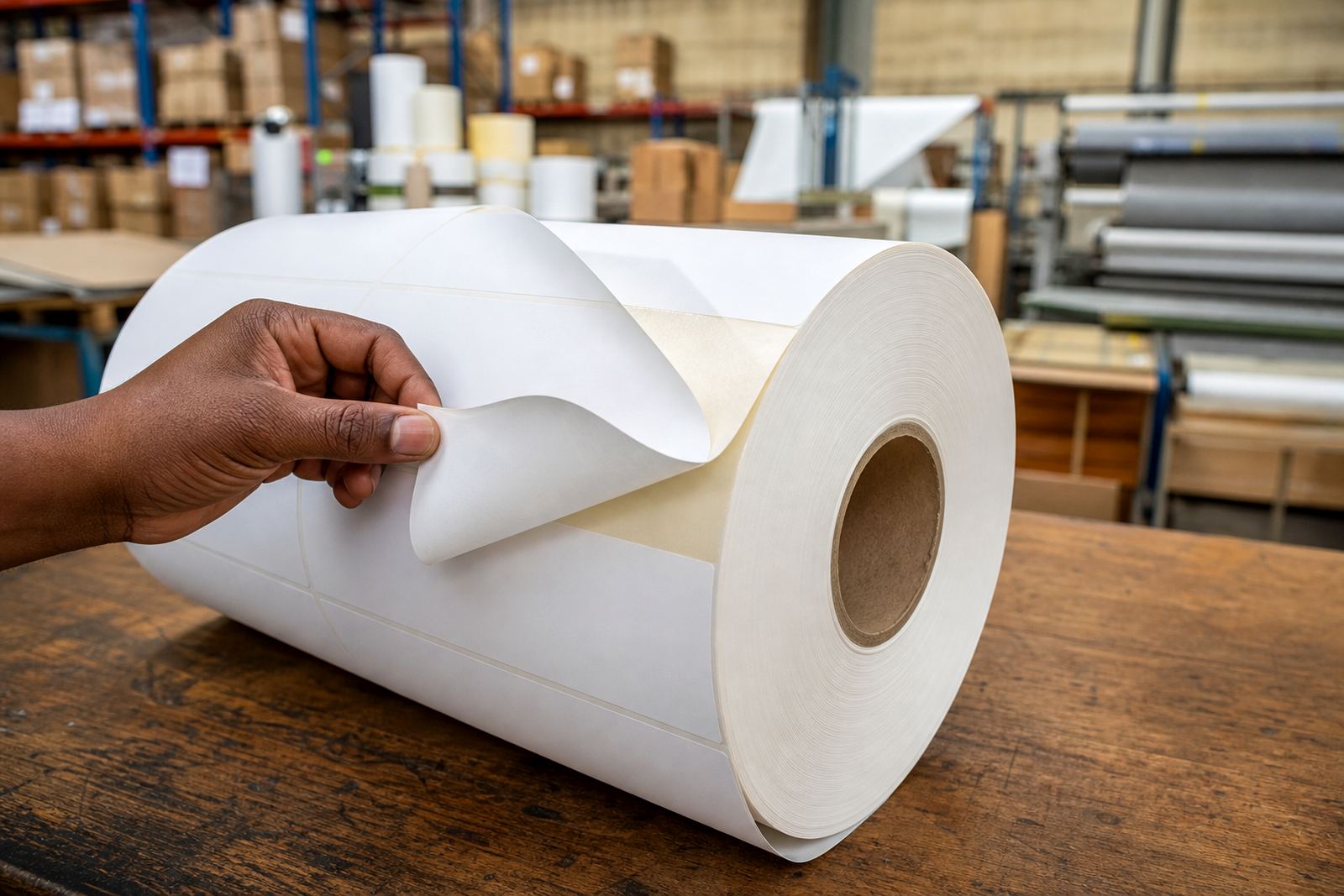
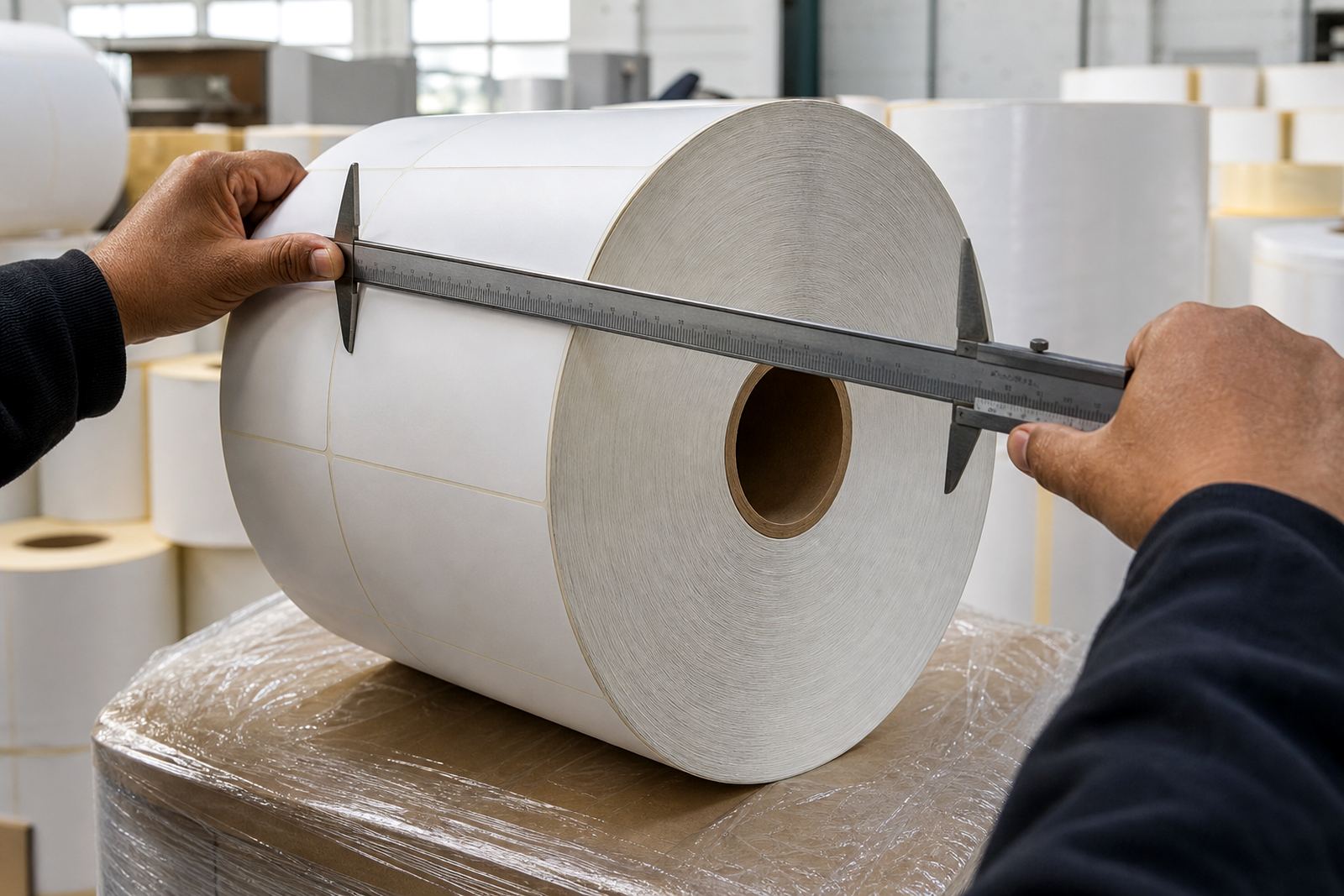
The outer diameter is the full width of the wound roll from edge to edge, including the label face stock, adhesive, liner and the air space left by winding. That one figure tells you a lot about how a roll will behave inside a printer, on a rewinder, or on a packing table in Westmead or Pinetown where space is tight and the work must keep moving.
A roll that is too large can press against the printer housing, drag on the guides or stop the cover from closing properly. A roll that is too small may fit easily but give a short run length, which means more roll changes and more stops in the shift.
- Printer compartment fit
- Run length per roll
- Stability during feeding
- How often operators change rolls
How diameter links to label count and core size
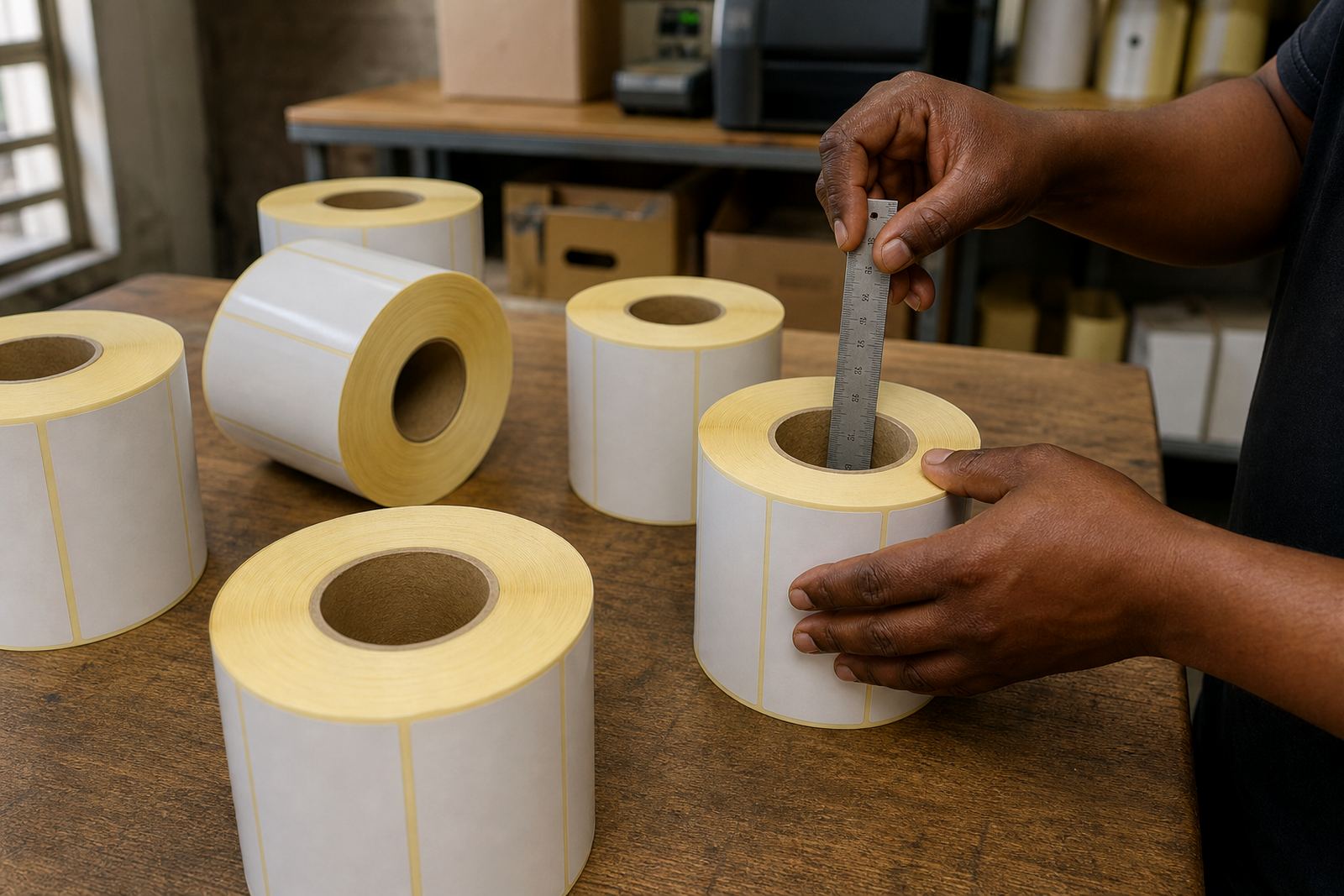
Outer diameter is not the same as label width or core size. A 76 mm core can hold a very different amount of material from a 25 mm core, and a long roll on a small core may still stay within the same outer diameter if the label size and liner thickness are right. The mix changes again if the adhesive coat is heavy or the face stock is thicker.
That is why roll length planning matters. A packing team in Johannesburg may want fewer changeovers for carton sealing labels, while a small retail store in Cape Town may rather use a shorter roll that fits a compact printer on the till counter. The right diameter gives you the balance between fit and run length.
- Core size affects how much material fits on the roll
- Label length changes the total roll count
- Thicker face stock usually builds a larger roll faster
- Pressure sensitive liner weight also changes the final size
What different printer types can take without trouble
Not every printer accepts the same roll size. Direct thermal units for shipping labels often have a tighter compartment and usually need a specific outer diameter and core size. Thermal transfer printers can be more forgiving, but they still need the right match between roll width, winding direction and the feed path. If the roll sits crooked, the print head can wear unevenly and the label edge may wander.
Benchtop units, industrial printers and handheld label printers all have their own limits. The manual or spec sheet normally states the maximum outer diameter, core size and roll width. If that information is missing, a fit check is worth doing before production starts. It saves time and avoids wasted stock.
- Direct thermal rolls are often used for shipping and short life labels
- Thermal transfer rolls are used where print durability matters more
- Core size must match the spindle or holder
- Winding direction must suit the printer path
When a bigger roll helps and when it just gets in the way
A larger outer diameter can be useful when you want long uninterrupted runs, especially on dispatch shifts or in seasonal retail periods. Fewer roll changes can make a real difference where one operator handles packing, scanning and labelling at the same station. In manufacturing, that extra length can support longer coding or product runs with less interruption.
But bigger is not always better. If the roll is too large for the compartment, operators may force the cover shut or trim the label stock to make it sit. That is not a good trade. It can lead to poor feed, crushed edges or labels that peel unevenly. For coastal areas like Durban, moisture can also affect how a roll stores and behaves, so the packaging and warehouse conditions need attention too.
- Use larger diameters when run length is a priority
- Keep to the printer limit if the compartment is small
- Store rolls in a dry area away from direct sun
- Do not force a roll into a tight housing
A Westmead packing line example you can picture
Picture a small goods supplier in Westmead packing orders for Durban, Johannesburg and Pretoria. The team uses one printer for courier labels and another for product labels. The courier printer takes a larger outer diameter roll, while the product printer has a smaller housing and needs a tighter fit. If both stations are given the same roll size, one of them will struggle and the day gets slower for no good reason.
That is where sample rolls and printer fit checks pay off. By checking the outer diameter, core size and winding direction before the order runs, the supplier avoids returns and awkward stops during peak dispatch hours. It is a practical step, not a fancy one, but it keeps the line moving.
- Match each printer to its own roll size
- Check compartment height before ordering
- Use sample rolls for first-time setups
- Confirm the label path before a full production run
What to confirm before you place a repeat order
When a roll works well, the next step is to keep it that way. Repeat order planning should record the outer diameter, core size, roll length, winding direction and printer model used. If the label face stock changes, or the adhesive changes from permanent to removable, the roll diameter may shift too. Even a small change in liner thickness can alter the final size.
For sites in Pietermaritzburg, Hammarsdale and Cape Town where stock may move between teams or branches, clear notes prevent mix-ups. A roll that suits a warehouse printer may not suit the retail back office unit. Keep the measurements together and the next order will be easier to pack, dispatch and use.
- Outer diameter
- Core size
- Roll length
- Printer model and fit notes
- Winding direction and label orientation