When the label must leave no fuss behind
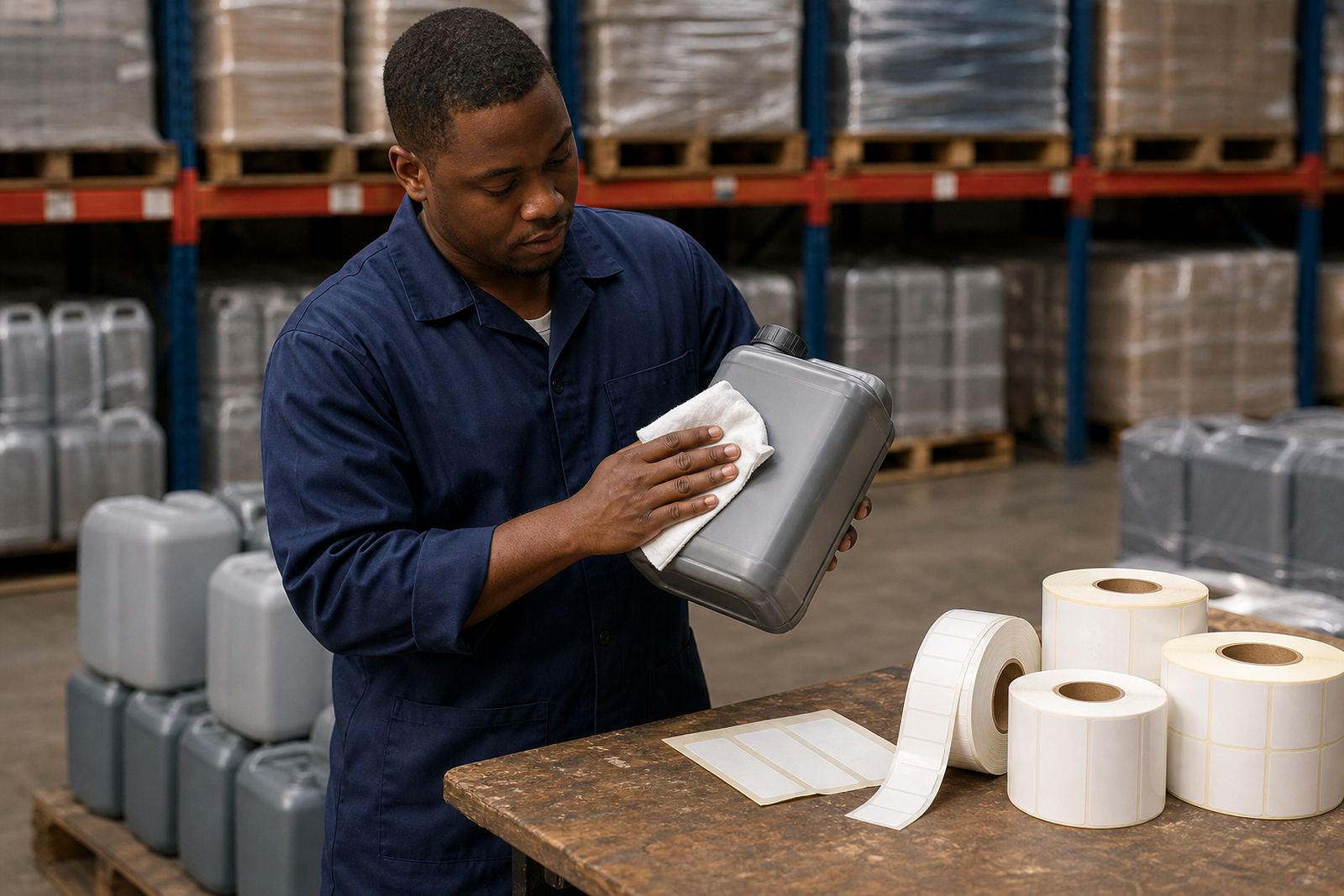
Not every label is meant for permanent use. A removable adhesive is chosen when products, totes, trays, cartons or shelves need identification for a short period, then a clean peel-off without tearing the pack or leaving heavy residue. That matters where items are reworked, repacked, transferred between depots, or checked and returned to circulation.
In Westmead and Pinetown, we see this used on plastic crates, reusable delivery tubs, sample packs and retail goods that rotate through promotions. The adhesive has to hold through handling and transport, but still release properly when the stock is moved on. On coated cartons and smooth plastics, a good removable stock can save time at the end of a shift because there is less scraping, less solvent wiping and fewer damaged surfaces.
Where temporary marking pays its way
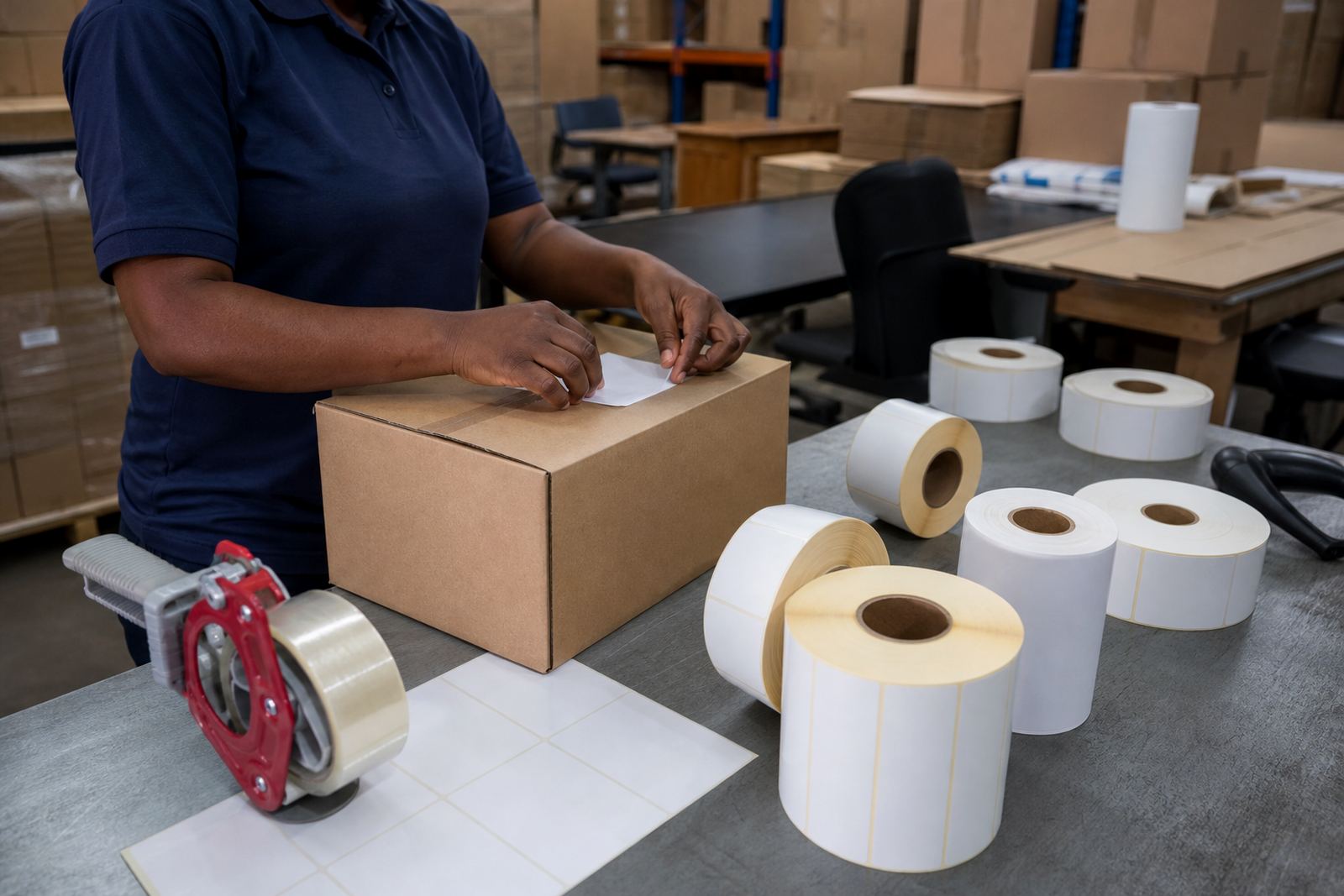
Removable adhesive jobs are useful anywhere stock changes often. They are common in dispatch, returns, warehouse picking and short-run retail pricing. They also help when a supplier needs to mark internal codes, inspection dates or staging points before final packing is done.
- Stock rotation labels for bins, trays and shelves
- Internal transfer labels for packs moving between sites
- Temporary batch or inspection marking on finished goods
- Promotional labels on retail cartons and display packs
- Returnable container identification for reusable logistics items
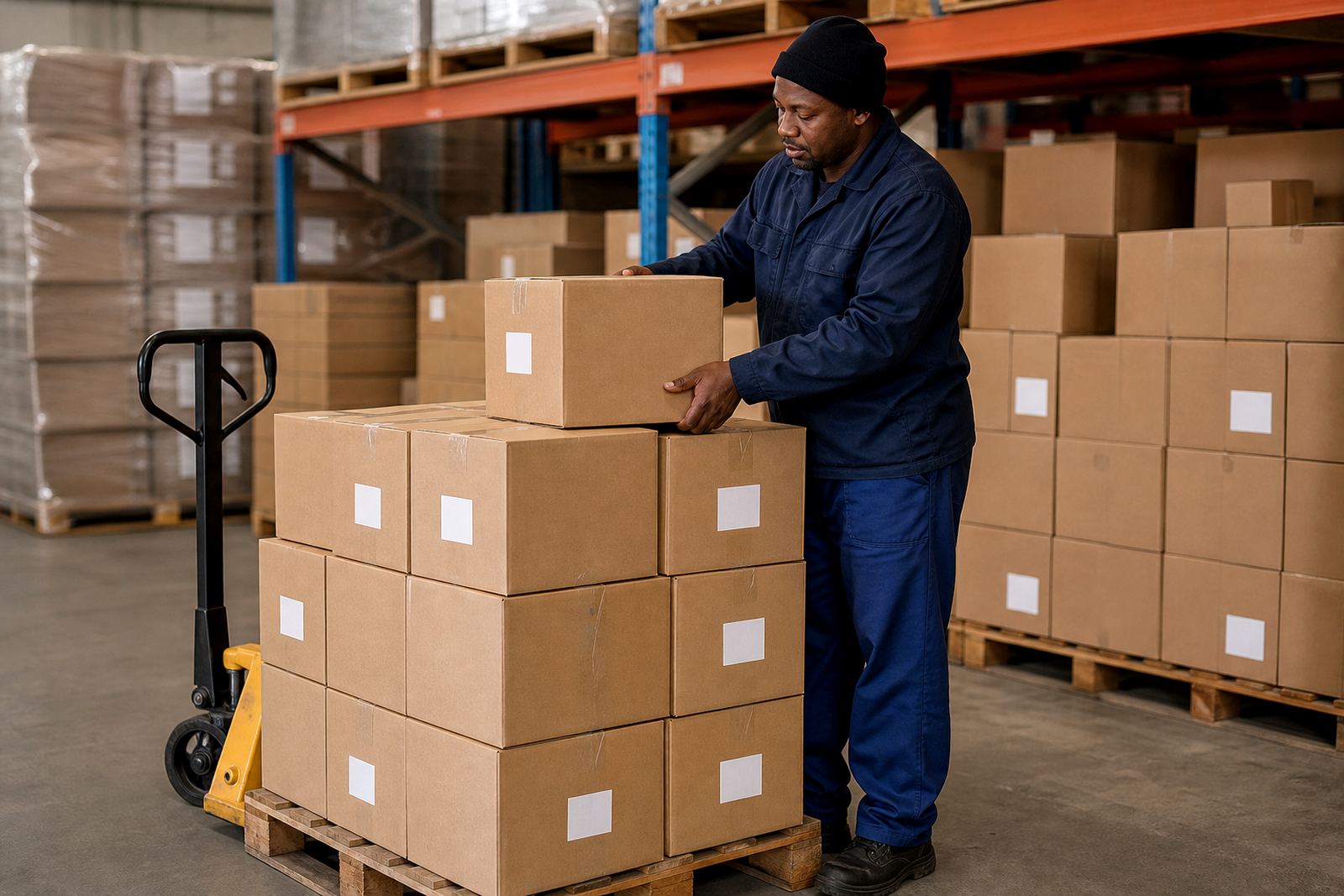
For businesses moving goods between Durban, Johannesburg and Cape Town, these labels help keep each stage visible. A box can be marked in Pinetown, checked in Pretoria, and still be easy to relabel later without fighting old adhesive.
How the face stock changes the result
The top layer, or face stock, matters just as much as the glue. Paper face stocks are common for short-life marking, where a matt finish and easy printability are more important than moisture resistance. Film face stocks suit damp or chilled areas better, and they are often chosen where condensation, handling or surface rubbing is expected.
If the label must be read by hand and removed soon after, a standard paper face stock can be enough. If it is going onto a cool room pack or a plastic crate that gets wiped often, a synthetic face stock is usually a better match. The aim is to match the face stock to the surface and the conditions, not just to the printer.
- Paper face stocks for general indoor marking
- Matt coated stocks for sharper print and cleaner text
- Film face stocks for moisture, rubbing and longer handling
- Clearer prints for barcodes, item codes and short instructions
Adhesive strength should match the job, not the guess
Removable does not mean weak. It means the adhesive is formulated to hold for a defined period and then release with less effort than a permanent grade. On smooth glass, most coated cartons and some plastics, the right removable adhesive grips well enough for transport. On rough corrugated board or dusty surfaces, the bond can be less predictable, so testing is worth the time.
Humidity near the coast, especially around Durban and Hammarsdale, can affect how a label behaves after application. So can cold stores, dusty pack lines and textured containers. If the label must survive a week in a storeroom and still peel off cleanly, that is a different requirement from a same-day dispatch sticker.
- Short-term adhesion for temporary identification
- Cleaner removal from smooth surfaces than from rough ones
- Better performance when the application surface is clean and dry
- Choice of adhesive should follow the surface, temperature and removal point
Thermal rolls and removable stock in the same workflow
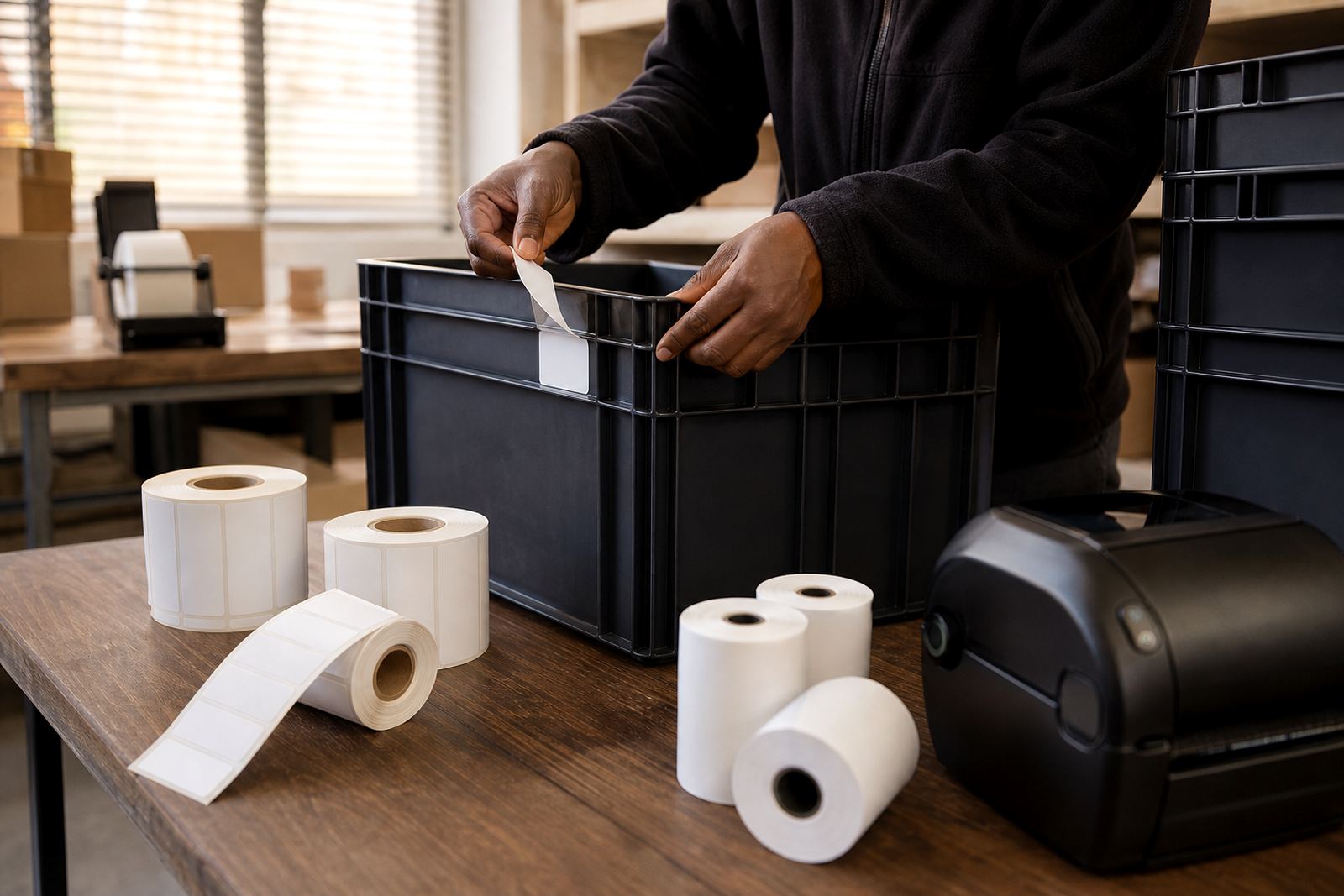
Removable jobs are often printed on thermal rolls, either direct thermal or thermal transfer, depending on the application. Direct thermal prints without a ribbon and is useful for short-life labels such as picking notes, dispatch labels and temporary shelf labels. Thermal transfer uses a ribbon and is preferred when the print needs more durability against rubbing, heat or light.
Printer fit matters here too. Core size, roll diameter, winding direction and label gap all need to suit the machine. A benchtop unit used for smaller runs will not take the same roll as a larger industrial printer, and if the winding direction is wrong the label may feed poorly or skip at the edge. We check those details before supply so the rolls suit the printer and the task.
- Core sizes must suit the printer holder and feed path
- Roll length should match the shift pattern and print volume
- Winding direction affects feeding and label presentation
- Direct thermal suits short use, thermal transfer suits longer handling
A practical Pinetown example from stock control
A distribution team in the Pinetown area might use removable labels on reusable plastic totes leaving the warehouse in the morning, then peel them off when the totes return in the afternoon. The same tote can be relabelled for a different route or a different customer the next day. That cuts down on cleaning time and keeps the container reusable without old labels building up on the sides.
It also helps when stock is moved between branches. A pallet can be marked for sorting in Westmead, then reallocated for a delivery run to Pietermaritzburg or Johannesburg. If the label is meant to come off after receiving, the adhesive should release cleanly instead of leaving patchy residue on the container. That small detail matters when you are handling dozens of units before the end of the shift.
What we check before a removable run goes out
For removable adhesive jobs, the correct mix of stock, glue and roll format prevents wasted labels and messy removal later. We look at the surface, the time the label must stay on, the printer type and the way the pack is handled in transit. If needed, sample rolls can be used before the main run so the adhesive and face stock are tested on the actual pack or crate.
- Surface type: carton, plastic, glass or coated board
- How long the label must remain in place
- Whether the print is for hand reading or scanning
- Printer compatibility, core size and winding direction
- Whether the label must release cleanly after use
That kind of planning matters for retail, logistics and manufacturing jobs across South Africa, from Cape Town to Pretoria. A removable label should do its work quietly, then come off without causing a second job for the staff who have to clear the line.