
Why a carton seal is more than a sticker
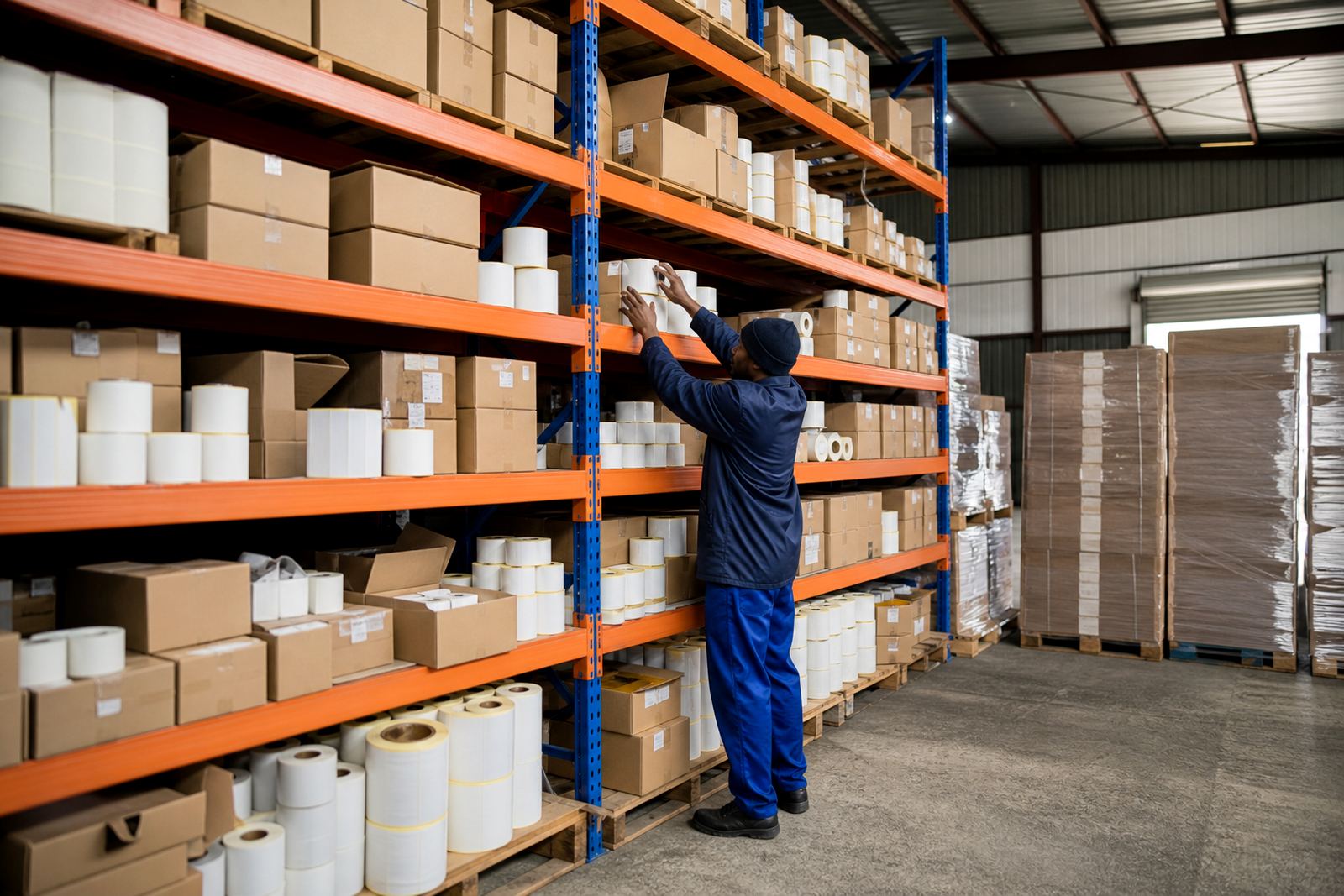
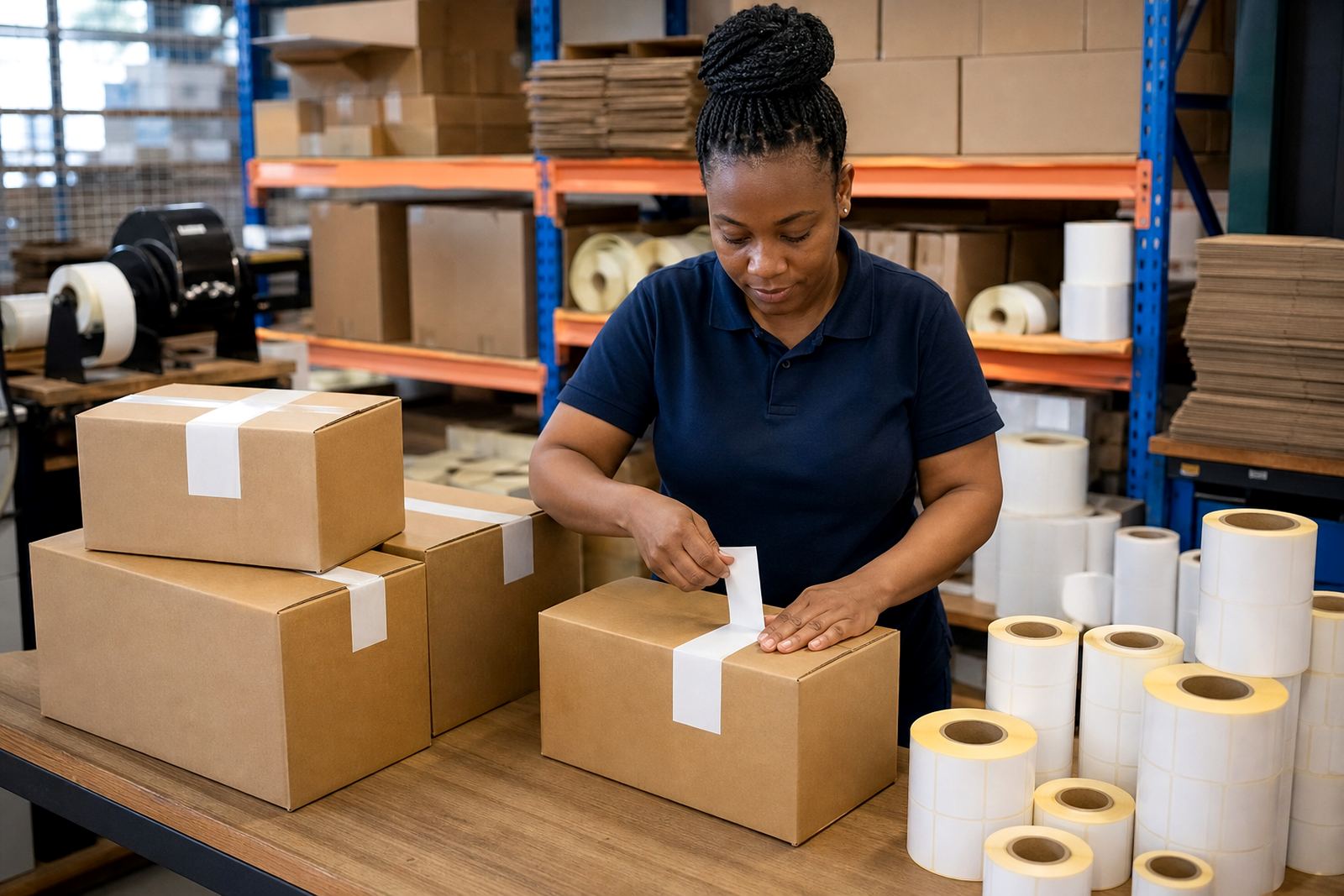
A carton seal is usually a label, strip or closure marking applied across a box flap, seam or opening point. In Westmead, Pinetown and the wider Durban industrial area, that small piece of material often has to deal with rough handling, heat, dust and the odd wet pallet on the way to Johannesburg or Cape Town.
For basic closure work, the label does not need to be decorative. It needs the right face stock, the right adhesive and a liner that feeds cleanly on the application line or by hand. If the carton is cold from early-morning loading, or if the store room gets humid near the coast, the adhesive choice matters a lot more than the print layout.
- Seals can show first opening, re-taping or tampering.
- They can carry batch codes, pack counts or route marks.
- They can help warehouse staff spot the right carton fast.
Face stock choices that hold up on moving cardboard
For carton sealing, the face stock is the top layer that carries the print and gives the label its body. Paper face stocks work well when the box is clean, dry and handled indoors. They are often used for shipping notes, carton IDs and short life control marks. When a carton needs more grip or a neater finish, a coated paper face can give better print definition and easier reading.
Where cartons are exposed to moisture, warehouse dust or rough stacking, synthetic face stocks can be the better choice. They resist scuffing and do not soften as quickly if the load sits in a warm truck or near a loading bay door. For export-style packing or chilled product outer boxes, this can make the difference between a readable seal and one that peels or smudges before delivery.
We often advise customers to match the face stock to the carton surface and the handling path, not only the print method. A corrugated box with recycled fibres may need a different tack than a glossy carton with a coated finish.
- Paper face stocks suit dry indoor carton sealing.
- Coated paper improves print clarity and handling.
- Synthetic face stocks suit moisture, dust and heavy movement.
Adhesives for warm depots, cold rooms and long routes
The adhesive is what keeps the seal where it should stay. For carton closure work, the three main options are usually permanent, removable and high tack permanent. Permanent adhesives are used when the seal must stay put through transport and storage. Removable adhesives are better for short-term control markings or returns handling where the label may need to come off later. High tack options bite faster on rough or dusty cardboard.
At the coast, humidity can make carton surfaces feel slightly damp even when they look dry. Inland, the problem may be heat and dust. In both cases, the right adhesive should grab cleanly without lifting at the corners. If a carton is sealed before the glue line has settled, or if powdery board is used, the seal can fail early and cause rework at dispatch.
- Permanent adhesive for closed cartons and security use.
- Removable adhesive for temporary control marks.
- High tack adhesive for rough board and fast line work.
Adhesive matching is one of the most useful checks before a full run. A sample roll can save a lot of waste when a new carton style comes in from a supplier in another province.
Thermal rolls for carton marks and line control
Carton sealing work often links with thermal printing because many pack houses need quick, clear marks at the packing bench. Direct thermal rolls are used where the print is needed for a shorter life and the label printer uses heat to create the image directly on the face stock. These are practical for dispatch labels, carton control marks and short-term route labels.
Thermal transfer rolls use a ribbon to transfer the image onto a compatible label face stock. This is better when the carton mark needs more durability, such as for longer storage, barcode scanning or repeated handling in a busy warehouse. If the box passes through multiple hands from Pinetown to Pretoria, thermal transfer can give a tougher print surface.
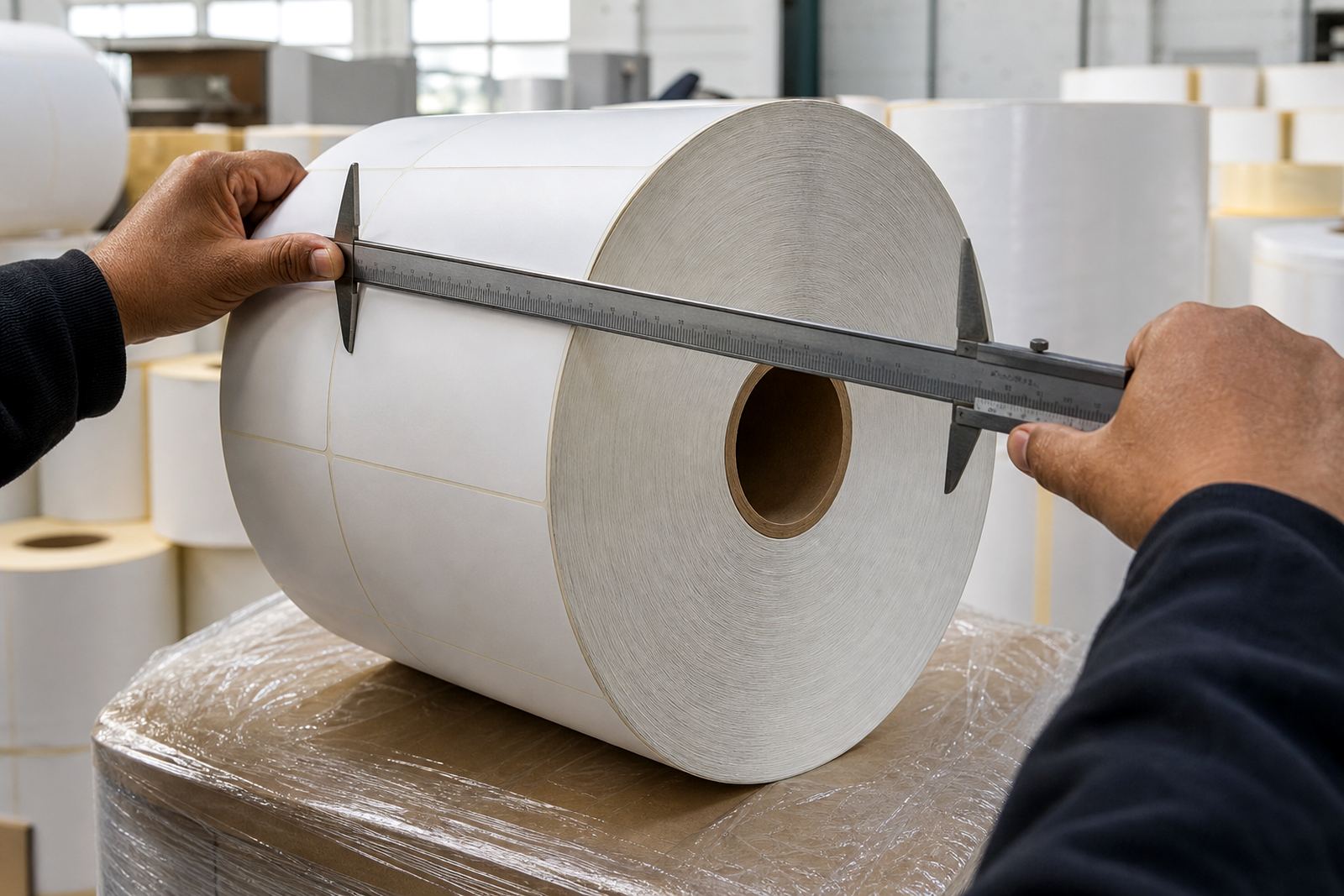
Printer fit checks matter here. Not every roll suits every machine. Core size, roll diameter, winding direction and gap or black mark format all need to suit the printer and the way the operator loads the roll. A roll that is slightly off can cause stoppages just when the line is busiest.
- Direct thermal for short life, quick dispatch use.
- Thermal transfer for longer wear and better durability.
- Core size and winding direction must match the printer.
Core size, winding direction and the part people forget
When a carton seal or control label is ordered, people often look first at the print and the adhesive. But the liner, core and winding direction can be just as important. A label roll on a 25 mm core will not suit every benchtop printer, and a 76 mm core is standard for many industrial units. If the roll is wound face in when the printer expects face out, production stops while someone tries to reverse it.
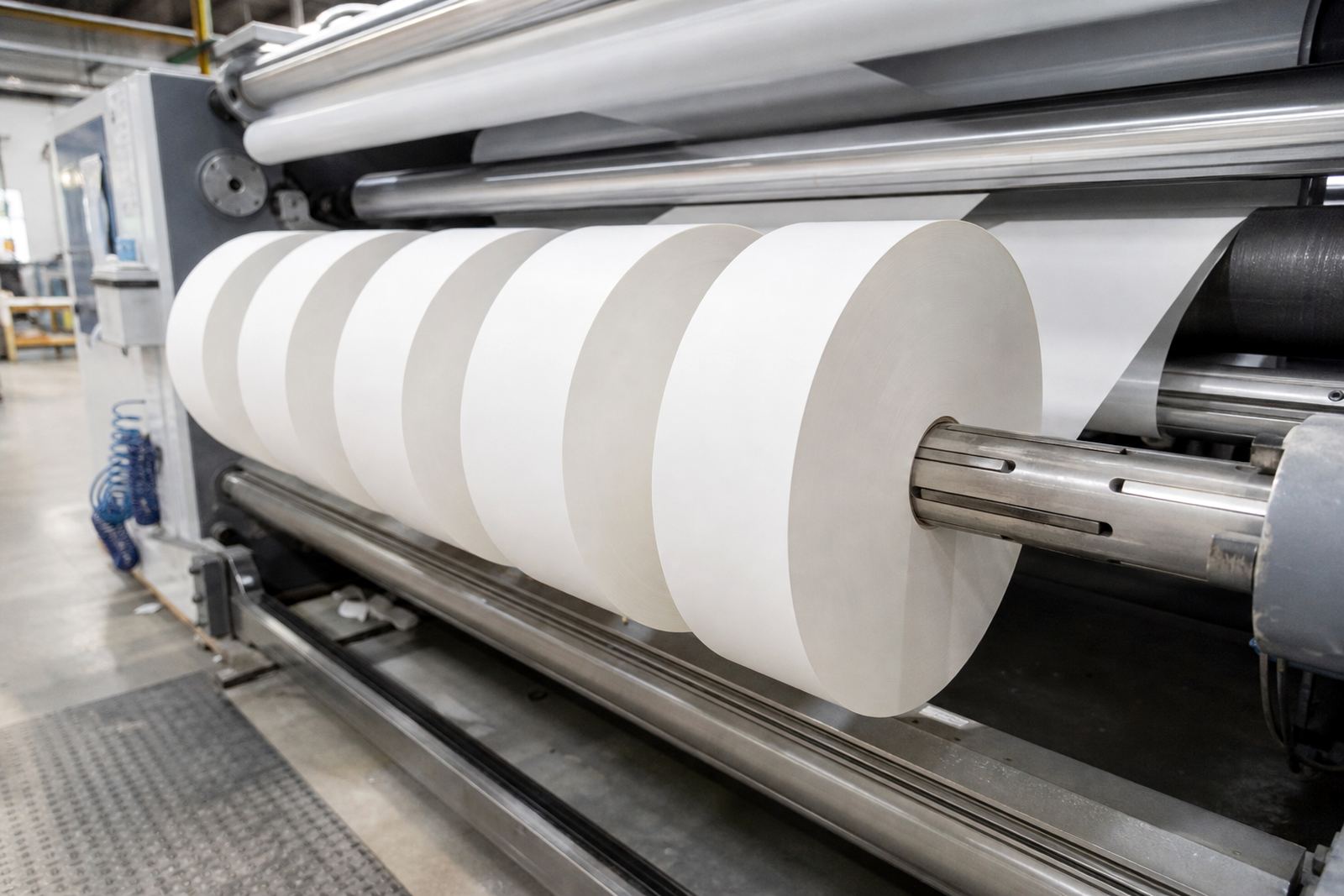
Rewinding and custom slitting are useful where a carton line needs narrower labels, shorter lengths or a different count per roll. This is common in packing houses that run several box sizes in one shift.
For Westmead and Pinetown customers supplying nationally, the practical question is often not what looks neat, but what will feed cleanly every time. A well-set roll can save more time than an extra layer of print finish ever will.
A Durban packing bay example that shows the difference
Picture a small packing team in the Durban area sealing cartons for retail stores in Gauteng and the Western Cape. The cartons leave after lunch, sit in a vehicle through heat and stop-start traffic, then move through a warehouse in Johannesburg the next morning. If the seal is just a generic paper label with weak adhesive, corners can lift and the box may be opened again for inspection. If the seal uses the correct face stock and a stronger adhesive, the carton stays marked and the receiving team can trust the code on arrival.
That same setup may need a direct thermal roll for quick packing labels and a separate thermal transfer roll for cartons that will stay in storage for longer. The right mix depends on the product, the route and the amount of handling. There is no single answer for every carton, and that is usually where good usage review pays off.
- Short route, short storage, lighter handling.
- Long route, repeated handling, tougher seal needed.
- Different carton finishes may need different adhesive grades.
In practical terms, the best carton seal option is the one that stays readable, stays attached and helps the bay work faster with less rework.
How our team handles carton seal orders from Westmead
Label Paper works from Westmead, Pinetown and supplies carton seal stock and thermal rolls to Durban, Johannesburg, Cape Town, Pretoria and Pietermaritzburg. Our team handles face stock selection, adhesive matching, core sizing, roll length planning, winding direction, sample rolls, printer fit checks, dispatch packing, repeat order planning and usage review. That is useful when a customer is moving from one carton style to another, or when a printer change means the old roll format no longer fits.
Sibusiso Lourens oversees the business as Managing Director, with support from Naledi Mdlalose in sales, Johan Reddy in conversion, Ayanda Ntsele in customer support, Megan Moonsamy in production planning and Themba Kotze in dispatch. The enquiry form on our contact page is the usual first step when a business wants a carton seal matched to its packing line.
Whether the need is a basic closure mark for retail cartons or a tougher control label for logistics, the right construction starts with the board, the route and the printer, not just the print face.