Why a parent roll can spoil before it is even opened
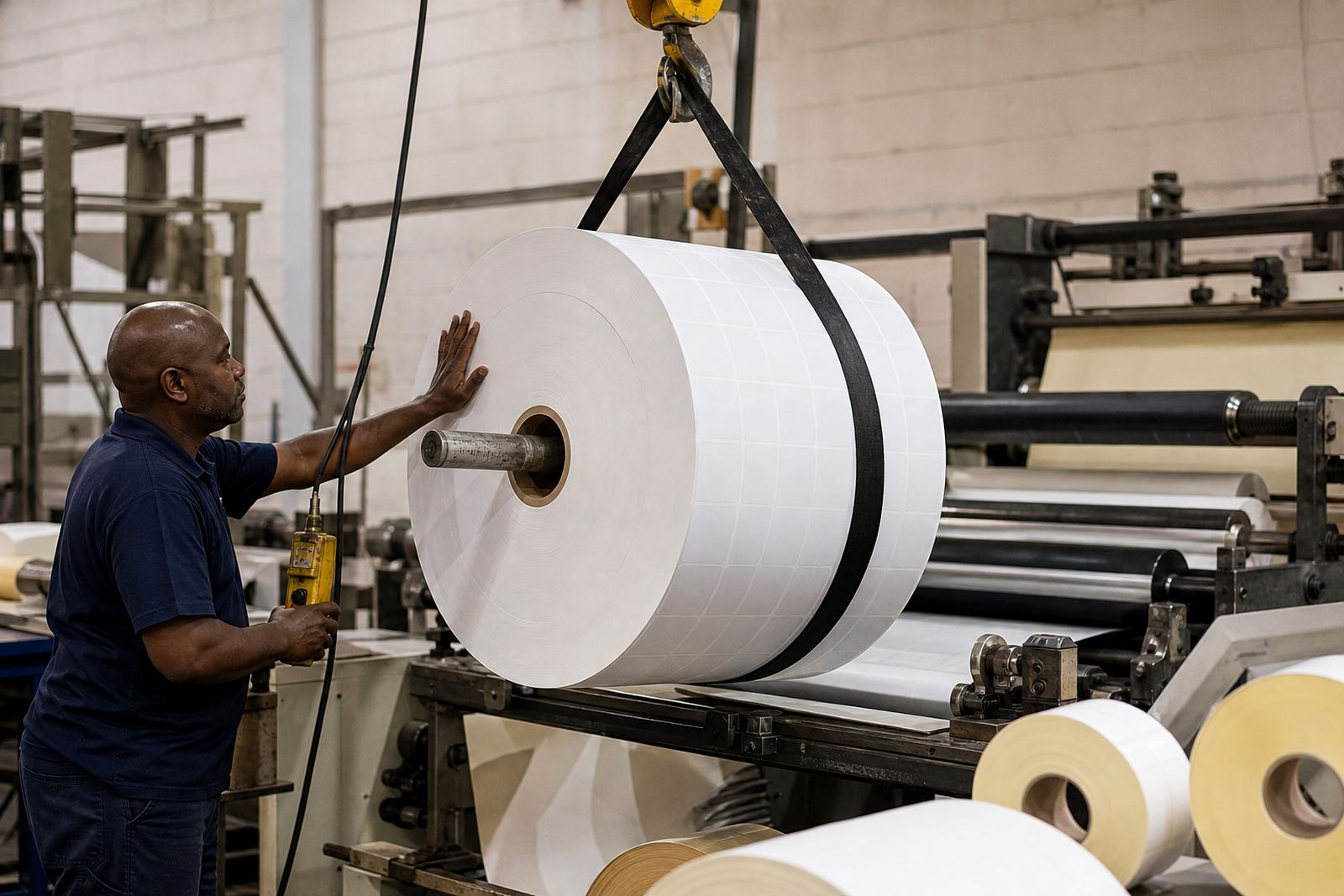
A jumbo roll carries a lot of pressure in one coil, so the first risk starts before the knife touches it. If the roll is dropped, squeezed too hard with forks, or left standing where heat builds up, the edge can crush and the unwind can shift. That leads to telescoping, baggy web, and a print run that keeps wandering on the machine.
In Westmead, where loading bays can get busy and the floor traffic never really stops, it pays to plan where each roll lands and how it will be moved again. A 76 mm core needs proper support, and a wide roll should never be left with weight hanging off one side. Even a small nick on the edge can travel through the whole length once the roll goes into rewind or slitting.
For label stock, the face material and adhesive also respond to handling. Heat, dust and moisture can change the way a roll behaves, especially with coated paper, film face stocks or permanent adhesive. A roll that has sat too close to an open bay door or a humid wall may look fine from the outside but still feed poorly once it is on the line.
Lifting gear, fork width and the first turn of the day
Good handling starts with the way the roll is picked up. The lift should support the core evenly and not pinch the roll body. If the forks are too narrow, the roll can flex. If they sit too close to the edge, the ends can bruise. For larger parent rolls, that damage does not stay local, it affects unwind stability from the first turn.
Before moving any jumbo roll, check the wrap, the core integrity and the direction it must unwind. It is also worth confirming the roll length and winding direction against the job card before the roll leaves storage. A wrong unwind direction can force a last minute rework and waste good material.
- Match fork spacing to the roll width and core support points.
- Keep the roll upright only where the floor is level and the stand is rated for it.
- Use edge protectors if the roll must travel across a rough threshold.
- Do a quick visual check for crush marks, loose wraps and dust before loading.
In a Durban conversion room, coastal humidity can make this even more important. Paper-based stocks can pick up moisture, while some films hold static and attract dust. A clean, dry transfer from storage to machine saves trouble later.
Storage habits that keep the roll round
Jumbo rolls should be stored where the temperature stays as even as possible and where the floor is dry. Standing a roll against a wall for too long can flatten one side, and stacking the wrong way can create pressure marks that show up during slitting. The best habit is to keep each roll identified, dated and positioned so the oldest stock is used in order.
For self-adhesive label stock, storage time matters because the adhesive continues to settle. Some jobs need a clean, strong bond for cartons or sealing, while others need controlled release for liner removal.That small pause can prevent edge curl and inconsistent unwind tension.
- Store rolls off damp floors and away from direct sun at bay doors.
- Keep shrink wrap intact until the roll is needed.
- Do not lean narrow rolls where they can oval over time.
- Separate paper face stock from film face stock where the environment changes quickly.
In Pretoria, where dry air can still sit beside sharp daytime heat, the issue is not always moisture. Sometimes it is sudden movement from a cool store to a hot machine room, and that change can affect curl and print registration.
Slitting and rewinding without turning a good roll into waste
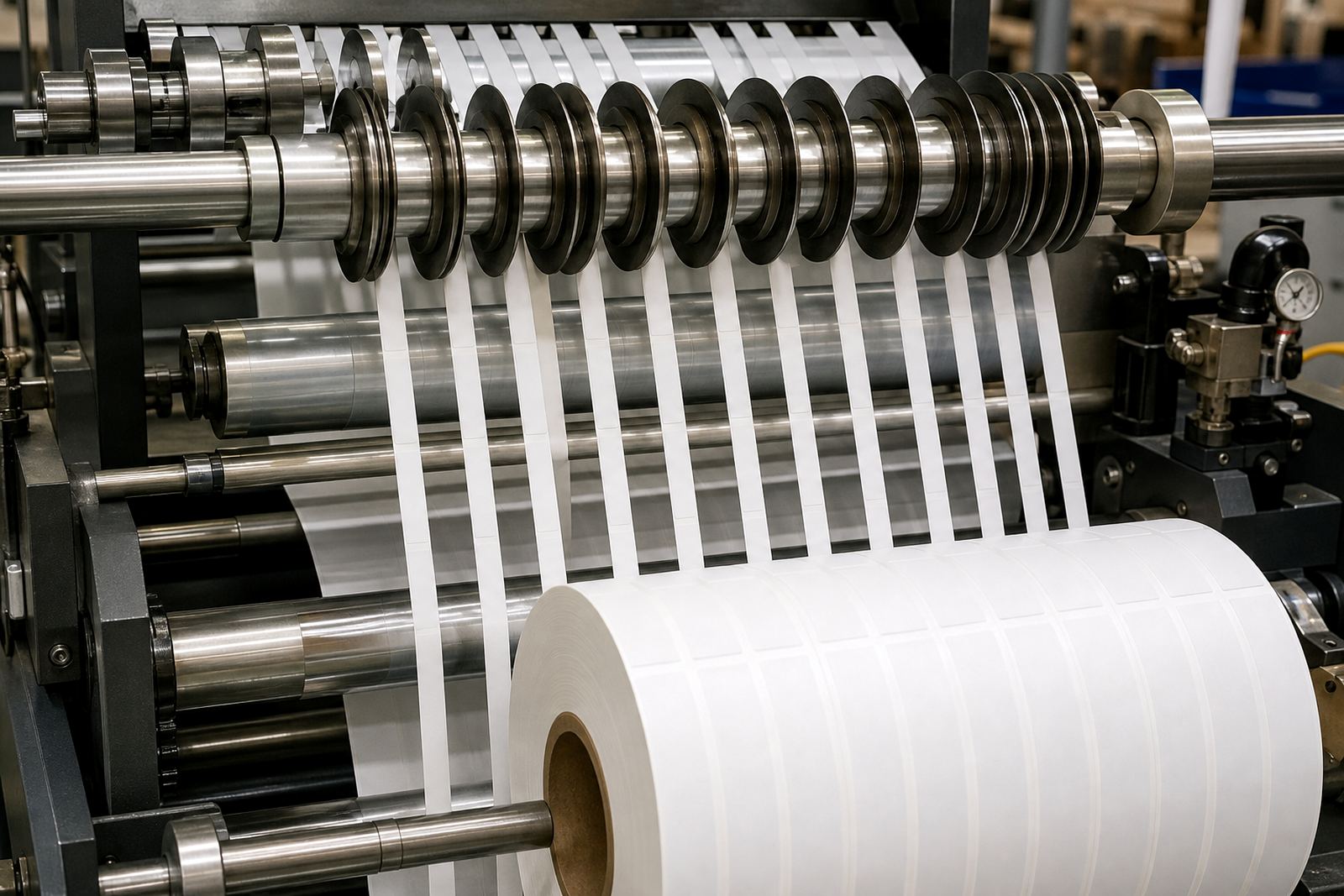
Once a parent roll enters conversion, the slitter setting becomes the whole story. Blade condition, tension balance and web path all matter. If the knives are dull, the edge can fray. If tension is too high, the web stretches and the finished rolls wind too tight. If tension is too low, the roll builds soft and the outer wraps can slip.
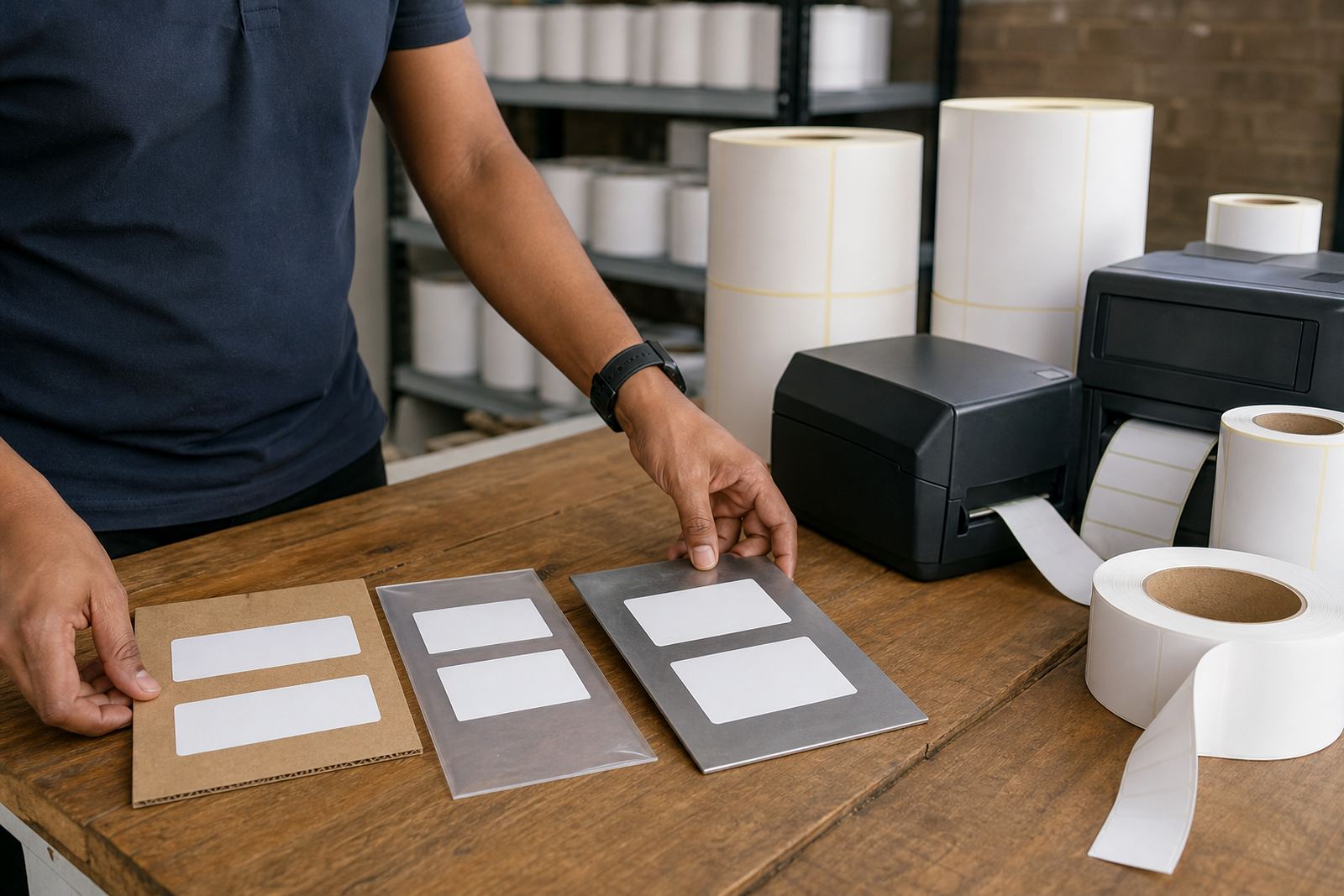
Rewinding also needs a clear decision on core size and finished roll length. A 38 mm core is common on some lighter rolls, while 76 mm cores suit heavier duty use and higher line speeds. Printer fit checks should be done before packing, especially where the rolls are going onto benchtop thermal units, industrial print stations or applicators that need a precise core and diameter.
Label Paper handles the practical parts that keep a job orderly: custom slitting, rewinding, core sizing, roll length planning and winding direction. When those details are aligned before the roll is cut, the result is easier to load and less likely to cause jams or skewed print.
Face stock, adhesive and liner choices that change handling
Handling is not only about size and weight. The material build changes how the roll behaves. Paper face stocks are often easier to slit cleanly, while certain film stocks need tighter control so the edge stays neat. A stronger adhesive may need more careful release control, and the liner choice affects how the roll feeds and peels at speed.
A release liner that is too soft can wrinkle under pressure. A liner that is too stiff can make the finished roll hard to unwind on smaller printers. That is why sample rolls are useful before a full production run. They allow a quick check of adhesion, slit quality and feeding behaviour on the actual equipment.
- Use face stock selection to suit packaging, sealing or coding needs.
- Match adhesive strength to the surface, including cartons, drums or film wrap.
- Check liner thickness and stiffness where high speed dispense is expected.
- Confirm printer compatibility on the exact machine to be used.
In logistics runs between Johannesburg and Cape Town, where the same label may face a dry warehouse one week and a humid coastal site the next, the handling choice must suit the full route not just the print room.
A local example from Westmead to dispatch
A common week in Westmead starts with a parent roll arriving for a retail barcode job and ends with finished rolls leaving for several branches. The roll may be slit for different widths, rewound to a set length and packed for dispatch to Durban, Pietermaritzburg or farther afield. If the job changes halfway through, the team must keep the unwind direction, core size and packing order straight or the batch becomes messy fast.
That is where dispatch packing and repeat order planning matter. A roll that leaves the converter in good condition still needs protection in transit. Corners need support, labels must stay dry, and cartons should be marked so the site receiving them knows which roll goes to which printer or line. When the end customer is running on a schedule, one damaged edge can hold up sealing or coding across an entire shift.
Handled properly, jumbo rolls are not awkward. They are predictable. The trick is to treat each one like a working tool, not just a large circle of material waiting to be moved.
The checks that save the next shift
Before a jumbo roll leaves the conversion area, a short final check prevents most problems. It should cover the roll edges, the core, the tension of the rewind, the clean state of the wrap and the accuracy of the label on the box. If anything looks uneven, it is better to sort it immediately than have the client discover it on a machine in Hammarsdale or in a warehouse on the N3.
Usage review also helps. If a customer keeps asking for the same stock but needs a different width, adhesive or roll length every month, the handling plan should be adjusted rather than forcing the same setup each time. That is usually where waste begins, not in the final pack, but in the way the roll was set up from the start.
For South African businesses working in retail, manufacturing or logistics, careful jumbo roll handling is not fancy. It is the basic discipline that keeps stock usable, print-ready and on time.