Why the printer head does all the work
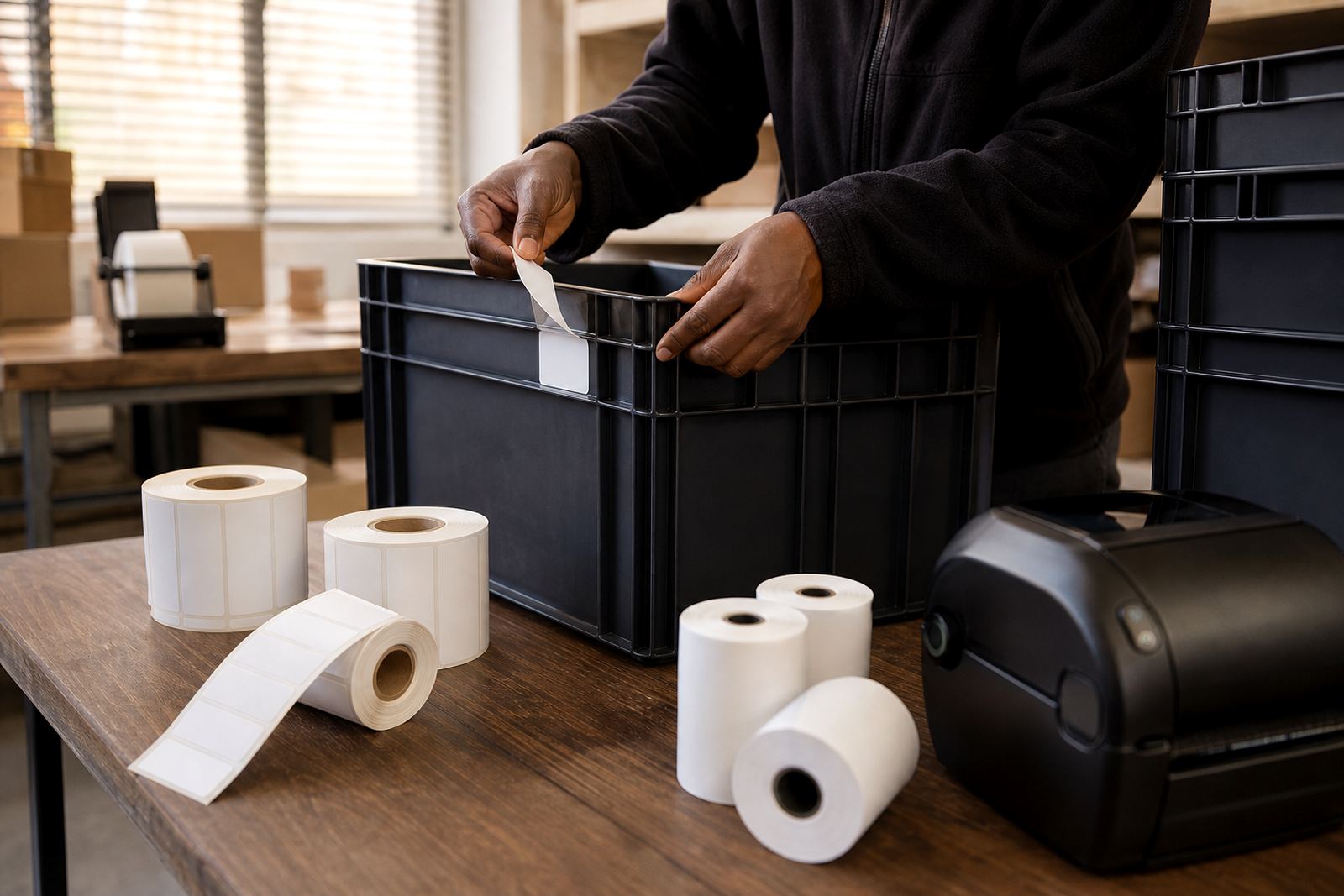
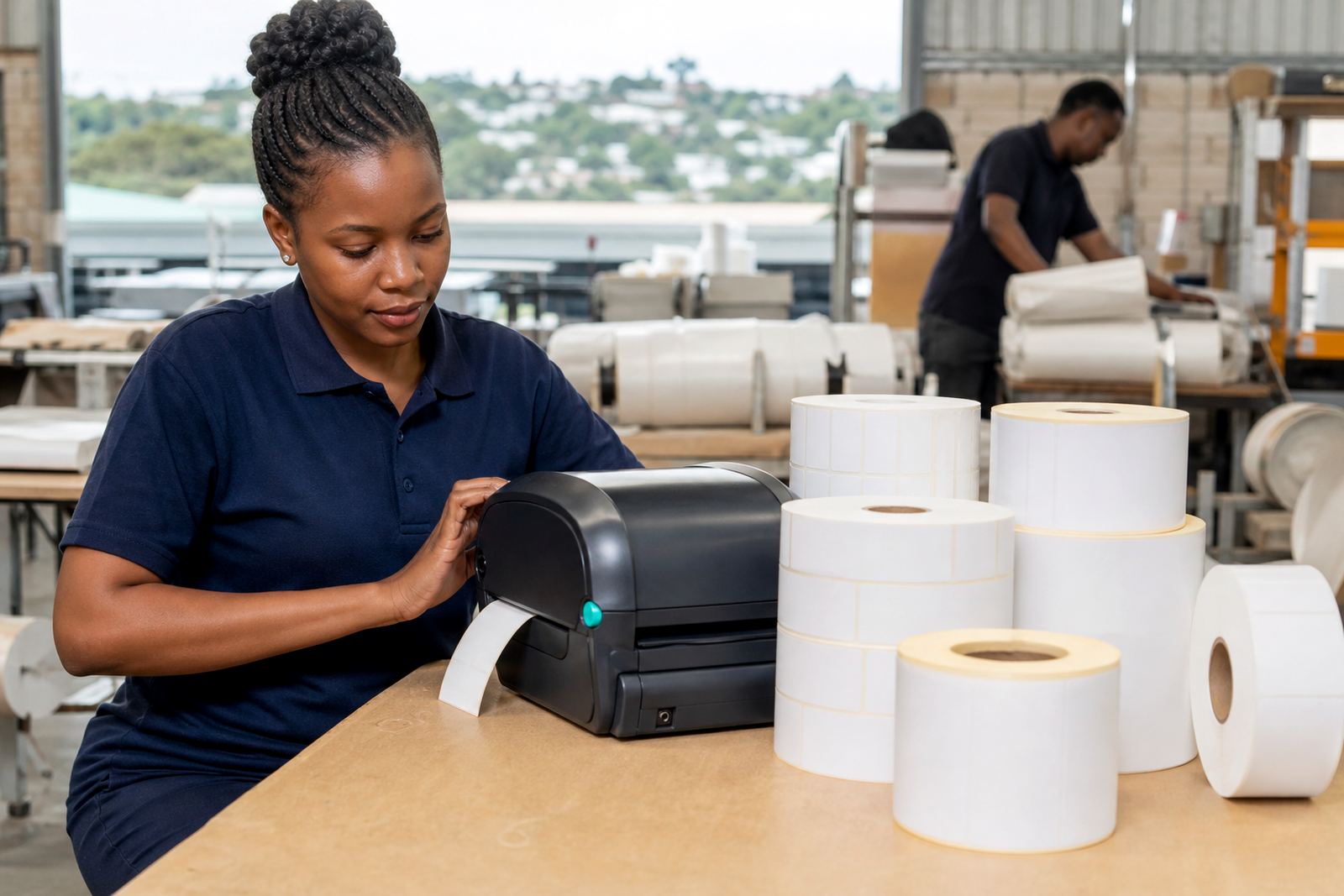
Direct thermal stock has a heat-sensitive face coating. When the print head warms selected points on the label, those areas turn black and form the text, barcode or image. Because there is no ribbon, the setup is straightforward and the roll path is shorter, which helps on busy packing tables in Westmead, Pinetown or a small dispatch area in Pietermaritzburg.
The trade-off is worth noting. Direct thermal labels are practical, but they are not the best choice for every application. Heat, sunlight, abrasion and some chemicals can cause the print to fade faster than a thermal transfer print. For parcels that move out the door the same day, that is usually fine. For items that sit in a storeroom, freezer or shipping cage for weeks, it may not be enough.
- No ribbon is required, so roll changes are quicker.
- Print quality is good for barcodes, addresses and batch codes.
- The label face must be chosen for the storage and handling conditions.
Where direct thermal earns its keep
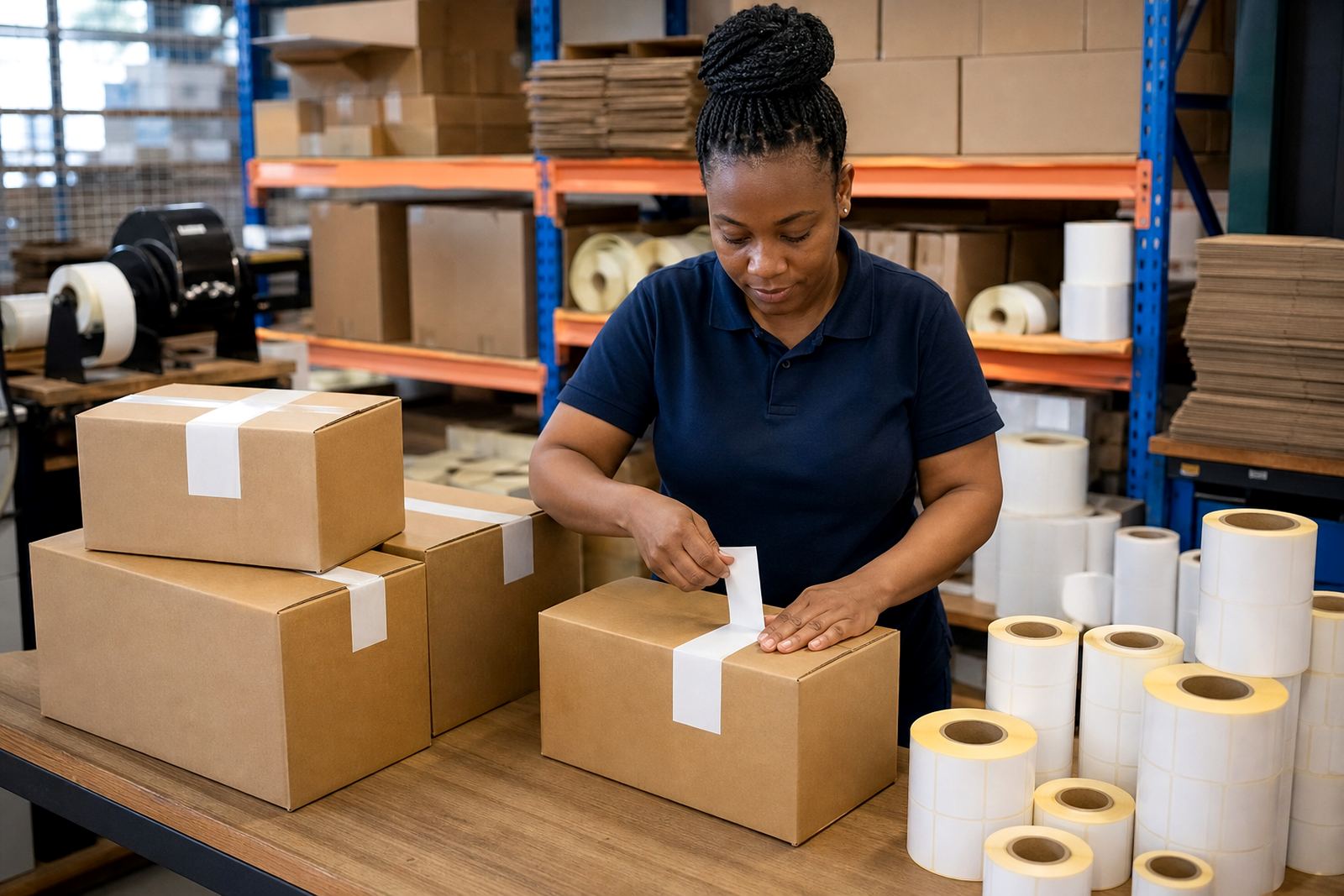
In South African operations, direct thermal is commonly used for courier labels, weigh scale labels, retail shelf marking, short-life product labels and internal warehouse identification. It works well where labels are printed in volume and applied soon after printing. Logistics teams in Durban or Johannesburg often favour it for cartons, totes and route labels because the process is quick and there is less consumable stock to manage.
It also suits many retail and light manufacturing tasks. If a label must show a price, a barcode, a batch number or a despatch reference for a short period, direct thermal is usually the cleaner option. For produce, bakery items and stock that turns fast, the label may only need to last a few days or a few weeks. That is where the format fits neatly.
- Parcel and despatch labels
- Retail shelf and weighing labels
- Short-life batch and internal control labels
- Returns, transfers and warehouse movement labels
The label face, adhesive and liner all matter
Direct thermal is not one single product. The face stock, adhesive and liner must match the job. A smooth top-coated paper face is common for general use. It feeds well, prints clearly and handles everyday handling in offices, factories and stores. Where better resistance is needed, a more specialised face may be used, but the choice depends on the printer, the shelf life and the surface the label will stick to.
Adhesive selection is just as important. Permanent adhesive is used when the label must stay put on cartons, plastic tubs or retail packs. Removable adhesive suits temporary identification on containers or trays. Freezer grade and high-tack options are used where conditions are more difficult, such as cold rooms, chilled distribution or slightly dusty packaging areas. Coastal humidity in places like Durban can also influence how neatly a label bonds to the pack.
The liner must release cleanly and feed at a consistent tension. If the liner is too light or too stiff for the printer, you can get tracking issues, poor print registration or a messy rewind. That is why label width, gap size, winding direction and core size all need to be checked before a roll is supplied.
Roll sizes that fit the printer, not the other way round
Direct thermal rolls are not interchangeable across every printer. Benchtop units often use smaller roll diameters and 25 mm or 40 mm cores, while larger industrial printers may take bigger outer diameters and 76 mm cores.
Printer fit checks are worth doing before a roll is committed. You need to confirm the print width, outer diameter, core size, winding direction and the gap or black mark format. Some printers are happier with a narrow label on a smaller core, while others need a wide roll that sits neatly between the guides. In practice, a label that looks fine on paper can still cause trouble if it is wound the wrong way or packed too tightly.
- Check printer type: benchtop, mid-range or industrial
- Confirm core size and maximum roll diameter
- Match label width to the print head width
- Confirm whether the printer uses gap, black mark or continuous stock
When direct thermal is the wrong call
Direct thermal is convenient, but it has limits. If a label must withstand long exposure to sunlight, rubbing in transit, cold storage cycles or oily handling, thermal transfer is often the better route because the ribbon print tends to last longer. For stock sent from Pretoria to Cape Town, for example, a carton label that will be handled many times may need something more durable than direct thermal paper.
It is also not the best choice where the label must remain legible for a long compliance period or where the surface is rough, damp or uneven. In those cases, the adhesive and face stock must work harder, and sometimes the printing method itself needs to change. The practical question is not which print method is newer, but how long the label must stay readable and what it will face on the way there.
A proper usage review helps avoid wastage. The right answer may be a shorter roll length for fast-changing jobs, a stronger adhesive for corrugated cartons, or a switch to thermal transfer for longer life. Small changes in winding direction or label width can also cut down on jammed printers and spoiled stock, which saves time on the floor.
A Pinetown supply example that shows the difference
A small distributor in Westmead might print shipping labels through the morning and use them on cartons moving to Durban warehouses by afternoon. In that case, direct thermal makes sense because the labels are applied quickly and the print only needs to survive the journey and handover. If the same business starts labelling stock for cold-room holding or long-term shelving, the better option may change.
That is why sample rolls are useful. They let the team test print darkness, barcode readability, peel feel and adhesion on the actual pack surface before a larger run is approved. When the label stock is matched properly, the workflow is calmer, the printer is less fussy, and the stock room does not end up with rolls that almost fit but do not quite work.
For businesses across South Africa, from Hammarsdale to Johannesburg, the practical method is the same: confirm the job, choose the face stock, match the adhesive, check the printer and plan the roll length around real usage. That is the clearest way to get direct thermal working properly instead of treating it as a one-size-fits-all answer.