
When a label only needs to do one job, direct thermal can be enough
Direct thermal printing uses heat from the print head to darken a coated label face stock. No ribbon is needed, which keeps the process neat and easy for short runs, parcel labels, weigh scale labels, courier labels and point of sale tickets. If the label will be used quickly and then discarded, this method often makes practical sense.
It works well where labels are applied and used within a shorter time frame. That includes dispatch labels for same day courier loads, fresh food packaging, temporary bin labels and warehouse movement labels. In humid coastal areas like Durban, direct thermal stock still needs careful storage away from sun, moisture and rough handling because the printed image can fade faster than many people expect.
- Best for short life labels
- No ribbon required
- Good for parcel and ticket printing
- Works on compatible direct thermal printers
Thermal transfer when the label must survive handling, sun and cold rooms
Thermal transfer printing uses a ribbon between the print head and the label face stock. The ribbon transfers ink onto the label, creating a printed image that is generally more durable. For products that sit on a shelf, travel through a distribution chain, or face rubbing and frequent scanning, this method is usually the safer choice.
Thermal transfer is often used for product identification, barcodes, asset labels, chemical drums, warehouse shelving and long life packaging. It is a better fit where the label must stay readable after heat, friction or moisture exposure. In Gauteng, where many goods move through dry warehouses and long delivery routes, that extra resistance can save time and reprints.
- Better for longer lasting labels
- Suitable for barcode readability over time
- Useful for handling, storage and transport
- Needs ribbon and a compatible printer setup
Face stocks, adhesives and liners change the outcome more than most people think
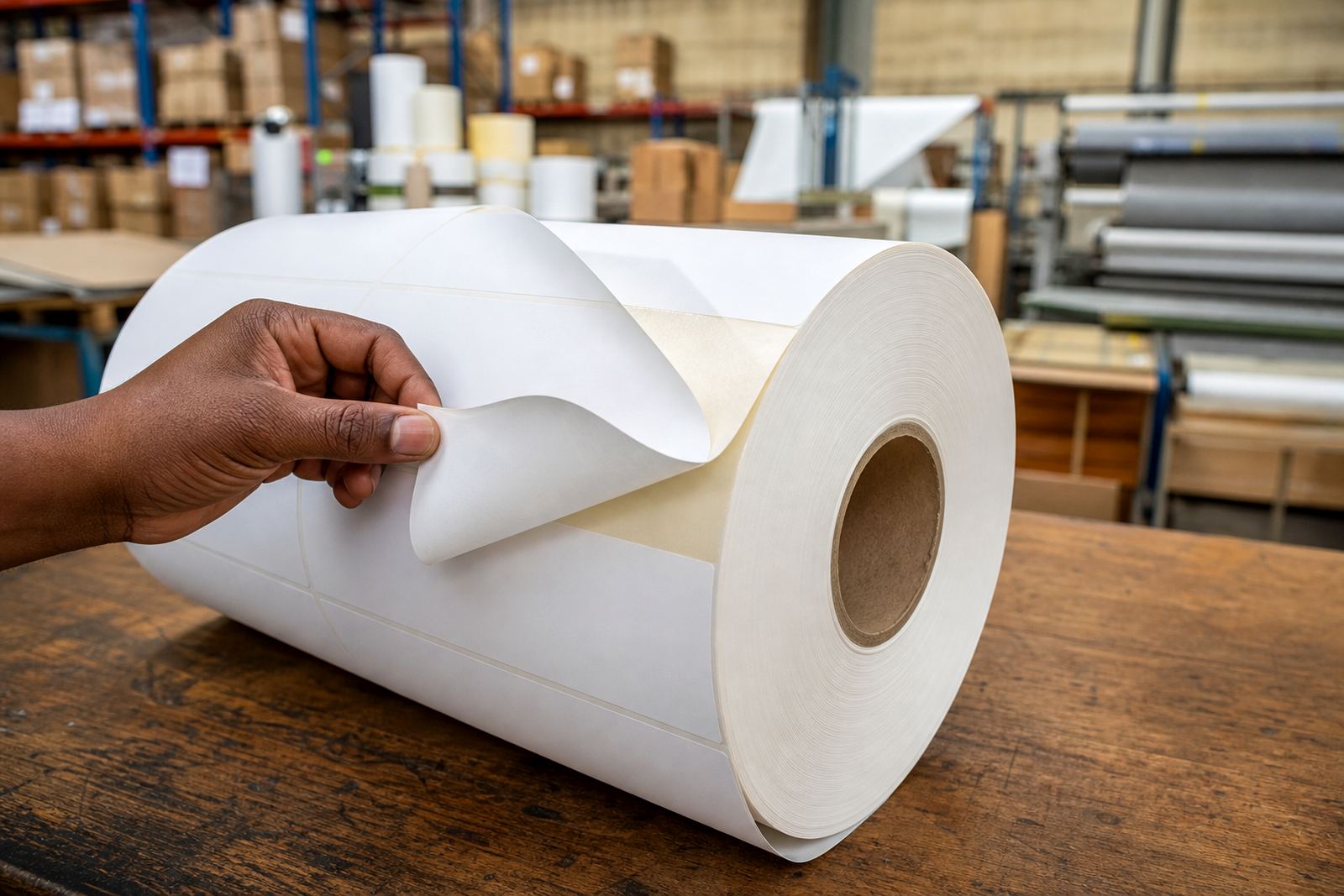
The print method matters, but the label material matters just as much. A paper face stock may be fine for carton seals or dispatch work, while a synthetic face stock can handle moisture, oil and cleaner contact better. Gloss, matt, top coated and writable finishes all behave differently under print heads and ribbons.
Adhesive choice matters too. A permanent adhesive suits sealed cartons, retail jars and many logistics uses. A removable adhesive is better when the label must come off cleanly. Freezer grade adhesives, high tack options and general purpose adhesives all exist for different surfaces such as glass, corrugate, plastic tubs and powder coated cartons. The liner also affects feeding and stripping, especially on slower or older machines.
- Paper face stocks suit many short term labels
- Synthetic stocks suit moisture and wear
- Permanent, removable and freezer adhesives serve different surfaces
- Liner release must suit your applicator or printer
Core sizes, winding direction and printer fit are not small details
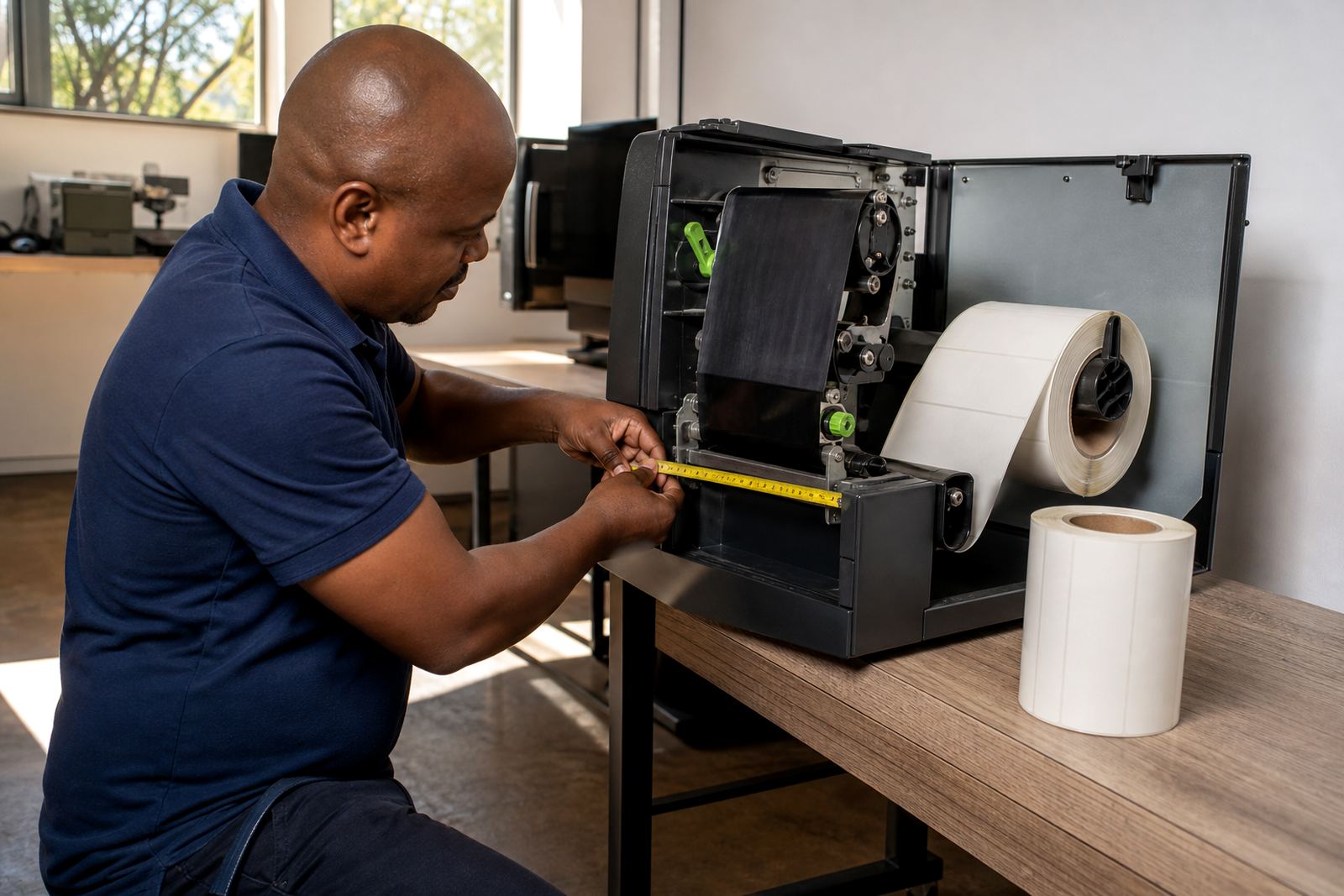
A roll can be the right width and still fail in the printer if the core size, roll diameter or winding direction is wrong. Common core sizes include 25 mm, 38 mm and 76 mm, and the right one depends on the printer model and how the roll feeds. Some benchtop printers take smaller cores, while larger industrial units handle bigger rolls for longer runs.
Winding direction also matters. Labels can be wound face in or face out, and the printer must match that setup. If not, the sensor position, print head contact and unwind path can all cause trouble.
- Check core size before ordering
- Match roll diameter to the printer bay
- Confirm face in or face out winding
- Allow for heat, dust and power interruptions on site
A practical way to choose between the two print methods
If the label is short term, cost sensitive and mainly for dispatch, direct thermal is often the easier option. If the label must stay readable, resist rubbing or survive storage, thermal transfer usually gives better results. The decision is less about which method is better overall and more about what the label has to do after it leaves the printer.
For example, a Pietermaritzburg wholesaler may use direct thermal for parcel labels and thermal transfer for shelf labels and product identification. A Cape Town packhouse might choose thermal transfer for chilled goods and direct thermal for internal movement labels. The right split can reduce waste, improve scan rates and keep stock moving without drama.
- Use direct thermal for short life dispatch work
- Use thermal transfer for durable product and warehouse labels
- Match the method to temperature, handling and shelf life
- Ask how the label will look after 2 days, 2 weeks and 2 months
Sampling first avoids expensive roll mistakes
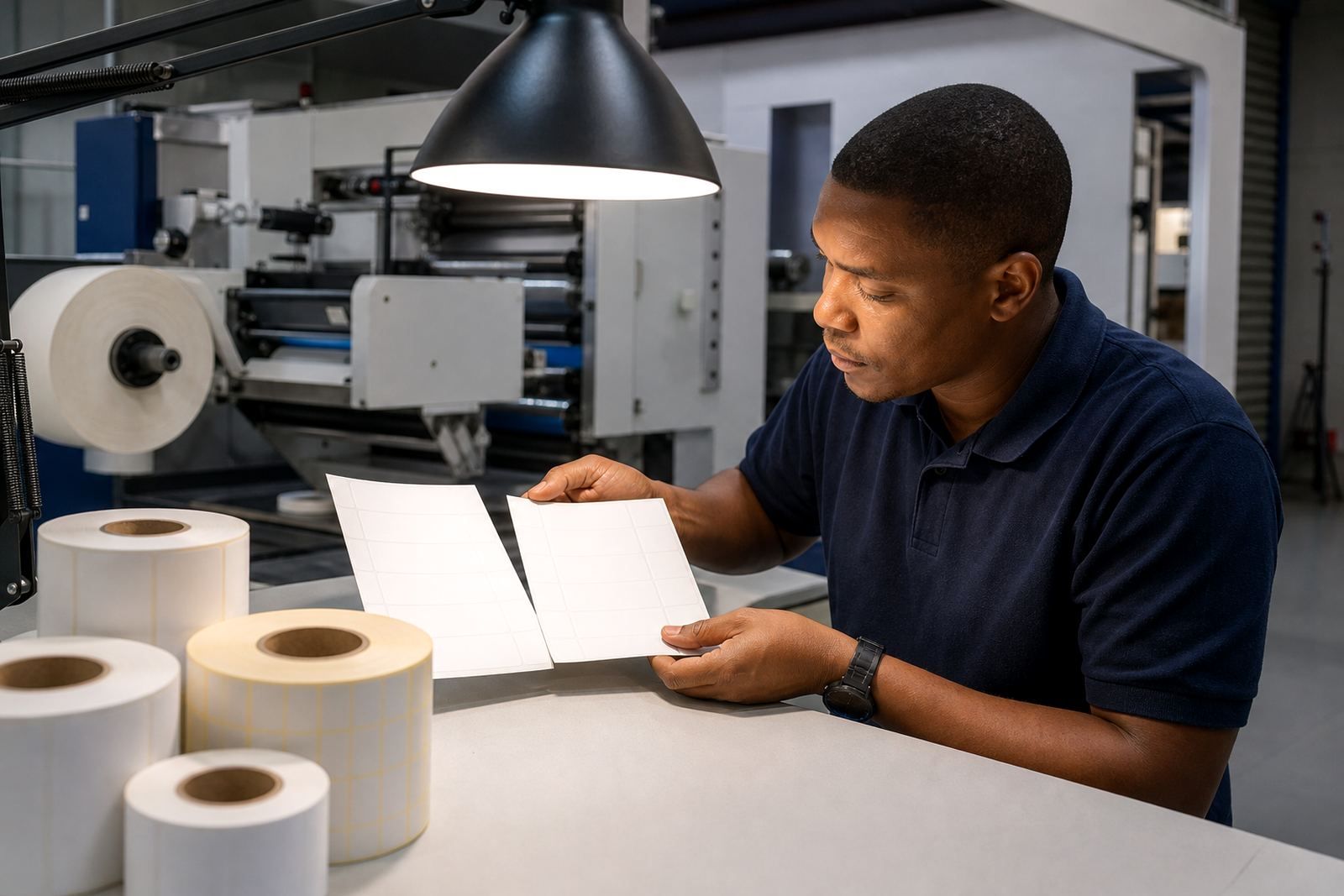
A sample roll tells you more than a spec sheet on its own. It shows how the adhesive grips the surface, whether the print is dark enough, if the barcode scans cleanly and whether the edge lift starts after a few hours. That matters when labels go onto dusty cartons, cold bottles or slightly curved containers.
We help customers test face stock selection, adhesive matching, printer fit checks and roll length planning before a full order is made. That saves time where labels are used across multiple sites or different printers, and it helps keep later supply consistent. In logistics, even a small difference in liner release or winding direction can slow the line down.
- Test on your actual surface, not only on a sample sheet
- Check barcode readability after printing and after handling
- Confirm later supply matches the first approved roll
- Plan dispatch packing for storage in hot or humid conditions
What our Westmead team looks at before a job goes out
At our Westmead, Pinetown base, the team looks at the full label setup, not only the print method. That includes the face stock, adhesive, liner, core size, roll length, winding direction and printer compatibility. Sibusiso Lourens manages the overall direction, with Naledi Mdlalose on sales, Johan Reddy on conversion, Ayanda Ntsele on customer support, Megan Moonsamy on production planning and Themba Kotze on dispatch coordination.
That practical approach matters when supplying Durban, Johannesburg, Cape Town, Pretoria and Pietermaritzburg. A label used in retail can behave differently from one used in warehousing or manufacturing, and the roll must suit the actual machine, not just the label artwork. When the setup is right, printing stays steady and the labels do the job without fuss.
- Direct thermal for short term, lower handling jobs
- Thermal transfer for durable, longer life applications
- Core size, winding and printer fit must be checked together
- Sample rolls help avoid rework and wasted stock