Where permanent labels earn their keep
Permanent adhesive jobs are the bread and butter of label use. They are applied once and expected to stay in place through storage, transport, stacking, rubbing and the odd splash of moisture. That makes them suitable for retail, logistics, manufacturing and light industrial packing where labels must remain readable from the first scan to the last shelf check.
On a normal production floor the label may face curved containers, corrugated cartons, shrink-wrapped packs or plastic crates. A good permanent adhesive is chosen for the surface, the temperature and how long the item will sit before use. If the pack is going into a cold room in Durban or moving through a hot warehouse in Gauteng, the adhesive needs to hold without lifting at the corners.
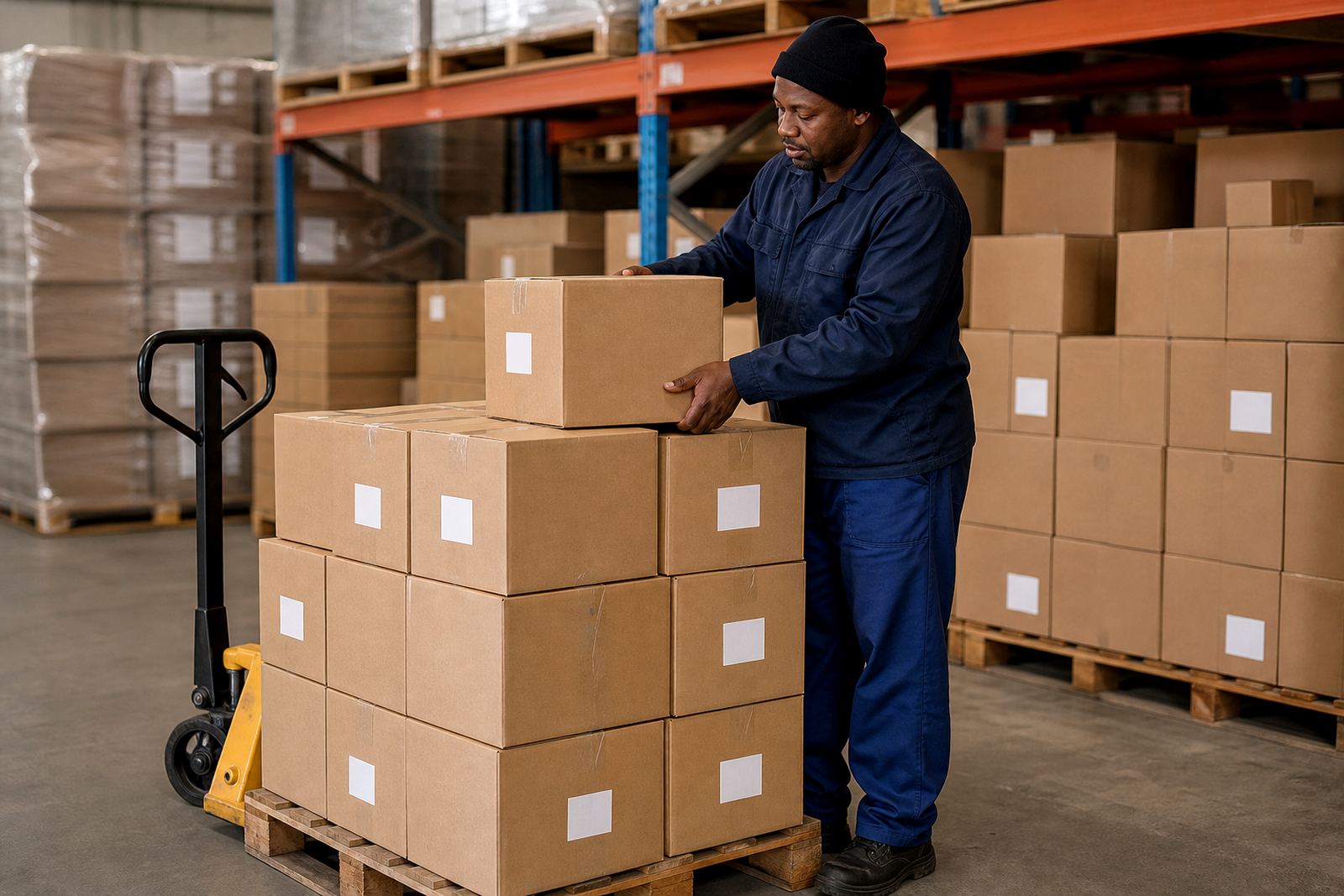
- Carton sealing labels and contents labels
- Product identification for shelves and bins
- Batch and code labels on packs and sleeves
- Dispatch and routing labels for parcels
Face stock choices that suit the job
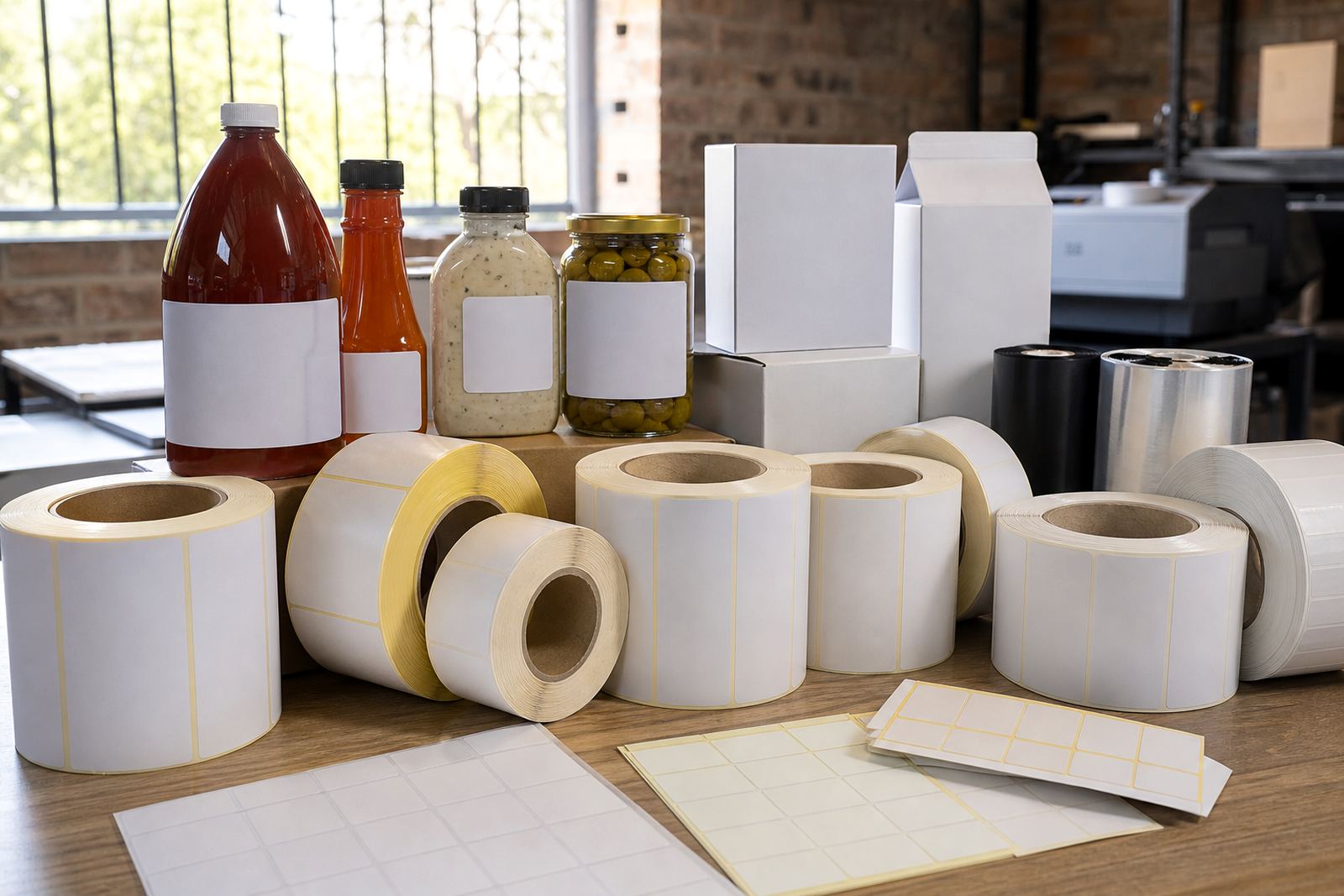
The face stock is the top layer you print on. For permanent work the most common choices are paper and film based stocks, and each suits a different use. Matt paper is often selected for general packaging and warehouse work because it prints cleanly and is cost-friendly. Semi-gloss or coated paper gives a sharper print for retail presentation, while film stocks such as polypropylene or polyester are used where the label may face moisture, abrasion or rough handling.
We also look at how the label will be read. If it is a barcode, small text or a code on a fast-moving line, print clarity matters more than appearance alone. In some cases the pack is already visually busy, so a clean white face stock gives better contrast. For damp conditions, coastal humidity or chilled goods, a synthetic face stock can be the safer choice.
- Paper stocks for cartons, sleeves and short-to-medium life packs
- Film stocks for moisture, rubbing and longer wear
- Printable surfaces for barcodes, batch codes and warnings
- Options for matt, semi-gloss and clear presentation needs
Adhesive strength is not one size fits all
Permanent does not mean the same adhesive suits every surface. Some packs are smooth and clean, others have a textured finish or a slight powder from manufacture. A label on glass, plastic, painted metal or board may need a different adhesive balance to get proper grip. If the product is cold at the time of application, or if the surface carries dust or oil, adhesion can be affected quickly.
That is why adhesive matching matters. We consider whether the pack is dry, chilled, dusty or handled with gloves. For example, a warehouse in Pinetown sending mixed cartons to Johannesburg may need a stock that bonds well to plain board and still holds after a few temperature changes. The label should stay on, not curl at the edge or slide when the pack is moved.
- General purpose permanent adhesive for clean packaging surfaces
- Higher tack options for board, crates and tougher handling
- Choices for chilled conditions and variable storage
- Advice when the pack is glossy, dusty or slightly uneven
Thermal rolls for fast print work
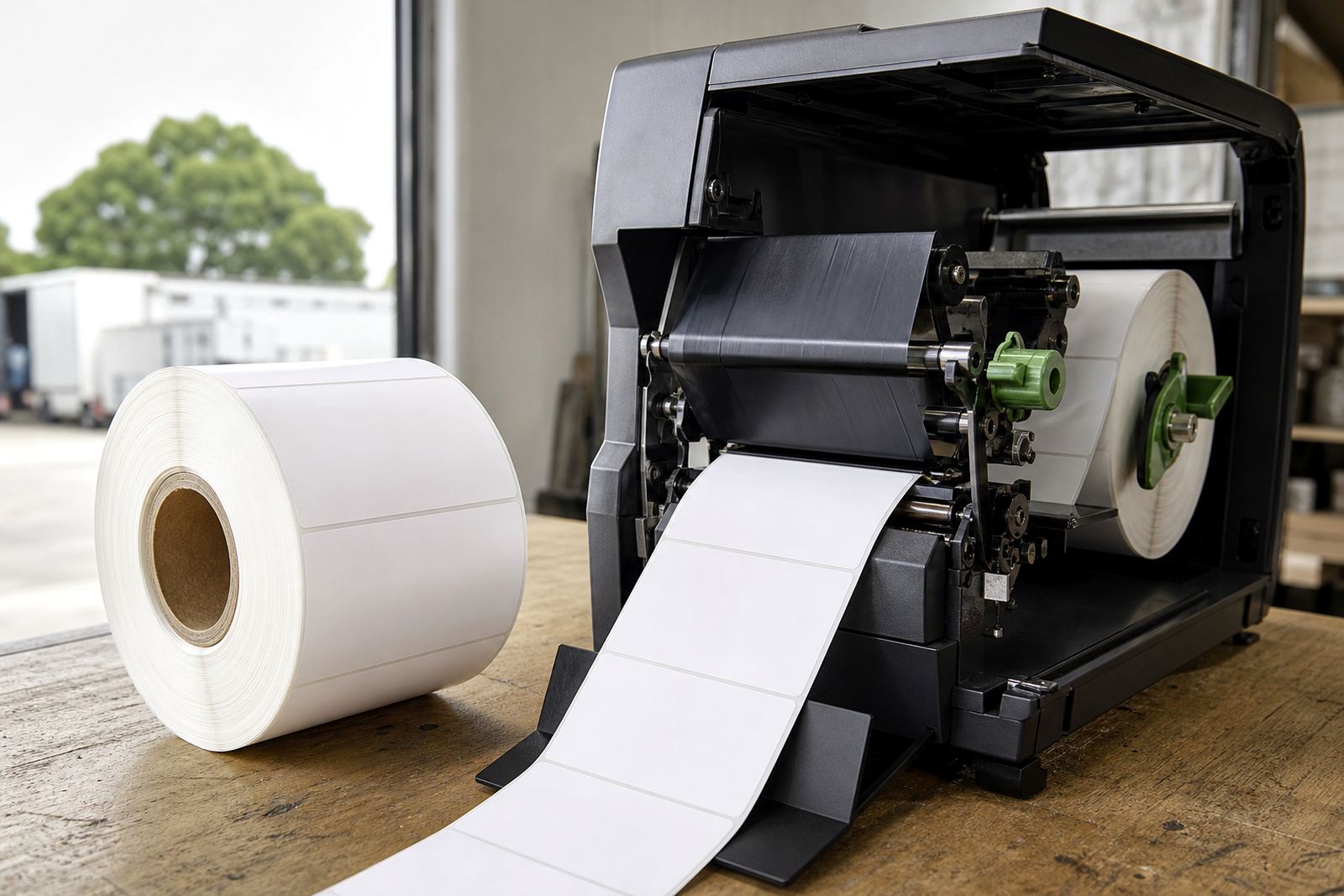
Permanent adhesive jobs are not limited to pre-printed label stock. Thermal rolls are widely used for shipping labels, shelf labels and dispatch runs where speed matters. Direct thermal rolls work without a ribbon and suit shorter life labels such as courier slips or temporary warehouse marks. Thermal transfer rolls use a ribbon, which gives a longer lasting print and better resistance to smudging, fading and handling.
Printer fit is important here. Core sizes, roll diameter, winding direction and printer type all need to line up properly. A roll that is too large or wound the wrong way can slow down work or cause jams.
- Direct thermal for short-term shipping and dispatch labels
- Thermal transfer for longer lasting print and tougher handling
- Core sizing to suit benchtop and industrial printers
- Winding direction planned for clean, reliable feed
Packing lines in Westmead and beyond
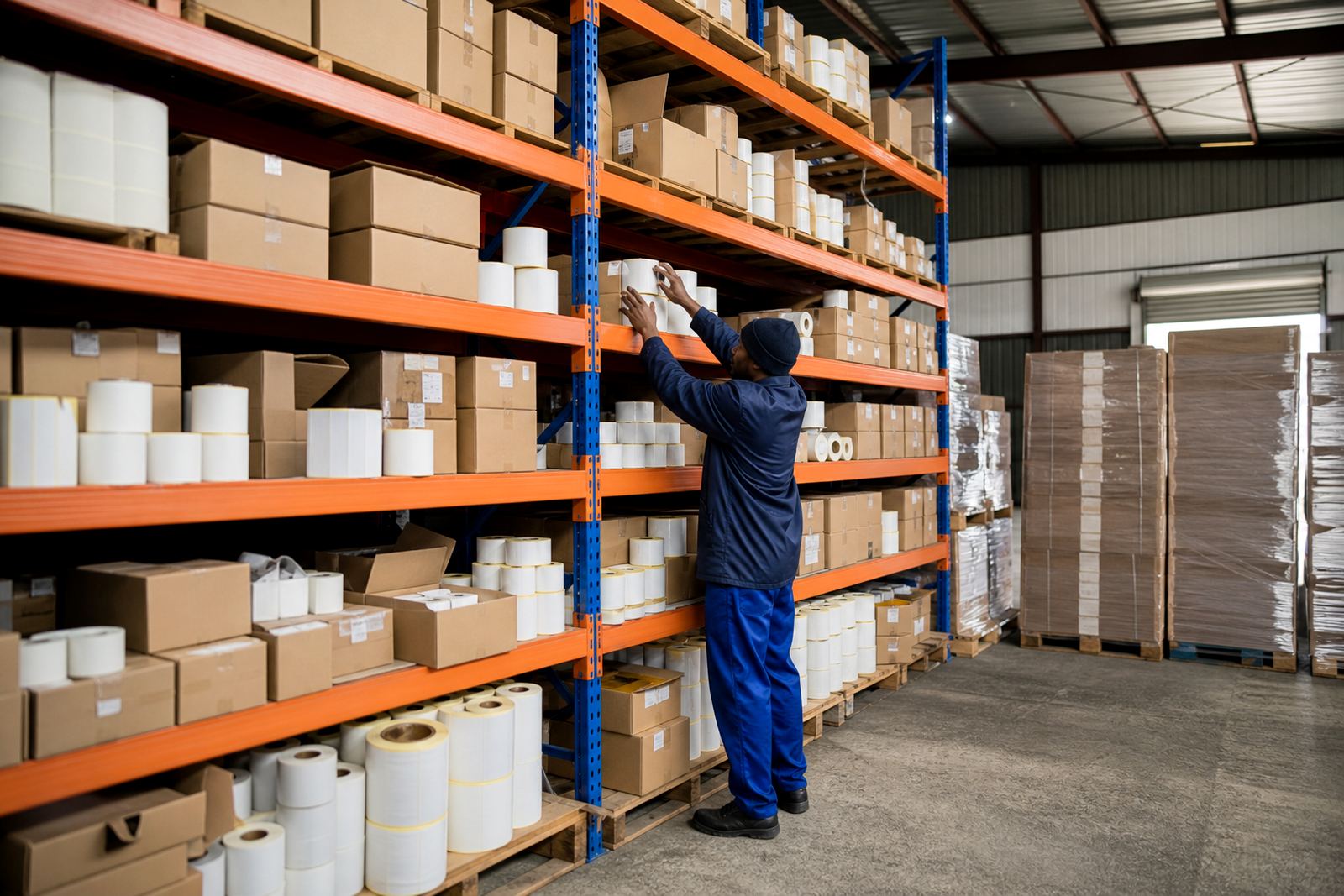
A lot of permanent adhesive work happens in practical, repetitive settings. In Westmead and the wider Pinetown area, labels are used on cartons, sealed packs and pallet items that move daily through dispatch. A local food packer may need a label that stays put on a chilled sleeve, while a hardware supplier in Pretoria may need a tough carton label that survives stacking and warehouse dust.
For a small manufacturer in Pietermaritzburg, the same order may need split reels for different machines, while a larger operation in Johannesburg may need better roll length planning to reduce line stoppages. The point is not to overcomplicate it, but to match the stock to the actual job on the floor. When the label suits the pack and the printer, there is less waste and fewer reprints.
A simple working example: a Durban distributor sending sealed cartons inland may use a paper face stock with permanent adhesive for outer case labels, then a thermal transfer roll for barcoded dispatch labels. The carton label keeps the item identified, and the barcode stays readable through the trip.
Sample rolls, repeat runs and getting the first batch right
Permanent label work is worth checking before full production starts. Sample rolls are useful when you want to see how the label behaves on the actual surface, not just on a sample sheet. A short test can show whether the adhesive grips, whether the print stays sharp and whether the roll feeds without trouble in the printer or applicator.
Once the right stock is found, repeat order planning becomes much easier. We can keep the same face stock, adhesive, core size and winding direction on record so the next run stays consistent. That matters when a product range grows, or when a factory changes pack sizes and needs different roll lengths but the same general label performance.
- Sample rolls for surface and print testing
- Repeat order planning for steady production
- Roll length planning to suit daily usage
- Dispatch packing arranged for safer transport across South Africa
What to watch before a label goes into daily use
Permanent adhesive labels are judged by what happens after they leave the packing table. If the stock is wrong, the issue shows up in transport, cold storage or at the shelf. Look at the surface, the temperature range, the printer, and how long the item must remain identified. A label for a box of dry goods is not the same as one on a chilled tub or a product handled by hand many times a day.
For businesses in Durban, Cape Town, Pretoria, Johannesburg and Pietermaritzburg, local conditions matter too. Coastal humidity can test the adhesive, while inland dust and heat can affect storage and print quality. The right permanent label job saves time because it reduces relabelling, improves scan rates and keeps products looking orderly on the shelf or in the truck.
When the brief is clear, the stock can be matched properly. That is where a practical supplier helps: face stock selection, adhesive matching, core sizing and printer fit checks all work together. A label should do its job once, and then stay there.