Why a label holds better on a decent surface
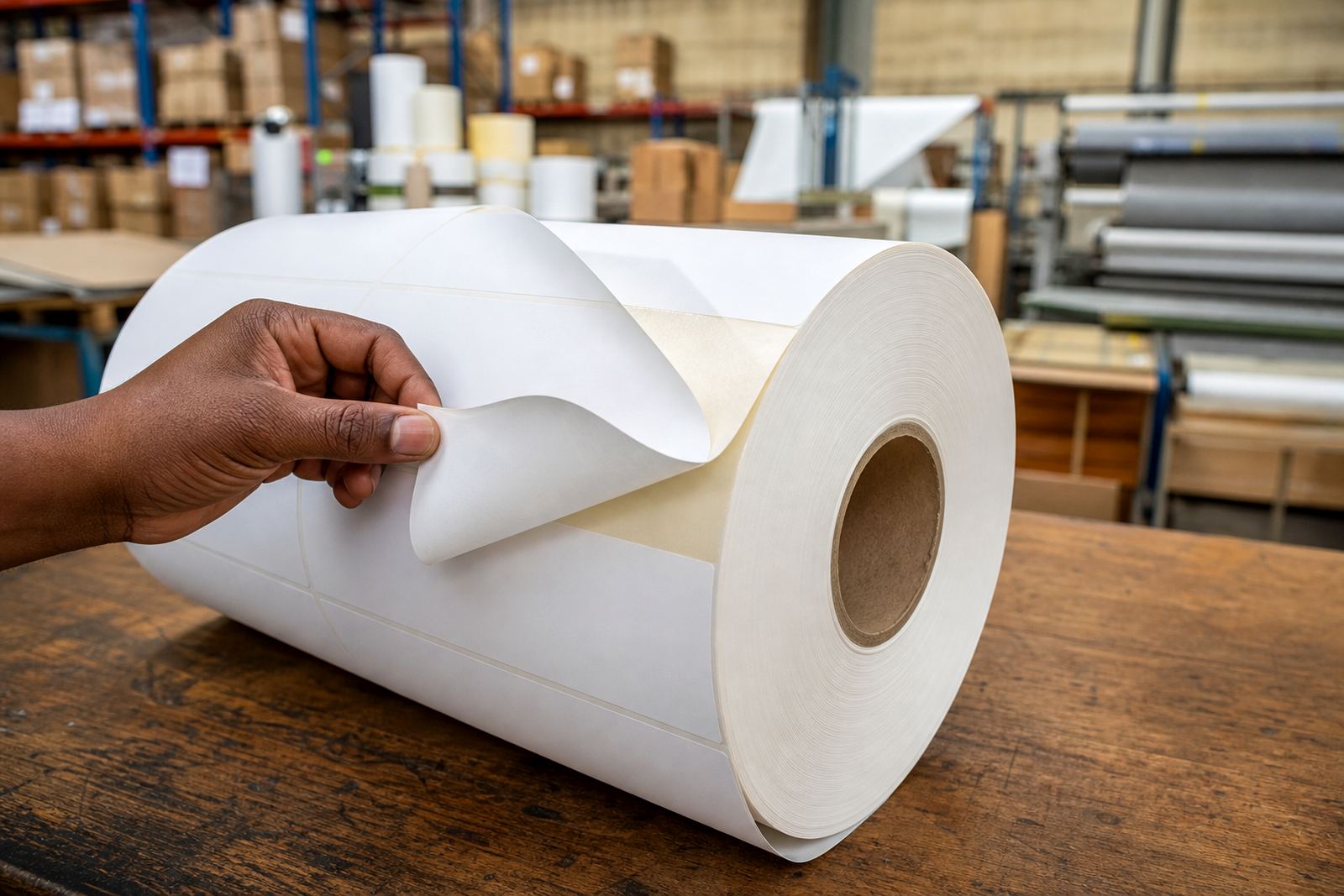
Self-adhesive labels depend on contact. The face stock carries the print, the adhesive does the sticking, and the liner protects the adhesive until application. If the surface has dust, moisture, grease or loose fibres, the adhesive cannot wet out properly. That usually means corner lift, trapped air, or labels shifting after packing.
On corrugated cartons, a clean surface helps the adhesive bite into the board evenly. On plastic tubs, bottles and sleeves, it helps prevent the label from skating across the surface during application. Even a small change in surface condition can affect how consistently labels sit on the pack.
What surface condition looks like in a real packing room
In practice, a clean surface does not mean laboratory clean. It means free of the obvious troublemakers: loose dust, cardboard fluff, condensation, powder, grease and hand marks. In Westmead and across the Durban side, humidity often makes cartons feel slightly damp by mid-morning. That can be enough to change how a label behaves, especially on shorter runs where workers are applying by hand.
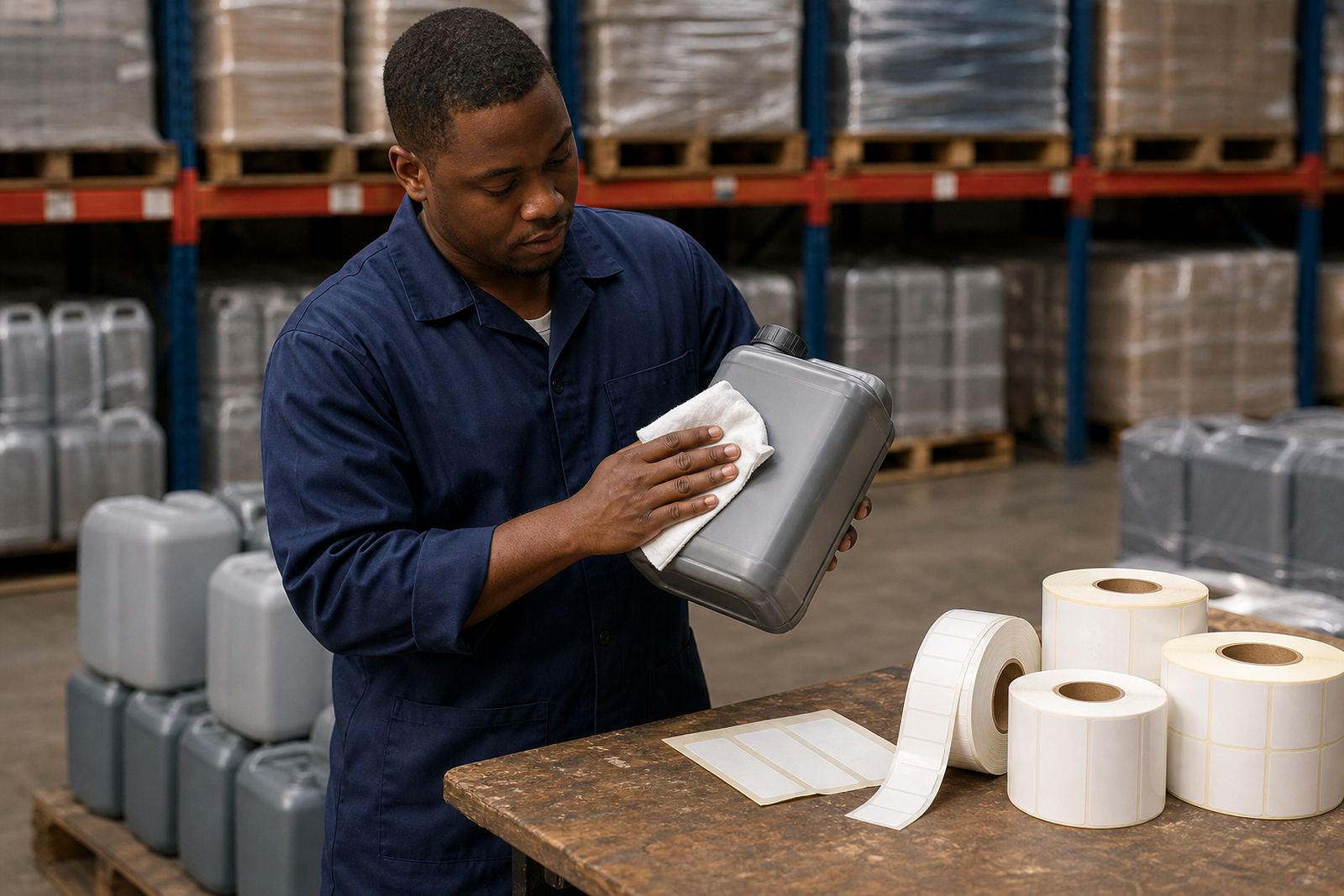
For chilled goods, condensation is the usual problem. For powders and dry foods, fine dust is often the issue. For drums, chemical containers and workshop packs, the challenge is residue from handling or previous marking. A quick wipe or dry brush can save more time than re-labelling later, and that matters when the line is moving.
The adhesive still has to suit the job
A clean surface helps, but it is not the whole story. The adhesive must suit the pack, the temperature and the way the product is stored. Some jobs need a permanent adhesive for secure sealing or traceability. Others need a removable grade for temporary identification. A freezer pack needs different behaviour from a retail carton on a dry shelf.
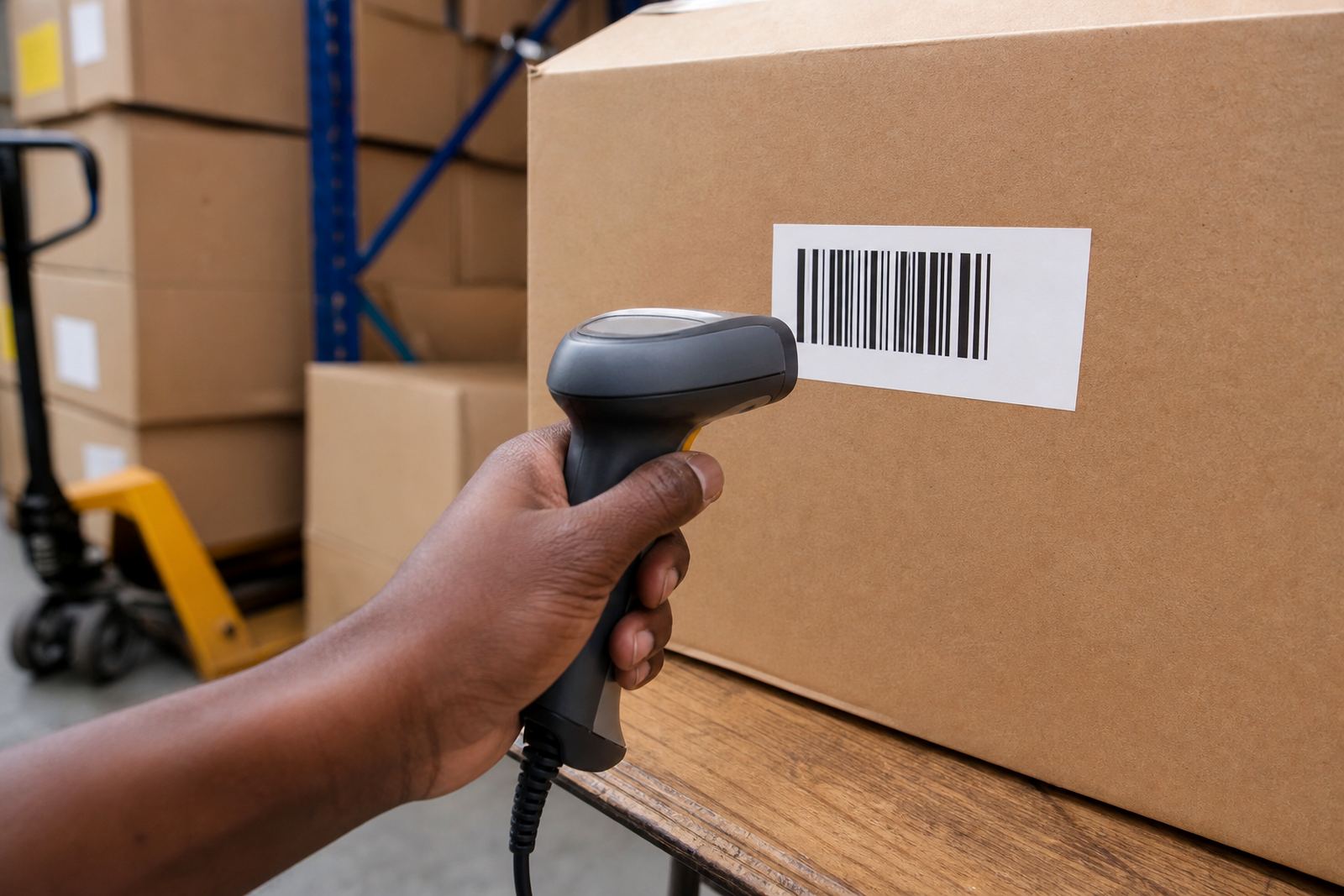
For packaging and logistics work, the conversation often starts with the surface and then moves to adhesive matching. A label on glass, coated board, film or recycled board can all ask for different tack and holding power. The right choice reduces lifting on corners and keeps the label readable after transport, stacking and sorting.
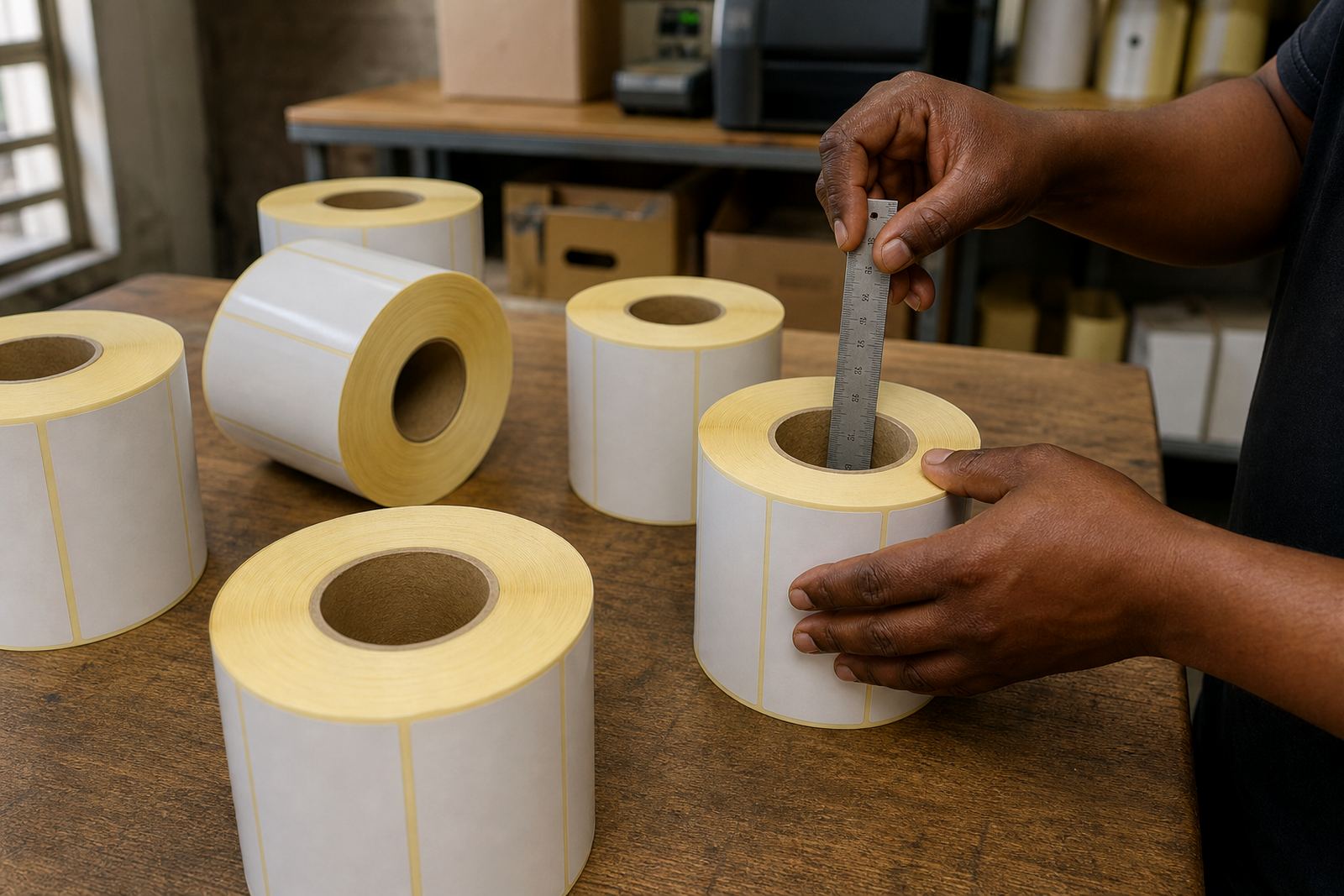
On our side, that is why sample rolls and usage review matter. A small test run shows whether the stock releases cleanly from the liner, feeds well through the printer, and stays put once applied.
Paper face stocks, film faces and the print finish
Face stock is the top layer that takes the print. Paper face stocks work well for many retail and warehouse labels, especially where cost control and readability matter. Film face stocks are often chosen where moisture, abrasion or handling is higher. The surface finish also changes the result: matt, semi-gloss or gloss can alter barcode readability, writing space and presentation.
For South African operations, the practical question is often whether the label must survive rain, cold rooms or rough handling in transit. A paper face stock may be enough for a dry internal carton label. A more durable face stock is better where pallets move between depots, trucks and stores, or where labels face humidity in coastal areas like Durban and Cape Town.
Thermal rolls: direct thermal and thermal transfer are not the same
Thermal rolls are often confused, but the printing method changes the whole result. Direct thermal stock darkens through heat from the print head and does not need a ribbon. It is useful for short to medium life labels, despatch notes and high-turnover work where speed matters. Thermal transfer stock uses a ribbon to print onto the label, and that usually gives a more durable image.
If the label needs to last through sun, abrasion, cold rooms or long storage, thermal transfer is often the safer choice. If the label is for short-term movement through a warehouse, direct thermal can be the practical option. Core size and roll diameter must match the printer, because a good label on the wrong roll will still cause feeding problems.
A Pinetown example that saves rework
A packaging team in the Pinetown area might be labelling cartons for stores in Durban, Johannesburg and Pretoria. If the cartons come off the sealer with dust and a bit of tape fluff, the labels may lift at the edges during stacking. If the cartons are wiped or brushed before labelling, the result is usually more consistent and the pack reaches dispatch with less rework.
The same applies to a retail operation packing promotional tubs. If the tubs carry moisture from chilled storage or condensation from a cold room, the label can fail before the pallet even leaves the bay. A simple surface check, plus the right stock and adhesive, often makes the process steadier, and less wasteful.
That is why roll length planning, winding direction and printer fit checks are part of the job as well. When the surface is ready and the roll is set up properly, labels feed cleaner and the team spends less time clearing faults.