

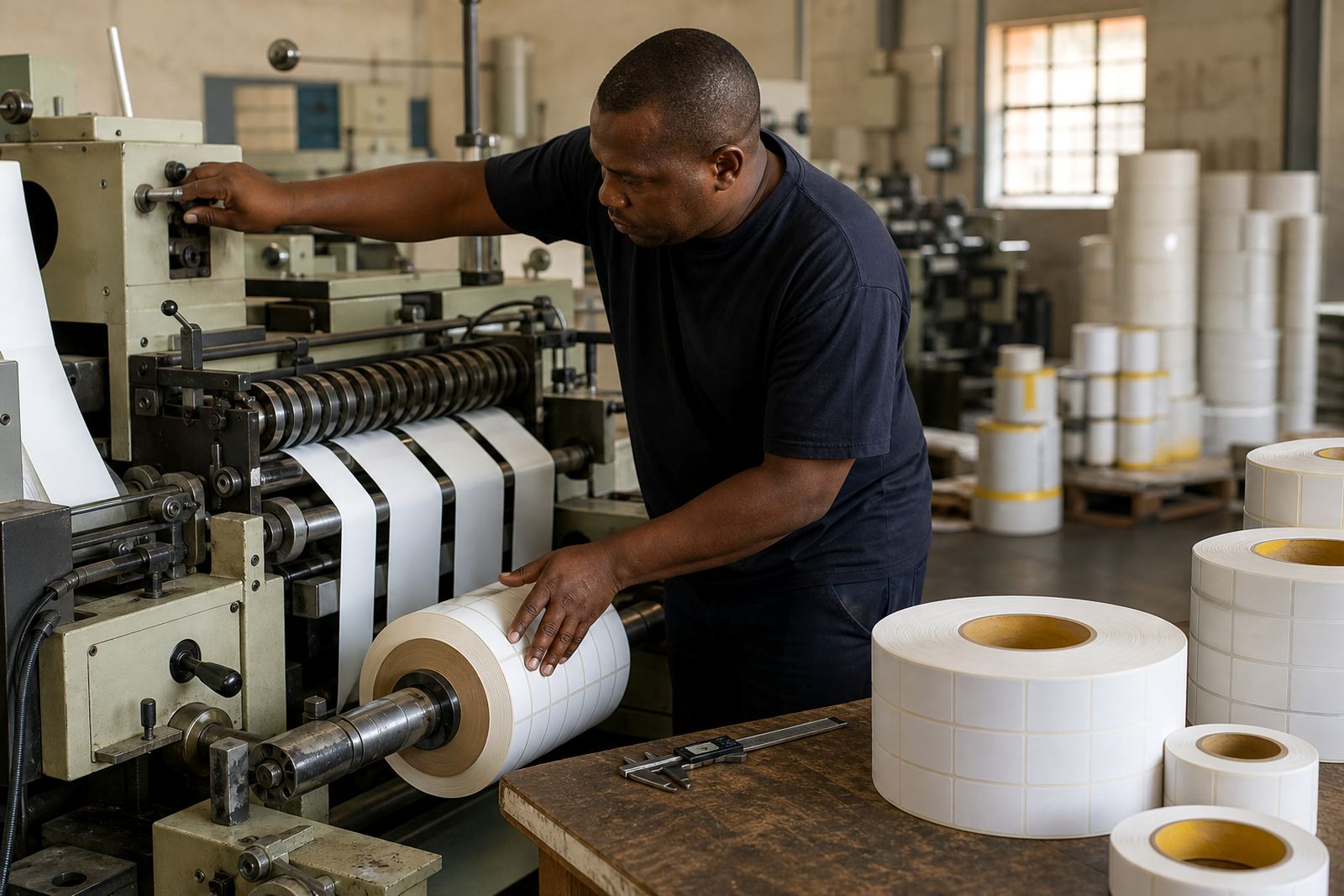
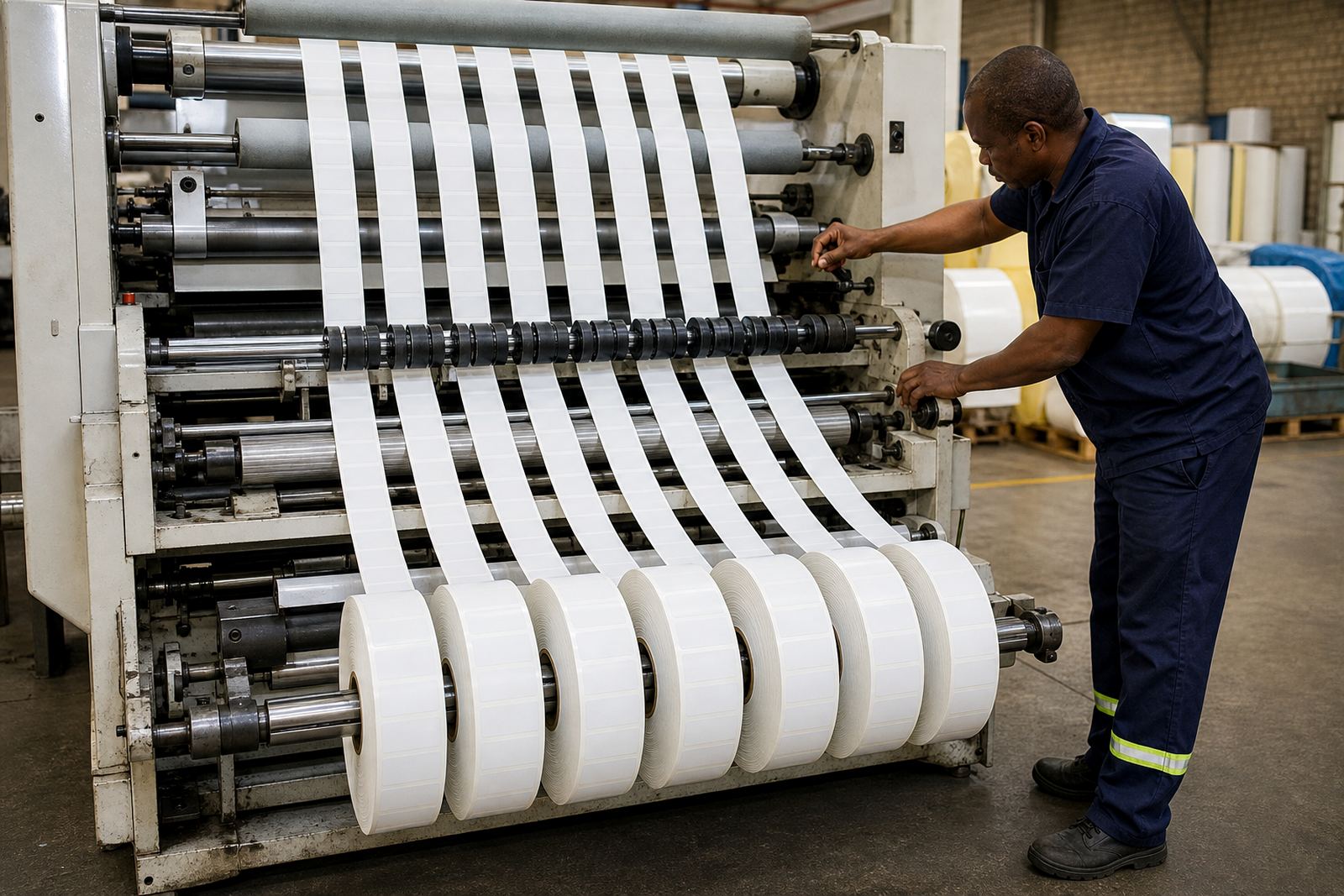
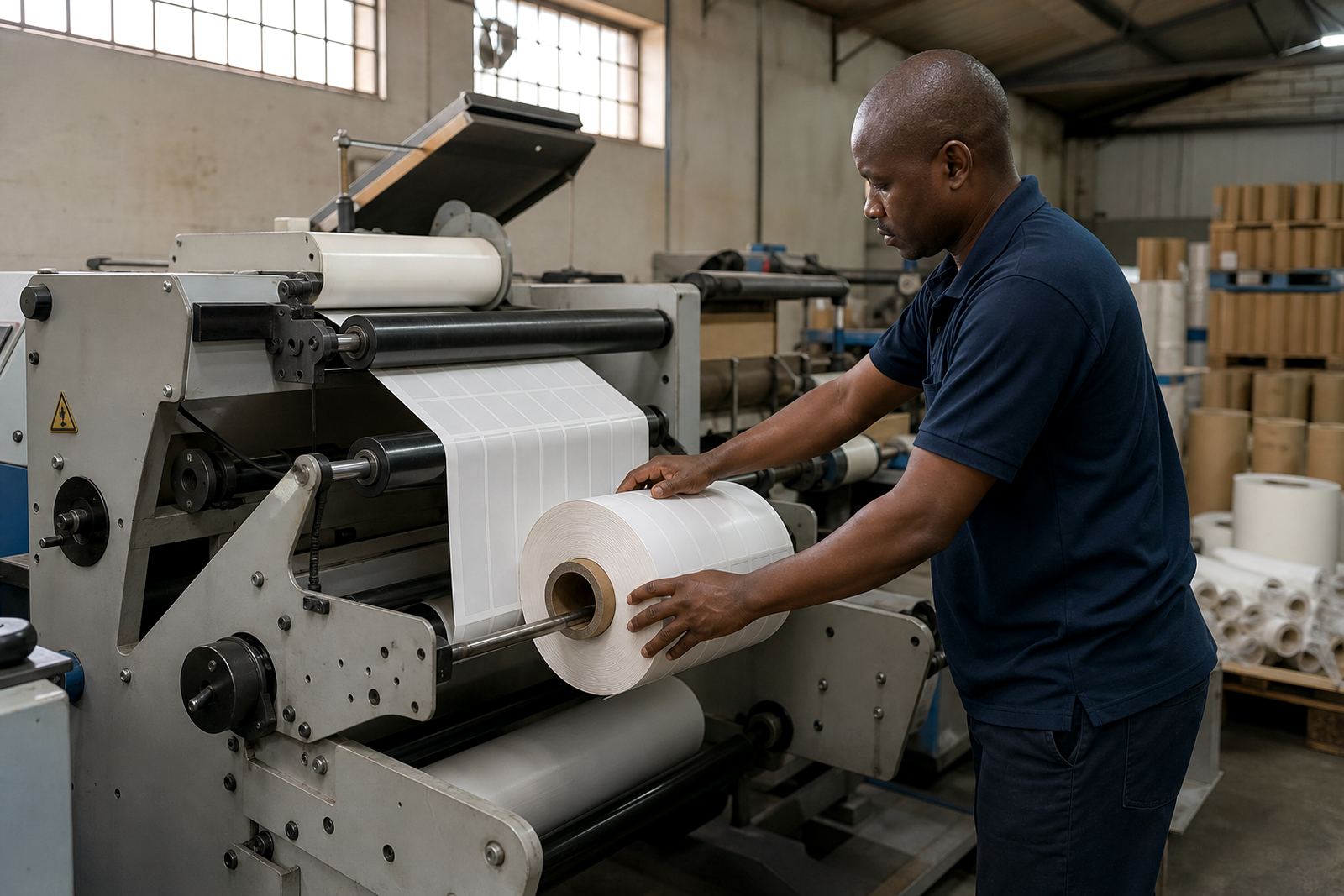
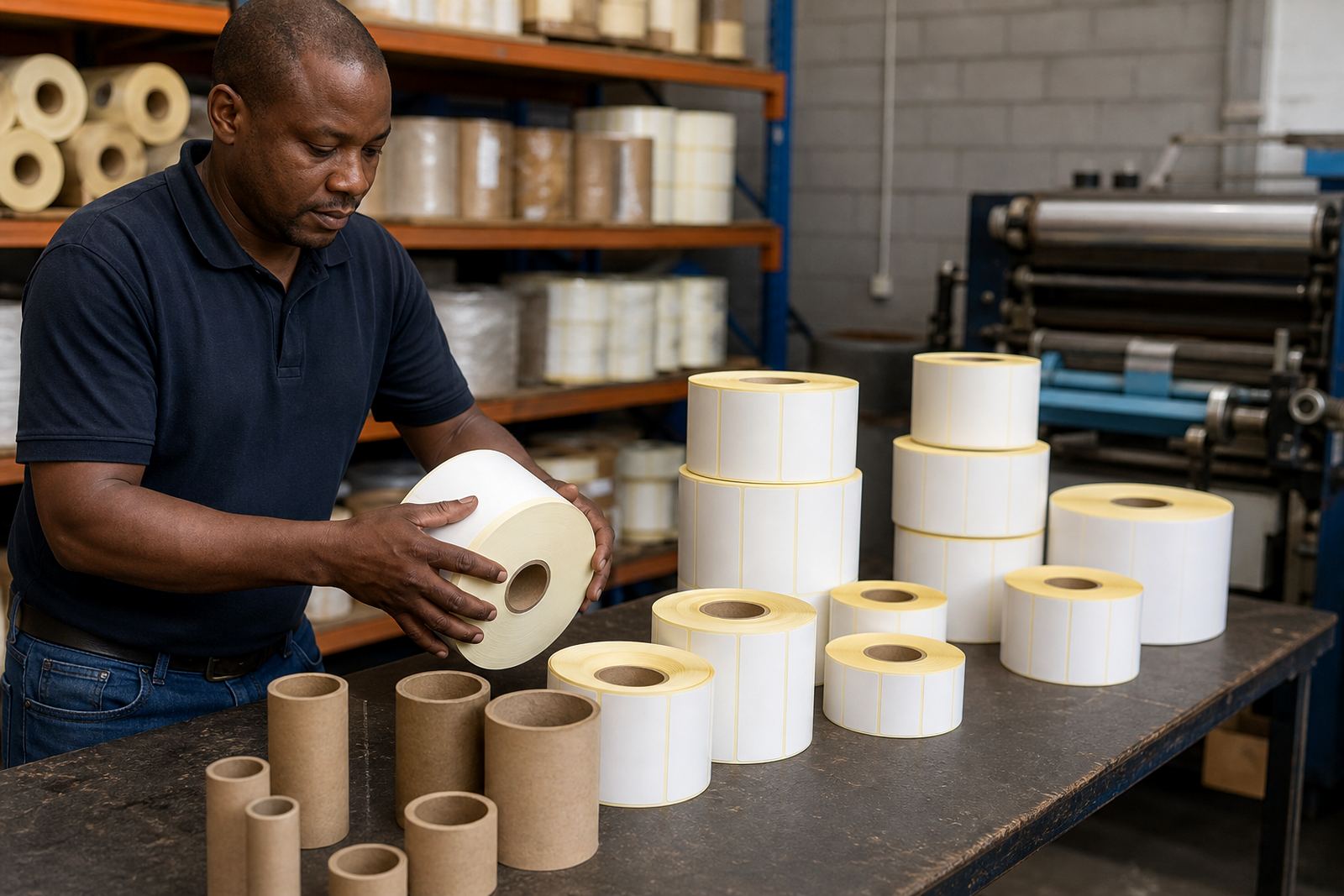

When a full master roll is not the right fit
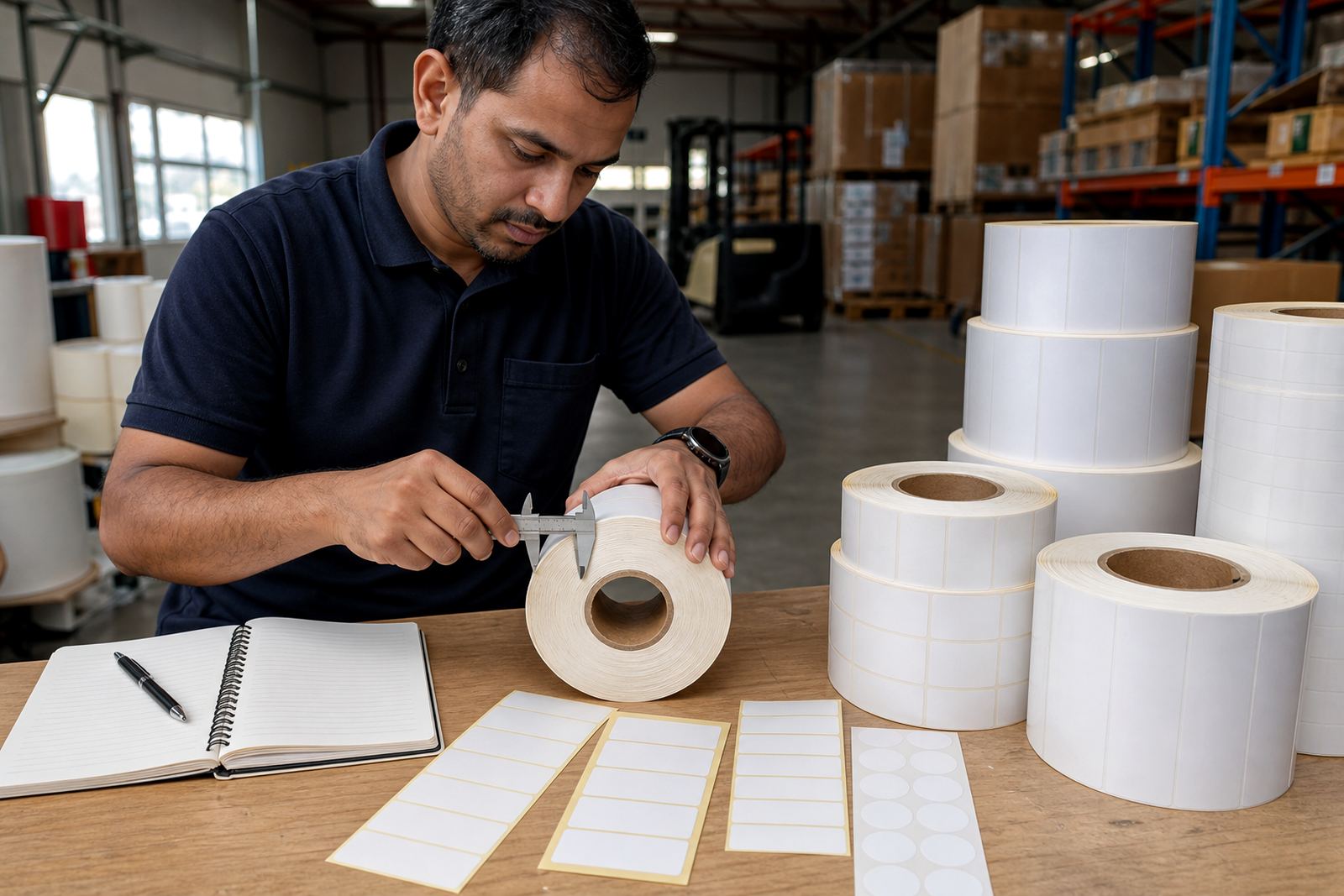
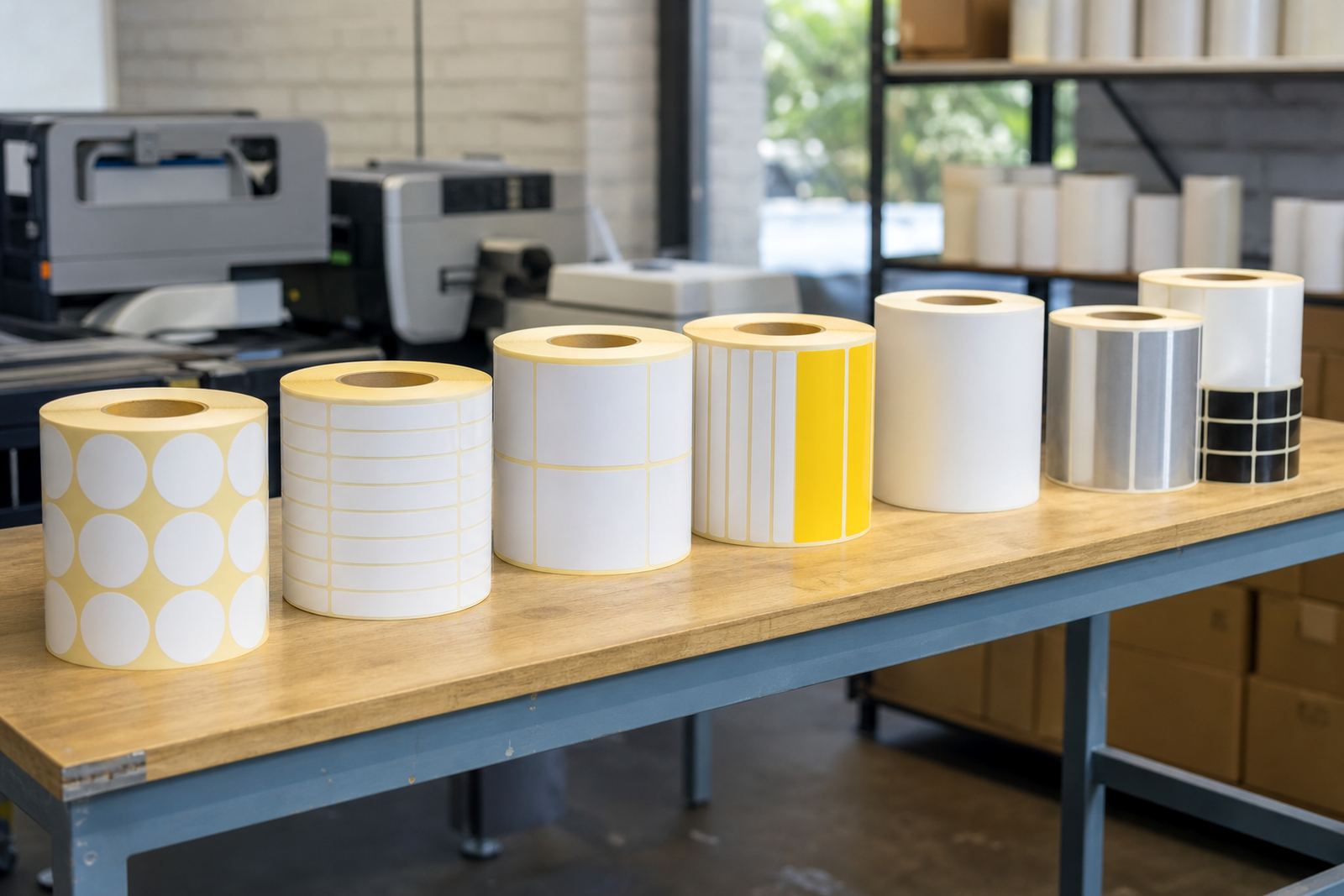
Not every operation can work from a standard roll width or length. Some printers need narrower labels for cartons and shelves, while others run long labels for warehouse codes, pallet marking or product seals. Conversion turns bulk stock into the format your equipment can handle without waste at the line.
We work with self-adhesive face stocks, release liners and adhesive types so the finished roll suits the application. For food packaging, freezer use, short-term retail marking or rougher cartons, the substrate and glue choice matter just as much as the size. Coastal humidity in Durban or hot storerooms in Gauteng can change how a roll behaves in practice.
How slit widths and roll lengths get matched
Slitting is the process of cutting wider parent rolls into narrower rolls. Roll length planning then sets how much material goes onto each finished roll so the customer gets fewer changeovers and better control of stock.
- Width set to suit the label design, printer path and backing waste
- Length planned for duty cycle, label volume and storage space
- Core size checked so the roll fits the spindle or holder
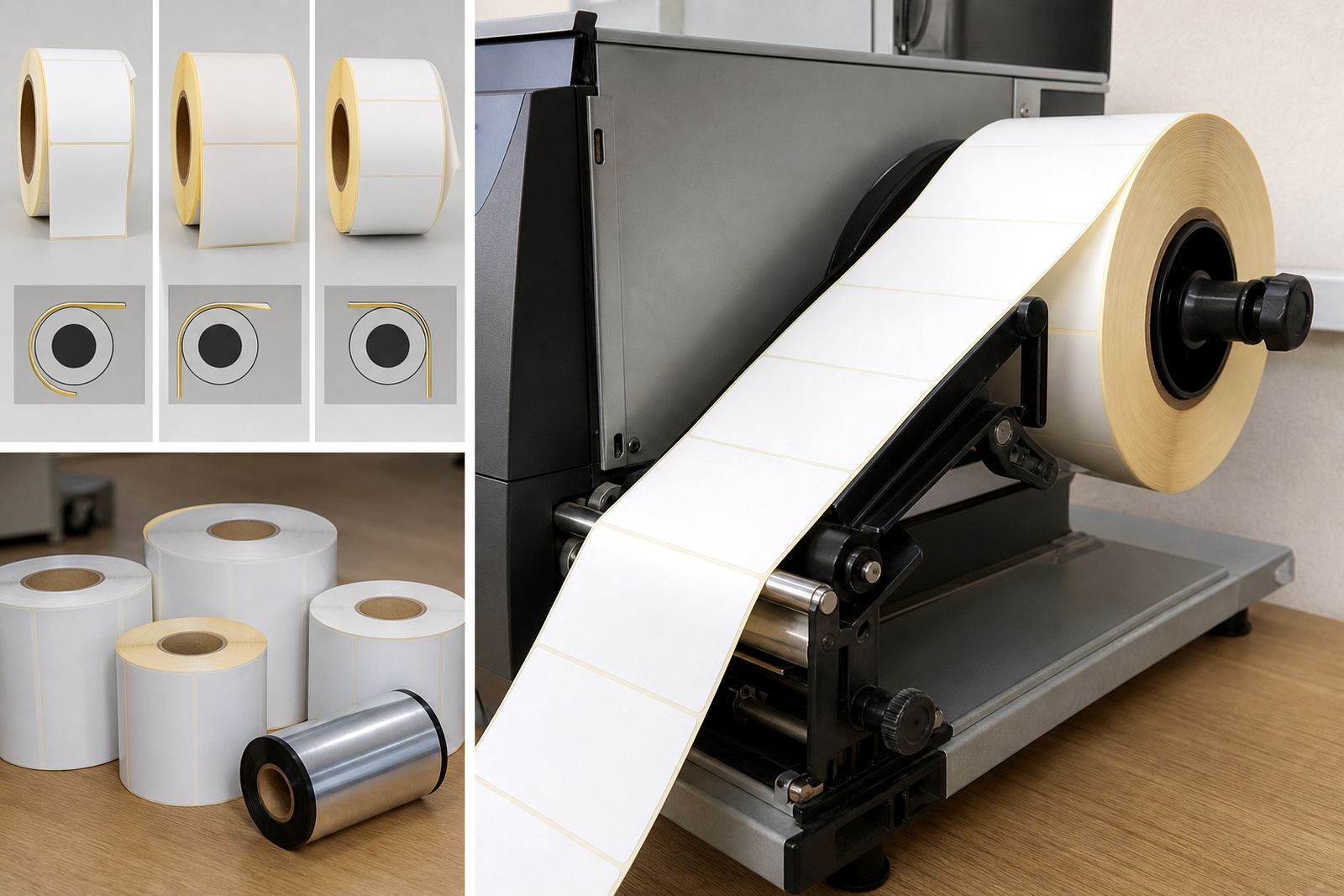
- Winding direction set for the print head, peel edge and applicator flow
These details sound small, but they save time on the floor and reduce jams, rethreading and off-centre feeding.
Face stock, adhesive and liner choices that change the result
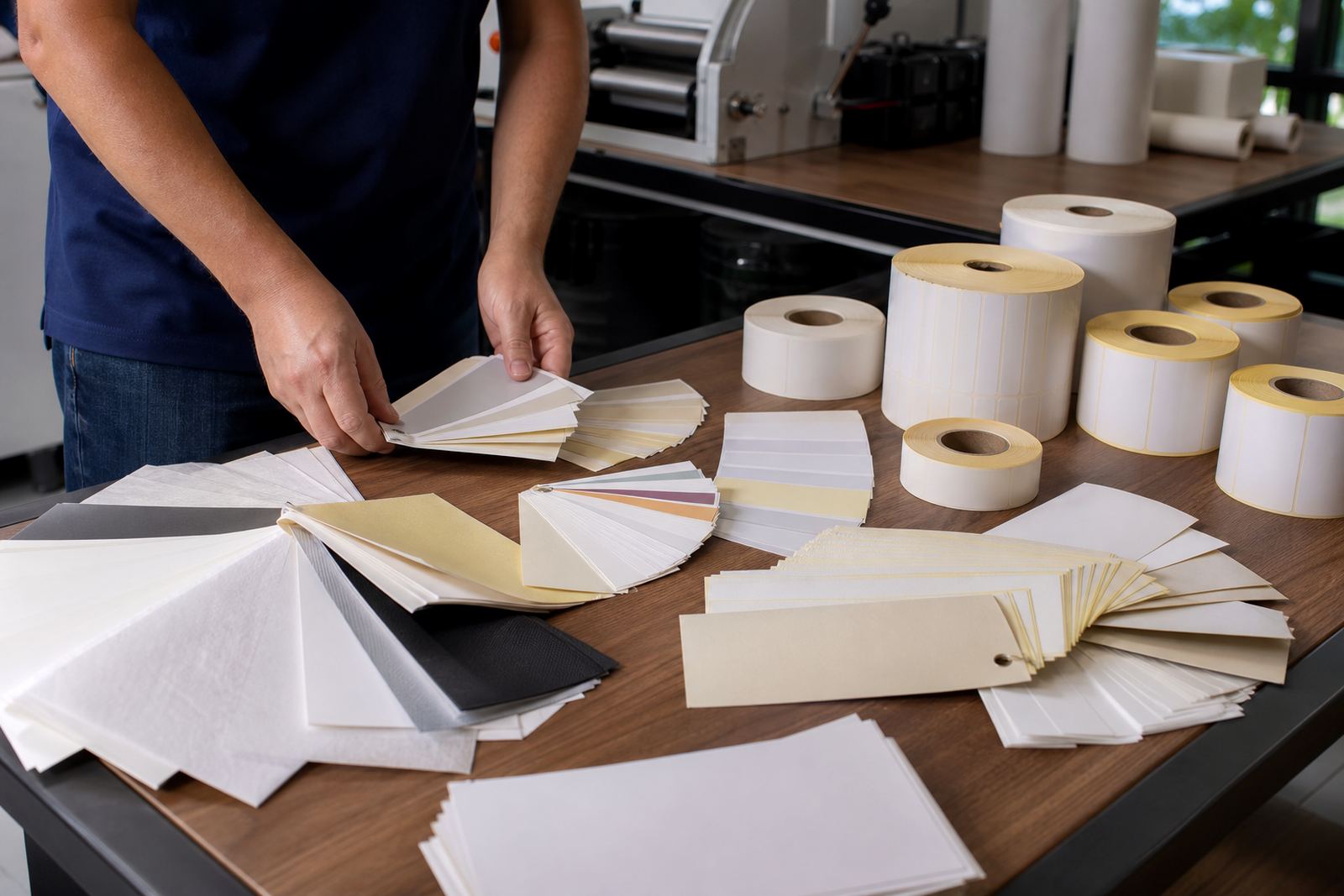
Different applications call for different materials. A glossy face stock may suit retail presentation, while a matt paper stock can work better for variable coding or handwriting. Plasticised face stocks are often chosen where moisture, handling or scuffing is a concern. The adhesive needs to match the surface too, whether that is corrugated cartons, chilled packs, glass, drums or powder-coated containers.
The liner also plays a part. Glassine and other release liners affect unwind smoothness, label dispensing and how neatly the waste comes off during application. We look at whether the labels must peel cleanly, stay secure in transit or tolerate cold rooms and condensation. One wrong pairing can lead to lifting edges, adhesive ooze or labels that refuse to release properly.
Direct thermal or thermal transfer, and why the choice matters
Direct thermal rolls are made for printers that print by heat onto a coated surface, without a ribbon. They are often used for short-life labels, delivery labels and many retail or logistics jobs. Thermal transfer rolls, on the other hand, use a ribbon and are better where print life, resistance and sharper detail are needed.
- Direct thermal: no ribbon, quicker changeovers, suited to shorter life labels
- Thermal transfer: ribbon required, better for durability, barcodes and longer storage
- Printer fit checks: width, core size, outside diameter and sensing marks reviewed before conversion
- Application review: packaging, retail shelf use, cold storage or dispatch labels assessed first
We also check whether the printer takes a 25 mm core, a 40 mm core or a larger core format, because the wrong core can stop the roll from feeding properly. The same applies to outside diameter and unwind direction.
Printer fit checks before the rolls leave Westmead
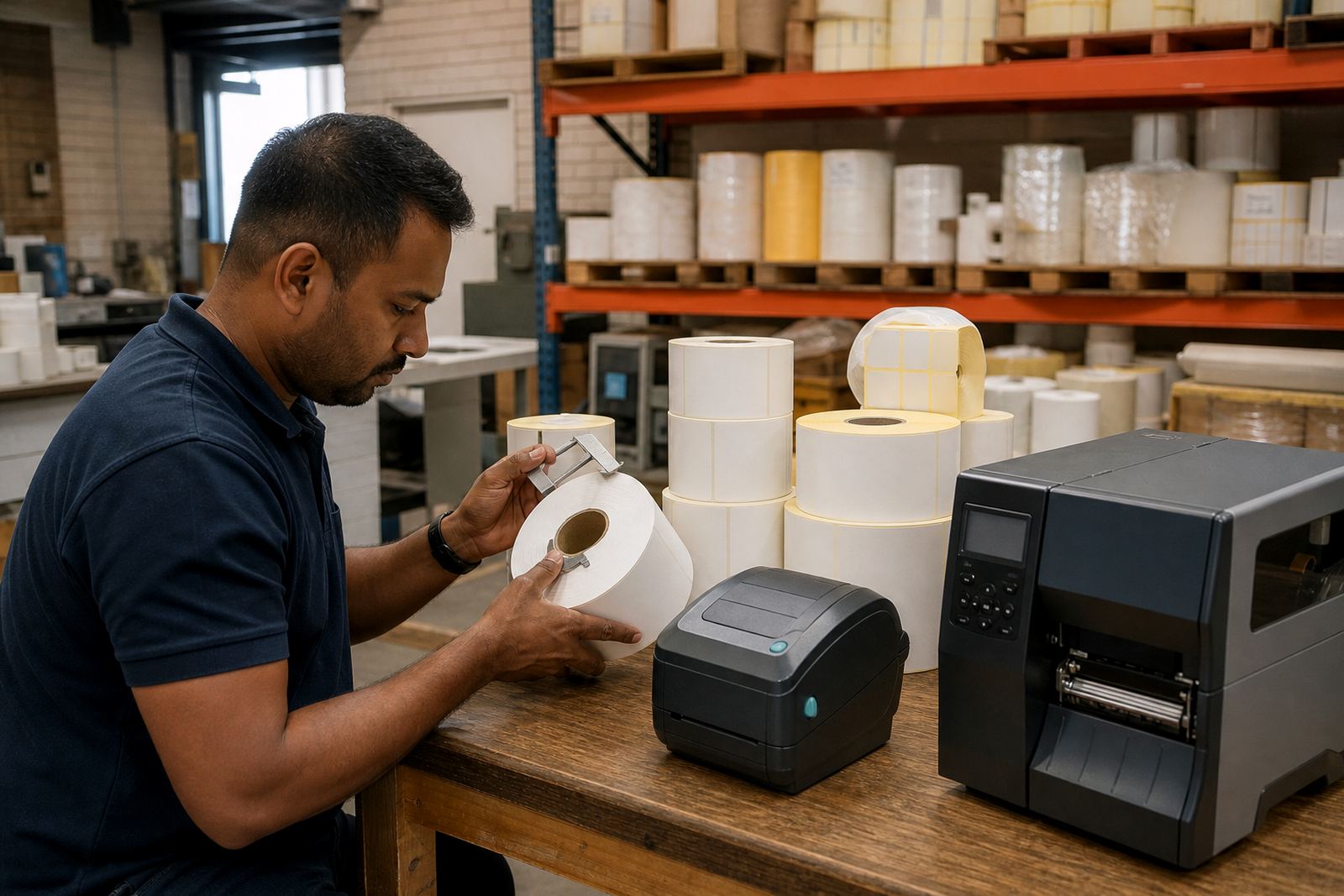
Label stock only helps if it feeds cleanly through the machine. That is why printer fit checks are part of the conversion process. We confirm the roll fits the tray or spindle, that the gap or black mark sensing matches the printer settings, and that the edge of the roll presents correctly for the peel plate or applicator.
For teams in Pinetown, Hammarsdale and wider KZN, this matters when stock is running through more than one printer type. A warehouse label that works on one machine may not suit a smaller counter printer. We try to avoid that kind of mismatch before the roll is packed and sent out.
Packing for dispatch, sample rolls and repeat planning
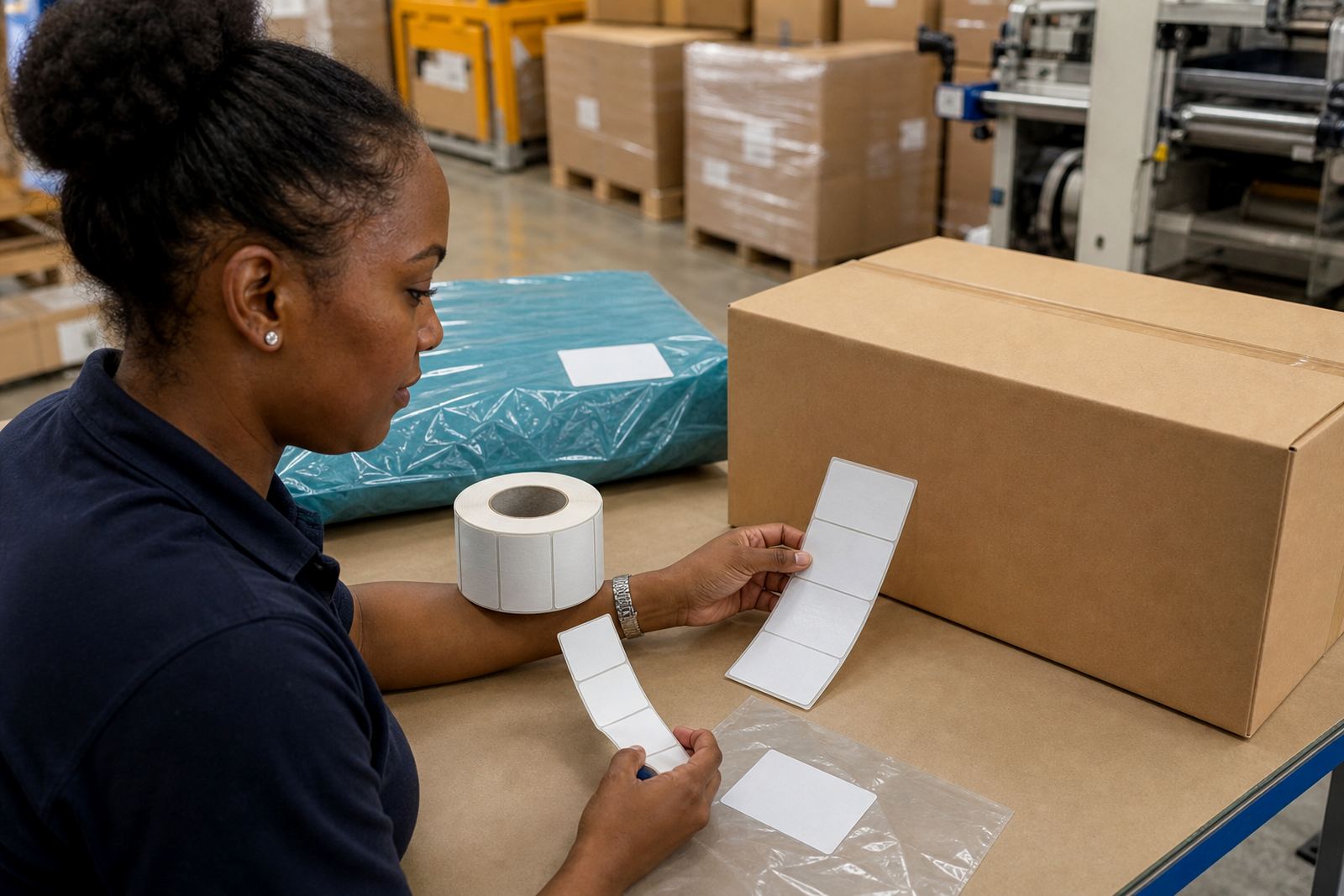
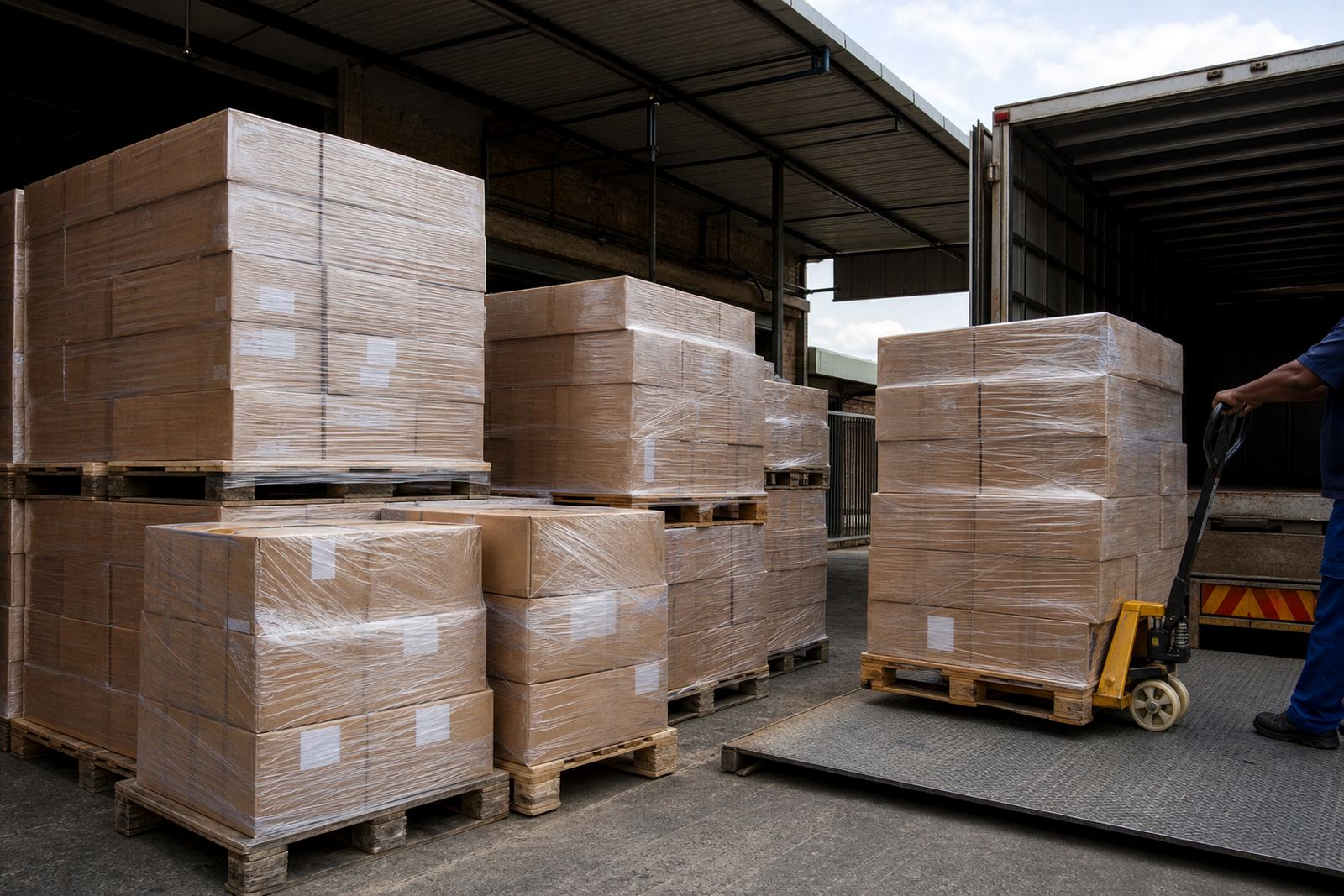
Once the roll is prepared, it still needs to move safely. Dispatch packing protects the edges, keeps the rolls square and reduces crushing in transit. That is important on long routes to Cape Town, Pretoria or Johannesburg, where parcels can be handled many times before they arrive.
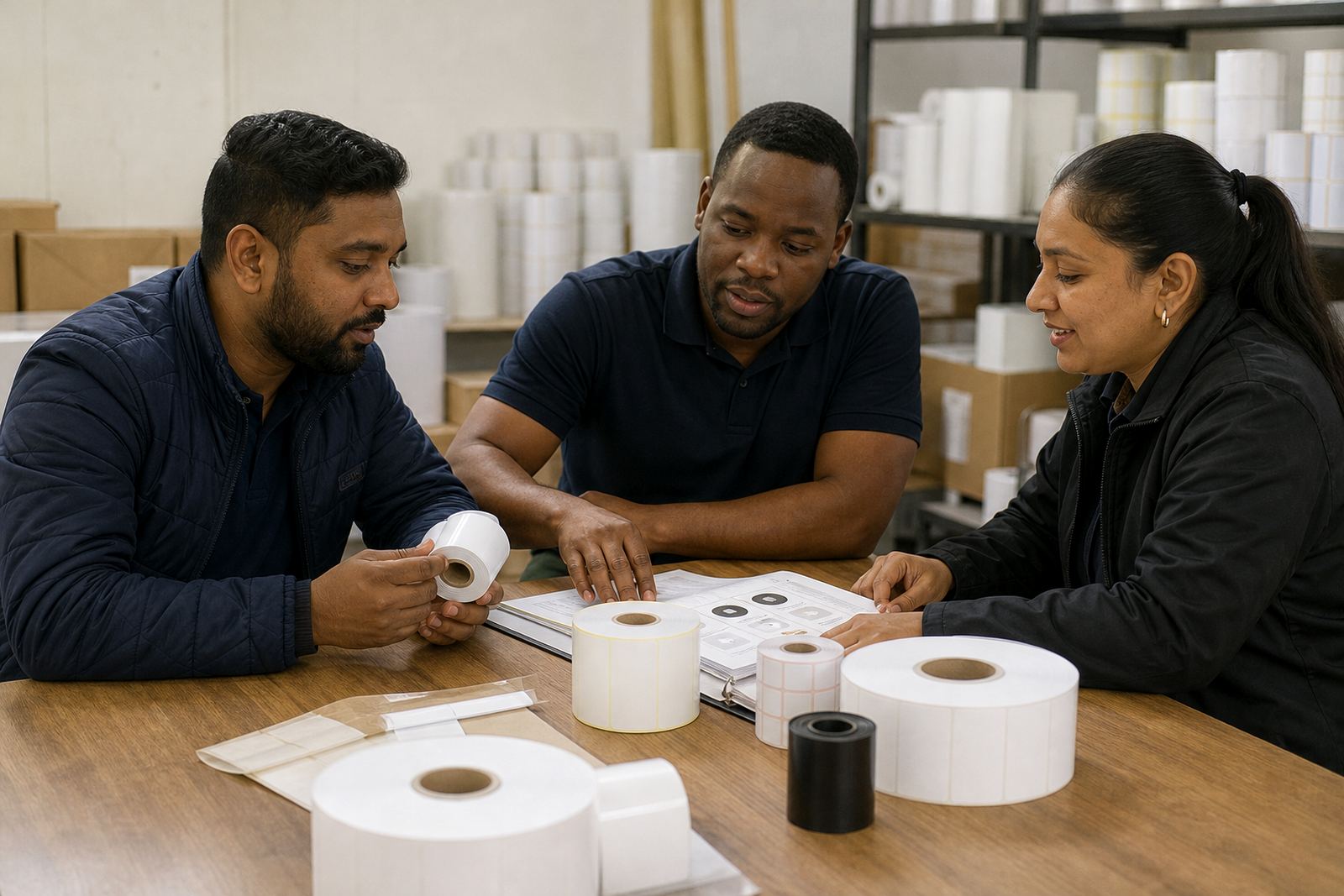
- Sample rolls help test adhesion, print clarity and feeding before full production
- Usage review helps plan the next order based on actual line consumption
- Repeat order planning reduces gaps in supply during busy periods
- Conversion notes are kept for width, core, winding and length consistency
Our team in Westmead works across production and dispatch so the format on the pallet matches the format your staff were expecting, no surprises and no wasted setup time.