When a label must tell the truth about opening
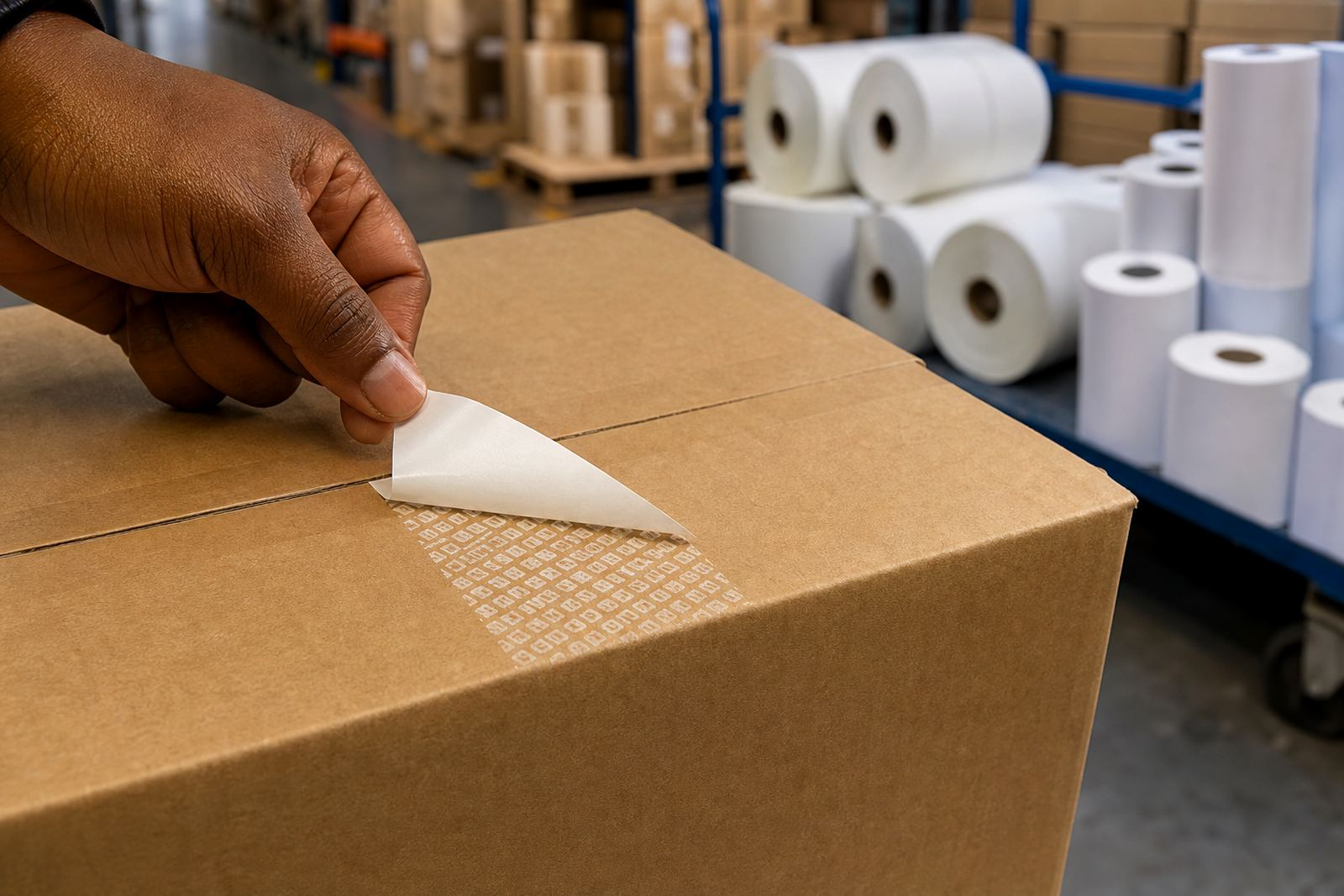
A tamper-indicating label is not just a sticker with glue. It is a label built to split, void, leave a message or break apart when someone tries to lift it from a carton, lid, pouch or plastic container. That reaction makes the label part of the security check, especially where goods move through warehouses, retail shelves and courier networks.
In Westmead, Pinetown and across Durban, we see these labels used on packed spares, food containers, sealed boxes and medical packs where a missed opening can mean spoilage, missing contents or customer disputes. A good tamper label must stick well to the surface, release a clear sign of interference, and still print cleanly when batch details or codes are needed. The point is not to make removal impossible, but to make it obvious.
- Shows visible opening or lift attempts
- Supports packing checks and handover control
- Helps buyers see whether a seal has been disturbed
Face stock, adhesive and liner choices that change the outcome
The face stock is the top layer that carries the print. For tamper use, the face stock has to match the job. Some applications need a matte paper face for short life carton seals, while others need a stronger synthetic face for moisture, rubbing or cold rooms. In coastal areas like Durban and Pietermaritzburg, humidity can affect both print quality and label edge lift, so material choice matters more than people think.
The adhesive does the real work. A permanent adhesive is often used where the label must not be removed cleanly. For oily cartons, textured boxes or chilled packs, the adhesive must be chosen with the surface in mind because weak bonding can make the tamper feature useless. Liners also matter. A good liner lets the roll run cleanly through the printer and through slitting, without unwanted curl or snap back. If the label stock is badly matched to the liner, you get waste, poor feed, and labels that do not sit right on the pack.
- Paper face stock for cartons and short-term sealing
- Synthetic face stock for moisture, handling and wipe-downs
- Permanent adhesive for harder removal and cleaner security
- Glassine or similar liners for stable release through printing
For many businesses in Gauteng, the Northern Cape and along the coast, the best result comes from testing before a full run. That test should check peel force, corner lift and how the label behaves after 24 hours on the actual pack surface.
Direct thermal or thermal transfer for tamper work
Not every tamper label is printed the same way. Direct thermal stock is heat-sensitive and prints without a ribbon. It suits shorter life labels, courier use, and cartons that will move quickly through the supply chain. Thermal transfer needs a ribbon and usually gives a tougher print, which is better when the label must survive abrasion, sunlight or longer storage.
For tamper-indicating work, the print method should match the life of the product. A label on a carton that leaves Pinetown today and reaches Johannesburg in two days may be fine with direct thermal if it is only for transit control. A label on a drum, sealed spare part, or stock that sits in a store room for weeks may need thermal transfer so the code stays sharp. If the print fades too soon, the security function is weakened because staff can no longer read batch or handling details.
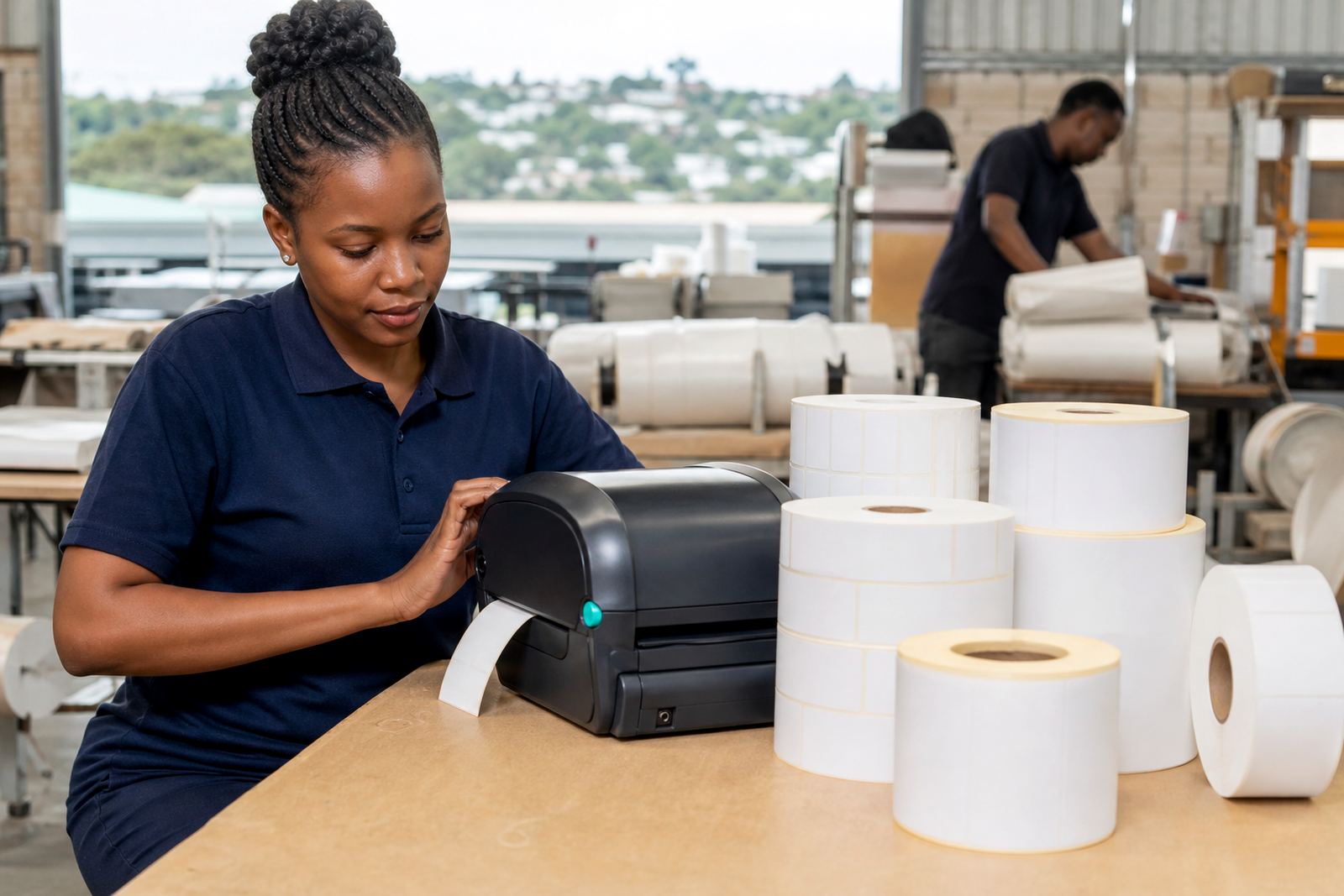
Printer compatibility also needs checking. Most label systems run on common benchtop or industrial printers, but the roll width, core size and wound-out direction must line up with the machine. A 25 mm core is common on smaller printers, while larger equipment may use 40 mm or 76 mm cores depending on the feed path and roll size. If the roll is wound the wrong way, the print can be upside down or the sensor may miss the gap.
Where tamper labels earn their keep in local operations
Tamper labels are useful anywhere a closed pack needs to stay visibly closed. In logistics they help on courier bags, sealed cartons and return parcels. In retail they are used on price protection seals, promotional packs and storage tubs. In manufacturing they can secure access points, component boxes and stock that should not be opened before line use.
A practical example is a food pack leaving a small production room in Westmead for delivery to a retailer in Cape Town. The label needs to stay stuck despite handling, warm trailers and warehouse stacking. If the pack is opened and resealed, the label should show that immediately. That is useful for both the supplier and the customer because it reduces argument at receiving. It is also handy for businesses dealing with municipal or site control rules, where sealed items must remain intact until inspection or handover.
- Courier and dispatch seals
- Retail carton protection
- Warehouse access control
- Manufacturing parts and kit boxes
- Cold chain packs and chilled goods
In towns with strong heat or heavy humidity, edge lift and adhesive softening are common problems. That is why a label that works in a cool storeroom may fail on a delivery route to coastal KZN. The setting matters just as much as the label itself.
How to plan a label that stays readable and obvious
Good tamper labels start with the pack surface and the type of interference you want to show. If you only need a quick visible seal, a standard paper face with a permanent adhesive may be enough. If the label must survive rough handling, moisture or cold storage, you may need a stronger face stock, a better adhesive and a print method that holds up under friction.
It also helps to think about the label size before printing begins. Too small and the tamper message is easy to miss. Too large and the label gets caught on corners or folds. Roll length planning matters too, because a short roll may interrupt a packing run and a roll that is too heavy can create feed trouble on smaller printers. For businesses with mixed sites in Durban, Johannesburg and Pretoria, it is worth keeping the same core size and printer setup wherever possible.
Useful checks before a run:
- Confirm the surface is clean, dry and free of oil
- Match face stock to the handling and storage conditions
- Check printer width, core size and winding direction
- Test the label after application and again after 24 hours
- Make sure the tamper message is easy to see from arm’s length
These checks save time later.
A practical fit for Westmead supply and national dispatch
From our base in Westmead, Pinetown, tamper label stock is often supplied for packing and sealing work that needs to move quickly across South Africa. A business in Hammarsdale might need sample rolls for a new carton seal, while another in Johannesburg may need repeat order planning after a change in box size. The label itself looks small, but the decision around stock type, adhesive and printer fit can affect the whole packing line.
That is why services such as adhesive matching, face stock selection, core sizing, rewinding and printer fit checks are useful before a full production run. A label that is technically correct but wrong for the printer or pack will create stoppages. A label that is matched properly will print, apply and read the way it should. That is the practical side of tamper indication: not just showing interference, but doing so reliably in the real conditions your team works in.
For many South African operations, the best tamper label is the one that does its job without becoming a nuisance. It sticks well, shows a clear sign if disturbed, and keeps its print legible through handling, transport and storage.