What the liner actually does on the roll
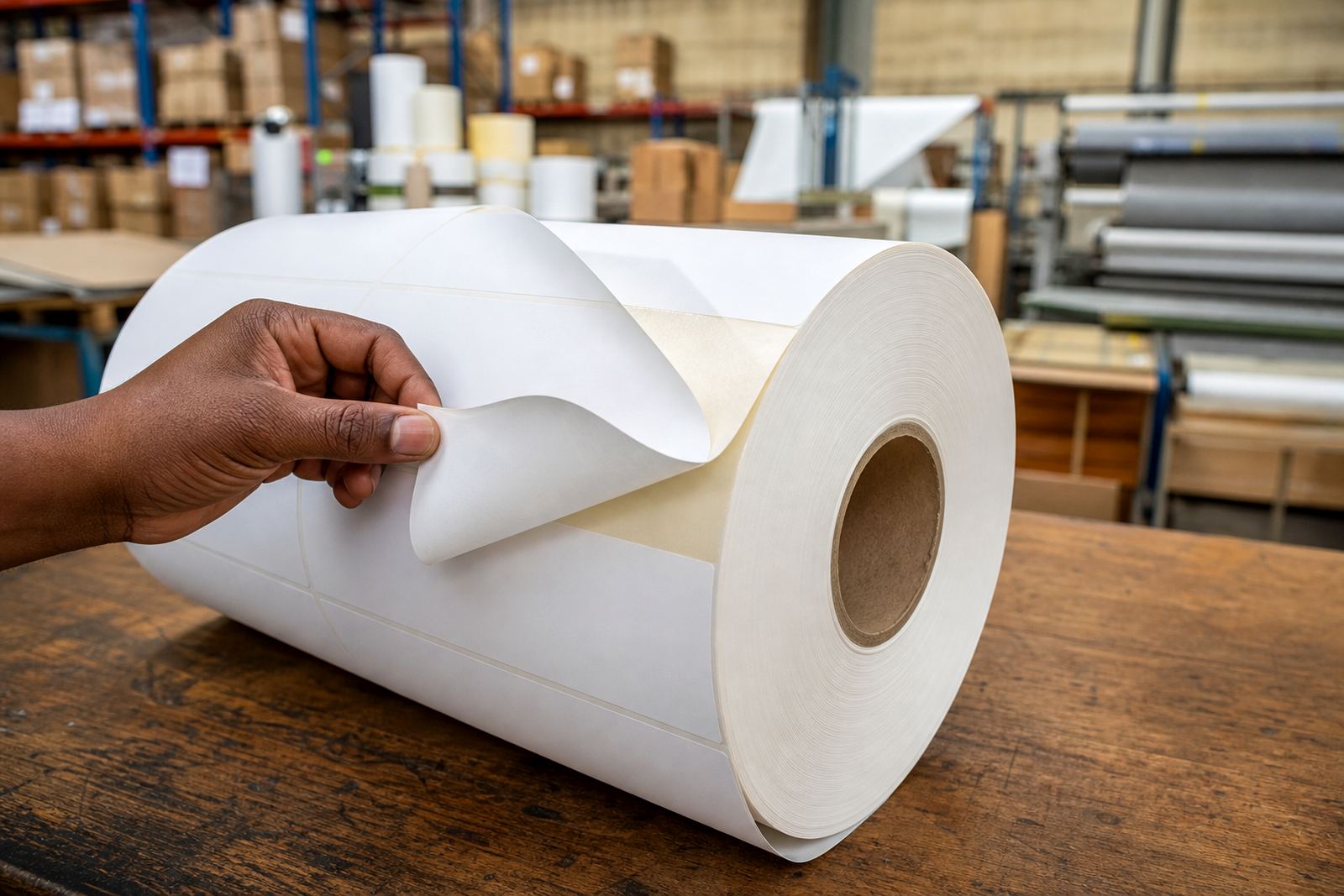
The liner is the backing sheet that carries the adhesive label stock until it is ready to be removed. In self-adhesive label stock, it must release cleanly when the label is peeled, but still hold the face stock firmly during slitting, winding and transport. That balance matters whether you are hand applying labels in Westmead or running cartons through a print-and-apply unit in Johannesburg.
A good liner also keeps the roll stable. If it is too weak, it can split at the edge during dispensing. If it is too stiff or uneven, the roll may not unwind properly and the web can wander. That leads to poor registration, wasted material and a lot of small stoppages that slow the shift down.
Why die-cutting depends on liner choice
Die-cutting is where the knife cuts through the face stock and adhesive, but stops short of the liner. The liner needs enough strength to carry the cut shape without tearing, yet enough release quality to let the label lift away neatly. For short labels, or narrow strips used on bottles and sachets, a weak liner can buckle and distort the cut line.
In practical terms, the liner influences how clean the kiss-cut is, how well the matrix weeds away, and how the finished roll behaves at the applicator. On a humid Durban morning, a liner that has absorbed moisture can feel softer and the cut path may shift a little. That is why stock selection should take the label shape, die pressure and storage conditions into account.
- Paper liners are often used for general label work and are suitable for many retail jobs.
- Glassine liners give a smoother release and are common where neat dispensing matters.
- Poly-coated liners can handle tougher handling and some machine-fed applications better.
Dispensing by hand or machine, the liner changes the feel
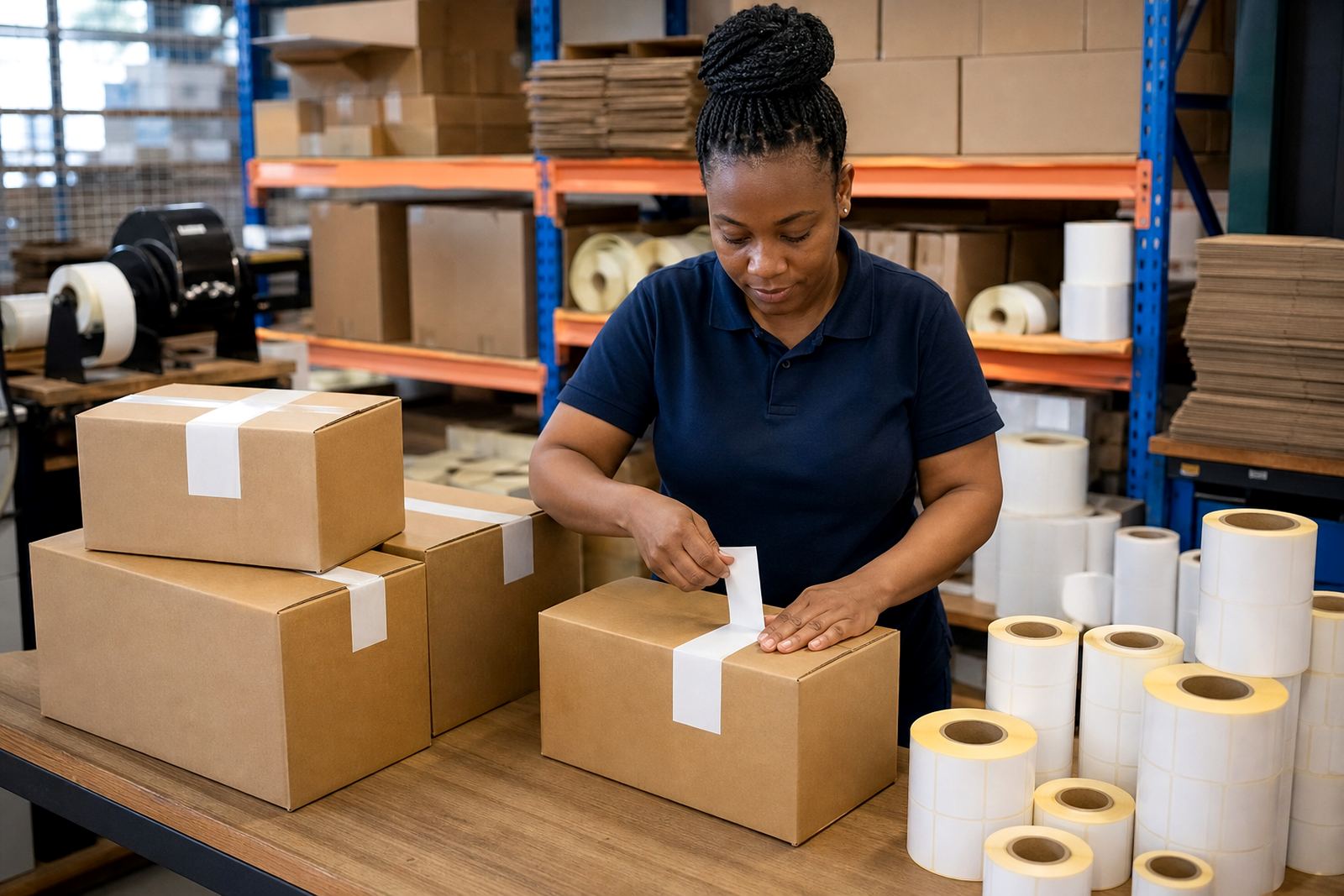
Manual dispensing depends on how easily the label lifts from the liner edge. If the release is too tight, staff have to tug at the label and the corners curl. If it is too loose, labels may lift in storage or shift in the box. For pack tables in Pinetown or Pietermaritzburg, that small difference shows up in daily speed and neatness.
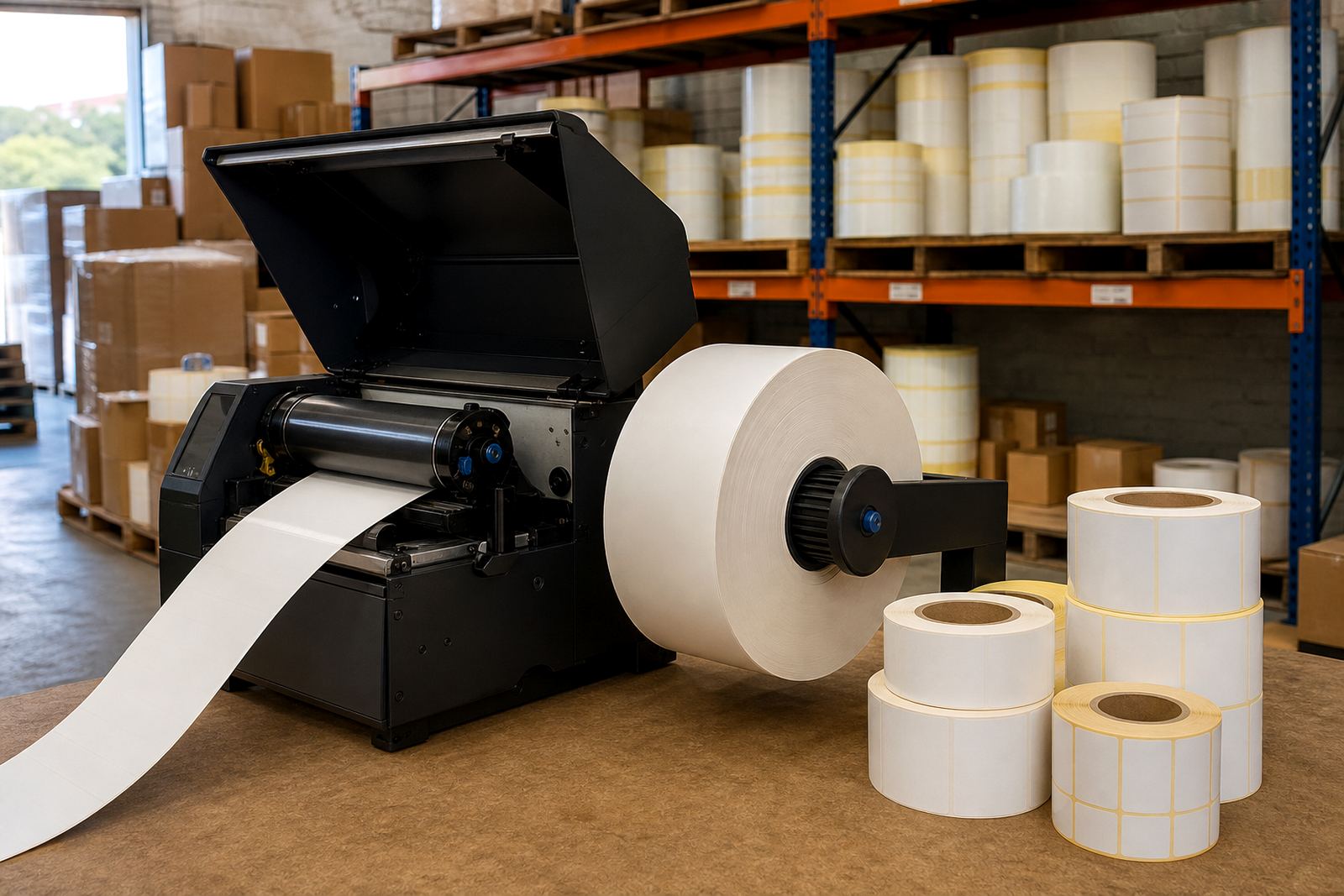
Machine dispensing is even more sensitive. A label applicator or print-and-apply unit expects a liner of consistent thickness and predictable release. Variations can cause slip, tracking issues or missed labels. That is why we look at roll width, wound side, core size and liner finish before planning a supply run.
- Check whether your dispenser peels from the left or right side.
- Match the liner stiffness to the speed of the line.
- Keep the roll edge clean so dust does not build up on the guides.
Storage conditions in South African warehouses
Liner performance changes when rolls are stored badly. Heat, dust and moisture can all affect the release layer and the way the roll feeds. In coastal areas, especially where humidity is high, the liner can soften slightly and the edges may curl if pallets are left open too long. Inland, dusty storage areas can contaminate the liner surface and cause rough peeling.
We always recommend keeping rolls in a dry room, off the floor and away from direct sunlight.A sealed carton is better than an open pallet sitting near a roller door. It sounds minor, but it saves plenty of grief later, especially on larger repeat runs.
Core size, winding and feeding details people forget
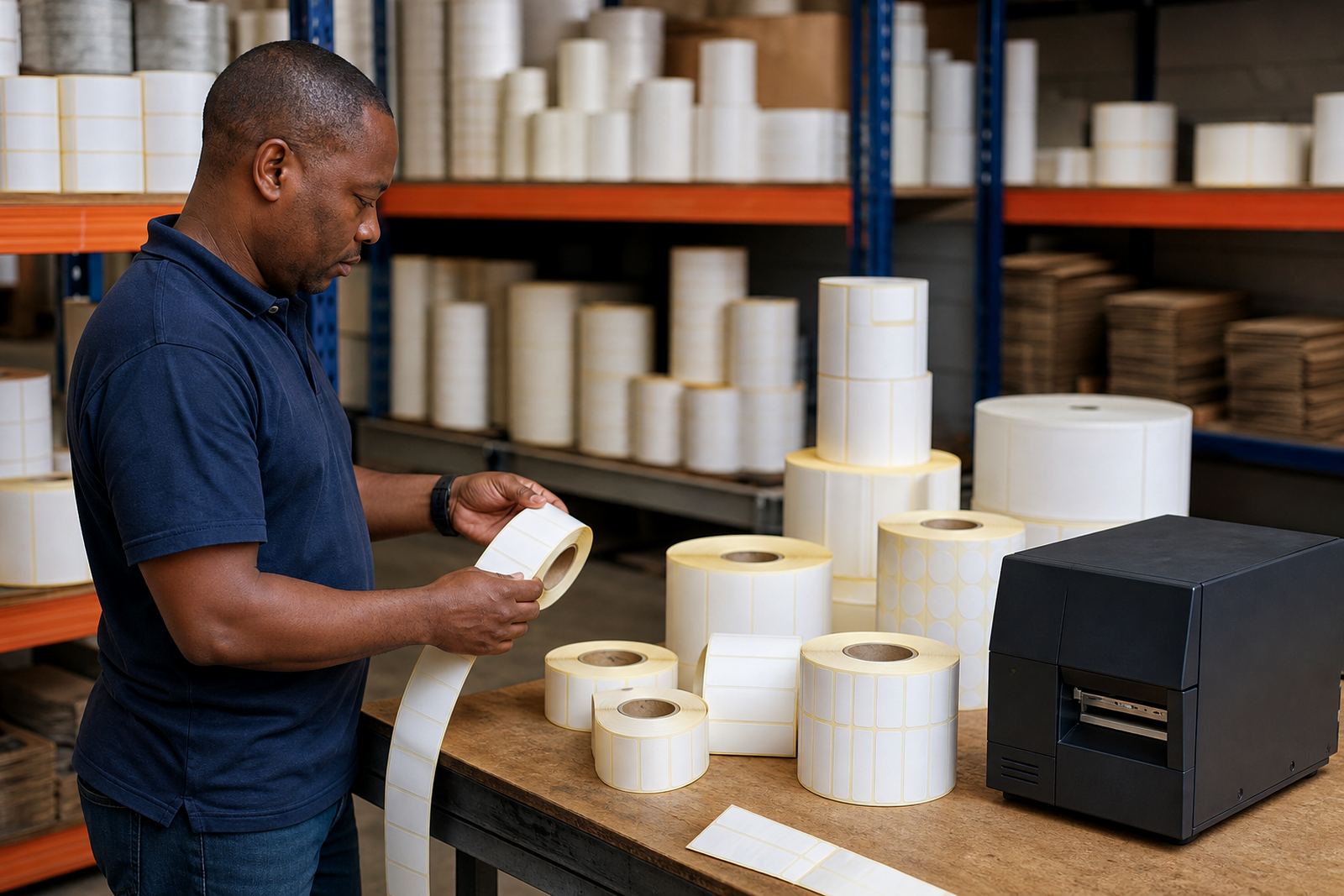
The liner does not work alone. Core size, roll length and winding direction all affect how it behaves on the machine. A 25 mm core is often used for smaller benchtop printers, while 76 mm cores are common on larger industrial setups. If the core does not match the spindle, the roll may wobble or need adapters, which is not ideal in a busy packing area.
Winding direction matters too. The liner must present the leading edge correctly so the label can be peeled without flipping the roll around on the line. When we plan a roll, we look at printer compatibility, label width, inside or outside wound supply and the way the operator loads the machine. That avoids a lot of guesswork at the point of use.
- Confirm core size before ordering, not after the pallet arrives.
- Check whether the printer needs thermal transfer rolls or direct thermal rolls.
- Make sure the winding direction suits the applicator or manual peel edge.
How liner choice affects the print and the final label
In direct thermal rolls, the liner still matters because the label has to run cleanly through the printer and dispenser. In thermal transfer work, the liner supports more handling before and after printing, which is useful for shipping labels, product labels and warehouse codes. Either way, if the liner release is uneven, the print path can drift and the label may not sit square on the pack.
For packaging teams, the liner also affects waste. A liner that peels too sharply can leave adhesive at the edge, while one that releases too slowly may pull the label face stock out of alignment. We often suggest sample rolls for this reason, especially when the job involves a new carton size or a new applicator setting. It is better to test on a short run than to fight a full day of rejects.
A Westmead supply that suits the job, not the guesswork
In Westmead, one customer may need narrow labels for shelf packs, while another needs heavy-duty rolls for outbound cartons and warehouse bins. The liner spec can be very different between those jobs. That is why our team checks adhesive matching, face stock selection, roll length planning and printer fit before a repeat order goes out. It saves time for sites in Durban, Cape Town, Pretoria and Johannesburg where the packing line cannot stop for avoidable faults.
We also help with custom slitting, rewinding and dispatch packing so the rolls arrive ready for use. If the liner release needs a different finish, or if a machine is sensitive to edge curl, we can adjust the supply plan around that. Small changes at the liner level often make the biggest difference on the floor, and a tidy roll is easier to use and store.
- Sample rolls help confirm peel quality before full production.
- Usage review helps spot liner waste and feeding issues early.
- Repeat order planning keeps the same liner spec consistent across batches.