Paper or film, and where each one earns its place
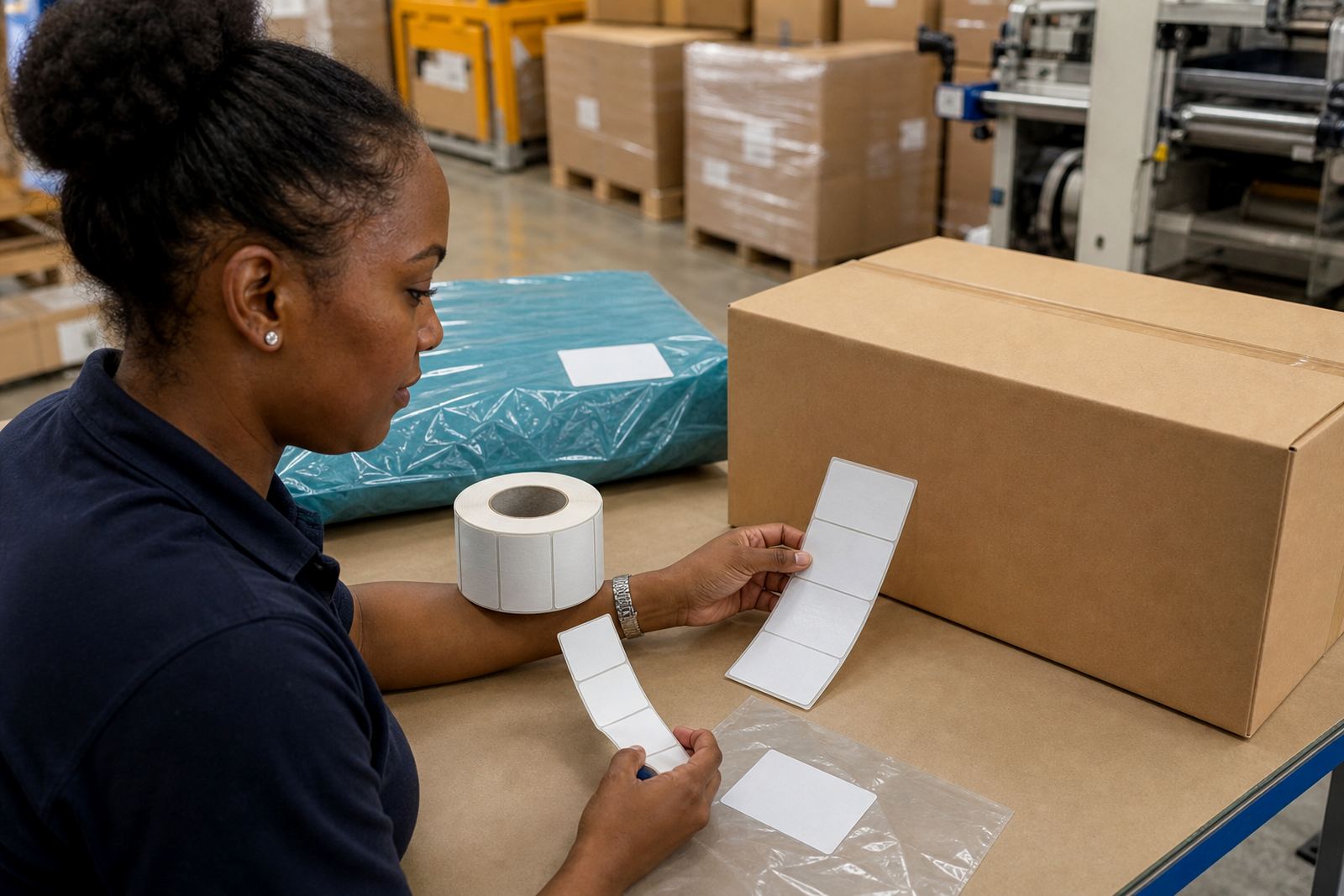
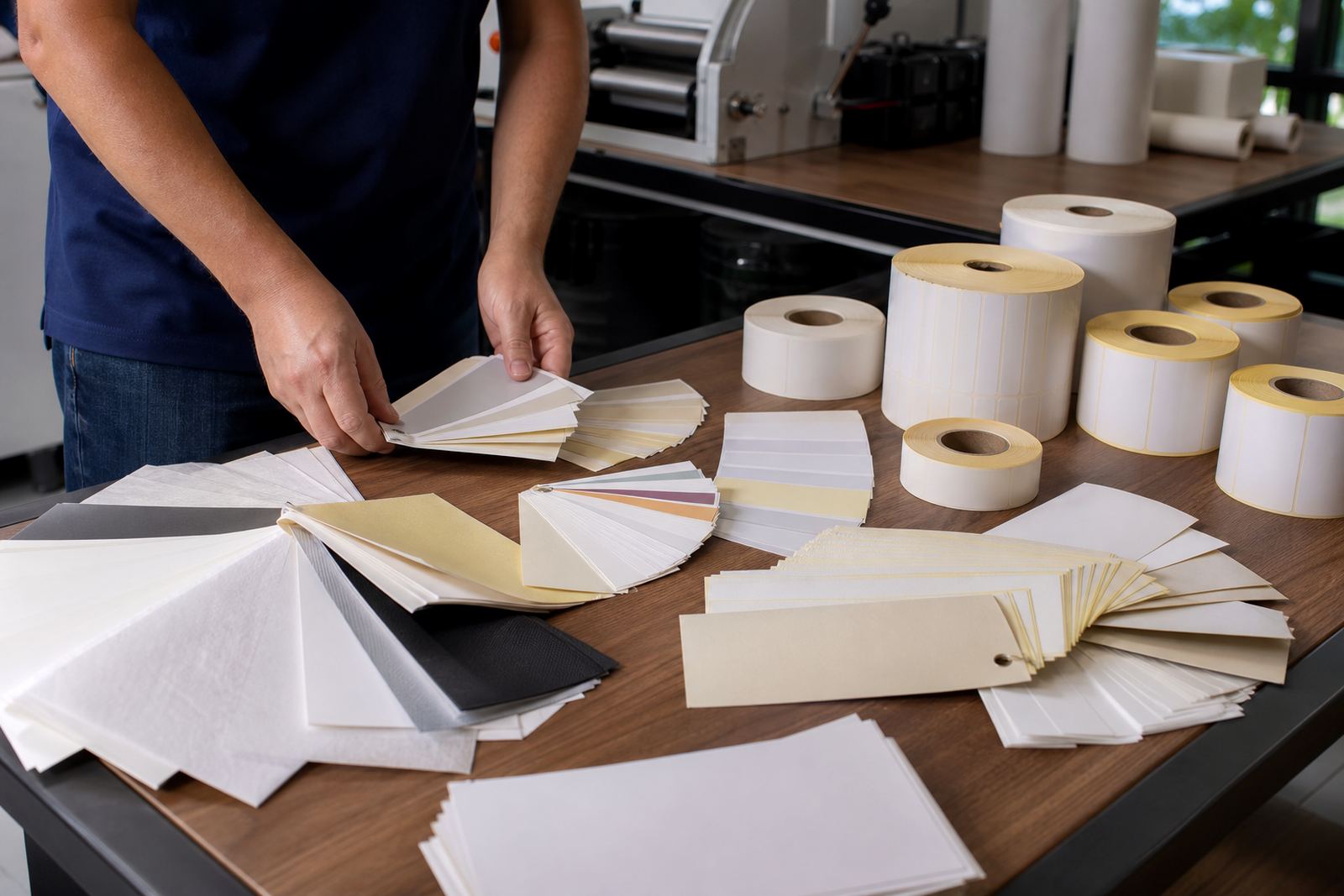
Face stock is the top layer of a self-adhesive label, the part that takes print and meets the product or carton. In practical terms, the choice usually comes down to paper or film. Paper stocks are often used for retail labels, pricing, batch identification and general packaging where the item is handled indoors and does not face much moisture or rubbing.
Film face stocks are chosen when labels must hold up better against scuffing, cold rooms, damp conditions or repeated handling. A polypropylene or polyester face can suit chilled goods, cleaning products, personal care items, drums and warehouse labels. In Durban or other coastal areas, humidity can also matter because some papers soften or lift earlier than a film construction.
We look at the full use case, not just the print image. If a carton will be stacked, wrapped, moved on a forklift and then opened at a store, the label needs enough body to stay readable after the trip. If a pouch is squeezed by hand, the face stock needs to move with it instead of cracking or wrinkling.
- Paper face stock for dry, indoor and short-to-medium life labels
- Film face stock for moisture, abrasion and flexible packs
- Different topcoats and uncoated faces for specific print and handling needs
- Opacity and brightness selected for barcode clarity and text contrast
Adhesive and liner choices that change the end result
The face stock does not work alone. Adhesive choice affects whether the label grips a smooth bottle, recycled carton, powder-coated drum or cold pack. A permanent adhesive is suited to most packaging and logistics uses where the label must stay put. Removable or repositionable options can work for temporary shelf marking, internal handling or test packs. For cold-chain work, the adhesive has to be selected carefully so it bonds even where condensation appears.
The liner is the backing sheet that carries the label through conversion and application. Glassine liners are often used where smooth release and clean winding matter, while thicker liners may be selected for some machine-fed runs. The wrong liner can affect dispense quality, reel build and how the roll behaves in a printer. That is why we check liner weight, release level and web stability when a roll is going into a benchtop, industrial or automatic applicator setup.
We also consider whether the label will be applied by hand or by machine. Hand-applied packs on a loading bay in Pinetown do not need the same roll behaviour as high-volume cartons going through a printer in Johannesburg. If the packer is working in a hot area, or in a cool room with damp air, the adhesive and liner both need to support that environment.
- Permanent adhesives for cartons, bottles, jars and warehouse labelling
- Removable adhesives for temporary signs and internal control labels
- Glassine and other liners chosen for release, feed and winding stability
- Adhesive matching based on substrate, temperature and handling
Printing method, barcode quality and printer fit
Face stock selection also depends on how the label will be printed. Direct thermal labels do not use a ribbon. They are common for shipping, short-life product marking and high-turnover applications. The face stock must be suited to heat exposure from the printhead, because the image is formed by heat on a coated surface. These labels are practical where you want speed and less consumable handling, but they can darken over time in heat and sunlight.
Thermal transfer labels use a ribbon and generally suit longer-lasting print, sharper small text and better resistance to abrasion or chemicals. Many paper and film face stocks can work with thermal transfer, provided the ribbon type matches the face stock. Wax, wax-resin and resin ribbons each behave differently, so the choice has to fit the label material and the use.
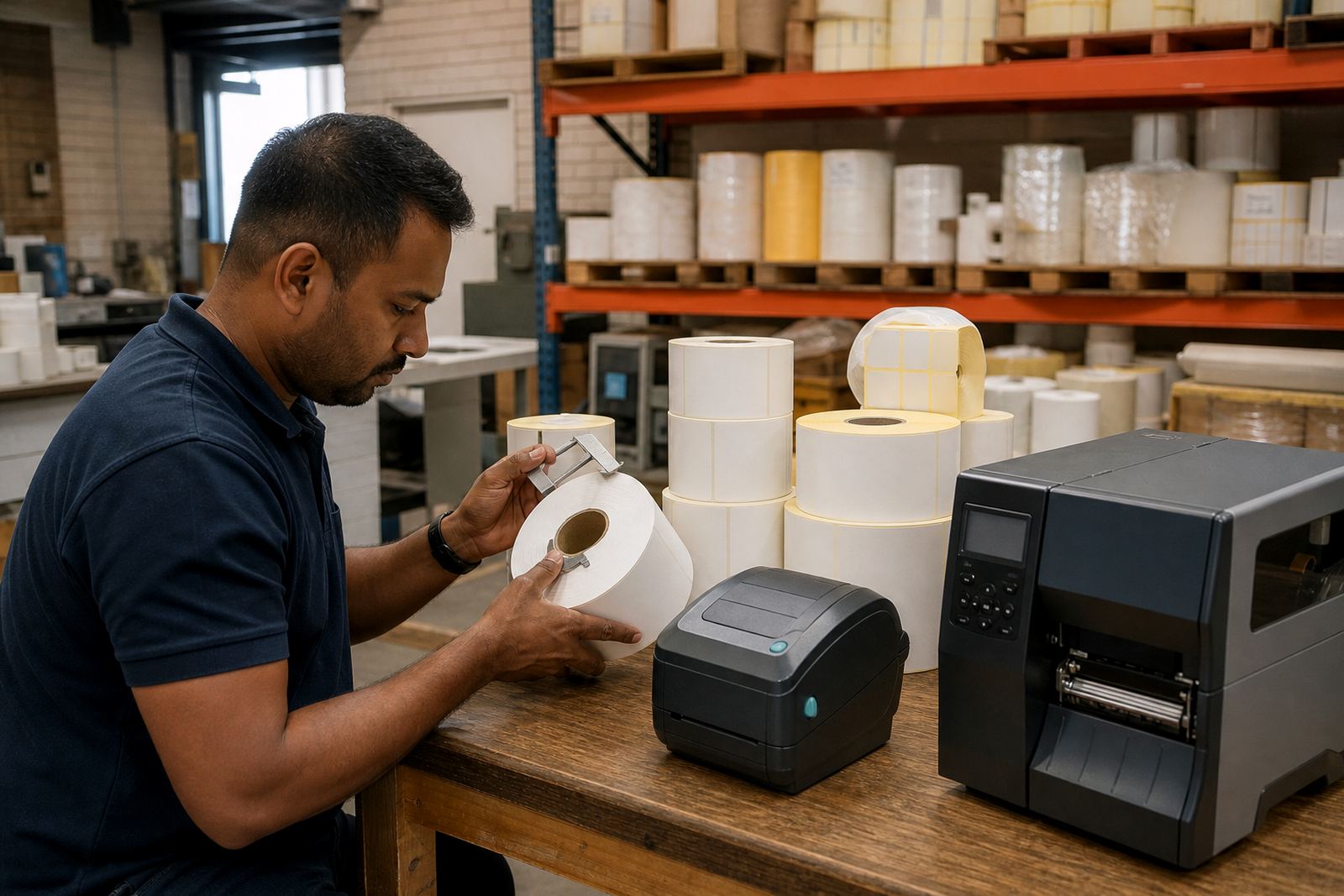
Printer fit checks are part of the job. We look at core size, roll diameter, unwind direction and the printer path so the roll feeds correctly. A label that is technically the right size can still jam or print badly if the core or winding is wrong. This matters in office printers, industrial units and applicators used in busy warehouses across South Africa.
- Direct thermal for short-life and fast-moving dispatch labels
- Thermal transfer for longer life and tougher print requirements
- Ribbon compatibility checked against the chosen face stock
- Core size and unwind direction matched to the printer or applicator
How we narrow the options before a full run
We start with the product, then work outward. A sample roll may be supplied first when the job needs checking on real stock, a real printer and the actual handling route. That is useful for cartons going into logistics, retail packs that pass through tills, or manufacturing labels that must survive oil, dust or cold storage. In many cases, one test run saves a lot of rework later.
The process usually covers five practical points: the pack surface, the handling environment, the print method, the application method and the roll format. If the label is for a smooth PET bottle, a textured kraft carton or a shrink sleeve area, the face stock response will differ. If the product is handled in Westmead, then moved to Cape Town or Pretoria, the climate swing also matters.
- Sample roll supplied where a test on site makes sense
- Face stock reviewed against surface texture and pack movement
- Direct thermal or thermal transfer matched to the print need
- Roll length, winding direction and core size confirmed before production
Turnaround, pricing and what happens after approval
Turnaround depends on the stock selected, the reel build and whether the job needs custom slitting or rewinding. Straightforward face stock selection with confirmed specifications can move quickly, while mixed requirements such as special adhesive matching, smaller core sizes or unusual roll lengths take longer. We plan dispatch packing carefully so rolls arrive ready for production and store room handling, whether they are going to Durban, Johannesburg, Pietermaritzburg or further afield.
Pricing is based on the construction and the amount of conversion needed, not on guesswork. The face material, adhesive, liner, roll length, core size and slitting width all affect the final cost. A plain paper roll for a short run is priced differently from a film label made for tougher handling and longer shelf presence. Where possible, we group repeat order planning so known specifications do not need to be reworked from scratch each time.
Aftercare focuses on usage review. If labels are lifting, fading, jamming or printing too lightly, we look back at the stock choice and adjust the spec. That may mean a different face stock, a stronger adhesive, another liner or a different unwind direction. The goal is practical: fewer stoppages, clearer print and a label that suits the job at hand.
- Turnaround depends on stock type, conversion and roll format
- Pricing reflects the actual label construction and preparation required
- Scheduled reorders can be held to confirmed specifications for consistency
- Usage review helps fine-tune the next run if handling changes
When the label has to survive more than the printer room
Face stock selection is about how the label behaves after it leaves the printer. A label that looks good on the roll can still fail if it is placed on a damp carton, a curved container, or a product that is handled all day on a packing line. We take the small details seriously because that is where the difference shows. A label for a warehouse in Hammarsdale may need a very different build from a retail ticket in Cape Town or a chilled pack moving through Pietermaritzburg.
If you need help choosing between paper and film, or between direct thermal and thermal transfer, we can work through the pack, the print and the handling with you. The aim is a label that matches the job without waste, extra stoppages or last-minute changes on the floor.
Key facts
| Face stocks | Paper, polypropylene and polyester options selected for the use case |
|---|---|
| Adhesives | Permanent, removable and temperature-aware adhesive matching |
| Liners | Release liners chosen for feed, winding and dispense stability |
| Print methods | Direct thermal and thermal transfer roll compatibility |
| Core sizes | Core sizing matched to benchtop and industrial printer requirements |
| Supply areas | Westmead, Pinetown, Durban, Johannesburg, Cape Town, Pretoria, Pietermaritzburg and Hammarsdale |