What we measure before a roll leaves Westmead
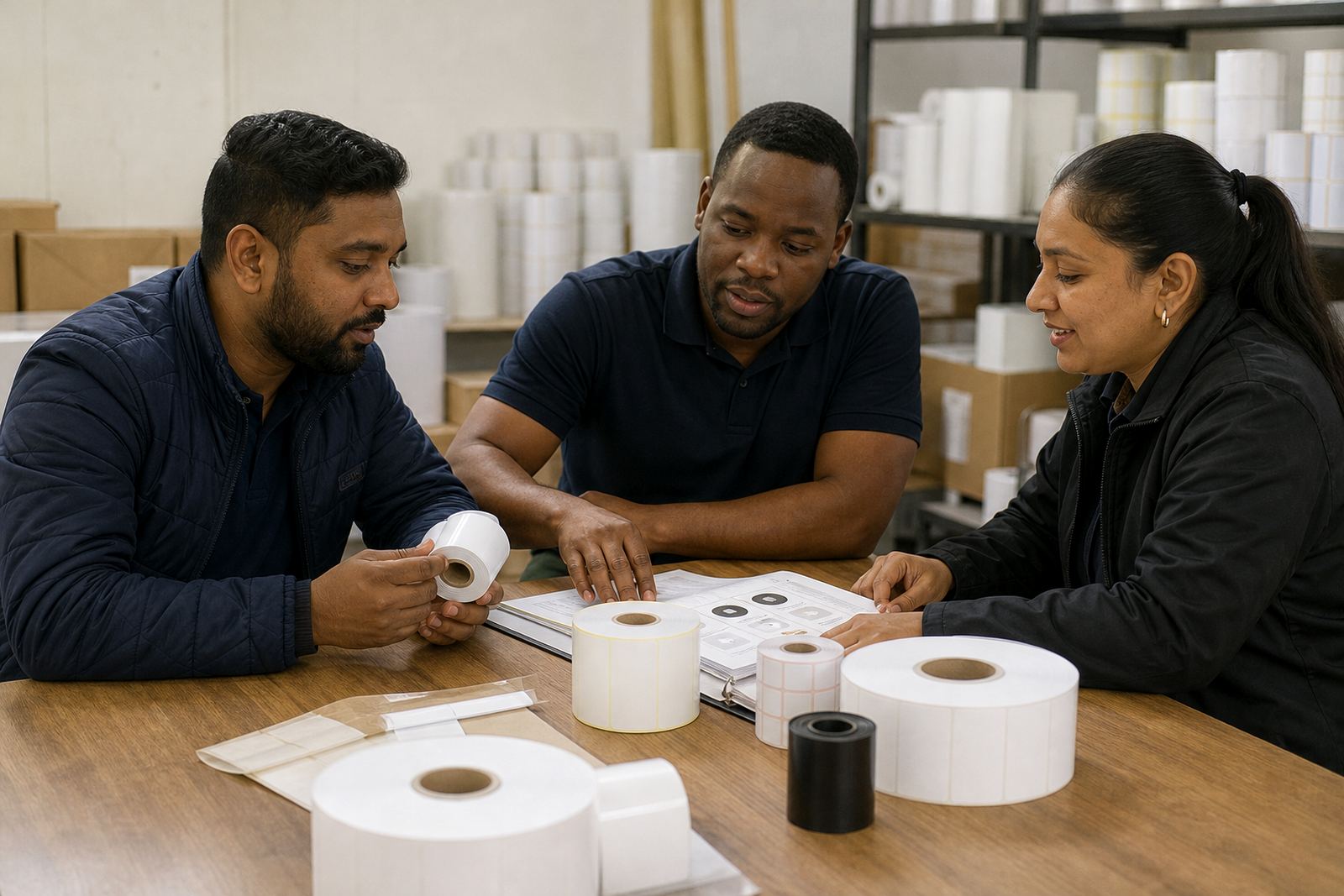
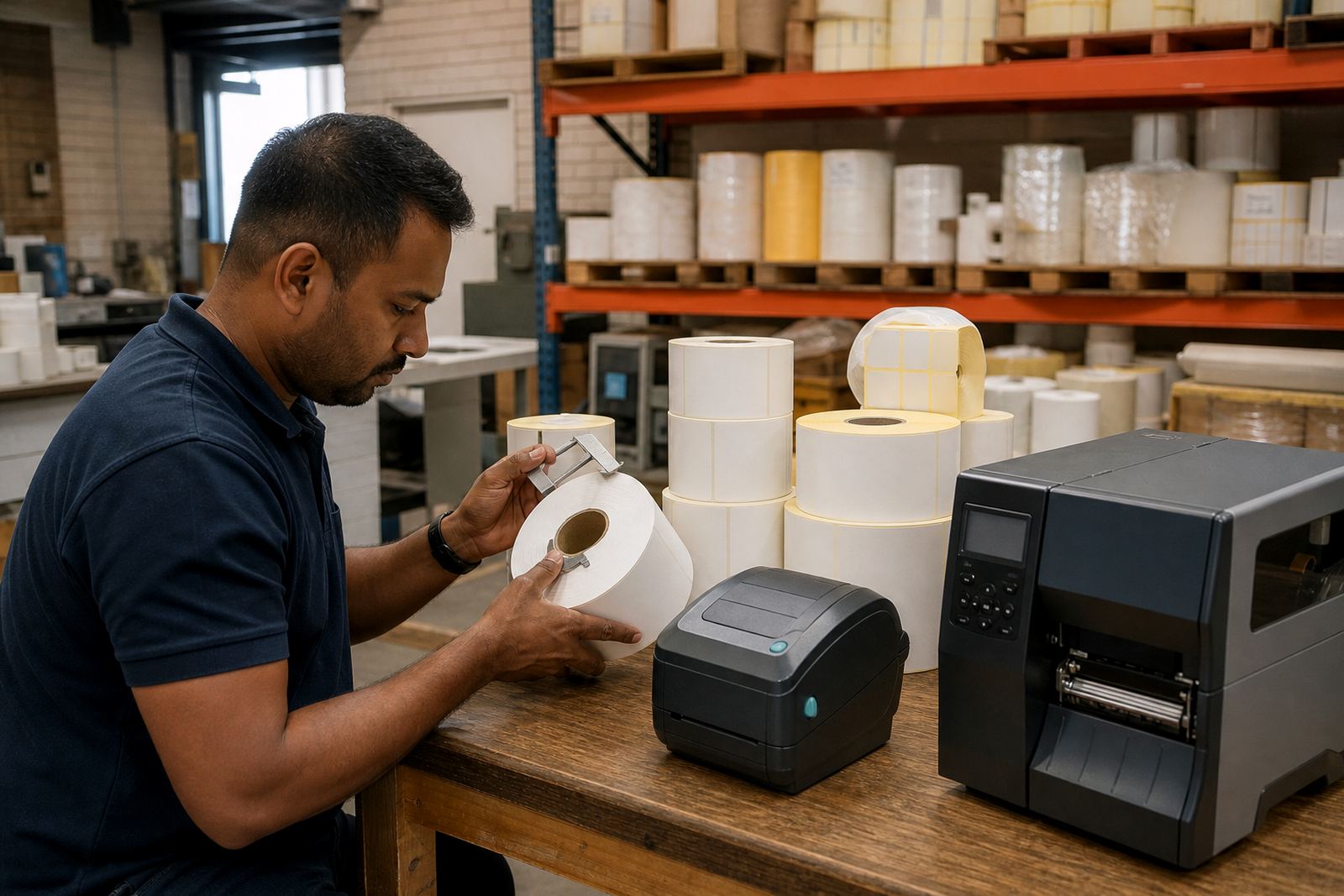
A fit check is more than comparing a width on paper. We look at the full roll build, because a roll that is correct on size can still catch inside a printer if the core, outer diameter or winding direction is off. For businesses in Pinetown, Durban, Johannesburg and Cape Town, that saves time on the line and avoids panic when a label run is due.
We check the label face stock, adhesive type and liner build, then compare it with the printer path and spindle size. If the printer is used for packaging, retail shelf labels or logistics scanning labels, the media must feed smoothly and unwind in the right direction. A small mismatch can cause drifting print, ribbon creasing or labels peeling too early.
- Roll width and label pitch
- Core size, usually 25 mm, 40 mm or 76 mm
- Outer roll diameter and how much room the printer allows
- Winding direction and print side out or in
- Gap, black mark or continuous media format
Direct thermal and thermal transfer are not the same job
We check the print method first because that decides the media you should load. Direct thermal rolls are used without a ribbon and suit short-life labels, parcel labels and dispatch stickers where speed matters. Thermal transfer rolls need a ribbon and suit longer-life labels for stock rooms, product labelling and items that may face heat, handling or light exposure.
The printer fit check confirms whether the machine accepts the media path and ribbon clearance needed for the roll type you want to use. If the printer is set up for direct thermal, there is no point sending thermal transfer stock and expecting good results. The same applies the other way round, and it can be a costly mix-up if no one checks first.
- Direct thermal for fast moving dispatch work
- Thermal transfer for longer life print on labels
- Ribbon path clearance where a ribbon is required
- Printhead pressure and media guidance alignment
How the fit check is carried out
Most checks start with the printer model details, the media spec and a sample of the roll build if available. We then compare the width, core and roll diameter against the machine limits and the way the printer loads. If needed, we test the label gap or mark sensing so the printer reads the media properly. Some printers are fussy about liner thickness or the way the label edge tracks, so it pays to check instead of guessing.
Where a customer uses more than one printer across a site, we can compare the same roll against all units and make a note of what fits where. That is useful for warehouses, retail back offices and manufacturing plants where different teams use different printers on the same order line. It keeps the setup tidy and reduces stoppages when stock changes over.
- Review of printer type and load method
- Matching against supplied roll dimensions
- Check of sensing method and media path
- Advice on winding direction and core selection
Specs we normally work with
Our printer fit checks are commonly done around standard label and roll formats used in South African packaging and dispatch operations. We work with a practical range of face stocks, adhesives and liners so the check is useful for real production, not just theory. The aim is to match your machine to the roll you will actually run, with enough detail to reduce trial-and-error.
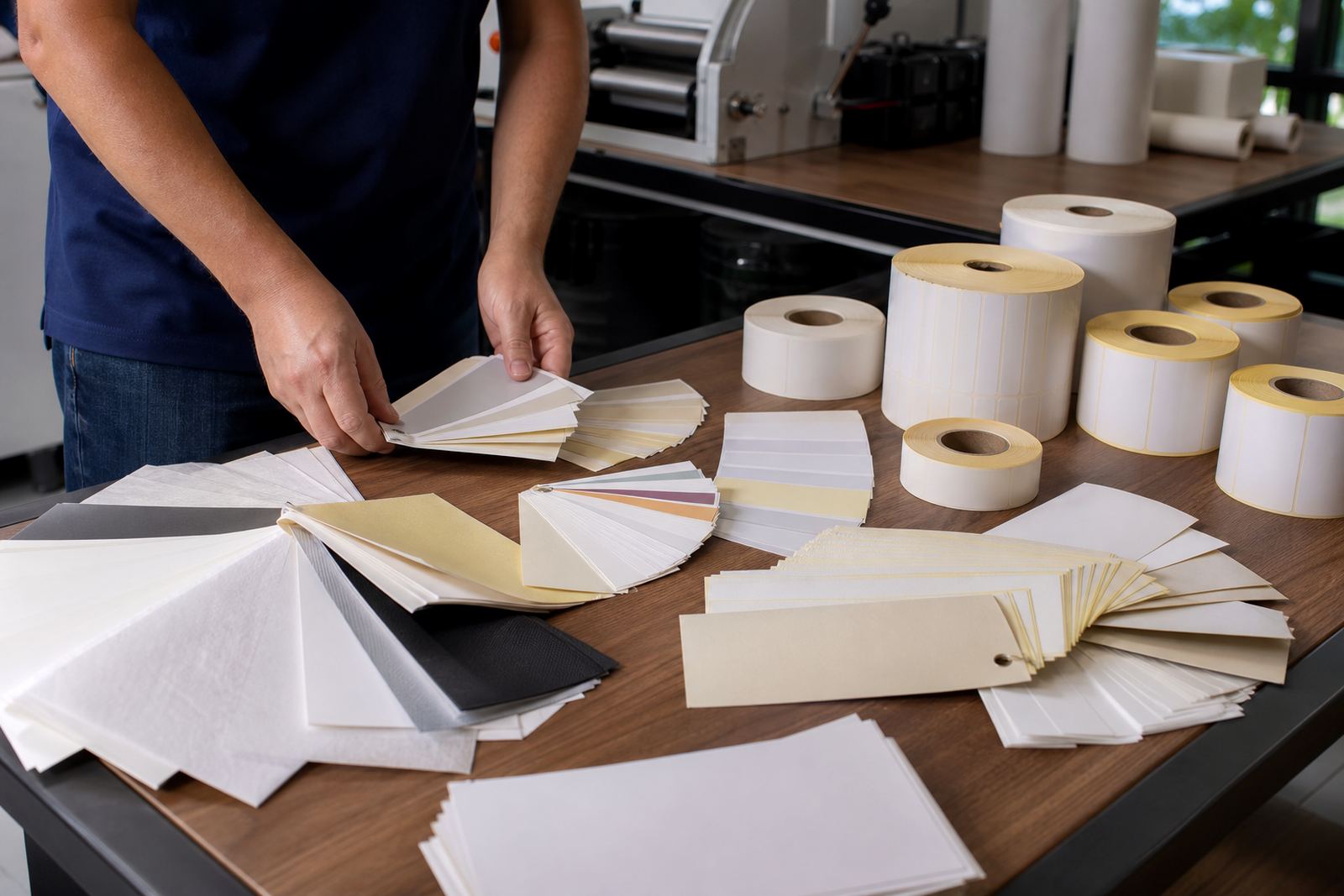
Typical points we look at include label width, roll outside diameter, unwind direction, core diameter and whether the printer needs a 25 mm, 40 mm or 76 mm core. We also check whether the stock is paper, polypropylene or another synthetic face stock, since that affects friction, roll build and print method. If the printer lives in a warm store room or a coastal area like Durban, humidity can also affect how the roll feeds and peels.
- Face stock: paper or synthetic label material
- Adhesive: permanent, removable or freezer-suitable where required
- Liner: glassine or equivalent release liner depending on the build
- Core size: 25 mm, 40 mm, 76 mm
- Roll diameter: matched to printer chamber space
- Media format: gap, black mark or continuous
Turnaround, pricing and repeat work
Turnaround depends on how complete the information is when the enquiry arrives. If we have the printer type, media spec and a sample or dimension sheet, the check moves faster. If a sample roll must be reviewed against a few different machines, allow a little more time. For urgent warehouse changes or a new line setup, we work through the likely fit issues first so you can get the right stock moving without back and forth.
Pricing is handled on an enquiry basis because the work can range from a quick specification check to a more detailed review of roll build, winding and printer path constraints. We keep it clear and practical. If the same format is ordered again later, we can use the previous fit notes to reduce repeat checks, which helps with planned reorders and multi-site supply.
- Quick checks for known printer and stock combinations
- More detailed checks where several roll sizes are under review
- Fit notes kept for scheduled label runs and site standardisation
- Useful for changeovers in retail, logistics and manufacturing
Aftercare when the rolls are already on site
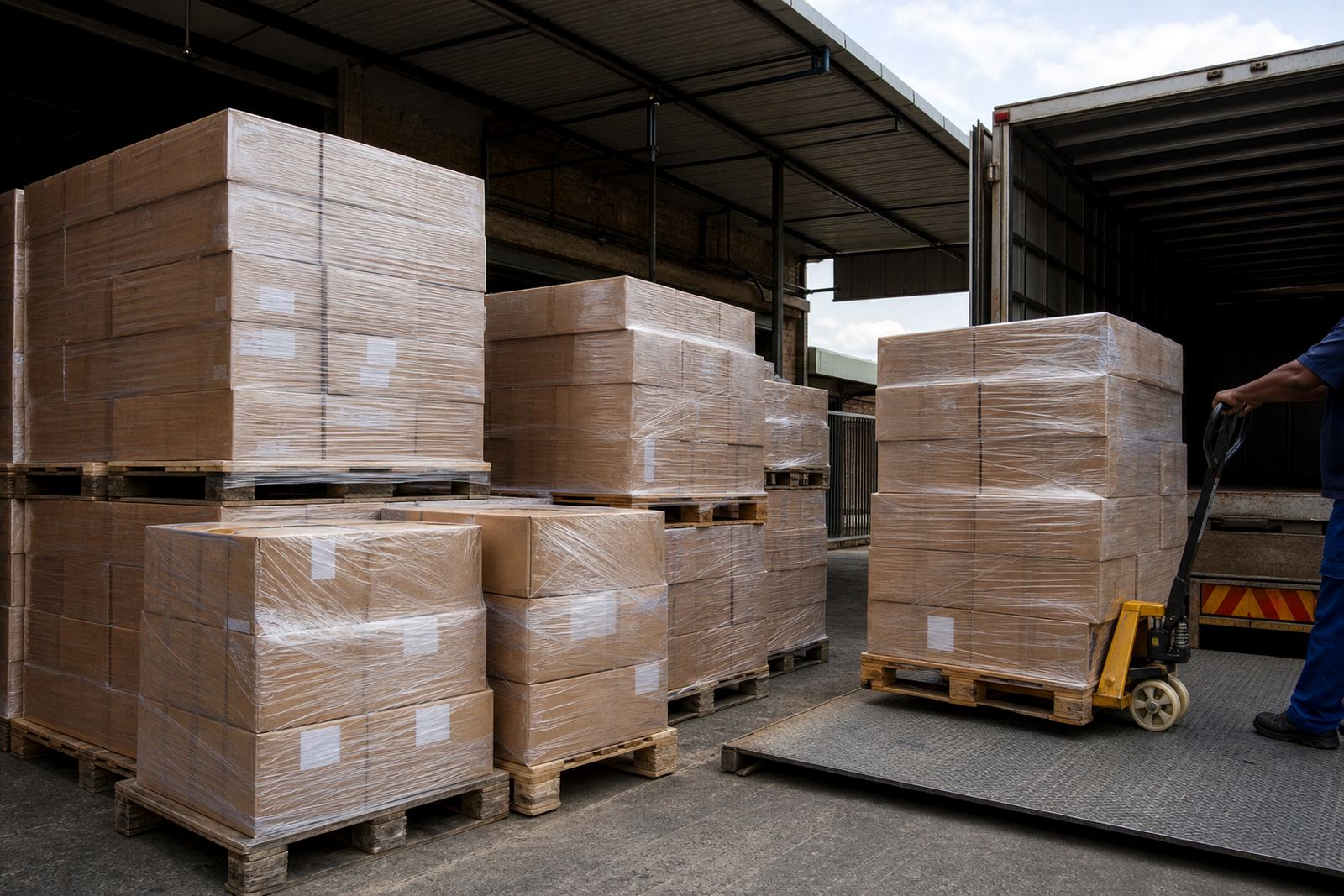
Once stock is dispatched, we stay available if the printer does not feed as expected. The issue may be as small as the core being too tight, the roll sitting off-centre, or the winding direction not matching the spindle setup. Sometimes the printer path is fine but the label sensor needs a small adjustment to read the media gap properly. We help narrow that down before anyone starts trimming rolls or forcing them into the machine.
We will talk through the practical bits, not just the paper spec. That kind of aftercare is often what keeps a label line steady when conditions are not perfect.
- Help with feed issues, skewing and sensing problems
- Checks against the intended printer and media path
- Practical guidance for site conditions and storage
- Notes retained for the next production run
Key facts
| Service | Printer Fit Checks |
|---|---|
| Base | Westmead, Pinetown |
| Supply area | Durban, Johannesburg, Cape Town, Pretoria and Pietermaritzburg |
| Media types | Self-adhesive label stock and thermal rolls |
| Core sizes checked | 25 mm, 40 mm, 76 mm |
| Print methods | Direct thermal and thermal transfer |