Packing that holds its shape on the road
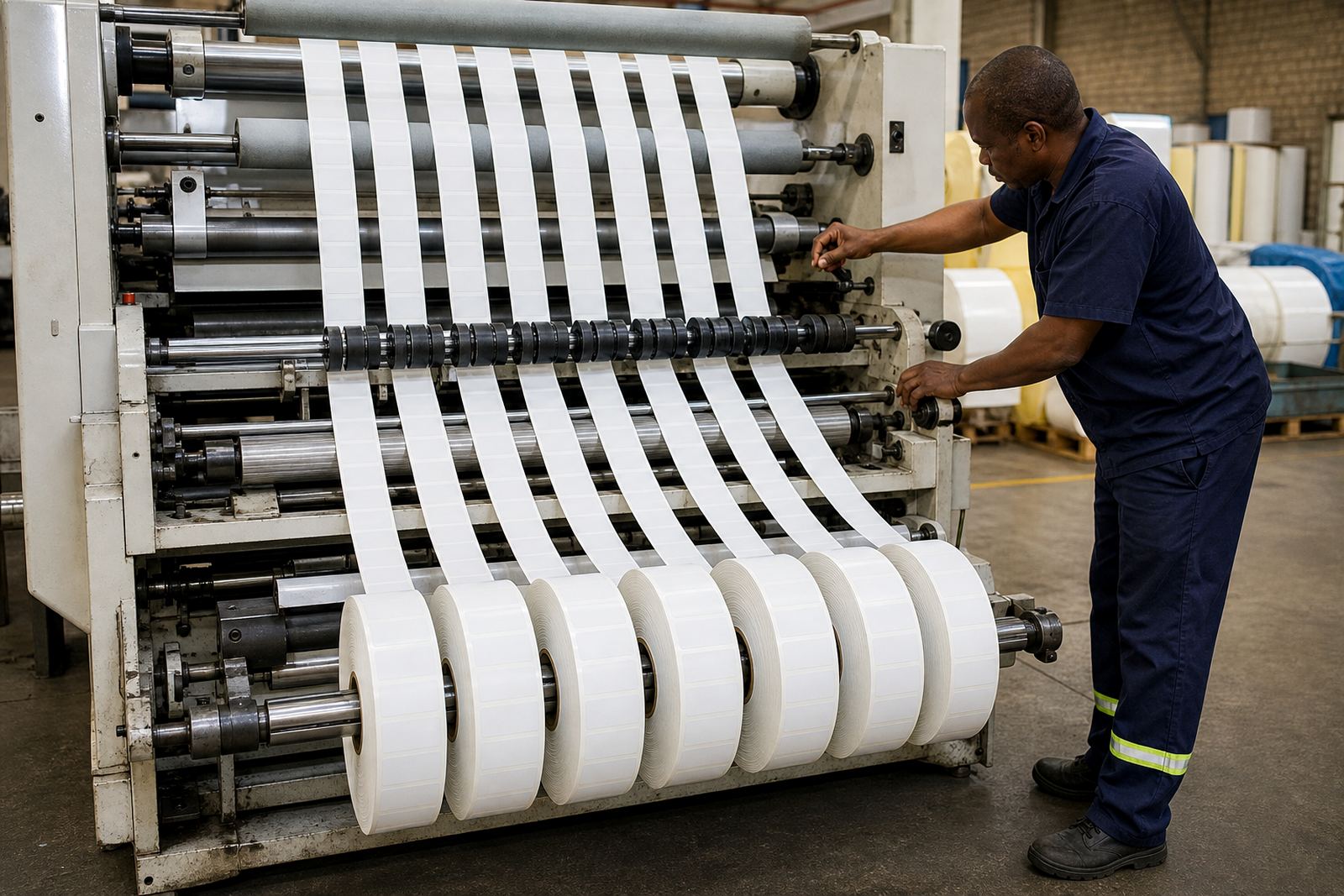
Our dispatch packing service is built around the way label stock and thermal rolls travel in South Africa. A carton that suits a small label run is not the same as a pallet load going to Johannesburg or Cape Town, so we pack by roll size, outer diameter, core size and the way the goods will be handled at receiving. Each order is prepared to protect the roll face, keep the edges clean, and make counting easier when the box is opened.
For converted rolls, we can pack by SKU, by batch or by destination site. That helps if one order is split across Durban, Pretoria and Pietermaritzburg, or if one site needs mixed roll lengths in the same consignment. We also consider coastal humidity, dusty loading areas and the rough handling that can happen when goods move through multiple depots. The aim is not fancy packing, just packing that works.
- Cartons sized to reduce movement inside the box
- Outer wraps to protect against scuffing and dust
- Core protection for 25 mm, 40 mm and 76 mm cores
- Clear carton marks for item count and site receiving
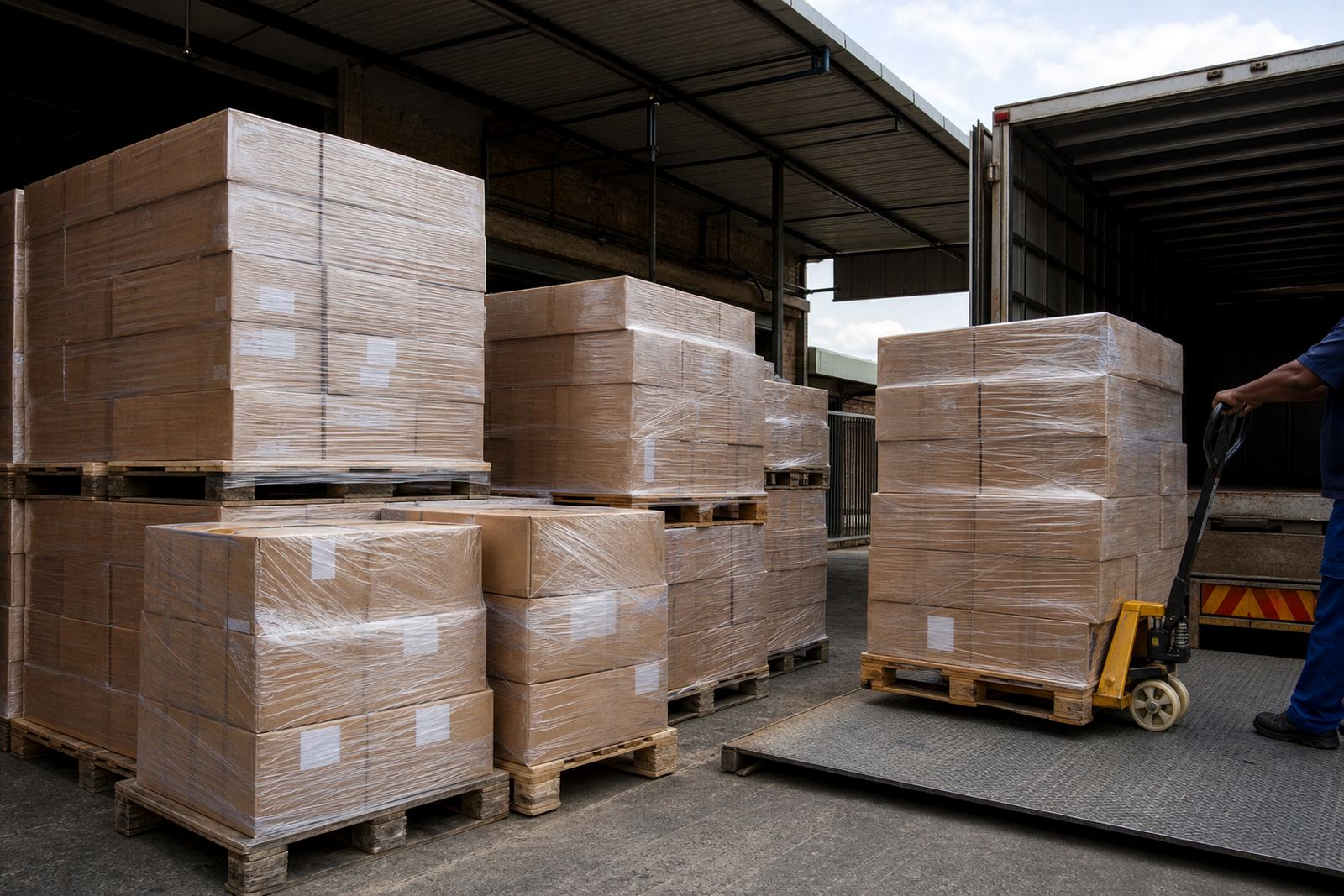
- Pallet stacking planned for stable transport
What gets included in the pack-out
We prepare dispatches for label face stock rolls, thermal transfer rolls and direct thermal rolls, depending on the order.We keep the pack-out practical, with the right number of rolls per carton and sensible pallet layers so the load stays square.
Included items can vary by order, but a standard dispatch can contain protective wrapping, carton labels, packing slips and destination marking. Where requested, we can separate rolls by printer compatibility, for example benchtop units, mid-range industrial printers or wider-format machines. We can also group rolls by face stock type or adhesive type so the receiving team is not opening every carton to find the correct line item.
- Single-site or multi-site packing on one order
- Mixed line items separated clearly inside the load
- Rolls grouped by printer size and core size
- Batch separation for easier stock control on arrival
- Optional sample rolls packed with main orders
The packing sequence from bench to truck
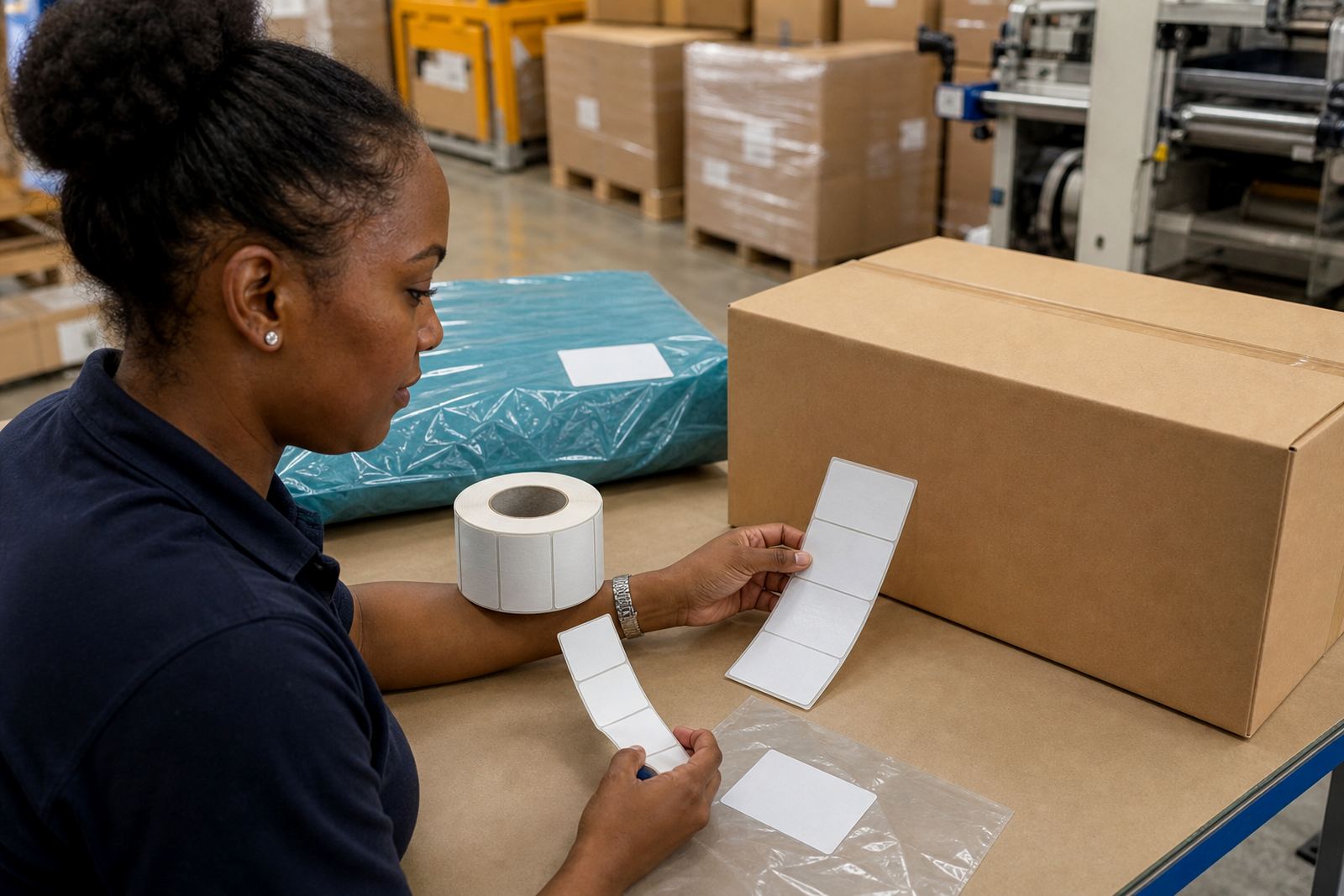
Each dispatch starts with a final count against the converted order, then the rolls are checked for size, core and winding direction. After that, the rolls are placed into the chosen cartons or pallet positions in a way that keeps pressure off the label edge. Where needed, we use inserts or spacing to stop the rolls shifting during transport. This is especially useful for lighter label stock that can move around inside a larger carton if it is not secured properly.
Once the pack is closed, the outside is marked for destination, item count and handling needs. If the order is going into a store room with limited space, we can pack in a way that makes stacking easier at the site. If the consignment is going straight into a distribution centre, we can pack for faster receiving with clear counts and grouped lines. The process is straightforward, but it saves time when the pallet is opened on the other side.
- Final count and order match before sealing
- Roll orientation checked for winding direction
- Cartons sealed for short or long distance transport
- Pallet layers built for stable stacking
- Receiving marks added for quick identification
Pack styles for different label and roll orders
Different products need different packing. Small rolls for retail shelf marking are usually better in compact cartons, while larger thermal rolls for warehouse use may need stronger outer packing and tighter pallet wrap. Label face stocks with heavier coatings, stronger adhesives or special liners can also change how we pack the load, because some rolls are more sensitive to edge pressure than others.
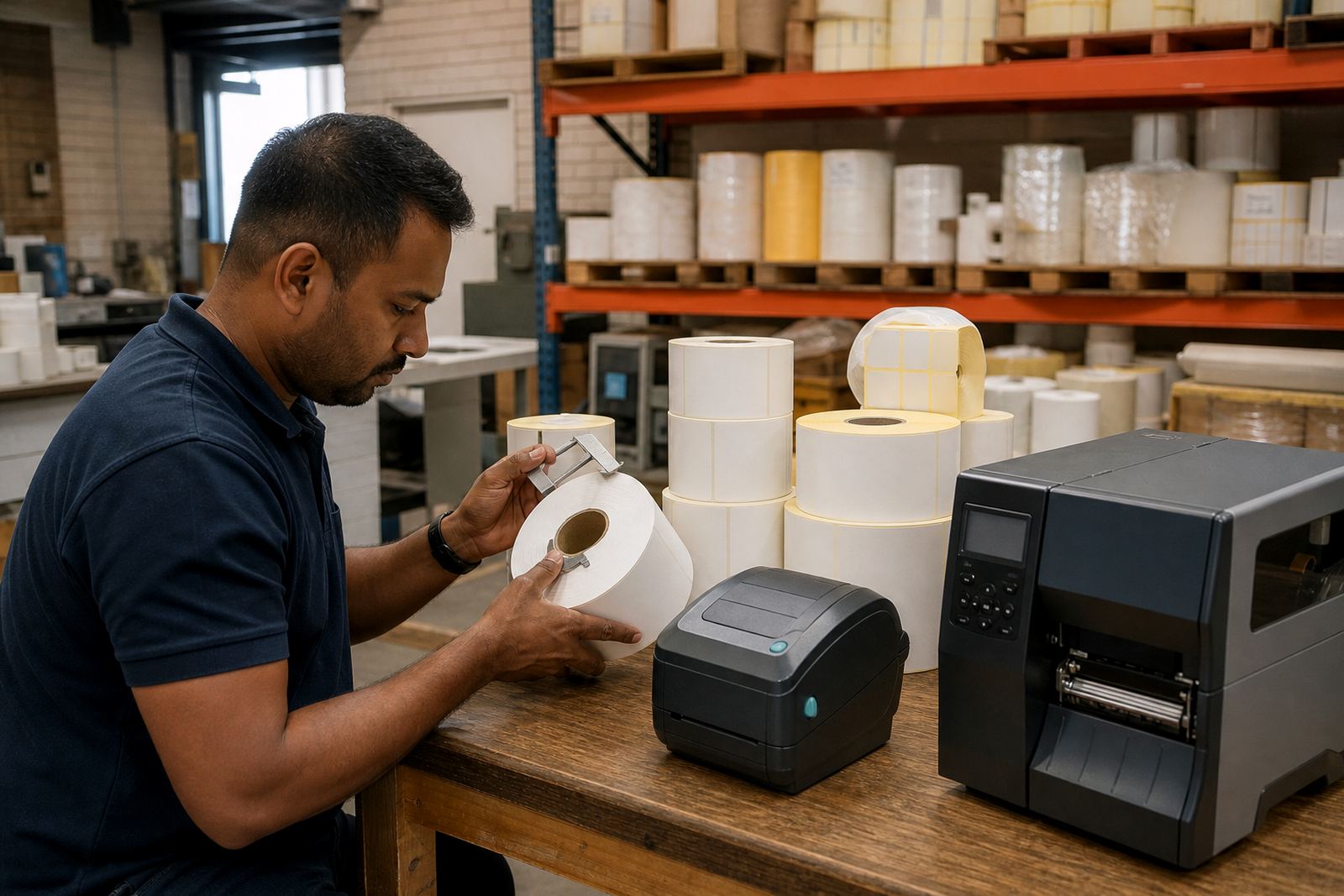
We also plan for printer fit checks. If a customer is using 40 mm core rolls for a benchtop printer, the box should not be packed the same way as a 76 mm core roll for an industrial printer. The same applies to direct thermal rolls versus thermal transfer rolls, since the receiving team may need to separate them by application before issuing stock. Good packing makes that easier and cuts down on handling later.
- Compact cartons for small retail label runs
- Stronger pack-outs for wider rolls and heavier loads
- Separate packing for direct thermal and thermal transfer stock
- Core-specific packing for 25 mm, 40 mm and 76 mm cores
- Grouped lines for packaging, sealing and coding jobs
How turnaround is planned without holding up dispatch
Turnaround depends on order size, the number of line items and whether the job needs special packing instructions. A single carton of repeat stock can move quickly, while mixed orders with several roll widths, core sizes and destinations need more planning. We schedule dispatch packing alongside conversion so the order does not sit waiting once it is ready. That helps when a customer has a factory stop, a store opening or a production run that cant wait till next week.
For larger orders, we will often stage the pack-out in steps. That means some cartons are closed and marked while other parts of the order are still being checked, which keeps the process moving. If a customer needs split deliveries to Durban and Gauteng, or wants a portion held for a second dispatch, we can plan the packing around that. Clear pack planning also helps when sites receive goods through different gates or departments.
- Quick pack-out for known label specifications
- Staged packing for mixed or multi-site consignments
- Split dispatch planning for separate delivery points
- Carton and pallet counts matched to the invoice line-up
- Held orders can be packed in sequence for later release
Pricing, receiving notes and aftercare that keeps stock usable
Pricing for dispatch packing is usually tied to the pack method, carton count, pallet count and any extra handling needed for mixed orders. A simple boxed order does not carry the same packing effort as a pallet that needs layered separation, clearer site labels and split destination marking. We quote in a practical way, based on the actual work needed to get the stock out safely and ready for receiving.
After dispatch, we can help with a usage review if the customer finds that cartons are too large, too loose or not ideal for their receiving area. That can lead to better roll grouping on the next order, fewer damaged edges and less time spent sorting boxes at site. If there is a repeat pattern, we can adjust the pack size, carton count or pallet build for the following run. The idea is to keep the order moving cleanly from our floor to yours.
- Pricing based on cartons, pallets and handling complexity
- Clear pack notes for receiving teams and stock rooms
- Adjustments available for repeat order planning
- Better grouping for high-volume or split-site delivery
- Support after dispatch if packing needs refining
Key facts
| Service area | Westmead, Pinetown and nationwide dispatch to Durban, Johannesburg, Cape Town, Pretoria and Pietermaritzburg |
|---|---|
| Products packed | Self-adhesive label stock, direct thermal rolls and thermal transfer rolls |
| Core sizes | 25 mm, 40 mm and 76 mm, with other sizes by request |
| Packing formats | Cartons, split cartons, pallet loads and mixed-site consignments |
| Receiving details | Item counts, destination marks and handling notes for easier stock intake |
| Use cases | Packaging, sealing, coding, retail shelf marking, logistics and manufacturing |