Where the roll count meets the shift plan
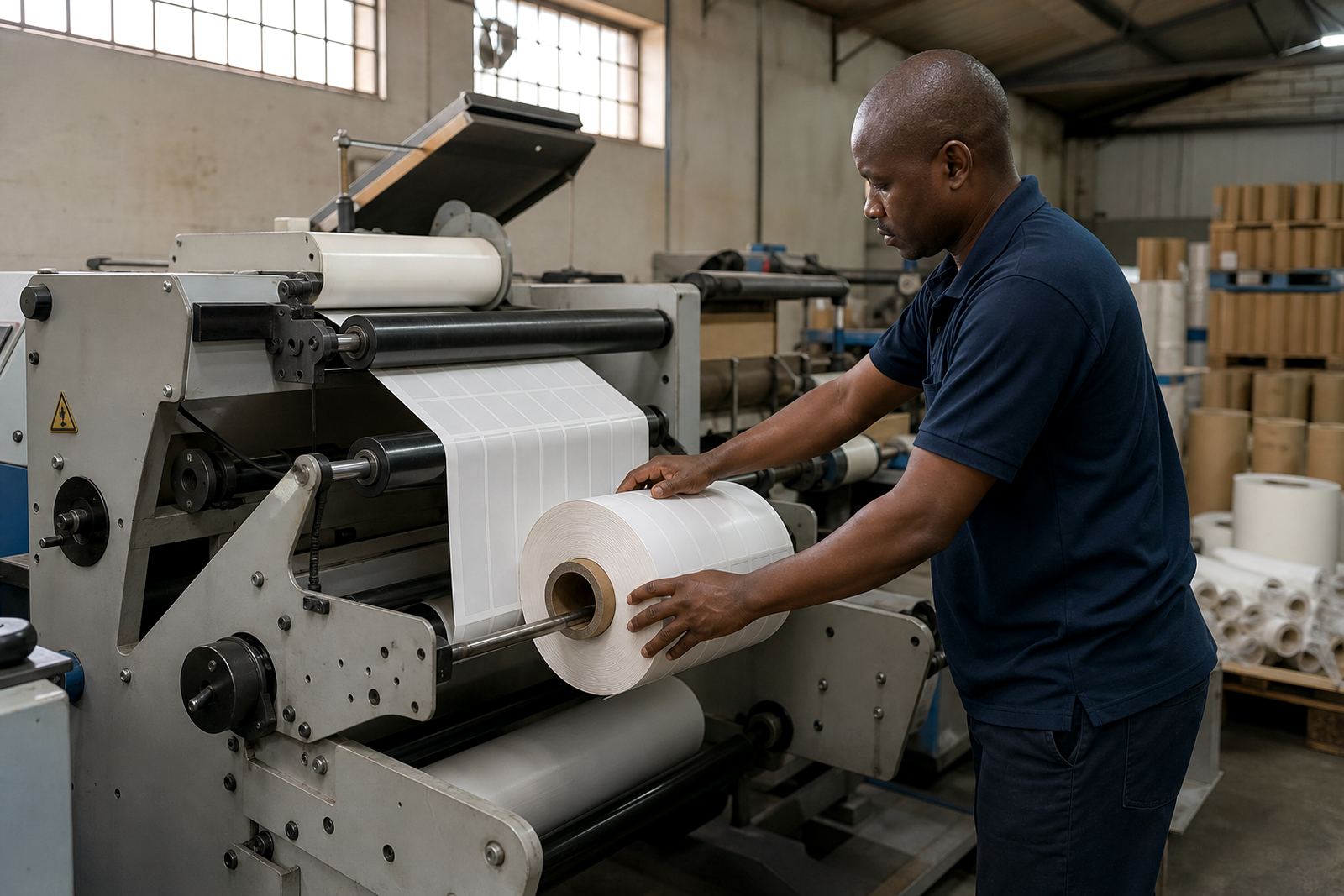
In many packing rooms the trouble is not the label face stock itself, it is the roll length. Too short and the line stops too often for changeovers. Too long and you can strain the printer, waste material at the end of a run or end up with stock that does not suit the way your staff work. We plan roll length around daily usage, label size, print speed and the way your team runs the shift, whether that is a small retail back room in Pietermaritzburg or a larger dispatch floor in Johannesburg.
We look at how many labels are needed per day, how often reels are changed, and whether the printer is used for short bursts or long runs. That gives a better fit for direct thermal rolls and thermal transfer rolls, especially where there are power interruptions, busy month end dispatches or multiple packing points on one site.
What gets checked before a roll size is set
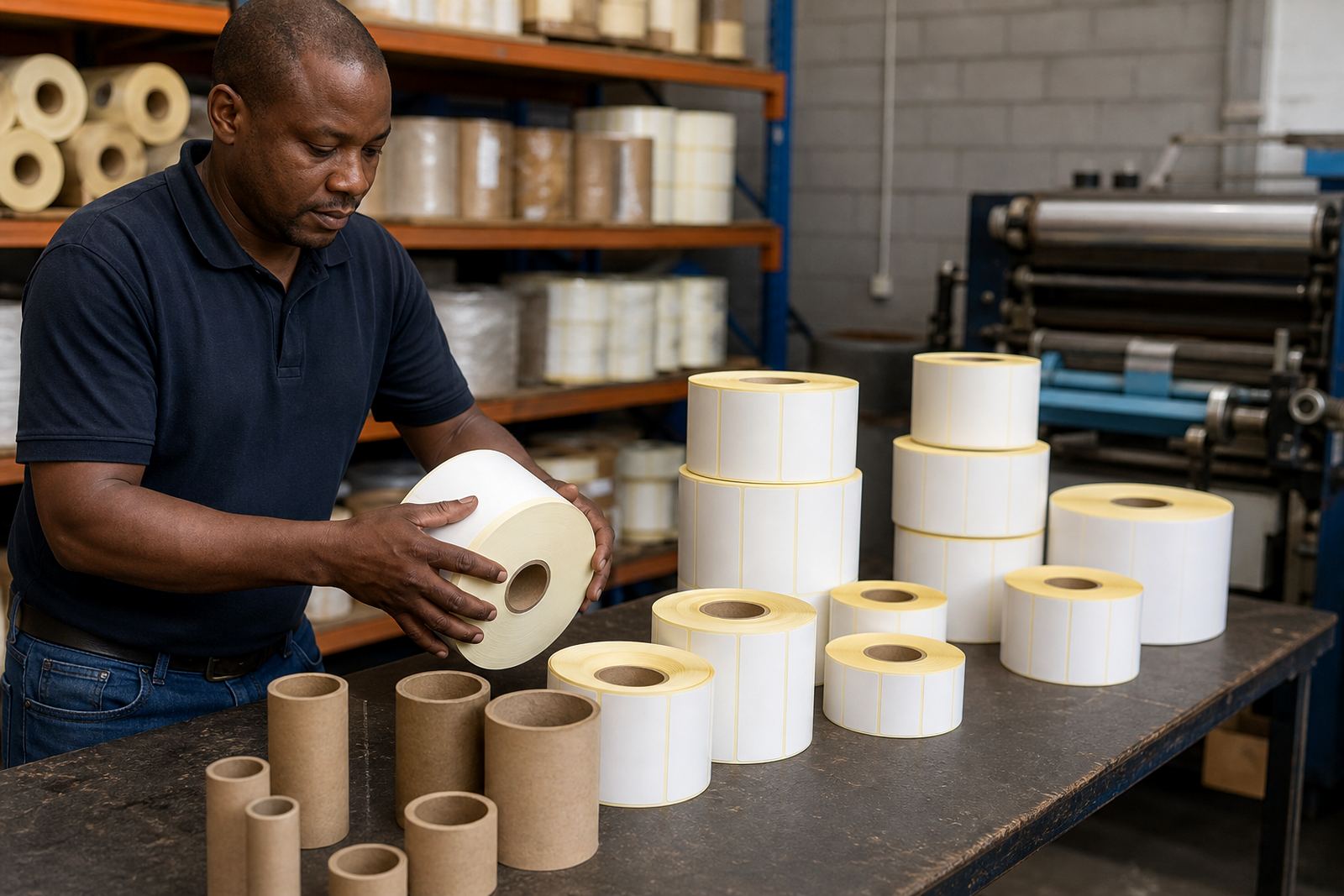
Roll length planning is not guesswork. We check the label face stock, adhesive type, liner thickness, core size and printer path so the roll feeds cleanly and does not force unnecessary tension. A roll that works in a benchtop unit may not suit a wider industrial printer, and a roll made for a 25 mm core will not fit the same way as one wound on a 76 mm core.
- Usage rate per shift, per day or per week
- Label size, gap and repeat length
- Printer type, core size and maximum outer diameter
- Direct thermal or thermal transfer application
- Pack size preference for storage and dispatch
- Changeover timing on the packing line
How we match stock to the machine and the job
Some customers need a narrow roll with many metres for small cartons, while others need shorter rolls with thicker facestock for heavier handling. We can help plan around thermal transfer ribbons, direct thermal print heads and common feed widths used in warehouse, retail and light manufacturing printers. If there is a barcode, batch code or date coding requirement, we also allow for print density so the roll gives a clear impression from the first label to the last.
On coastal sites such as Durban and Hammarsdale, humidity can affect how a roll is stored and handled. In dry inland depots, dust and heat can create different issues. Roll length planning takes these practical matters into account so the stock behaves well in real use, not only on paper.
- Thermal transfer for longer life labels and better resistance to rubbing
- Direct thermal for fast, ribbon free printing on shorter life applications
- Face stocks such as paper, synthetic and top coated materials
- Adhesives for cartons, chilled packs, drums and general packaging
The planning steps from enquiry to approval
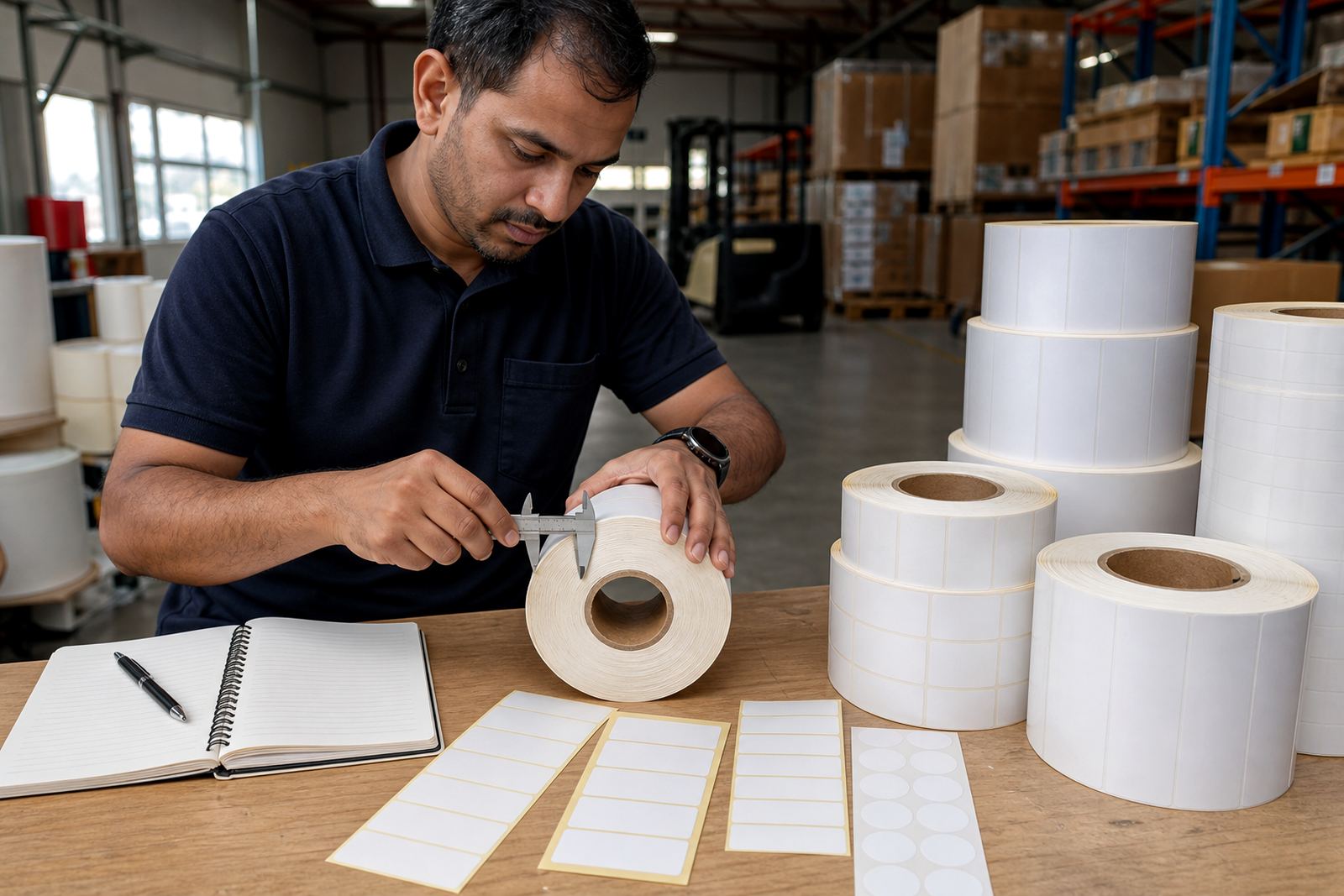
Once the enquiry comes in through the contact page, we review the current label size, printer model, core size and any known usage rate. If sample rolls are needed, we can arrange them so the printer fit is checked before full production. From there we work out a roll length that suits your application and the way your team loads stock, stores cartons and dispatches finished goods.
The process is practical and usually follows four steps:
- Assess the job details and printer compatibility
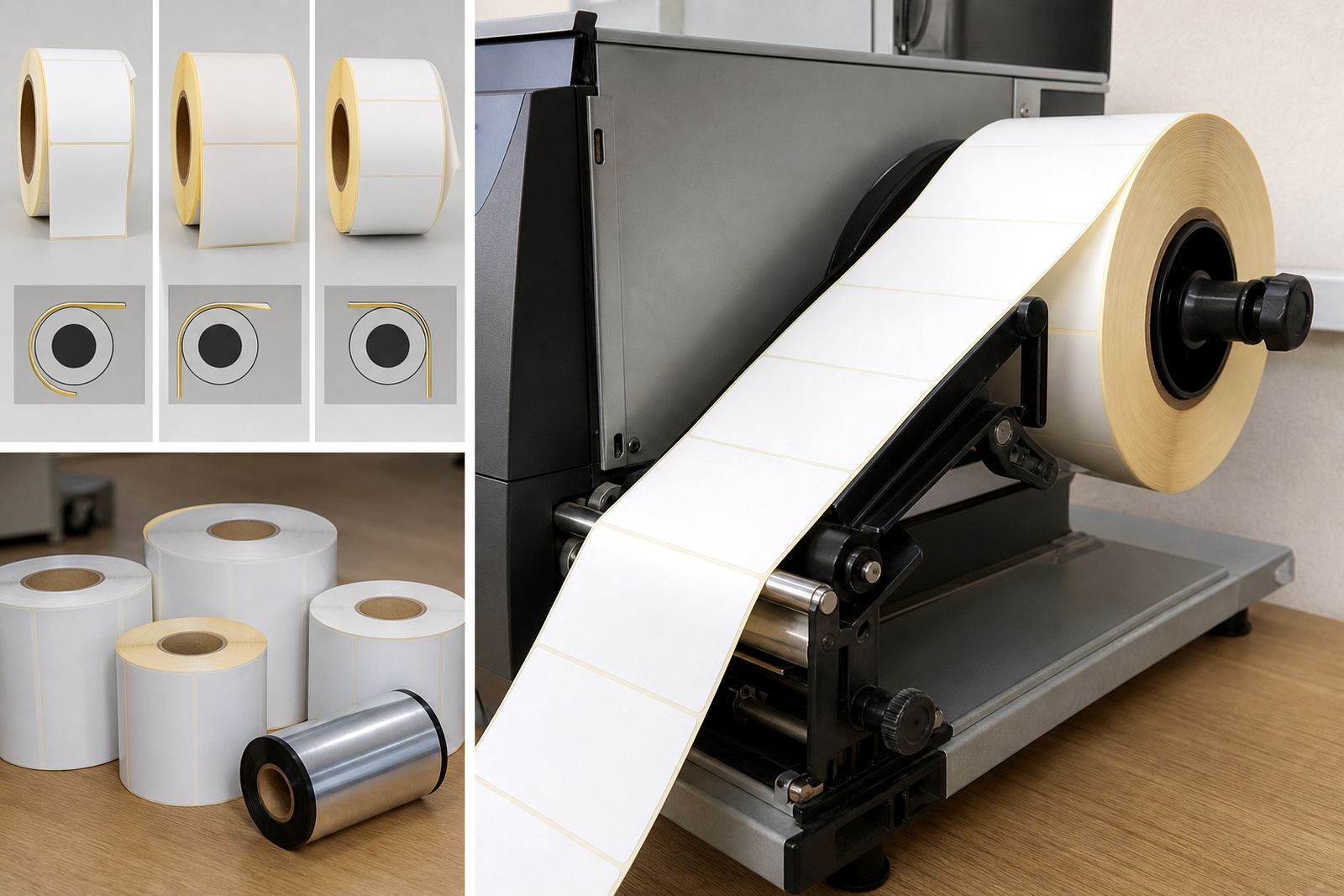
- Confirm label dimensions, core size and winding direction
- Plan roll length and pack count for the site
- Prepare the run and arrange dispatch packing
Turnaround, pricing and the parts that move fastest
Lead times depend on the label face material, adhesive choice, slit width and whether the order is a standard repeat or a fresh setup. Straightforward repeats with confirmed specifications can move through faster. New roll planning takes a little longer because we first check fit, print output and pack handling. That extra care helps cut waste and keeps your label stock steadier once the order is running routinely.
Pricing is based on the materials used, roll length, core size, slitting work and any extra set up needed for printer fit checks or sample rolls. We do not price by guesswork. If a customer needs different roll lengths for separate branches in Durban, Cape Town or Pretoria, we can structure the order around those needs so the stock does not sit unused on a shelf.
Aftercare once the first rolls are in use
After the first supply goes out, we stay available for usage review and repeat order planning. If the labels are feeding too fast, running out too soon or leaving too much slack in storage, the roll length can be adjusted on the next run. That is especially useful where a business grows, adds another printer or changes from short retail runs to longer logistics batches.
We also help where conditions change.With that in mind, we keep the planning tied to what the site actually does, not only the printer spec on the box.
- Adjust roll length for heavier daily usage
- Revisit core size where printer models change
- Review winding direction for smoother feed
- Update pack counts for easier storage and dispatch
Key facts
| Product scope | Self-adhesive label stock and thermal rolls |
|---|---|
| Roll formats | Direct thermal and thermal transfer |
| Core sizes | Common 25 mm and 76 mm options, with other sizes on request |
| Compatibility | Benchtop and industrial label printers, subject to fit checks |
| Planning factors | Usage rate, changeover frequency, printer capacity, pack handling |
| Service area | Westmead, Pinetown and supply across South Africa |