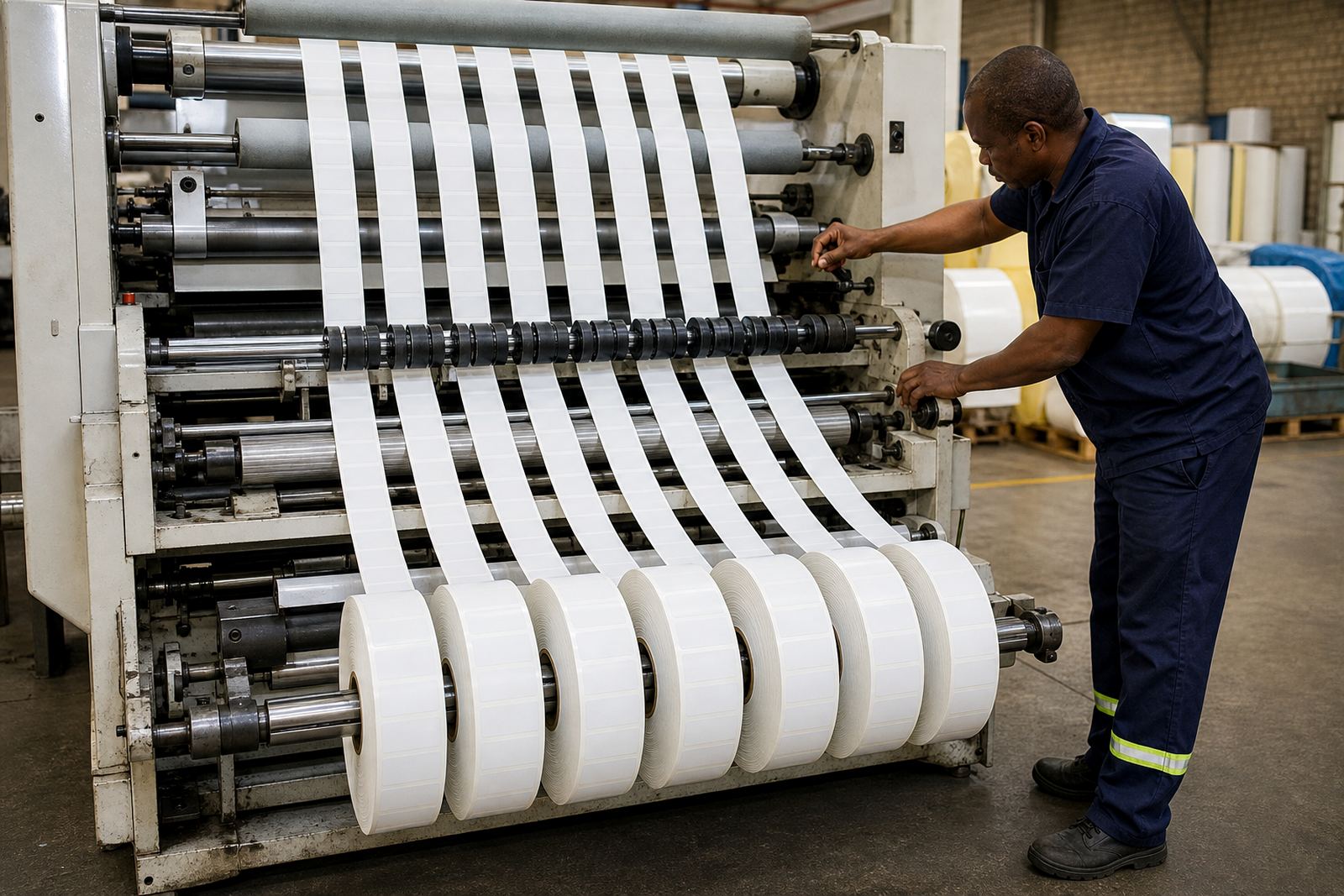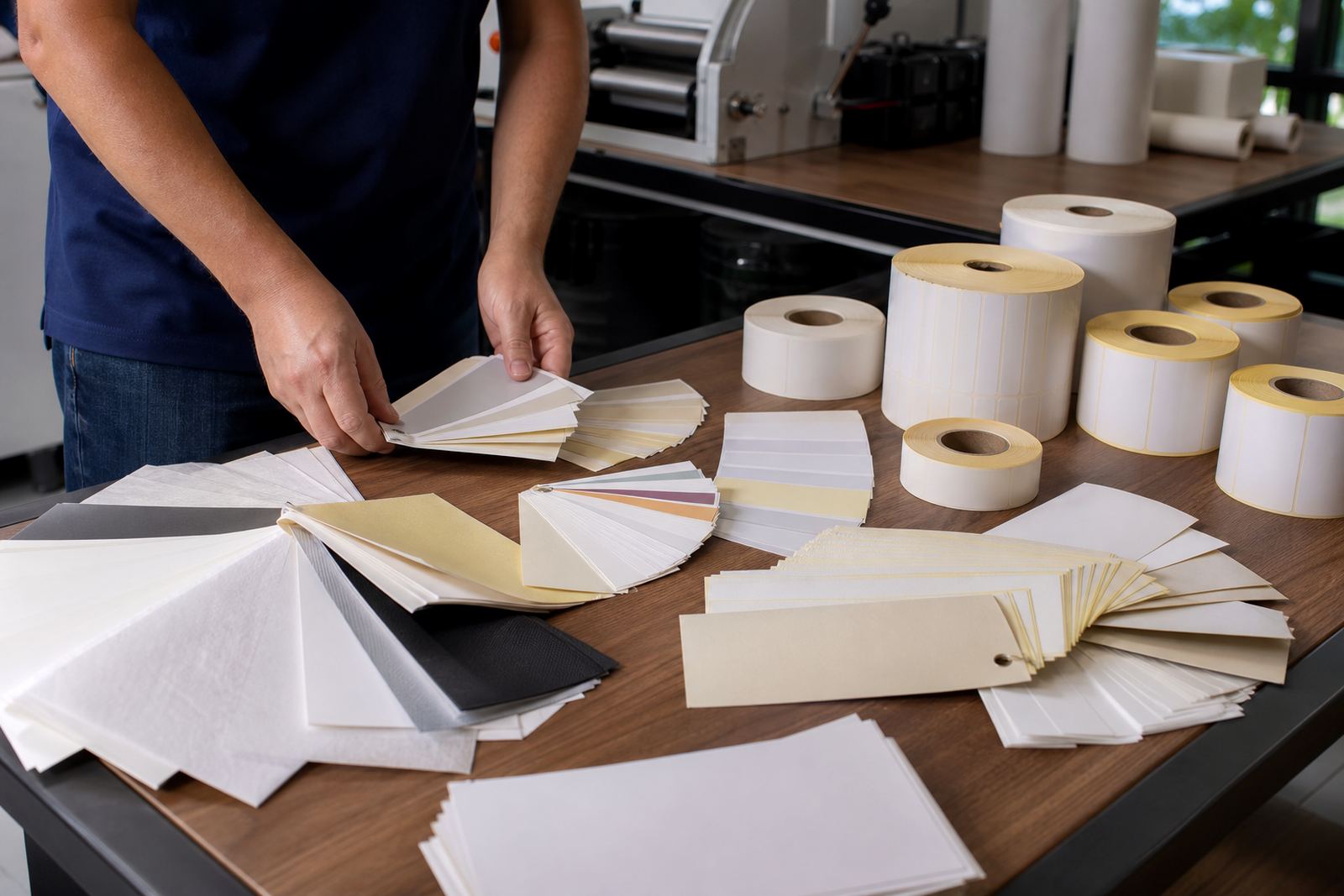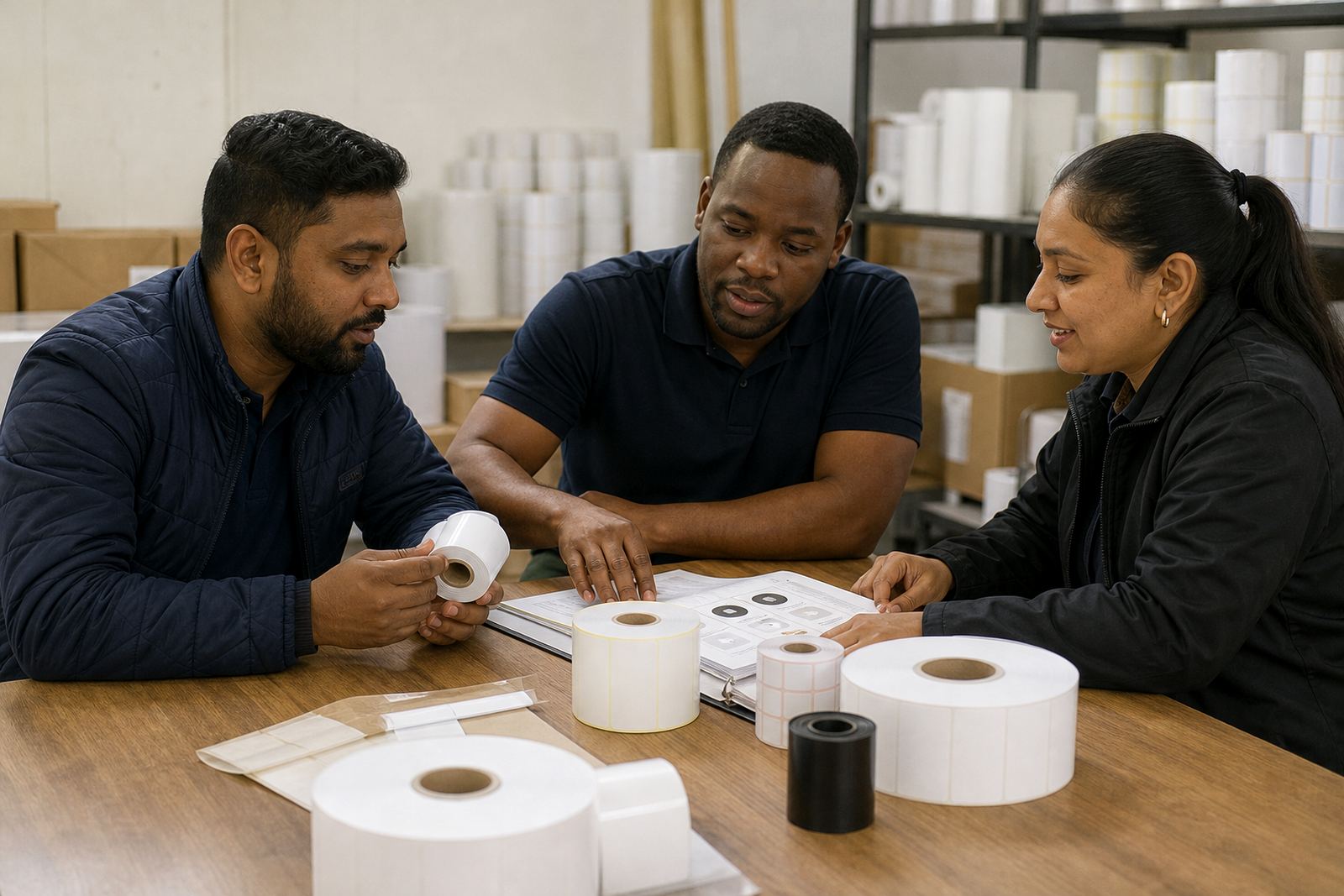
A closer look at what leaves the roll room
Usage Review starts with the way your labels are being used on the floor, in dispatch, and at packing benches. We look at average daily pull, weekly peaks, seasonal lifts, and the kinds of jobs that eat through stock fastest. That includes short run product labels, carton seals, courier labels, shelf strips, coding labels and barcoded dispatch labels.
The discussion is practical. If your site in Westmead or Pinetown is printing more at month end, or your Johannesburg branch burns through direct thermal rolls faster than the others, we work from those numbers rather than guesswork. A few small changes to roll width, length, core size or face stock can make a large difference to how often you stop and reorder.
- Daily and weekly consumption pattern review
- Peak periods, promotions and shift-based use
- Branch-by-branch roll movement checks
- Stockout points and over ordering patterns
Where the waste usually hides
Most overuse does not come from one big mistake. It is usually a mix of wrong roll lengths, labels printed on a stock that tears too easily, adhesive that does not suit the box or pouch, and printer settings that waste a few millimetres on every job. Over a month, that adds up. On coastal routes like Durban, humidity can also affect how labels release from liners and how cartons hold adhesive once packed.
We compare your current consumption against the material being used. That means face stock selection, adhesive type, liner weight, winding direction and printer fit. If a thermal transfer ribbon is being used on a job that could run on direct thermal, or if a direct thermal label is being stored too long in heat, the review will flag it. The goal is not to force a change, only to make the load lighter where it counts.
- Face stock behaviour on cartons, sleeves and bags
- Adhesive hold on chilled, dry and slightly dusty surfaces
- Direct thermal and thermal transfer usage fit
- Printer waste from incorrect gaps, margins or speed settings
The parts of the review we work through
Every Usage Review covers the same core points, but the answer will differ by site. A warehouse in Pietermaritzburg may need longer courier roll runs, while a retail back office in Pretoria may need smaller, more frequent packs with better core control. We also check whether a 25 mm, 40 mm or 76 mm core is better suited to your printer path and holder setup.
The discussion includes label face stock selection, adhesive matching, liner format, roll length planning and winding direction. If you are using benchtop printers, industrial units or hand applied labels, we check that the stock will feed properly and print cleanly. In some cases a slight change in label layout can save time at every pack-out point.
- Core sizes and printer compatibility checks
- Direct thermal versus thermal transfer roll planning
- Label width, length and gap review
- Roll build for manual or machine applied use
How the process runs from first chat to planned supply
We begin with a short discussion about your sites, printer models, label sizes and the jobs that matter most. After that, we look at the past usage pattern and note where stockouts happen, where rolls get left half used, and where some branches draw more than their share. If needed, we ask for a sample roll or a current spec so the review matches the actual setup.
From there, we suggest a supply pattern that suits your operation. That may mean fixed pack quantities, a better roll length, a different liner width, or splitting stock between branches to keep cover in place. The outcome is a practical usage plan, not a complicated report that sits in a drawer.
- Initial discussion and site pattern check
- Review of current labels, rolls and printer setup
- Suggested order pattern and pack sizes
- Optional sample rolls for verification
Turnaround and pricing without the guessing game
Usage Review is priced according to the amount of material checking and planning involved. A single site with one or two printer types takes less work than a multi branch operation moving stock between Durban, Cape Town, Johannesburg and Pretoria. If the review needs sample rolls, relabelling trials or several spec comparisons, that is folded into the quotation before anything is confirmed.
Turnaround depends on how quickly we receive the current usage details and any samples needed for checking. Straightforward reviews move quickly. More detailed planning for mixed packaging lines, chilled storage or different printer types takes longer, but it stays orderly. We do not force the same answer on every customer because the consumption pattern is never the same.
- Pricing based on scope, sites and product mix
- Clear quote before any review work begins
- Faster turnaround for single-site or single-printer setups
- Additional checks only where they add value
Aftercare that keeps the numbers useful
Once the review is done, we keep the supply side aligned with the pattern we identified. If usage changes because of a new SKU, seasonal uplift or a shift in packaging format, we can revisit the numbers and adjust the roll plan. That helps prevent the common problem where stock levels stay on old assumptions while actual demand has moved on.
We also help with repeat order planning, dispatch packing and simple usage review follow ups for branches that want tighter control. If a site starts using labels faster than expected, or if stock is sitting too long in humid storage, we can adjust the pack size or material recommendation. It is a small bit of attention that keeps the line moving and avoids the panic order on a Friday afternoon.
- Follow up on changing consumption patterns
- Repeat order planning for steady stock cover
- Branch level adjustments when demand shifts
- Support for storage, handling and printer fit questions
Key facts
| Service area | Westmead, Pinetown and supply across Durban, Johannesburg, Cape Town, Pretoria and Pietermaritzburg |
|---|---|
| Main focus | Practical review of label and thermal roll consumption to reduce stockouts and over ordering |
| Materials covered | Self-adhesive label face stocks, adhesives, liners, direct thermal rolls and thermal transfer rolls |
| Compatibility checks | Core size, roll length, winding direction and printer fit |
| Typical users | Retail, logistics, packaging and manufacturing operations |
| Support options | Sample rolls, order pattern planning, usage follow up and dispatch packing |