Why the adhesive matters more than the face stock
A label can have the right size, colour and print quality, yet still fail if the adhesive does not suit the pack. In Westmead and across the country we see cartons with dusty board, chilled goods with condensation, smooth PET bottles, waxy plastics, powder-coated drums and corrugated cases that travel a long way in heat. Each surface behaves differently, so adhesive choice is part of the spec, not an afterthought.
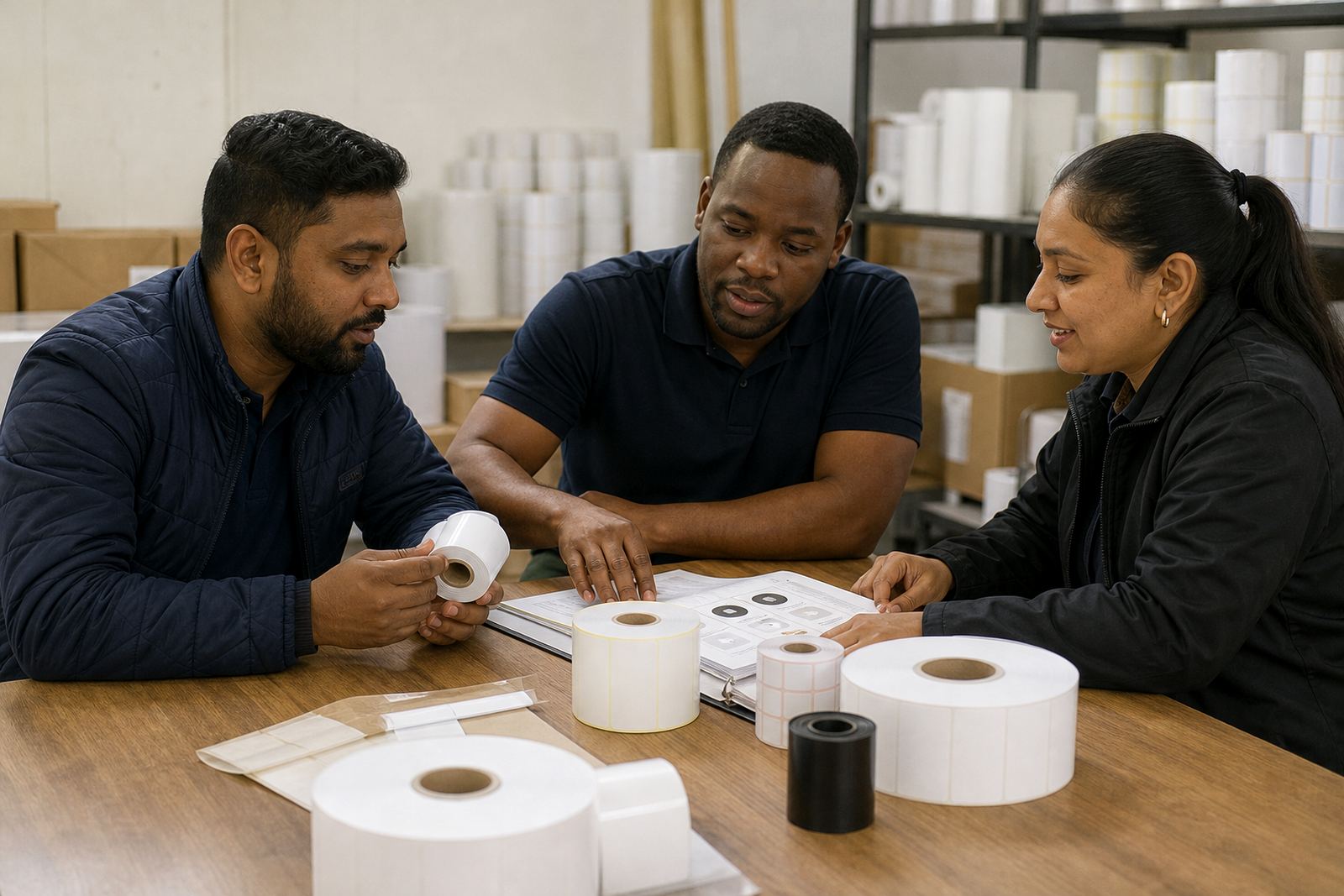
Our adhesive matching service looks at the product, the route it travels, the surface it lands on and the conditions it will face. That includes warehouse dust, forklift handling, municipal storage rules, cold rooms, freezer doors and coastal humidity in places like Durban. We also check whether the label must stay in place for days, weeks or longer, or if it should peel off cleanly at the point of use. A good match saves time at packing, reduces re-labelling and lowers spoilage from labels lifting at the edges.
- Permanent adhesives for long wear on cartons, drums and retail packs
- Removable adhesives for temporary marking and short-term identification
- Cold-use adhesives for chilled and freezer applications
- Options for paper, synthetic and top-coated face stocks
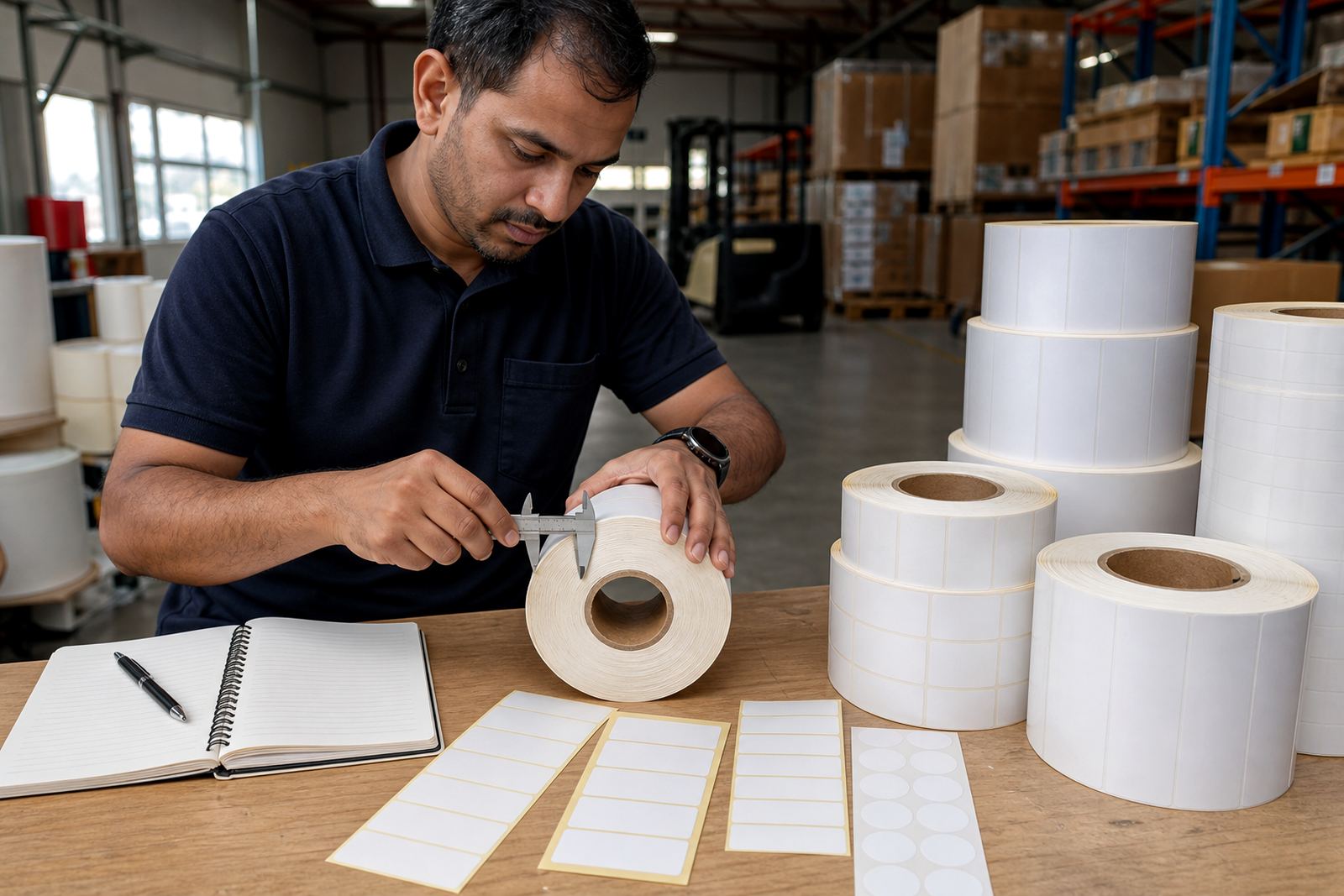
The surface tests we work through before a roll is cut
Matching starts with the surface, because that is where the bond is made. Smooth glass, lacquered packaging, recycled board and low-energy plastics do not hold adhesive in the same way. We ask what the substrate is, whether it is dry or slightly damp, and if the label will face friction, oils, condensation or repeated hand contact. For some jobs, a label must hold on a dusty carton in a hot Johannesburg warehouse. For others, it must stay secure on a chilled tray pack leaving Pietermaritzburg before sunrise.
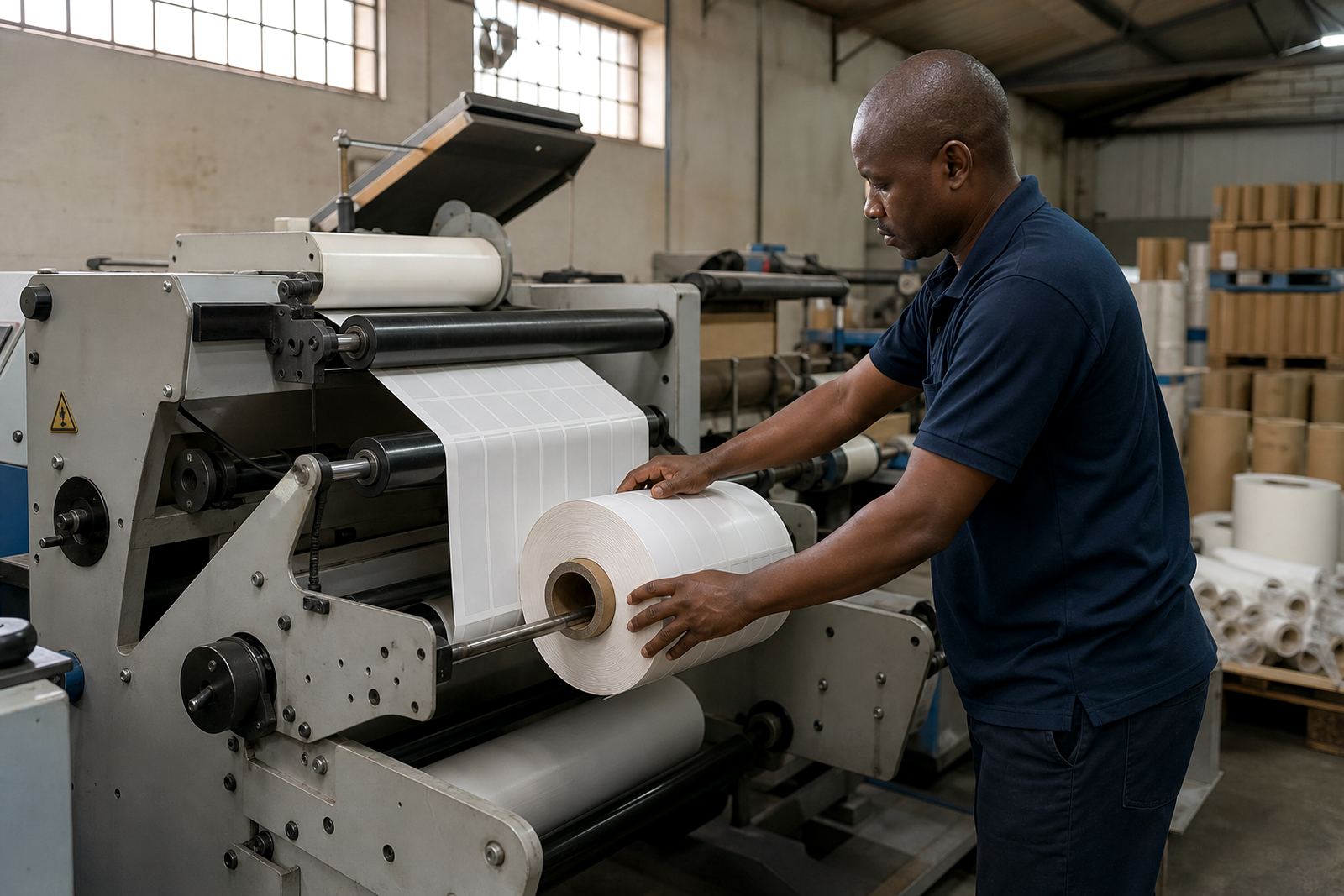
We also look at the print method and application speed. A label used on a hand-applied pack line can use a different tack profile to one dispensed by a high-speed machine. If the label is going through a benchtop printer, tabletop unit or industrial printer, the release liner and roll build must feed cleanly without drag. That is why adhesive matching often sits together with printer fit checks and roll length planning.
- Surface type: board, plastic, glass, metal or coated film
- Temperature at application and during storage
- Exposure to moisture, oils, dust and handling
- Whether the label must remove cleanly or stay fixed
Permanent, removable and cold-use options explained plainly
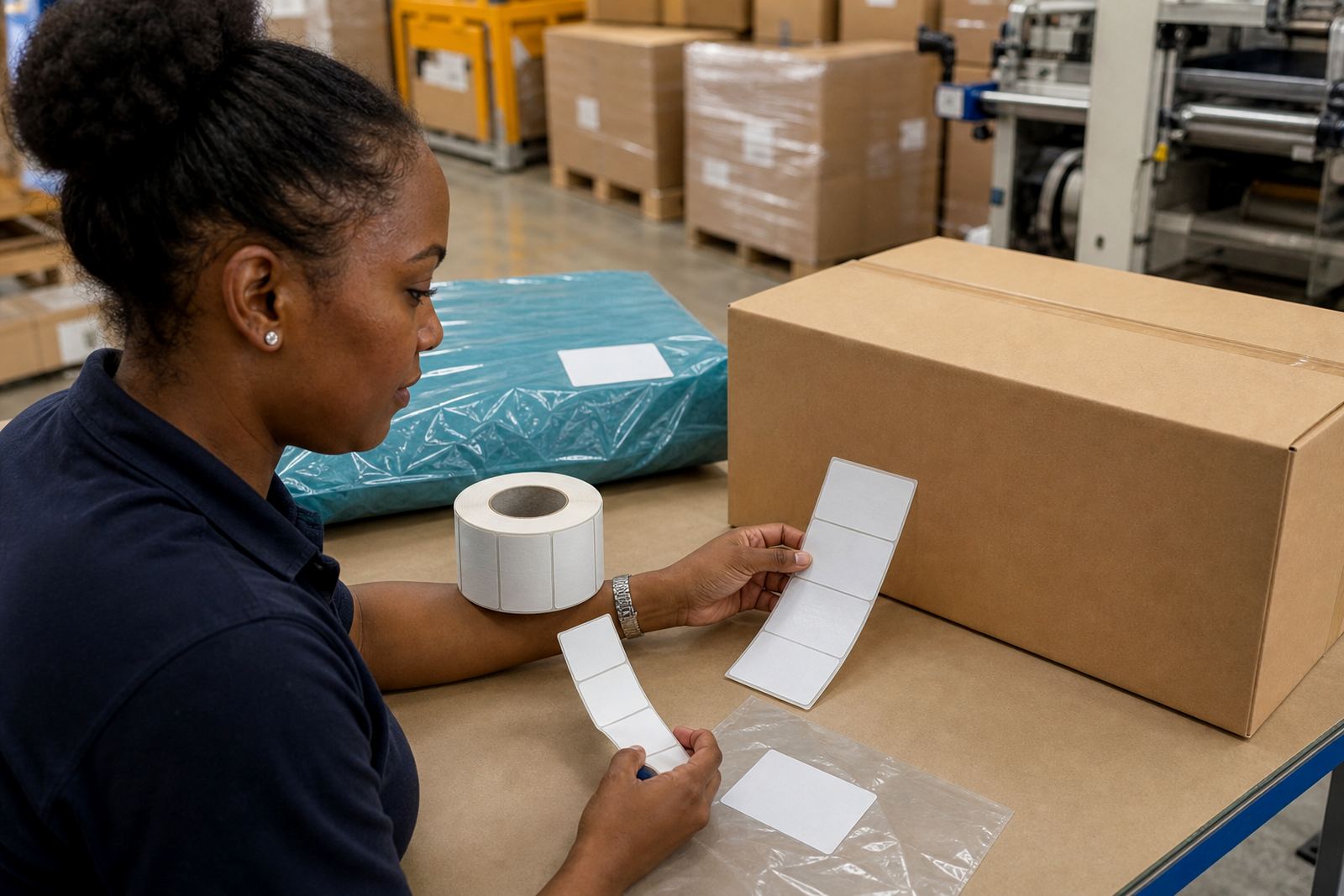
Permanent adhesive is used when the label must stay attached for the life of the pack. It suits shipping labels, product identification, safety marking and most retail cartons. On the right face stock it gives a firm grab and keeps its hold through transit, stacking and general handling. Removable adhesive is better when the label is only needed for a short period, or when a clean peel matters after promotion, internal tracking or temporary bin marking.
Cold-use adhesive is selected for chilled rooms, refrigerated delivery and frozen stock. It is built to bond at lower temperatures than standard adhesives, which matters in South African cold-chain work where labels may be applied in a cold store or on a pack that has already cooled down. Some jobs need a stronger initial tack, while others need lower tack to prevent edge pull on delicate packaging. We match the adhesive to the actual use case, not just the label material.
- Permanent: shipping, compliance and long-term identification
- Removable: temporary marking, promotions and internal stock control
- Cold-use: chilled, refrigerated and freezer conditions
- Special handling: curved packs, recycled board and low-energy plastics
How we handle an adhesive match from enquiry to dispatch
Once the enquiry comes through the contact form, we review the label use, pack type, printing method and the environment it will face. If needed, we suggest sample rolls so the adhesive can be checked on the actual surface before a full run. That step is useful when a client has mixed stock, changing suppliers or a new pack format. For Westmead Supply and Pinetown Supply work, we can often move quickly on local requests, while larger runs for Durban, Johannesburg, Cape Town, Pretoria and Pietermaritzburg are planned to suit the route and dispatch schedule.
The process usually includes face stock selection, adhesive matching, core sizing and winding direction checks. Where a label must print on a specific machine, we also look at printer compatibility, ribbon use for thermal transfer and the required roll diameter. If the job is for direct thermal rolls, we check exposure to heat and sunlight because that print style is better for shorter life uses. Thermal transfer rolls suit more durable print requirements when used with the correct ribbon. Not every pack needs the same setup, so we keep the advice practical and specific.
- Review the pack surface, temperature and handling
- Choose the adhesive class and face stock type
- Confirm printer, core size and roll dimensions
- Provide samples where testing will reduce risk
Turnaround, pricing and what shapes the final cost
Turnaround depends on whether the adhesive is a standard match or whether we need to test more than one option. Straightforward jobs can move fast once the specification is clear, while more involved work may need sample approval before full production. We plan for that early so there is less stopping and starting at your side.
Pricing is based on the adhesive type, face stock, roll width, roll length, core size, quantity and any extra conversion work such as rewinding or custom slitting. A freezer-safe adhesive on a synthetic face stock will usually cost differently from a removable adhesive on paper stock, and a short pilot roll is priced differently from a full production run. We keep pricing tied to the spec, so you pay for the label build that suits the job and not for extras you do not need.
- Standard stock matched to common packaging lines
- Special adhesive builds for chilled or difficult surfaces
- Sample rolls for testing before volume production
- Production pricing shaped by quantity and conversion steps
Aftercare once the labels are on pack
After the order leaves our dispatch team, we stay available to review how the labels are performing on your line. If a label is lifting at the corner, leaving adhesive residue, or gripping too hard for a temporary application, we can revisit the match and adjust the specification. That support is especially useful when the same product is packed in different sites, or when winter and summer conditions change how a label behaves. A pack line in Cape Town with cooler air and coastal moisture can call for a different answer to a site in inland Gauteng.
Aftercare also covers usage review and repeat order planning. When a label performs well, we note the adhesive type, face stock, core size and winding direction so the next order runs the same way. If the product changes, we update the spec before the next run is cut. That keeps production tidy and helps avoid scrap, reprints and slow-downs at the pack bench.
For a clean result, the label must suit the pack, the printer and the environment. That is the part we keep checking, even after the first delivery.
Key facts
| Service area | Westmead, Pinetown and supplying across South Africa including Durban, Johannesburg, Cape Town, Pretoria and Pietermaritzburg |
|---|---|
| Adhesive types | Permanent, removable and cold-use |
| Face stock options | Paper, top-coated paper and synthetic label stocks |
| Roll formats | Custom slit rolls with core sizes to suit label printers and applicators |
| Printer compatibility | Benchtop, tabletop and industrial thermal printers, direct thermal and thermal transfer |
| Support included | Sample rolls, adhesive matching, printer fit checks, usage review and repeat order planning |