When a wide roll must become a usable one
Custom slitting is the conversion of wide master rolls into narrower widths that suit the real job. In label stock, that means taking face material with the right adhesive and liner, then cutting it to the width needed for a carton seal, shelf label, courier label or coding label without wasting material on a roll that is too broad.
We work with self-adhesive label face stocks in paper and film, with permanent, removable or freezer-grade adhesive options where the application calls for it. The liner can be glassine or PET, depending on the release required, and the slit roll has to suit the printer path, unwind direction and core size as well as the finished label width.
- Roll widths cut to customer spec, subject to material and line limits
- Core sizing matched to benchtop, industrial and semi-industrial printers
- Winding direction set for top out, bottom out or side out use
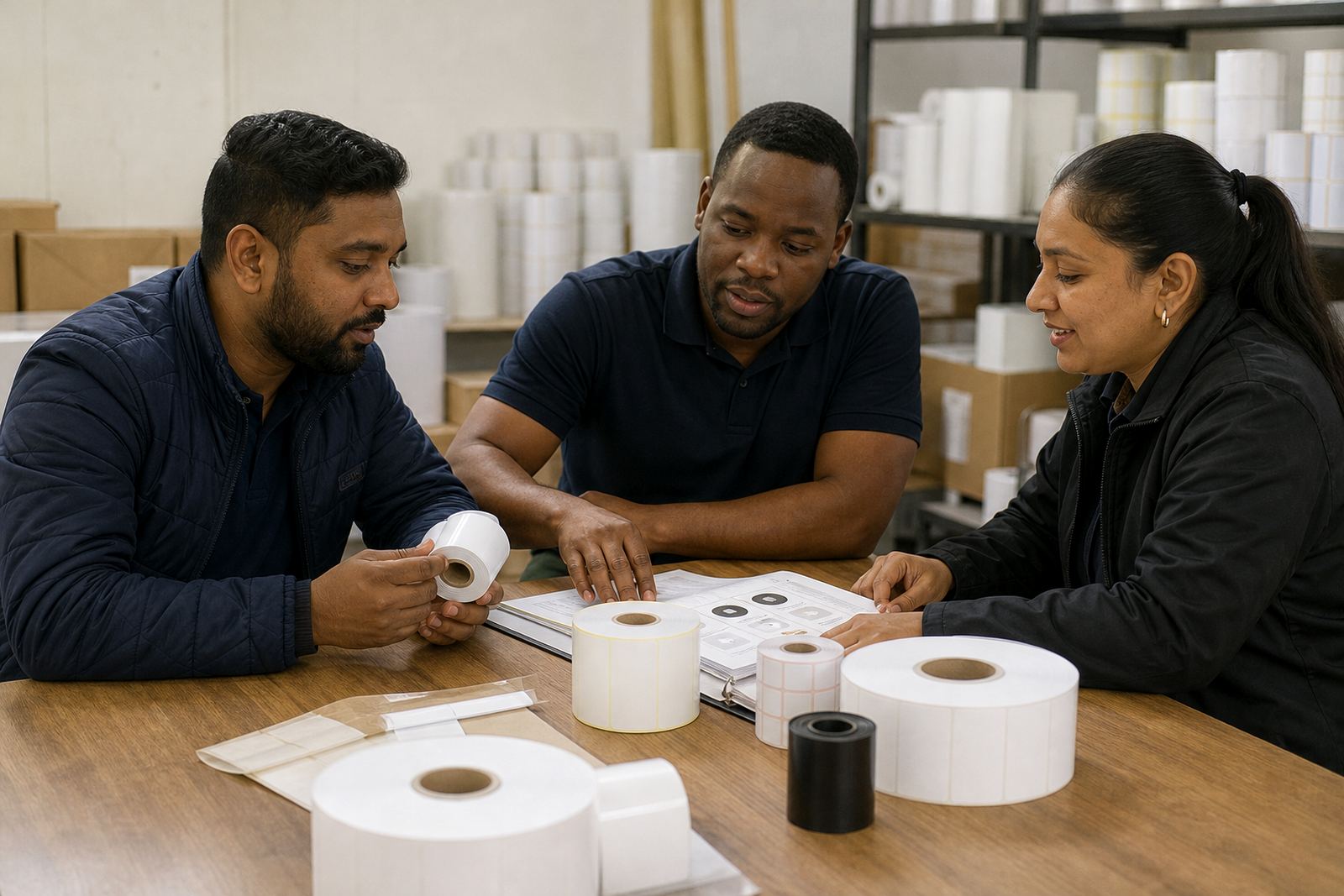
- Sample rolls available before a full run where needed
What the slitting room checks before the blades go in
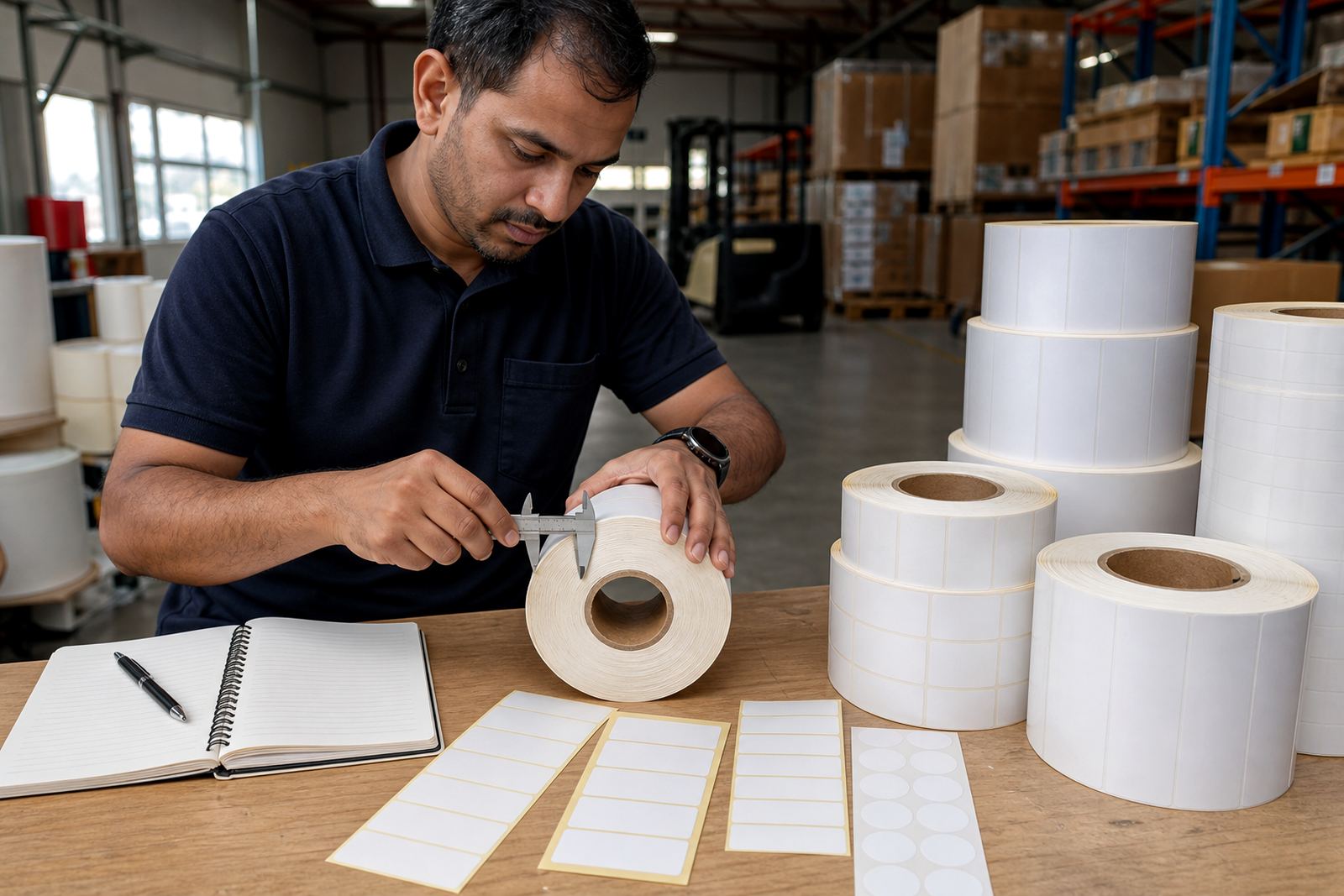
Before any slitting starts, we check the master roll width, outer diameter, liner type, adhesive build and the intended use. A label that will sit on chilled stock in Pietermaritzburg needs different handling from a short-run retail roll going into a warehouse in Johannesburg, and coastal humidity in Durban can also influence how the material is packed and stored.
We also confirm the practical limits of the printer. Some machines take 25 mm cores, others need 40 mm or 76 mm cores, and the unwind has to feed cleanly or the roll can snag during printing. If the roll length is too long for the printer chamber or too tight for the unwind spindle, the job becomes troublesome and wasteful.
- Face stock selection for paper, vellum, polypropylene or polyester type uses
- Adhesive matching for cartons, bottles, pouches and cold-room packs
- Core sizes checked against the customer printer fit
- Roll length planned to avoid oversized rolls that do not print well
How the conversion is carried out
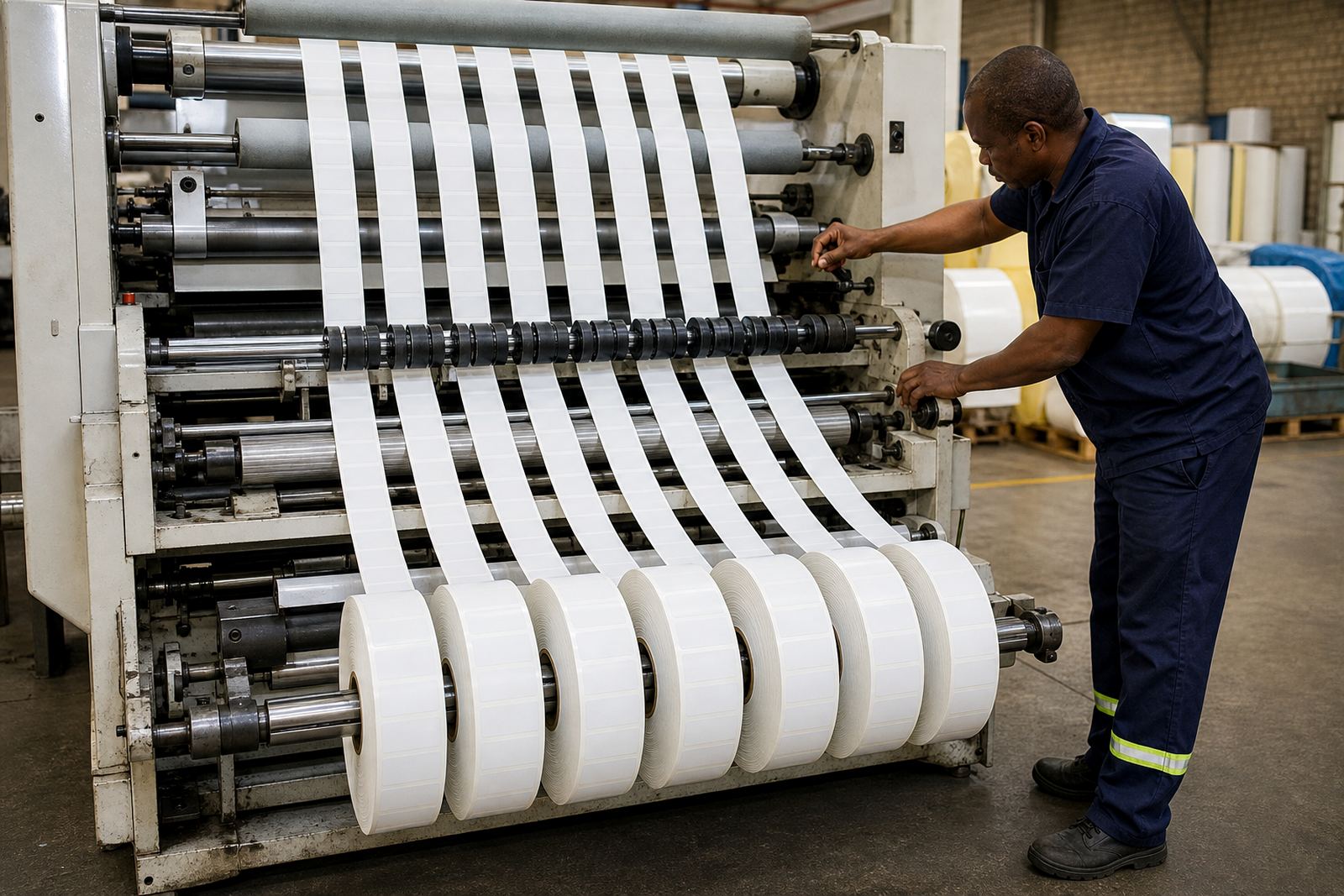
The process begins with the order detail and the material spec. We confirm the finished width, the number of rolls, the required core size and the winding direction. After that, the master material is mounted, tension is set, and the slitting knives are positioned so the edges stay clean and the roll winds evenly.
During conversion, the goal is consistency. A crooked edge or uneven tension can cause telescoping, edge crush or poor feeding on the printer. We keep the rolls aligned, trim where needed, and rewind so the finished product is neat enough for dispatch and practical in use, not just neat on the pallet.
- Set-up and verification of width, length and core size
- Slitting, rewinding and edge checking during the run
- Pack-out that protects the roll face and the liner edge
- Dispatch planning for single sites or multi-site delivery
Widths, rolls and printer fit that actually work
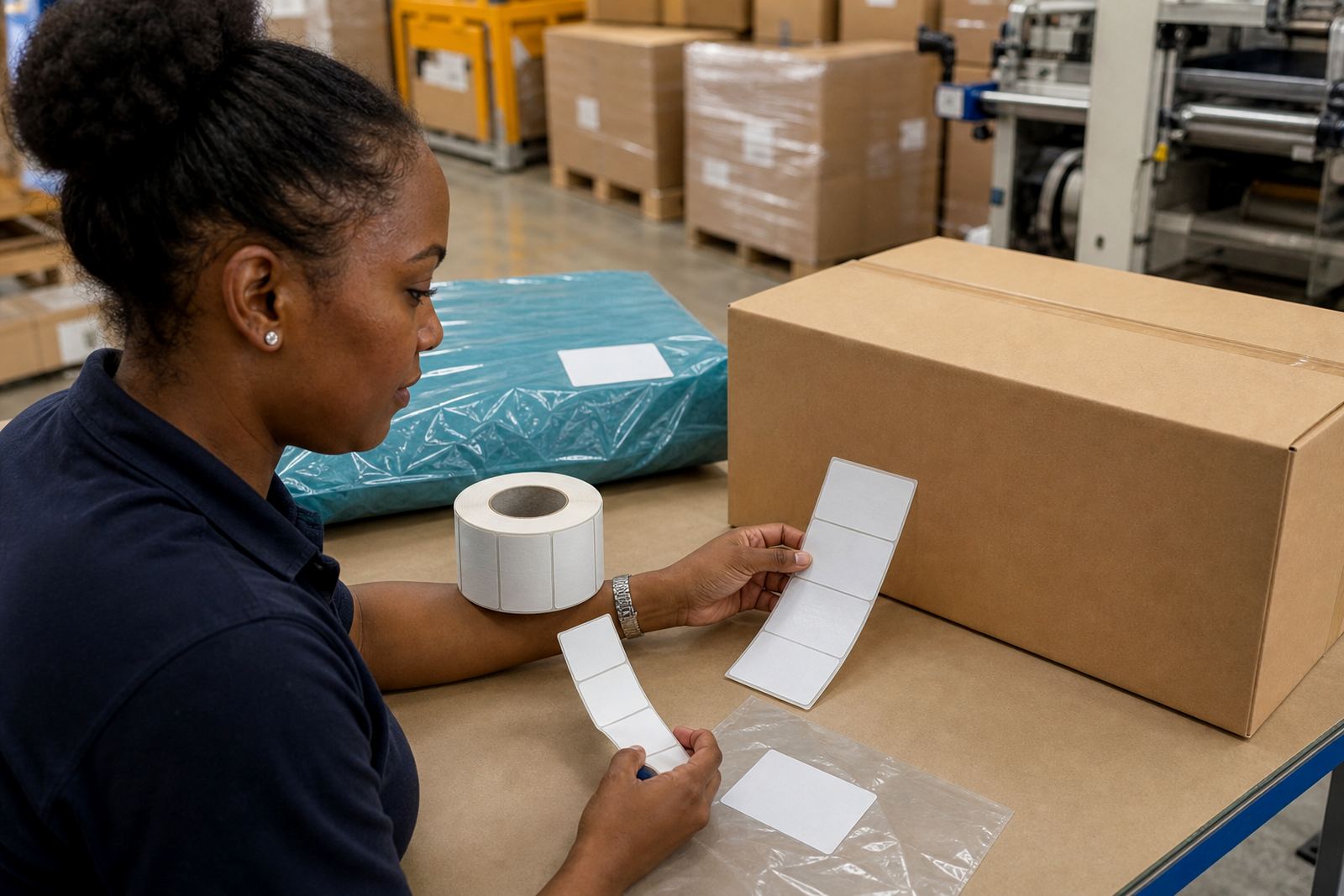
Not every label width suits every printer or application. A narrow roll may be ideal for pricing labels or small pack seals, while a wider roll suits shipping labels, bin labels or product information labels. We plan the slit width against the machine path so the roll feeds properly and the print stays in the usable area.
Where clients use direct thermal rolls, the face stock is coated for heat-sensitive printing and does not need a ribbon. Thermal transfer rolls use a compatible face material together with a ribbon, which is better for longer-life labels, handling and some exposed storage conditions. In either case, the slit width and core must match the printer. A roll that is technically correct but not printer-ready is no help.
- Direct thermal rolls for short life labels and high-volume dispatch
- Thermal transfer rolls for longer durability and better resistance
- Finished widths planned around label artwork and application method
- Core and outer diameter checked for feed stability
Turnaround, pricing and order planning
Turnaround depends on the material on hand, the number of widths required and whether the job needs sample confirmation first. Smaller slit runs can move quickly, while larger or mixed-width orders need more setup and more careful roll planning. We keep the timing realistic so the pack line does not sit waiting for labels.
Pricing is based on the material type, slit width count, total metres, core size, winding direction and any extra handling such as rewinding or sample rolls. If an order needs special packing for a humid coastal route, or tighter wrap for long-distance freight, that is also factored in. We quote on the real job, not on guesswork, which keeps the process fair and clear.
- Costs driven by width count, roll length and handling complexity
- Quote structure suited to scheduled reorders and single conversion jobs
- Roll lengths planned to reduce waste and unnecessary changeovers
- Delivery to Westmead, Durban, Johannesburg, Cape Town, Pretoria and Pietermaritzburg
Aftercare once the slit rolls leave Westmead
Once the rolls are packed, we stay available for usage review, repeat order planning and changes to core sizing or winding direction. If a printer starts feeding differently, or the pack line shifts to a new label size, we can review the previous spec and adjust the next slit run so the order suits the new setup.
We also help with adhesive matching and face stock selection when the application changes, such as moving from dry warehouse packs to chilled goods or from shelf marking to shipping. A small change in stock, adhesive or roll length can prevent jams, misfeeds and wastage later on, so it pays to review the set-up before the next batch.
- Scheduled reorders matched to the last approved spec
- Usage review when the printer, line speed or packaging changes
- Sample rolls for new widths before full conversion
- Dispatch packing suited to local courier movement and warehouse handling
Key facts
| Service area | Westmead, Pinetown and South Africa-wide supply |
|---|---|
| Material types | Paper, vellum, polypropylene and polyester label face stocks |
| Adhesives | Permanent, removable and freezer-grade options where suitable |
| Liner options | Glassine and PET liner types |
| Core sizes | Common 25 mm, 40 mm and 76 mm cores, subject to machine fit |
| Roll formats | Custom slit rolls, rewound rolls and sample rolls |