When the label must leave the roll the right way up
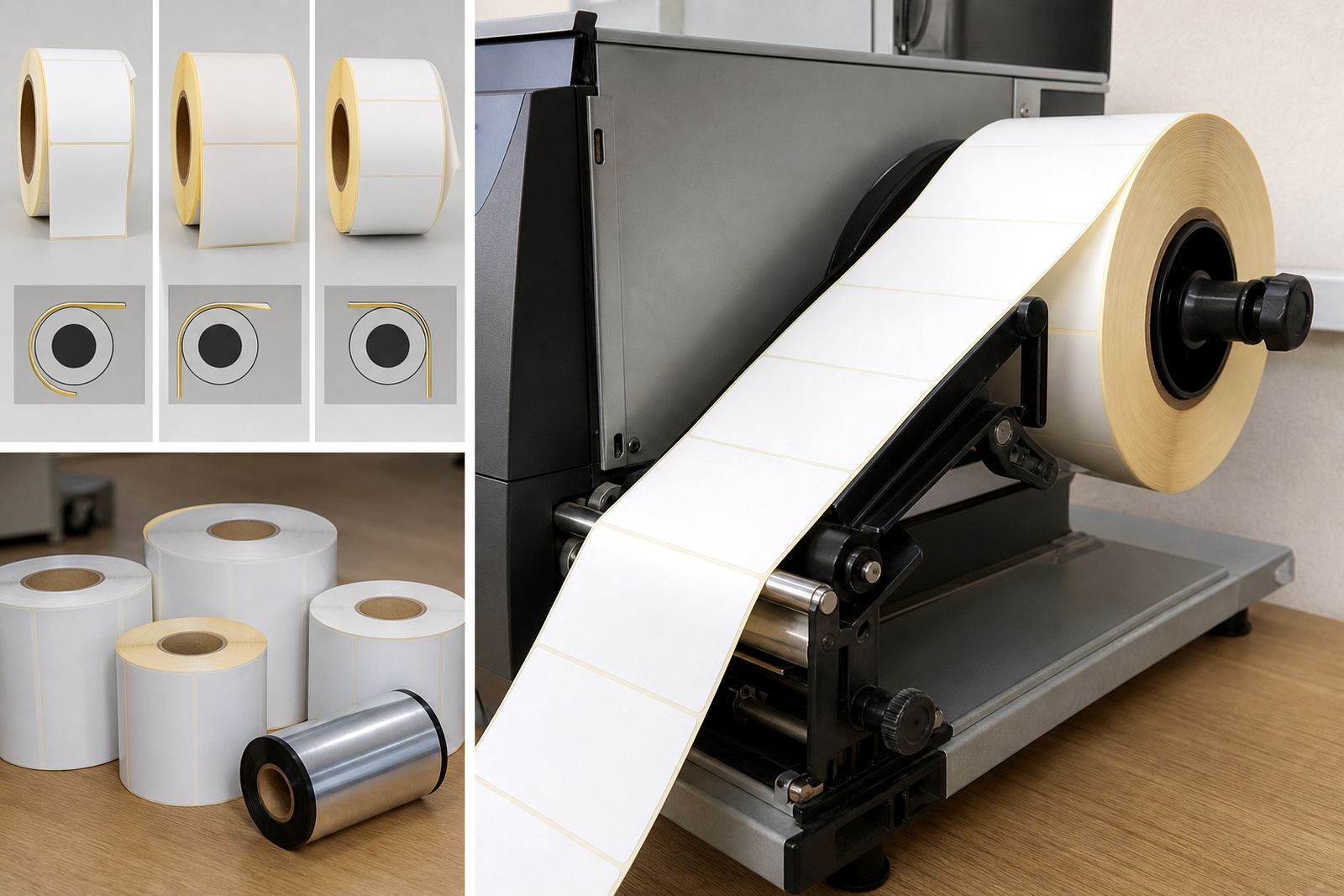
Winding direction decides which side of the roll faces out, how the label starts, and whether the leading edge feeds cleanly into the printer or applicator. For self-adhesive label stock, that means matching the face stock, adhesive and liner to the way your equipment peels and presents each label. A roll wound the wrong way can cause skipped labels, sensor issues, torn corners or a stop-start feed that slows packing during peak shifts.
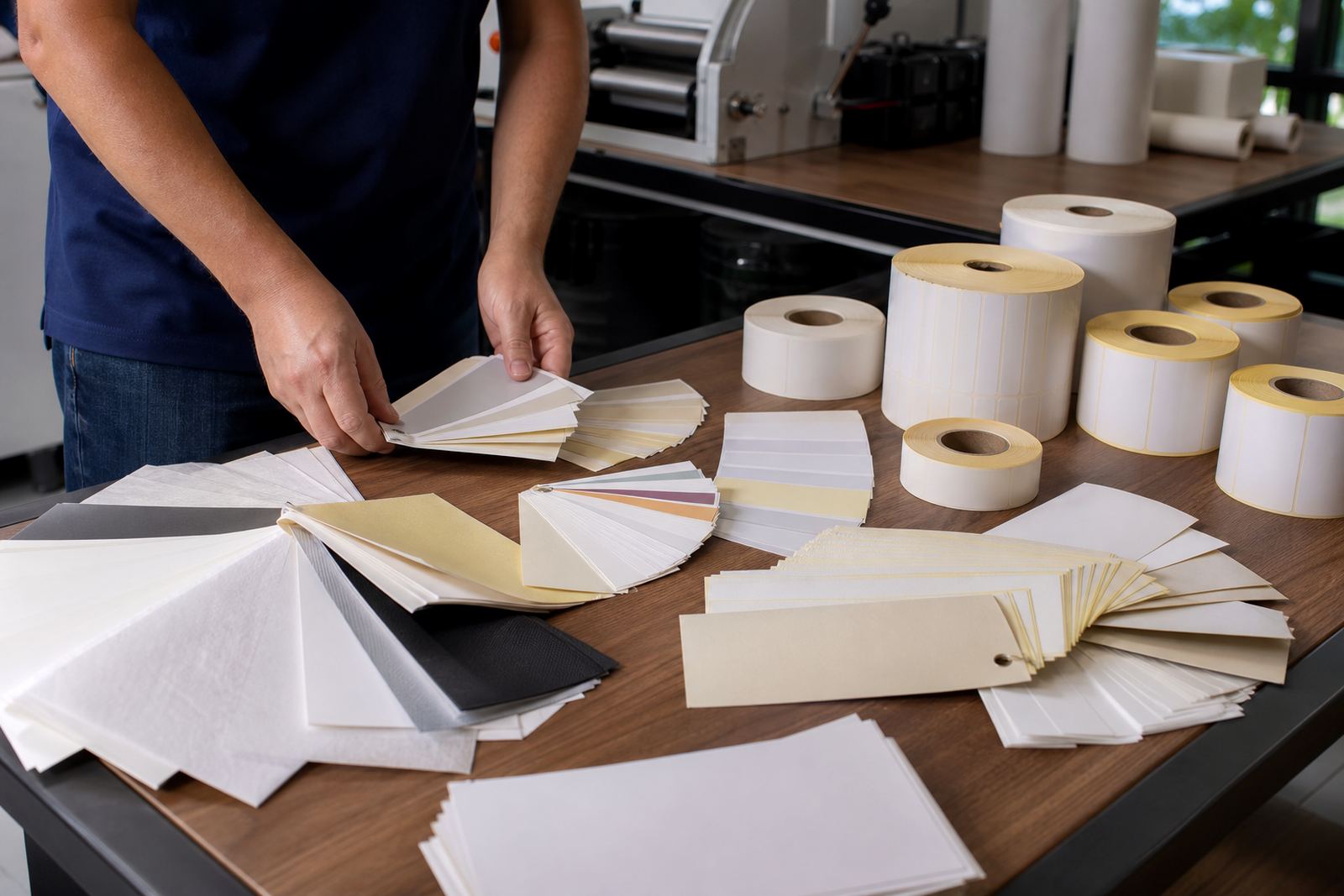
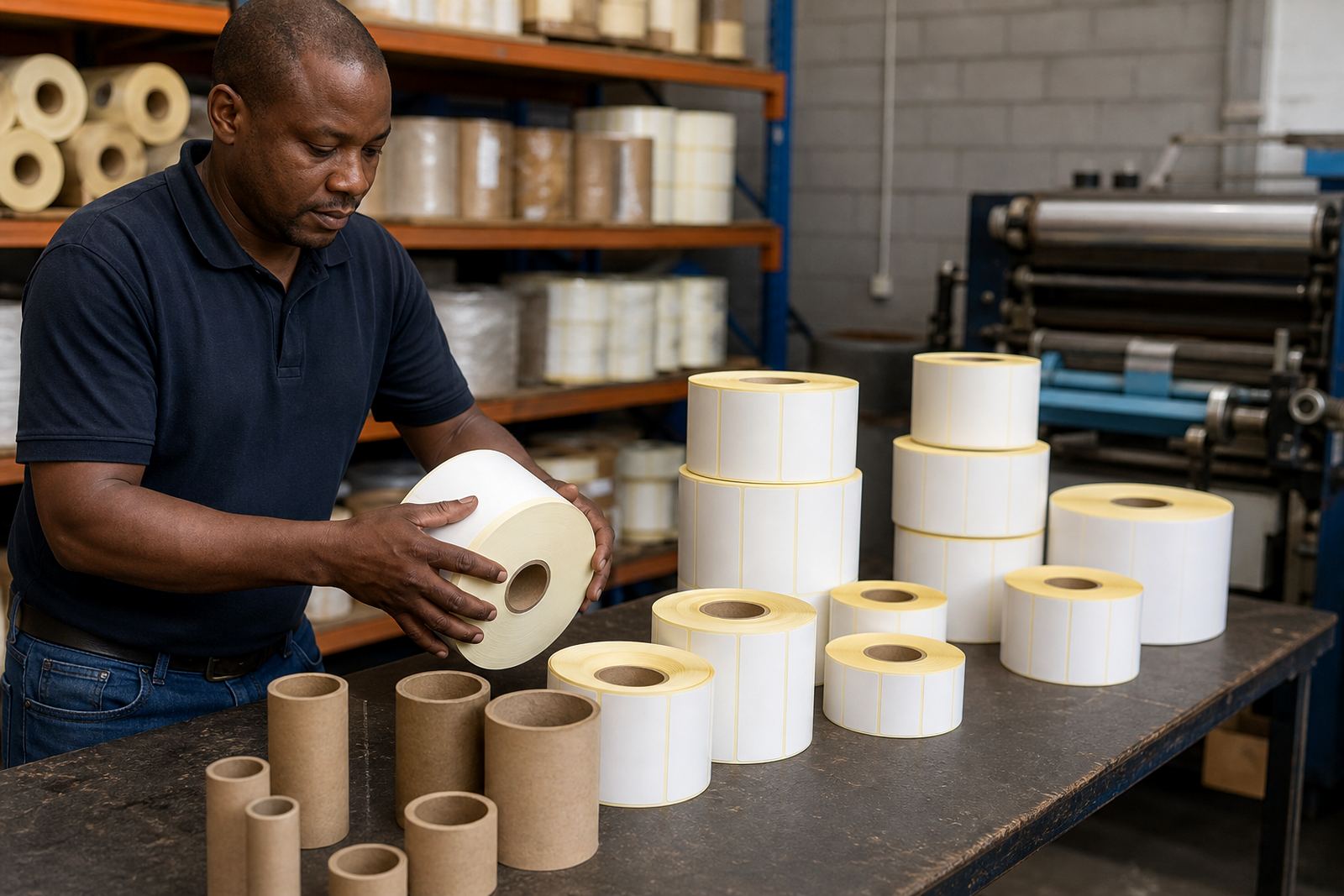
We work with roll formats used across packaging, retail, logistics and manufacturing. That includes plain paper face stocks, synthetic face stocks for moisture or scuff resistance, permanent and removable adhesives, and glassine or PET liners. The winding direction is set together with roll length, core size and label layout so the roll runs the way your machine expects, not the way the paper happens to land.
- Top wound or bottom wound orientation
- Label facing in or facing out, based on feed path
- Single-row and multi-row label layouts
- Core sizes from common 25 mm, 40 mm and 76 mm options
What we check before we set the wound side
Every job starts with the equipment, not the roll. Some benchtop and industrial printers unwind from the top, while others need the label face to enter from the underside. Applicators can be even more particular, especially where the leading edge must peel at a fixed angle or the liner must run with a certain curl. If the wrong winding is used, the applicator may miss the label edge or the sensor may not register the gap cleanly.
We check the printer make-up in practical terms: core diameter, roll outer diameter, gap or black mark sensing, unwind direction, label width, and whether the roll must travel left-to-right or right-to-left through the feed. For thermal rolls, we also confirm if the stock is direct thermal or thermal transfer, because the ribbon path and print side can change what winding is suitable. It sounds fussy, but it saves a great deal of waste later on.
- Printer feed path and sensor position
- Applicator peel plate orientation
- Roll diameter limits for the machine tray
- Label gap, black mark or continuous material
How the roll is built around your line
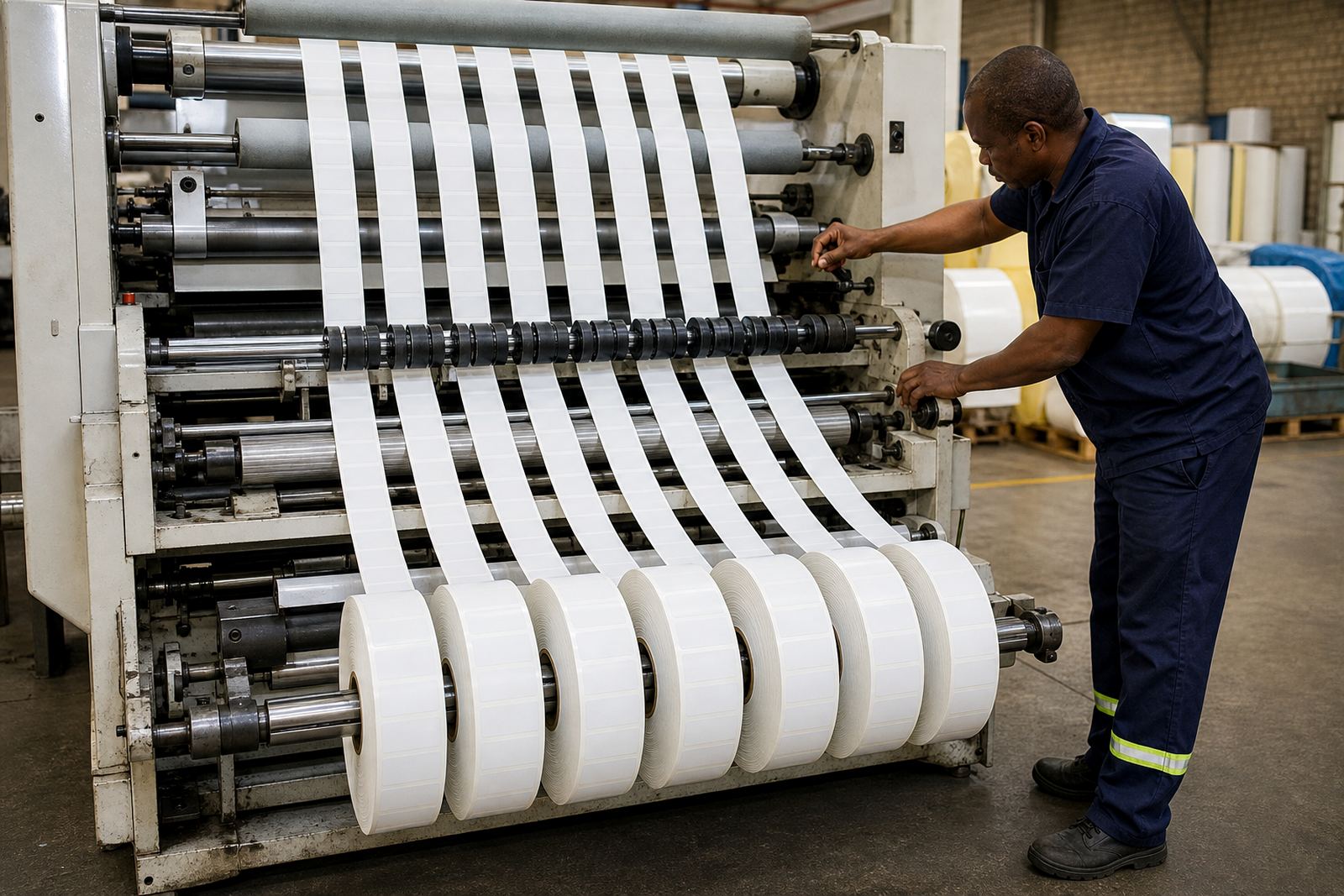
Winding direction is part of the full conversion spec. We plan the roll so the labels unwind smoothly, the liner stays under tension, and the outer edge does not telescope or loosen in transit. For hotter inland conditions, a tighter and neater wind can help avoid edge lift in storage. In coastal areas like Durban, where humidity is higher, correct winding and packing help the roll hold its shape better during handling.
We can set the winding to suit face stock and adhesive pairing as well. For example, a permanent adhesive on coated paper may behave differently to a removable adhesive on a synthetic face stock, and that affects peel and presentation. If the roll will be used on variable data printers, coding units or wrap applicators, we plan the unwind direction with the actual use in mind, not just the drawing on paper. The result is a roll that behaves properly in the pack line and not after the carton has already been opened.
- Matching unwind to left hand or right hand feed paths
- Roll build for cartons, trays and dispenser use
- Slip-resistant packing for dispatch across South Africa
- Support for low-volume sample rolls and production runs
From sample roll to full production run
We usually start with a sample roll or a small test batch when the application is new, or when a site changes printer model, applicator head or label size. That gives you a chance to check print position, peel action, label release and feed smoothness before a larger run is released. If the sample shows a need for a different unwind direction, we adjust it before the full order is planned.
For scheduled reorders, we keep winding direction on record so future production stays consistent. This helps where different branches receive stock, or where one site in Pinetown prints the labels and another site in Johannesburg applies them. Consistency matters when several teams are involved and the pack line cannot afford confusion. A small note on the spec sheet can prevent a lot of rework, and yes the wrong way round still happens more often than people think.
- Sample roll confirmation
- Trial on your printer or applicator
- Spec sign-off before bulk conversion
- Repeat order matching for steady supply
Turnaround and pricing without the guesswork
Turnaround depends on the stock type, roll size and conversion steps required. A standard winding direction change on an existing specification is usually straightforward, while a fresh setup with new core sizing, slitting or adhesive matching takes longer. We plan production in a practical queue so urgent packing needs can be handled without rushing the finish.
Pricing is based on what the job actually needs: base material, adhesive, liner, roll length, core size, winding direction, and whether the order includes sample rolls or printer fit checks. If a roll needs a tighter build for a specific machine or a special unwind for applicators, that is factored into the quote. We do not load the price with extras that do not affect the result, and we will tell you where a simpler spec can meet the same job.
- Quoted according to material and conversion steps
- Lead time linked to stock availability and production load
- Clear costing for sample and production quantities
- Dispatch planning for Durban, Cape Town, Pretoria and beyond
Aftercare once the rolls land on site
After dispatch, we stay available to check how the rolls are running in your line. If the first carton shows any feed issue, the usual causes are winding direction, sensor setting, core fit or a tension change in the printer. We can talk through the symptoms and compare them to the original spec before you waste a second batch. That is often enough to correct the setup fast.
We also help with usage review for sites that run different label types across departments. A small change in winding can be useful when moving from one applicator to another, or when a business adds a new printer with a different unwind requirement. If the roll is for retail shelf labels, logistics cartons, or coded production labels, we keep the notes together so the next batch arrives the same way. It keeps things tidy, which is exactly what a label should do.
- Support on feed, peel and print position questions
- Record of the final winding direction used
- Help when changing printer or applicator models
- Ongoing repeat order planning from Westmead, Pinetown
Key facts
| Service | Winding Direction |
|---|---|
| Roll types | Self-adhesive labels and thermal rolls |
| Orientation options | Top wound, bottom wound, face in, face out |
| Core sizes | Common 25 mm, 40 mm and 76 mm cores |
| Compatible equipment | Benchtop printers, industrial printers, applicators and coding lines |
| Supply area | South Africa, including Durban, Johannesburg, Cape Town, Pretoria and Pietermaritzburg |