A small run that answers the big questions
Sample rolls are for the stage where you need proof, not guesswork. A short trial quantity lets you check whether the face stock suits the job, whether the adhesive grips properly, and whether the roll feeds cleanly through your printer or applicator. That matters when a carton is moving through a busy store room, a cold room, or a production line that cannot stop for rework.
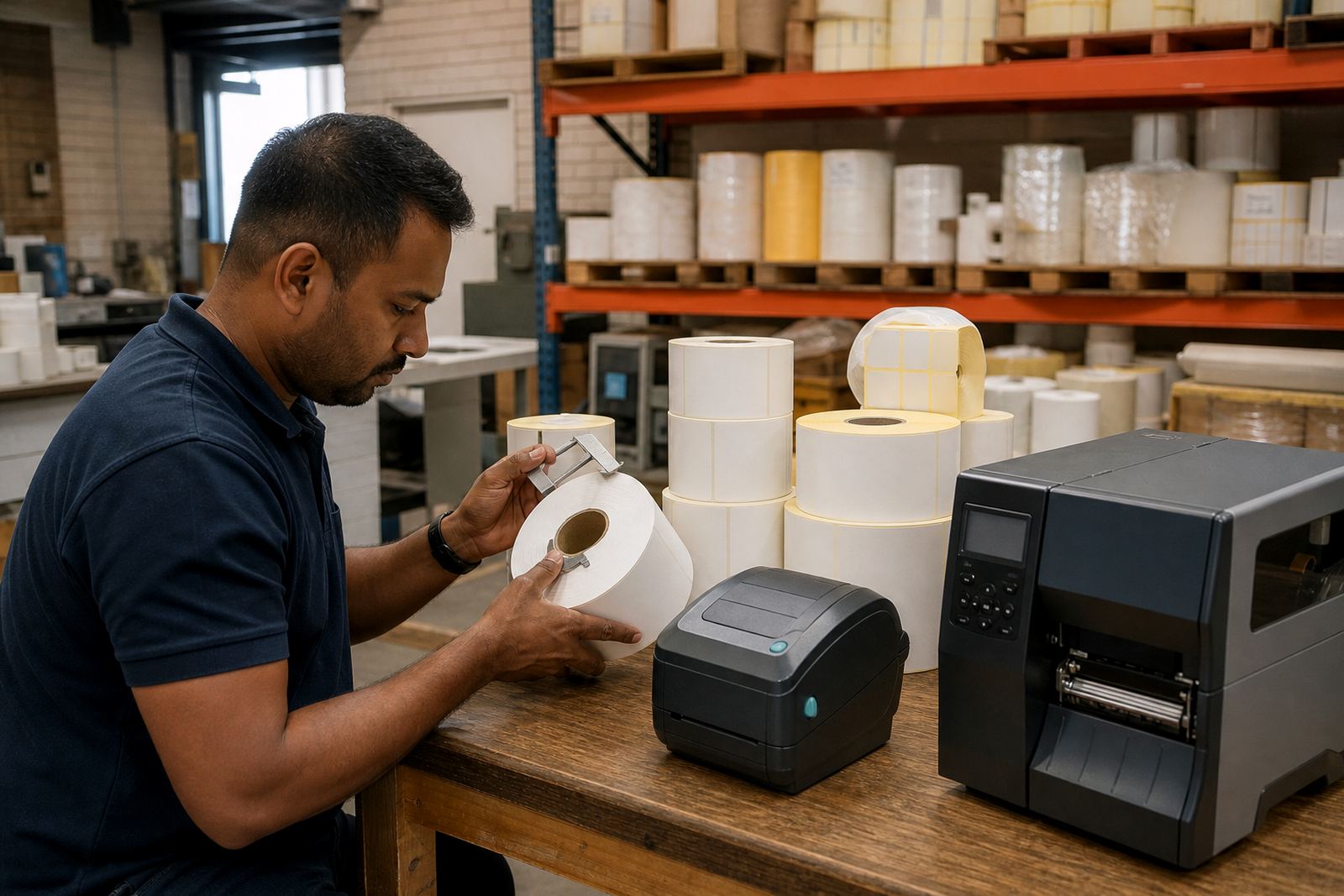
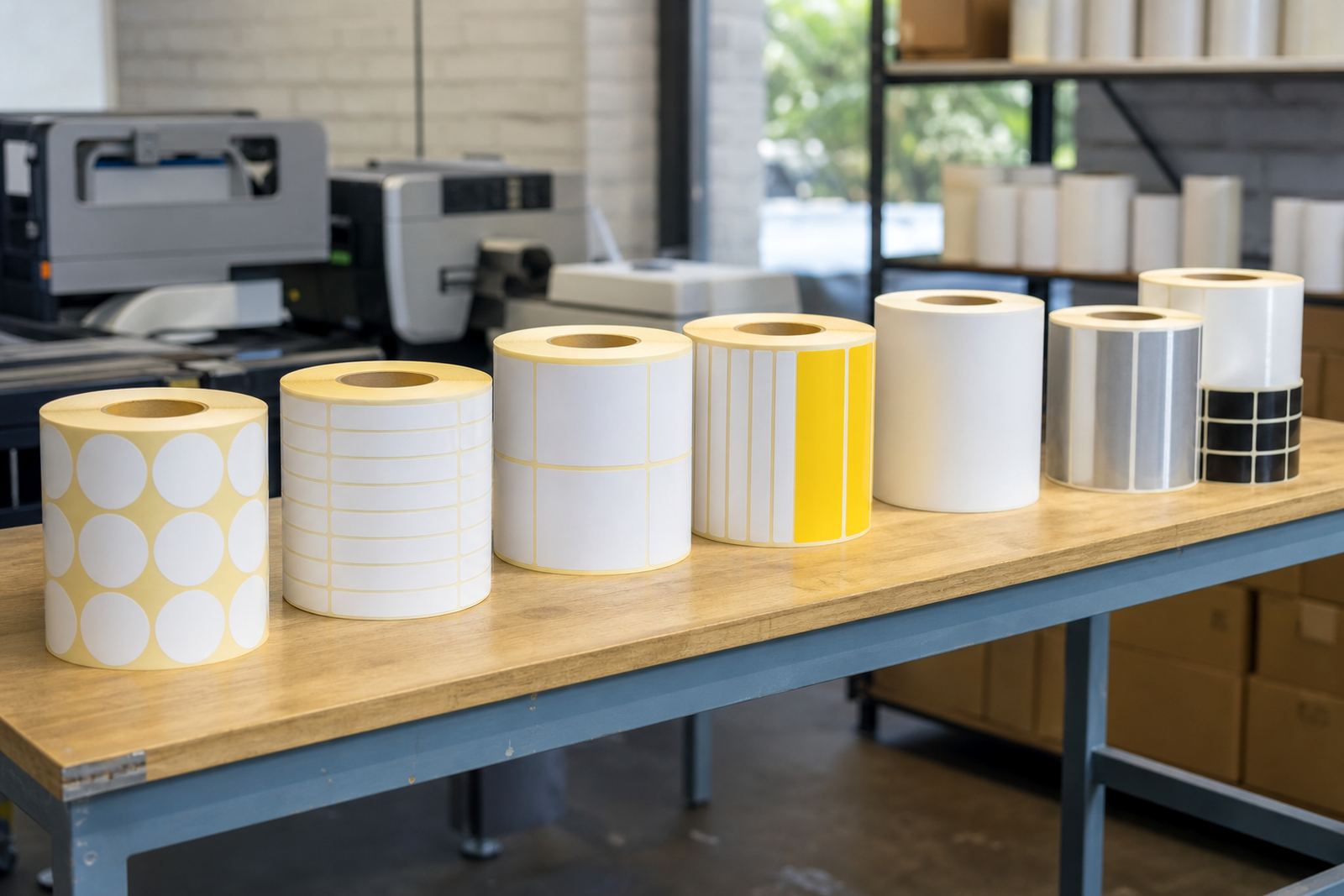
We prepare sample rolls for self-adhesive labels and thermal rolls in practical lengths and widths, usually on the same core size and winding direction that will be used on the full order. If you are testing labels for retail packs, barcodes, shipping marks or batch coding, the sample is set up to show how the material behaves in real use, not just how it looks on a table.
- Trial quantities for one or more label constructions
- Suitable for print, peel and application testing
- Useful before new product launches or machine changeovers
What is checked before the roll leaves Westmead
Each sample roll is prepared with the purpose of checking compatibility. We look at face stock selection, adhesive type, liner release and the roll build so that the trial reflects the final supply as closely as possible. For thermal rolls, we can set up direct thermal stock for short life print use or thermal transfer stock where a ribbon is needed for tougher print performance.
This is the point where many teams catch avoidable problems, such as a label that peels on curved containers, a thermal image that fades after heat exposure, or a roll that runs too tightly on a compact printer. A small sample helps you see those issues before a full production run goes out the door.
- Face stocks can be paper, synthetic or other label facings suited to the application
- Adhesives can be matched for permanent, removable or freezer type use
- Linings can be tested for release, feed consistency and die cut clean up
How the sample order is put together
We start with the job details you send through the enquiry form on our contact page. That includes the product surface, print method, label size, core size, winding direction and whether the roll must suit a benchtop printer, a semi industrial unit or an applicator. From there we put together a sample that gives you a proper reading of how the material will behave.
If needed, we can also plan more than one sample roll so you can compare options side by side. For example, one face stock may suit packaging better while another gives cleaner print contrast for logistics scanning. The same goes for adhesives, because what holds on corrugated board may not be the best fit for chilled packs or powder coated cartons.
- Confirm the label size, roll diameter and core diameter
- Choose the print method: direct thermal or thermal transfer
- Set the winding direction to suit your printer or dispenser
- Pack the samples so they travel well to Durban, Gauteng or coastal sites
Typical specs for sample rolls
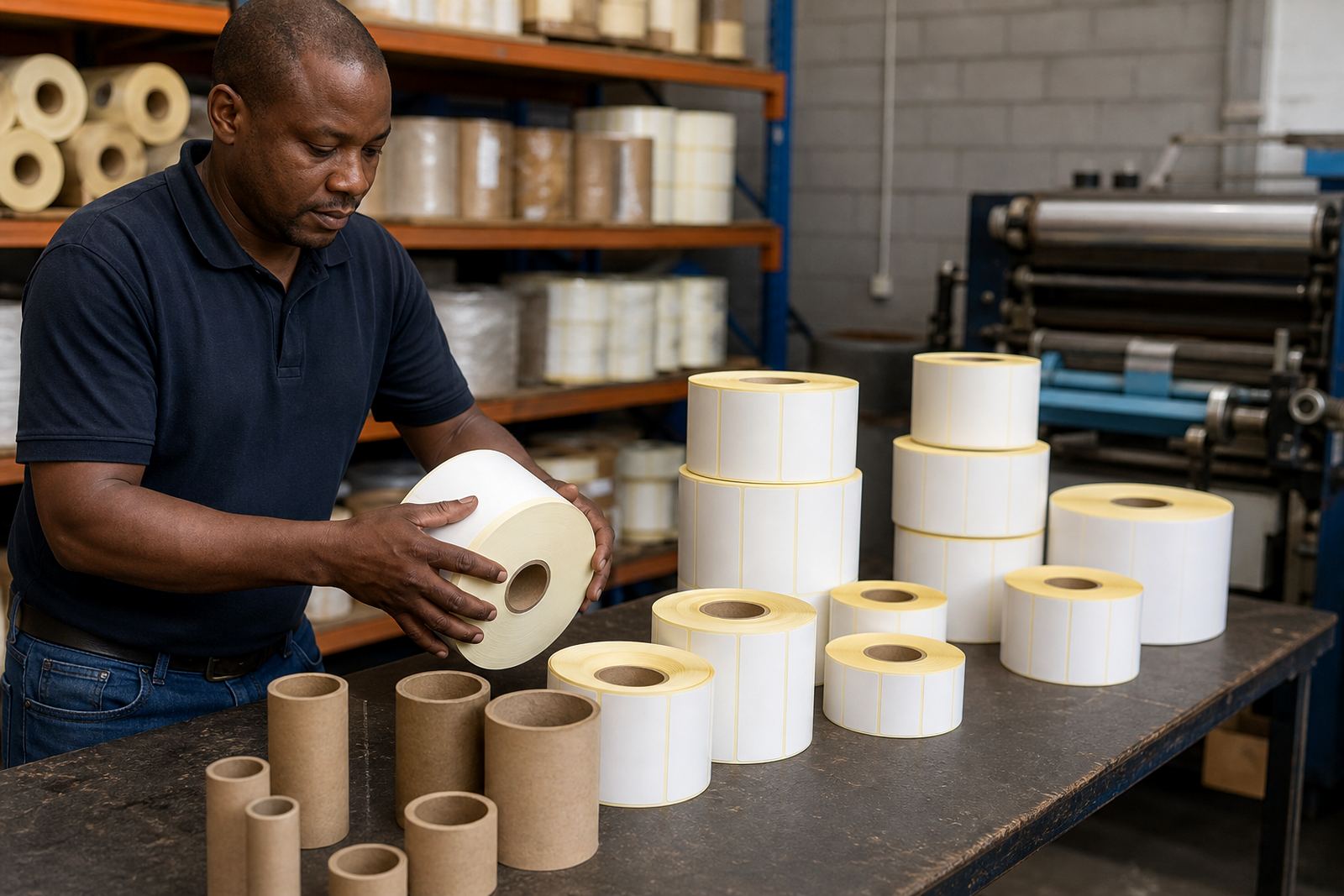
Sample rolls are usually supplied in practical trial lengths so you can run enough tests without carrying excess stock. We can supply narrow or wider formats depending on the application, and core sizing is matched where possible to the printer model or holder you use. For many label printers, the common cores are 25 mm and 40 mm, while larger industrial equipment may need a different fit.
Direct thermal sample rolls are useful for short term labels, shipping marks and retail printing where speed matters. Thermal transfer samples are better when you need the printed image to withstand handling, scuffing, sunlight or moisture. In both cases, the aim is to check feed, print density and adhesion under the actual site conditions you work in, whether that is a warm warehouse in Pinetown or a humid dispatch area near the coast.
- Widths can be matched to the label size and printer path
- Core sizes can be adjusted to suit benchtop and industrial printers
- Length is planned for a meaningful trial without excess waste
Turnaround, packing and dispatch planning
Sample rolls are handled as a quick-turn job because they are often needed before a larger purchase or machine change. Once the details are confirmed, we schedule the preparation, check the roll build and pack for transport so the sample arrives ready to test. If your site has receiving rules, pallet limits or dispatch cut-off times, we work around those where possible.
For customers outside KwaZulu-Natal, sample rolls can be sent to Johannesburg, Cape Town, Pretoria, Pietermaritzburg and other centres through normal courier channels.
- Prepared for quick trial use and practical testing
- Packed to reduce damage during courier transport
- Can be grouped with other label stock samples if needed
Pricing approach and what happens after the trial
Sample rolls are priced according to the material type, the amount required, the number of options being tested and any special setup such as core sizing or winding direction changes. Where the trial is straightforward, the cost stays lean. Where you need multiple constructions for comparison, the quote reflects the extra preparation involved. We do not load the price with unnecessary extras.
After the trial, we go through the results with you so the next order is based on actual use, not theory. If a label lifted on a chilled carton, we look at the adhesive. If print was too light, we look at the face stock and thermal settings. If the roll fed badly, we check the winding and core fit. That follow-up helps avoid waste on the full run and keeps the next order aligned with your equipment.
- Pricing depends on material, size, setup and quantity of samples
- Feedback can be used to refine the next order
- Useful for repeat runs, new products and printer changeovers
Key facts
| Service | Sample Rolls |
|---|---|
| Base area | Westmead, Pinetown |
| Supply areas | Durban, Johannesburg, Cape Town, Pretoria, Pietermaritzburg |
| Roll types | Self-adhesive label samples and thermal roll samples |
| Common fits | Benchtop and industrial printers, dispensers and applicators |
| Trial focus | Print quality, adhesive performance, feed consistency and application fit |