A shop-floor refresh with tight timing
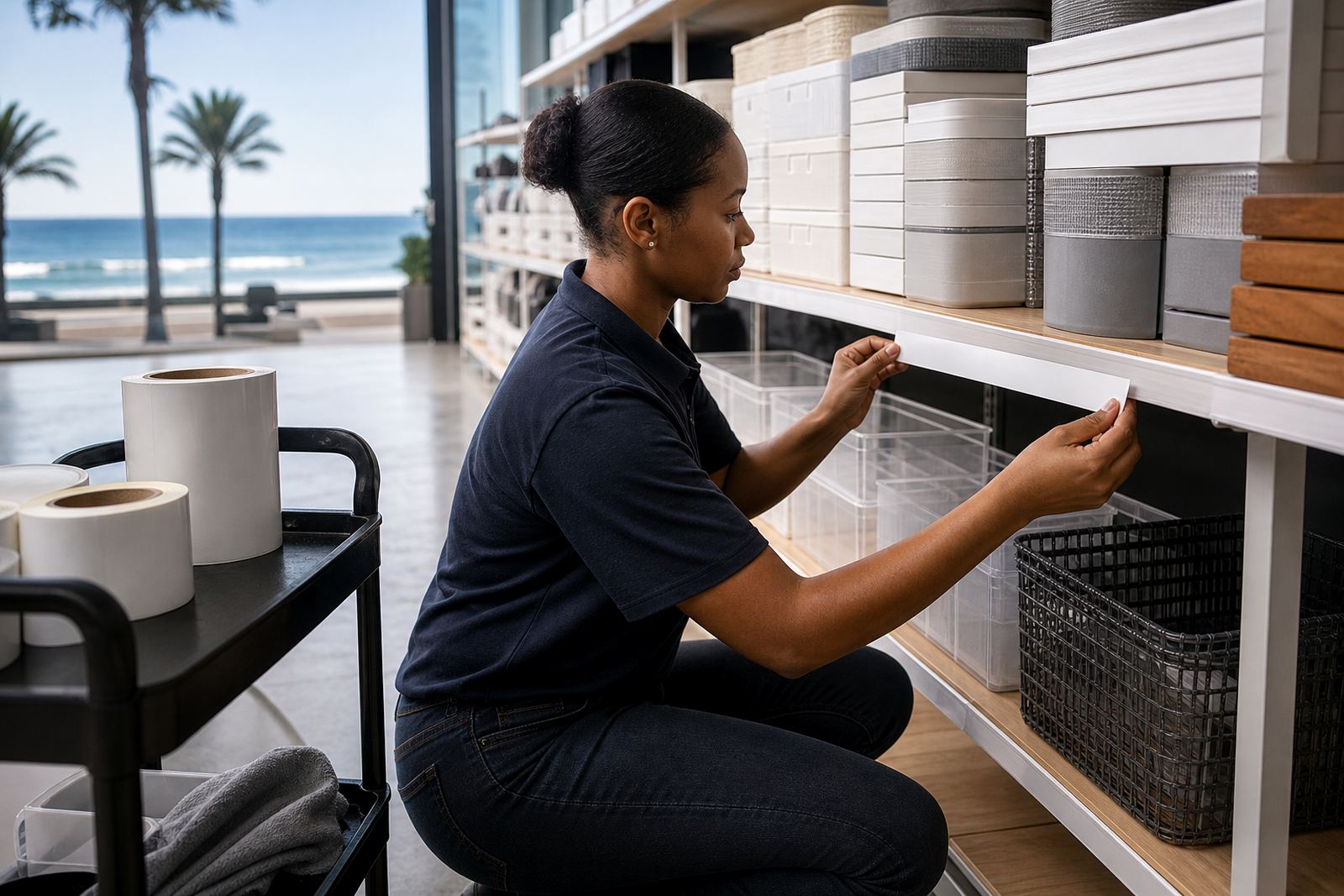
The brief came from a retail team in Umhlanga working through a full shelf reset ahead of a trading period. They needed label rolls for gondolas, chilled shelving and promotional bays, with enough consistency to keep the range readable after a fast changeover. The store wanted labels that could be printed in batches, applied by staff on shift, and still hold up in a coastal setting where humidity can soften weaker adhesive and curl lighter paper stock.
Because the refresh was happening in stages, the labels had to suit short runs rather than one long production batch. That meant careful roll planning, predictable winding direction, and a format that would feed cleanly through the printers already on site. The team also wanted the labels to sit neatly on painted shelving and pre-finished strips without lifting at the corners.
- Retail shelf label rolls for price points, barcodes and promotion markers
- Short-run supply for phased rollout across the store
- Coastal conditions considered for adhesive grip and edge stability
Why the material choice mattered on the coast
Umhlanga stores often deal with warm conditions, salty air and frequent cleaning, so the face stock and adhesive had to be matched properly. For this job we worked with a smooth label face stock that gave sharp print for both text and barcode fields. The store needed legibility first, because shelf labels get scanned, read from a distance, and handled during stock moves.
We discussed the difference between direct thermal and thermal transfer printing with the site team. Direct thermal suits shorter-life shelf labels where the print head creates the image directly on the heat-sensitive stock, while thermal transfer uses a ribbon and is better when a label needs longer print life or stronger resistance to smudging. For this refresh, the chosen format needed quick output and neat presentation, so we matched the roll to the printer type already used in-store.
- Face stock selected for clean text and barcode contrast
- Adhesive matched for painted shelf edges and plastic ticket strips
- Roll build set to suit the existing printer feed path
What we supplied for the label run
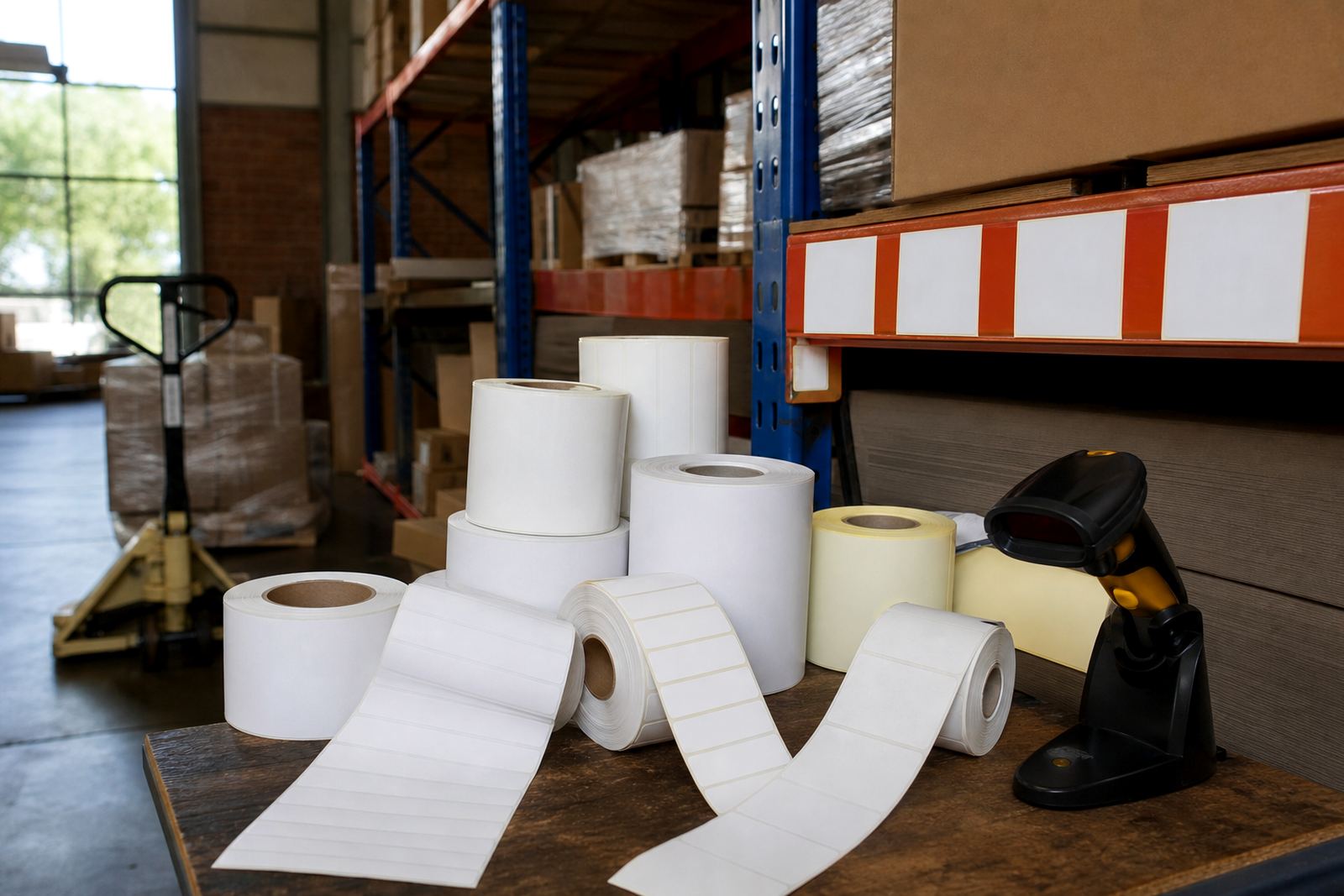
The supply included short-run shelf label rolls cut to the required width, with a liner that released smoothly during application. We also checked core size, winding direction and outer roll diameter so the labels could be loaded without trial-and-error on site. The shop used a mix of small-format label printers, so printer fit checks were part of the planning before dispatch.
Alongside the main shelf labels, we prepared sample rolls for sign-off on print darkness and adhesion. That gave the client a chance to test the labels on actual shelving before the full issue went out. It also helped confirm that the labels would sit flat and not interfere with shelf edges or product facings.
- Custom slitting to the required shelf label width
- Core sizing for the printers on site
- Sample rolls for print and adhesion checks
- Roll length planning to reduce waste during the refresh
How the job moved from brief to dispatch
The project ran over two weeks from brief to delivery. In week one we confirmed the label size, printer type, adhesive needs and the exact shelf locations to be covered. We then planned the roll count, rewound the stock to the required format, and prepared the dispatch pack so the store team could move straight into application.
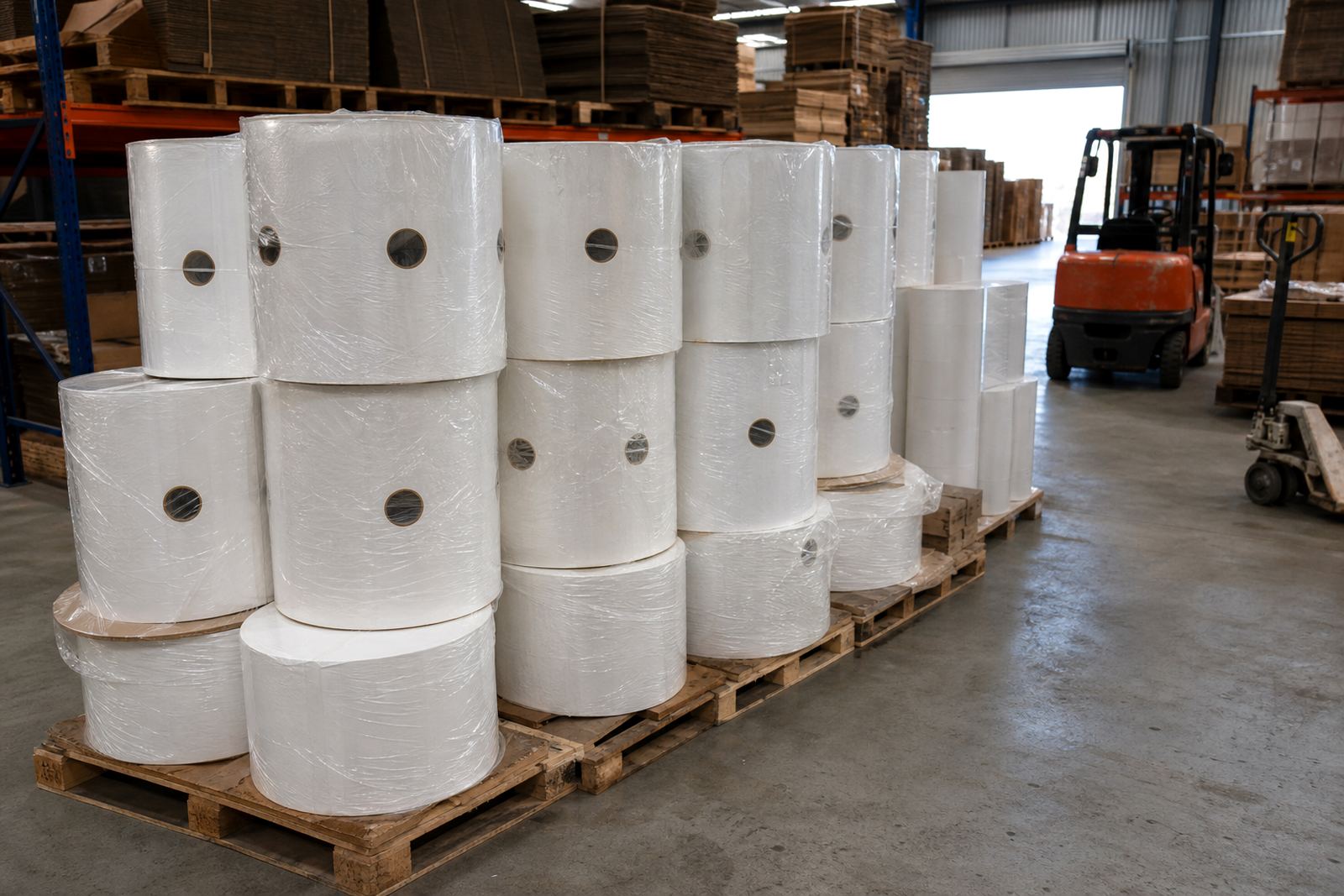
In week two we finalised the rolls after the sample checks, packed them for clean transport, and sent the order from Westmead, Pinetown to Umhlanga. The store had enough material to complete the first phase without holding excess stock on the floor, which matters when storage space is tight and back-of-house counters are already busy.
- Week 1: brief, sizing and printer fit checks
- Week 2: production, packing and dispatch
- Delivered in usable batches for staged shelf work
The details the store team noticed
The first practical result was faster label handling at shelf level. Staff could load the rolls, print what they needed and apply labels without extra trimming. The adhesive held properly on the shelf material, even in cooler zones near fridges where some papers can loosen after a few hours. The print stayed clear enough for price reading and barcode scanning, which kept the refresh moving.
The retail team also noted that the labels sat flatter than the previous stock they had used. That meant less curling at the corners and fewer labels needing to be replaced after the first pass. For a coastal store with regular foot traffic, that kind of small improvement saves time across a whole week of trading.
- Cleaner application at shelf edge and ticket strip level
- Better staying power in humid conditions
- Fewer reprints and fewer labels pulled off after fitting
What we would set up the same way next time
We would approach the next Umhlanga label refresh in the same way, with an early printer check and a sample roll before the full run. That keeps the label format aligned with the actual hardware in use, and it avoids waste if the site is running mixed printers or older units with narrower feed tolerances. For retail sites that swap prices often, that first check is worth doing every time.
That helps the team apply labels in manageable blocks instead of trying to complete the whole floor in one go. For a refresh of this kind, the real win is not only the roll quality but the way the material arrives ready for the job at hand.
- Repeat the sample check before full production
- Keep roll lengths matched to the update cycle
- Stage dispatch if the store is changing shelves in phases
Why this project suited our Westmead supply setup
From Westmead, Pinetown, we handle label stock for retail, logistics and manufacturing sites across Durban, Johannesburg, Cape Town, Pretoria and Pietermaritzburg. This Umhlanga project suited our setup because it needed practical roll planning rather than a one-size-fits-all order. The team could rely on us for adhesive matching, face stock selection, rewinding and dispatch packing without having to manage multiple suppliers.
For a coastal refresh, the important thing is matching the material to the shelf, the printer and the pace of the store. That is what made this job work: the right roll build, the right adhesive, and a dispatch plan that fit the store's timetable. Nothing flashy, just labels that did the job and stayed put.
- Westmead-based supply for coastal and inland retail sites
- Support for short runs and repeat label planning
- Suitable for stores needing predictable output during busy trading periods
Key facts
| Project town | Umhlanga, KwaZulu-Natal |
|---|---|
| Client type | Retail store team |
| Product supplied | Short-run self-adhesive shelf label rolls |
| Label construction | Face stock, pressure-sensitive adhesive and release liner |
| Print method | Matched to existing direct thermal printer setup |
| Lead time | 2 weeks from brief to dispatch |