A pallet of labels had to do more than look neat
The brief came from a warehouse operation in Westmead, Pinetown that was printing barcodes for rack locations, outbound cartons and internal movement labels.
They were working with mixed label sizes and a few print failures from the previous supply. Some rolls were feeding off-centre, others were too narrow for the existing artwork, and a few labels were lifting where the surface had dust or light handling. The warehouse needed practical stock, not a flashy product sheet.
- Site type: warehouse and despatch operation
- Use: barcode scanning, rack labelling and carton identification
- Location: Westmead, Pinetown
- Main issue: inconsistent roll fit and poor label adhesion
What the warehouse printers actually needed
We started by checking the printer setup, label sizes and the way the team loaded rolls on shift. Their mix included benchtop and industrial thermal printers, so we had to match the core size, roll width and winding direction carefully. A roll that is technically correct can still jam if the core or unwind is wrong, especially when staff are moving quickly between packing benches and rack aisles.
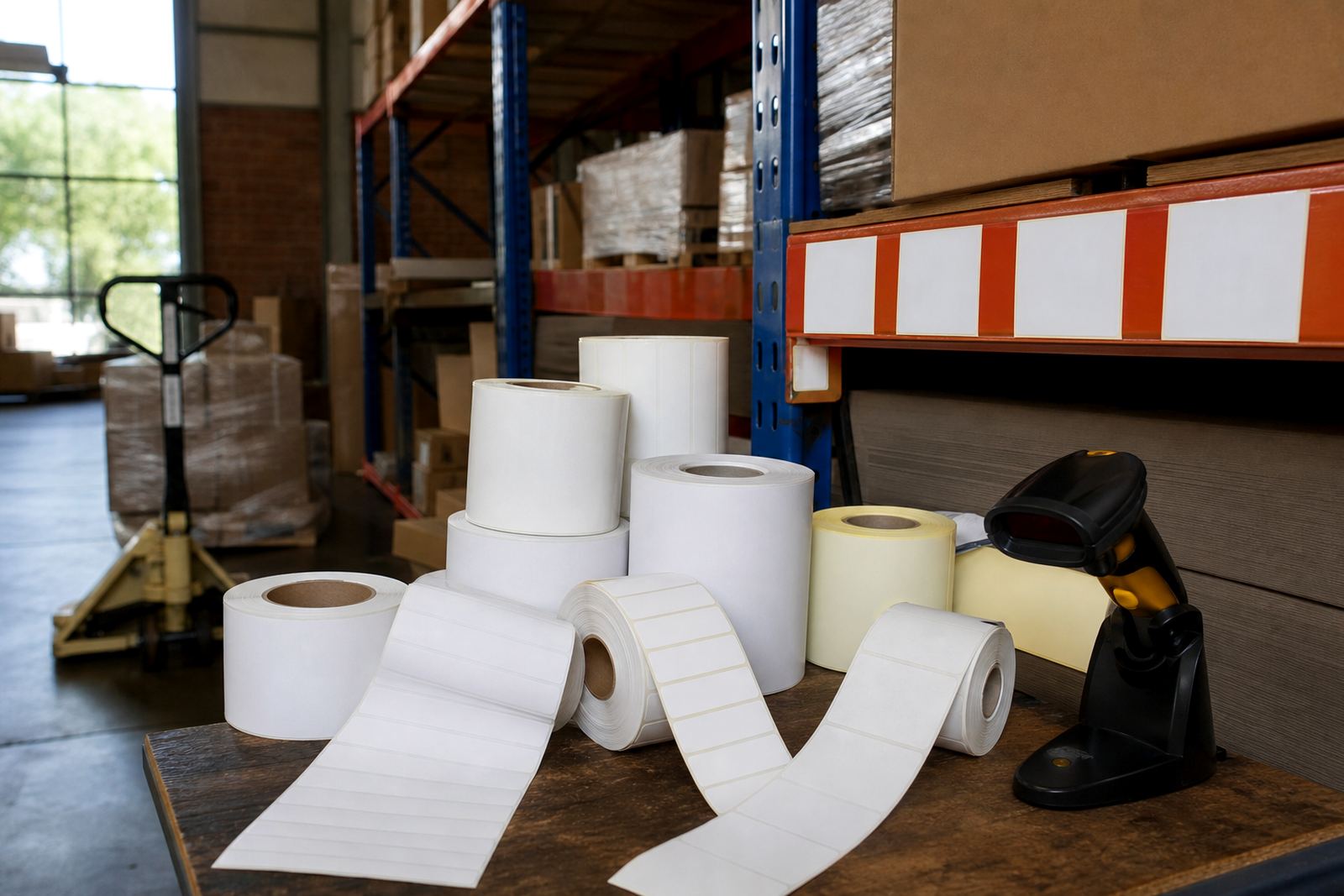
The job called for direct thermal labels for short-life warehouse identifiers and thermal transfer labels for longer-life rack markings. Direct thermal stock suited same-day despatch labels, where the barcode only needed to survive a day or two. Thermal transfer stock was better for labels that needed longer legibility in dusty zones, on shelving, or in warmer areas near dispatch doors. We also had to think about adhesive type because cardboard, painted steel and plastic tubs all behave differently.
- Direct thermal rolls for fast-moving dispatch labels
- Thermal transfer rolls for longer-life rack and location labels
- Core sizes matched to the printer take-up and spindle setup
- Winding direction matched to the feed path so the rolls loaded cleanly
The warehouse preferred a face stock that printed sharply and scanned first time, even with mixed lighting and a bit of dust in the air. In Westmead, humidity can be a factor too, so the label face and adhesive had to cope with occasional moisture and handling without curling up at the edges.
Slitting, rewinding and roll planning in one pass
Once the specs were confirmed, we carried out the conversion work in-house. That included custom slitting to the required widths, rewinding into printer-ready roll lengths, and setting the winding direction for the machines in use. We planned the roll lengths so the warehouse could change rolls less often during peak dispatch hours, but not so long that staff struggled with bulky rolls on smaller printers.
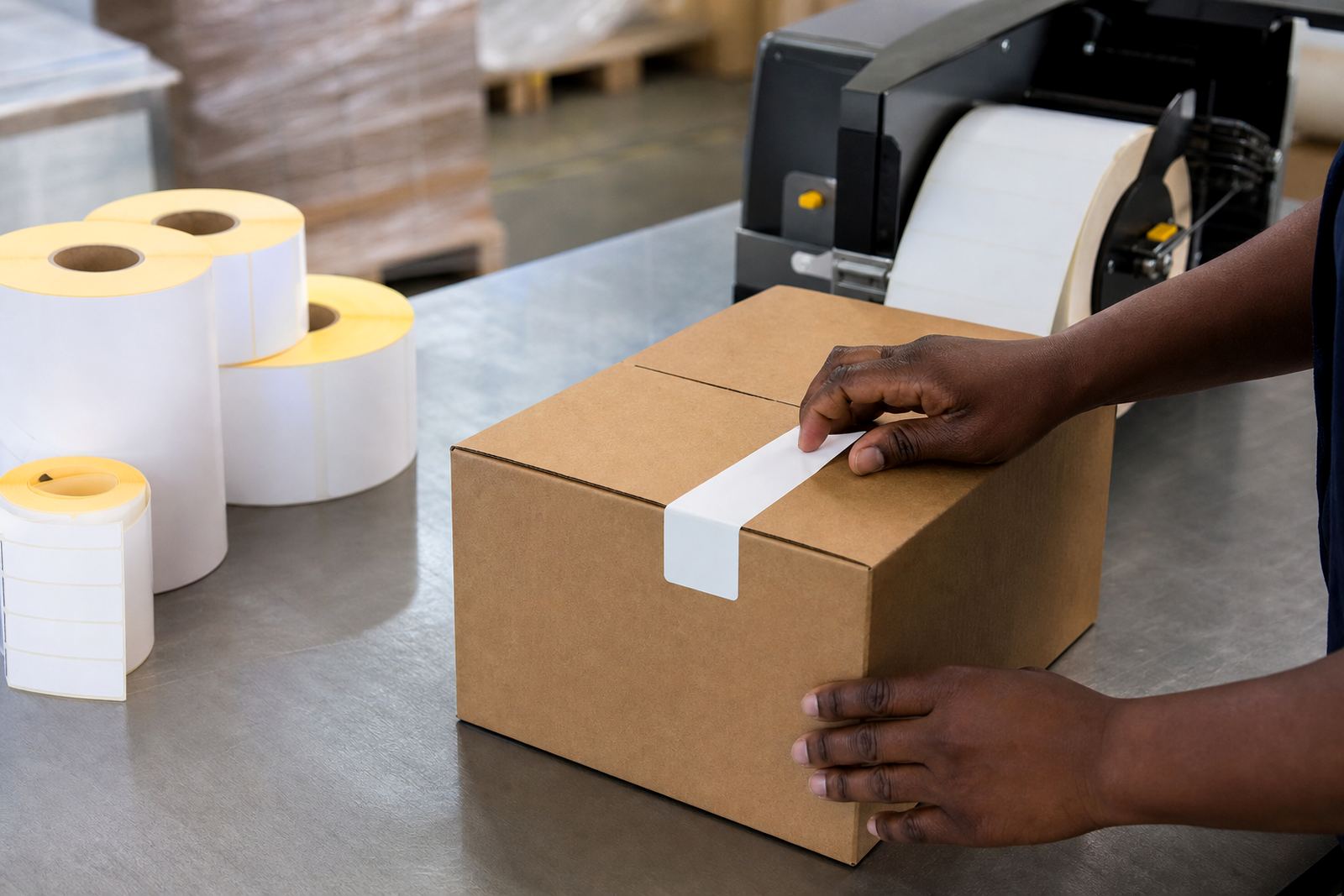
We also checked the adhesive match against the surfaces on site. For carton labels we used a general purpose permanent adhesive suitable for clean, dry board. For rack and shelf labels, the hold needed to be more reliable on painted metal, so we used a stronger tack profile. Labels were supplied with the liner cut cleanly and evenly, which helps with feeding and keeps the peel edge consistent.
- Custom slitting to the required widths
- Rewinding for printer-ready roll lengths
- Adhesive matching for cartons, racks and plastic containers
- Sample rolls supplied for field testing before full production
We sent sample rolls first so the warehouse team could test print quality, barcode scanning, peel performance and fit in real working conditions. That saved time later because any adjustment to width or core could be made before the full run was converted.
Two weeks from brief to pack-out
The project ran over two weeks. The first week was for measurements, printer checks and sample roll testing. The second week covered full conversion, pack-out and dispatch planning. Because the warehouse was still operating during the job, we staggered the work so the client could keep scanning and labelling while the new stock was being prepared.
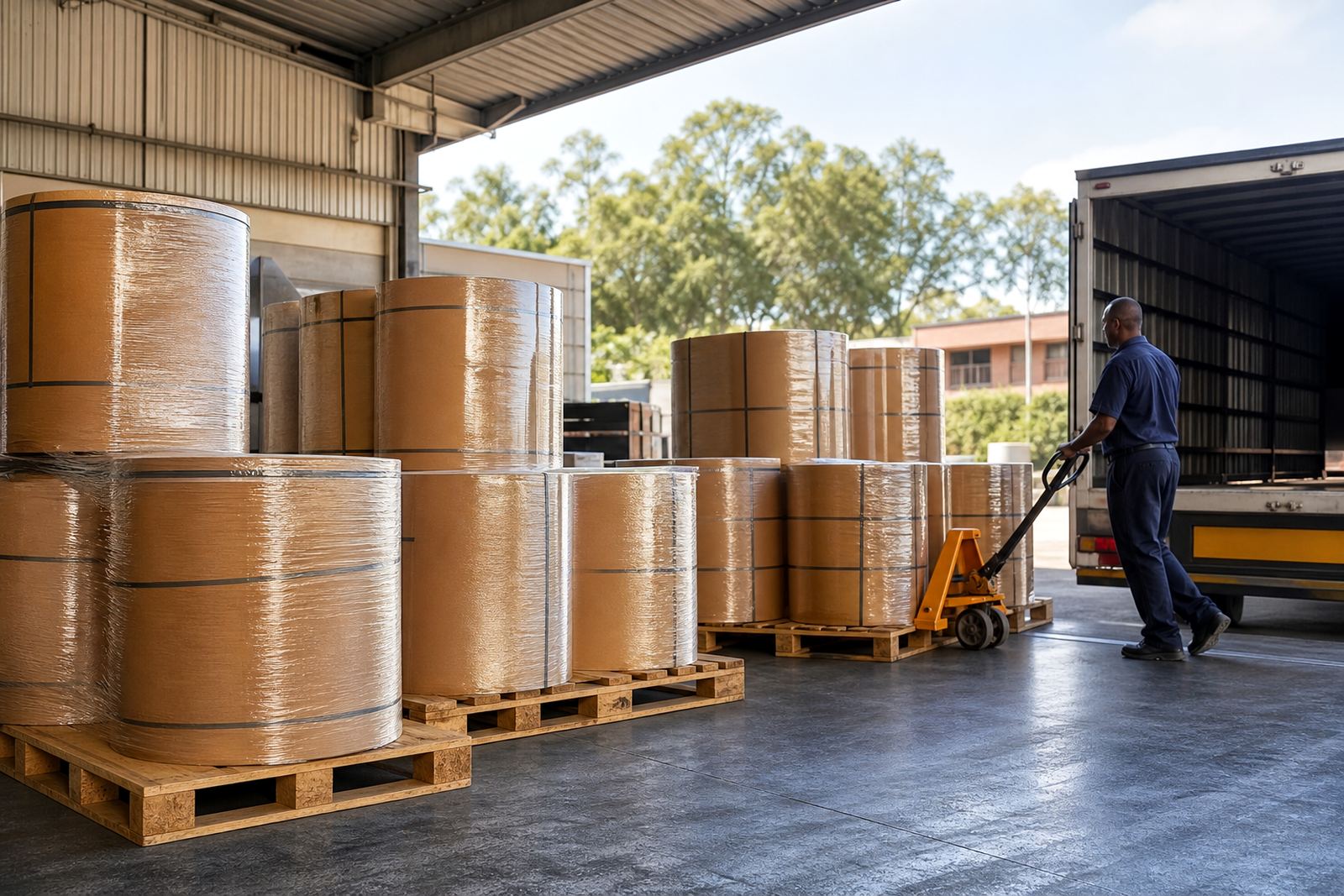
Dispatch packing mattered here as much as the conversion itself. Rolls were boxed to reduce edge damage in transit and to keep dust out. The client needed product moving between Westmead and other depots, so each carton was packed to survive local courier handling and long road freight to Johannesburg, Cape Town, Pretoria and Pietermaritzburg.
- Week 1: brief, measurements and sample approval
- Week 2: conversion, packing and dispatch
- Output prepared for warehouse use across multiple shifts
- Orders packed for both local collection and national delivery
The result was a cleaner stock flow through the warehouse, with fewer printer stoppages and less time spent reloading rolls. Staff could print, scan and apply labels without second-guessing whether the roll would feed properly.
The changes the warehouse noticed on the floor
After rollout, the warehouse reported steadier barcode print quality and better label placement on cartons and racks. The labels stayed readable through normal handling, and the location markers on shelving held up better in high-traffic areas. That helped with pick accuracy and made it easier for the team to keep rack positions consistent during busy shifts.
Another gain was the reduction in waste. When rolls are poorly matched to the printer, you lose labels to jams, misfeeds and edge damage. By sorting the core size, roll length and winding direction properly, the warehouse got more usable labels out of each roll. In practical terms that means less downtime and fewer emergency reprints just before dispatch closes.
What we would set up for the next warehouse run
We would take the same approach again: check the printer type first, confirm the real surface the label will stick to, and test a small batch before converting the full order. Warehouses often change their label requirements over time, especially when new racking is added or a different scanner setup is introduced. A quick usage review at that stage can prevent a lot of waste later.
If a similar job came in for a site in Durban, Johannesburg or Cape Town, we would still start with the same basics. Match the face stock to the job, choose the adhesive for the surface, and make sure the rolls are set up for the machine that is actually on the floor. That way the labels do the work they were bought for, with no drama.
Key facts
| Client type | Warehouse and despatch operation |
|---|---|
| Town | Westmead, Pinetown |
| Product supplied | Self-adhesive barcode label rolls and thermal rolls |
| Print method | Direct thermal and thermal transfer |
| Core sizes | Matched to the warehouse printer setup |
| Timeline | 2 weeks from brief to pack-out |