Mixed cartons, one label path
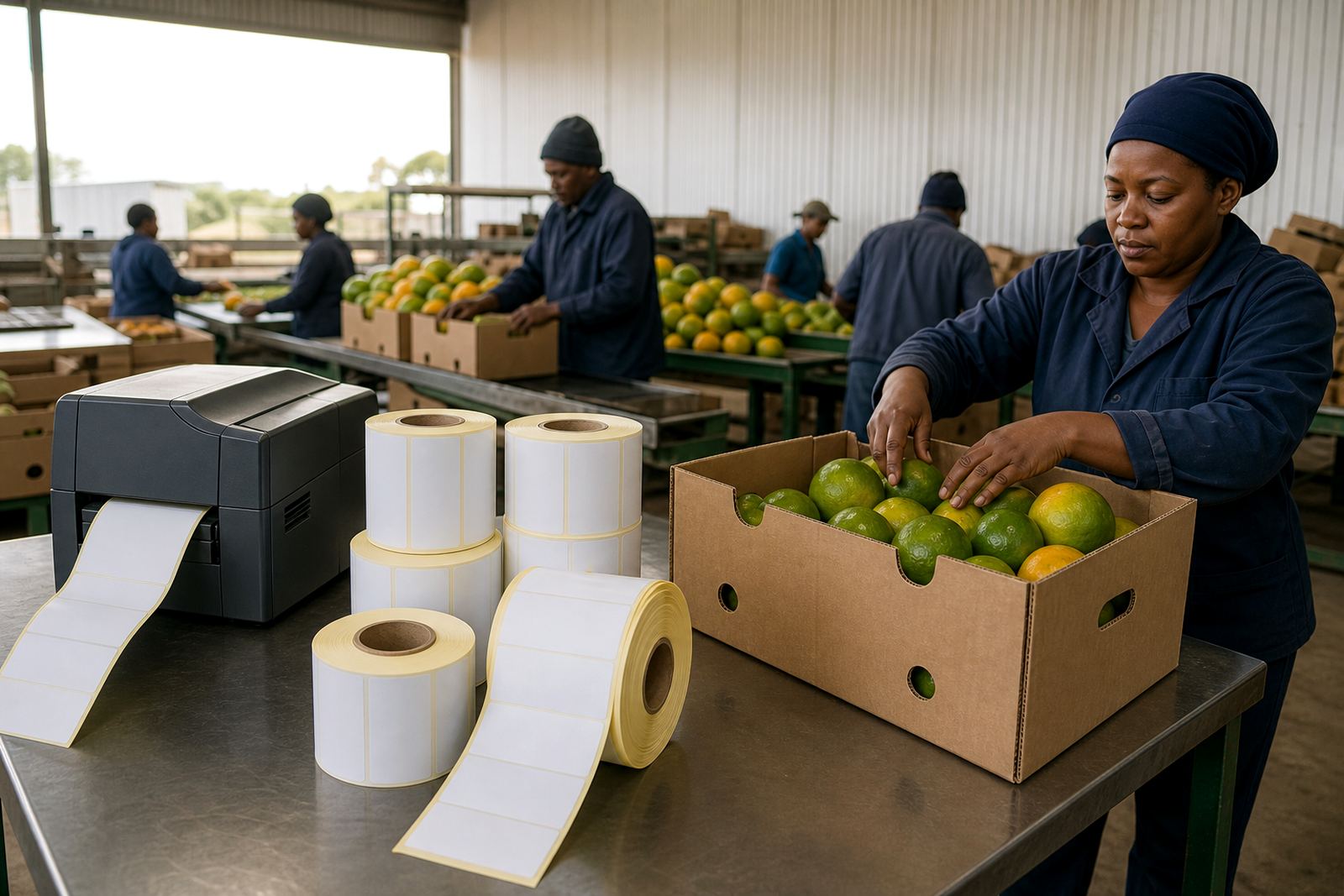
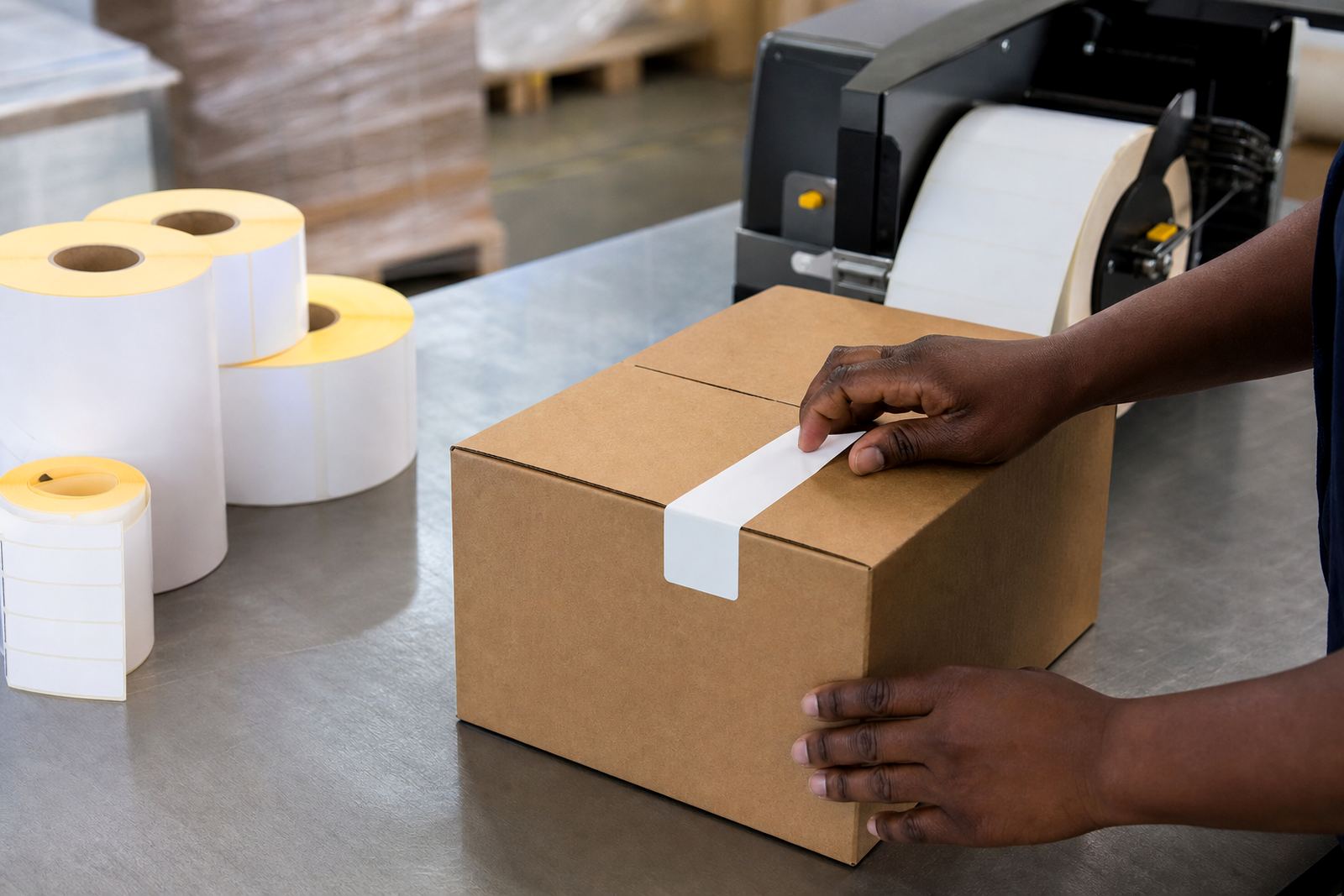
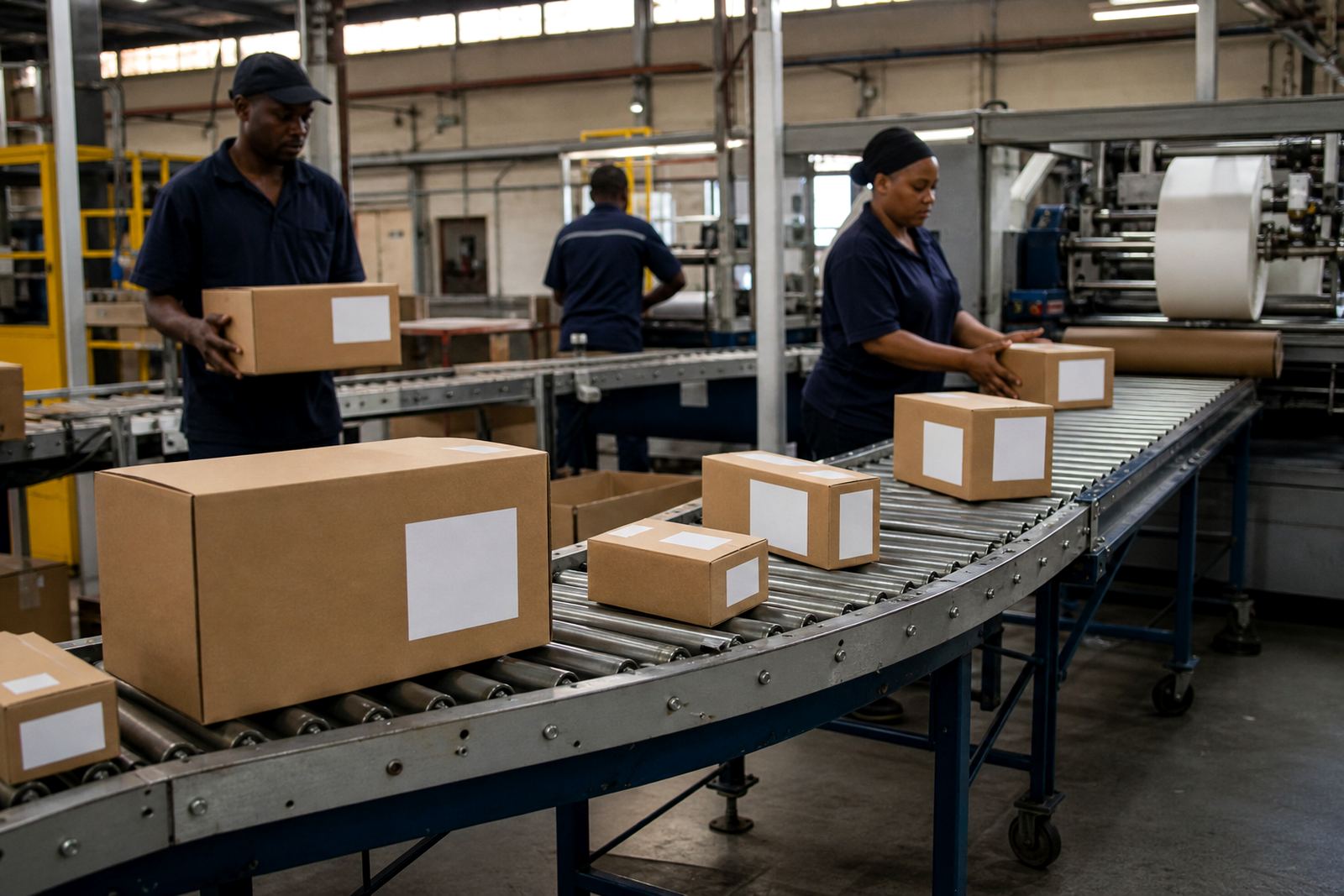
The brief came from a packing floor in Pinetown that was handling cartons in different sizes, with short runs, repeat lines and a steady pace at the end of the shift. The team needed carton labels that would print clearly, stay put on corrugated board, and still peel at speed without lifting corners or leaving gaps between packs.
Labels had to survive handling, stacking and movement through dispatch, while staying readable for product ID, route codes and internal checks.
What the roll needed to do on the floor
We started with the substrate and the adhesive rather than the printer. For carton work, the face stock needs enough body to print well and stay legible, but not so much stiffness that it curls badly on tight wind. We also looked at whether the cartons were plain kraft, printed board, or lightly coated board, because that changes how an adhesive bites.
For this job, the important details were:
- Self-adhesive face stock suited to carton identification
- Permanent adhesive selected for corrugated surfaces
- Liner that would run cleanly through the applicator path
- Roll width slit to match the print area on mixed case sizes
- Core sizing set for the existing printer holders
- Winding direction checked so labels fed the right way on line
Slitting, winding and fit checks
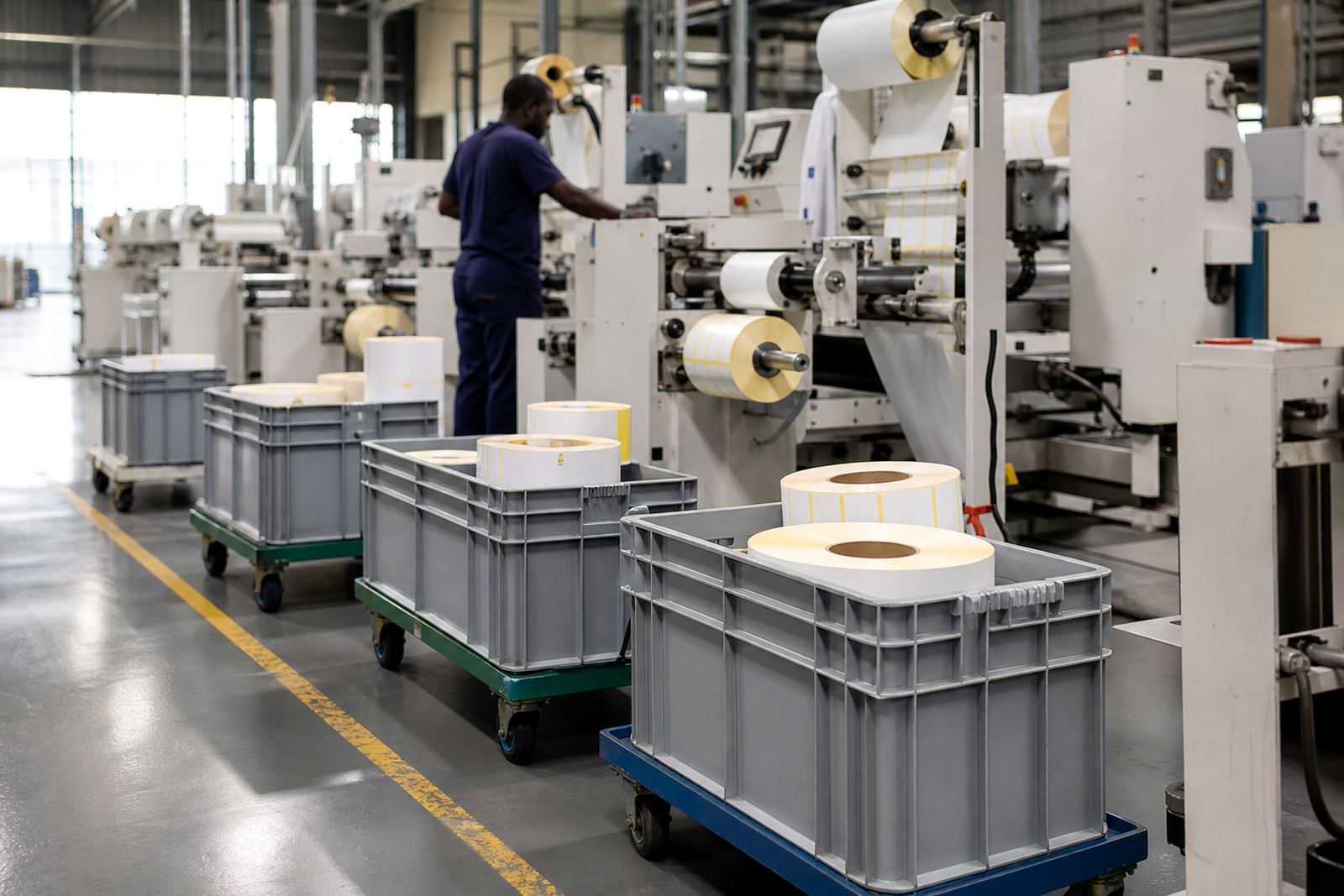
The order needed custom slitting because the operation was not using one standard carton size. We planned the roll widths to suit the smallest and widest cases in the range, which reduced waste and stopped the team from over labelling a box just to cover the print block. The rewind tension was kept consistent so the rolls would unwind cleanly, even when the shift got busy and operators were moving fast.
We also matched core sizes to the printer and dispenser setup already on site. In practice, that meant checking the spindle fit, roll outside diameter, and the unwind direction before production started. It sounds small, but if the roll feeds the wrong way, the line loses time and the operator gets stuck fixing jams instead of packing.
The job was completed over two weeks, including sample rolls, approval, slitting and final packing. That gave the site time to run test prints and check how the adhesive held on different carton surfaces.
Face stock choice for print clarity
Carton labels need to stay readable under warehouse lighting, on fast moving conveyors and in dispatch areas where boxes can be dusty or slightly scuffed. We supplied a face stock that printed clearly for barcodes, route text and carton references, with enough opacity to keep the code easy to scan.
Depending on the print method, the label construction changes. Direct thermal is suited to shorter life labels where heat from the printhead darkens the coating directly. Thermal transfer uses a ribbon and is better for labels that need longer resistance to rubbing, handling or sunlight. For this carton job, the printer compatibility had to match the roll construction, the print width and the thermal method used on site.
- Direct thermal for short to medium life carton identification
- Thermal transfer for longer lasting, rub resistant marking
- Roll lengths planned around shift usage and changeover time
- Sample rolls supplied before full production
Packing, dispatch and supply across the country
Once the roll spec was signed off, we packed the cartons for dispatch from Westmead, Pinetown and routed the order for delivery into the national supply run. The client needed labels that could be reordered without having to restart the setup process every time, so we kept the winding direction, core size and slit widths on record for repeat order planning.
That helped on future runs for sites in Durban, Johannesburg, Cape Town, Pretoria and Pietermaritzburg, where the same carton format may be used in different depots or with different operators. Keeping the specification consistent also made stock control easier at the packing bench and reduced downtime when the label changeover came up mid day.
- Dispatch packed for handling in warehouse and transport conditions
- Core and unwind details recorded for the next production run
- Usage review done after first issue to confirm print and adhesion
What changed after the first run
The client saw a cleaner run on the line because the labels matched the cartons instead of being trimmed or adjusted at the point of use. That reduced waste and made the packers more confident during busy periods. The adhesive held properly on the board, and the barcode area stayed usable after handling, stacking and movement through despatch.
If we handled a similar carton label job again, we would begin with a sample roll on the actual printer and carton surface, then confirm the slitting, core size and winding direction before full production. That is the quickest way to reduce feed issues and keep the job steady from the first roll to the last.
For operations in Pinetown and Hammarsdale, where packing lines often have to work around changing schedules and power interruptions, that sort of upfront fit check saves time later. It also gives the team a label spec they can rely on when the next batch lands.
Key facts
| Project type | Carton identification label rolls |
|---|---|
| Town | Pinetown |
| Base | Westmead, Pinetown |
| Production timeline | 2 weeks |
| Label construction | Self-adhesive face stock with permanent carton adhesive |
| Format details | Custom slit widths, matched core size, checked winding direction |