A cold-room line that could not afford lifting edges
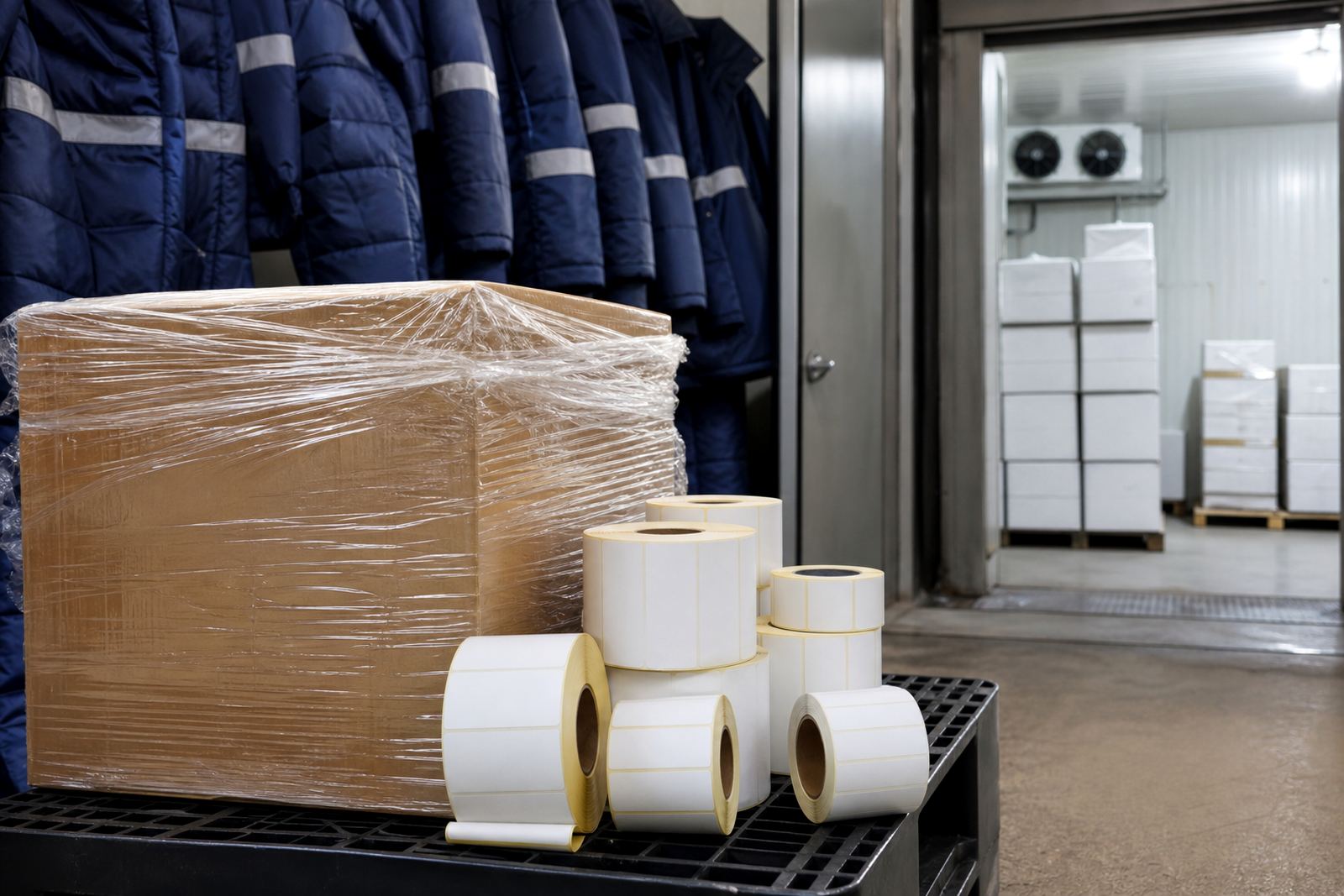
The brief came from a food producer in Pietermaritzburg working with chilled stock that moves from packing benches into cold storage, then out through loading bays where condensation is part of daily work. Their old labels were struggling on damp cartons and plastic tubs, with corners lifting after a few hours and printed codes smudging when the rolls were handled with cold hands.
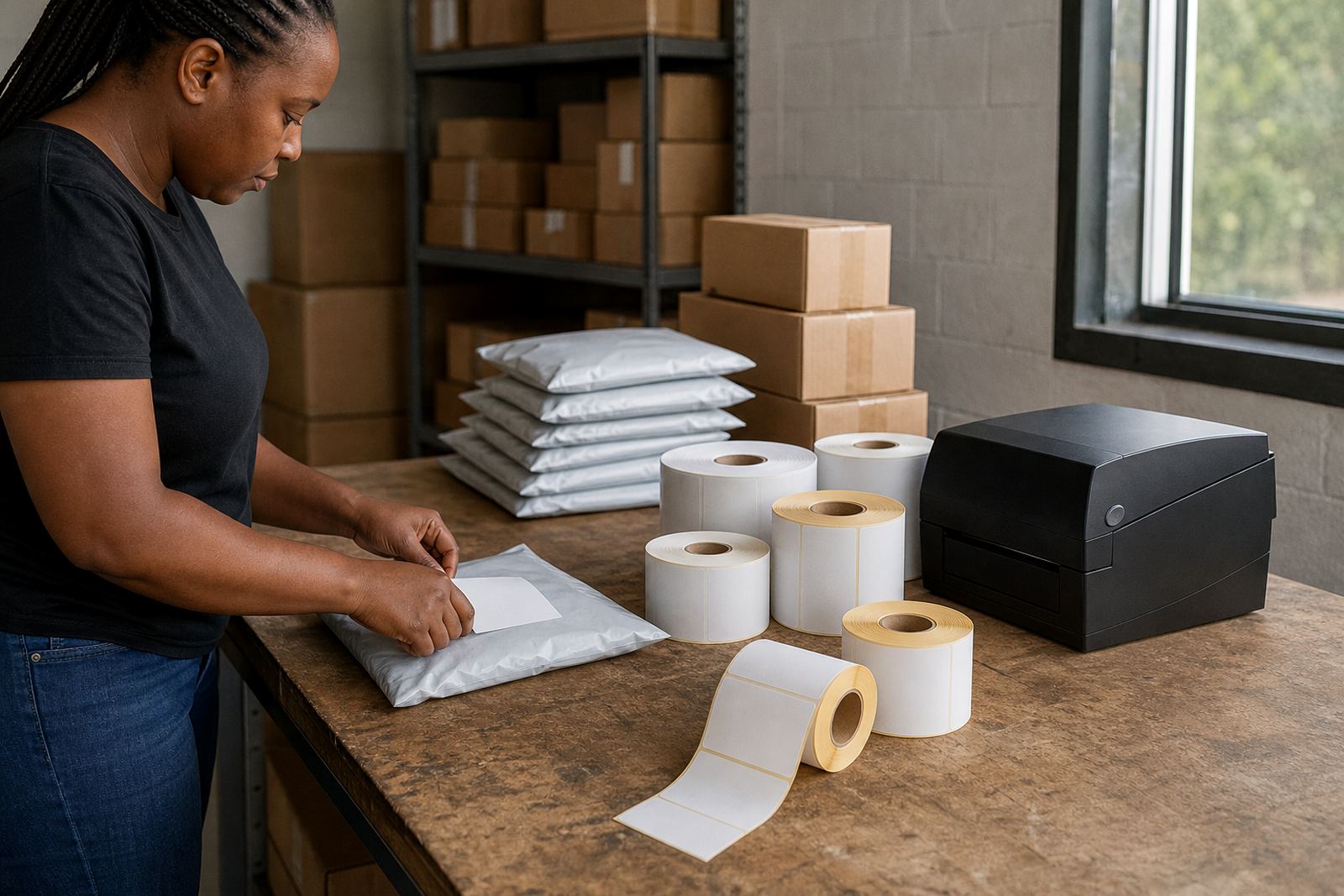
They needed a label stock that could be printed neatly, apply quickly and stay readable through chill cycles. The work had to suit busy packing staff, who label in batches and cannot stop to fight a stubborn liner or a crooked unwind. We also had to keep the format compatible with the thermal printers already on site, because changing the whole print room would have added cost and delay.
The town conditions mattered too. In PMB, cold-room work often means moving products through warm ambient air and back into a chilled store, so the adhesive has to hold through moisture changes without turning brittle. The client wanted a practical fix, not a glamorous one, and the stock needed to suit day-to-day use on food packaging, shelf-facing cartons and dispatch labels.
What had to be right before the first roll went out
We treated the brief as a conversion job, not just a supply request. That meant checking the face stock, adhesive, liner weight, roll length, core size and winding direction before anything was packed for dispatch. For freezer and chilled work, the wrong combination can fail in ways that only show up after printing, so we kept the setup plain and dependable.
- Face stock selected for clean print contrast and good code legibility
- Freezer-grade adhesive chosen for cold surfaces and humidity exposure
- Smooth release liner set for steady feed through thermal printers
- Core size matched to the printer spindle already in use
- Roll length planned to reduce stoppages during packing runs
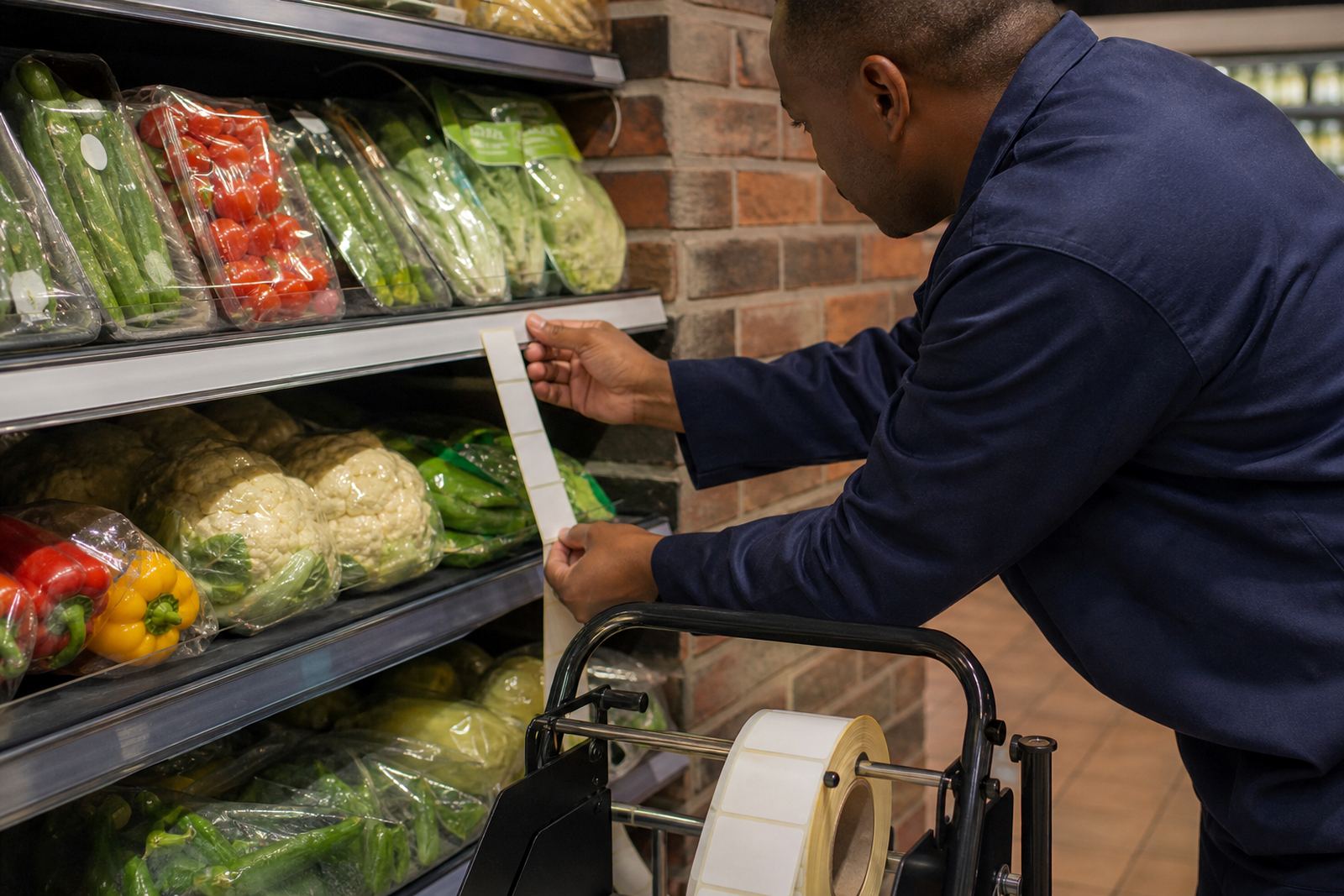
- Winding direction checked for correct unwind on the label applicator and handheld printer
We also checked whether the client needed direct thermal or thermal transfer rolls. Direct thermal is useful for short-life chilled labels where speed matters, while thermal transfer gives better resistance to scuffing and handling when a ribbon is used. For this job, the print life had to suit cold-room movement without overcomplicating the process, so we built around the printer setup they already trusted.
The stock mix we put together for Pietermaritzburg
The final supply covered multiple pack styles, because one freezer label does not suit every surface. Some cartons had a slightly rough board finish, while the plastic tubs needed a more aggressive grab. We set up the job with a few sample rolls first, then moved into the confirmed run once the application testing held steady.
We supplied a combination of self-adhesive label stock formats in practical widths for production use, with core sizes suitable for common benchtop and industrial thermal units. The label face stock was chosen for crisp print quality and regular handling, and the adhesive was matched for chilled storage rather than room temperature only. That made a real difference once the rolls went through the cold-room cycle and back to the packing floor.
There was also some fine tuning around roll length planning. Longer rolls cut down on changeovers, but only where the printer feed remains stable. Too much roll weight can slow the line and affect edge tracking, so we balanced output against machine control. The result was a stock setup that worked for the packing team without making reciept-style mistakes on the print line, like waste labels and misfeeds.
- Suitable for chilled product marking, case labels and batch identification
- Compatible with common thermal printers using the agreed core size
- Set up for clear barcodes, dates and human-readable text
- Supplied in roll form for faster handling and less bench clutter
How the conversion was handled over two weeks
The project ran over two weeks from brief to final dispatch. In week one we confirmed the label application, checked the printer fit and worked through sample rolls for adhesion, unwind and print clarity. That stage also helped us decide where a direct thermal label would be enough and where thermal transfer would be the safer choice for handling and moisture.
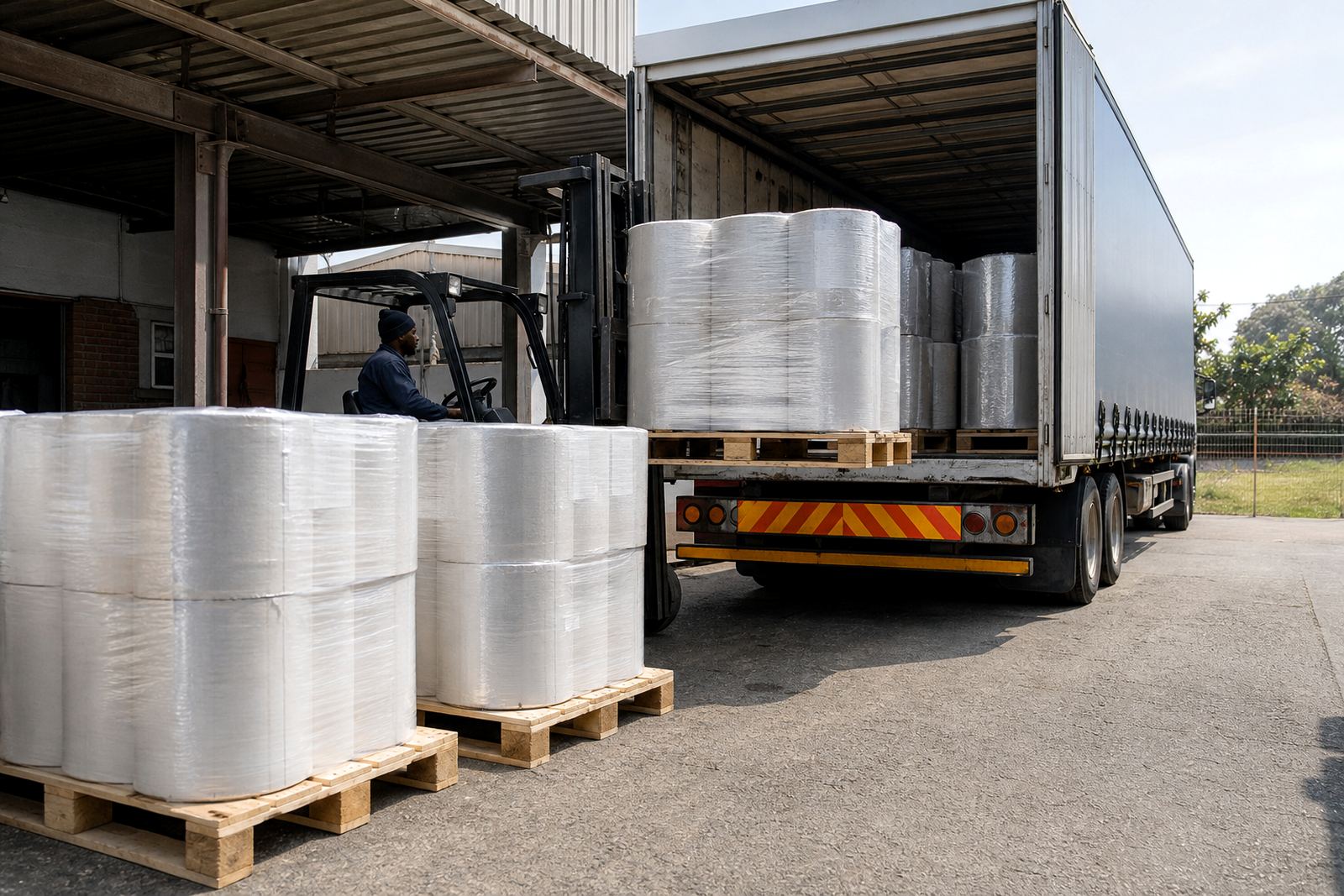
In week two, we completed the roll conversion and packed the supply for dispatch to Pietermaritzburg. The team checked slit widths, rewound the stock to the agreed roll length, and aligned the cores for the printer format on site. We also reviewed winding direction and packing layout so the labels would arrive ready for use, not needing rework at the receiving end.
The client’s operation was not looking for a long trial period. They wanted a label that worked the first time and kept working once the cold room started running full pace. That is why we kept the process tight and practical, with a clear sign-off before production. No special handling was needed after dispatch, just consistent use and normal storage away from direct heat and dust.
What changed once the new freezer stock was in use
Once the new rolls were in circulation, the biggest change was consistency. Labels stayed flat on chilled packs and cartons, print quality held up better, and staff spent less time dealing with lifted corners or smudged batch marks. The packing line became easier to manage because the rolls fed more evenly and the liner released cleanly through the printer.
From a practical point of view, the customer gained better presentation and fewer avoidable rejects. For food businesses in Pietermaritzburg, that matters because a label that peels in the cold room can slow dispatch and create waste at the worst possible time. This stock gave them a cleaner finish, better barcode readability and less handling pressure during peak packing periods.
- Improved adhesion on chilled cartons and plastic packaging
- Better code readability after cold storage and handling
- Fewer stoppages from label edge lift and feed issues
- Cleaner output for retail-facing and dispatch use
What we would do for a similar cold-room job
For any freezer stock project like this, we would repeat the same early checks: substrate test, adhesive match, printer fit and roll format review. That sequence saves time later and stops small compatibility issues from turning into production delays. It is also the best way to keep the label stock suitable for the actual site conditions, not just for a sample on a clean bench.
We would also keep sample rolls in the process before full conversion, especially for customers working with chilled goods across Pietermaritzburg, Durban or Johannesburg. Different packing teams use different printers and speeds, and one site may need a tighter roll or a different core size than another. The right answer is usually in the details, not in making the label more complicated.
For this kind of work, the most useful result is not a flashy spec sheet. It is a roll that feeds properly, prints clearly and holds through the cold room without argument. That is the standard we would apply again for chilled product marking, freezer cases and any packaging line that has to keep moving in damp, low temperature conditions.
Key facts
| Project | PMB Freezer Stock |
|---|---|
| Town | Pietermaritzburg |
| Client type | Food packing and cold-room operation |
| Product types | Self-adhesive label stock and thermal rolls |
| Key format | Core sizes matched to existing thermal printers |
| Timeline | 2 weeks from sample checks to final dispatch |