A warehouse job with no room for curling or scan errors
The brief came from a Hammarsdale warehousing operation handling fast-moving stock on pallet lines, racking lanes and dispatch bays. Their team needed barcode labels that would stay flat on cartons and plastic containers, print clearly through long shifts, and run without constant stopping for feed issues or scanner rejects.
The site works in the kind of conditions common around Hammarsdale and the outer Durban industrial belt: changing temperatures through the day, dust from loading areas, and hands moving quickly during peak dispatch. That means the label stock has to do more than look neat. It has to hold adhesive strength, keep the print clean and survive handling from packing to final scan.
The order was planned as a long-run job, with rolls set up for repeated use on thermal printers already in the warehouse. We also had to keep the roll build practical for the team on shift, because a roll that is too large or wound the wrong way slows the line down fast.
Choosing the label build that would hold up on the floor
We worked through the substrate and adhesive choice first. For carton and warehouse use, a white top-coated face stock was the sensible base because it gives a clean print area for barcodes, text and batch details. Where labels may rub against stretch wrap or be handled often, the face stock has to accept a good image without feathering at the edges.
On the adhesive side, the job needed a pressure-sensitive adhesive suited to general purpose warehousing, with decent tack on clean cardboard and sealed packaging. We kept the adhesive choice practical for indoor storage, with enough grab for ordinary dispatch work without making labels lift at the corners. For some cartons, a permanent adhesive is the safest fit, but in a warehouse it still needs to release from the liner cleanly during fast application.
- Face stock: white self-adhesive label stock for barcode printing
- Adhesive: general purpose permanent adhesive for cartons and packaging
- Liner: silicone-coated backing for clean release and smooth dispensing
- Use: carton labels, bin labels, dispatch marking and scan labels
Direct thermal or thermal transfer, and why that mattered here
The next step was printer method. For a warehouse that scans constantly, the difference between direct thermal and thermal transfer matters. Direct thermal is useful where the label life is shorter and speed matters, because the image forms directly on the coated label face. Thermal transfer uses a ribbon, which gives a harder-wearing print for labels that may sit longer in storage or face more rubbing.
For this Hammarsdale job, the print environment and use pattern pointed us toward a thermal transfer setup for the main barcode rolls. That gave better resistance to fading and handling, especially where cartons might sit in racking before moving out. We still discussed direct thermal as an option for short-life dispatch labels, because it can be the better choice when labels are used within a narrow window.
- Thermal transfer: better for longer storage and tougher handling
- Direct thermal: suited to shorter-life labels and faster print runs
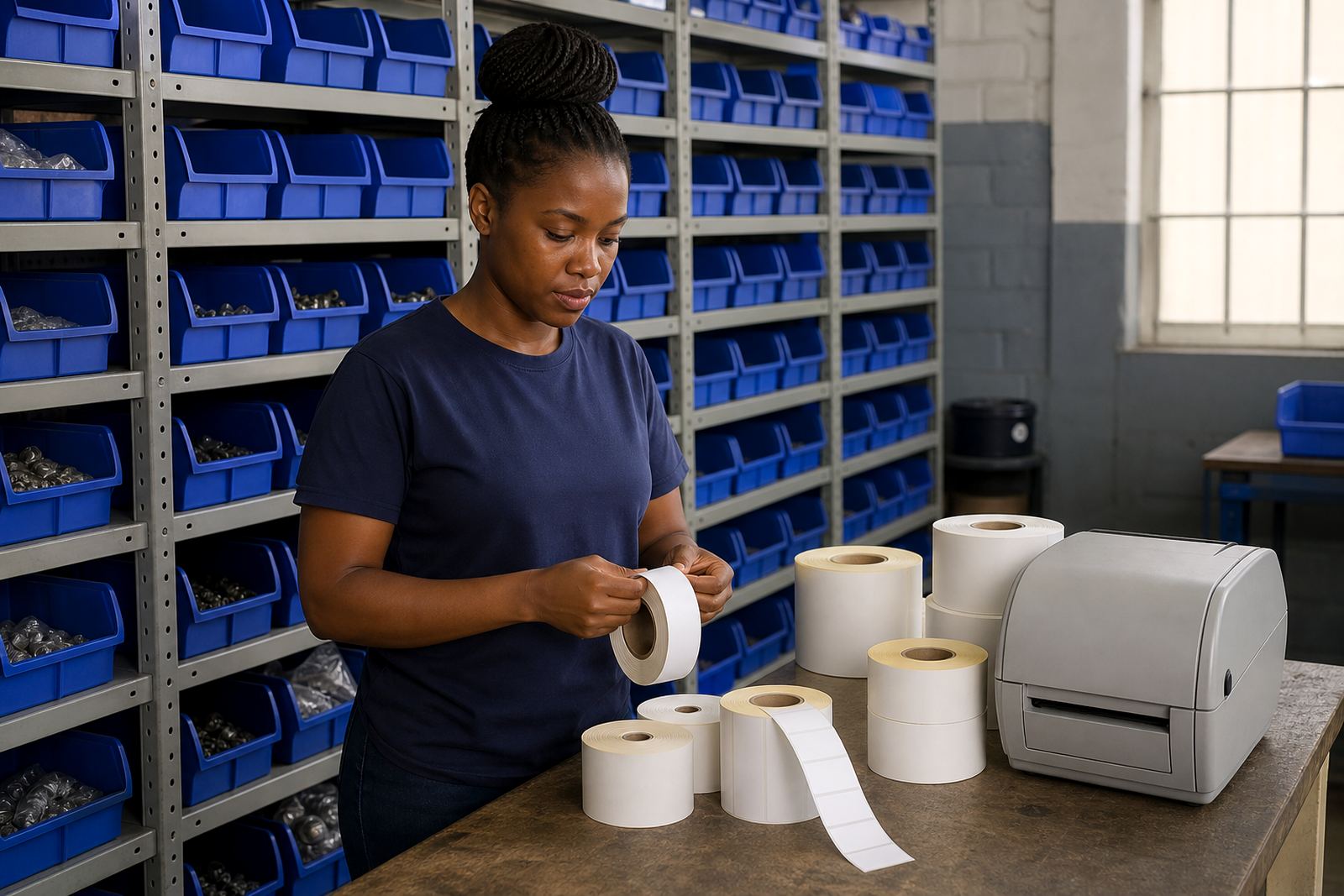
- Printer fit check: head width, sensor position, unwind direction and core size
- Common core sizes: 25 mm, 40 mm and 76 mm depending on machine type
How we converted the rolls for the Hammarsdale line
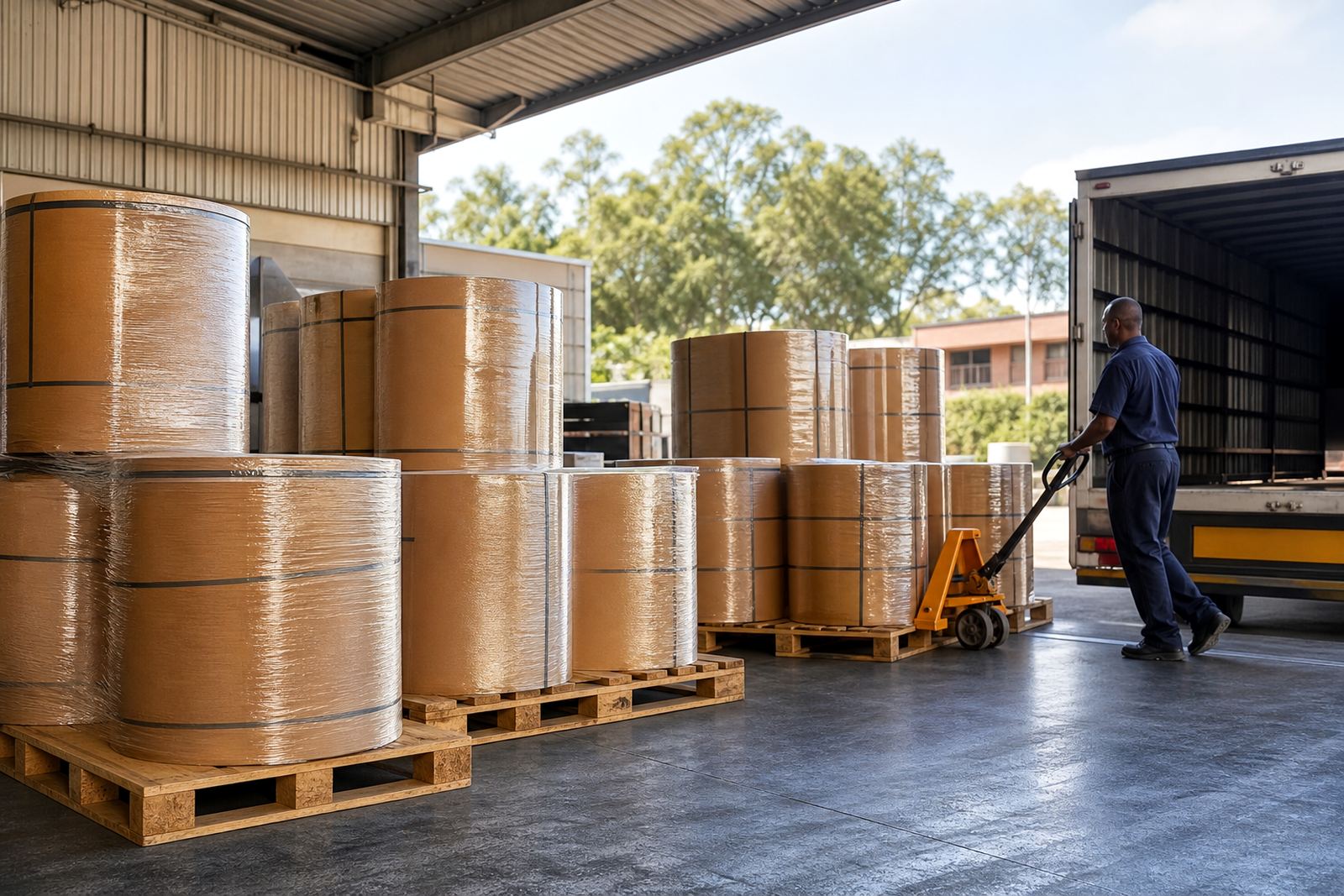
We supplied the order from Westmead as converted rolls, with roll length planning based on the warehouse’s daily usage and the printer capacity on site. The conversion work included slitting to the required width, rewinding in the correct direction, and packing the rolls so they would arrive ready for floor use.
The team also needed practical consistency across the batch. That meant checking winding direction, core size and roll outer diameter before dispatch. A barcode roll that is wound incorrectly can waste time immediately, and in a busy warehouse that quickly turns into a bigger labour cost than the roll itself.
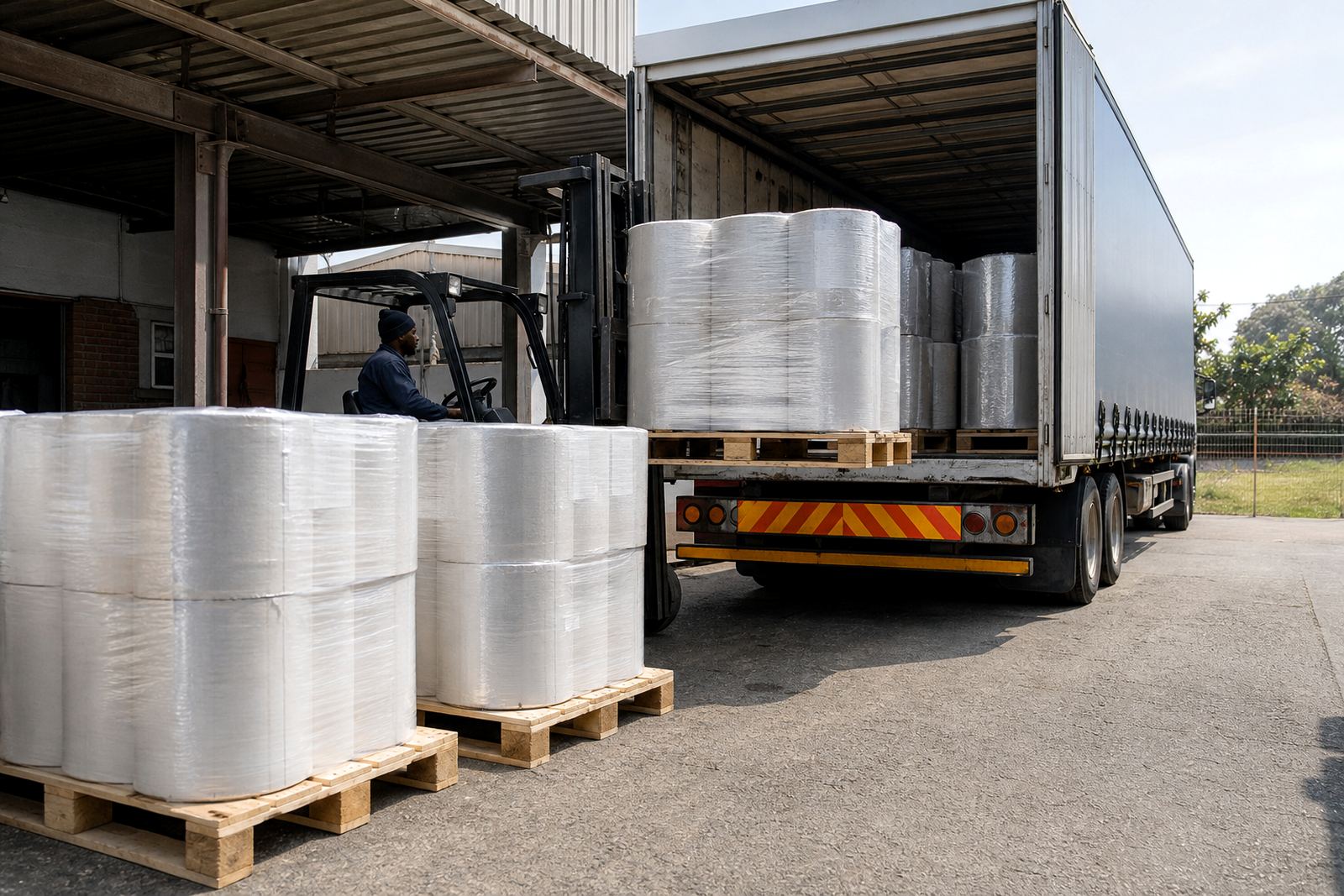
We prepared sample rolls first so the warehouse could confirm print clarity, feed behaviour and label peel before the full order went out. After that, we finalised the production run and packed the rolls for transport into Hammarsdale with handling kept tight and neat.
- Custom slitting to the required label width
- Rewinding to suit the warehouse printer setup
- Sample rolls for print and feed checks
- Dispatch packing for safe delivery from Westmead to Hammarsdale
The four week window and what changed on site
The full job ran over four weeks from brief to delivery. Week one covered the usage review, printer fit checks and face stock selection. Week two focused on adhesive matching and sample roll approval. Week three was production, slitting and rewinding. Week four covered packing and dispatch into Hammarsdale.
Once the rolls were in use, the warehouse reported cleaner scan reads and fewer stops during label changeovers. The barcode image stayed consistent through the run, and the team could move through cartons faster without having to reprint from failed feeds. That kind of result matters in a warehouse where every delay lands on the next pallet stack.
The labels also held well on standard cartons and packaging film, which gave the site a better finish across inbound stock, put-away and despatch. Nothing flashy, just less waste and fewer interruptions.
What we would do for a similar warehouse job
For a similar Hammarsdale or Pinetown warehouse order, we would keep the same process: confirm printer type first, then match the face stock and adhesive to the real surface, not just the label spec on paper. That saves time later and avoids the common issue where a roll looks fine in hand but behaves badly on the printer.
We would also keep sample rolls in the process, because a quick test will usually show whether the unwind direction is right and whether the barcode print is reading cleanly. For jobs with long daily throughput, core size and outer diameter need to be planned with care. If the roll is built too large, operators are forced into more changeovers, which defeats the point of ordering a long-run format.
For warehouses across Durban, Johannesburg, Cape Town, Pretoria and Pietermaritzburg, the same approach holds up. Practical selection, clean conversion and dispatch that arrives ready to use. That is the part that makes the difference on site.
Key facts
| Client type | Warehouse operation in Hammarsdale |
|---|---|
| Product type | Self-adhesive barcode label rolls |
| Face stock | White top-coated label stock |
| Adhesive | Permanent pressure-sensitive adhesive |
| Printer method | Thermal transfer roll format |
| Timeline | 4 weeks from brief to dispatch |