A dispatch room in Parow with no room for label waste
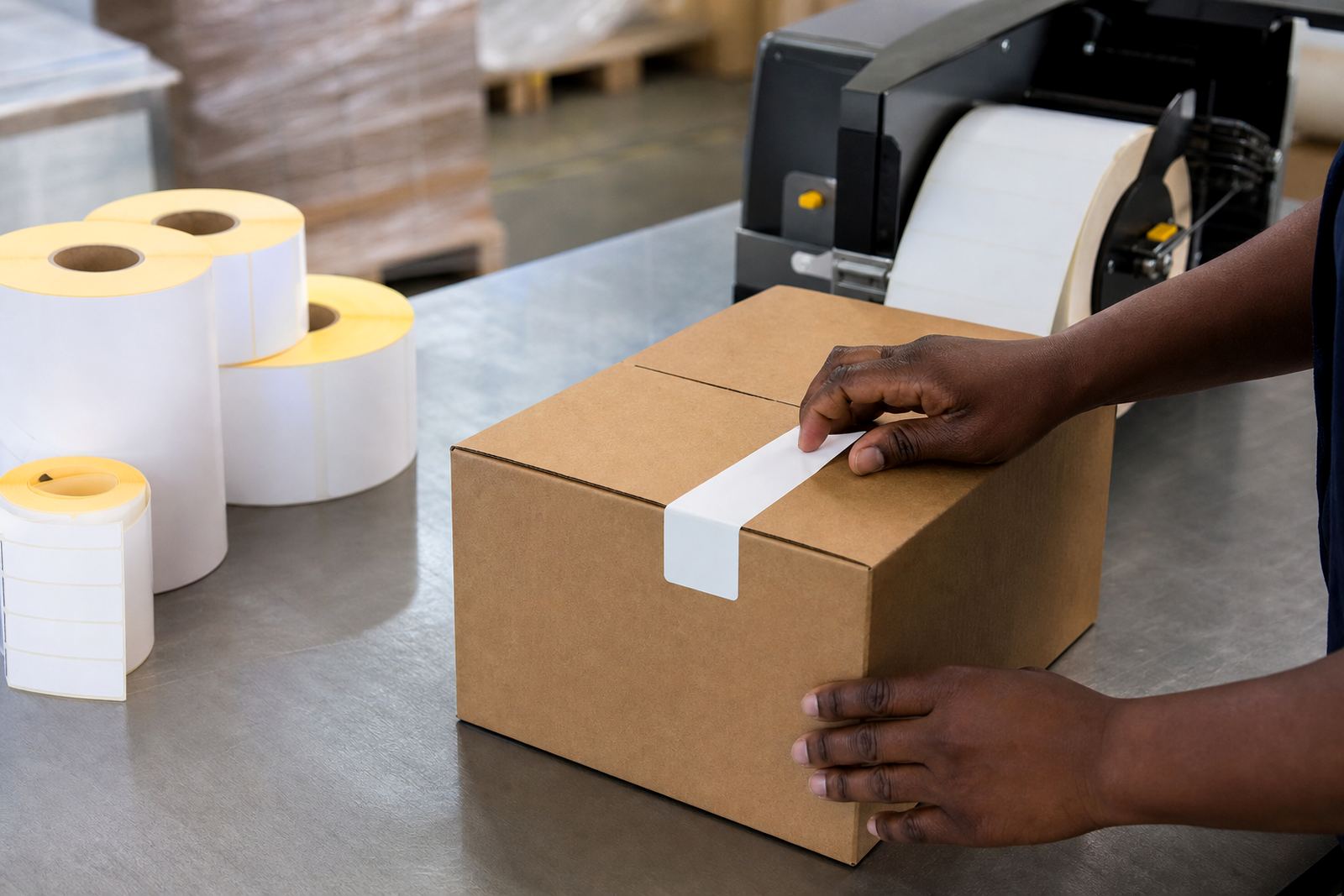
The brief came from a busy dispatch operation in Parow handling cartons, parcels and pallet labels across a fast turnover floor. The team needed shipping label rolls that would feed cleanly through benchtop thermal printers, stay legible on mixed packaging surfaces and hold up during sorting, stacking and road transport into the Western Cape and further inland.
Their main concerns were label jams, adhesive failure on dusty carton tops, and rolls that ran out too early in the shift. They also wanted the format to suit standard dispatch printers already in use, with no need to change the whole setup just to get better output. That meant the roll specs had to be checked properly, from core size to winding direction.
- Dispatch labels for carton and parcel identification
- Rolls matched to thermal printers used at packing benches
- Adhesive chosen for paperboard, shrink wrap and mixed packaging
- Label size set for quick scanning and clear address fields
How we set the roll spec without overcomplicating it
The job was completed over two weeks, starting with a usage review and printer fit check. We looked at the label width, print density, core size and unwind direction required by the dispatch room. The result was a practical spec that could be loaded quickly and kept running through the busiest part of the day.
For the face stock, we used a direct thermal label stock suited to short to medium life shipping use, where the print needs to be clear but the label does not need to survive months of sunlight or rough outdoor exposure. Direct thermal was the better fit here because it kept the process simple and removed the need for ribbons. That choice works well for dispatch labels where speed and readability matter more than long term archive performance.
- Direct thermal face stock for shipping and despatch use
- Standard core format matched to the printer carriage
- Winding direction confirmed before final slitting
- Roll length planned to reduce changeovers during peak packing
Adhesive and liner choices for carton handling in Cape weather
Parow dispatch work often moves between cool indoor packing areas and hotter loading zones, with coastal moisture also playing a part. We matched the adhesive to hold on corrugated cartons and common wrap surfaces without lifting at the corners when boxes were moved quickly or stored for a short period before collection. The liner was selected for clean release and steady feeding, which matters when operators are loading rolls all day.
We also checked the face stock finish for print clarity under normal warehouse lighting. For this type of work, a smooth direct thermal topcoat is usually the better choice because it gives a darker print and better scan consistency than a rougher surface. The label stock had to stay flat through the printer path, then separate cleanly from the liner with minimal waste.
- Adhesive matched for cartons, wraps and mixed packaging surfaces
- Liner selected for smooth peeling and consistent feed
- Face stock suited to barcodes, address text and routing marks
- Held up through handling in a busy dispatch room
Printer fit checks and roll planning that avoided stoppages
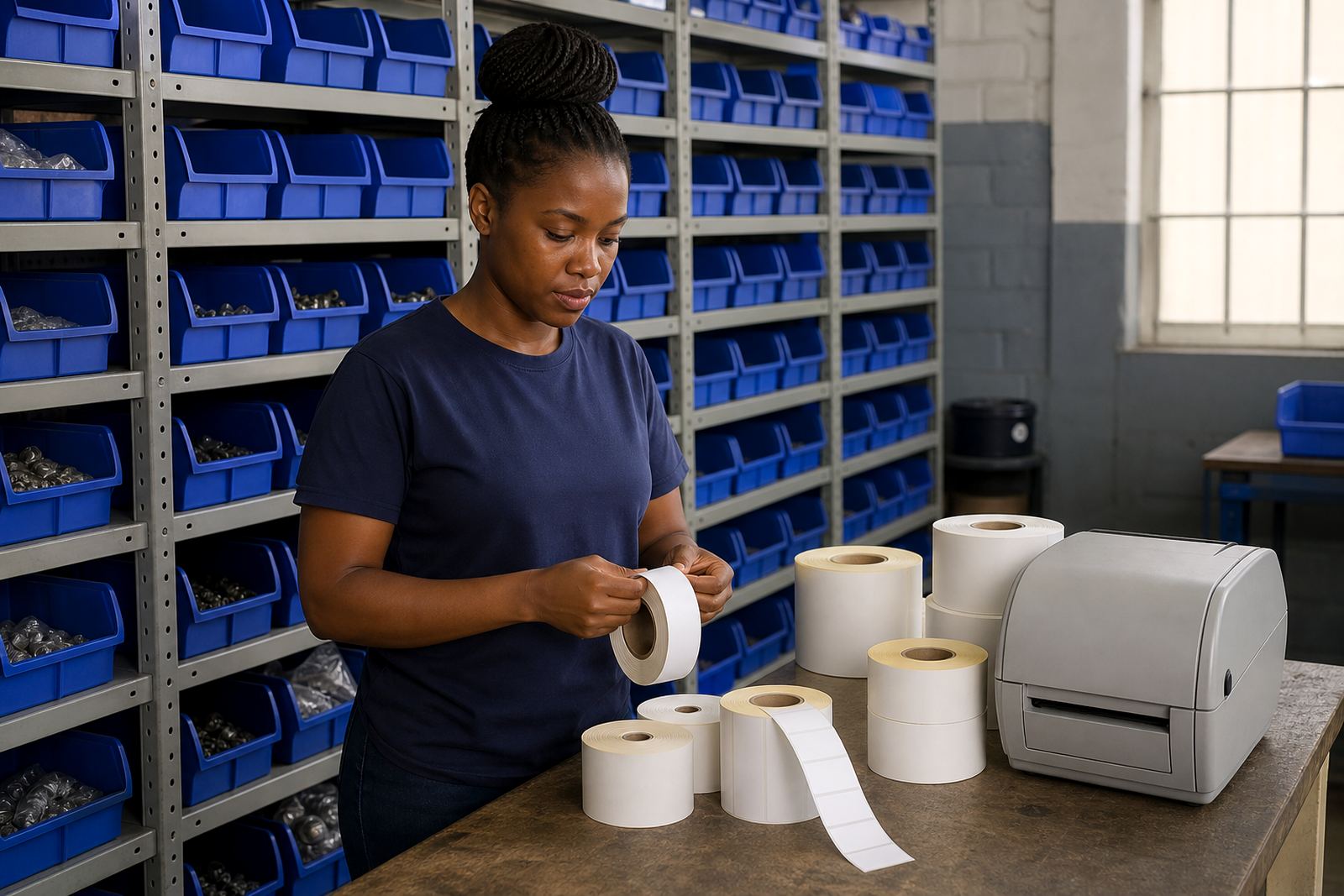
One part of the project that saved time was checking compatibility before the full run. We confirmed the printer width limits, the core diameter and the roll outer size so the operators would not have to force the reel into place. That made the label changes quicker and reduced the chance of misfeeds.
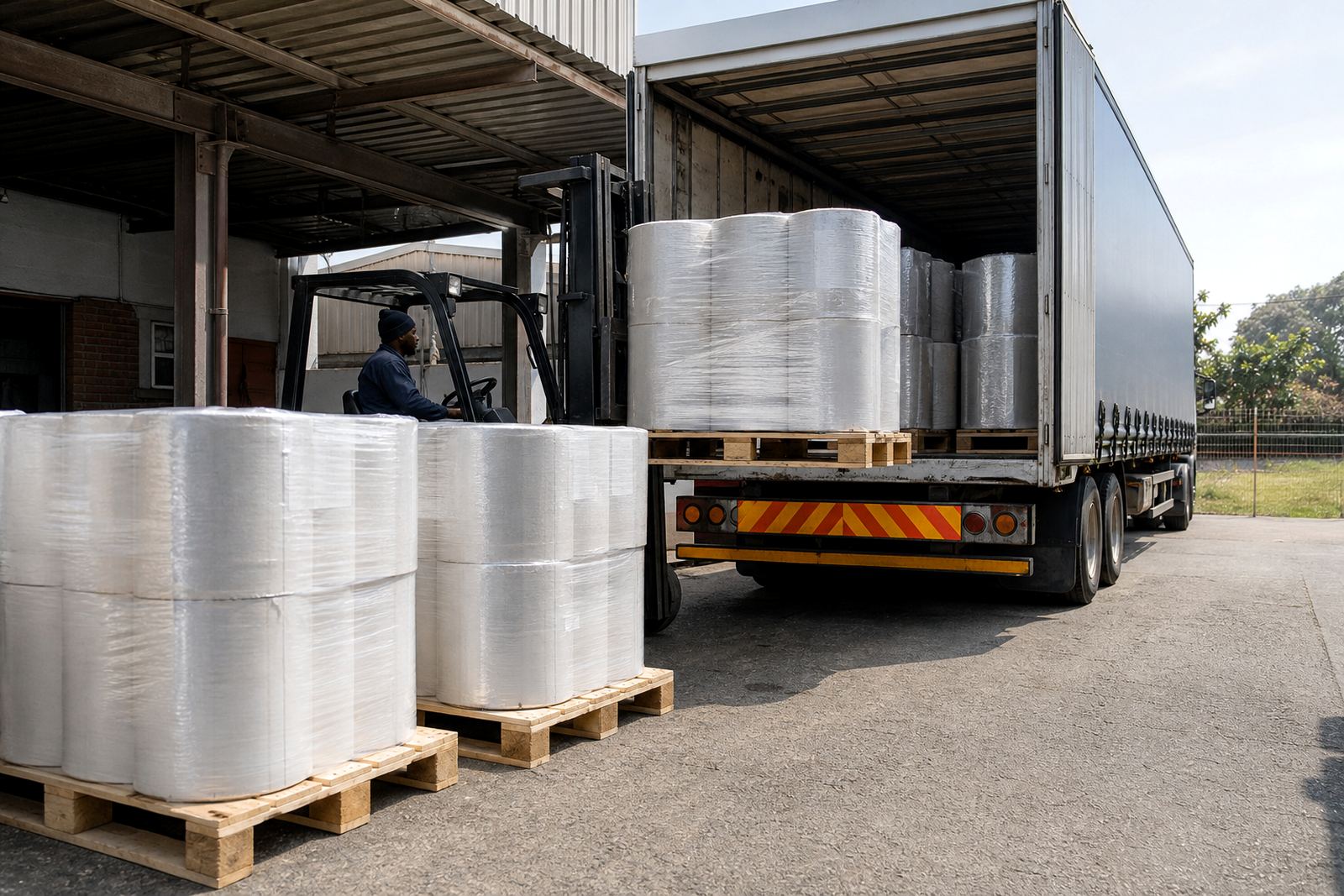
For the dispatch room, a few small changes made a real difference. The team wanted enough metres on a roll to keep a station going through a shift, but not so much that the reel became awkward to handle. We planned the roll length around their actual usage pattern and packed the finished rolls for dispatch in a way that protected the edges during transport.
- Printer fit checks for benchtop thermal units
- Core sizing matched to the machine holders already on site
- Roll length planned around shift usage and dispatch peaks
- Dispatch packing arranged to protect the label edges
What changed in the Parow packing area
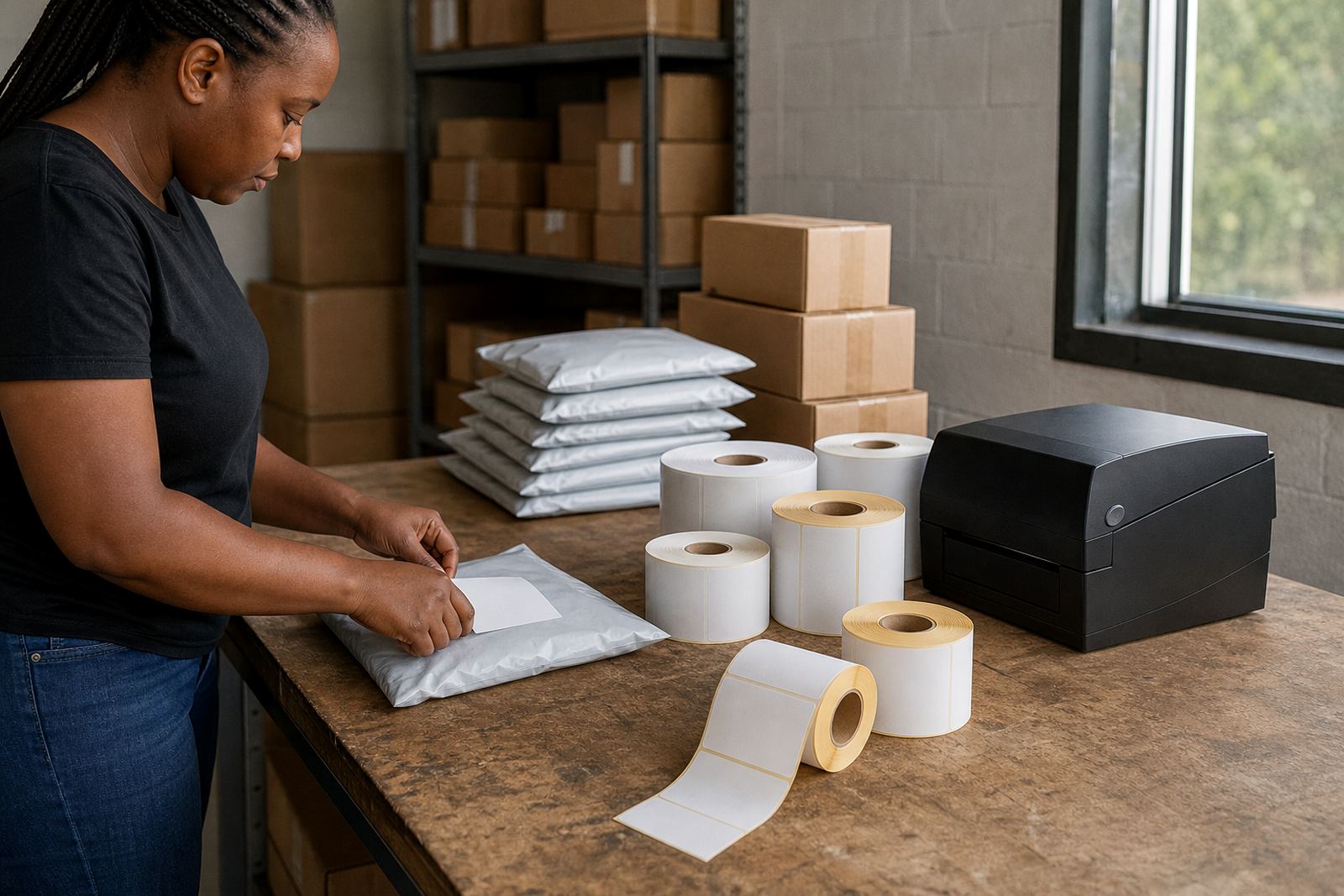
Once the rolls were in use, the packing room had fewer interruptions caused by label feed issues and label stock slipping off cartons. Operators could print, peel and apply labels with less fiddling at the bench, and the barcode quality stayed readable for the downstream sorting process. That helps when a parcel has to move from the Parow floor into a larger distribution chain without delays.
The client also found it easier to manage reordering because the working spec was documented clearly. Instead of guessing at the next batch, the team now had a repeatable format for face stock, adhesive and core size. That sort of consistency matters in dispatch rooms where a small change can throw off the whole day.
- Fewer misfeeds and less label waste
- Cleaner barcode output for sorting and scanning
- More consistent peel and application at the packing bench
- A repeatable order spec for later runs
What we would set up on the next dispatch run
We would approach another Parow dispatch label job the same way: check the printer first, confirm the application surface and then set the roll size around real usage rather than guesswork. That gives a more practical outcome than simply sending a standard roll and hoping it fits. It also keeps the operation running in a neat rhythm, which is what a busy dispatch room needs.
If the operation later changes to a longer lasting label or a different print process, the spec can be adjusted to thermal transfer stock with a ribbon friendly face material. For this project though, direct thermal was the correct choice for speed, clarity and ease of use in a high turnover packing area.
Key facts
| Project | Parow Dispatch Labels |
|---|---|
| Town | Parow, Cape Town |
| Supply type | Self-adhesive direct thermal shipping label rolls |
| Core size | Matched to existing benchtop printer holders |
| Roll format | Custom slitting and roll length planning |
| Lead time | 2 weeks from spec check to dispatch |