
Why Moorreesburg needed a better roll spec
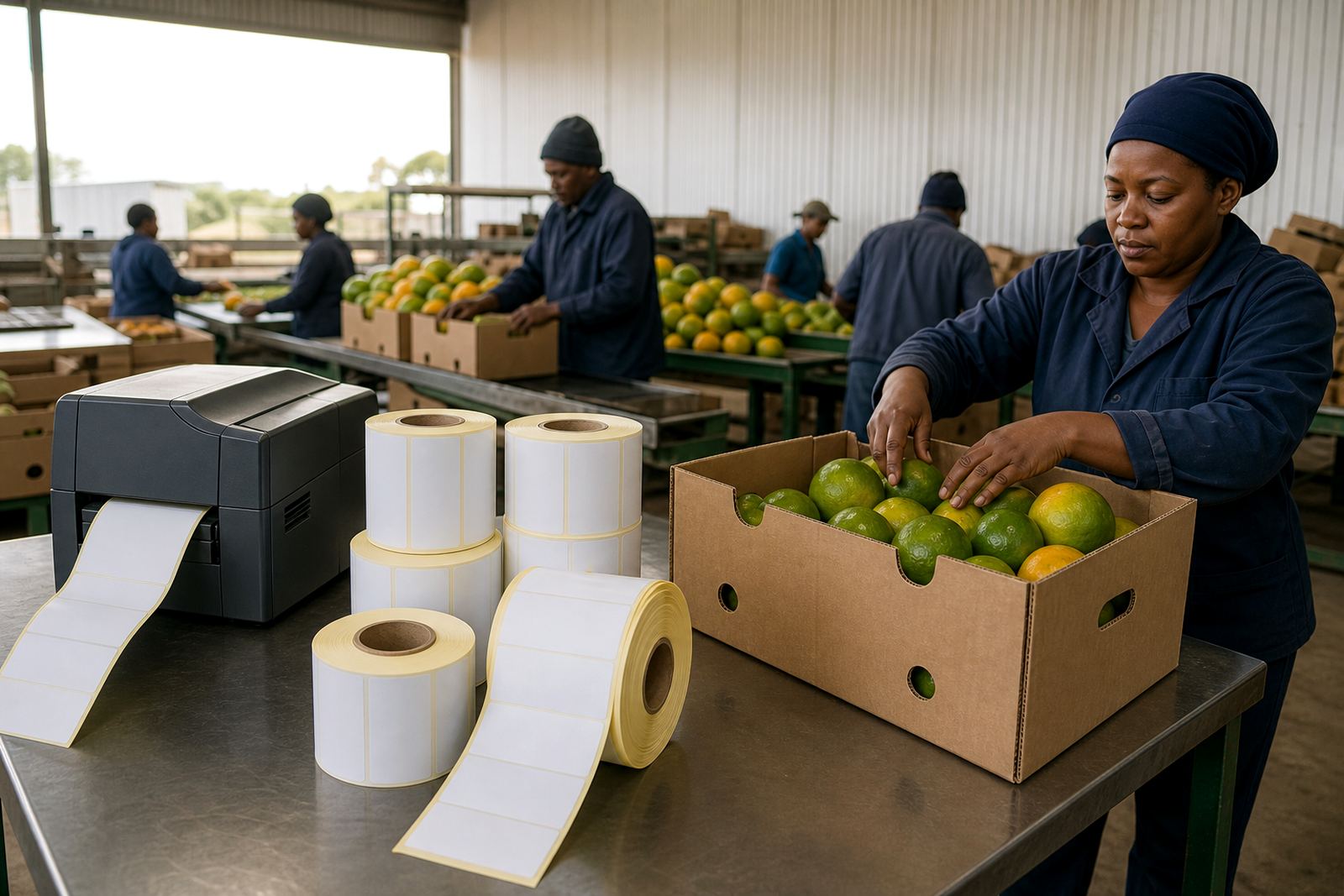
The brief came from a produce operation in Moorreesburg handling carton labelling, produce traceability and outbound pallet marking. The team needed rolls that would print cleanly through long shifts, hold barcode contrast on white face stock and release without tearing when staff were moving fast at the packing table.
There was also the practical side. Produce rooms can be damp, warm and busy, and labels have to survive cool rooms, handling, and occasional condensation once cartons move between areas. The rolls also had to fit the printers already in use, with no waste on mismatched cores or the wrong winding direction.
- Use case: produce packs, carton labels, dispatch labels and traceability codes
- Conditions: moisture, cold storage movement, dust and quick handling
- Printer concern: correct roll width, core size and unwind direction
The face stock, adhesive and liner we matched
For this job we worked with a direct thermal face stock for fast print runs where the label only had to carry a short life span, and a thermal transfer option for cartons and items that needed better durability. The direct thermal material was suited to day-of-pack use, while the thermal transfer option gave a tougher printed image when the product would sit longer in storage or move through cooler areas.
We matched the adhesive to the surface. For clean cartons, a permanent general purpose adhesive was the practical choice. Where the team needed easier removal from certain secondary packs, a lighter tack option was considered. The liner was set up for smooth feeding through the printer and easy strip-off at the packing bench, which matters when staff are applying hundreds of labels a shift.
- Face stock options: direct thermal for short-life use, thermal transfer for longer holding periods
- Adhesives: permanent and lighter tack options depending on pack surface
- Liner: silicone-coated release liner for steady feeding and clean dispensing
Roll lengths, cores and printer fit checks
The packhouse was using a mix of label printers, so we checked the roll build against each machine before production. That meant confirming core diameter, outer roll size, unwind direction and whether the printer wanted a narrow slit roll or a wider format for batch packing. A small mismatch can stop production, and in a produce environment that means a queue building at the line very quickly.
We supplied sample rolls first so the team could test feed, print darkness and barcode scanning before committing to the full run. That let us confirm the labels tracked properly through the printer path and did not curl at the edge after printing. We also planned the roll length so the packroom could get through a full shift without constant changeovers.
- Core sizes checked for benchtop and industrial printers
- Roll lengths planned to reduce downtime during packing peaks
- Barcode scan testing done before the main run
How the run was handled in Westmead
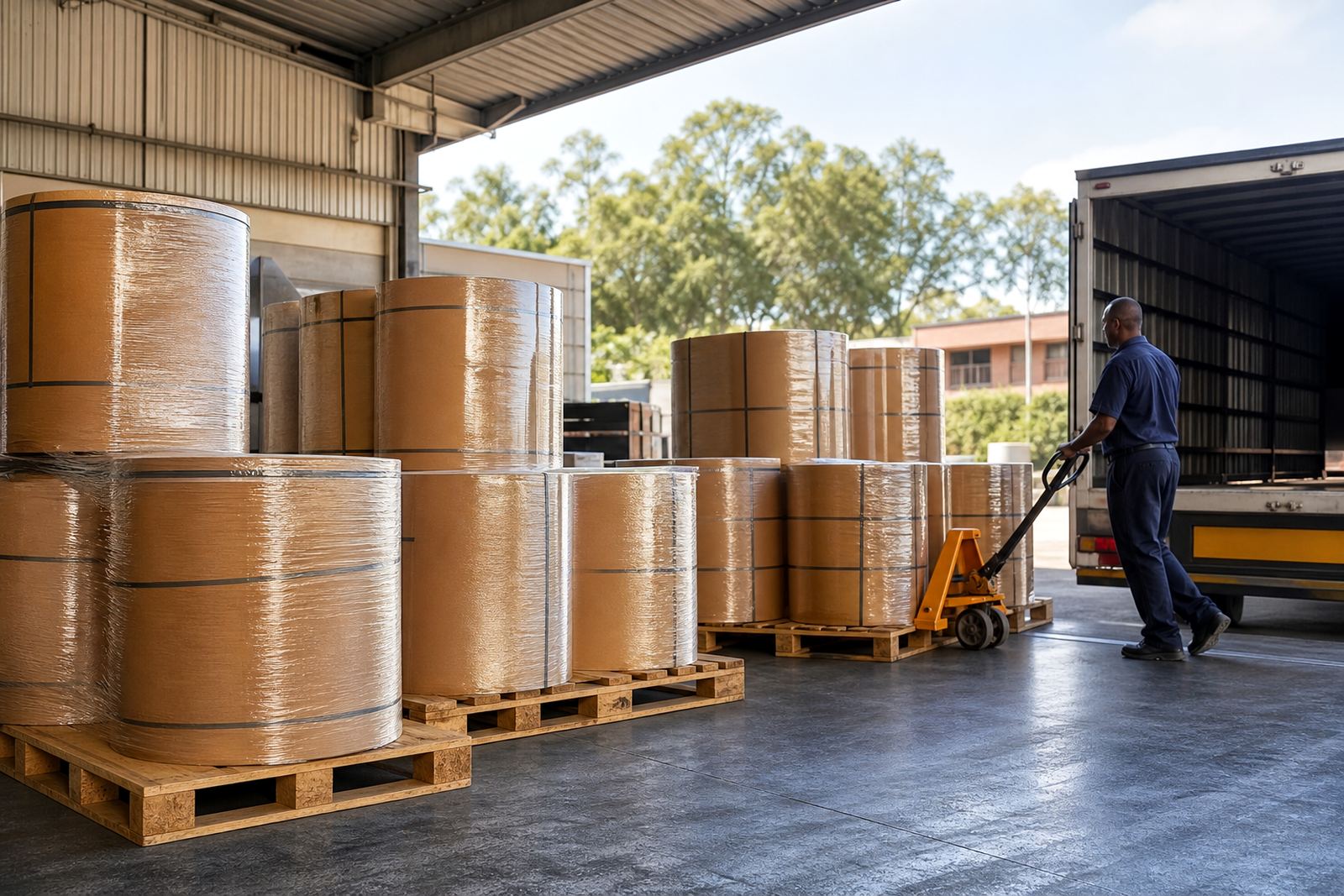
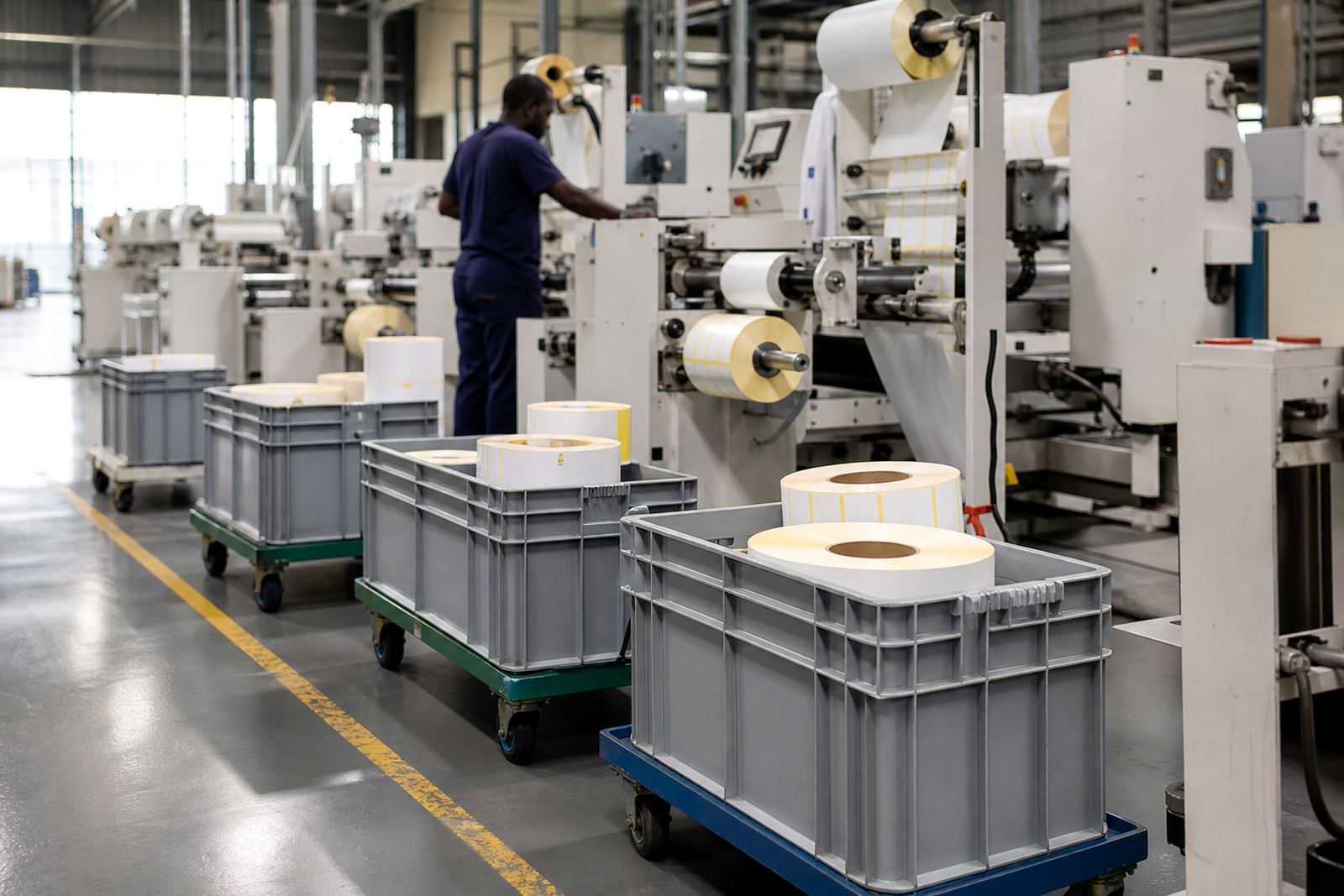
Once the spec was signed off, the rolls were slit, wound and packed in Westmead, Pinetown for collection and dispatch. The conversion team set the winding direction to suit the applicator style and printer feed path, and the dispatch side packed the rolls to reduce crush and edge damage in transit. That matters when freight is moving from KwaZulu-Natal to the Western Cape or inland depots.
The job was planned over two weeks from first sample to final dispatch. Week one covered sample rolls, printer fit checks and adhesive matching. Week two covered production, roll labelling and dispatch packing. The client wanted a practical turnaround, not a long back-and-forth, so the whole process was kept tight and clear.
- Week 1: samples, fit checks and adhesive selection
- Week 2: production, packing and dispatch
- Dispatch planning: carton protection and roll identification for receiving teams
What changed on the packing floor
After the new rolls were introduced, the packing team had fewer interruptions from feed errors and label changeovers. The barcode print was more consistent, and the labels sat flatter on the carton surface, which helped when workers were scanning in a hurry or loading mixed batches for delivery. The team also had less waste from misfeeds and wrong-size rolls.
For a produce business, those small gains matter. Moorreesburg operations often work to tight loading windows, and if a label fails at the wrong moment, pallets wait. With the roll spec aligned to the actual printer and pack surface, the team could keep moving through the shift with less rework.
- Cleaner barcode output for scanning at dispatch
- Less waste from wrong roll widths and poor feed
- Fewer stops during busy packing periods
Label supply for seasonal packing swings
Produce volumes change with the season, so we set up repeat order planning around expected packing peaks. That includes holding the roll spec, confirming any change in carton stock or pack surface, and checking whether the printer fleet has changed at the site. If the packhouse swaps a machine or changes the label size, a quick review saves a lot of nuisance later.
For this Moorreesburg project, the team wanted a supplier that could deal with the practical details without making each order start from zero. That meant keeping the same slit widths, core size, winding direction and face stock where possible, then adjusting only where the packing job actually demanded it.
- Repeat order planning for seasonal volume changes
- Usage review if cartons, printers or pack formats change
- Same core, width and wind spec retained where possible
The parts of the spec that mattered most
The most important thing was not just the label material, but the fit between the roll and the packing line. In this kind of work, the right adhesive on the wrong face stock can still give trouble, and the right material on the wrong core can slow everything down. We kept the spec practical, measured and compatible with the equipment already in the packhouse.
If we were to repeat this job, we would follow the same order: sample rolls first, then printer fit checks, then final production and dispatch packing. That sequence kept the risk low and helped the Moorreesburg team get a label roll that worked in real packing conditions, not just on paper.
Key facts
| Project | Moorreesburg Produce Rolls |
|---|---|
| Client type | Produce packhouse and dispatch operation |
| Town | Moorreesburg |
| Primary products | Self-adhesive label stock and thermal rolls |
| Core sizes | Matched to benchtop and industrial printers |
| Timeline | 2 weeks from samples to dispatch |