The Bellville brief landed on the packing table
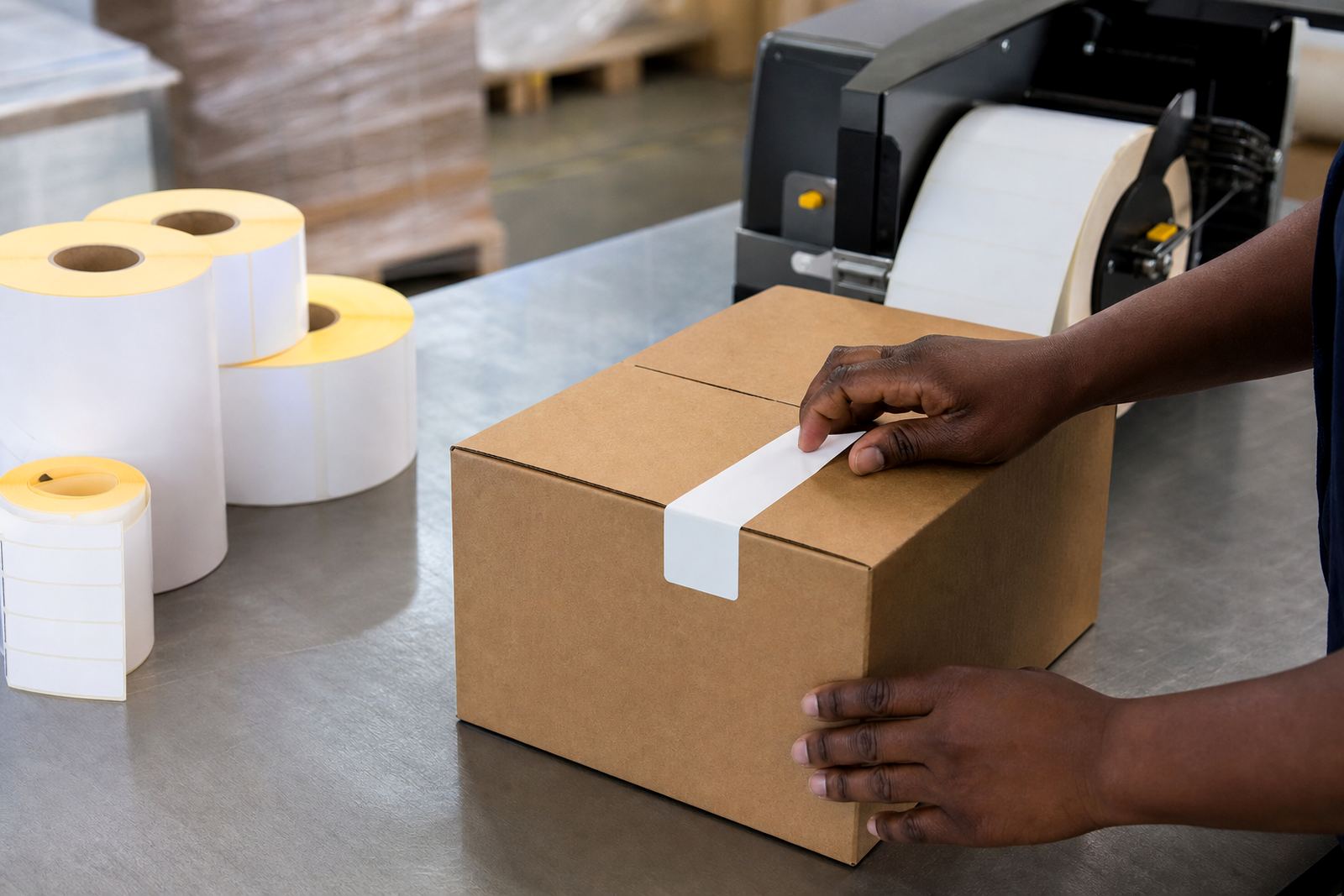
The client was a mid-sized packaging and dispatch operation in Bellville serving retail and distribution customers across the northern suburbs and wider Western Cape. Their cartons moved through busy loading areas, then on to courier lanes where boxes are lifted, stacked and opened more than once. They wanted tamper seals that would make interference obvious at a glance, without peeling at the corners or leaving bits of adhesive on the carton. Their team also needed the rolls to run on standard thermal transfer printers already on site, with no change to the label path or a different core size.
The brief was practical from the start. The seals had to bridge printed carton seams cleanly, stay legible after storage, and suit winter damp as well as the hotter, dustier days in Bellville. They also wanted a label format that would not slow packing staff down during peak dispatch. A lot of jobs like this fail because the label is chosen first and the box later, which is backwards. Here the carton board, glue line and handling pattern all mattered.
What had to work, and what could not be compromised
For tamper seals we usually look at three things together: the face stock, the adhesive and the liner. The face stock needs enough body to carry print clearly and tear in a controlled way if someone removes it. The adhesive must bond to corrugated board, including slightly dusty cartons, but not ooze under pressure. The liner has to release smoothly for fast application, especially when operators are using a hand-applied process or a printer-applicator line. In this job the client wanted a material that gave clear messaging, held shape across the seam and still performed in Bellville conditions where humidity shifts through the day.
- Face stock: white self-adhesive label face stock selected for clear print and good contrast
- Adhesive: tamper-indicating adhesive matched for carton sealing, with strong initial grab
- Liner: silicone coated backing for clean release and consistent rewinding
- Format: roll labels wound to suit the client’s existing thermal transfer printer setup
- Core: standard core size checked against the printer feed path before production
- Roll use: carton seam seals for packing, dispatch and receiving control
We also had to keep the labels consistent from roll to roll, because a seal that changes in length or gap positioning makes packing slower. On these jobs, a millimetre here or there does matter. The prints must line up with the carton fold and the tear line, otherwise the seal does not tell the full story.
How the rolls were built for fast packing lines
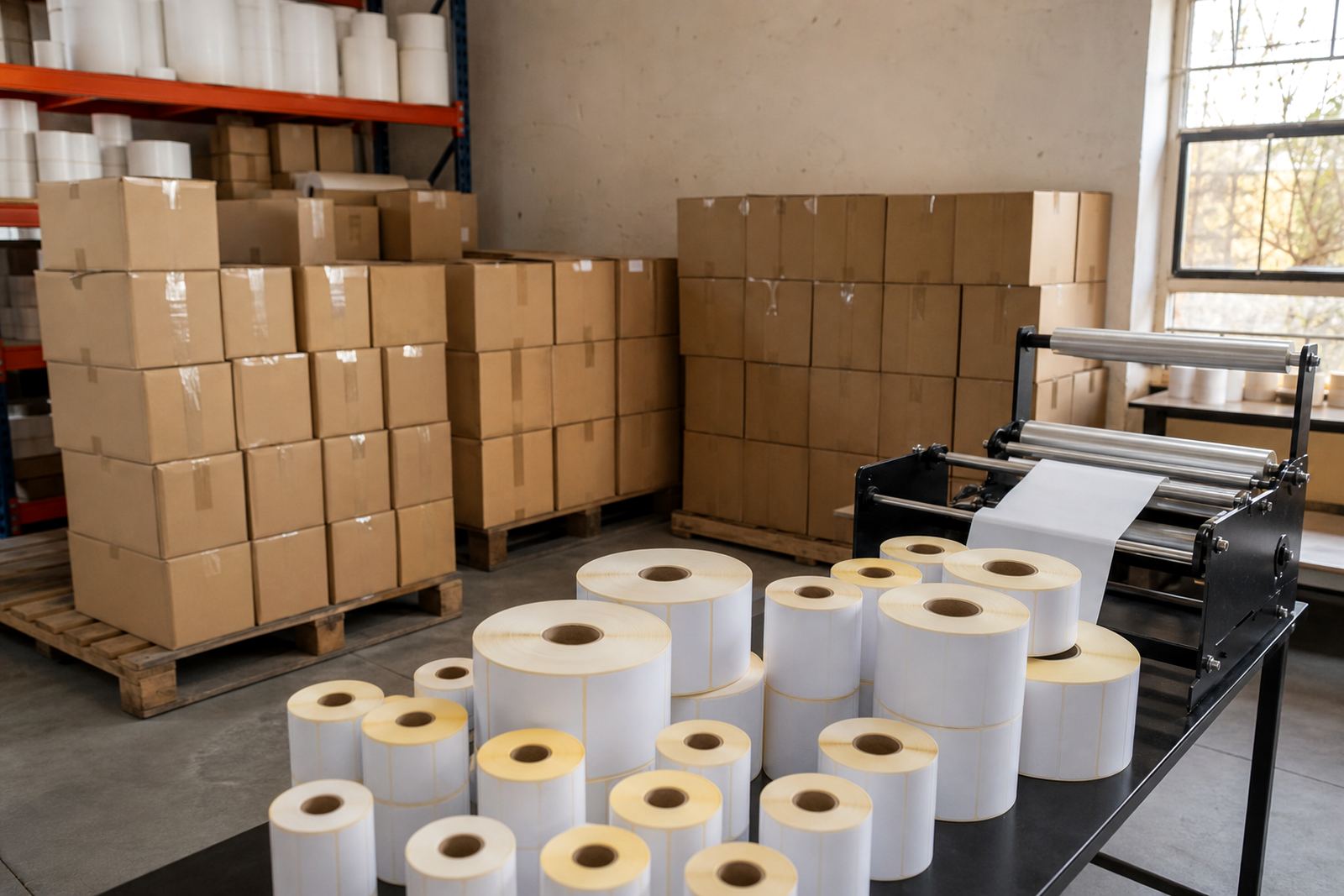
We supplied tamper-indicating label rolls prepared through our conversion and slitting process in Westmead, Pinetown. The label face stock was cut to the required seal width and rewound in the winding direction the client needed for their applicaton method. We planned the roll length so the packing team could work through a shift without constant changeovers, and we matched the core size to the printer feed so the rolls sat correctly on the spindle. Where needed, we also checked the unwind direction so the leading edge presented cleanly and the label did not twist under load.
The project called for direct thermal versus thermal transfer clarity as well, because not every label line uses the same print method. Direct thermal is useful where speed matters and the print life is shorter, while thermal transfer gives a more durable print for labels that must stay readable on a carton for longer. In this case we supplied rolls for thermal transfer printing, since the seals had to stay legible through storage, handling and delivery, and the client’s printer setup already supported that method. A small note worth saying: the printer fit check saved time later, because the staff did not have to fight the roll width or adjust guides every few boxes.
- Custom slitting to the exact seal width required for carton seams
- Rewinding to the needed roll length for fewer interruptions on the line
- Core sizing checked against the client’s printer spindle and feed guides
- Winding direction matched to the operator flow at the packing bench
- Sample rolls supplied first for fit and adhesion checks on real cartons
The two-week path from sample to sealed cartons
Week one was used for material selection, sample roll preparation and printer fit checks. The client tested the samples on actual cartons, including boards with light dust and areas where the fold line sat close to the glue join. We reviewed adhesion on flat board, around the seam, and after a short rest period to see how the bond settled. We also checked print clarity, since a tamper seal has to carry clear wording or mark lines and still look tidy after it has been handled a few times.
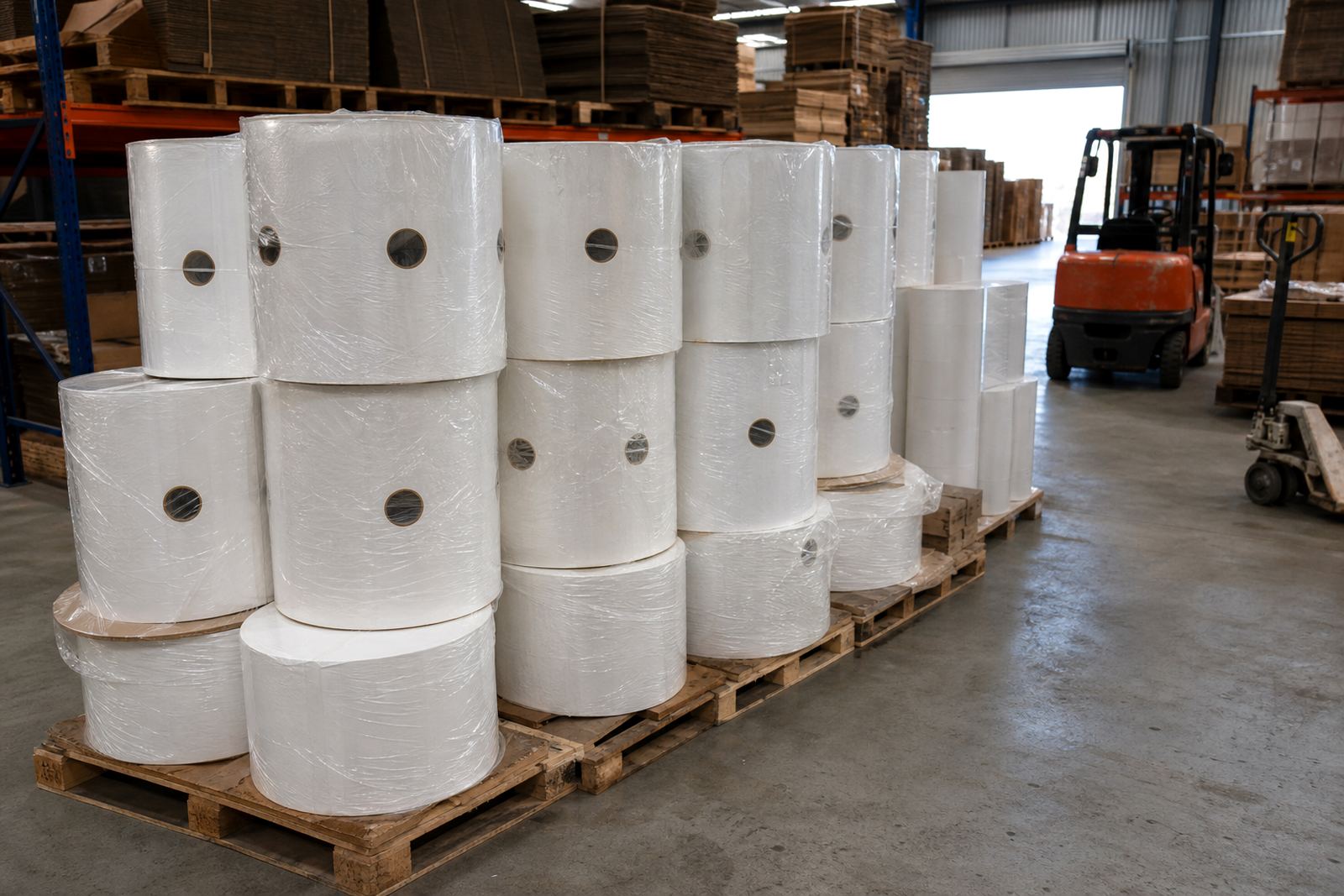
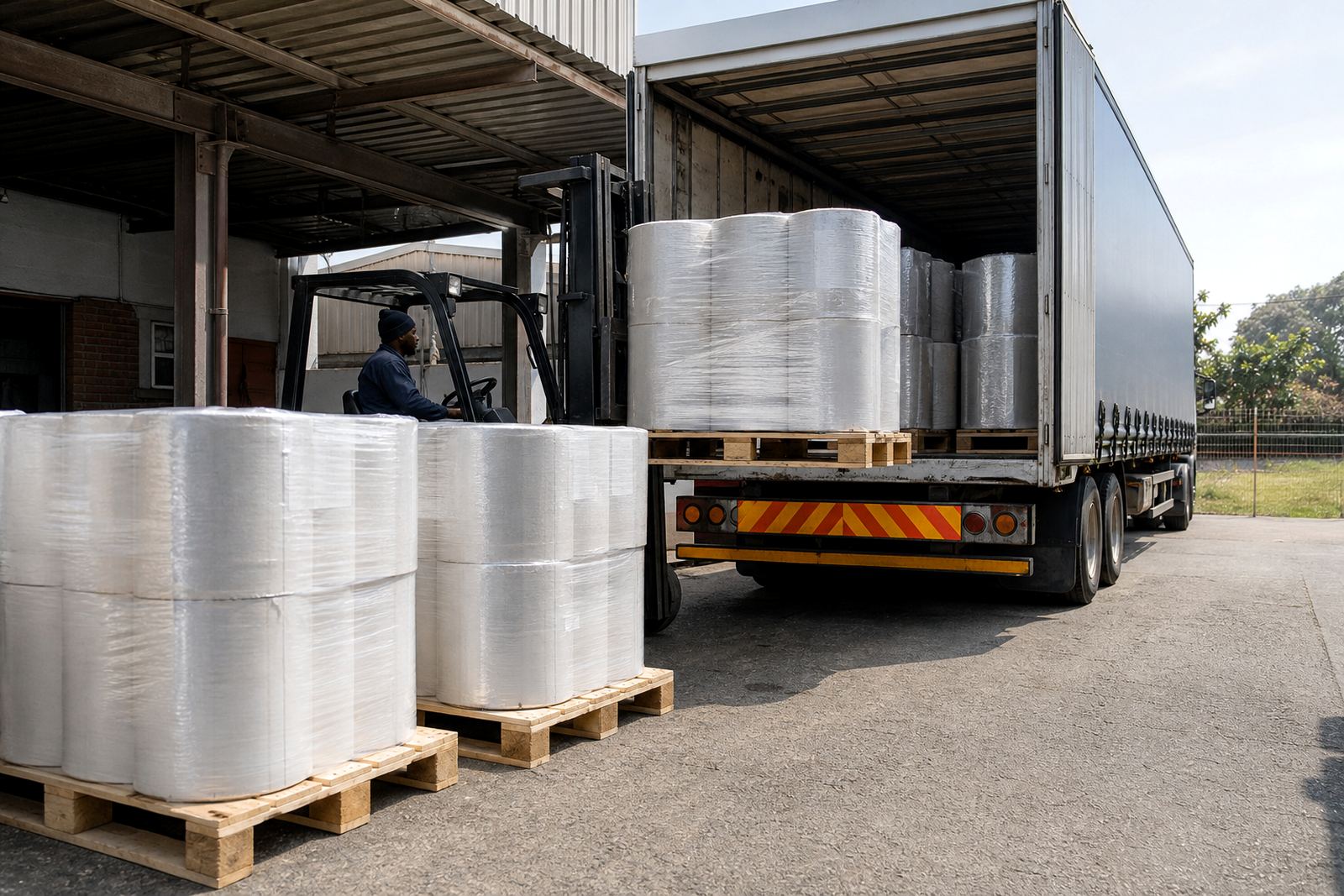
Week two covered final roll production, packing and dispatch from our Westmead base to Bellville. The packing team wanted the rolls boxed so the edges would not crush in transit, especially as the goods were moving through several handling points. The final dispatch was arranged with the roll labels packed for clean receipt and easy storage on site. The timeline stayed tight, but not rushed, which matters when a customer is changing over a control label on an active line.
- Week 1: sample rolls, adhesive checks and printer compatibility checks
- Week 2: final production, dispatch packing and delivery to Bellville
- Outcome: labels ready for immediate use on cartons without extra setup
What the Bellville team noticed after rollout
Once the rolls were in use, the packing team reported cleaner sealing across carton flaps and better confidence at dispatch. The tamper evidence showed clearly when a carton had been opened, and the labels held well through normal warehouse movement. That matters in a city route where cartons might be stacked, shifted and returned to a bay more than once before leaving the premises. The client also liked that the label print stayed readable under bright warehouse lights and did not smudge when handled with slightly damp hands, which is common in loading areas after rain.
The other gain was less visible but just as useful: the staff spent less time correcting misfeeds and fewer rolls were rejected at the printer. Because the core size, roll length and winding direction were set properly, the labels moved through the printer steadily. In plain terms, the job just worked, and that is usually the best outcome for packing control. The customer also said the seal looked neat on the carton, not like an afterthought glued on at the last minute.
What we would carry over on the next tamper seal run
If we were repeating this project for another Bellville or Cape Town packing line, we would follow the same sequence: confirm the carton board, confirm the print method, then set the adhesive and winding spec around that. We would still start with sample rolls, because real cartons always tell you more than a paper spec sheet. If the sealing surface changes, or the cartons move between warm and cold storage, we would review the adhesive again before final production. The same goes for a printer change, since even a small difference in core fit can slow the line.
For businesses sealing cartons in retail, logistics or light manufacturing, the lesson is straightforward. A tamper label is not only a message, it is part of the pack process. When the face stock, adhesive and liner are matched properly, the seal does its job without giving the staff extra work. That was the outcome here, and it is the outcome we would aim for again.
- Recheck the carton surface if the board supplier changes
- Confirm printer model and core size before every repeat order
- Keep sample rolls on hand for quick line checks
- Review roll length if dispatch volumes rise sharply
Key facts
| Project | Bellville tamper-indicating carton seal rolls |
|---|---|
| Client type | Packaging and dispatch operation |
| Town | Bellville, Western Cape |
| Product build | Self-adhesive label face stock with tamper-indicating adhesive and release liner |
| Print method | Thermal transfer roll labels |
| Timeline | 2 weeks from sample approval to dispatch |