Bins, bolts and labels that had to keep pace
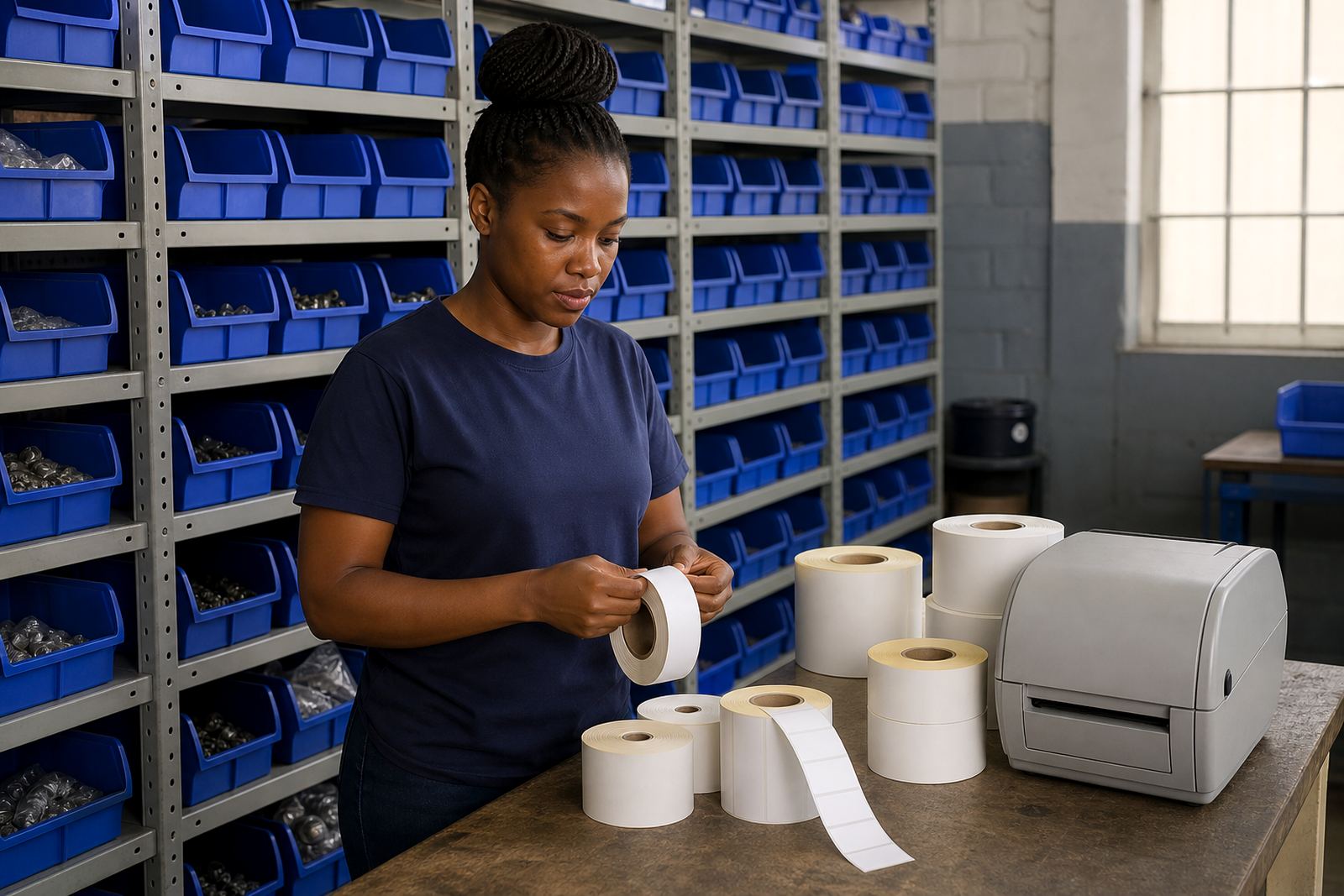
The client was a workshop supply operation in Germiston that needed stock labels for parts bins, rack fronts and packaged hardware. Their team was moving between receiving, kitting and dispatch all day, so labels had to stay readable after handling, wiping and short term storage in a busy floor area.
They needed bin label rolls that could be printed in house, split into useful widths for different container sizes, and supplied in a format that would not jam the printer when the shifts got busy. The stock also had to stand up to indoor warehouse conditions, including dust, oily hands and the occasional heat build up near loading areas.
The brief from Germiston, in plain terms
The ask was practical: clear part identification, strong barcode contrast and labels that would stay put on plastic bins, cardboard cartons and powder coated racking. They also wanted a steady roll length so the team could plan label changes without stopping production every few minutes.
- Label face stock for general stock control use on smooth bin surfaces
- A release liner that fed cleanly through benchtop and industrial printers
- Adhesive selection for clean indoor surfaces and lightly textured packaging
- Roll widths that suited narrow bin fronts and wider shelf labels
- Core sizes matched to the printers already on site
The workshop also asked for guidance on direct thermal versus thermal transfer, because some bins were exposed to sunlight at the loading side and some were stored in cooler internal aisles. That choice mattered for print life and image quality.
What we supplied and the way it was set
We supplied self adhesive label stock in a few practical constructions, including paper face stock for general indoor use and a synthetic face option where extra wipe resistance was needed. For adhesive, we matched a permanent grade for most part bins, then reserved a removable option for temporary location labels and seasonal stock moves.
For print method, we explained the difference between direct thermal and thermal transfer in normal workshop terms. Direct thermal was suitable for short life labels and quick printing, while thermal transfer gave better durability where labels were likely to face abrasion or longer storage. The printer fit check covered ribbon use, print width, core size and winding direction so the rolls could run without constant adjustment.
We also handled custom slitting and roll length planning so the client could use one master material across several label widths. That reduced waste and helped the stores team keep the same look across bins, shelves and cartons. A few test rolls were supplied first, then the final set was wound and packed for dispatch.
Specs that made the rolls work on the floor
On this job, the useful details were the ones that affected day to day use. We planned roll widths from narrow bin strips up to wider stock identification labels, and we kept the core sizes aligned to the printers already running in the Germiston store room. That avoided the common problem of a roll that looks right on paper but not on the spindle.
- Face stock: paper for general bins, synthetic where extra resistance was needed
- Adhesive: permanent for stock control, removable for temporary marking
- Linertype: clean release liner for smooth feeding and neat waste removal
- Print method: direct thermal for short term labels, thermal transfer for longer life
- Core sizes: matched to the printer load requirements on site
- Winding direction: set for the operator's existing label path and peel edge
We also checked that the barcode area stayed clear of the adhesive bleed and that the text would remain legible at close range. In a parts store, a label that is easy to scan saves a surprising amount of time during picking and cycle counts.
Timeline from sample roll to dispatch
The project ran over three weeks from first briefing to final dispatch. Week one covered the usage review, the sample rolls and the printer fit checks. Week two was used for face stock selection, adhesive matching and roll length planning. Week three covered custom slitting, rewinding, packing and dispatch preparation.
Because the team in Germiston wanted to avoid interruption to stores operations, we kept the process tight and practical. There was no need for long product trials across multiple departments. The trial rolls showed enough to confirm feed quality, barcode contrast and adhesion on the relevant surfaces, so the final order could move ahead without delay.
What changed once the bins were labelled properly
Once the rolls were in use, the workshop could label stock more consistently across bins, shelves and small cartons. Staff spent less time retyping labels or replacing peeled corners, and the clearer print improved stock picking around the parts area. The labels also made it easier to separate fast moving items from slower stock.
The client reported better order in the bin areas and fewer mistakes during put away. That matters in a place where the same type of washer, fitting or service part may sit in several locations. A label system only works if it can be repeated every day, not just when the stores person has extra time.
For the Germiston site, the biggest gain was control. The right stock, the right roll width and the right adhesive meant the labels became part of the workflow instead of another task to manage.
What we would set up for the next parts bin run
We would repeat the same approach on another parts bin project: start with the printer already in use, check the actual bin surfaces and choose the adhesive by location rather than by guesswork.
For similar sites in Germiston, Johannesburg, Pretoria or Durban, we would keep the sample stage, the roll length planning and the winding direction check. Those small details save time later, especially where one store handles many part numbers and the team needs labels that behave the same way every shift.
- Keep a master material and split into useful widths
- Match core size to the printer before final winding
- Use removable adhesive only where labels must be changed often
- Choose thermal transfer for labels that need longer life
The result is not flashy, but it is steady and that is what stock control needs.
Key facts
| Project | Germiston Parts Bins |
|---|---|
| Client type | Workshop stock control and parts storage operation |
| Town | Germiston |
| Supplied | Self adhesive label stock and thermal rolls |
| Timeline | 3 weeks from sample rolls to dispatch |
| Key method | Custom slitting, rewinding, core sizing and printer fit checks |