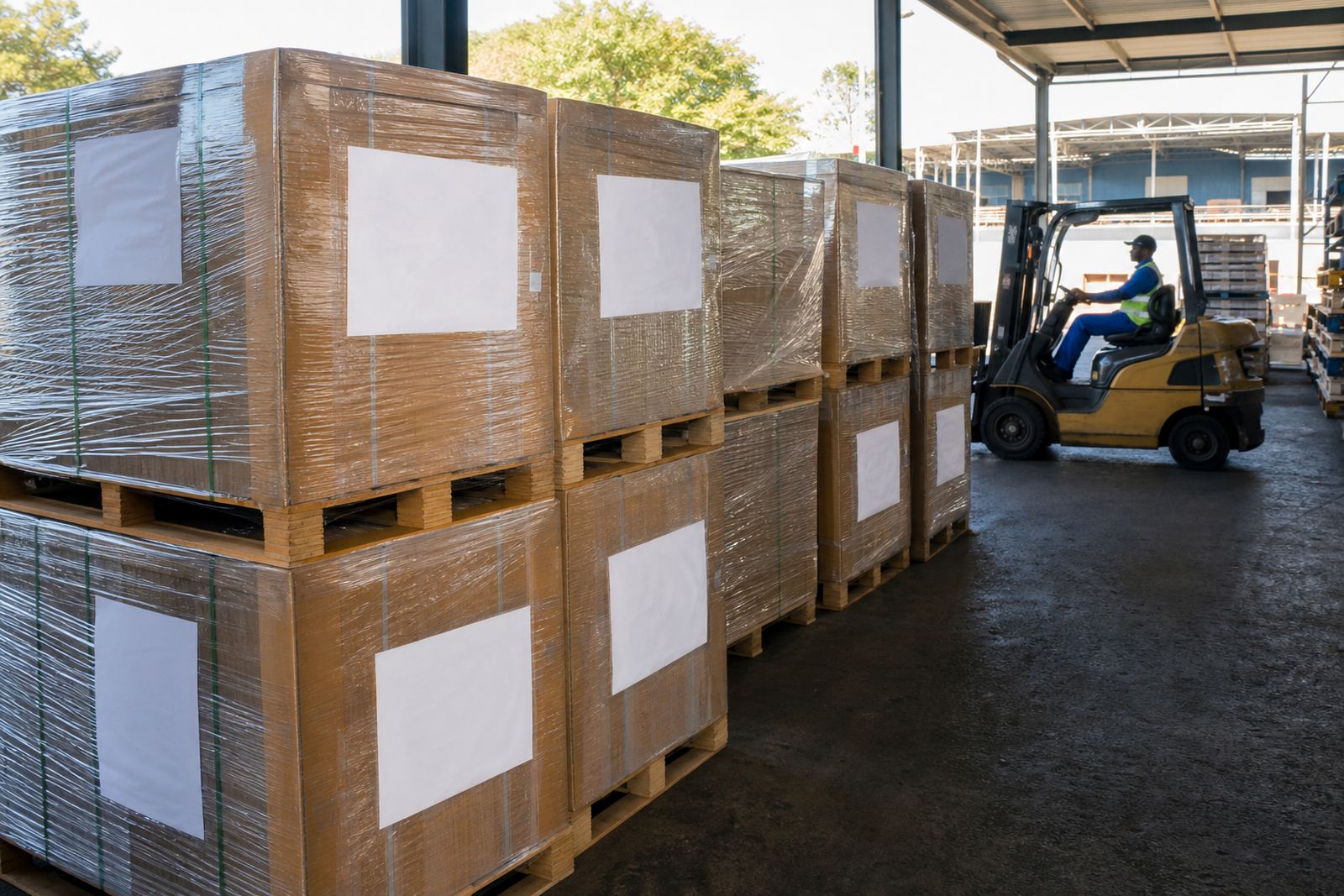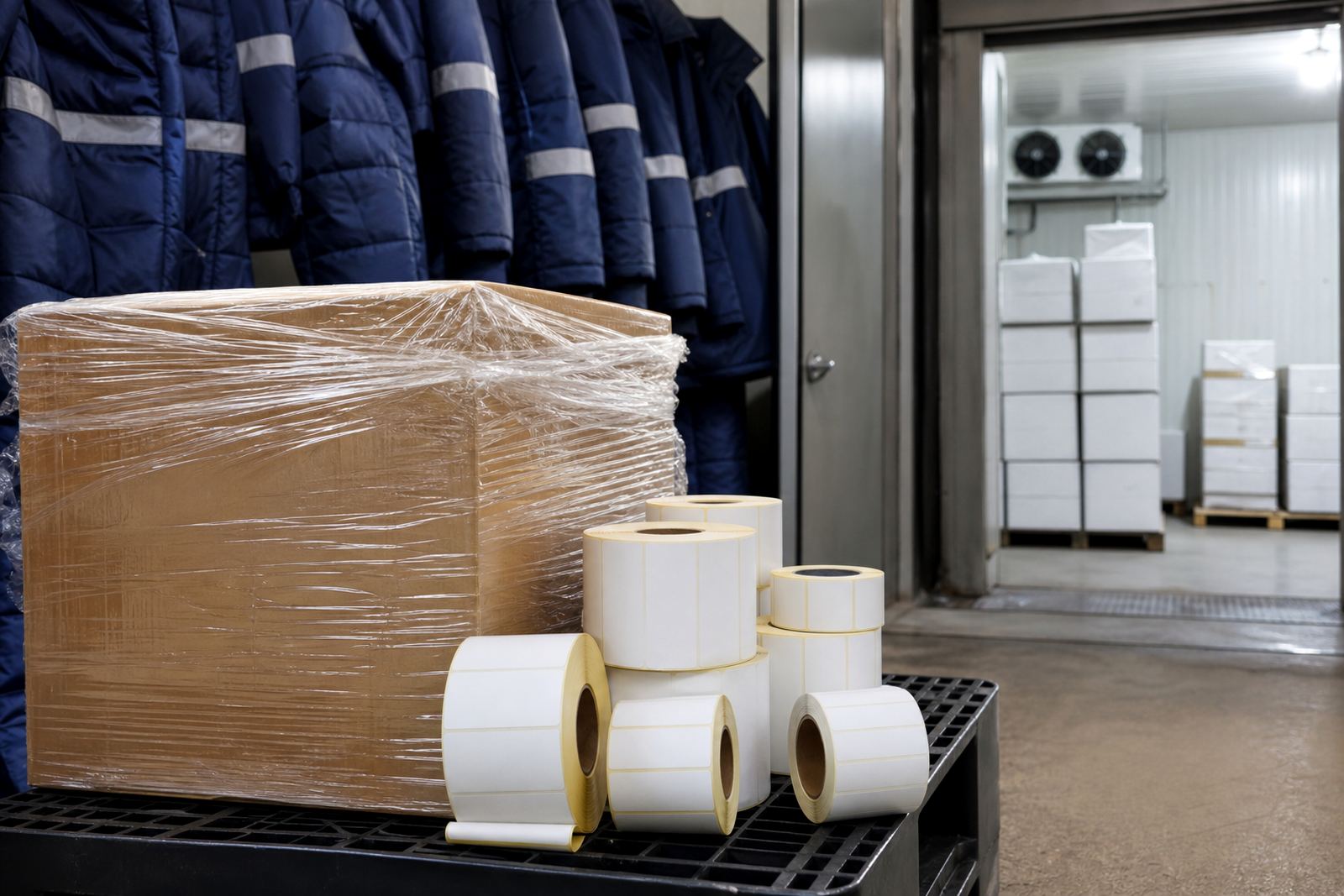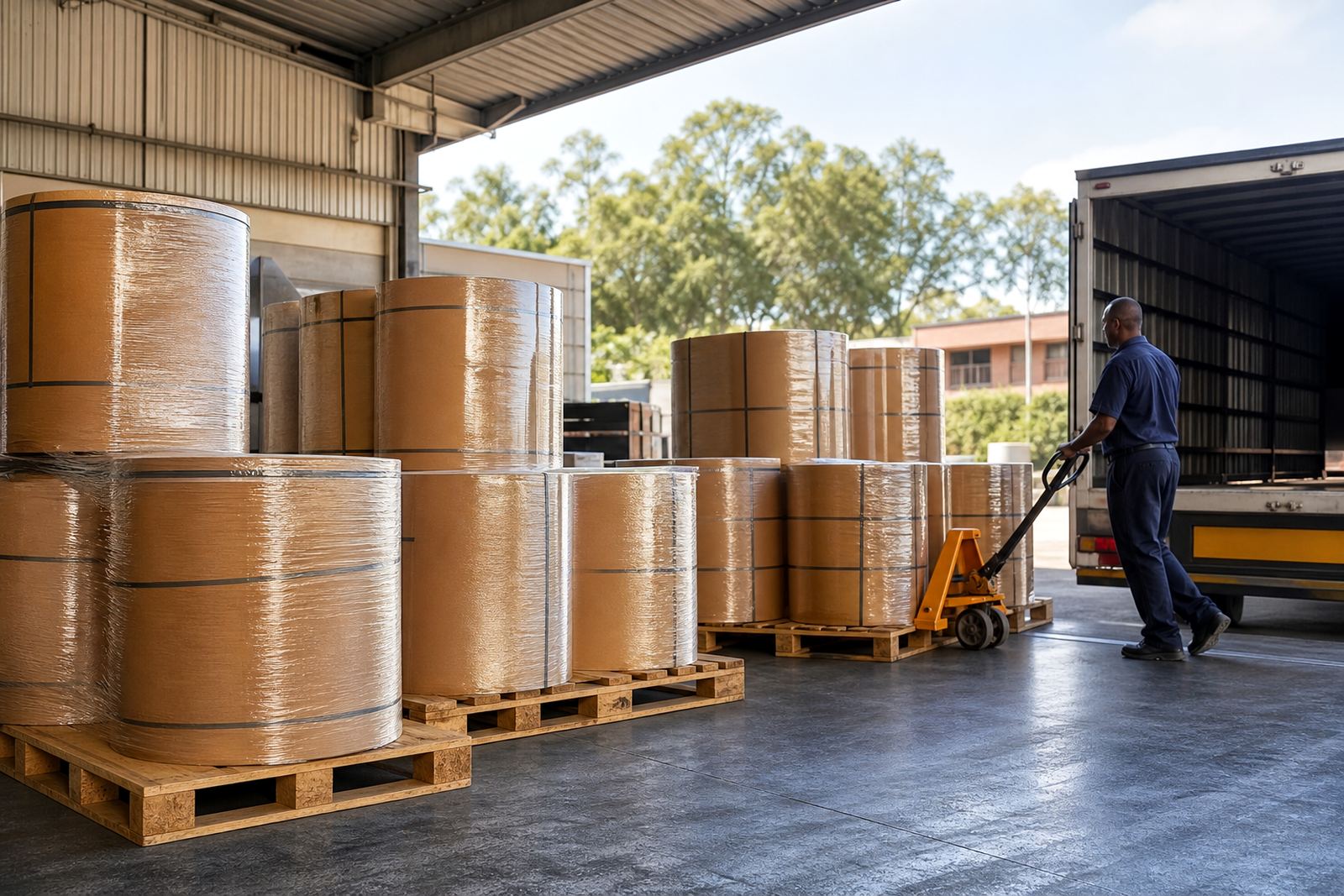

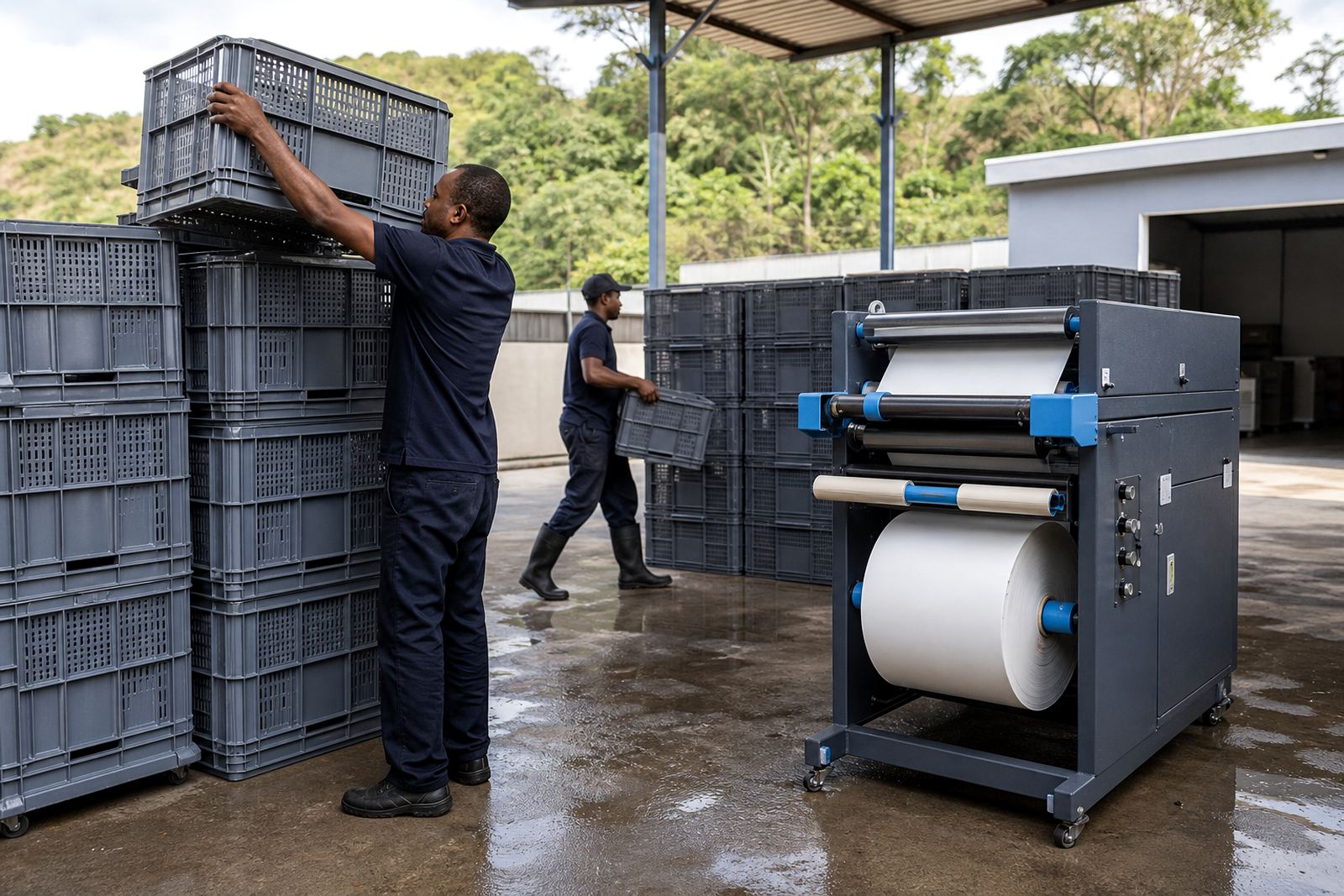
How the crate label problem showed up on the floor
The work came from a reusable crate user in Newlands East, Durban, where boxes and tote crates move through packing, loading and return cycles every day. Their old labels were leaving glue marks, tearing on removal and causing extra time at wash-down and inspection points. The brief was clear: keep the label readable in transit, then allow clean removal without damaging the crate surface or leaving sticky residue.
The team also had to work around mixed handling. Some crates were labelled before loading, some after sorting, and some sat in a hot bay before dispatch. In coastal humidity, a label that looks fine in the morning can start lifting by afternoon if the face stock and adhesive are not matched properly. We used that as the starting point, not just the print size.
Stock, adhesive and liner choices that made sense for reuse
For this project we supplied a self-adhesive face stock suited to general packaging and identification work, paired with a removable adhesive designed for temporary hold. The liner was chosen for steady dispensing on the customer’s printer path and for clean converting on our side, so the roll would feed evenly and not snag during long runs. We also checked whether the print surface needed a matte or smooth finish for barcode reading and handwritten marks.
On reusable crates, a removable adhesive must strike a balance. Too light and the label peels during transport. Too strong and the label leaves a mess when removed. We planned for that middle ground, with enough tack for day-to-day handling and a release profile that made end-of-cycle stripping quick. The result was a neater crate return process, less rubbing with solvents, and less wear on the plastic surface.
- Label face stock: general purpose self-adhesive stock for clean print and handling
- Adhesive type: removable grade for temporary crate identification
- Liner: silicone-coated backing for stable release from the roll
- Finish: print-friendly surface for barcodes, batch marks and short text
Roll build for direct thermal and ribbon printing
The client needed rolls that would work with their existing benchtop and industrial label printers, so we checked the print method first. Direct thermal stock works well for short-life labels and avoids ribbon use, while thermal transfer stock is better where you need more resistance to scuffing, heat or contact with moisture. For this crate job, the choice depended on how long the label stayed on the crate and how much handling it got before removal.
We supplied rolls in the core size that matched the printer feed path and mandrel setup already in use. Core sizing matters more than many people think, because the wrong core can cause wobble, misfeeds or wasted set-up time. We also confirmed winding direction so the label peeled off the correct way through the printer, then planned roll length to reduce changeovers during busy loading periods. A short stop at the wrong time can upset an entire dispatch line, especially when loads are going out before peak traffic hits Old Main Road.
- Direct thermal option for shorter holding periods and fast print use
- Thermal transfer option for longer life and better rub resistance
- Core sizes matched to the customer’s printer hardware
- Winding direction set for smooth feeding and correct peel orientation
What we did in the first two weeks
The full job took two weeks from initial sample sign-off to finished roll supply. In week one we reviewed the crate surface, the print method, and the handling pattern in Newlands East. We then produced sample rolls and checked peel behaviour by hand, because what looks fine on paper does not always behave the same on a crate wall or lid. We also looked at whether the customer needed a slightly larger label panel for clearer batch numbers without crowding the barcode.
In week two we converted the agreed stock, slit it to the required widths, and packed the rolls for dispatch. The pack-out had to suit local receiving conditions, so we used tidy carton labelling and secured the rolls to stop edge damage in transit. That matters when stock is moving between Pinetown and Durban, or going further inland where parcels can be handled more than once. Megan and Themba handled the planning and dispatch sequence, while the production side kept the roll build consistent across the batch.
The result on reusable crates and dispatch timing
Once the labels were in use, the customer reported cleaner crate returns and less time spent scraping off old adhesive. Labels stayed readable through ordinary handling, then lifted away without ripping the plastic film or leaving heavy residue behind. That helped at receiving, sorting and wash-down, where delays were starting to stack up before. It also meant the same crate could be recirculated faster, which is important when stock turns are tight and storage space is limited.
The job also improved print consistency. The barcodes held their shape, batch text stayed clear, and the label edge did not curl during normal movement. For a reusable crate operation, that small detail makes a proper difference because curled corners catch on stacked crates and pallet wrap. The change was not flashy, just practical, and that is usually what counts in day-to-day warehouse work.
- Cleaner removal with less residue on the crate surface
- Better label legibility during transport and sorting
- Fewer delays at return and reissue points
- More consistent crate rotation across the handling cycle
What we would set up for another crate programme
If the same type of crate project landed again, we would repeat the sample-first approach and confirm adhesive strength against the actual crate material before full roll production. We would also check how long the label needs to remain on the crate, because that one point changes the whole material choice. A label used for same-day movement is not the same as one that must survive warehouse storage, damp floors or afternoon heat in a non-air-conditioned bay.
For similar work in Durban, Pietermaritzburg or inland depots, we would keep the conversation practical: printer model, core size, roll length, wound direction and the removal requirement at the end of use. That saves time later and keeps the label stock aligned to the real job instead of a generic spec sheet. Sibusiso and the team at Westmead keep that process straight, from sample roll to dispatch. It is not complicated, but it does need care.
Key facts
| Project type | Removable adhesive crate labels for reusable handling |
|---|---|
| Location | Newlands East, Durban |
| Lead time | 2 weeks from sample approval to supply |
| Label use | Temporary crate identification for packing and returns |
| Stock setup | Self-adhesive face stock with removable adhesive and release liner |
| Printer fit | Core size, winding direction and roll length matched to customer printers |