Parcel labels that had to work after the tape gun
The brief came from a Durban North parcel operation handling outgoing cartons for local delivery and interstate courier lanes. Their team needed labels that would print cleanly during busy packing runs, then stay readable through sorting, stacking and the odd damp morning near the coast. The job was not about fancy branding. It was about barcodes, addresses and service codes staying clear from despatch to handover.
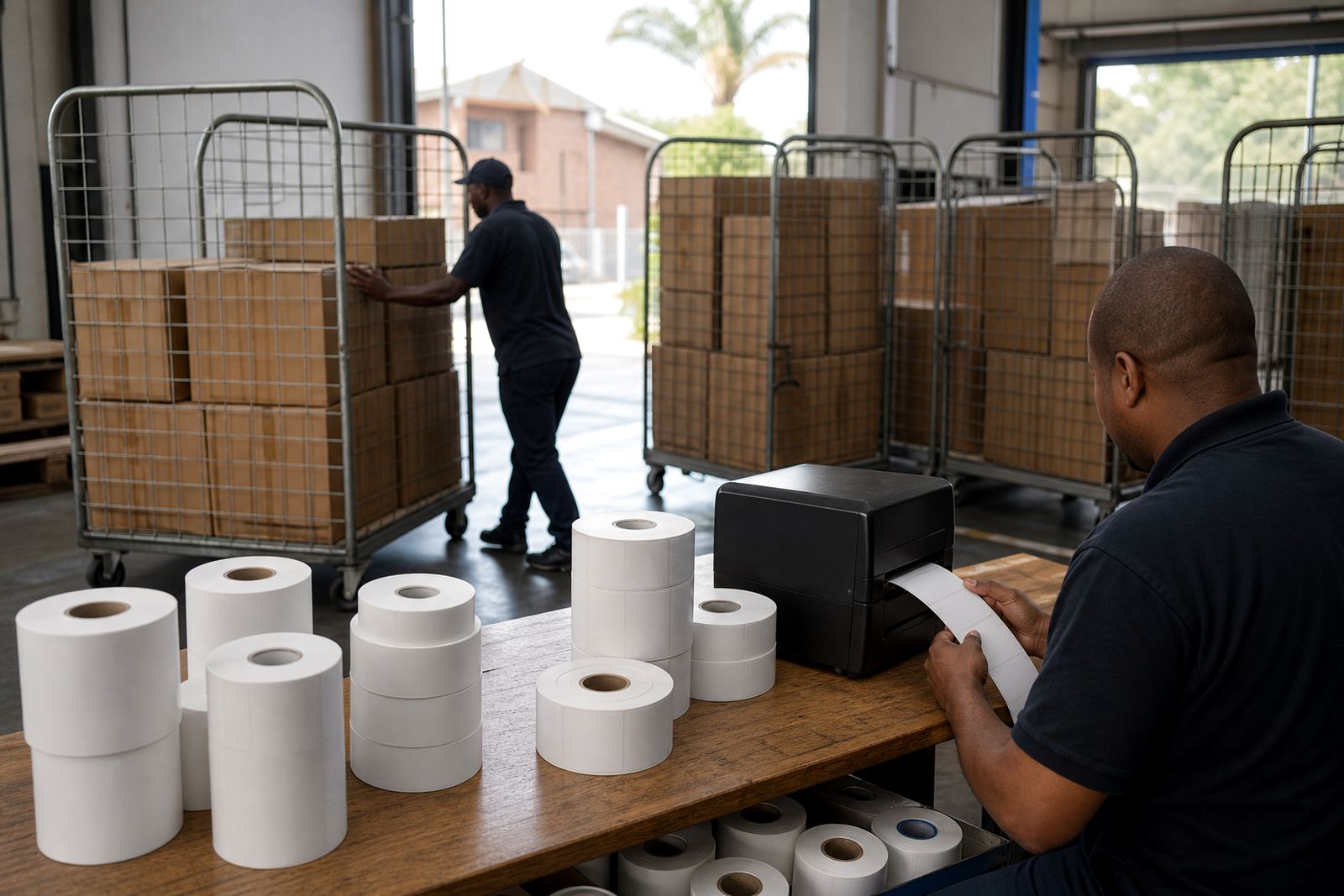
The packers were using benchtop thermal printers with a narrow feed path and limited tray space, so the roll format had to be right first time. They also wanted consistent winding, because a loose rewind can cause edge lift and feed drift on smaller machines. We looked at the print face, adhesive hold, liner strength and roll diameter together rather than treating them as separate items. That saved a lot of trial and error later.
- Client type: parcel despatch and courier packing team
- Town: Durban North
- Use: outgoing parcel labels, routing and barcode print
- Environment: indoor packing area with coastal humidity and frequent printer use
The format we matched to their printer line
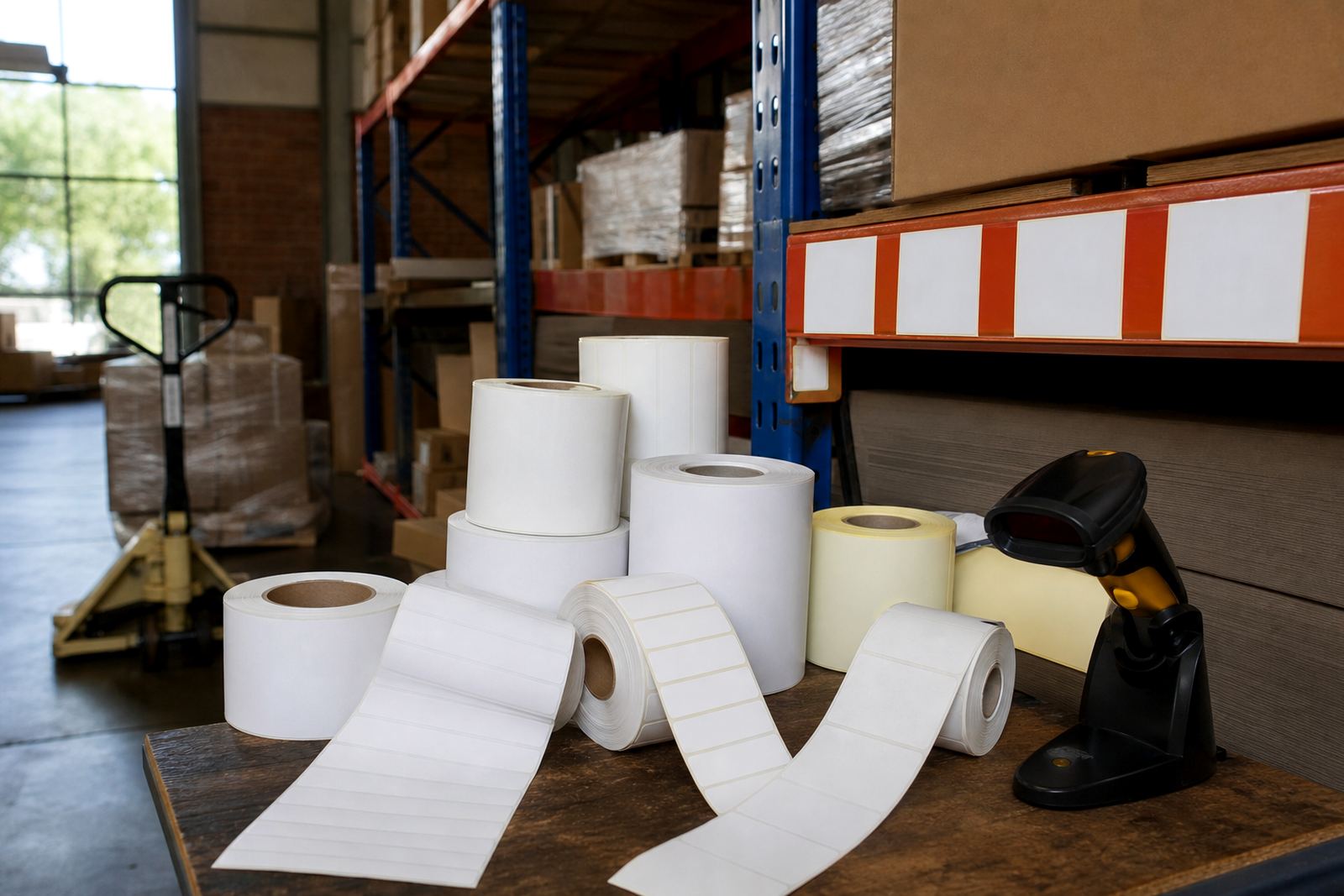
We prepared direct thermal rolls for the main despatch printer line, with a size that suited fast hand application and scanner reading. Direct thermal was the better fit here because the labels were for short to medium life parcel use, not long term shelf identification.
Where a parcel label needs to survive longer storage or more abrasion, thermal transfer is usually the stronger option because the ribbon sits between the printhead and the face stock. In this project we kept the setup direct thermal, but we still checked the alternative in case the client later moved some lanes to warehouse stock tags. That is part of proper roll planning, not upselling. The roll width, outer diameter and core size were set to fit the printer guide and the packing bench space.
- Roll type: direct thermal courier rolls
- Core size: 25 mm and 40 mm options depending on printer
- Width range: matched to standard parcel label formats
- Application: fast print, peel, apply and scan
Face stock, adhesive and liner choices that hold up in Durban weather
For parcel work, the face stock must print sharply and release cleanly from the liner without curling. We used a smooth thermal face stock suited to barcode and address print, with a clean top surface that takes heat evenly. On the adhesive side, the team needed a general purpose tack that grabs well on carton board and courier sleeves, yet still gives a fair chance of repositioning during application. That balance matters when packets are moving across several stations.
The liner had to feed properly through the printer and strip easily for hand application. In humid conditions, a weak liner can wrinkle or go soft before the roll is finished, especially if the stock sits near a loading bay. We also checked storage handling because rolls left open in a warm prep area can pick up moisture faster than expected. It sounds basic, but those details are what keep a dispatch line moving without staff having to fight the material.
- Face stock: direct thermal paper for parcel despatch
- Adhesive: general purpose permanent tack for cartons and courier bags
- Liner: silicone coated release liner for easy peel
- Finish: clean print face for barcodes, routing and address blocks
A two week setup from sample to packed stock
The work ran over two weeks. In the first week we confirmed the printer model, the label width and the roll build, then supplied sample rolls for testing on live packing shifts. The team checked feed consistency, barcode readability and how the adhesive behaved on plain carton board, printed cartons and plastic courier sleeves. Once the sample run passed, we moved to the full production batch and set the winding direction to suit the printer path.
The second week covered slit production, rewinding, core setting and dispatch packing. We packed rolls in a way that reduced edge damage during transport from Westmead to Durban North and beyond. The client also asked for a repeat order plan because parcel volumes rise and fall with promotions and month end spikes. We noted the usage rate, roll length preference and printer fit so the next supply could be prepared without another long round of checking.
- Week 1: machine check, samples, print testing and adhesive review
- Week 2: full production, packing and dispatch
- Extra step: repeat order planning for changing parcel volumes
- Delivery focus: protect roll edges and keep cartons dry in transit
What changed on the packing bench
Once the correct rolls were in place, the packing team had fewer feed stops and less label waste from misprints. The labels came off the liner cleanly, which sped up hand application and helped the team keep parcels moving in order. Their barcode scanners read the prints more consistently because the thermal density was set for clear contrast rather than dark, blotchy overprint. Small as that sounds, it makes a real difference when parcels are leaving in batches.
They also had less drama with corner lift on well sealed cartons. For a courier label, that is not a small thing. If the edge lifts, the scanner misses it or the barcode gets damaged by handling. The finished rolls gave them steadier output through the shift, and the staff did not need to keep adjusting guides or refeeding loose labels. That is the kind of result clients notice after a few days, not just on the first print.
- Cleaner feed through benchtop thermal printers
- Better barcode contrast for scanning at despatch
- Less edge lift on carton surfaces
- Reduced waste from misfeeds and damaged labels
What we would set up for the next parcel run
If we repeated this job for another Durban North parcel team, we would keep the same structure: sample first, then full batch, then repeat order planning based on real use. We would also keep a close eye on core size and outer diameter, because courier teams often change printer models when volumes grow. A good roll is the one that fits the machine already on the floor, not the one that needs extra trimming or a loose shim to work.
For similar work across Durban, Johannesburg, Cape Town, Pretoria or Pietermaritzburg, the key checks stay the same. Match the label face to the print life, choose the adhesive for the surface, and confirm winding direction before production starts. That keeps dispatch steady and avoids last minute stock changes when the line is already busy. If the team is working through heat, humidity or power interruptions, those basics matter even more.
- Keep sample approval tied to the actual printer in use
- Record winding direction and core size with the order
- Plan roll length around shift volume and storage space
- Check carton and courier sleeve adhesion before full production
Key facts
| Project | Durban North Parcels |
|---|---|
| Town | Durban North |
| Supply type | Courier-format direct thermal rolls |
| Core sizes | 25 mm and 40 mm |
| Typical use | Parcel despatch, barcode and address labelling |
| Timeline | 2 weeks from sample check to dispatch |