A warehouse grid that had to read first time
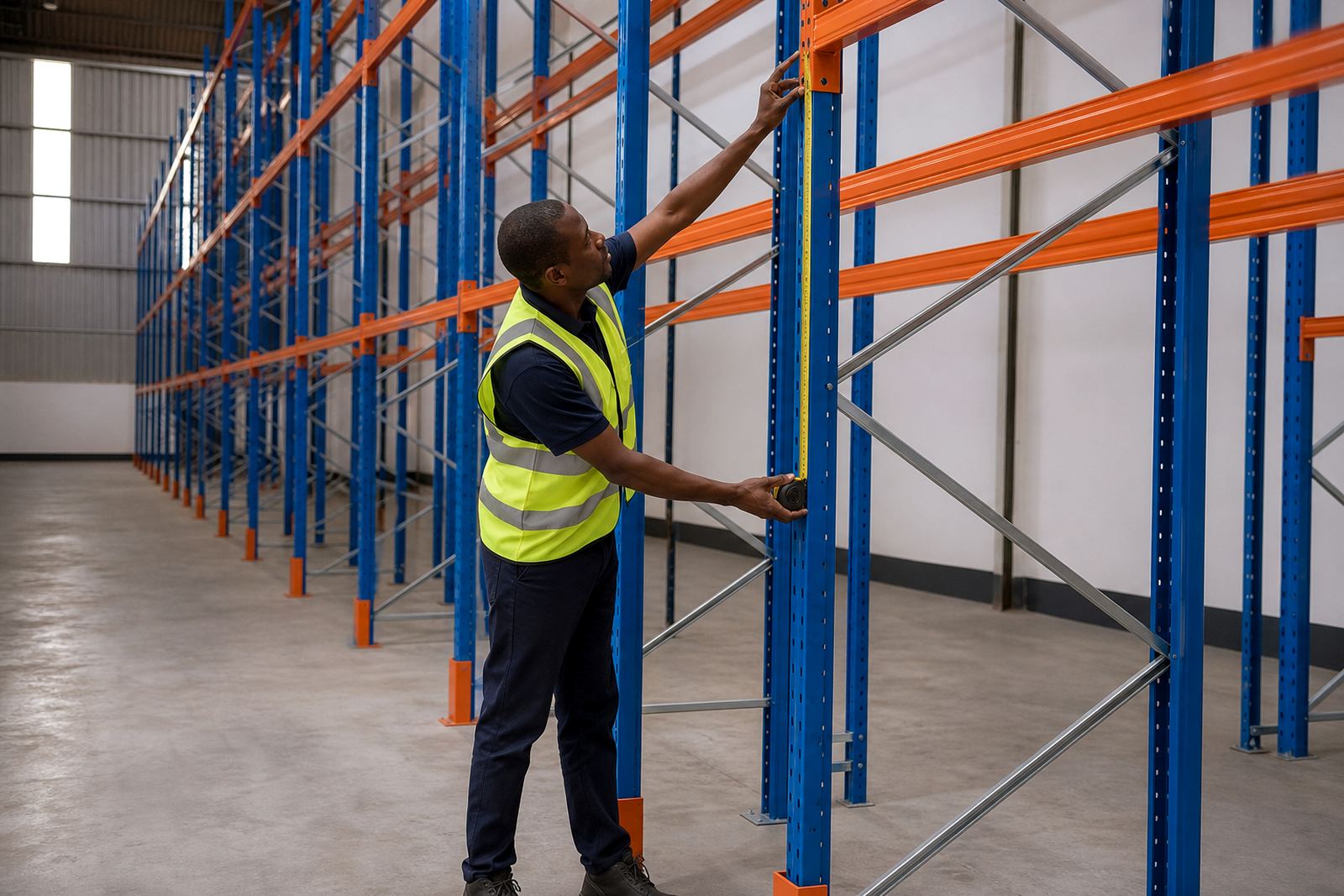
The brief came from a warehouse team in Centurion handling mixed cartons, pallets and fast-moving reserve stock. They wanted rack location labels that could be read quickly at aisle level, hold up to daily handling and stay legible under indoor lighting, dust and the odd patch of heat near loading doors.
The job was for internal control rather than customer-facing packaging, so the labels had to be practical, not decorative. Each code needed enough white space around the bars and text to scan cleanly on handheld readers, while still fitting on narrow beam faces and upright rack posts. The site also wanted a repeatable format for future bays, with no rework each time a row was extended or relabelled.
- Client type: warehouse and distribution operation
- Town: Centurion, Gauteng
- Use: rack location codes and internal stock control
- Setting: indoor warehouse with daily forklift traffic and dust exposure
The limits we had to work inside
The warehouse gave us fixed rack dimensions, an existing coding system and a clear instruction to avoid overcomplicated labels. Some positions were narrow and others had deeper beam faces, so one size would not suit every location. We also had to keep the labels compatible with their thermal transfer printers and their handheld scanning routine, with no curling at the corners after application.
Centurion warehouses can run warm in summer and cold overnight, so the adhesive had to grip well on painted steel, even when surfaces were a bit dusty from pallet movement.That meant choosing a face stock with a clean print surface and an adhesive that would hold on properly without creeping.
- Fixed rack widths and mixed label sizes
- Painted steel surfaces with light dust build-up
- Handheld scanner readability required
- Compatibility with thermal transfer printing
What we cut, wound and checked
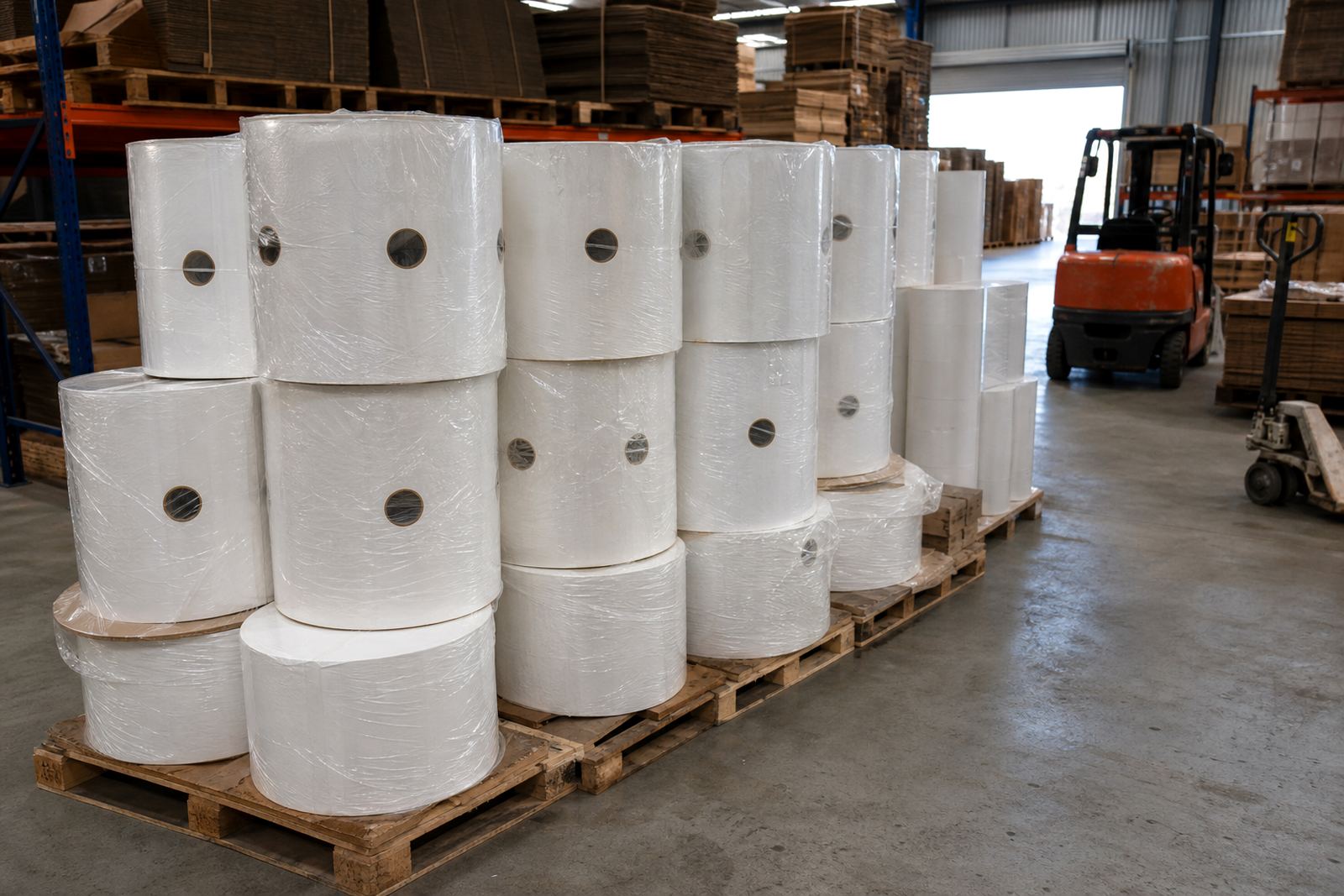
We supplied self-adhesive label stock cut for rack codes, using a printable face stock suited to crisp barcodes and clear alphanumeric text. For this kind of work, the face stock needs a smooth, consistent surface so the ribbon transfers cleanly and the scanner sees a solid code. We paired that with a general-purpose permanent adhesive for indoor warehouse use, then matched the liner so the labels would release cleanly during application.
The rolls were prepared with the right core size for the customer’s printer setup, with winding direction checked so the print would track correctly through the machine. We also looked at the label pitch and roll length planning so the team could run longer batches without stopping too often. Where the site had different rack face widths, we cut multiple formats rather than forcing everything into one awkward size.
- Self-adhesive label stock for rack location coding
- Thermal transfer compatible face stock for sharp print contrast
- Permanent indoor adhesive for painted steel racking
- Core size matched to the printer setup
- Winding direction set for correct feed and print orientation
Printer fit, sample rolls and the first run
Before the full batch went out, we supplied sample rolls so the warehouse could confirm the print position, scan performance and label size against the actual racks. That saved time because the team could check the physical fit on beam faces and post strips before the full issue was packed. We also confirmed the printer compatibility, including the ribbon width and the way the roll sat on the spindle.
The first production run was completed over two weeks, with one week spent on sample checks and approvals, then a second week for cutting, rewinding and dispatch packing. The sample stage also gave the customer room to test application speed with gloves on, which matters on a busy floor where staff need to label quickly without fiddly edges lifting up. Once approved, the production batch followed the same format exactly, which kept the location sequence neat across the site.
- Week 1: sample rolls, size confirmation and print tests
- Week 2: full cut, rewinding and dispatch packing
- Checks covered scan contrast, label positioning and roll feed
The change on the warehouse floor
After installation, the rack codes were easier to read from the aisle and faster to scan during receiving, put-away and stock counts. The team reported fewer location mix-ups because the labels sat flat on the steel and the print stayed sharp even after repeated handling. For a warehouse that moves product all day, that matters more than fancy presentation.
The practical gain was cleaner internal control. Staff could identify bays faster, match the physical rack to the system location with less second-guessing, and keep the picking rhythm moving. The format also made future extension simpler, because the same label spec could be repeated for new rows, overflow locations or revised stock zones without changing the whole setup.
- Cleaner rack identification during receiving and picking
- Better scan readability on handheld devices
- Less confusion between nearby locations
- Repeatable format for future bay extensions
What we would set up next time
We would use the same approach again for another warehouse in Gauteng or anywhere else in South Africa: sample first, confirm the printer fit, then cut the final rolls to match the rack face and the coding rules. That sequence saves time and avoids mismatched stock, especially where different aisles need different label widths or where the printer setup is already fixed on site.
For the next job, we would again review the face stock, adhesive strength, core size and roll length before production starts. If the site had colder storage zones, coastal humidity or more abrasive handling, we would adjust the material choice accordingly. The key is to match the label to the shelf, the printer and the pace of the warehouse, not force one stock to do everything.
- Repeat the sample roll stage before full production
- Check core size and spindle fit before dispatch
- Plan roll length around the print volume on site
- Match adhesive to the rack surface and operating conditions
Key facts
| Project | Centurion Rack Codes |
|---|---|
| Town | Centurion, Gauteng |
| Client type | Warehouse and distribution operation |
| Label use | Rack locations and internal warehouse control |
| Material type | Self-adhesive label stock for thermal transfer printing |
| Timeline | 2 weeks from sample to dispatch |