A Pretoria brief built around scan speed and route control
This project was for a logistics operation in Pretoria managing outbound pallets, transfer stock and receiving lanes across a busy yard. The labels needed to carry route codes, stock IDs and handling notes without smudging when handled in gloves or exposed to dust, slight moisture and early-morning condensation.
The team needed a format that could be printed in-house and applied quickly during dispatch peaks. They also asked for a stock that would stay flat on corrugated cartons and wrapped pallets, with enough contrast for handheld scanners and visual checks at a distance.
Label stock choices that suit warehouse handling
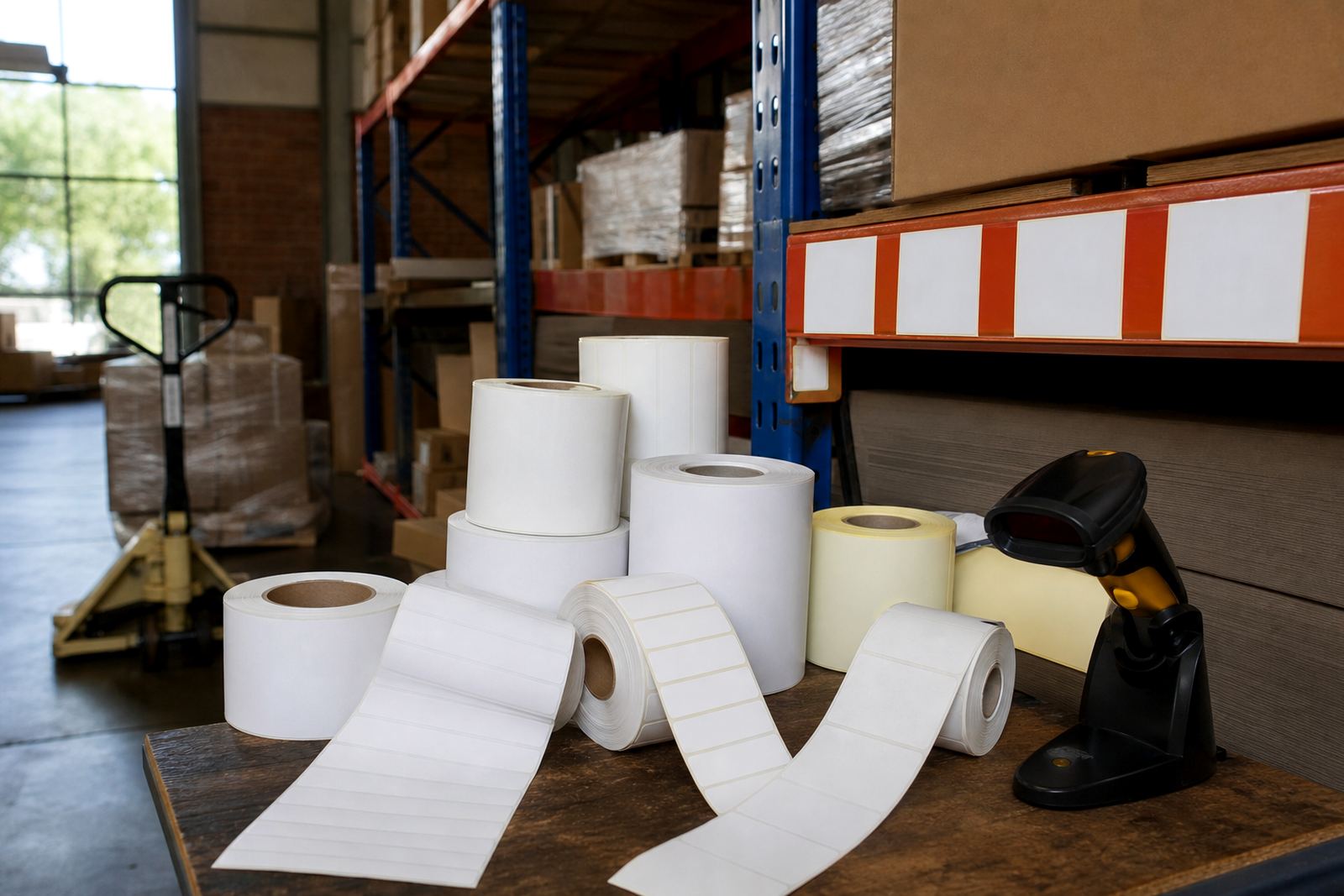
We worked through the face stock, adhesive and liner options before production. For pallet labels, the face stock needs to accept crisp print without feathering, while the adhesive has to grip onto board, stretch wrap or plastic surfaces depending on the final packing method.
- Face stock selected for clean thermal transfer print and good opacity
- Pressure-sensitive adhesive chosen for carton and wrap contact
- Silicone-coated liner for smooth release during application
- Roll winding set to match the application direction on the printer
For heavier warehouse use, we usually keep the finish practical rather than glossy. A matte top layer helps with readability under fluorescent lights and on overcast days, which matters when labels are checked at loading bays and not just at the packing table.
Direct thermal or thermal transfer for this job
The client was weighing direct thermal against thermal transfer. Direct thermal is useful for short-life labels and avoids a ribbon, while thermal transfer is better where the print must hold up longer, especially on labels that may move through storage, sorting and transport before final receipt.
In this Pretoria case we recommended thermal transfer for the main pallet labels because the print needed better resistance to scuffing and heat. That gave them a cleaner result on route labels and reduced the risk of fading under strong sun at the yard edge, which is a real issue in Gauteng summers.
- Compatible with common benchtop and industrial thermal printers
- Core size matched to the printer spindle and unwind set-up
- Roll diameter planned to suit batch volume and loading time
- Print orientation checked before full roll supply
Conversion details that kept the line moving
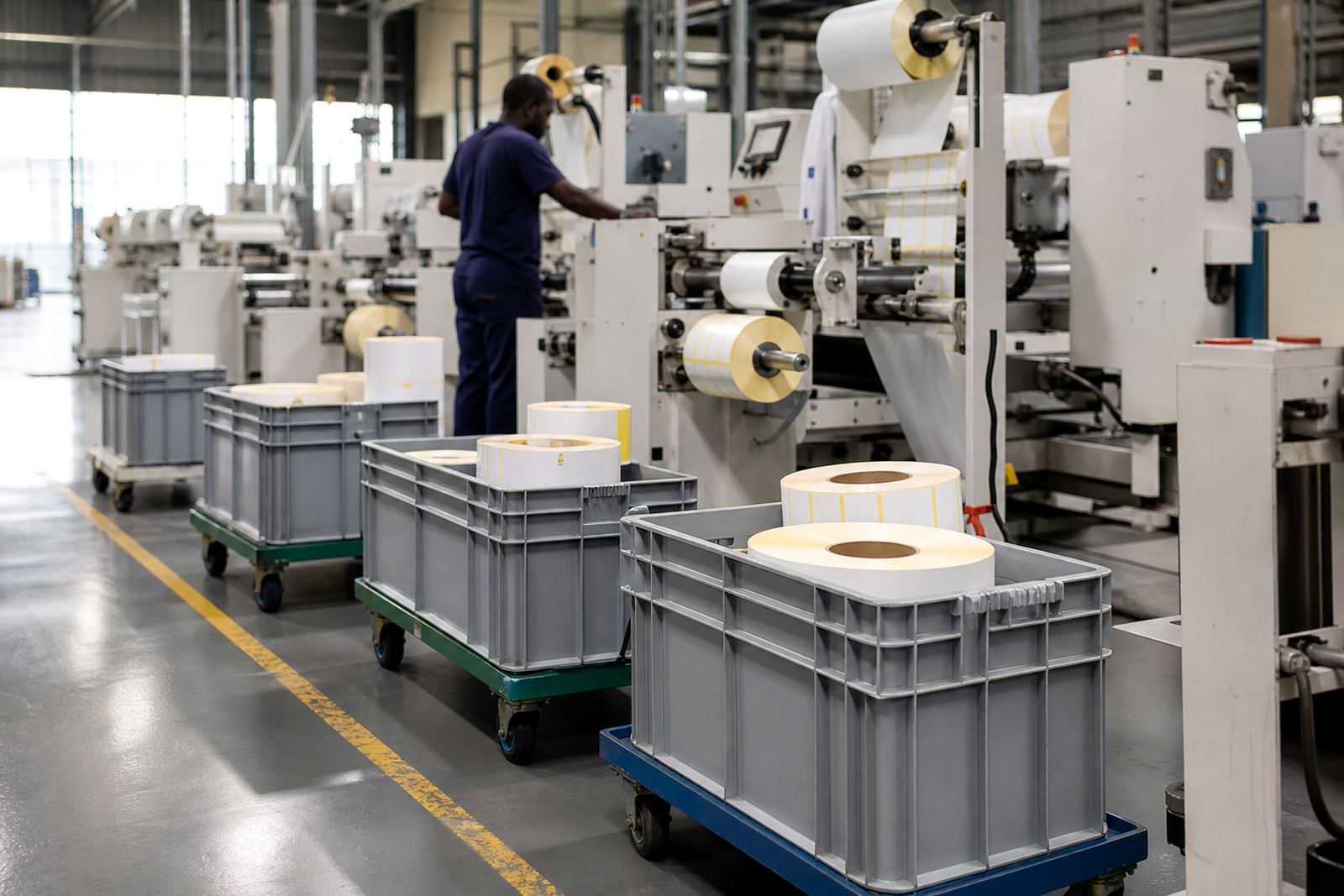
Once the material choice was signed off, we handled custom slitting, rewinding and core sizing so the rolls fit the client’s printers without forcing manual adjustments. That keeps production smoother and helps avoid wasted rolls when operators have to pause for re-threading or alignment fixes.
We also set up the roll length planning around their average dispatch day, not just peak days. That meant they could use a practical roll size for repeated print runs, with enough length to keep changeovers down but not so much that the rolls became awkward to handle in a busy packing area.
Sample rolls were supplied first for printer fit checks and adhesive matching. The sample stage also allowed the team to test label placement on different pallet surfaces, including shrink wrap, plain board and lightly textured cartons.
Three-week turnaround from test rolls to dispatch pack
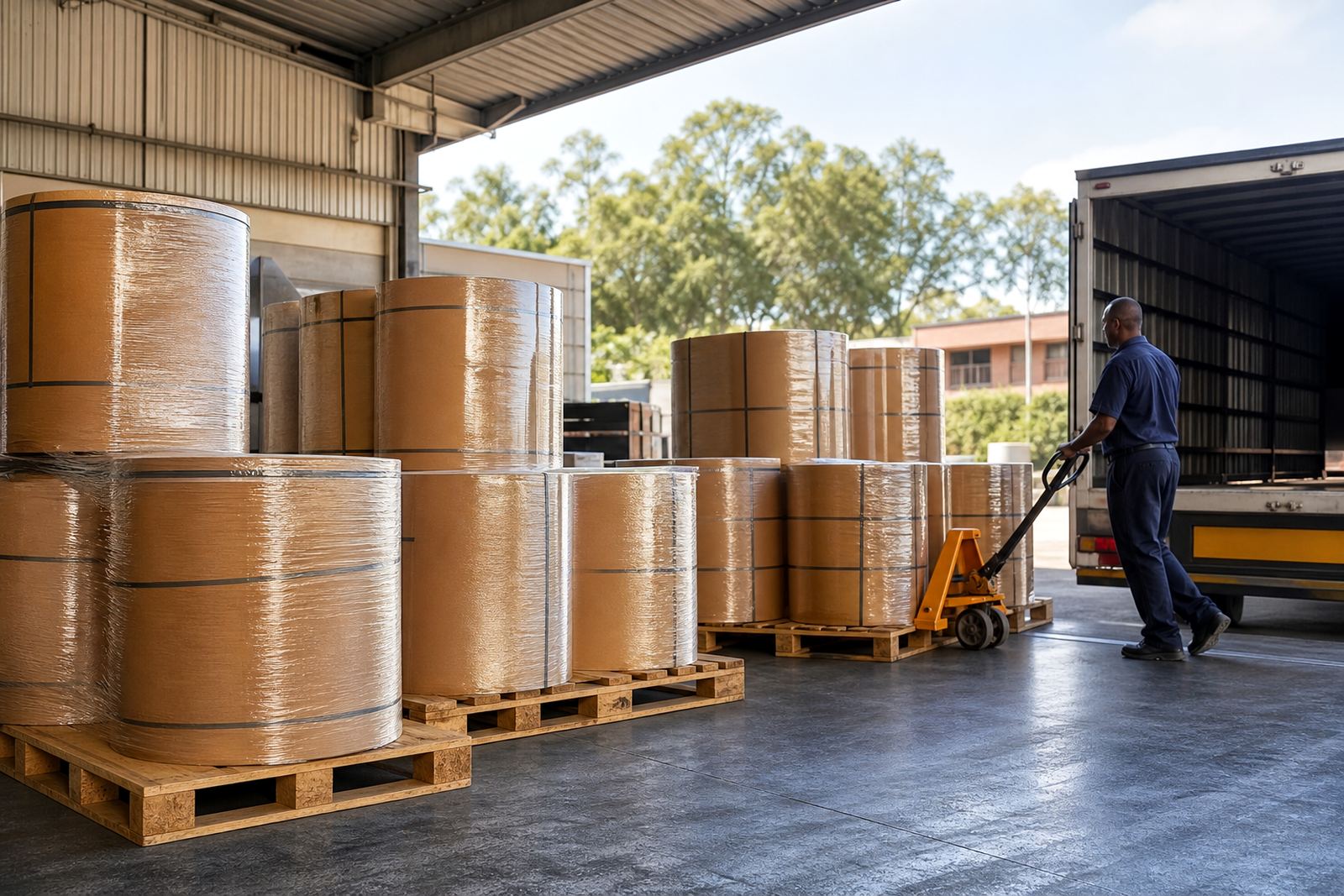
The project ran over three weeks from the initial brief to the final dispatch pack. Week one covered stock selection, print trials and adhesive testing. Week two was used for conversion setup, sample rolls and fit checks. Week three covered full production, packing and route-ready dispatch from Westmead, Pinetown.
Because the labels were intended for a Pretoria site with strict receiving times, we paid close attention to packing order and batch separation. The dispatch pack was arranged so the client could identify each roll group quickly and put them straight into circulation without sorting through mixed stock.
- Week 1: brief, material matching and printer compatibility checks
- Week 2: sample rolls, winding direction confirmation and test application
- Week 3: full run, dispatch packing and handover prep
What changed on the warehouse floor
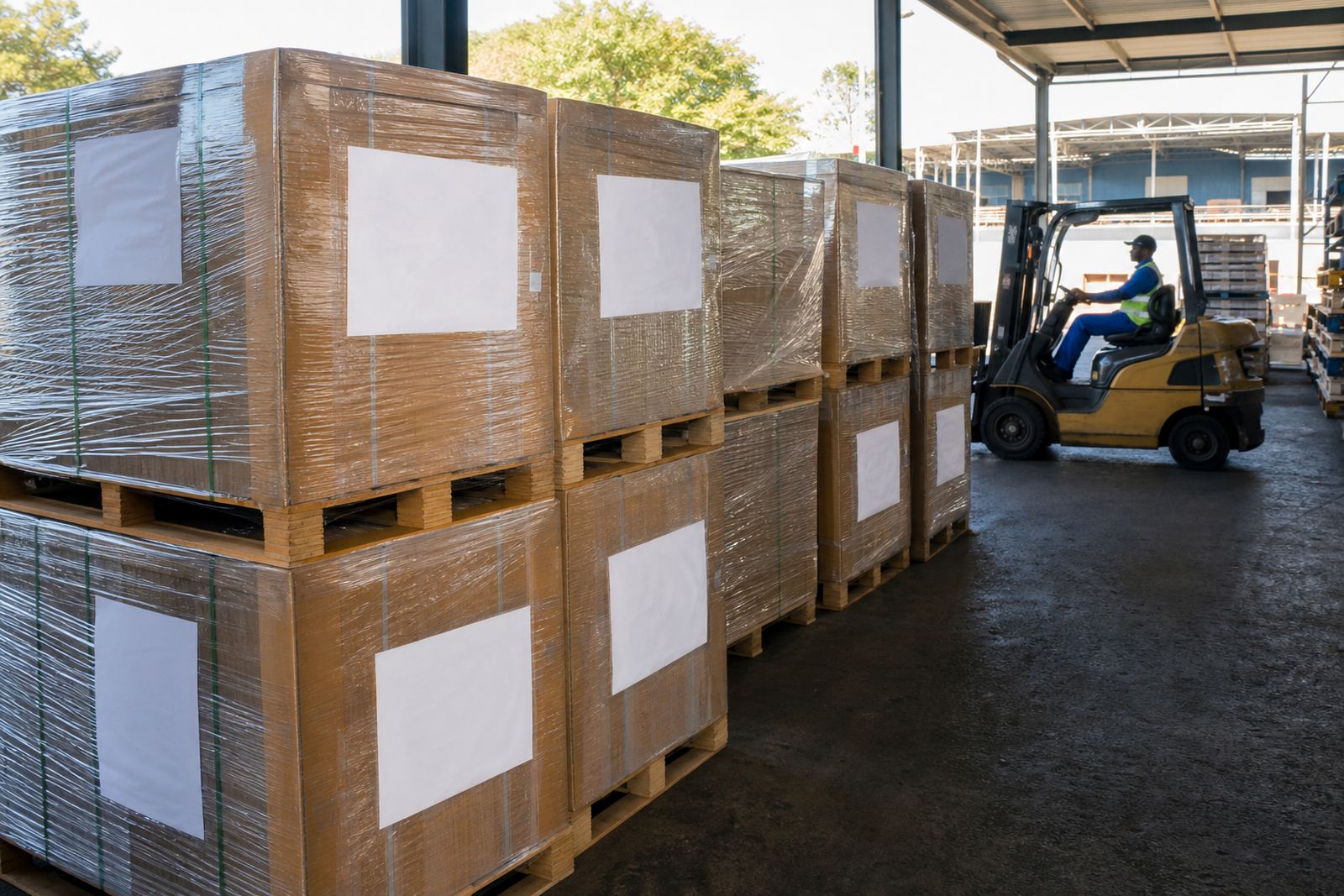
The result was cleaner pallet identification with less rework at packing and fewer print stoppages from mismatched roll formats. The labels held better through handling, and the route information stayed readable during transfer between staging, loading and receiving.
For the customer, the big advantage was tighter control over pallet labelling. Their team could mark stock clearly, keep items easy to identify while moving, and cut down on rushed relabelling that interrupts a shift. It also helped the yard run more smoothly when several loads were being prepared at once.
In practical terms, the labels suited the way the site actually works: dust, movement, hot afternoons and pressure at dispatch. That is where the right label stock earns its keep, not in a sample on a table.
If we set this up again for another Pretoria site
If we repeated this job for another Pretoria operation, we would start with the printer model, label size and target surface, then confirm whether the print needs to last one day or several weeks. That lets us match face stock and adhesive properly from the start, instead of correcting problems later.
We would also keep the sample roll stage in place, especially where the site uses different printers across packing lines or has mixed pallet surfaces. A quick fit check saves time, and it helps the final roll spec land right first time.
Label Paper supplies self-adhesive label stock and thermal rolls from Westmead, Pinetown to packaging, retail and logistics operations across South Africa, including Pretoria, Durban, Johannesburg, Cape Town and Pietermaritzburg.
Key facts
| Project type | Wide-format pallet labels for route and stock identification |
|---|---|
| Location | Pretoria |
| Supply base | Westmead, Pinetown |
| Material format | Self-adhesive label stock and thermal rolls |
| Print method | Thermal transfer preferred for longer handling |
| Turnaround | 3 weeks from brief to dispatch |