What the Durban counter needed to keep moving
The brief came from a retail outlet in Durban that was using a compact counter printer for regular price labels and shelf marking. The store needed rolls that would feed cleanly, print sharply and hold up through handling, especially where labels are touched often during ticket changes, stock counts and repricing. In a retail setting, the first problem is usually not the printer itself, it is the wrong roll build. A liner that does not release well, an adhesive that lifts on coated packaging, or a face stock that smudges too easily can slow the whole front end down.
The outlet also had to manage frequent replenishment. That meant we looked at core size, wound roll diameter, winding direction and the printer path, because a roll that is technically the right width can still jam if the fit is off. The Durban site also asked for a setup that would cope with warm conditions and the usual warehouse dust that finds its way into retail back areas. For a shop that prints labels every day, consistency matters more than fancy spec sheets.
- Client type: retail outlet
- Town: Durban
- Use: price labels and stock marking
- Printer type: counter printer for regular in-store use
- Main need: reliable feed and clean print results
Paper face, adhesive and liner, matched as one unit
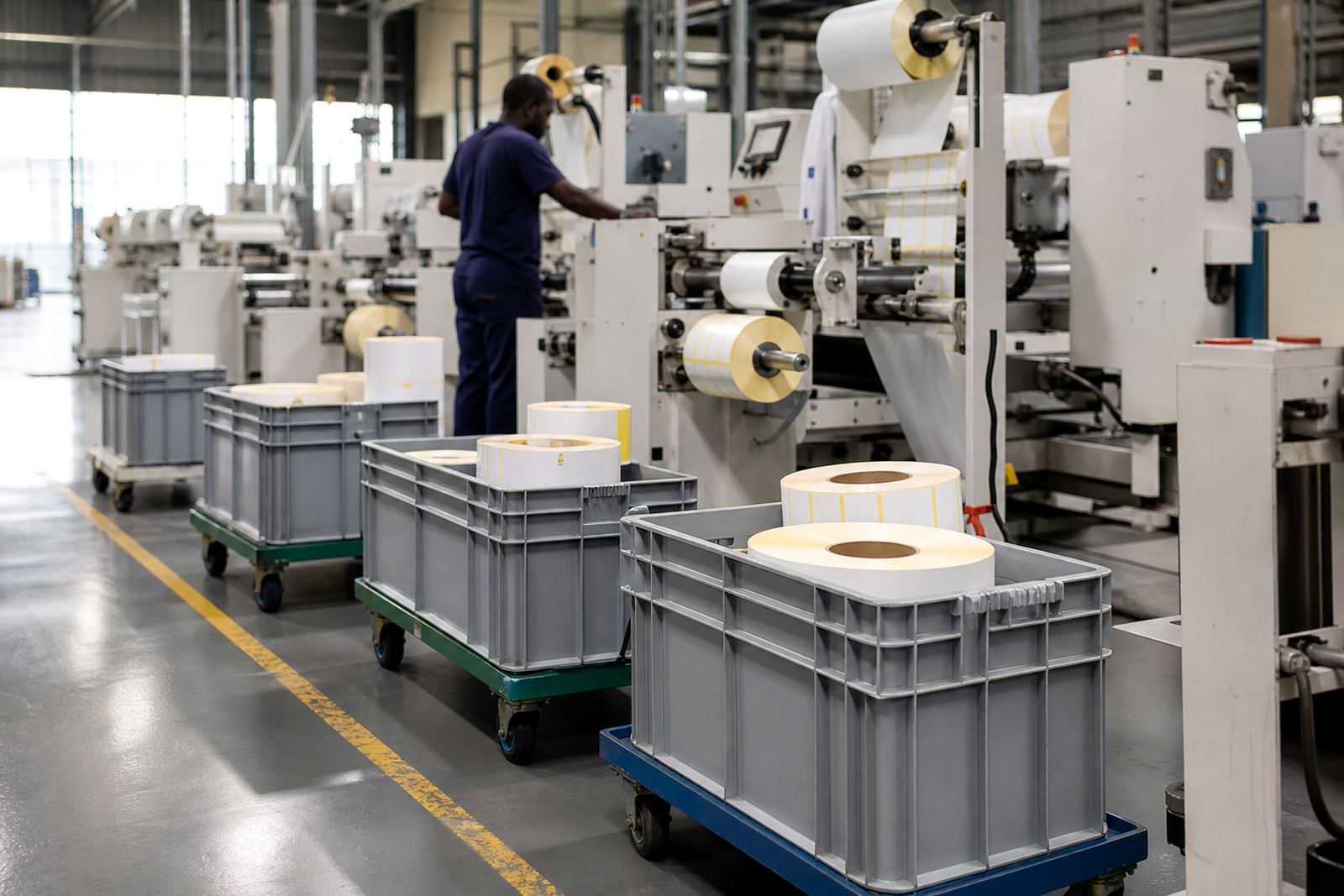
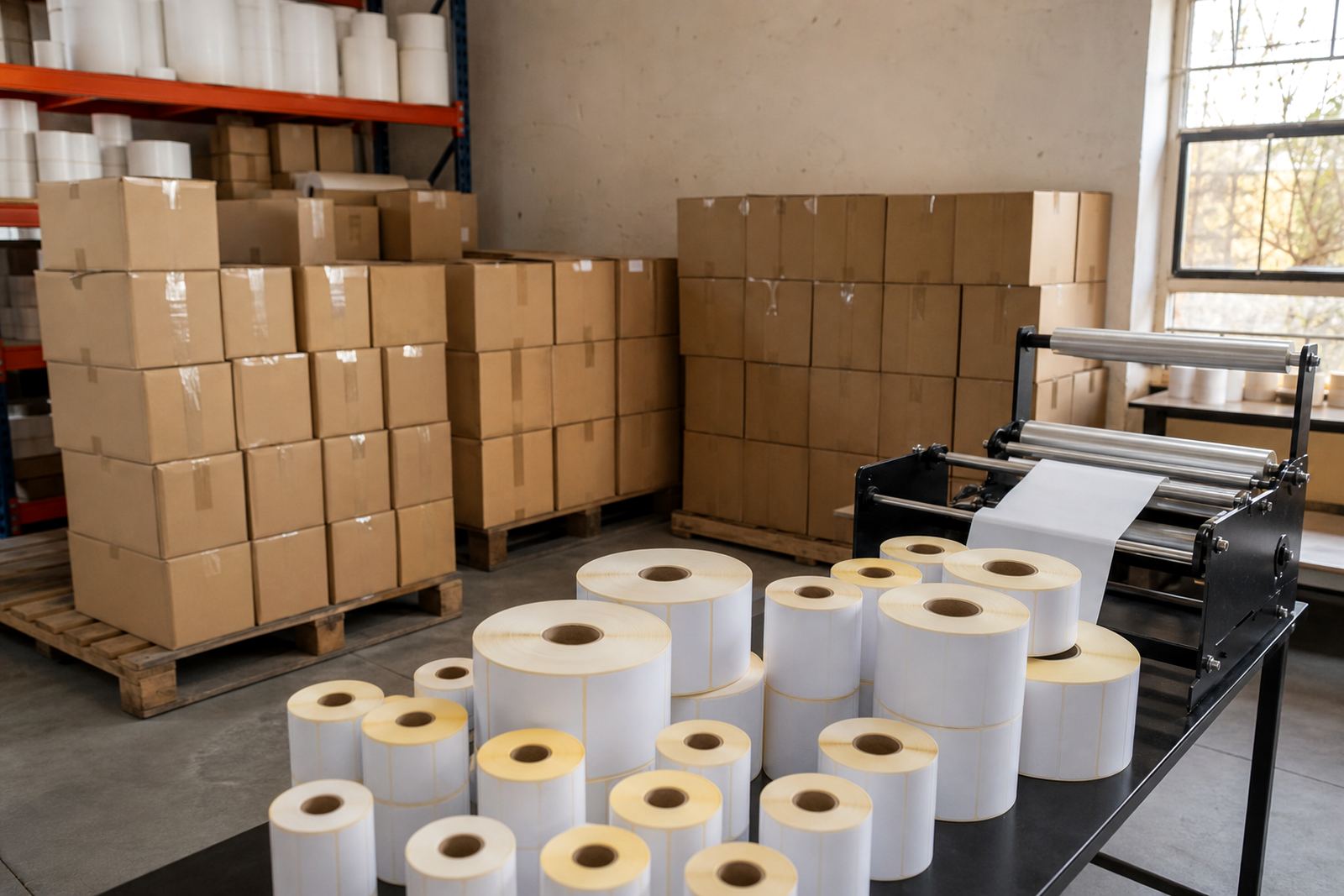
For this project we worked through the full label build rather than treating the paper as a loose roll of stock. Self-adhesive label material has three parts that need to work together: the face stock, the adhesive and the liner. The face stock is the printed surface and for retail labels it needs to take thermal print cleanly, hold readable text and resist light rubbing from hands or baskets. The adhesive must suit the surface it is going onto, whether that is a carton, wrapped tray, plastic tub or another retail pack. The liner has to release well enough for fast peeling without tearing or leaving fibres behind.
We supplied labels with a practical retail face stock suited to frequent handling and a general purpose adhesive selected for everyday packaging and shelf application. Where labels are used indoors and changed often, you do not always need the strongest bond available. In many stores a clean peel and steady grip are more useful.That small detail matters, because a poorly wound roll can cause a staff member to stop mid-run and rethread the machine.
- Face stock selected for clear thermal print
- Adhesive matched to common retail surfaces
- Liner chosen for easy release and clean dispensing
- Roll build checked for stable unwinding
Direct thermal instead of transfer ribbon work
For the Durban outlet, direct thermal rolls were the better fit for fast counter printing. Direct thermal material prints without a ribbon, which keeps loading quicker and reduces the number of consumables the store must carry. It is a practical choice for price labels, temporary shelf tickets and short to medium life labels where speed matters more than long term chemical resistance. We explained the difference clearly because many retail teams use the wrong type of roll in a printer that can accept more than one print method.
Thermal transfer rolls are different. They are used with a ribbon and are better for labels that need stronger resistance to rubbing, heat or outdoor handling. In this case, the store did not need that extra layer, so direct thermal was the cleaner solution. That also kept the workflow straightforward for staff. The printer could be loaded quickly, the labels came out legible and the roll change was easy enough for the team to manage during peak hours when customers are already at the counter.
- Chosen method: direct thermal
- Reason: fast loading and no ribbon required
- Use case: price labels, shelf tickets and short life retail marking
- Alternative discussed: thermal transfer for tougher environments
Printer fit checks and the small details that stop jams
We ran printer fit checks before supply so the outlet did not end up with a box of rolls that looked right but sat badly in the machine. Core size, roll width, outside diameter and winding direction all affect how a roll feeds. For counter printers, especially the smaller units used at till points, the wrong core can tilt in the holder or rub against the side wall. That is when feed problems start. We also checked the label gap and the sensing requirements so the printer could read each label cleanly without constant re-calibration.
The team wanted a setup that would be easy to reorder. So we planned the roll length to suit their consumption pattern and allowed for repeat supply in the same configuration. That way, the store can keep a known format on hand and avoid mixing roll builds across different departments. It sounds minor, but in a retail store with changing staff and busy mornings, a predictable roll specification saves time every week.
- Core size confirmed for the printer holder
- Roll width and diameter checked against the machine path
- Winding direction set for smooth feed
- Label gap aligned with printer sensing
Two weeks from brief to first cartons out
The project moved over two weeks from brief to supply. The first stage was the usage review, where we asked how often the store prints, what surfaces the labels go on and whether they need labels that are handled for long periods or only while stock is on the move. After that, we prepared sample rolls for the printer check and confirmed the label finish, release and print clarity. Once the fit was confirmed, production planning and dispatch packing followed in the same specification so the outlet would not need to recheck each batch.
In Durban, timing matters because retail stock movements are often tied to weekly deliveries and trading hours that leave little room for stoppages. The store needed replenishment that could slot into its routine, not a supply that arrived at the wrong time and sat in the back room. With the order set up for repeat use, the outlet now has a cleaner replenishment rhythm and less risk of running low during a busy week.
- Week 1: brief, usage review and sample rolls
- Week 2: printer fit check, planning and supply
- Outcome: ready for repeat replenishment
- Support: dispatch packing suited to store receiving
What changed once the rolls were in daily use
After installation, the store had fewer feed interruptions and a cleaner print result on the shelf and till labels. The staff were able to load the rolls faster, and because the build was matched correctly, there was less waste from misfeeds and poor release. That matters in retail where every small stoppage spreads across a full shift. A label roll is only a small item, but if it causes a jam at the wrong time, the impact is felt on the floor straight away.
The outlet also benefited from a neater replenishment pattern. Instead of treating labels as an emergency buy, it now has a repeat order path based on the same roll size and printer setup. For us, this is the sort of work we would gladly do again for another Durban retail site: review the printer, match the face stock and adhesive to the surface, confirm the core size and wind, then plan supply in a way that fits the store's trading pace. Nothing flashy, just labels that do the job properly.
- Cleaner print results on price labels
- Less downtime from misfeeds
- Faster roll changes at the counter
- Repeat order setup kept consistent
Key facts
| Project type | Counter-printer roll setup for retail pricing |
|---|---|
| Town | Durban |
| Print method | Direct thermal |
| Roll build | Self-adhesive label stock with matched face stock, adhesive and liner |
| Printer fit | Core size, winding direction and roll diameter checked |
| Timeline | 2 weeks |